
Review · MEXICAN
PDC Traditional Mexican Cooking Experience
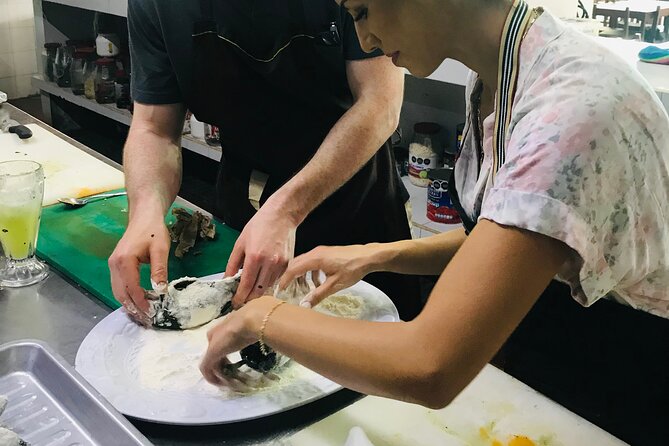
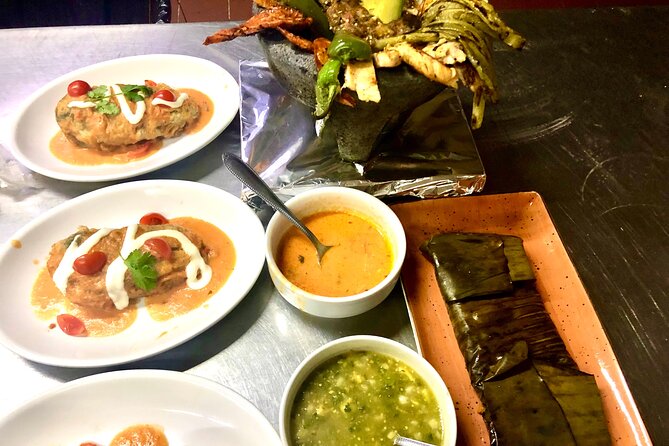
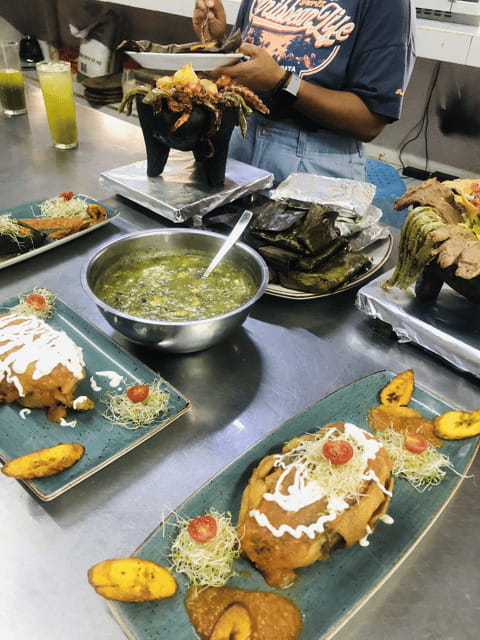
The best part of this Playa del Carmen cooking class is that you do not simply watch a chef work. You help prepare several dishes, including tamales, chiles rellenos, and a volcanic-stone molcajete filled with grilled meat, seafood, vegetables, and guacamole. Food is the lesson, but Mexican family life and regional cooking traditions are part of the story, too.
I like the generous amount of hands-on cooking, and I like the small group limit of eight, which gives you room to ask questions. Hosts such as Panchito and Francisco bring local stories into the meal. The main drawback is simple: ingredients are prepared before you arrive, and the class takes place in a rented restaurant rather than a family home or local market.
Key points
- A full Mexican meal, not a single recipe: Prepare aguas frescas, antojitos, tamales, chiles rellenos, side dishes, and a large molcajete course.
- Local hosts with personality: Panchito, Francisco, Lilia, and the cooking team combine food instruction with stories about Mexico and Playa del Carmen.
- Small groups of up to eight: The size suits people who want to cook rather than sit at the back and watch.
- Restaurant kitchen setting: You get a spacious, well-equipped work area, but not a home kitchen or market visit.
- Plenty to eat afterward: Portions can be large, and you may take prepared food with you if you cannot finish it.
- A practical Playa del Carmen location: Meet at Town Hall Plaza, then walk about 5 to 10 minutes to the cooking venue.
Why this class feels different from a recipe demonstration
Many cooking classes hand you measured ingredients, show you a few steps, and send you home with one dish. This class aims at something broader: how Mexican cooking works as a way of caring for people.
That idea matters because traditional Mexican food is not one fixed menu. Corn, chili peppers, regional produce, cooking methods, and local customs change from one part of Mexico to another. The class uses those differences to explain why food can tell you something about the place where it is prepared.
You will hear about the cultural background of Mexican cuisine and the role of food in daily life. The hosts also connect the cooking to the saying mi casa es tu casa, the idea that welcoming someone to your home includes feeding them well.
The class reflects the UNESCO recognition of traditional Mexican cuisine as an Intangible Cultural Heritage of Humanity. That does not mean you will receive a formal lecture. Instead, the cultural setting comes through while you chop, mix, grill, fill, and taste.
More Mexican Cooking Classes in Mexico:
- Cabo San Lucas Mexican Cooking Class Experience and Local Markets
★ 5.0 · 915 reviews - Mexican Cooking from Scratch in a Local Home in Tulum
★ 5.0 · 585 reviews - Authentic Mexican Legacy Cooking Class in Cabo San Lucas
★ 5.0 · 530 reviews
Meeting Panchito or Francisco in downtown Playa del Carmen
Your meeting point is Town Hall Plaza on 20th Avenue between 8th and 10th streets in downtown Playa del Carmen. This gives the class a clear starting point, though you should allow time to find the plaza before the scheduled meeting.
After introductions, your host walks with the group for about 5 to 10 minutes to a rented restaurant. That short walk is useful because the host can begin explaining the class and the food before you reach the kitchen.
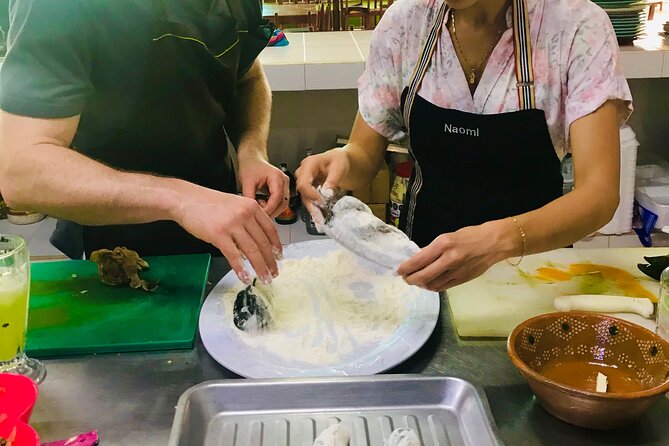
The venue is not presented as a private home. It is a conventional restaurant with an ample kitchen, cooking tools, support cooks, and enough room for a small group to work. I see this as a practical tradeoff. You lose some of the intimacy of cooking in a local family house, but you gain a controlled workspace designed for food preparation.
Panchito is the name that comes through most strongly in the personal service. He has led conversations about Mexican history, Playa del Carmen, food, beliefs, and everyday life. Francisco is also named as a warm and engaging host, and Lilia is part of the cooking team on some sessions. The exact host may vary, but the format includes a main host, chef, and support cooks.
Starting with aguas frescas and antojitos
The cooking begins with aguas frescas, traditional nonalcoholic refreshments made in different flavored styles. These drinks provide an easy introduction because you begin preparing something right away rather than waiting for the main course.
Next come antojitos mexicanos. The term refers to Mexican snack foods and small starters, many of which draw on pre-Hispanic food traditions and later regional influences. The class describes them as fusion-flavored starters, so you can expect an introduction to the way older ingredients and later cooking ideas meet on the plate.
This first stage helps set the rhythm of the class. You are not just following a printed recipe. You are learning how several parts of a Mexican meal work together, from refreshing drinks to small savory bites.
The organizers do not take you to a farmers market first. There are no real local farmer markets in the area suitable for this activity, so the ingredients are prepared in advance. That saves time and gets you cooking almost immediately.
If market shopping is essential to your idea of a food tour, this is a limitation. You will not compare produce, bargain with vendors, or choose ingredients at a stall. If your priority is making food during the 3.5-hour session, the pre-prepared ingredients make good sense.
Tamales that change your idea of the dish
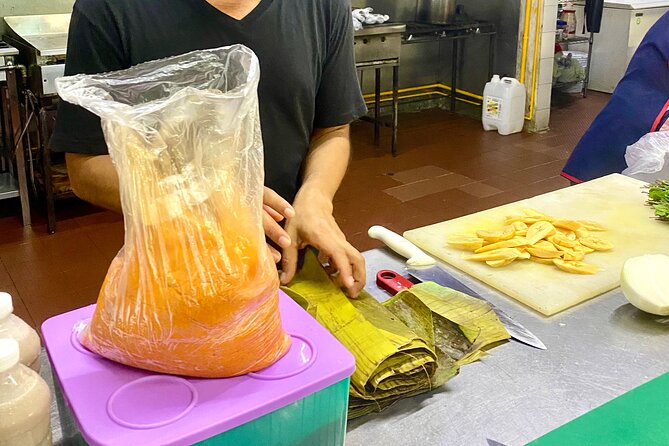
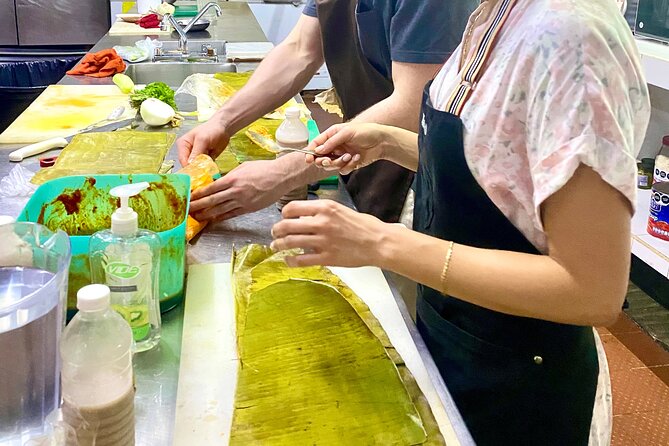
Tamales are one of the most memorable parts of the class. The process gives you a better understanding of why tamales are more involved than their compact shape suggests. You work with the ingredients and preparation rather than simply receiving one as a finished snack.
One session included tamales made from scratch, and the finished result changed one participant’s view of what a tamale could be. That is useful context for anyone who has only tried tamales from a restaurant or packaged food counter. A class setting lets you see the work behind the texture, filling, wrapping, and cooking.
Tamales also fit the class’s larger theme. They are associated with preparation, sharing, and feeding more than one person. You will not leave thinking of them as a quick individual dish.
Because the class includes several other courses, you should not expect to make a large batch of tamales for a take-home freezer supply. The purpose is to learn the technique and enjoy the dish as part of a much larger meal.
A few more cooking classes around Mexico worth a look
- Puerto Vallarta Cooking Class Experience with Market Tour
★ 5.0 · 698 reviews - Mexican Cooking Class with Food Market Visit in Mexico City
★ 5.0 · 506 reviews - Authentic Mayan Cooking Class in Cozumel
★ 5.0 · 344 reviews - Flavors of Oaxaca: Cooking Class with No Set Menu and Local Market Tour
★ 4.5 · 333 reviews
Chiles rellenos and the main-course cooking
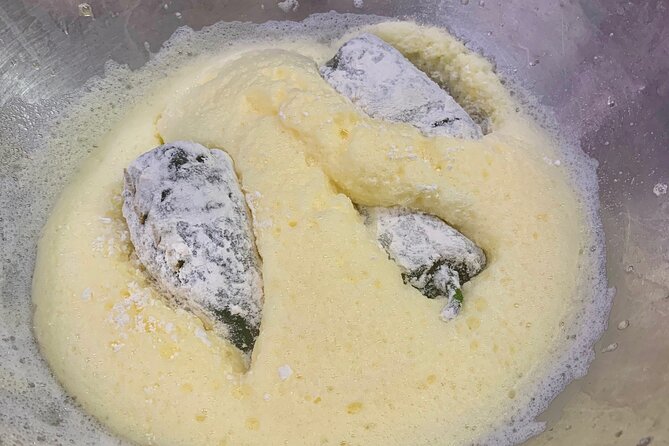
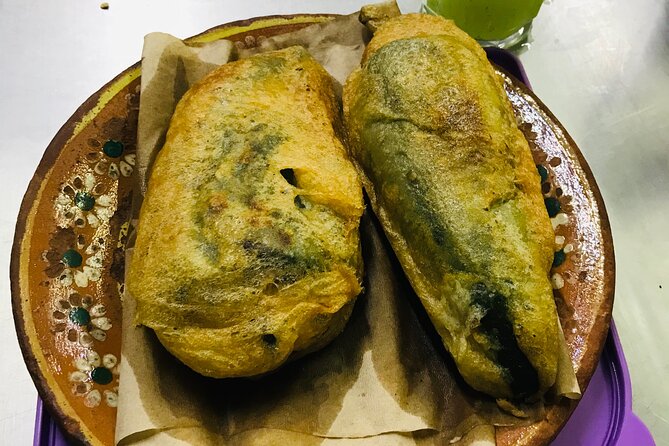
Chiles rellenos are another recurring main dish. The name means stuffed peppers, and the preparation gives you a hands-on look at one of Mexico’s best-known comfort foods.
The class may also prepare dishes such as pipian or mole, with the exact main course changing from session to session. This variation is worth noting. If you book because you want one particular dish, ask about the current menu before you arrive. The experience is built around traditional cooking rather than a guaranteed single recipe.
This flexible menu also helps show that Mexican food is not limited to tacos and salsa. Sauces, stuffed chiles, corn-based foods, and side dishes all have a place at the table. The hosts explain how corn and chili peppers form the base of much traditional cooking while regional choices shape the final dish.
You will have guidance from the host, chef, and support cooks. The format is demonstration followed by your own preparation, not a show where you sit and watch every step. That makes the class a better fit if you already spend time in the kitchen and want more than a basic introduction.
The Land, Sea, and Sky molcajete
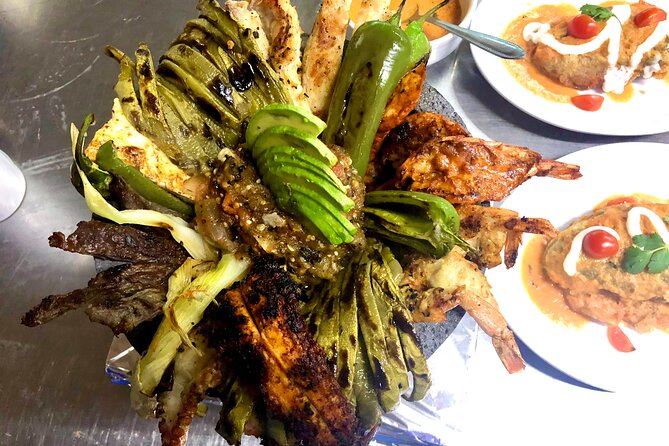
Seafood fans have a particularly generous option: a Cielo, Mar y Tierra molcajete. The name refers to land, sea, and sky, and the dish combines octopus, shrimp, flank steak, and chicken.
The food is prepared in a molcajete, a volcanic-rock mortar traditionally used for grinding and serving. Here it becomes part of the cooking presentation as well as the finished meal. A fire show in the mortar has been part of the preparation, followed by grilled vegetables, shrimp, octopus, beef, and chicken topped with guacamole.
That combination is substantial. It is also a good example of the class’s generous approach. You are not preparing one tiny tasting portion. You may end up with enough food for more than one meal, depending on the menu and your group.
Red snapper or lobster can be requested for an additional charge, based on your choice. Confirm the surcharge before ordering so the final cost is clear. If you are happy with shrimp, octopus, beef, and chicken, the standard combination already provides a wide range of textures and flavors.
The molcajete course may be too much if you prefer a light meal or do not eat meat and seafood. This is one of the places where the class favors abundance over restraint.
Side dishes, drinks, and what you take home
Side dishes are prepared to accompany the main courses. They matter because they show how a meal is assembled rather than treating the main dish as a stand-alone plate.
Refreshments and beverages are included. Mexican wine from a selected winery may be offered with the food, along with other drink choices. The information does not promise a particular wine or vintage, so think of it as an optional pairing rather than a formal wine tasting.
The amount of food is one of the clearest strengths of the class. You can take cooked and prepared dishes with you if you cannot finish them at once. One session produced enough food for roughly two meals each, and a generous portion was packed up for later.
This practical benefit adds value to the $116 price. You are paying for a 3.5-hour class, ingredients, kitchen use, instruction, drinks, and a meal that may continue after the class ends. The value is strongest if you enjoy hands-on cooking and will make use of the food afterward.
The price is less compelling if you mainly want a quick lunch, a market visit, or a polished restaurant meal with no work. You are paying for participation, not only for what arrives on the plate.
A small group with room for conversation
The class is limited to eight participants. That size should help you stay involved, especially during shared preparation and demonstrations.
A small group also gives the host time to talk. Conversation has covered Mexican history, the Playa del Carmen area, cooking, beliefs, and daily life. For me, this is one of the more valuable parts of the activity because the food becomes a starting point for understanding local culture.
The hosts are not only there to call out cooking instructions. Panchito has been singled out for his personable approach, while Francisco, Lilia, and the support staff have helped create a welcoming and relaxed kitchen atmosphere.
Still, the class has a social format. You will be cooking alongside other people and sharing the kitchen. If you prefer a private lesson with one chef focused only on your technique, this may not be the right setup.
Who should book this Playa del Carmen cooking class?
I would recommend it most strongly to people who:
- Want to cook several Mexican dishes in one session
- Enjoy learning through conversation and cultural context
- Like generous portions and the chance to take food away
- Are curious about tamales, chiles rellenos, molcajetes, and regional cooking
- Prefer a small group instead of a large demonstration
- Have enough time for a relaxed 3.5-hour activity
Families and couples may find the shared kitchen format appealing, though the available information does not specify a minimum age. Anyone with food allergies, dietary restrictions, or strong dislikes should ask about the menu before booking, since the standard dishes can include meat, seafood, chili peppers, and dairy or other ingredients.
The class is less suitable if you want to shop for ingredients, cook in a local home, or focus on one dish in great technical detail. It is also not ideal for anyone looking for a short activity between other fixed plans. Allow time for the full session and the walk between the plaza and restaurant.
Booking details that matter
The price is $116 per person, and the session lasts 3.5 hours. English and Spanish are available, so check that the language you want is offered when you choose a time.
You meet at Town Hall Plaza, not at the restaurant. That distinction matters because arriving directly at the kitchen could leave you in the wrong place. The restaurant is only about 5 to 10 minutes away on foot once the group meets.
The activity allows free cancellation up to 24 hours in advance for a full refund. You can also reserve now and pay later, which helps if your Playa del Carmen plans are still changing.
Should you book the PDC Traditional Mexican Cooking Experience?
Book it if you want a real cooking session with a generous meal attached. The strongest reasons are the small group, the number of dishes, the local food stories, and the chance to prepare food rather than watch someone else do it.
The class is especially good for people who want a fuller picture of Mexican cuisine. You will touch several parts of the meal, from aguas frescas and antojitos to tamales, chiles rellenos, sauces, side dishes, and the dramatic molcajete course.
Skip it if a local market visit or a private home setting is essential. The ingredients are prepared in advance, and the restaurant kitchen is chosen for space and food safety rather than a home-style setting.
At $116, I see solid value for a hands-on half-day activity that includes food, drinks, instruction, a small group, and possible leftovers. If that sounds better than another restaurant meal, this is a worthwhile addition to a Playa del Carmen stay.
FAQ
Where does the cooking experience begin?
Meet at Town Hall Plaza on 20th Avenue between 8th and 10th streets in downtown Playa del Carmen.
How far is the restaurant from the meeting point?
After introductions at the plaza, the group walks about 5 to 10 minutes to the rented restaurant venue.
How long does the experience last?
The cooking experience lasts 3.5 hours.
How many people are in the group?
The group is limited to eight participants.
Which languages are available?
The experience is offered in English and Spanish.
Are ingredients and cooking tools included?
Yes. Cooking ingredients, tools, and other cooking materials are included, along with refreshments and beverages.
Will the group visit a local farmers market?
No. There are no real local farmer markets in the area used for this activity, so the ingredients are prepared before the class begins.
Can I take food home?
Yes. If you cannot finish all the food during the session, you are welcome to take cooked and prepared dishes with you.
What is the cancellation policy?
You can cancel up to 24 hours in advance for a full refund. Reserve now and pay later is also available.
Just added around Mexico
- Oaxaca: Vegetarian Cooking Class★ 4.8 · 139 reviews
- Oaxaca: Traditional Oaxacan Cooking Class★ 5.0 · 17 reviews
- Oaxaca: Cooking Class with No Set Menu &Local Market Tour★ 5.0 · 7 reviews
- Oaxaca: Traditional Oaxacan Food Cooking Class★ 5.0 · 10 reviews
- Oaxaca: Oaxacan Mole Workshop with a Traditional Cook★ 4.7 · 158 reviews
- Oaxaca: Traditional Oaxacan Cooking Class with Market Visit★ 4.9 · 80 reviews
- Oaxaca: 10 Mexican Salsas Cooking Class with Taco Tasting★ 4.8 · 11 reviews
- Muchos moles: Multi-variety mole cooking class and feast★ 5.0 · 5 reviews
Mexican Cooking Classes, compared.
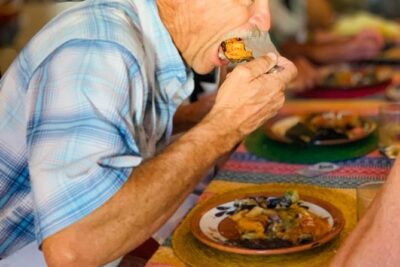
Cabo San Lucas Mexican Cooking Class Experience and Local Markets
Read our review →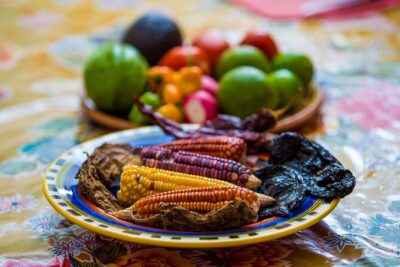
Mexican Cooking from Scratch in a Local Home in Tulum
Read our review →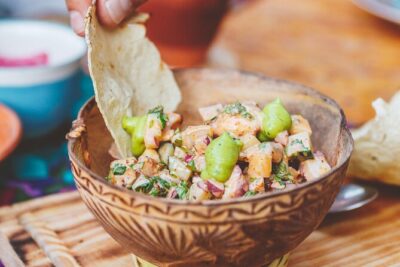
Mexican Cooking Class with Food Market Visit in Mexico City
Read our review →
Essence of Mexico: Authentic Mexican Cooking Class & Market Tour
Read our review →
Mexican Cooking Class with fresh Local Market ingredients selection and transpor
Read our review →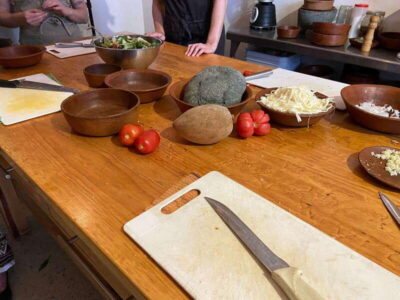
Oaxaca: Oaxacan Mole Workshop with a Traditional Cook
Read our review →Browse the lists this tour appears in