Review · GREEK
Paros: Greek Cooking Class with Meal and Wine
Paros has plenty of good places to eat, but this class takes you past the dining table and into the cooking itself. At Parea Cuisine, Iro and George guide you through Greek staples, from tzatziki and keftedakia to moussaka, stuffed vegetables, fresh fish, and dessert, with plenty of local food knowledge along the way. The meal is served with homemade wine from the family farm.
I like the farm-to-table focus, since the class makes a clear connection between Paros farmers, island produce, olive oil, cheese, and the food on your plate. I also like the warm, small-scale setting, where you can ask questions, practice techniques, and hear about the Mediterranean diet rather than simply watch a chef work.
The main consideration is the price, $160 per person, and the four-hour commitment. This is not a quick demonstration. It suits adults who care about food, conversation, and local traditions, and it is not designed for children under 14 or wheelchair users.
Key points to know before you book
- Taste Paros before cooking: Begin with local cheeses, olives, olive oil, and souma, a traditional island spirit.
- Cook a full Greek meal: Prepare appetizers, a main course, and dessert, then sit down to eat what you made.
- Learn with Iro and George: The hosts have taught at a public culinary school for chefs and run Parea Cuisine Paros.
- Expect generous portions: Plan to arrive hungry. The finished meal is substantial, with several courses and wine.
- Use local, seasonal ingredients: Your menu may include stuffed vegetables, moussaka, pasticcio, or the fresh fish of the day.
- Plan ahead: Classes require an appointment, a minimum of two participants, and allergy information at least 24 hours before the class.
A four-hour taste of Paros at Parea Cuisine
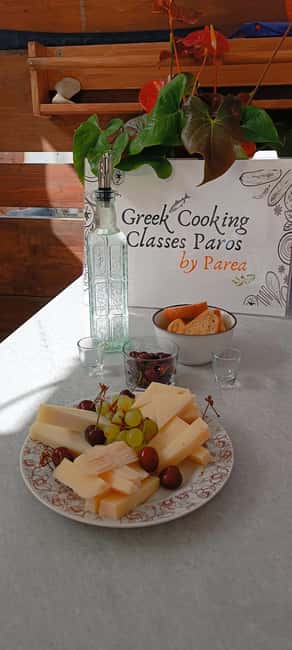
The class meets at Parea Cuisine, the traditional restaurant connected with your hosts, Iro and George. The experience also has the feel of a family kitchen, which matters here. Greek food is not just a set of recipes. It is tied to farms, seasons, shared meals, and the careful use of simple ingredients.
Iro and George have experience teaching at a public culinary school for chefs, so you can expect more than a friendly meal-preparation session. They explain the reasons behind techniques and ingredients, including ideas connected with nutrition, farming, and the Mediterranean diet.
The tone is practical rather than formal. You will help prepare the food, ask questions, and work through several dishes. Some classes are small, making it easier to follow along and get involved. Larger groups can be arranged by request, but a bigger class may feel less personal than the usual format.
The four-hour length gives the meal room to unfold. You are not rushing from one recipe to another, and there is time for the food to cook, for conversation to develop, and for the hosts to explain how Paros food fits into daily life.
More Cooking Classes with Lunch in Greece
- Chania Cooking Class-The Authentic Enjoy traditional Cretan meal
★ 5.0 · 339 reviews - Santorini: Cooking Class with Lunch and Wine Tasting
★ 4.8 · 289 reviews - Greek Cooking Class with a Local Chef, Wine, & Meal in Drios
★ 4.9 · 246 reviews
Start with olive oil, cheese, olives, and souma
The opening tasting sets the tone. You begin with Greek olive oil, local olives, and a cheese platter featuring characteristic cheeses made by farmers on the island. You also taste souma from a local distillery.
This is a useful first lesson because olive oil and cheese can seem like background ingredients when you see them on a restaurant table. Here, you get to focus on them. The tasting gives you a better sense of the flavors that shape many Greek meals, while the local products connect your food to Paros itself.
The cheese selection may include more than one style, and the exact offering can change with local availability. That seasonal element is part of the appeal, though it also means you should not expect a fixed menu down to every last ingredient.
Some sessions begin with homemade cheese and bread, and the food starts arriving early. If you eat a large breakfast, you may regret it later. The portions are generous, and the tasting is only the beginning.
Greek appetizers that you can make at home
The first cooking work includes familiar Greek appetizers. You may prepare tzatziki, keftedakia, and a traditional Greek salad, with other small dishes depending on the class.
Tzatziki is a good starting point because it looks simple but depends on balance. You learn how the yogurt, cucumber, garlic, and herbs come together, rather than treating it as a dip bought from a supermarket. Keftedakia, or Greek meatballs, bring another set of skills, including mixing, shaping, and seasoning.
The Greek salad is equally useful. It shows how good ingredients can carry a dish without a long cooking process. Fresh vegetables, local olive oil, and well-chosen cheese matter more than complicated preparation.
You may also work on zucchini balls or other seasonal appetizers. Knife skills and basic kitchen habits are worked into the session, so you leave with methods you can use beyond Greek cooking.
I like this part of the class because it gives you recipes that are realistic for a home kitchen. You do not need special equipment or a professional kitchen to repeat them. The lesson is less about copying a restaurant plate and more about understanding how the pieces work.
Choose a main course shaped by the season
The central dish depends on availability and the group’s choice. Options include fresh seasonal vegetables stuffed with a traditional filling, moussaka, pasticcio, or the fresh fish of the day.
Stuffed tomatoes, peppers, zucchini, and aubergine show how Greek cooking makes vegetables the center of a meal. The vegetables are not treated as a side dish. They carry the dish, with rice, herbs, cheese, or other filling bringing texture and flavor.
Moussaka is a more involved choice. It gives you a chance to see how layers of aubergine, meat, and sauce become a finished dish. Pasticcio offers a similar lesson in building a baked meal with pasta and a creamy topping.
If fresh fish is available, the menu may follow the catch of the day. That makes the meal feel tied to the island and the season, but it also means you should accept some flexibility. This is not the right class for someone who needs a guaranteed, unchanging menu.
The food is prepared with fresh local ingredients, including produce connected with the family farm and Paros farming community. That connection is one of the strongest reasons to book. You are not simply learning generic Greek food in a tourist setting. You are seeing how island ingredients move from farm and kitchen to plate.
More Cooking Classes with Wine Tasting in Greece
- Athens: Classic Cooking Class with Market Visit and Wine
★ 5.0 · 1,101 reviews - Athens: Food Market Visit and Cooking Class with Wine
★ 4.9 · 1,087 reviews - Greek Cuisine Cooking Class in Santorini with Recipes and Wine
★ 5.0 · 969 reviews - Mykonos: Cooking Class with Food and Wine
★ 4.9 · 282 reviews
Dessert and homemade wine finish the meal
The class ends with dessert, usually Greek halva or baklava. Both offer a sweet finish with a clear link to Greek home cooking.
Baklava teaches the pleasure and patience of thin pastry, nuts, and syrup. Halva gives you another traditional option with a different texture and flavor. The exact dessert may vary, so think of this as a choice within the class rather than a guaranteed two-dessert spread.
Homemade local wine is served throughout the meal. The wine comes from the family farm, adding another personal link to the food. It is not a separate tasting event with a long list of labels. Instead, it is the house drink that accompanies the cooking and the final meal.
You should pace yourself. Four hours of tasting, cooking, and wine can be a lot, especially in warm weather. The class is designed around sitting down to eat together, so it feels more like a long Greek lunch than a short practical lesson.
The people make the class feel personal
Iro is the main host described in the experience, and George also helps lead the class. Their teaching style is warm and conversational, with food, farming, nutrition, and Greek culture woven into the cooking.
That personal approach is important. You are not being handed a printed recipe and sent to a workstation. You are welcomed into a family setting and encouraged to take part. The result can feel closer to cooking with local friends than attending a polished hotel activity.
Iro also makes an effort to support Paros farmers and local producers. This gives the class a purpose beyond the meal itself. You learn why local ingredients matter, how food connects with community life, and why the island’s cooking is shaped by what grows and is made nearby.
The hosts are also attentive when someone in the group feels unwell or needs extra help. That is useful in a four-hour class, where different people may have different energy levels and cooking experience.
The setting can be especially meaningful if you have Greek family roots. Even if you already know some Greek dishes, you may still learn new preparation methods, stories, or ideas about the food.
What the $160 price includes
At $160 per person, this is a premium food activity. The price includes the cooking class, olive oil tasting, cheese platter, olives, souma, appetizers, the main meal, dessert, and homemade local wine.
That is a lot of food and drink over four hours. You are paying not only for ingredients, but also for instruction, the hosts’ time, the meal, and access to a personal side of Paros that you will not get from a standard restaurant visit.
The value is strongest if you want an activity that combines lunch and a cultural lesson. If you only want to eat Greek food, you can spend less at a restaurant. If you want to learn several dishes, understand local ingredients, and share the cooking process with Iro and George, the price is easier to justify.
Come hungry, but not so hungry that you rush the opening tasting. Bring a container only if you already know you will have a way to carry food safely, since the portions can be too generous for some people to finish.
Transportation to Parea Cuisine is not included. You need to arrange your own way to the meeting point, so check the location before booking and allow enough time to arrive without stress.
Who will enjoy this Paros cooking class
This experience is a strong fit for adults who plan their holidays around food. It also suits couples, friends, families with older teenagers, and anyone who enjoys a long social meal.
You do not need to be an experienced cook. The class is hands-on, but the purpose is to teach and share rather than test your technique. You should be willing to chop, mix, shape, taste, and take part in the group meal.
It is especially well suited to you if you want:
- A personal connection with Paros food and farming
- Recipes you can repeat at home
- A full meal rather than a short demonstration
- Local wine and traditional Greek products
- A relaxed activity with conversation and cultural context
It may not suit you if you need a fast schedule, a fixed menu, or an accessible wheelchair-friendly venue. Children under 14 cannot take part, and the class needs at least two participants.
Inform the hosts about allergies at least 24 hours before the class. Since the menu may include dairy, meat, fish, nuts, wheat, and alcohol, early notice matters.
Booking details that matter
Classes are by appointment only, with at least 24 hours’ notice. Starting times depend on availability, so check the schedule before arranging the rest of your day.
You can cancel up to 24 hours in advance for a full refund. The reserve-now, pay-later option also helps if your Paros plans are still shifting.
The class is offered in English and Greek. If you are arranging a larger group, ask in advance, since group sizes beyond the regular format need special planning.
Should you book the Parea Cuisine class?
I would choose this class if you want one Paros activity that combines food, local products, practical cooking, and time with a welcoming family. The strongest parts are the farm connection, the generous meal, and the chance to learn several dishes instead of watching one recipe from a distance.
Book it when you can give the experience a full four hours and arrive hungry. Skip it if you are looking for a cheap lunch, a quick activity, or a highly structured class with a guaranteed menu.
For food-focused visitors, couples, and curious older teenagers, this is one of the more useful ways to spend part of a day on Paros. You leave with a full stomach, new recipes, and a clearer sense of how island food reaches the table.
FAQ
Where does the cooking class take place?
The class meets at Parea Cuisine in Paros.
How long does the Greek cooking class last?
The experience lasts four hours.
What food will I prepare?
You will prepare Greek appetizers such as tzatziki, keftedakia, and Greek salad. The main dish may be stuffed seasonal vegetables, moussaka, pasticcio, or fresh fish of the day. Dessert is either Greek halva or baklava.
Are drinks and tastings included?
Yes. The experience includes olive oil tasting, local olives, a cheese platter, souma, and homemade local wine served with the meal.
Is transportation included?
No. Transportation to the meeting point at Parea Cuisine is not included.
Can children or wheelchair users join?
The class is not suitable for children under 14 or wheelchair users. A minimum of two participants is required, and allergies should be reported at least 24 hours in advance.
More Hands-On Workshops in Greece
- Naxos: Half-Day Cooking Class at Basiliko Family Tavern
★ 5.0 · 887 reviews - Chania: Authentic Cooking Class in the White Mountains
★ 4.9 · 529 reviews - Naxos:Half-day cooking class at Basiliko
★ 5.0 · 457 reviews - Naxos Perivoli Farm Experience & Wood-fire Cooking Class
★ 5.0 · 339 reviews
More Greek Cooking Classes in Greece
- Greek Cooking Class in Athens Including Rooftop Dinner with Acropolis View
★ 5.0 · 826 reviews - Greek Small-Group Athens Cooking Class & Dinner
★ 5.0 · 574 reviews - Athens: Greek Cooking Class & Dinner on a Rooftop
★ 5.0 · 383 reviews - Athens: Greek Cuisine Cooking Class and 3-Course Dinner
★ 4.8 · 270 reviews
Just added around Greece
- Paros: Cooking Class with 6-Course Menu and Drinks★ 5.0 · 4 reviews
- Paros: Greek Cooking Class with Full Meal★ 4.9 · 96 reviews
- Naxos: Food Walking Tour & Cooking Class with Meal & Drinks★ 4.9 · 86 reviews
- Naxos Town: Olive Oil Tasting & Baking in the Heart of Town★ 5.0 · 69 reviews
- Naxos: Family Farm-table Cooking, Kouros Tour & Live Music★ 5.0 · 26 reviews
- Mykonos: Traditional Cooking Class with the Locals★ 5.0 · 11 reviews
- Mykonos: Hands-On Cooking Class with a Professional Chef★ 4.9 · 14 reviews
- Moires: Cooking Class and Olive Oil Tasting at a Family Farm★ 5.0 · 93 reviews
Greek Cooking Classes, compared.
Greek Cuisine Cooking Class in Santorini with Recipes and Wine
Read our review →
Greek Cooking Class in Athens Including Rooftop Dinner with Acropolis View
Read our review →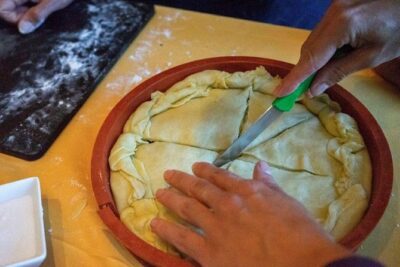
Greek Small-Group Athens Cooking Class & Dinner
Read our review →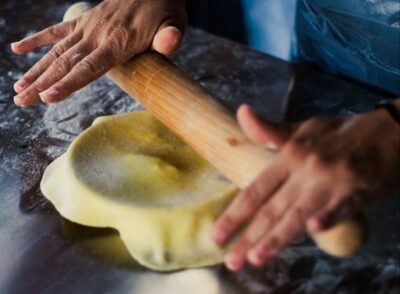
Athens: Greek Cooking Class & Dinner on a Rooftop
Read our review →
Athens: Greek Cuisine Cooking Class and 3-Course Dinner
Read our review →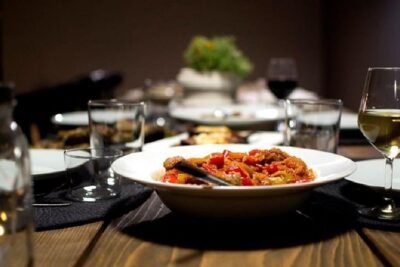
Traditional Greek cooking class and lunch or dinner with an Acropolis view
Read our review →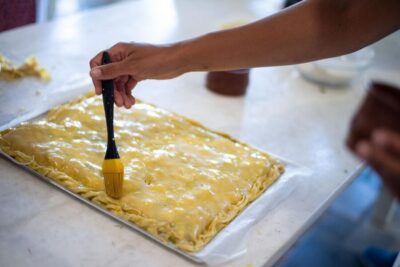
Greek Cooking Class with a Local Chef, Wine, & Meal in Drios
Read our review →