
Review · ROME
Rome Cooking Class: Make Pasta and 3 Spritz Cocktails
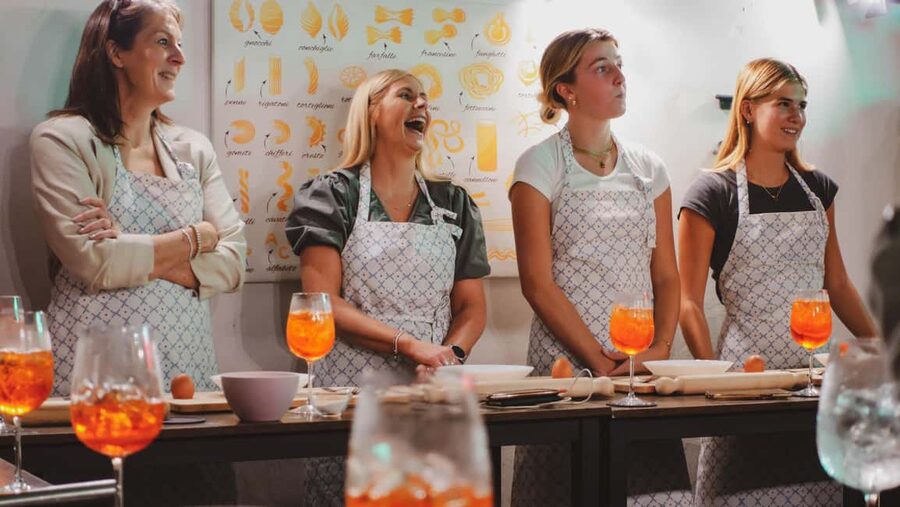
The best part of this Rome class is the pairing: you learn to make fresh pasta while an Aperol, Hugo, or limoncello spritz keeps the lesson loose and social. Hosts such as Sunny, Angela, Gio, Shivi, and Giovanna have earned praise for clear instruction, warm humor, and getting first-time pasta makers involved.
I like the small group, capped at 14, and the fact that you eat what you make with two Roman sauces to choose from. I also like the practical finish: you take home the recipes, so the class can live on after your holiday. The main catch is the menu. It contains gluten and dairy, with no vegan, gluten-free, or dairy-free option.
Key points at a glance
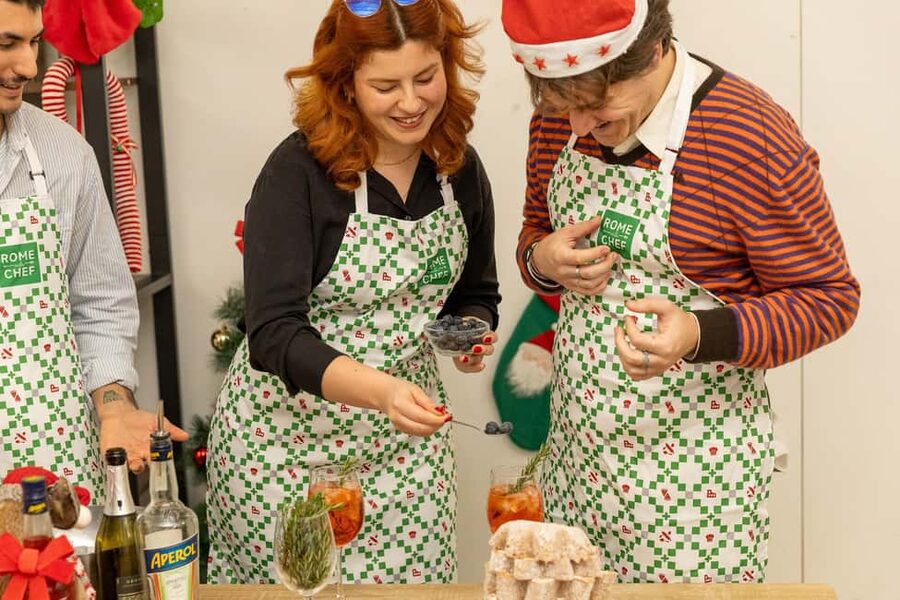
- Three spritzes in one class: Make Aperol, Hugo, and limoncello spritzes with a mixologist.
- Two Roman pasta sauces: Finish your handmade pasta with carbonara or cacio e pepe.
- Small-group setting: The class holds no more than 14 people, with private groups also available.
- A social break near the Colosseum: Cook, eat, and meet people without giving up half a day.
- Recipes to take home: The class focuses on skills you can repeat in your own kitchen.
- Important food restriction: Gluten and dairy are part of the menu, and major substitutions are not available.
What this Rome cooking class is really about
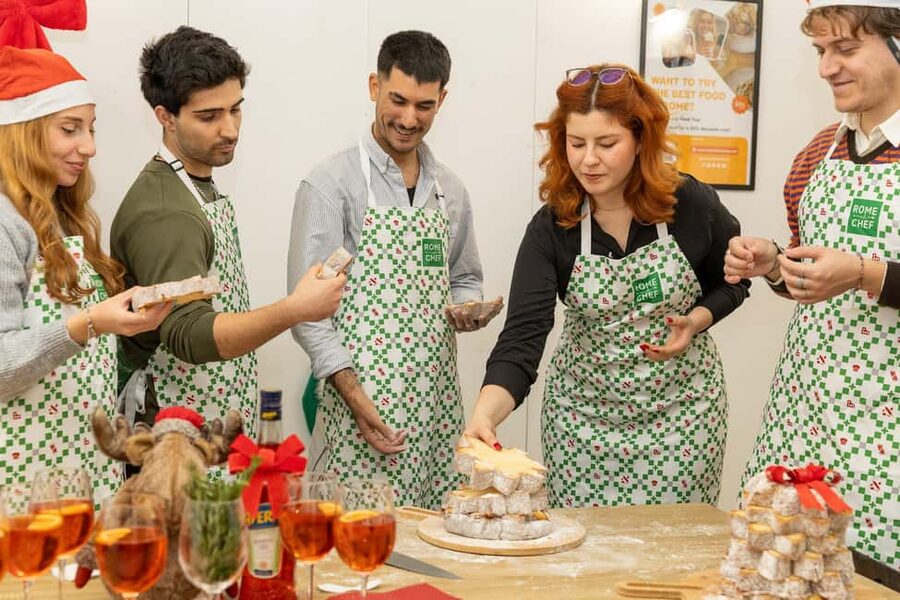
This is not a quiet demonstration where you sit back and watch a chef do everything. You work with the ingredients, prepare pasta by hand, and help create the meal you later eat. The drinks are part of the lesson too, so the class feels more like a friendly evening activity than a formal culinary course.
The setting is close to the Colosseum, which makes it easy to fit into a day of sightseeing. You can spend the afternoon among ancient ruins, then swap stone and marble for flour, eggs, sparkling water, and a plate of pasta. That change of pace is one of the class’s strongest points.
The experience is taught in English. The usual format lasts three hours, though one recent session was described as lasting about two hours. I would plan for the full three hours, especially if you have evening plans afterward.
More Pasta Making Classes in Rome
- 3 in 1 Cooking Class near Navona: Fettuccine, Ravioli & Tiramisu
★ 5.0 · 7,376 reviews - Rome: Pasta Making Class with Wine, Limoncello, and Dessert
★ 4.9 · 3,177 reviews - Rome: 3-in-1 Fettuccine, Ravioli, and Tiramisu Cooking Class
★ 4.9 · 2,704 reviews
Making the three Italian spritzes
The drinks come first or run alongside the cooking, depending on the class flow. You learn three versions of a classic Italian aperitivo:
- Aperol spritz
- Hugo spritz
- Limoncello spritz
Aperol is the familiar orange-colored choice, with a bitter-sweet taste. Hugo is lighter and more floral, while limoncello brings a clear lemon note. Having all three gives you a useful comparison rather than just one standard drink.
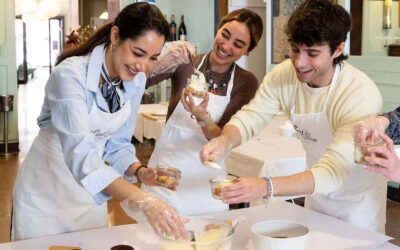
The mixologist guide explains how the drinks are put together, and you get one of each as part of the class. This is a good fit if you enjoy learning through tasting. It also means you should pace yourself. Three cocktails over a cooking session can catch up with you, especially when you are standing, mixing, kneading, and eating.
Unlimited water and soft drinks are included, which is a sensible detail. Use them. The class is called Tipsy Cooking for a reason, but the goal is still to make pasta well enough to eat.
Kneading, cutting, and boiling your own pasta
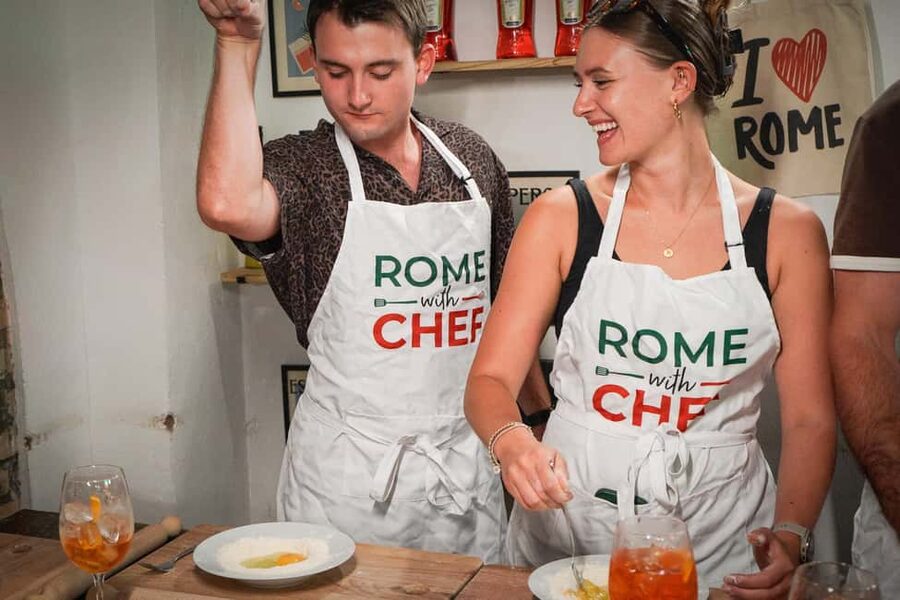
The pasta section is the heart of the class. You follow a chef’s demonstration, then get hands-on with the dough. You knead it, shape or cut it, and cook it before sitting down to eat.
That process is more useful than simply watching a professional prepare pasta. You learn how the dough feels and how much work goes into turning a few fresh ingredients into dinner. Several people who had never made pasta before found the process easier than expected, which is encouraging if you are a beginner.
The instruction is practical rather than academic. You may not leave with a full pasta-school education, but you should leave with a workable method and recipes you can try at home. Visual demonstrations are especially helpful here. You can watch the texture and technique instead of trying to follow a long written explanation while your hands are covered in flour.
The fresh ingredients also matter. This is not a lesson built around packaged food dressed up at the end. You make the pasta, cook it, and eat it as part of the same experience.
Carbonara or cacio e pepe for the final plate
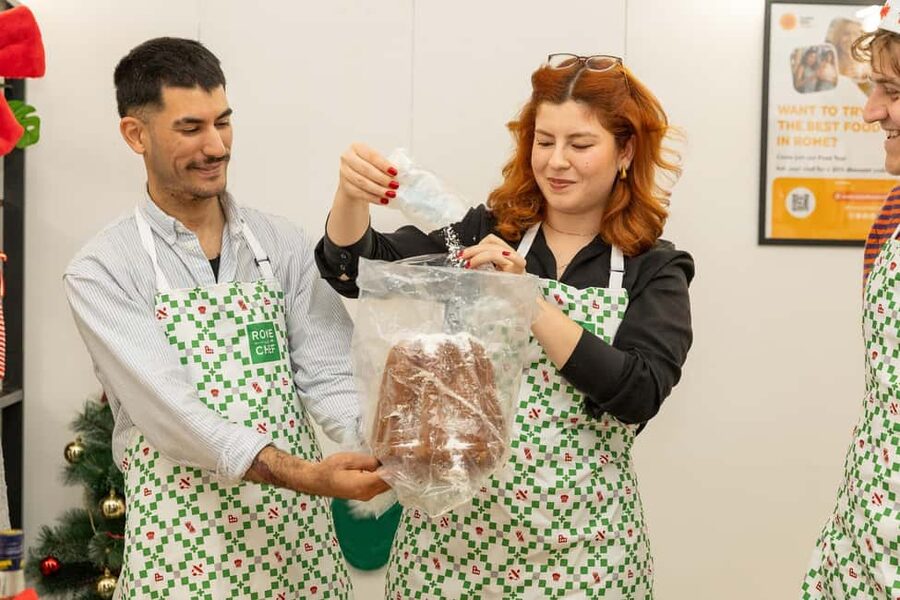
Once the pasta is ready, you choose between two famous Roman sauces: carbonara or cacio e pepe. Both are simple recipes, but simplicity makes technique important.
Carbonara is the fuller, creamier-tasting option, though traditional carbonara does not use cream. Cacio e pepe is more spare, built around cheese and pepper. Choosing between them gives you a small taste of two different Roman approaches to pasta.
The class can provide vegetarian options, but the main menu still includes dairy and gluten. If you have coeliac disease, gluten intolerance, lactose intolerance, or follow a vegan diet, this is not the right class for you. Other allergies or restrictions should be raised in advance, though the provider does not promise every request can be met.
I like that you get to eat two different pasta preparations in some sessions. The amount of food can be generous, so do not treat this as a quick snack before dinner. It is the meal.
Same place, a different menu:
- Rome: Fettuccine Pasta Cooking Class in Rome’s City Center
★ 4.8 · 2,414 reviews - Fettuccine & Tiramisù: Cooking Class with Wine & Limoncello
★ 4.9 · 2,103 reviews - Pasta Cooking Class Near the Colosseum with 3 Spritz Cocktails
★ 5.0 · 1,686 reviews - Enjoy Spritz and Pasta Making in Piazza Navona
★ 5.0 · 1,681 reviews
The value of a 14-person class
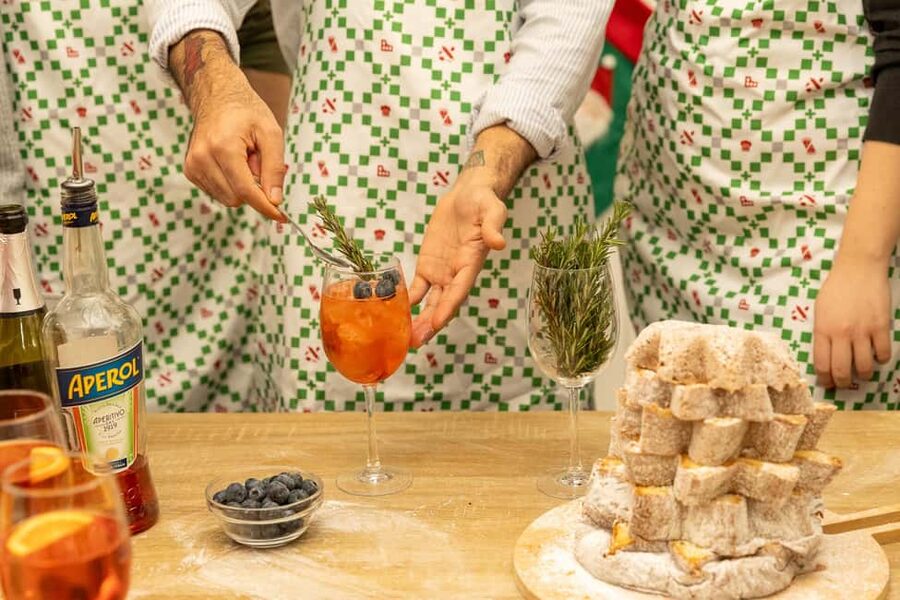
A maximum of 14 people is small enough to keep the class active without making it feel like a private lesson. You can ask questions, work alongside other participants, and meet people from different countries. Couples fit well here, but you do not need to arrive as part of a large group.
The social side is a major part of the appeal. The cooking gives everyone an easy subject to talk about, and the shared meal creates a natural finish. If you are visiting Rome with a partner, this is a relaxed date-night option. If you are traveling alone, it gives you a way to meet people without joining a sightseeing group.
Hosts make a real difference. Sunny is repeatedly praised for being welcoming, energetic, and clear. Angela is noted for her pasta instruction and friendly style. Gio, Shivi, Giovanna, Kelly, and other members of the team have also been singled out for keeping people involved. Your guide will depend on the scheduled session, but expect a lively host rather than a silent kitchen instructor.
A private group is available if you want the room to yourself, though the shared class is likely the better value for most couples and solo visitors.
Why the $99 price can make sense
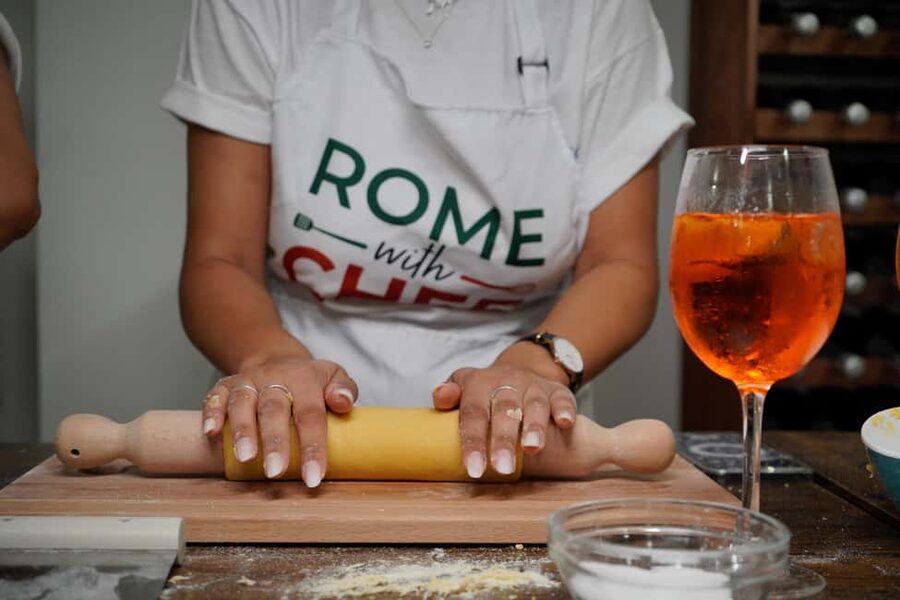
At $99 per person, this is not the cheapest meal in Rome. You are paying for more than pasta. The price includes a three-hour activity, instruction from a chef and mixologist, three spritzes, fresh ingredients, the food you prepare, water and soft drinks, and recipes to take home.
Compare it with paying separately for a pasta meal, three cocktails, and a cooking lesson. The value improves if you would otherwise book both a food tour and an evening drink. You also get an activity that creates a memory and a skill, rather than only another restaurant meal.
The price makes less sense if you do not drink, cannot eat the menu, or want a serious professional cooking course. It is designed as a fun, social food experience. You should choose it for the combination of cooking and cocktails, not just for the lowest-cost way to eat pasta.
Timing your visit near the Colosseum
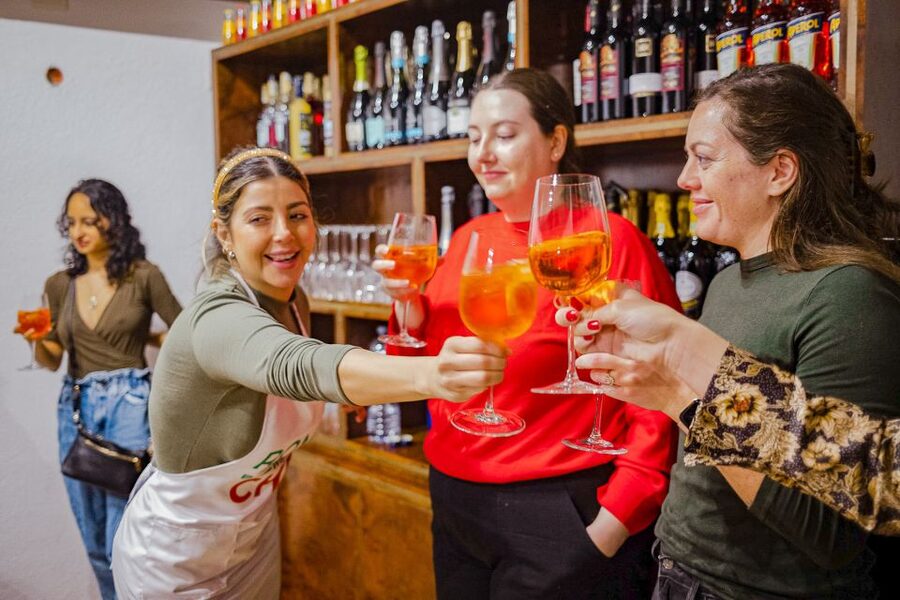
The meeting point is at Via Cesare Balbo 19, around the corner from the Hotel 77 entrance. Look for the Rome with Chef sign and arrive 10 minutes early.
The location may shift slightly, but any alternate meeting point is within about a five-minute walk and advance notice is provided. This matters in central Rome, where a short street change can still cause confusion if you are rushing from another attraction.
Late arrival is a serious issue. You cannot join after the class has begun, and there is no refund for missing it. I would not schedule this immediately after a timed Colosseum visit or a distant museum booking. Give yourself a comfortable buffer, then enjoy the class without checking your phone every few minutes.
Because it is near the Colosseum, the activity fits well on a sightseeing day. Still, you will be handling food and drinks, so it is best placed when you are ready to slow down rather than squeeze in one more monument.
Who will enjoy this class most
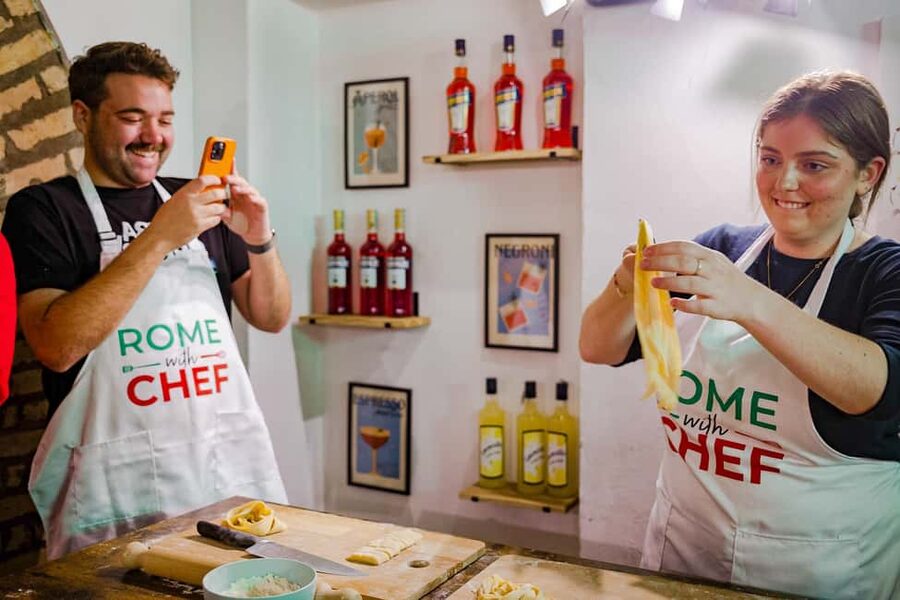
I would recommend this experience to:
- Couples looking for a shared evening activity
- Solo visitors who enjoy meeting people through food
- First-time pasta makers
- Travelers who want an interactive break from museums and ruins
- Food and cocktail fans who like learning by doing
- Small groups celebrating a holiday or special occasion
It is also suitable for people who want a light introduction to Roman food rather than a formal cooking qualification. The instructions are designed to get everyone involved, including complete beginners.
I would not choose it for a strict dietary program. The class cannot accommodate vegan, gluten-free, coeliac, gluten-intolerant, or lactose-intolerant diets. Infants are not a good fit either, since a child under two would need to stay on an adult’s lap and would not have a separate seat or work area.
Small details that improve the experience
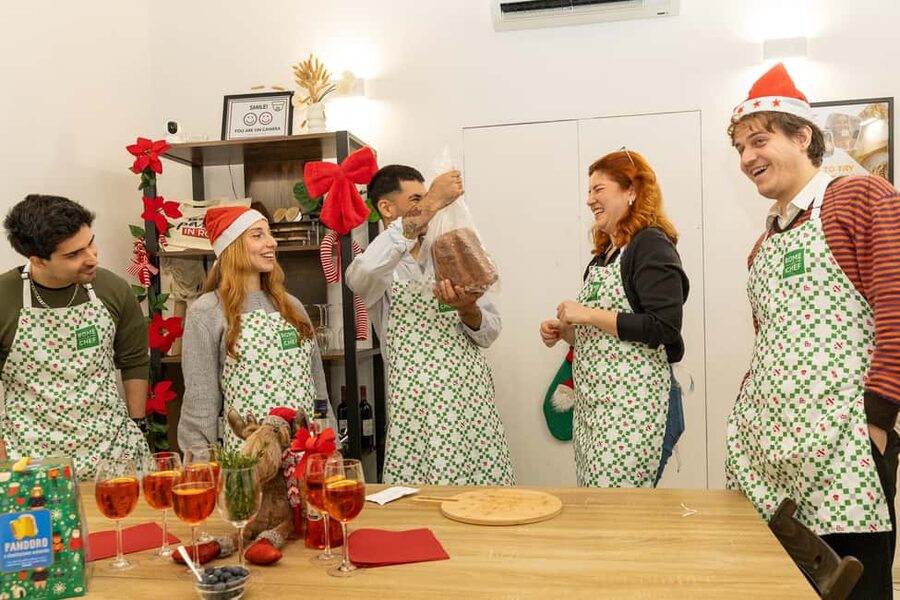
Arrive having eaten lightly, but not after a large meal. You will receive three drinks and a substantial amount of food, and the session is built around eating your own creations.
Wear something comfortable. You will be working at a kitchen station, and the class includes kneading, cutting, and cooking. The supplied information does not specify a dress code or special equipment, so you do not need to prepare for a formal kitchen exam.
Keep your recipes somewhere easy to find when you return home. The best value comes when you actually repeat the pasta and sauces in your own kitchen. Cacio e pepe in particular is a useful dish to practice because it depends on getting a few simple steps right.
Finally, treat the host as part of the experience. The class works best when you ask questions, take part, and accept the social side. It is less rewarding if you want to sit quietly and photograph every step.
Should you book the Rome pasta and spritz class?
I would book it if you want a lively, hands-on evening near the Colosseum and like the idea of mixing cocktails with a simple Italian meal. The small group, three drinks, fresh pasta, two sauce choices, and take-home recipes give the $99 price a fair case.
Skip it if you need a vegan or allergy-safe menu, dislike group activities, or want a long, serious study of Italian cooking. For everyone else, this is a smart way to replace one ordinary restaurant meal with something you help create. Reserve with the full three-hour window in mind, arrive early, and pace the spritzes.
FAQ
How long does the Rome cooking class last?
The advertised duration is three hours. One session was described as lasting about two hours, so keep your schedule flexible and allow the full three hours.
Where does the class meet?
The meeting point is Via Cesare Balbo 19, around the corner from the Hotel 77 entrance. Look for the Rome with Chef sign. The location can change slightly, but any alternate meeting point is within a five-minute walk and advance notice is provided.
How many people attend the class?
The shared class has no more than 14 participants. A private group option is also available.
Which spritzes are included?
You make and drink one Aperol spritz, one Hugo spritz, and one limoncello spritz. Water and soft drinks are also available without limit.
Which pasta sauces can I choose?
You can choose between carbonara and cacio e pepe. You make the pasta yourself, then eat it with the sauce you select.
Can the class accommodate vegetarian diets?
Vegetarian options are available. The class cannot accommodate vegan, gluten-free, coeliac, gluten-intolerant, or lactose-intolerant diets.
What happens if I arrive late?
You must arrive 10 minutes early. Late arrivals cannot join the class and do not receive a refund.
More Hands-On Workshops in Rome
- Rome: Pasta & Tiramisu Cooking Class near the Spanish Steps
★ 4.8 · 1,395 reviews - Rome Tipsy Cooking Class: Make Pasta and Mix 3 Spritz Cocktails
★ 5.0 · 1,357 reviews - Cooking Class in the Heart of Rome: Pizza and Tiramisu Making
★ 5.0 · 1,330 reviews - Rome Cooking Class: Make Pasta, Dine & Drink Wine With Local Chef
★ 5.0 · 1,263 reviews
Just added around Rome
- Testaccio: Home Cooking Cacio e Pepe, Amatriciana, Carbonara★ 4.9 · 57 reviews
- Super Fun Pasta and Gelato Cooking Class by the Vatican★ 5.0 · 6 reviews
- Spritz and Spaghetti Traditional Cooking Class in Rome★ 4.9 · 30 reviews
- Rome: Vatican Food Tours, Cooking classes & Free Tours★ 4.9 · 11 reviews
- ROME:Hands-On Lasagna & Marsala Tiramisu Cooking Experience”★ 5.0 · 3 reviews
- Rome: Trastevere Pasta Making Class★ 4.9 · 33 reviews
- Rome: Traditional Pasta and Tiramisu Cooking Class★ 5.0 · 4 reviews
- Rome: Small Group Pasta cooking class near Piazza Navona★ 4.9 · 8 reviews
Pasta Making Classes, compared.
Florence: Pasta Cooking Class with Unlimited Wine
Read our review →
3 in 1 Cooking Class near Navona: Fettuccine, Ravioli & Tiramisu
Read our review →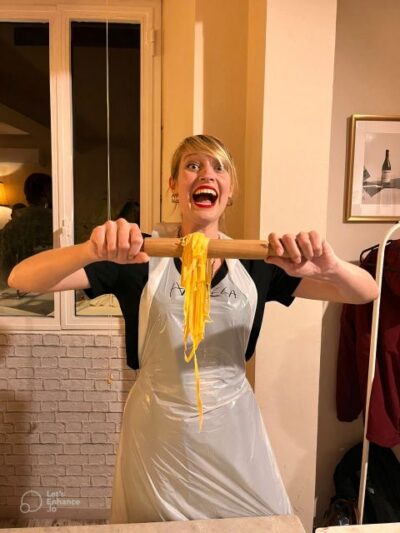
Rome: Pasta Making Class with Wine, Limoncello, and Dessert
Read our review →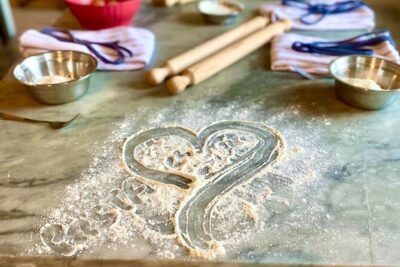
Rome: 3-in-1 Fettuccine, Ravioli, and Tiramisu Cooking Class
Read our review →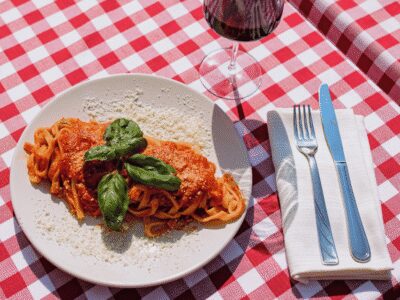
Rome: Fettuccine Pasta Cooking Class in Rome’s City Center
Read our review →
Florence: Cooking Class Pasta & Tiramisu Making Unlimited Wine
Read our review →Browse the lists this tour appears in