
Review · NEW DELHI
14 Days Golden Triangle with Wildlife Safari & Heritage Rajasthan
The best part of this 14-day journey is its range. You get Delhi’s Sikh temples and Mughal monuments, the Taj Mahal, Jaipur’s royal buildings, four safari outings, and Rajasthan’s blue, lake, desert-edge, and village towns in one private trip. It is a big route, but the private car and driver keep it practical.
I like the door-to-door transport and the freedom of a private group. I also like the mix of famous sights and less polished stops, from Chand Baori and Bishnoi village to the markets around Clock Tower. The main drawback is the pace: several driving days last four to eight hours, so this suits you if you want broad coverage more than long, lazy stays.
Key points at a glance
- Four wildlife outings: Two safaris at Ranthambore and one Jhalana safari are included, with Ranthambore visits morning and evening on Day 5.
- Sunrise at the Taj Mahal: You return to the monument early for a guided visit of about two hours.
- Private transport for one to ten people: Small groups use a sedan or wagon, while larger groups travel by minivan.
- Rajasthan beyond Jaipur: The route continues to Udaipur, Jodhpur, Pushkar, and Mandawa.
- Hotel choice affects the price: Accommodation and daily breakfast are included only when you book the hotel option.
- A strong first visit to India: The schedule covers major landmarks while leaving some room for changes within a private tour.
A wide view of India in 14 days
At $835.72 per person, this tour offers a lot of ground for the money, but you need to check which booking option you select. The listed inclusions cover 13 nights, breakfast, private transport, local guides, and several safari costs only when the hotel option is included. Monument tickets, personal expenses, tips, insurance, flights, trains, and meals other than the stated breakfasts are extra.
That makes the value strongest for someone who wants one arranged trip rather than piecing together hotels, drivers, transfers, and local guides. You are paying for convenience and coverage. You are not buying an all-inclusive holiday.
The private format matters. A four-seater sedan is used for one or two people, a six-seater wagon for three or four, and a 10-seater minivan for five to ten. Only your group participates, so you can ask to adjust the order of stops or skip an attraction. One note in the tour details says Mr. Gopal from the booking company called to help coordinate a booking, which may be useful if you want to clarify hotel or timing choices before departure.
A few more cooking classes around New Delhi worth a look
- Full-Day Jeep Safari Tour with Cooking Lesson
★ 5.0 · 284 reviews - Jodhpur Desert Camel Safari With Cooking Class With Sumer
★ 5.0 · 5 reviews
Delhi begins with temples, tombs, and crowded lanes
Your arrival transfer starts at Indira Gandhi International Airport, Terminal 3. The first day is gentle by Indian standards, with a hotel transfer followed by Gurdwara Bangla Sahib and Agrasen Ki Baoli, or free time if you arrive tired.
Gurdwara Bangla Sahib is a Sikh temple with a calm pool and a strong connection to the eighth Sikh Guru, who is associated with caring for people during smallpox and cholera outbreaks. You get about 30 minutes here, enough for a first look, though not enough for a long visit.
Agrasen Ki Baoli is a very different stop. This protected stepwell drops into the ground through long flights of stone steps. The visit is brief, about 15 minutes, but it gives you a striking piece of old Delhi architecture without requiring a full museum visit.
Day 2 brings the major Delhi sights. Qutub Minar is a 73-meter, five-story tower built in the early Delhi Sultanate period. The complex is worth more than a quick photograph, so the scheduled hour is useful. Admission is extra.
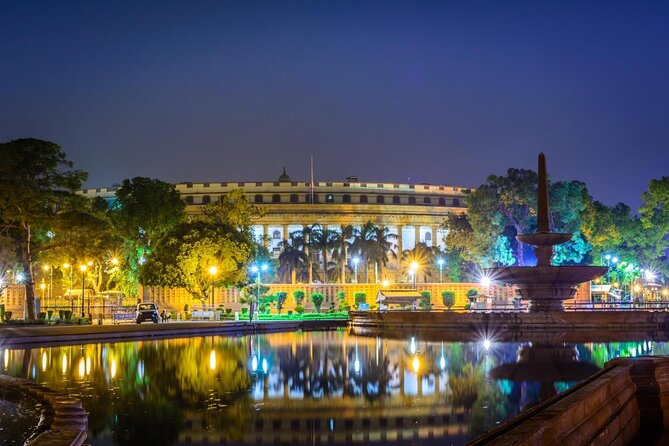
The Lotus Temple provides a change of mood and shape. Its white flower-like design is open to people of all religions, with about 30 minutes allowed. India Gate and Parliament House offer a look at the ceremonial center of modern Delhi, while Jama Masjid takes you back to the Mughal period.
The day finishes at Humayun’s Tomb and Chandni Chowk. Humayun’s Tomb is especially important because its formal garden and structure helped set the pattern for later Mughal monuments. Chandni Chowk is less tidy and more sensory, with spice shops, dried fruit, silver jewelry, saris, and narrow lanes full of small stores.
Expect traffic, heat, noise, and plenty of walking. The private car is most useful here because Delhi’s sights are spread out and the roads can make short distances feel long.
Agra puts the Taj Mahal at center stage
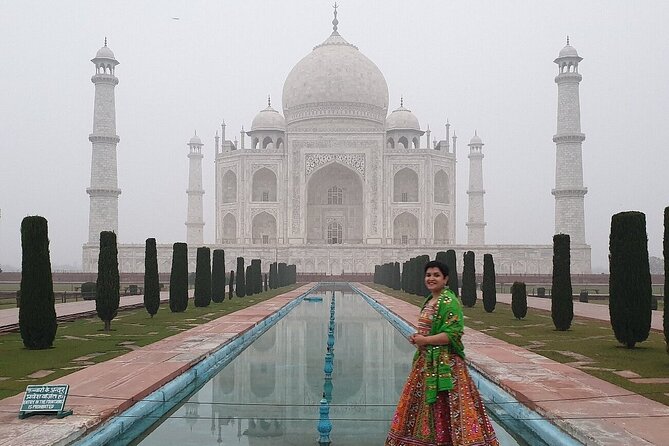
The drive from Delhi to Agra is about 222 kilometers and takes roughly four hours. After checking in, you visit the Taj Mahal, Agra Fort, Itmad-ud-Daulah, and Mehtab Bagh.
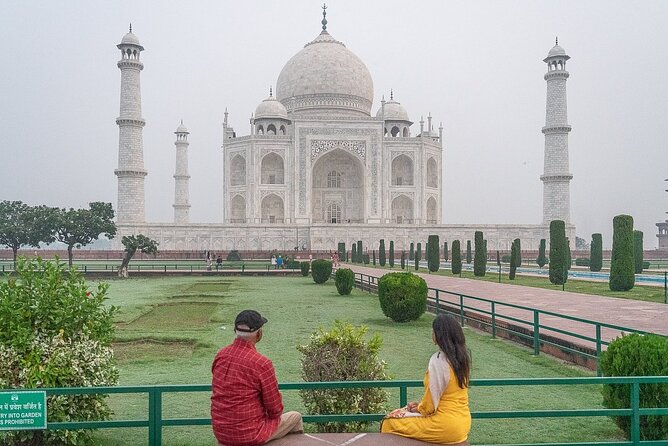
The Taj Mahal needs no sales pitch, but timing matters. You see it first during the main visit and then return before sunrise the following morning. That second visit is a smart feature, since the light and atmosphere change, and the early start can help you avoid the strongest daytime heat.
The monument visit lasts about two hours and includes a guided tour inside. A battery bus carries you between the parking area and the monument, which saves some effort. The entry fee is not included, so budget for it separately.
Agra Fort gives the Taj Mahal its political setting. This massive red sandstone complex was linked to rulers including Akbar and Shah Jahan, and its rooms show how Mughal power worked as both government and royal residence. It is not just a second fort after the Taj. It helps explain the people and court behind the famous tomb.
Itmad-ud-Daulah is smaller and often called the Baby Taj. Its detailed stone work rewards a slower look, while Mehtab Bagh offers a view toward the Taj across the Yamuna River. The sunset stop is short, only about 30 minutes, so your guide may need to keep the visit moving.
Fatehpur Sikri and Chand Baori lead to safari country
Day 4 starts again at the Taj Mahal, this time at sunrise. You then leave Agra for Fatehpur Sikri, Chand Baori, and Ranthambore.
Fatehpur Sikri was Emperor Akbar’s capital for about a decade. Its courtyards and red sandstone buildings make it one of the most rewarding stops on the route, but the one-hour visit is fairly brisk. Keep your hat, water, and comfortable shoes ready.
Chand Baori at Abhaneri is one of Rajasthan’s most striking stepwells. It reaches about 30 meters below ground in a precise pattern of stairs. The scheduled hour gives you time to see the geometry and take photographs without turning the stop into a rushed roadside break.
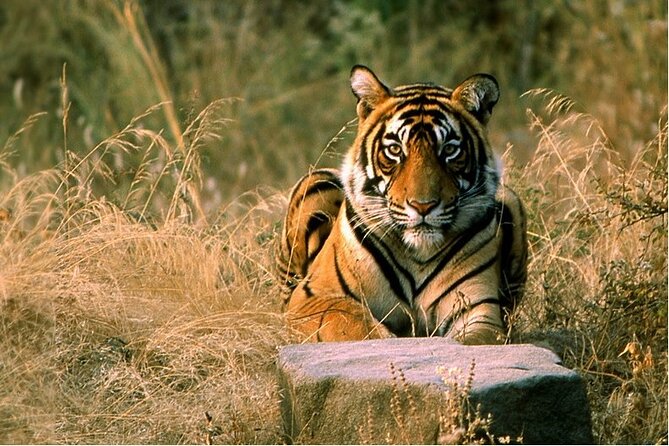
Ranthambore is the first major wildlife section. You check in after the drive and spend the night near the park. The schedule does not promise a tiger sighting, and you should not judge the safari only by that possibility. The value is the chance to see the park by open vehicle and to watch for wildlife in its natural setting.
Day 5 includes a morning safari and a second safari in the evening, each about three hours. The Ranthambore park entrance and either a canter or jeep are included. Two outings give you a better chance to see something interesting than one short drive, and the morning and evening settings feel different.
Same place, a different menu:
- Five Course Cooking Class & Meal
★ 5.0 · 250 reviews - AI Tour – Cook, Talk, Dine & more with locals at their Delhi Home
★ 5.0 · 238 reviews - Veg and Non veg : Private Cooking Class in Delhi home (7 meal)
★ 5.0 · 226 reviews - Indian Cooking Class in an Authentic Local Home – Learn 6 Dishes
★ 5.0 · 195 reviews
Jaipur combines forts, temples, and royal design
On Day 6, you leave Ranthambore for Jaipur. The route includes Galtaji Temple, also called the Monkey Temple, Birla Mandir, and a Jhalana Safari Park outing.
Galtaji has three sacred water pools and a complex setting among the hills. The name gives you a fair warning: monkeys are part of the scene. Birla Mandir is a white Hindu temple on raised ground near Moti Dungar, and its clean lines contrast with the older structures elsewhere in Jaipur.
Jhalana is a different kind of safari from Ranthambore. The tour includes a three-hour outing, with the park known for sightings. It is useful to have this included, but remember that wildlife is never guaranteed. Jaipur itself is your base that night.
Day 7 is the city’s main sightseeing day. Panna Meena Ka Kund begins the morning with another stepwell. Amber Fort follows, with about two hours for its palaces, courtyards, and decorative details. The fort sits above the city and is one of the essential Jaipur stops.
Jal Mahal is mainly a photo stop, since the palace sits in Man Sagar Lake. The City Palace gives you a longer look at royal rooms and collections, while Jantar Mantar explains Jaipur’s scientific side through monumental astronomical instruments built in 1734.
Hawa Mahal closes the day with its famous pink facade and rows of windows. The listed visit lasts 30 minutes, so expect an exterior-focused stop rather than a slow museum visit. Jaipur has a lot to offer, and this packed day favors coverage over quiet exploration.
Udaipur slows the rhythm beside Lake Pichola
The drive from Jaipur to Udaipur takes about eight hours. That is one of the longest travel days, so you should treat it as a transfer with scenery rather than a full sightseeing day. After checking in, you can visit local markets and choose a restaurant for dinner.
Day 9 is easier on the body. Lake Pichola offers a boat ride option, including views toward Jagmandir Palace island. The boat ticket is extra, but it is one of the most natural ways to understand Udaipur’s setting.
The City Palace takes about two hours and looks over the lake. Its collections include weapons, paintings, sedan chairs, tiger cages, and photographs. Jagdish Temple adds an active religious site built in the Indo-Aryan style.
Bagore Ki Haveli Museum is another useful stop, though the schedule notes that you can skip it. That flexibility is welcome after so many formal sights. Udaipur is a good place to slow down, but the route gives you only one full sightseeing day.
Jodhpur brings a blue city and a giant fort
The drive to Jodhpur takes about six hours. After arrival, you visit Clock Tower Market and local markets. The area is a practical place to see daily commerce, shops, and the older city atmosphere before the next day’s major monuments.
Mehrangarh Fort deserves the full two hours provided. It rises above the city and contains weapons, paintings, royal palanquins, and former palace rooms. The views over Jodhpur are a major part of the visit, but the fort itself is the reason to come.
Umaid Bhawan Museum shows a later royal chapter and occupies part of one of the world’s largest private residences. Jaswant Thada is a smaller marble memorial often compared with the Taj Mahal of Jodhpur. Its quiet scale works well after the huge fort.
The afternoon Bishnoi village excursion is listed as highly recommended. It gives you a chance to see a local village setting and spend time with residents rather than moving from one palace to another. The description is not specific about the exact activities, so ask your guide what is planned that day.
Pushkar and Mandawa add religious and artistic detail

Pushkar is reached on Day 12 after a roughly five-hour drive. The town is associated with Brahma Temple, one of the few temples dedicated to Brahma, and Pushkar Lake, where families pray and rituals take place at the ghats.
The visits are short, about 30 minutes each. Follow local instructions around the lake and temple, since these are active religious places rather than staged attractions. You also spend the night in Pushkar, which keeps the day from becoming only a roadside stop.
Day 13 continues to Mandawa, a drive of about five hours. The main reason to visit is its painted havelis, historic houses decorated with colorful scenes and detailed artwork. The tour allows time to explore the village area, giving the Rajasthan section a final change of pace before Delhi.
The last day is another five-hour drive back to Delhi. Airport drop-off is available, but the timing of your flight matters. You should not book a tightly timed international departure without confirming the exact return schedule, since road conditions can affect a long drive.
What the price includes, and what it does not
The $835.72 per-person price is appealing for a 14-day private route if it includes the hotel package you select. Accommodation is listed for 13 nights, with daily breakfast, private air-conditioned transport, local guides, mineral water during journeys, airport or hotel transfers, and the safari entrances.
The main extra costs are significant:
- Monument entry fees
- Meals other than the included breakfasts
- Tips for the driver and guides
- Personal expenses and laundry
- Travel insurance
- Flights and train tickets
- Optional experiences such as the Lake Pichola boat ride
Room arrangements are normally twin sharing. Three people are placed in a triple room unless they pay more for two rooms. Ask about the hotel category before booking, since the options range from 3 to 5 stars and the final comfort level depends on what you choose.
The cancellation policy is friendly: cancel at least 24 hours before the start time for a full refund. Poor weather or failure to meet the minimum group size can also lead to a new date, another experience, or a full refund.
Who should book this route
I would choose this tour for a first visit to northern India when you want the major sights handled in one plan. It suits couples, families, and small groups who value a private vehicle and the ability to make minor changes.
I would think twice if you dislike long drives or prefer two or three nights in each town. The route covers Delhi, Agra, Ranthambore, Jaipur, Udaipur, Jodhpur, Pushkar, and Mandawa, so some days feel like transfers with sightseeing attached.
The strongest features are the Taj Mahal sunrise visit, two Ranthambore safaris, the added Jhalana safari, and the move beyond the standard Golden Triangle. The weaker point is that entry fees and most meals remain outside the headline price.
FAQ
Where does the tour start?
The tour starts at Indira Gandhi International Airport in New Delhi, with pickup at Terminal 3 available on arrival.
How long is the experience?
The tour lasts approximately 14 days and includes 13 nights of accommodation when the hotel option is booked.
Is this a private tour?
Yes. Only your group participates. Vehicle size depends on the group, from a four-seater sedan for one or two people to a 10-seater minivan for five to ten people.
Are hotels and breakfast included?
They are included when you select the option with hotel accommodation. Daily breakfast is listed for all 13 nights under that option.
Are safari fees included?
Ranthambore Safari Park entrance with a canter or jeep is included. The Jhalana Safari Park entrance is also included.
Are monument entrance fees included?
No. Monument entry fees are not included, so you will pay separately at places such as Qutub Minar, Humayun’s Tomb, the Taj Mahal, Agra Fort, Jaipur’s City Palace, and Mehrangarh Fort.
Can I cancel for a full refund?
Yes, if you cancel at least 24 hours before the experience start time. Cancellations within 24 hours are not refunded, and changes within that period are not accepted.
My booking verdict
Book this if you want a broad, private introduction to Delhi, the Taj Mahal, Rajasthan, and Indian wildlife without arranging each transfer yourself. The safari pair at Ranthambore, Jhalana, the sunrise Taj visit, and the quieter towns after Jaipur make it more varied than a basic Golden Triangle trip.
Skip it if you want a slow holiday, guaranteed wildlife sightings, or a price that covers every meal and admission. For the right kind of visitor, this is a practical way to see a large part of northern India, provided you accept the long drives and check the hotel package and extra fees before paying.
More History Tours in New Delhi
- Undiscovered Charleston: Half Day Food, Wine & History Tour with Cooking Class
★ 5.0 · 948 reviews - Florence Cooking Course with Historic Local Market Visit
★ 4.5 · 151 reviews - Taipei Cooking Class & Market Adventure in Historic Dadaocheng
★ 5.0 · 77 reviews - Kanazawa: Sushi & Japanese Cooking Class at a Historic School
★ 5.0 · 66 reviews
Just added around New Delhi
- Food Tour With Cooking Class in Local Village from Delhi★ 4.5 · 18 reviews
- Indian Cooking Class With Chef (Half Day)★ 5.0 · 6 reviews
- Delhi Kabul Cooking Class★ 5.0 · 19 reviews
- Cooking Demo + Lunch/Dinner and interaction with an Indian family @ Chez Anjali★ 5.0 · 48 reviews
- Authentic Cooking Class & Taj Mahal Tour from Delhi (All-Inclusive)★ 5.0 · 9 reviews
- Authentic Indian Cooking Class with Jyoti in Delhi★ 5.0 · 15 reviews
- 2 Days Private Delhi Tour with Best Cooking Class★ 5.0 · 15 reviews
- 2-Day Agra Tour: Taj Mahal Sunrise, Agra Fort & Cooking Class★ 5.0 · 4 reviews
Historical Tours, compared.

Undiscovered Charleston: Half Day Food, Wine & History Tour with Cooking Class
Read our review →
Florence Cooking Course with Historic Local Market Visit
Read our review →
Taipei Cooking Class & Market Adventure in Historic Dadaocheng
Read our review →
Kanazawa: Sushi & Japanese Cooking Class at a Historic School
Read our review →
Vietnamese Cooking Class in Historical Hoi An Restaurant
Read our review →
Cooking Class in a Historic Home in the Heart of Brindisi
Read our review →
Sicilian cooking class in the historic baglio Florio Adamo
Read our review →
Bolognese Cooking Class with Margherita in the Historic Center
Read our review →Browse the lists this tour appears in