
Review · THAI
Koh Samui: Thai Cooking Class with Samui Local Family
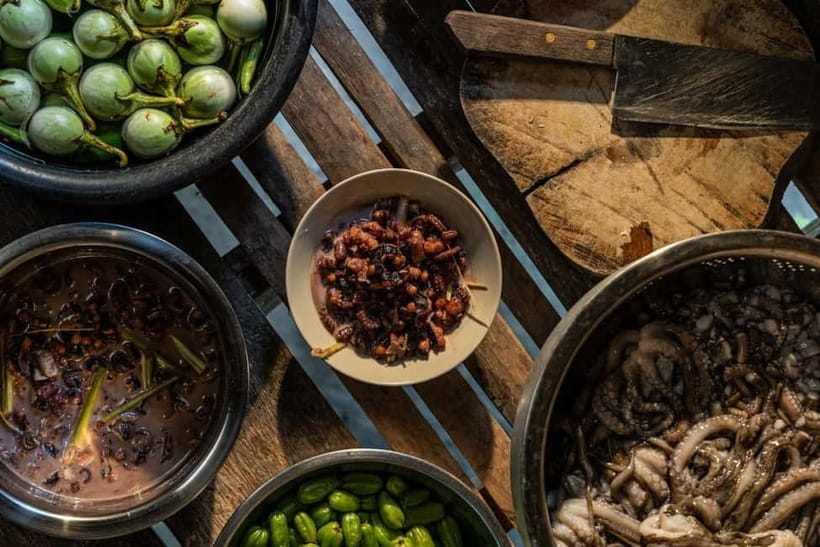
Thai food makes more sense when you handle the ingredients yourself. This four-hour Koh Samui cooking class begins at Big Buddha Market, then moves to a family-run open-air kitchen where Geng and O teach four dishes from a changing weekly menu. You learn to extract coconut milk, prepare curry paste, and balance Thai herbs and spices.
I like the market visit because it gives you a practical look at the ingredients before you cook with them. I also like the personal touch: family recipes, a relaxed kitchen, fresh produce, and a play area for children. The main drawback is that the menu changes every week, so you should check ahead if you have your heart set on a particular dish.
Key points at a glance
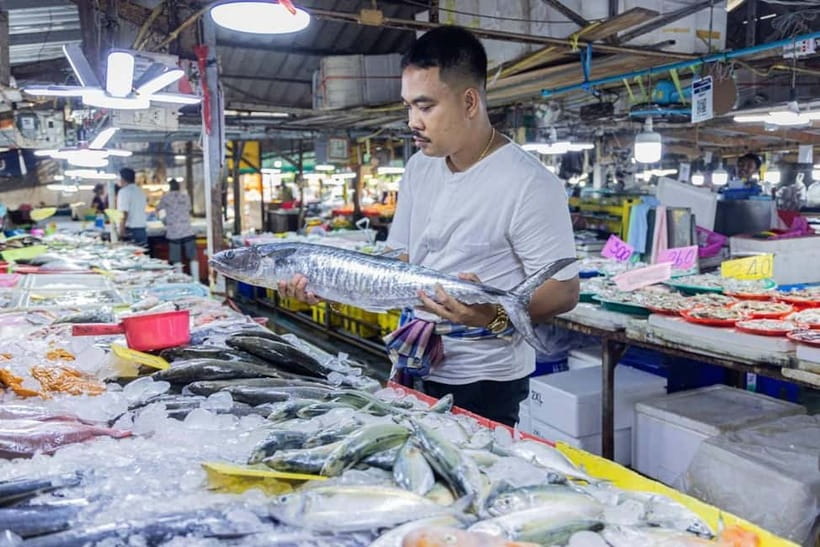
- Big Buddha Market first: Learn what Thai herbs, spices, vegetables, and other ingredients look like before they reach the cooking station.
- Four dishes from a rotating menu: Choose your dishes from the menu offered that week, with spicy and non-spicy options.
- Hands-on family techniques: Practice fresh coconut milk extraction, traditional curry paste preparation, and Thai flavor combinations.
- A genuine local setting: Geng and O run the class as Samui Native Chefs in an open-air kitchen.
- Useful for families: Children under nine cannot cook, but they can use the dedicated play area while adults work.
- Transfers and recipes included: Pickup and drop-off are included in Lamai, Maenam, and Chaweng, and you receive a recipe guide for home cooking.
Starting at Big Buddha Market
The class begins with hotel pickup, followed by a guided visit to Big Buddha Market. This is more than a quick stop to buy ingredients. You get an explanation of the local herbs and produce used in Thai cooking, which helps you understand the dishes before you start chopping.
That early market visit is one of the strongest parts of the experience. Thai recipes can look simple on paper, but the flavor depends on knowing the ingredients. Seeing the herbs and spices in their fresh form makes the later cooking lesson easier to follow.
You can ask about ingredients that are not part of your selected dishes, too. The market visit gives Geng or O room to explain broader aspects of Thai food, rather than limiting the lesson to four recipes.
The market is also useful for first-time visitors to Thailand. If you have wondered what to buy for curry, how Thai basil differs from other herbs, or what fresh coconut looks like before it becomes milk, this is your chance to ask. You are not simply watching a chef work. You are learning how the ingredients fit together.
Keep in mind that this part involves walking through a market, so comfortable shoes matter. The class is not suitable for people with mobility impairments or serious back problems.
More Home Cooking Classes in Thailand
- Benny’s Home Cooking Chiang Mai
★ 5.0 · 328 reviews - Chiang Rai:Lanna Home Cooking Class at Give Green Farm House
★ 5.0 · 61 reviews - Private Thai Home Cooking Lesson (since 2004)
★ 5.0 · 52 reviews
Moving into the open-air kitchen
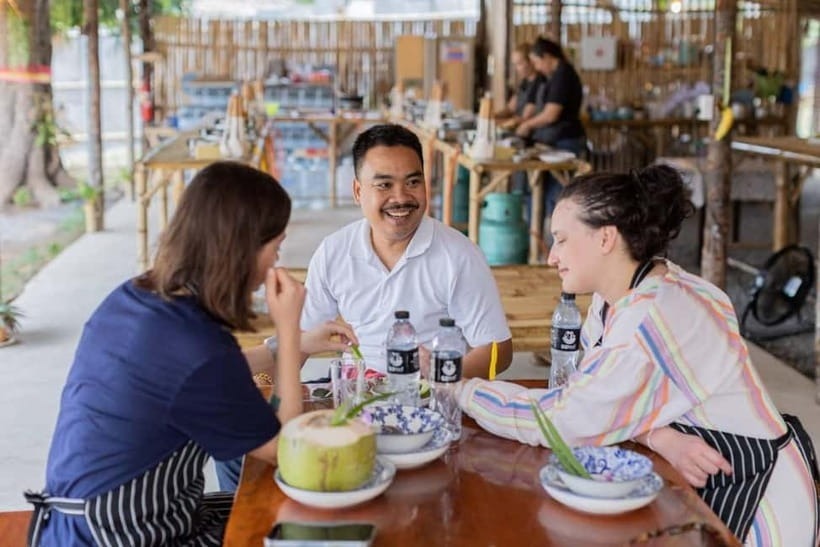
After the market, you continue to the Go Samui Cook school. The open-air kitchen gives the lesson a relaxed, home-style feel, while still providing the equipment and ingredients needed for the four dishes.
Geng and O teach with help from O and their team. The instruction is in Thai and English. The pace is designed for participation, so you should expect to chop, mix, prepare, and cook rather than sit back and watch a demonstration.
The kitchen is described as clean and well equipped, and the staff help bring ingredients to each cooking station and tidy up as you work. That matters in a practical class. You can focus on technique instead of searching for every bowl, utensil, or ingredient.
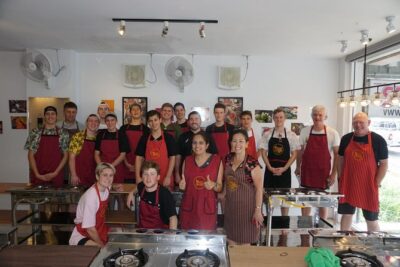
The setting also keeps the lesson personal. This is a small-group class, not a large demonstration where you struggle to see the cooking surface. You get direct explanations and time to ask questions about texture, spice level, and ingredient substitutions.
Choosing four dishes from the weekly menu
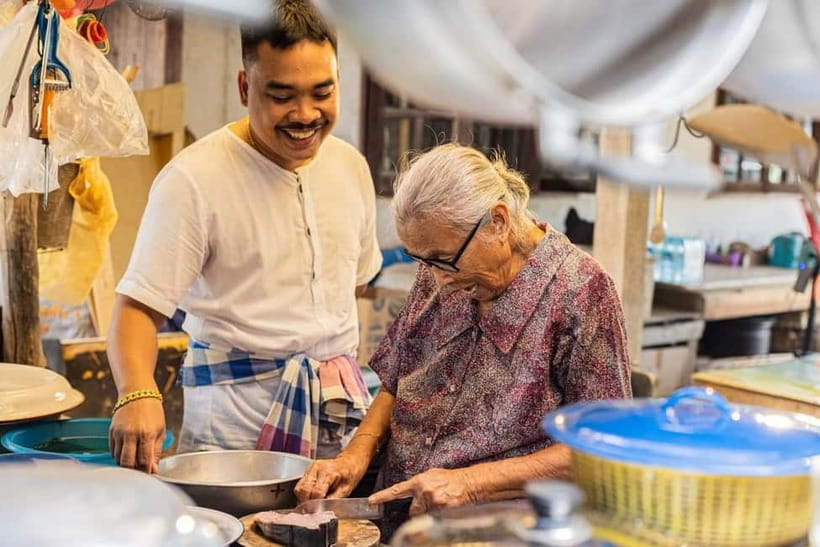
You cook four dishes from a menu that changes each week. That rotating schedule keeps the class from becoming repetitive, but it creates one important planning issue: check the current menu before booking if you want to learn a specific dish.
The menu includes a local selection, and the class focuses on Thai recipes rather than generic international cooking. You may also receive a bonus Pad Thai lesson using a family recipe, though the exact dishes depend on the weekly menu.
The ability to adjust the food to your taste is useful. You can choose spicy or non-spicy versions, and the team can work with vegan, vegetarian, gluten-free, and halal preferences. Tell them about dietary needs in advance so suitable alternatives can be arranged.
I would be careful if you have a serious food allergy. The information says alternatives may be provided, but the class is also listed as unsuitable for people with food allergies. That is a reason to contact the provider before booking and explain exactly what you must avoid.
You do not need to be an experienced cook. The instructions are given step by step, and the point is to learn the process. If you enjoy cooking at home, you will get more from the class because you can pay close attention to small details and use the recipe guide later.
Learning coconut milk and curry paste
Thai cooking often depends on methods that do not appear in a short restaurant menu description. One of the class techniques is extracting fresh coconut milk. This gives you a better sense of how traditional Thai dishes build body and flavor.
You also learn to prepare curry paste instead of treating it as a ready-made ingredient. The lesson covers proper combinations of herbs and spices, along with family methods passed down through generations.
These are the details that make the class useful after your holiday. A recipe card alone cannot show you how ingredients should look or feel during preparation. Working through the steps with Geng and O gives you a reference point for making the dishes at home.
The instruction also covers the balance of Thai flavors. You can ask how to adjust heat and how the herbs work together. The aim is not simply to copy a dish once, but to understand enough of the method to repeat it.
More Thai Cooking Classes in Thailand:
- Half-Day Thai Cooking Class at Organic Farm in Chiang Mai
★ 5.0 · 19,087 reviews - Chiang Mai: Cooking Class, Market & Thai Herbs Garden Tour
★ 4.9 · 4,824 reviews - Thai and Akha Cooking Class in Chiang Mai
★ 5.0 · 4,358 reviews - Phuket Thai Cooking Class with Market Tour Option
★ 5.0 · 2,665 reviews
Eating what you prepare
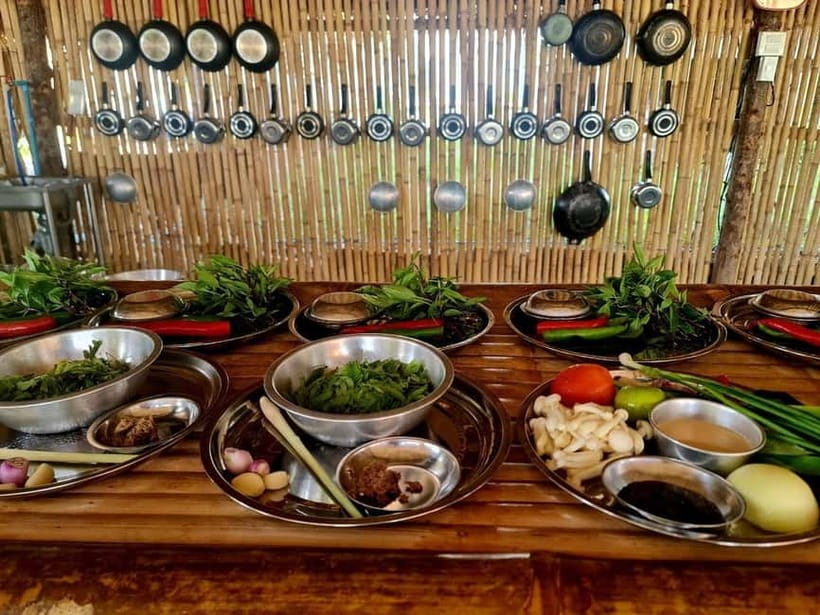
Once the cooking is finished, you sit down and eat the food you have prepared. Seasonal fruit and refreshments are included, with soft drinks available during the meal.
The food is not rushed out as separate restaurant courses. It is part of the lesson, which gives the group time to share the results and compare flavors. That shared meal helps the class feel like a family activity rather than a formal school session.
You do not need to force yourself to finish everything. Leftovers can be packed for you to take away, which is a welcome practical touch. One useful tip is to arrive hungry, but not so hungry that you rush through the preparation. The cooking is the main event, and the meal comes at the end.
The class also includes a recipe guide. This is where the $77 price becomes easier to judge. You are paying for transportation in the covered pickup zones, a market lesson, ingredients, equipment, instruction, refreshments, and four dishes, plus material you can use later.
What the $77 price gets you
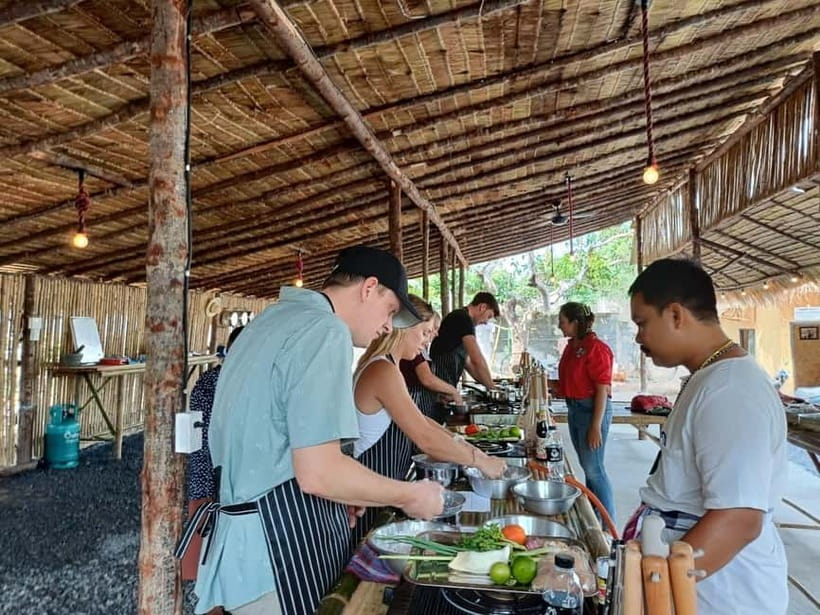
At $77 per person, this is not the cheapest way to eat Thai food in Koh Samui. You could have a meal for far less. But the comparison is not really between this class and a restaurant dinner.
The price includes a four-hour activity with transport, market access and explanation, hands-on teaching, all ingredients, cooking equipment, fruit, refreshments, and a recipe guide. You also leave with food to eat and techniques you can repeat at home.
I consider it good value for people who want an activity as well as a meal. It is especially worthwhile if you like meeting local residents, asking questions, and learning by doing. If you only want to sample Thai food, a restaurant offers a cheaper and simpler option.
Transfers cover Lamai, Maenam, and Chaweng. If your hotel is outside those areas, pickup is available for an additional THB 700 per person. That extra cost can change the value calculation for couples or families, so check your hotel location before you book.
If you are staying outside the included pickup areas, you may need to arrange a taxi to a meeting point. Build that cost and extra time into your plans.
A good choice for families and food lovers
This class works well for adults, couples, families with older children, and anyone who wants a break from beaches and sightseeing. The setting is friendly and the cooking is active, so you have a clear role throughout the session.
Children under nine cannot participate in the cooking class. They can stay in the dedicated play area, which helps parents take part without leaving a young child unattended elsewhere. Older children and teenagers may enjoy the practical nature of the lesson, especially if they already like helping in the kitchen.
The class also suits people who have taken cooking lessons before. The family recipes, market explanations, coconut milk work, and curry paste preparation add more substance than a simple recipe demonstration.
It may be less suitable if you have mobility problems, back problems, or a serious food allergy. The cooking also involves standing and working at a kitchen station, so wear comfortable clothes and shoes. Sunscreen is sensible for the market and open-air setting.
The family touch from Geng and O
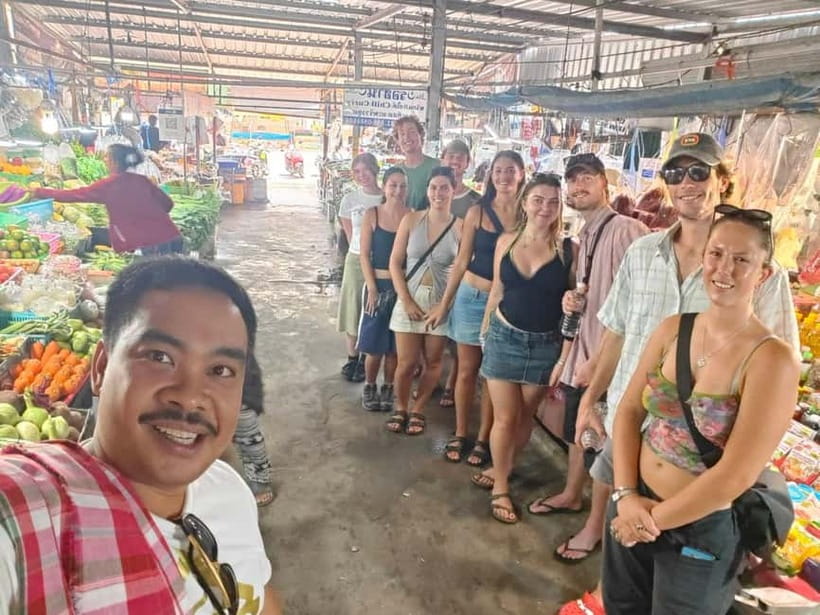
The tone of the class comes from the people teaching it. Geng and O run the school as a local family business, and their approach combines restaurant experience with family recipes.
Geng is described as funny and welcoming, while O guides participants through the market and cooking process. Their teaching style appears patient rather than rushed, with explanations that include ingredients beyond the dishes on the day’s menu.
That personal connection is important. You are not just following instructions from a cooking manual. You can ask why a particular herb is used, how to make a dish milder, or how to adapt a recipe for your own kitchen.
The staff also make an effort to keep the work comfortable. They bring ingredients to the stations, clean as the group cooks, and help with individual needs. That level of support is useful if you are new to Thai cooking or have a temporary injury, though anyone with mobility concerns should check suitability first.
Planning your day
The experience lasts about four hours, including the market visit and cooking session. Hotel pickup makes the morning or afternoon easier to manage, but confirm the pickup area and timing when you book.
Do not plan a tight appointment immediately afterward. Market visits, questions, cooking, and the shared meal all need room to breathe. You will enjoy the class more if you treat it as a half-day activity rather than a quick meal stop.
Wear clothes suitable for cooking. Comfortable shoes are important because of the market visit and time spent standing. Bring sunscreen, and remember that alcohol, smoking, and drugs are not allowed. Alcoholic drinks are also not permitted in the vehicle.
The menu changes weekly, so ask for the current choices before you commit. If you want non-spicy food or need vegan, vegetarian, gluten-free, or halal preparation, mention it early.
Should you book Go Samui Cook?
Book this class if you want to understand Thai food, not just eat it. The Big Buddha Market visit, family instruction, fresh coconut milk work, curry paste preparation, four dishes, and recipe guide give the activity real substance.
It is a particularly good fit for food lovers, families with children old enough to use the kitchen, couples looking for a hands-on activity, and cooks who want recipes they can repeat at home. The warm, local setting is a major part of the appeal.
Think twice if you dislike standing, have mobility or back problems, or have a serious food allergy. Also check the weekly menu and pickup area before paying. For everyone else, the $77 cost is reasonable for a four-hour lesson, a full meal, transport in the main resort areas, and skills you can carry home.
FAQ
How long does the Koh Samui cooking class last?
The cooking experience lasts about four hours, including the hotel pickup, Big Buddha Market visit, cooking session, and shared meal.
What does the class include?
It includes round-trip transfers from Lamai, Maenam, and Chaweng, a market tour, ingredient explanations, cooking four dishes, ingredients, equipment, a recipe guide, seasonal fruit, and refreshments.
Who teaches the class?
The class is run by Samui Native Chefs Geng and O, also known as the Go Samui Cook team. Instruction is available in Thai and English.
Do I visit a market before cooking?
Yes. The class includes a guided visit to Big Buddha Market, where you learn about Thai herbs and fresh ingredients before going to the open-air kitchen.
Can I choose the dishes I cook?
You choose four dishes from the menu offered that week. The menu changes weekly, so check the current selection in advance if you want to prepare a specific dish.
Can the food be made non-spicy?
Yes. You can request spicy or non-spicy versions of the dishes.
Can the class accommodate dietary preferences?
The class can accommodate vegan, vegetarian, gluten-free, and halal preferences. Tell the team about your needs in advance so suitable alternatives can be prepared.
Are children allowed to join?
Children under nine cannot take part in the cooking class, but they can stay in the dedicated play area.
Is hotel pickup included everywhere on Koh Samui?
Round-trip pickup is included in Lamai, Maenam, and Chaweng. Pickup outside those areas is available for an additional THB 700 per person.
More Hands-On Workshops in Thailand
- Chiang Mai: Authentic Cooking Class with Market & Farm Visit
★ 4.9 · 4,546 reviews - Bangkok: Hands-on Thai Cooking Class and Market Tour
★ 4.9 · 1,614 reviews - Chiang Mai: Cooking Class with Market and Pickup
★ 4.9 · 1,365 reviews - Bangkok: Tingly Thai Cooking School Half-Day Cooking Class
★ 4.9 · 1,191 reviews
Just added around Thailand
- Riverside Thai Cooking Class in Khao Lak with Market Tour★ 5.0 · 140 reviews
- Krabi: Evening Thai Cooking Class at Ya’s Cookery★ 4.9 · 125 reviews
- Krabi: Traditional Thai Cooking Class★ 4.8 · 175 reviews
- Private Thai Home Cooking Lesson (since 2004)★ 5.0 · 52 reviews
- Chiang Rai: Jungle Adventure-Group Trekking & Bamboo Cooking★ 4.9 · 166 reviews
- 1 Day Trekking Group Tour With Bamboo Cooking / Chiang Rai★ 5.0 · 51 reviews
- Chiang Rai:Lanna Home Cooking Class at Give Green Farm House★ 5.0 · 61 reviews
- Half-Day Thai Cooking Class with organic ingredients★ 5.0 · 96 reviews
Thai Cooking Classes, compared.
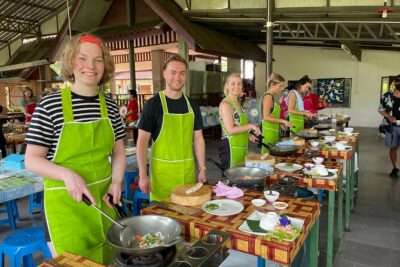
Half-Day Thai Cooking Class at Organic Farm in Chiang Mai
Read our review →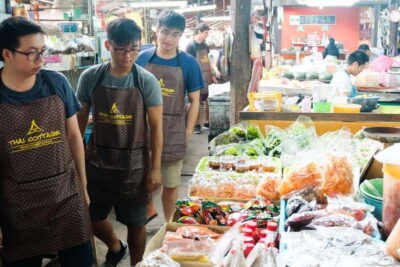
Chiang Mai: Cooking Class, Market & Thai Herbs Garden Tour
Read our review →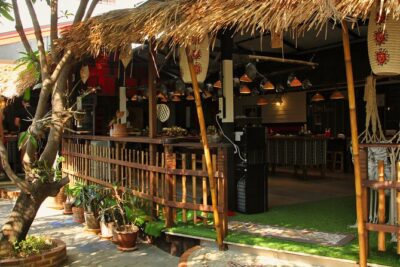
Phuket Thai Cooking Class with Market Tour Option
Read our review →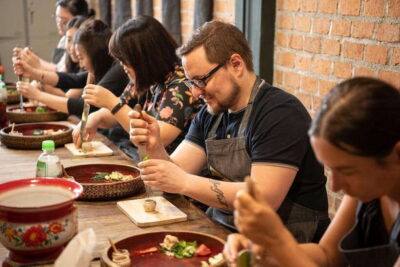
Bangkok: Hands-on Thai Cooking Class and Market Tour
Read our review →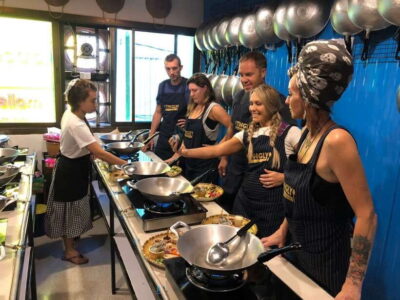
Bangkok: Tingly Thai Cooking School Half-Day Cooking Class
Read our review →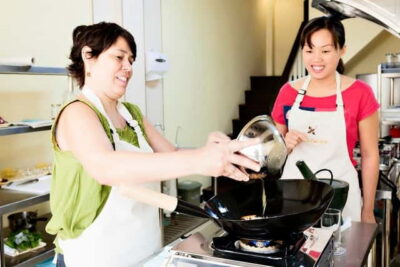
Bangkok: Maliwan Thai Cooking Class with Market Tour
Read our review →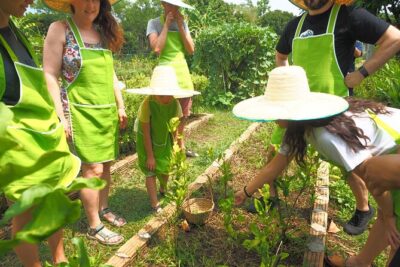
Browse the lists this tour appears in