Review · CHIANG MAI
Half-Day Thai Cooking Class at Organic Farm in Chiang Mai
The best part of this six-hour outing is that Thai food goes from something on your plate to something you understand. You visit a local market, inspect herbs and vegetables at an organic farm, then cook at your own station under guides such as Lily, Love, K, Luna, or Cici. The food is hands-on, not a demonstration where you simply watch.
I like the freedom to choose dishes and the fact that each recipe can be made vegetarian or vegan. I also like the practical pickup service, which saves you from sorting out transport to the countryside. The main drawback is the sheer amount of food. You may want a light breakfast or lunch before class, since the cooking can produce three very filling dishes, and dessert is not part of the half-day menu.
Key points at a glance
- Market first: Begin with a short visit to a local Chiang Mai market to see the herbs, spices, and vegetables used later.
- Organic farm setting: Tour the kitchen garden and learn how Thai herbs and vegetables grow before you start cooking.
- Your own cooking station: Chop, grind, stir-fry, and prepare the dishes yourself rather than watching a chef do all the work.
- Five cooking categories: Choose from curry paste, curry, stir-fried dishes, soup, and spring rolls.
- Flexible for dietary needs: Every menu can be prepared as vegetarian or vegan, and you can request mild or spicy food.
- Simple transport: Round-trip pickup and return to accommodation in Chiang Mai city are included.
From Chiang Mai city to the organic farm
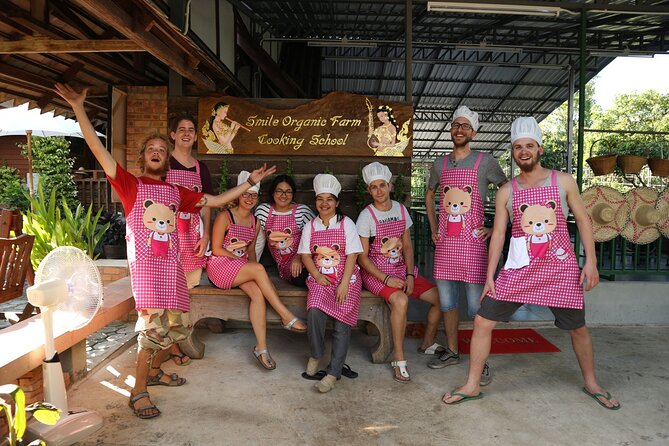
The day begins with pickup from your hotel or accommodation in Chiang Mai city. The exact pickup time depends on the session, so keep your morning or afternoon fairly open. Mobile tickets and booking confirmation make the arrival side simple, but you should still watch for the pickup details supplied after booking.
The drive takes you away from the city toward Smile Organic Farm Cooking School. One useful detail from the class schedule is a short stop at a local market before the farm. This is not meant to be a long market tour. Think of it as a practical introduction to the ingredients you will soon handle.
At the market, your guide can point out Thai spices, vegetables, herbs, and curry ingredients. This gives you context that a cooking class in a city restaurant often lacks. You begin to see that Thai cooking is built from fresh aromatics and careful balance, not just a jar of curry paste or a bottle of sauce.
One point to keep in mind is the drive. The journey from the market to the farm can take more than 30 minutes, so the activity is not a quick class in central Chiang Mai. That extra time is the tradeoff for a rural setting and a farm kitchen.
More Farm Cooking Classes in Chiang Mai
- Chiang Mai: Authentic Cooking Class with Market & Farm Visit
★ 4.9 · 4,546 reviews - Chiang Mai: Cooking Class with Organic Farm at Mama Noi
★ 4.9 · 1,151 reviews - Full Day Thai Cooking at Farm (Chiang Mai)
★ 5.0 · 1,127 reviews
Choosing your menu before cooking
When you arrive, the cooking team explains the available menu. You choose dishes from several categories instead of following one fixed recipe selected for the whole group. This is one of the strongest features of the class because you can focus on food you actually want to eat and repeat at home.
The menu covers five main areas:
- Curry paste
- Curry
- Stir-fried food
- Soup
- Spring rolls
The choices can vary by session, but examples include cashew nut chicken, Khao soi, coconut soup with chicken, and other classic Thai preparations. The supplied information also points to a format built around several dishes, often including spring rolls and a choice of main dishes. You may prepare three substantial portions, so pace yourself.
This menu choice works especially well for couples and families with different tastes. One person can choose a curry while another makes a stir-fry. Vegetarians and vegans do not need to sit out while everyone else cooks. The class says every menu can be prepared in a vegetarian or vegan version, and you can decide how spicy you want your food.
I recommend choosing at least one dish you already love and one that is new to you. That gives you a familiar success while showing you a new technique or flavor combination. If you are cooking with children, the menu choice also lets you avoid dishes that may be too spicy.
The herb garden explains the food
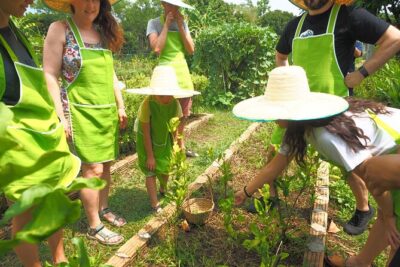
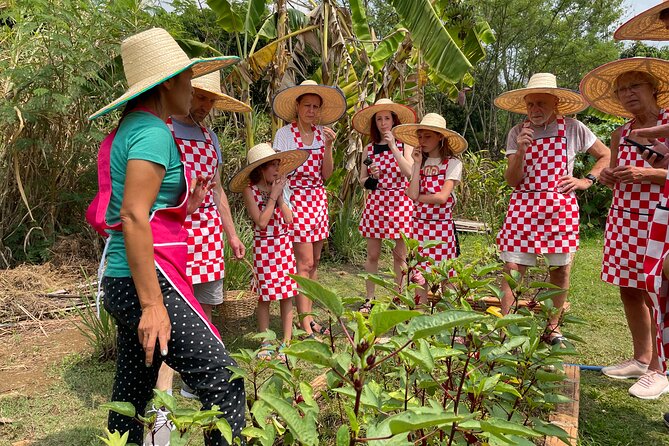
Before the cooking starts, you walk through the organic kitchen garden. The point is not to turn you into a farmer in one afternoon. It is to connect the ingredients on your prep table with the plants that produce them.
You learn about Thai herbs and vegetables, how they grow, and how they are used in cooking. This is particularly helpful if you have ever bought Thai basil, unfamiliar greens, or a piece of fresh galangal and wondered what to do with it. Smelling the herbs and seeing the plants gives you a better memory than reading their names from a recipe card.
The garden also adds a calm pause between the market and the busy preparation work. The cooking area is outdoors and relaxed, with a farm atmosphere rather than a formal restaurant classroom. Some sessions may include small farm animals, such as a tortoise, and the property has two French bulldogs. Those details are a pleasant bonus, particularly for families, but they are not the main reason to book.
Do not expect a large agricultural tour or a long lesson in organic farming. The garden visit is a useful introduction, then the class moves quickly toward cooking.
What happens at your cooking station
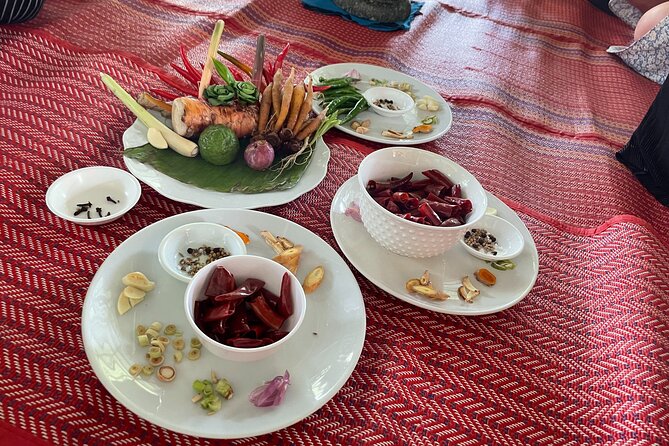
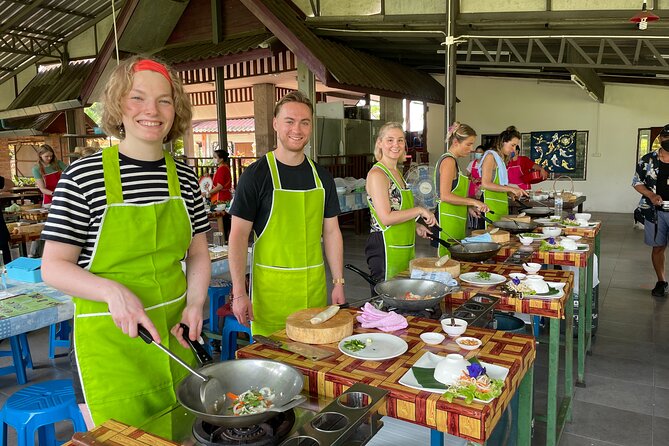
The class is limited to a maximum of 12 people, and each participant can have an individual cooking station. That matters. You are not standing behind a crowd trying to see one wok. You get to handle the ingredients and take responsibility for your own dishes.
The process includes chopping, grinding, mixing, and stir-frying. Curry paste is made from scratch, which is one of the most useful parts of the lesson. You can feel the difference between pounding fresh ingredients together and opening a prepared container.
Your guide explains each stage, then helps you work through it. Guides named Lily, Love, K, Luna, K, Cici, Natty, Natalie, Lizzy, and Piano have led different sessions, and the teaching style is energetic and informal. The strongest pattern is clear instruction paired with humor and personal help at the stove.
The group may contain up to 12 people, but the class is organized around individual portions. That keeps the pace moving and allows the guide to check each cooking station. You should still expect a group class, not a private lesson. If everyone is preparing different dishes, the teacher has to divide attention among several recipes.
The cooking itself is active but approachable. You do not need advanced kitchen skills. The value comes from learning the order of ingredients, the basic preparation of curry paste, and the way heat changes a stir-fry or soup. Clear directions matter here, and the guides are repeatedly praised for keeping the steps easy to follow.
More Farm Cooking Classes in Thailand
- Chiang Mai: HALF-DAY COOKING COURSE at a Thai Cooking Farm
★ 4.9 · 705 reviews - Cooking Class with Organic Farm in Chiang Mai at Mama Noi
★ 5.0 · 502 reviews - Evening Cooking Class in Organic Farm with Local Market Tour
★ 5.0 · 394 reviews - Cooking Morning Class Chiang Mai Visit Organic Garden and Market
★ 5.0 · 211 reviews
Five categories, plenty of food
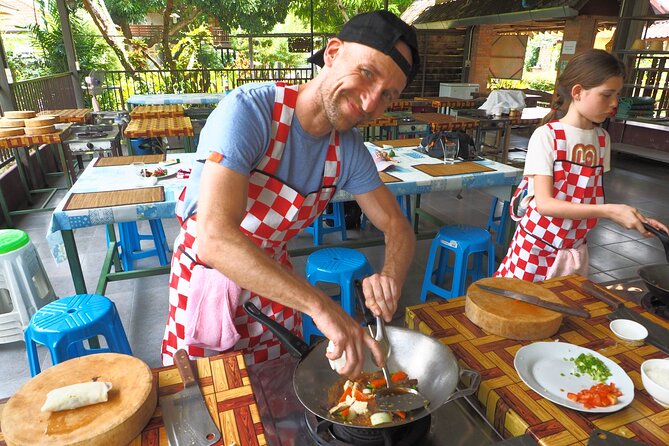
The five-category structure gives you a broad introduction to Thai cooking in one sitting. Each category teaches something slightly different.
Curry paste shows you the foundation of many Thai dishes. You work with herbs and spices rather than relying on a ready-made paste.
Curry teaches you how that paste becomes a complete dish. You can choose a version that suits your preference and set the heat level from mild to spicy.
Stir-fried dishes are fast and practical. This is the sort of recipe you can recreate on a weeknight if you prepare the ingredients first.
Soup brings a different balance of broth, herbs, and seasoning. It is also a useful way to learn how Thai flavors can be bright and savory without being heavy.
Spring rolls give you a hands-on starter and a simple wrapping task. They are a good fit for families because the preparation is easy to understand and share.
The menu is generous. Several people have found that the portions add up quickly, especially when you prepare multiple dishes. I would not plan a large meal immediately afterward. The one commonly noted omission is Thai dessert, but the class already gives you a substantial amount of food.
Eating what you made
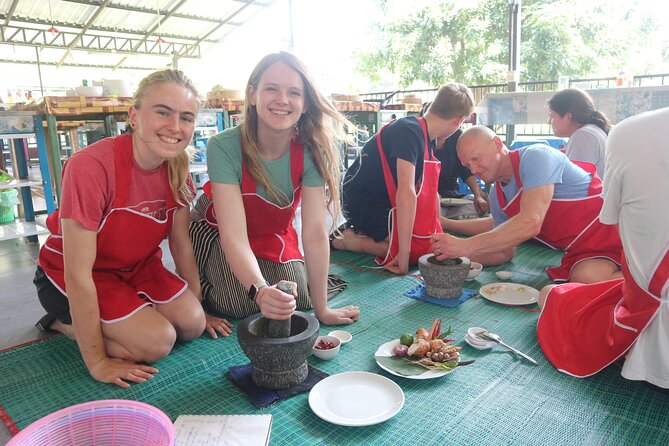
After the cooking, you sit down and eat in the farm setting. This is when the lesson pays off. You are not sampling a restaurant’s polished version. You are tasting the dishes you chopped, pounded, seasoned, and cooked yourself.
The communal meal keeps the mood social without making the class feel like a formal event. It also lets you compare choices with the people in your group. You may notice how different spice levels or curry selections change the final result.
The food is served as the cooking finishes, so the meal forms a natural end to the class. If you are prone to filling up quickly, take small portions at the start. You can always go back for more, but three cooked dishes can be more than you expect from a half-day activity.
Dessert is not included in the stated menu. If a sweet final course matters to you, this may be a minor disappointment. If you mainly want to learn savory Thai cooking and eat a full meal, the omission is easy to accept.
Why the $29.35 price offers good value
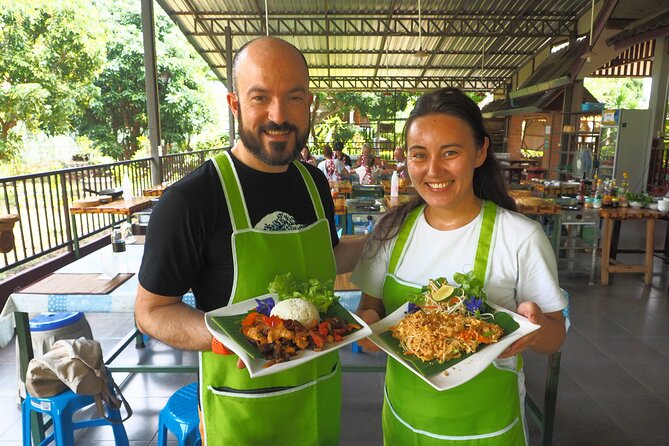
At $29.35 per person, the price covers roughly six hours, hotel pickup and return within Chiang Mai city, a market stop, a farm visit, instruction, ingredients, and a full meal. That is strong value if you would otherwise pay separately for transport and lunch.
The class also gives you more than a single recipe. You learn across several categories, make curry paste, and practice the basic preparation yourself. The organic farm and market add context that a kitchen-only lesson would not provide.
The value is less clear if you want a short, polished demonstration or a private chef. This is a group activity with a drive outside the city and a practical, sometimes busy cooking format. You are paying for participation, food, and a rural setting, not luxury treatment.
The price applies to participants aged 9 through 75. Children aged 4 through 8 have a visitor price, while children aged 0 through 3 are free. Children older than 9 can have their own cooking stations as participants, which makes the class more engaging for older children and teenagers.
Who will enjoy this class most
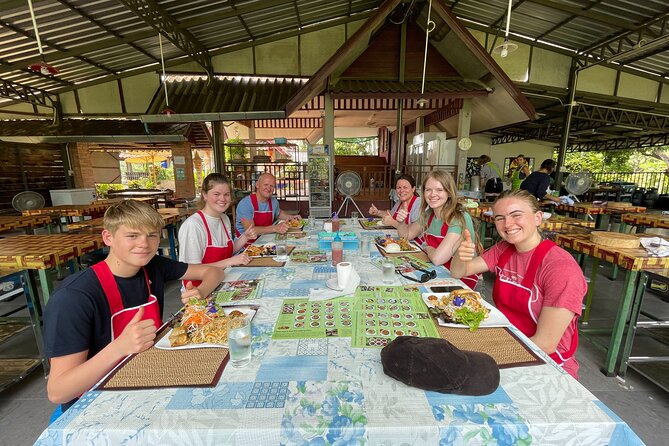
I would recommend the class to food-focused visitors who want more than a restaurant meal. It suits couples, solo visitors, families, and groups of friends because the menu allows each person to choose dishes.
It is also a good fit if you have dietary restrictions covered by the vegetarian or vegan options. You can ask for mild food, too, so a low tolerance for chili does not rule out the class.
Families should find the individual cooking stations useful, especially when children are old enough to participate. Younger children can attend as visitors, but the class is built around cooking, so toddlers may not get much from the lesson itself.
You may want to skip it if you dislike group activities, have limited time in Chiang Mai, or want a dessert-focused class. The six-hour schedule includes transport and several stages, and the farm is outside the city.
Practical details before you book
Pickup is offered from accommodation in Chiang Mai city, with return transportation at the end. The activity uses a mobile ticket, and confirmation is provided when you book.
The maximum group size is 12 people. Guides work with the group while helping at individual stations, so you get direct practice without paying the higher price of a private class.
Free cancellation is available if you cancel at least 24 hours before the start time. Cancellations or changes made less than 24 hours before the start time are not accepted for a refund. The cutoff follows local Chiang Mai time.
Bring an appetite, but not an enormous one. Several dishes are prepared, and the meal is one of the main rewards of the class. Also allow time for the ride to and from the farm rather than treating this as a quick activity between city sights.
Should you book the Smile Organic Farm class?
Book it if you want to understand Thai food by preparing it yourself. The market stop, herb garden, flexible menu, personal cooking station, and return transport make this a well-rounded half-day outing at a modest price.
I would be especially keen to book it for a couple, family, or small group with different food preferences. Choose your spice level, request vegetarian or vegan dishes, and avoid eating too much before you arrive.
Skip it only if your schedule cannot spare six hours, you want a private class, or a Thai dessert is essential. For everyone else, Smile Organic Farm Cooking School offers a practical and enjoyable way to turn a meal in Chiang Mai into a skill you can take home.
FAQ
How long does the Thai cooking class last?
The activity lasts approximately six hours, including the market visit, travel to the farm, garden introduction, cooking, eating, and return to Chiang Mai city.
Is hotel pickup included?
Yes. Pickup and return transfers are included for accommodation in Chiang Mai city.
How many people can join the class?
The maximum group size is 12 people.
Can I choose what I cook?
Yes. The team explains the available menu, and you choose dishes from the cooking categories offered during your session.
What types of Thai dishes can I make?
The five categories are curry paste, curry, stir-fried food, soup, and spring rolls. Specific dish choices can vary.
Are vegetarian and vegan options available?
Yes. Every menu can be prepared as vegetarian or vegan.
Can I choose how spicy my food is?
Yes. You can request mild or spicy food.
Are children allowed to join?
Yes. Children aged 9 and older can have their own cooking stations as participants. Children aged 4 through 8 have a visitor price, and children aged 0 through 3 are free.
More Hands-On Workshops in Chiang Mai
- Chiang Mai: Cooking Class with Market and Pickup
★ 4.9 · 1,365 reviews - Chiang Mai: Evening Cooking Class and Local Market Visit
★ 4.9 · 648 reviews - Tomyumthai Cooking Class in Chiang Mai
★ 5.0 · 234 reviews - Half-Day Cooking Class with Market Tour
★ 5.0 · 163 reviews
More Thai Cooking Classes in Chiang Mai
- Chiang Mai: Cooking Class, Market & Thai Herbs Garden Tour
★ 4.9 · 4,824 reviews - Thai and Akha Cooking Class in Chiang Mai
★ 5.0 · 4,358 reviews - We Cook Thai Home Garden Cooking School
★ 4.9 · 378 reviews - Chiang Mai: Traditional Thai Cooking Class with Market Tour
★ 4.8 · 137 reviews
Just added around Chiang Mai
- Chiang Mai: Local Northern Thai Cooking Class at Grandma’s★ 5.0 · 33 reviews
- Chiang Mai: Half Day Morning Cooking Class with Market Tour★ 4.9 · 10 reviews
- Half-Day Thai Cooking Class on a Local Farm Near Chiang Mai★ 4.9 · 32 reviews
- Half-Day Cooking Class with Market Tour★ 5.0 · 163 reviews
- Chiang Mai: Half Day Cooking Class at Organic Farm★ 4.8 · 96 reviews
- Full Day Thai Cooking Class in Organic Farm and Market★ 5.0 · 3 reviews
- Chiang Mai: Traditional Thai Cooking Class with Market Tour★ 4.8 · 137 reviews
- Chiang Mai: Traditional Thai-Akha Cooking Class& Market Tour★ 5.0 · 25 reviews
Thai Cooking Classes, compared.
Chiang Mai: Cooking Class, Market & Thai Herbs Garden Tour
Read our review →
Phuket Thai Cooking Class with Market Tour Option
Read our review →
Bangkok: Hands-on Thai Cooking Class and Market Tour
Read our review →
Bangkok: Tingly Thai Cooking School Half-Day Cooking Class
Read our review →
Bangkok: Maliwan Thai Cooking Class with Market Tour
Read our review →