
Review · ITALY
Polignano a Mare: Pasta Making Cooking Class with Drink
The best part of this Polignano a Mare class is that you learn the two pasta shapes most closely tied to Puglia, then sit down and eat what you made. You work with a local cook such as Annamaria or Daniele, shaping orecchiette and cavatelli by hand rather than simply watching a demonstration. I like the small, relaxed feel and the useful cooking advice you can take home. I also like the Apulian aperitivo, with taralli, preserved vegetables, seasonal greens, and wine while the pasta cooks.
The main thing to understand is that this is not a full restaurant-style cooking course. The chef prepares some steps, including the dough and sauce, so your hands-on work focuses mainly on forming the pasta. At $77 per person, the price is fair if you value local food, conversation, and a meal, but it may feel high if you expect to prepare every part from scratch.
Key points
- Two classic Puglian shapes: Learn to form ear-shaped orecchiette and ridged cavatelli.
- Local teachers: Annamaria and Daniele explain technique, ingredients, regional food customs, and practical kitchen tips.
- Small-group atmosphere: Some sessions have as few as six people, giving the chef time to correct your technique.
- Food and wine included: Enjoy taralli, focaccia, olives, preserved vegetables, seasonal greens, drinks, wine, and the pasta you make.
- Good for families: Children, teenagers, vegetarians, and vegans can take part.
- Historic-center setting: The class meets at a typical house at Via S. Vito 20 in Polignano a Mare.
Shaping Puglia’s Famous Pasta by Hand
Puglia’s pasta tradition is wonderfully plain: semolina flour, water, patient hands, and a few practiced movements. That simplicity makes the class appealing. You are not hiding behind a machine or buying a packet of dried pasta. You are learning how a local cook turns basic ingredients into shapes with a strong connection to southern Italy.
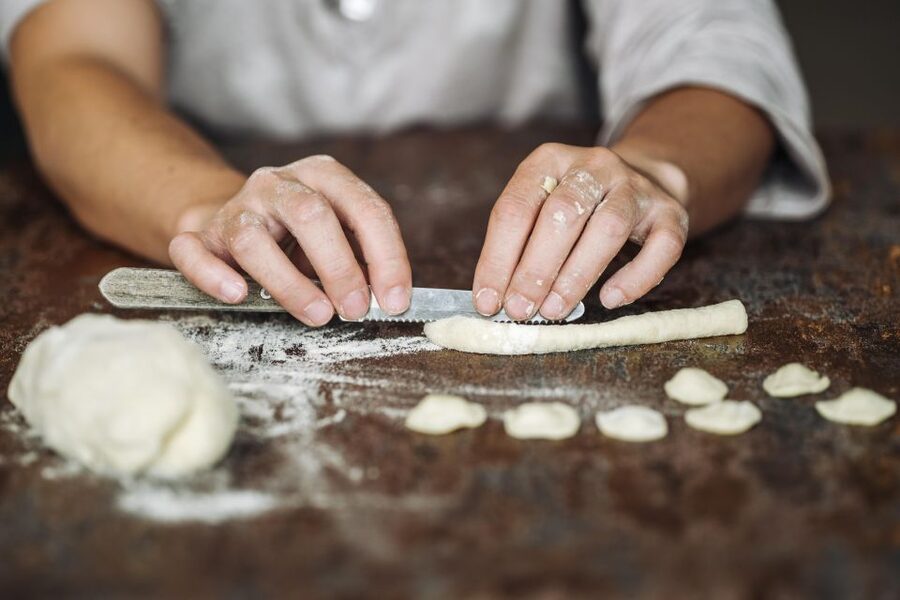
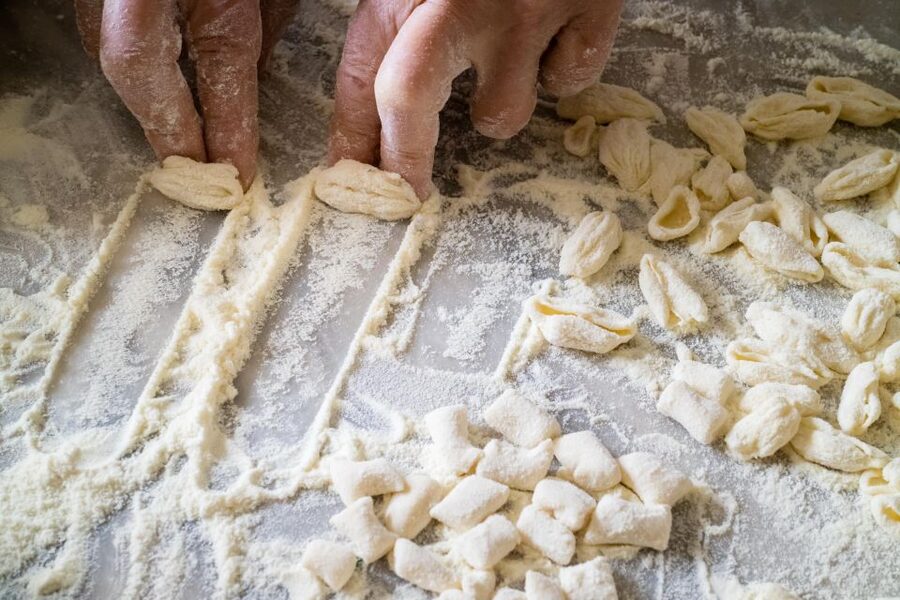
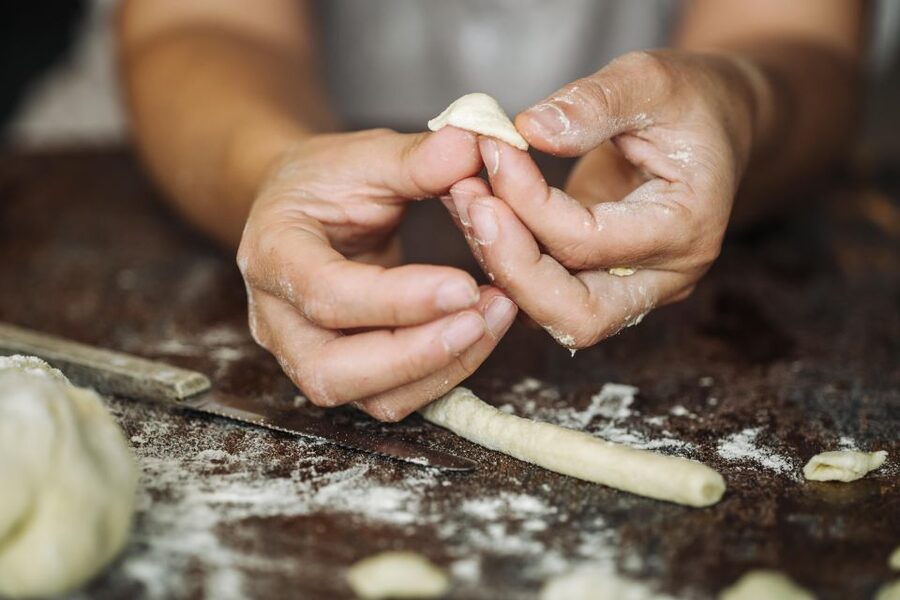
Orecchiette means little ears, and the name makes sense once you see the finished pasta. You press and drag a small piece of dough across the work surface, then turn it over your thumb or fingertip to create the shallow cup. The shape is designed to hold sauce, which is why a properly formed piece has both a thin center and a thicker rim.
Cavatelli is formed differently, with a small hollow or curled shape. The movement is less about making every piece identical and more about learning the pressure of your fingers. The chef shows you the motion, then watches your hands and offers corrections. That personal attention is one reason the class works better in a small group.
I would not expect perfect pasta on your first try. The first few pieces may be too thick, too large, or not quite hollow enough. That is part of the fun, and instructors such as Annamaria and Daniele are patient about it. They focus on helping you understand the movement instead of rushing you toward a polished result.
More Pasta Making Classes in Italy:
- Florence: Pasta Cooking Class with Unlimited Wine
★ 4.9 · 10,285 reviews - 3 in 1 Cooking Class near Navona: Fettuccine, Ravioli & Tiramisu
★ 5.0 · 7,376 reviews - Florence: Pasta & Tiramisu Cooking Class with Unlimited Wine
★ 4.9 · 6,708 reviews
What You Actually Do During the Two Hours
The class lasts about two hours, a good length for a food activity in the middle of a sightseeing day. You begin with an introduction to the pasta and the ingredients, followed by a demonstration of the shapes. The chef explains why Puglian pasta is made this way and how it differs from pasta traditions in other parts of Italy.
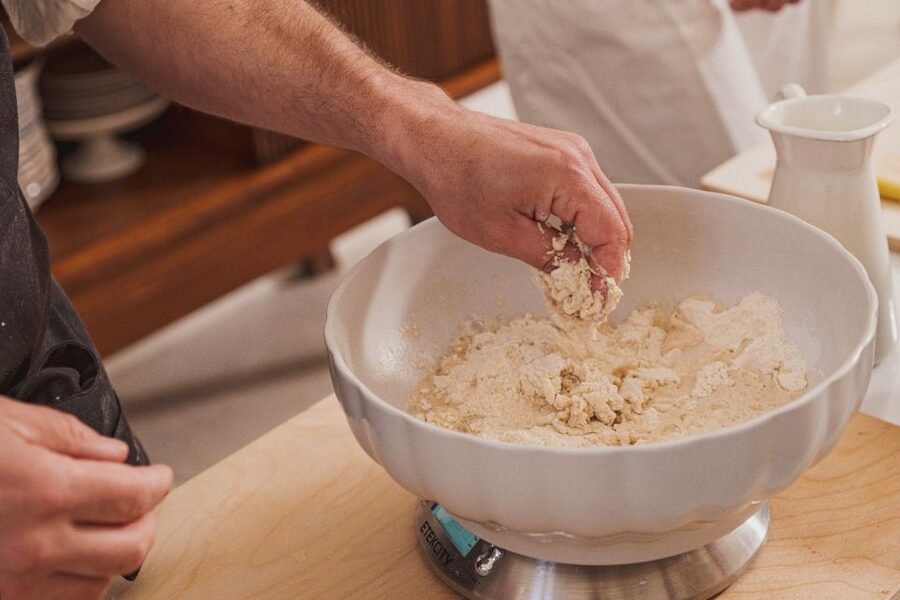
Your hands-on work comes once the dough is ready. Based on the detailed class descriptions and participant feedback, you should expect to shape the orecchiette and cavatelli rather than make the dough and sauce entirely yourself. That distinction matters. If you want a lesson centered on mixing flour, kneading, resting, preparing several sauces, and cooking a full menu, this class may be too limited.
For most people, the focus is exactly right. Pasta shaping is the tricky part, and it is the skill most likely to be useful at home. The chefs also offer tips about cooking pasta, sauce, ingredients, and reducing food waste. One instructor has a professional cooking background and explains the reasons behind common Italian cooking rules, rather than simply asking you to follow them.
You should have time to ask questions. Annamaria is praised for giving individual help, while Daniele is described as funny, attentive, and easy to understand in English. The names of the teachers can vary, so check the current session details when booking.
An Apulian Aperitivo Before Dinner
The food is not limited to the pasta you shape. The class includes a small aperitivo, which gives you something to eat while the pasta is being finished. Expect typical Puglian items such as taralli, preserved vegetables, seasonal greens, olives, and sometimes focaccia.
Taralli are crunchy ring-shaped snacks made from dough, often with olive oil and regional seasonings. They are simple but very local, and they make a good introduction to the everyday side of Puglian food. Preserved vegetables show another important part of the region’s kitchen, where seasonal produce is stored for later use.
Wine and other drinks are included. Several people specifically appreciated having red wine during the lesson, while another mentioned wine and limoncello with the meal. The exact selection and amount may vary, so do not book this as a wine tasting. Think of the drinks as part of a friendly shared meal, not as a formal lesson in Puglian wine.
This aperitivo also helps the class feel social. You are not standing at a counter waiting for the next instruction. You can talk with the people around you, snack, and listen to stories about Puglia, Italian food, and local customs. If you prefer a quiet technical workshop, the conversation may be more than you need. If you enjoy learning through food and company, it adds real value.
Eating the Pasta You Made
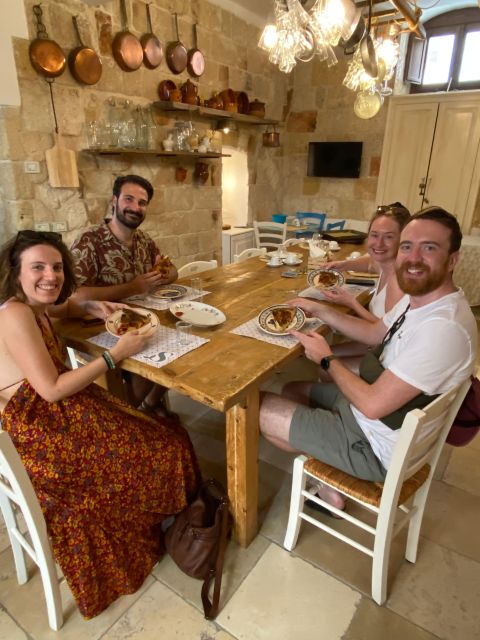
After the shapes are formed, the pasta is cooked and served. The included dish is orecchiette with tomato sauce, although the exact sauce described by participants has also included pesto. The important point is that you eat the pasta made during your lesson, rather than taking it home uncooked or watching someone else prepare a separate meal.
That final plate changes the feel of the class. You can see how the thickness of the dough affects the bite and how the shape catches sauce. It also gives you a clear target for your own kitchen. The pasta does not need to look perfect to taste good.
The meal includes the aperitivo items and drinks, making the activity closer to a light lunch or dinner than a short demonstration. Portions have been described as generous, but the class is still built around pasta and snacks, not a multi-course restaurant meal. If you arrive very hungry, keep that in mind.
I especially like that the cooking lesson ends with eating together. It gives the group a natural reason to slow down and talk. You leave with a skill, but also with a memory tied to the food you made with your own hands.
More Hands-On Workshops in Italy:
- Florence: Pasta Cooking Class with Unlimited Wine
★ 5.0 · 6,413 reviews - Naples: Pizza-Making Workshop with Drink and Appetizer
★ 4.9 · 5,411 reviews - Cooking Class and Lunch at a Tuscan Farmhouse with Local Market Tour from Florence
★ 5.0 · 4,831 reviews - Authentic Pizza Making Class in Naples with Appetizers and Drink
★ 5.0 · 3,178 reviews
The Teachers Make the Difference
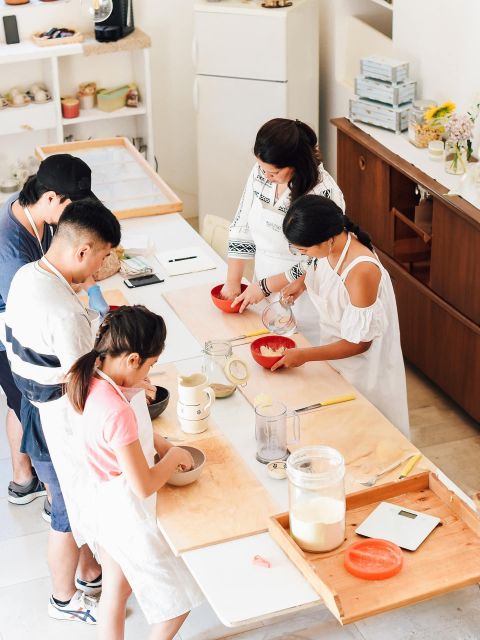
The class has several named instructors, including Annamaria, Daniele, and Maria in different sessions. Their teaching styles vary, but the strongest pattern is clear: the success of the class depends heavily on the person leading it.
Annamaria is warm and precise when demonstrating orecchiette. She gives step-by-step corrections and shares recipes and tips for making pasta, focaccia, and sauces at home. Daniele brings professional kitchen experience, humor, and a wider explanation of how pasta changes across Italy. He also talks about ingredients, sustainability, and food waste.
The classes can include more than cooking instruction. Some teachers discuss Puglian history, social issues, politics, and daily life. That can make the evening more interesting, especially if you want context rather than a narrow technical lesson. It also means the class may feel conversational and personal instead of tightly scripted.
English and Italian are offered. English ability has been praised repeatedly, but you should still expect some cooking terms and gestures to do part of the explaining. The teachers demonstrate each motion, so you do not need advanced Italian to follow the practical part.
Group Size, Families, and Accessibility
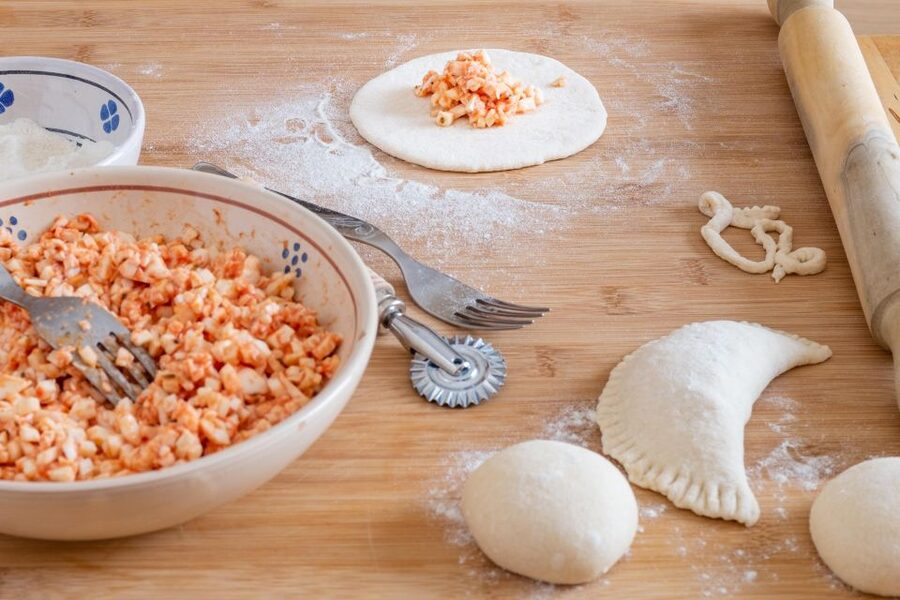
The class is suitable for families, and children as young as five and eight have taken part with parents and grandparents. Teenagers also fit naturally into the activity because the lesson gives them something physical to do and a meal at the end. Younger children may need help with the knife work and close attention during shaping.
Small groups are a major advantage. One session had six participants, and the intimate size allowed the chef to watch each person’s technique. This matters with orecchiette, where a quick correction can make the difference between a flat piece and a proper little cup.
The activity is suitable for vegetarians and vegans. The listed food centers on pasta, vegetables, taralli, and other Puglian products, but tell the provider about your needs when booking so the meal can be handled correctly.
The meeting point is a typical house at Via S. Vito 20, 70044 Polignano a Mare, in the historic center. The activity is wheelchair accessible. Optional pickup can be requested from Monopoli and nearby cities, but hotel pickup and drop-off are not included automatically.
Is $77 a Fair Price?
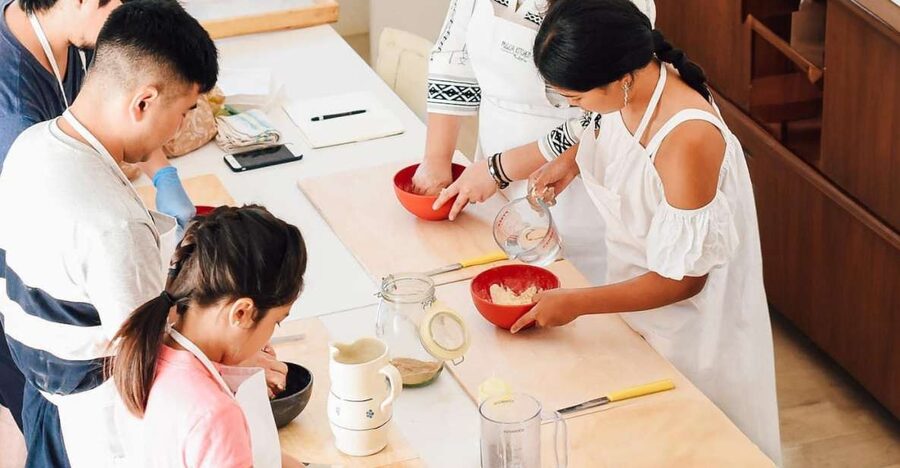
At $77 per person, this is not the cheapest pasta lesson you will find in Italy. The value depends on what you want from the class. You are paying for a professional chef, kitchen equipment, instruction in two regional pasta shapes, drinks, local snacks, and a meal of your own pasta.
The price makes more sense if you are staying in Polignano a Mare and want a compact activity that combines food, culture, and conversation. You do not need to arrange a separate restaurant meal afterward, and the two-hour length leaves room for a walk through town before or after the class.
The price feels less attractive if you have already taken several pasta classes or expect to prepare every ingredient yourself. At least one participant wanted to learn more Puglian sauces, and another felt the cost was high for the amount of hands-on cooking. Those are fair concerns.
I would compare this class with the cost of a meal and a guided food activity in Polignano. If you would happily spend $77 on an evening meal with drinks and a local cooking lesson, the package offers reasonable value. If your main goal is to master dough-making from start to finish, look closely at the exact session description before paying.
Practical Details Before You Book
The meeting point is Via S. Vito 20 in central Polignano a Mare. Give yourself time to find the house, especially if you are arriving from another part of town. Pickup from Monopoli or nearby cities is available on request, but it is not part of the standard price.
The activity is offered in English and Italian, and starting times depend on availability. You can cancel up to 24 hours before the class for a full refund, and the reserve-now, pay-later option helps if your schedule is still shifting.
Wear something comfortable and suitable for working with flour and food. The class provides the kitchen utensils, so you do not need to bring equipment. You can also ask questions throughout the lesson and, according to the teaching approach described by participants, record parts of the demonstration if you want a reminder at home.
Do not count on receiving a printed recipe sheet. One person wished for a take-home recipe, while the instructor allowed the lesson to be filmed. If you want exact measurements, ask during the class or confirm that you may photograph the written instructions.
Who Will Enjoy This Class Most?
I would choose this activity for someone who wants a taste of Puglian food culture without spending half a day in a kitchen. It suits couples, families, solo visitors who enjoy meeting people, and anyone who likes taking a practical skill home from a trip.
It is especially good for first-time pasta makers. The chefs explain the finger movements carefully, correct mistakes without fuss, and keep the pace relaxed. The history and food talk also give the class more shape than a simple craft lesson.
I would be cautious if you are a serious home cook expecting a full curriculum. You may not knead the dough, prepare the sauce, or cook several different dishes yourself. The lesson is strongest as a regional introduction centered on shaping pasta, not as professional culinary training.
Should You Book the Polignano a Mare Pasta Class?
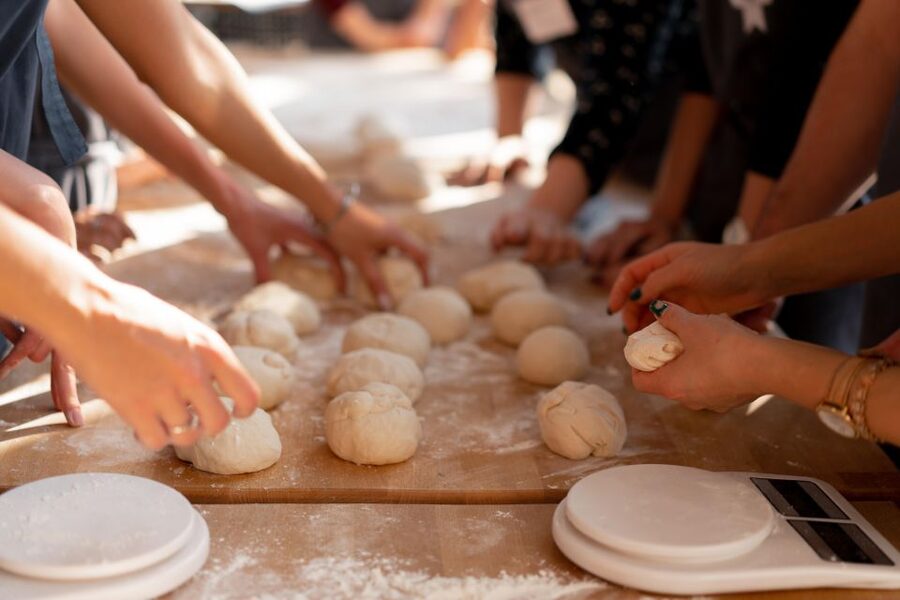
Book it if you want to learn orecchiette and cavatelli from a local teacher, eat your own work, and spend two easy hours with Apulian snacks and wine. Annamaria and Daniele bring patience, humor, and useful home-cooking advice, while the small groups allow real help at the table.
Skip it if you want a fully hands-on course covering dough, sauces, and several dishes from start to finish. For everyone else, the combination of a historic-center setting, local food, a family-friendly pace, and a shared meal makes this a practical and enjoyable addition to a Polignano a Mare stay.
FAQ
How long does the pasta-making class last?
The class lasts two hours.
What pasta shapes will I learn to make?
You will learn to make orecchiette and cavatelli, two traditional Apulian pasta shapes.
Will I eat the pasta I make?
Yes. Orecchiette with tomato sauce is included, and the pasta made during the class is cooked and served.
Are drinks included?
Yes. Drinks and local wine are included, along with an aperitivo featuring typical Puglian products.
What food is served with the aperitivo?
The aperitivo includes items such as taralli, preserved vegetables, seasonal greens, olives, and sometimes focaccia.
Is the activity suitable for vegetarians and vegans?
Yes. The activity is listed as suitable for both vegetarians and vegans.
Where does the class meet?
Meet Annamaria at the typical house at Via S. Vito 20, 70044 Polignano a Mare BA, in the historic center.
Is pickup available from nearby towns?
Optional pickup can be requested from Monopoli and nearby cities. Hotel pickup and drop-off are not included as standard.
Just added around Italy
- Verona: Pasta and Tiramisu Cooking Class with Fine Wine★ 4.8 · 633 reviews
- Siena: Small group Cooking Class in Chianti Farmhouse★ 5.0 · 162 reviews
- 3-hour Tuscan Cooking Class with Wine & Oil Tasting★ 4.5 · 36 reviews
- Italian Cooking Class and Wine Tasting in Tuscany★ 5.0 · 30 reviews
- Truffle Hunting and Cooking Class★ 4.5 · 26 reviews
- Cooking Class in a Secret Courtyard – Culurgiones (Sardinian Pasta)★ 4.5 · 55 reviews
- Cagliari Cooking Class: Sardinian Ravioli, Wine & Local Flavors★ 5.0 · 20 reviews
- Alghero Home Cooking Pasta Class at a Farmhouse with Wine★ 5.0 · 130 reviews
Pasta Making Classes, compared.
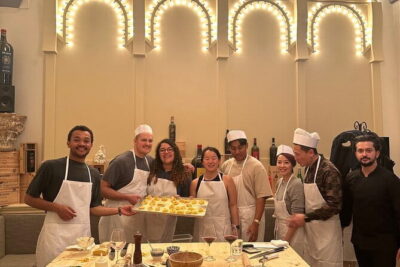
Florence: Pasta Cooking Class with Unlimited Wine
Read our review →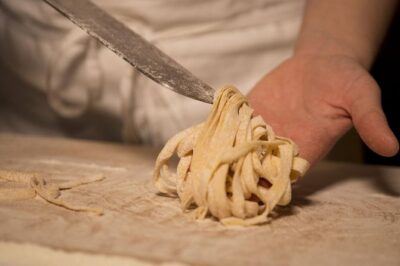
3 in 1 Cooking Class near Navona: Fettuccine, Ravioli & Tiramisu
Read our review →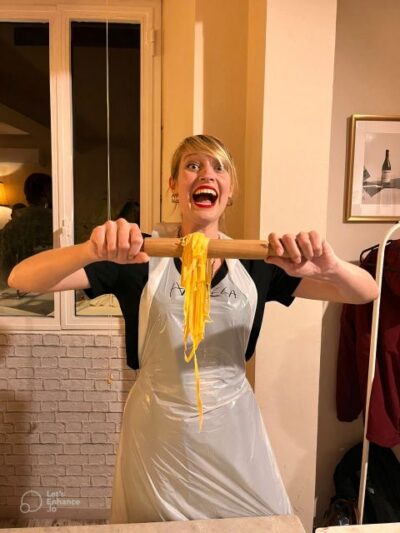
Rome: Pasta Making Class with Wine, Limoncello, and Dessert
Read our review →
Rome Cooking Class: Make Pasta and 3 Spritz Cocktails
Read our review →
Rome: 3-in-1 Fettuccine, Ravioli, and Tiramisu Cooking Class
Read our review →
Rome: Fettuccine Pasta Cooking Class in Rome’s City Center
Read our review →Browse the lists this tour appears in