
Review · ROME
Rome: Traditional Pizza Cooking Class near Piazza Navona
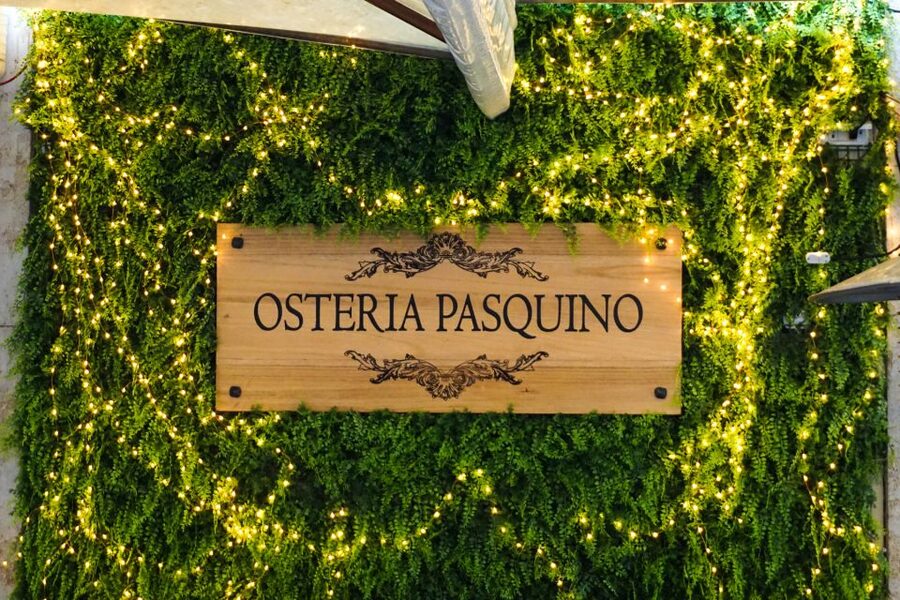
The best part of this class is that you do not just watch a chef make pizza. You work with the dough, shape your own Roman-style pie, choose toppings, and then sit down in Osteria Pasquino to eat what you made. The setting on Piazza di Pasquino puts a little Roman theater around an otherwise simple meal.
I like the small groups of up to 10 and the friendly, hands-on teaching. I also like the generous meal afterward: bruschetta, water, a glass of wine, beer, or soda, plus coffee or limoncello are part of the package. The main drawback is that the class can feel short if you want a serious lesson in dough fermentation, and the drink arrangements are worth clarifying at the start.
Key points to know
- Roman pizza from scratch: You work with flour, yeast, and water, then shape dough prepared for the class.
- Piazza Pasquino setting: The lesson takes place inside Osteria Pasquino, close to Piazza Navona.
- Friendly English-speaking chefs: Instructors have included Luca, Elisa, Sara, Simone, Georgia, and Alessandra.
- Dinner is built in: Eat your pizza with bruschetta and a choice of drink, then finish with coffee, tea, or limoncello.
- Good for families: Children over five and teenagers have enjoyed the relaxed format.
- Useful booking note: Vegetarian diets are supported, but the class is not suitable for people with gluten intolerance.
Making Roman pizza near Piazza Navona
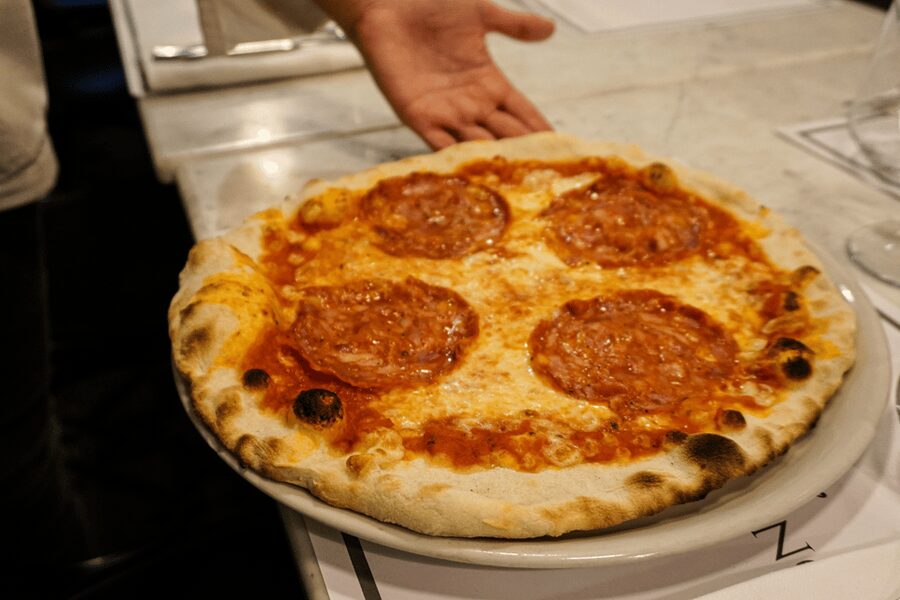
This is a cooking class with a meal attached, not a long culinary course. In about two hours, you get a practical introduction to Roman pizza and a seat at a historic-center osteria afterward.
You meet inside Osteria Pasquino at Piazza di Pasquino 1. The restaurant can be busy, and the outside signage may not make the meeting point obvious. Walk in and ask a waiter to take you to the class. That small step saves you from waiting outside and wondering if you have found the right place.
The welcome usually begins with complimentary prosecco. If you do not drink alcohol, ask what replaces it and how that choice affects the drink served with your meal. One customer was charged for an extra soda after choosing a soft drink at the welcome, so clear this up before the lesson begins.
The class is conducted in English. Instructors have included Luca, Elisa, Sara, Simone, Georgia, Alessandra, and Ana. The names change, but the format stays much the same: an upbeat chef explains the process, keeps an eye on each work station, and helps you recover when your dough refuses to behave.
More Pizza Making Classes in Rome
- Cooking Class in the Heart of Rome: Pizza and Tiramisu Making
★ 5.0 · 1,330 reviews - Rome: Combo Pizza and Pasta Cooking Class with Wine
★ 4.6 · 1,180 reviews - Pizza Cooking Class in Rome – Near Piazza Navona
★ 5.0 · 1,001 reviews
What you actually do with the dough
The useful part of the lesson is its hands-on nature. You are not handed a finished base and asked to sprinkle cheese over it. The class explains the basic ingredients and lets you take part in the dough-making process.
Several participants describe starting with flour, yeast, and water. You learn how the dough comes together, why it needs time to rise, and how flour affects the texture. Since a proper dough may need 24 to 48 hours to rise, the class also uses prepared dough for the shaping stage. This lets you make pizza during a two-hour session rather than waiting until tomorrow for dinner.
That arrangement is practical, but it is important to understand what you are buying. You get a taste of the full process, not a full bakery-style lesson in long fermentation. If your goal is to master hydration percentages, oven temperatures, and several dough styles, this class will feel introductory. If you want to make a good pizza in Rome and learn enough to try again at home, it fits well.
The shaping is where the class becomes playful. You stretch the dough into a thin Roman-style base, using your hands and sometimes a rolling pin. One technique taught in the class is tossing the dough from one hand to the other to remove excess flour. Do not expect everyone to produce a perfect circle. That is part of the fun, and the toppings will hide a few irregular edges.
Choosing toppings and baking your own pizza
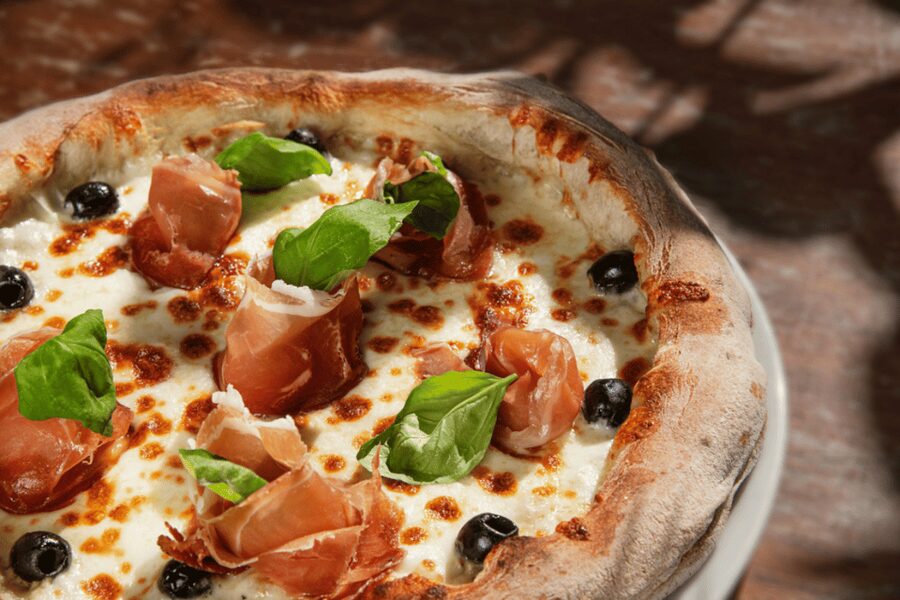
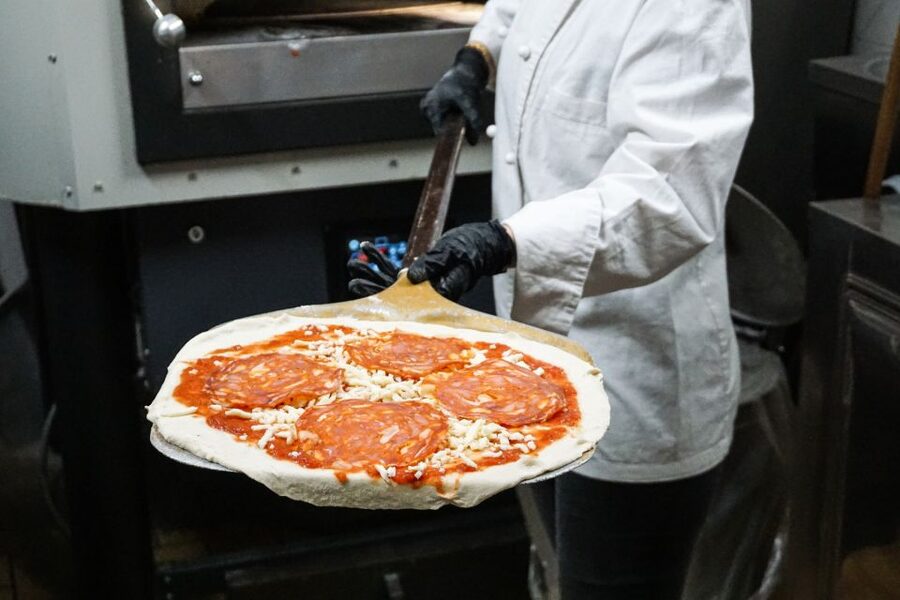
Once the base is ready, you choose from the available toppings. The selection is described as generous, though the exact choices can vary. You then build your pizza and pass it to the oven.
The baking goes quickly. One account describes the pizzas coming out after only a few minutes, ready to be carried to the dining area. You will probably spend more time shaping and chatting than waiting for the oven.
The cooking lesson also covers the kinds of pizza being made. One chef explained the history and different forms of pizza, along with some of the science behind dough. That extra context gives the activity more value than a simple make-and-eat session. You leave with a clearer idea of why Roman pizza is often thin and crisp rather than thick and chewy like Neapolitan pizza.
Expect the teaching to be light and social. Chefs such as Luca and Elisa have been praised for humor, patience, and making sure every person keeps up. Simone has a reputation for mixing clear instruction with conversation. That tone works well for families and mixed groups, though it may feel less focused if you want a quiet, technical workshop.
Eating at Osteria Pasquino
After the pizza comes out, you sit at the osteria and eat it in the same restaurant. This transition is one of the class’s strongest features. You are not standing around a counter, balancing a plate, or being sent elsewhere for dinner.
The meal includes bruschetta, bottled water, and a drink choice. Depending on the arrangement, that may be a glass of wine, a small beer, or a soda. Coffee, tea, or limoncello comes afterward. Prosecco is offered at the beginning as a welcome from the restaurant.
The portions and service make this feel like a proper lunch or early dinner rather than a snack. You can settle in, compare pizzas with the rest of the group, and enjoy the restaurant setting on Piazza di Pasquino. Some people have remained for dessert, but dessert is not listed as part of the class, so treat it as an extra purchase.
The food value is strong at $46 per person. In central Rome, a meal with drinks can quickly approach that price, and here you also get instruction and a social activity. I would not book it solely to save money on dinner, since a simple Roman meal can cost less. I would book it if you want dinner to be part of the day’s entertainment.
Same place, a different menu:
- 3 in 1 Cooking Class near Navona: Fettuccine, Ravioli & Tiramisu
★ 5.0 · 7,376 reviews - Rome: Pasta Making Class with Wine, Limoncello, and Dessert
★ 4.9 · 3,177 reviews - Rome Cooking Class: Make Pasta and 3 Spritz Cocktails
★ 5.0 · 2,937 reviews - Rome: 3-in-1 Fettuccine, Ravioli, and Tiramisu Cooking Class
★ 4.9 · 2,704 reviews
Why the small group matters
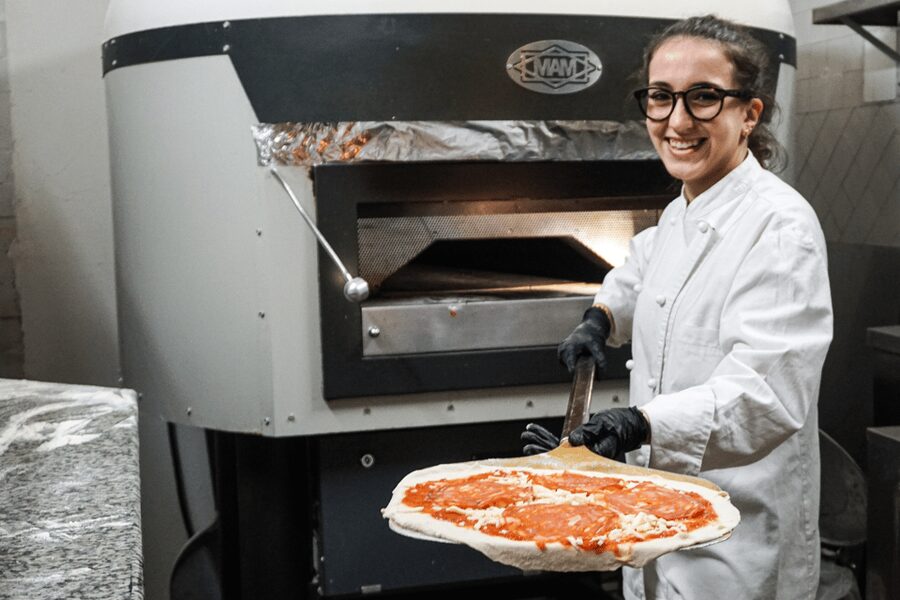
The maximum group size is 10. That is large enough to meet other people but small enough for the chef to reach each work station. It also makes the lesson work for families, couples, and solo visitors.
A private class is possible by chance when demand is low. Some sessions have had only one family or a very small number of people. That can give you extra attention, but you should not book expecting a private lesson. The stated format is a small shared group.
The social side is part of the appeal. You may end up sharing a table with people from several countries and comparing the pizzas you made. The food provides an easy reason to talk, and the class does not require any previous cooking skill.
The chefs tend to keep things relaxed. That suits beginners who worry about making a mess. It also works for a family with different ages and confidence levels. A seven-year-old has enjoyed the activity with a parent, while families with teenagers have found enough independence and humor to keep older children involved.
Is it good for children?
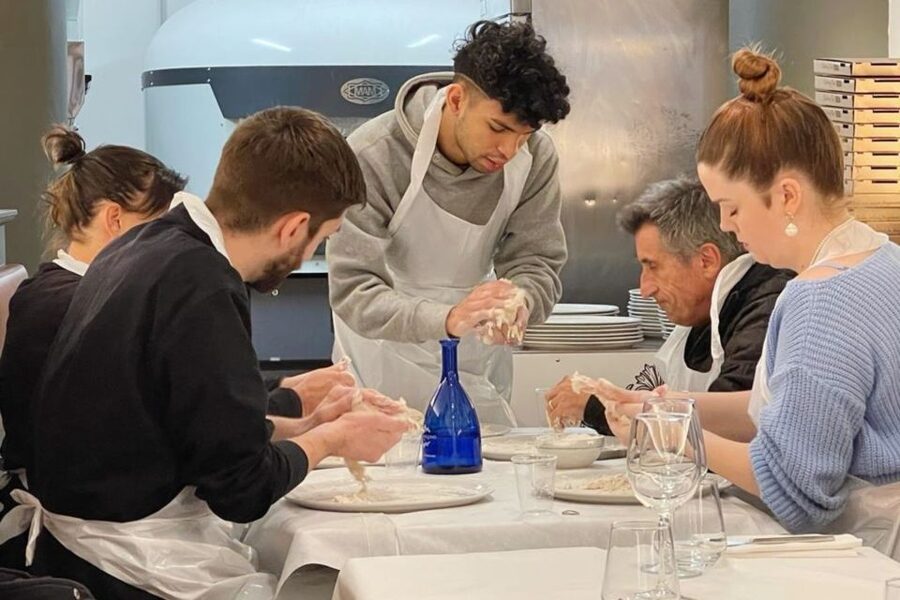
Yes, for children aged five and above. The class has worked especially well for families with children around seven to eleven and for groups with teenagers.
You should expect flour, hands-on work, and some waiting while other people receive help. Younger children may need an adult nearby, especially during shaping and topping. The class is not designed as a children-only workshop, so adults should be ready to take part rather than watch from the side.
For teenagers, the appeal is clear: you make real food, sit in a restaurant, and get a drink with dinner. The format is more active than a standard sightseeing stop and gives a family a shared task without requiring a full day.
Children under five are not accepted. People with gluten intolerance should also choose another activity. Vegetarian options and other dietary needs can be supported if you tell the provider when booking, but the information supplied does not promise a separate gluten-free dough.
Timing, pace, and the two-hour promise
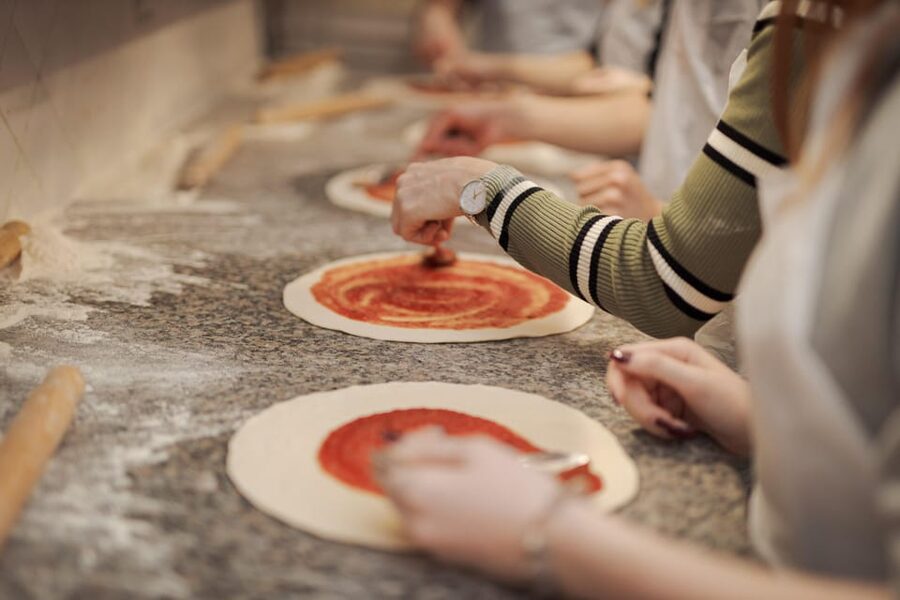
The advertised duration is two hours. That gives enough time for an introduction, dough work, shaping, baking, and the meal afterward.
Still, the pace may vary. Some classes move quickly, with the cooking portion completed in about 45 minutes before the meal begins. That can be a benefit if you are fitting the class between Piazza Navona and the Pantheon. It can disappoint you if you expect two full hours of instruction.
The class is best viewed as a compact food activity rather than a long workshop. You will learn the main steps, make your own pizza, and eat it in a pleasant setting. The time is used efficiently, but the lesson will not cover every detail of Italian pizza-making.
Check the starting time when you book. The activity runs at set times, and the exact schedule is not supplied in the basic description. Allow a few extra minutes to find Piazza di Pasquino and check in with the restaurant staff.
Getting there and finding the restaurant
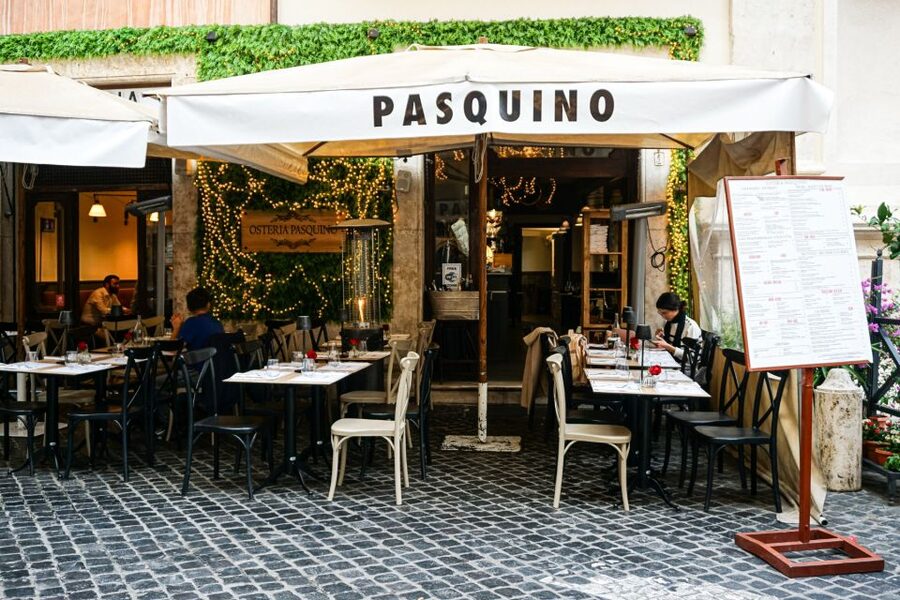
The meeting point is Osteria Pasquino, Piazza di Pasquino 1. The location is near Piazza Navona, in the historic center, so it works well alongside central Rome sightseeing.
The practical issue is the entrance. The outside may not clearly identify the cooking class. Go inside the osteria and ask a waiter to escort you to the class. If you arrive early, you may wait at an outside table before the lesson begins.
The central setting is convenient, but it also means the area can be busy and distracting. Give yourself time to arrive without rushing from another appointment. You do not need transportation arranged for the activity, and the meeting point is in an area many people visit on foot.
The venue is wheelchair accessible. For any specific mobility needs, I would still mention them when booking, since the class takes place in a working restaurant and the exact seating arrangement may vary.
What makes the instructors effective
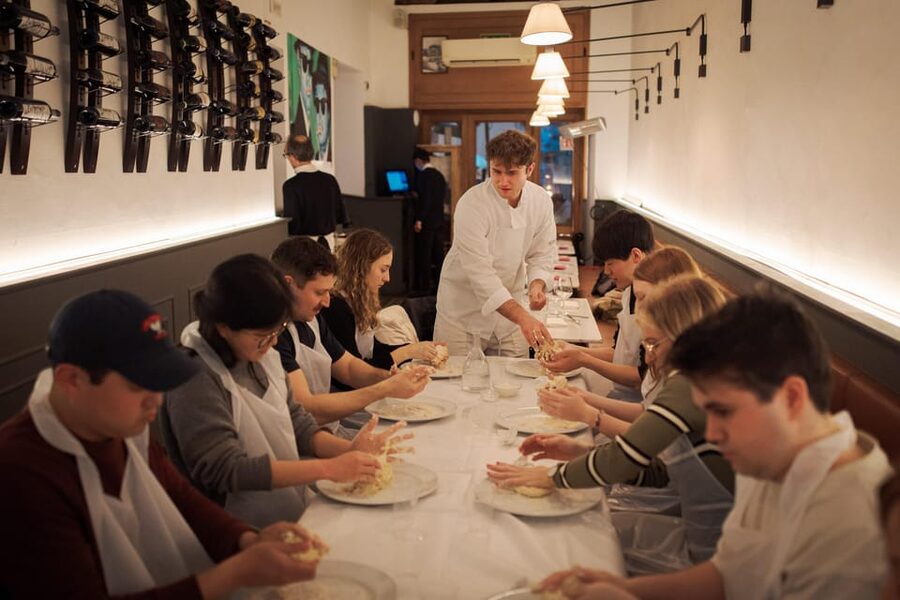
The strongest part of the class is usually the chef leading it. Luca has been praised for being welcoming and fun while explaining the pizza-making process. Elisa has been described as warm and attentive, with a talent for helping people feel involved.
Sara and Simone have also led sessions with a mix of instruction and humor. Georgia and Alessandra have been noted for their positive energy. These details matter because a cooking class can become awkward if the instructor simply demonstrates from a distance.
The teaching style appears relaxed rather than formal. You get useful facts about dough and pizza types, but you also get stories, jokes, and help at the table. That makes the class easy for a first-time cook.
The tradeoff is depth. A relaxed instructor may focus on making the activity enjoyable for everyone rather than giving a technical lecture. You will probably learn enough to repeat the recipe at home, but you will not leave as a pizza professional.
Price, inclusions, and small cautions
At $46 per person, the price covers the instructor, cooking activity, your pizza, bruschetta, bottled water, and a drink. Coffee, tea, or limoncello is also included after the meal. The welcome prosecco adds a pleasant beginning.
For Rome’s historic center, that is a fair package. You are paying for a central restaurant, food, drinks, and a two-hour activity. The value is strongest if you already planned to eat in this part of town.
Read the drink arrangement carefully when you arrive. Ask whether your welcome prosecco, soda, or other substitute counts toward the drink with dinner. That avoids the kind of unexpected charge that can sour an otherwise good evening.
Vegetarians can be accommodated, and other diets may be possible with advance notice. Gluten intolerance is specifically excluded, so do not assume that a dietary request will produce a safe gluten-free pizza.
Free cancellation is available up to 24 hours before the activity for a full refund. You can also reserve now and pay later, which helps if your Rome schedule is still changing.
Who should book this pizza class?
I would recommend it to families, couples, first-time cooks, and anyone who wants a meal with a little activity built in. It is especially useful on a Rome trip when you want a break from monuments and museums without giving up the city’s food culture.
It also suits people who like meeting others. The group is limited to 10, but the class remains social rather than private. Solo visitors can join without needing to arrange a group of their own.
I would choose something else if you have gluten intolerance, want a highly technical baking course, or dislike group activities. I would also skip it if you only want a quick restaurant meal, since the cooking lesson is the point.
Should you book it?
Book this class if making your own Roman pizza sounds more appealing than simply ordering one. The central location, approachable chefs, family-friendly format, and included food and drinks make $46 a reasonable price.
Go in with the right expectations. You will learn the basic method, shape and top a pizza, and enjoy it at Osteria Pasquino. You may not receive two full hours of technical instruction, and you should clarify the drink policy at check-in. For a cheerful Rome evening that combines cooking, dinner, and a little local atmosphere, this is a solid choice.
FAQ
Where does the pizza class meet?
Meet inside Osteria Pasquino at Piazza di Pasquino 1, near Piazza Navona. Ask a waiter to escort you to the class.
How long does the activity last?
The advertised duration is two hours. The cooking portion may move faster, with some sessions finishing the practical work in about 45 minutes before the meal.
Is the class taught in English?
Yes. The instructor teaches in English.
Do I need previous cooking experience?
No. The class is designed for beginners and includes guidance through the pizza-making steps.
What food and drinks are included?
The package includes your pizza, bruschetta, bottled water, and a glass of wine, a small beer, or a soda. Coffee, tea, or limoncello is included afterward, and complimentary prosecco is offered as a welcome.
Is the class suitable for children?
Children under five are not suitable for the activity. Children aged five and above, including teenagers, can take part.
Can vegetarians join?
Yes. Vegetarian options are available. Tell the provider about dietary needs when booking.
Is the class suitable for people with gluten intolerance?
No. The activity is not suitable for people with gluten intolerance.
Is the venue wheelchair accessible?
Yes. The activity is listed as wheelchair accessible.
Can I cancel the booking?
You can cancel up to 24 hours in advance for a full refund. A reserve-now, pay-later option is also available.
More Hands-On Workshops in Rome
- Rome: Fettuccine Pasta Cooking Class in Rome’s City Center
★ 4.8 · 2,414 reviews - Fettuccine & Tiramisù: Cooking Class with Wine & Limoncello
★ 4.9 · 2,103 reviews - Pasta Cooking Class Near the Colosseum with 3 Spritz Cocktails
★ 5.0 · 1,686 reviews - Rome: Pasta & Tiramisu Cooking Class near the Spanish Steps
★ 4.8 · 1,395 reviews
Just added around Rome
- Farmers’ Market Shopping with Cooking Class and Pasta Making★ 5.0 · 91 reviews
- Kitchen of Mamma: Pasta Cooking Class with market visit in Rome★ 5.0 · 140 reviews
- Rome Cooking Class 2-in-1: Make Fresh Pasta and Tiramisu Together★ 5.0 · 198 reviews
- Rome: Hands-on Fettuccine, Ravioli & Tiramisu Cooking Class★ 5.0 · 204 reviews
- Pasta Making and Tiramisù Cooking Class in Rome★ 5.0 · 217 reviews
- Rome: Pasta-Making Class with Italian Spritzes★ 4.8 · 229 reviews
- Cook With Us in Rome: A Hands-On Cooking Experience 09:20AM class★ 5.0 · 234 reviews
- Pasta and tiramisù Cooking class with Wine at Piazza Navona★ 4.8 · 235 reviews
Pizza Making Classes, compared.
Naples: Pizza-Making Workshop with Drink and Appetizer
Read our review →
Authentic Pizza Making Class in Naples with Appetizers and Drink
Read our review →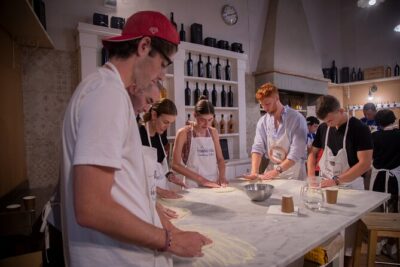
Florence Cooking Class The Art of Making Gelato & Authentic Pizza
Read our review →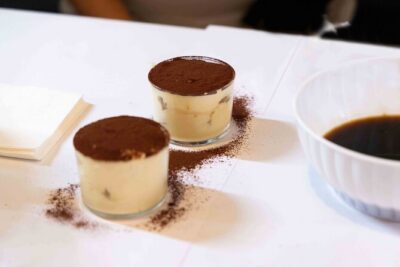
Cooking Class in the Heart of Rome: Pizza and Tiramisu Making
Read our review →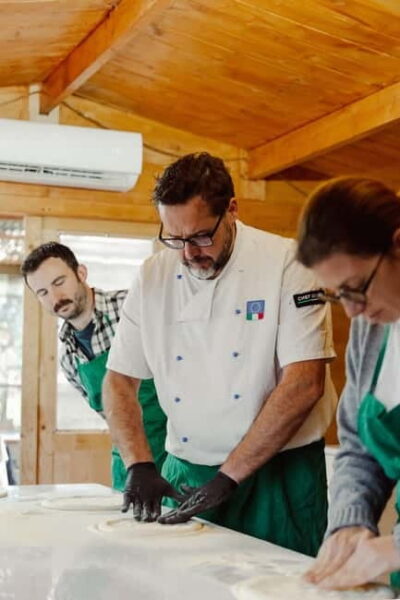
Rome: Combo Pizza and Pasta Cooking Class with Wine
Read our review →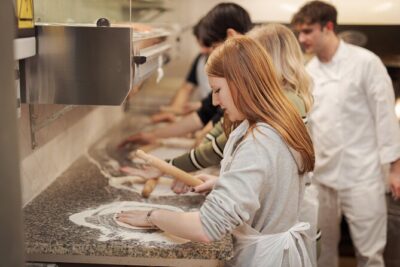
Pizza Cooking Class in Rome – Near Piazza Navona
Read our review →
Rome: Pizza & Tiramisu Class with Free Flowing Fine Wine
Read our review →
Palermo: Pizza and Gelato Cooking Class with Dinner and Wine
Read our review →Browse the lists this tour appears in