
Review · BARI
Bari: Private Pasta-Making Class at a Local’s Home
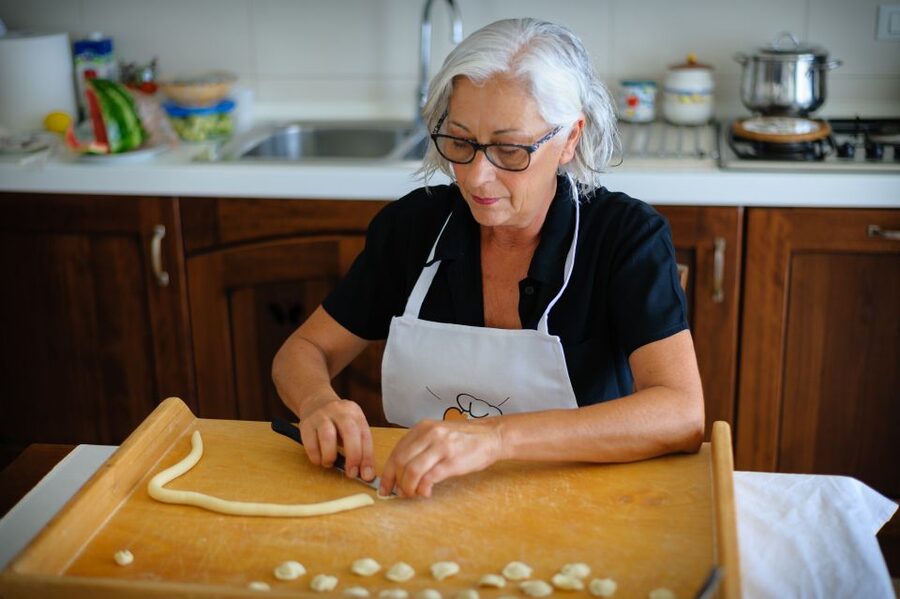
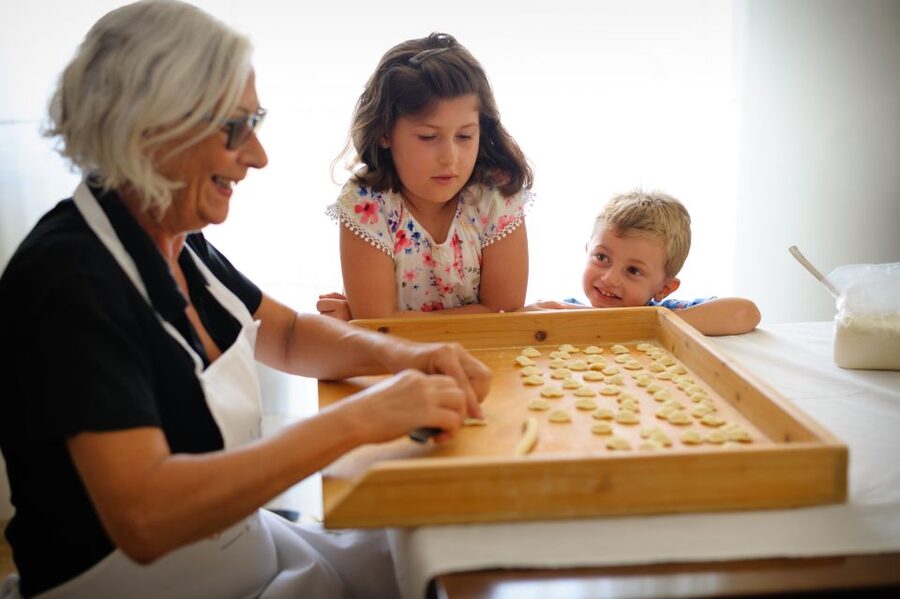
The best part of this Bari experience is that the cooking happens in a local family home, not a restaurant classroom. You learn three Apulian pasta recipes, then sit down to eat what you made with wine and conversation. I like the private format and the chance to hear family cooking tips from an Italian home cook. I also like that each person gets a workstation, so you are not simply watching someone else do the work.
The main consideration is the undisclosed meeting address. You receive the exact location only after booking, so this takes a little more planning than a class at a named cooking school. The class usually begins at 10:00 AM or 5:00 PM, though some flexibility may be possible if you ask ahead.
Key points at a glance
- Three regional recipes: Learn local pasta dishes from family cookbooks rather than a generic Italian menu.
- Private home setting: Cook and eat with a local family in a more personal setting than a large group class.
- Hands-on workstations: Each participant has utensils and ingredients for the practical part of the lesson.
- A full meal at the end: Taste all three dishes with local red and white wines, water, and coffee.
- Annalisa may host your class: Her warm welcome and lively conversation are central to the experience described by past participants.
- Flexible dietary requests: Vegetarian, vegan, and gluten-free needs can be arranged if you provide details when booking.
Why a Bari pasta class works so well
Bari is a good place to take a cooking class because food here is tied closely to home life. Pasta is not treated as a fancy restaurant course. It is something shaped, cooked, served, and shared around a table.
That makes this three-hour activity more than a recipe lesson. You get a practical look at how regional dishes are made, but you also get time with an Italian family. I like this balance. A short kitchen class gives you something useful to do, while the meal afterward gives the evening or morning a social center.
The class is private, which matters. You are not being folded into a large group with several unrelated parties. Your host can focus on your questions, adjust the pace, and make the session feel more like a visit than a demonstration. The tradeoff is that a private home class may feel less standardized than a professional cooking school. That is part of its charm, but it also means the exact home, host, and kitchen setup are not fully described in advance.
More Pasta Making Classes in Italy:
- Florence: Pasta Cooking Class with Unlimited Wine
★ 4.9 · 10,285 reviews - 3 in 1 Cooking Class near Navona: Fettuccine, Ravioli & Tiramisu
★ 5.0 · 7,376 reviews - Florence: Pasta & Tiramisu Cooking Class with Unlimited Wine
★ 4.9 · 6,708 reviews
Arriving at a local family home
You will receive the full address after booking. This protects the family’s privacy, but it means you cannot plan your route from the public activity information alone. Read the confirmation carefully and use the contact details provided there if you need help locating the meeting point.
The activity begins and ends at the same home. No separate transport is included, and no sightseeing stops are built into the schedule. Think of this as a focused food visit, not a city tour with a cooking stop attached.
The class usually starts at 10:00 AM or 5:00 PM. The morning session can work well if you want a substantial lunch and still have the afternoon free. The late-afternoon option leads naturally into dinner and may suit you better after a day of seeing Bari. You can ask the local partner about flexibility in advance, but do not assume that every time of day is available.
A little preparation helps. Contact the host if you have food restrictions, dislikes, or preferences. Vegetarian, vegan, and gluten-free requests can be accommodated, but the information needs to be supplied at booking time.
Three pasta recipes, one working station
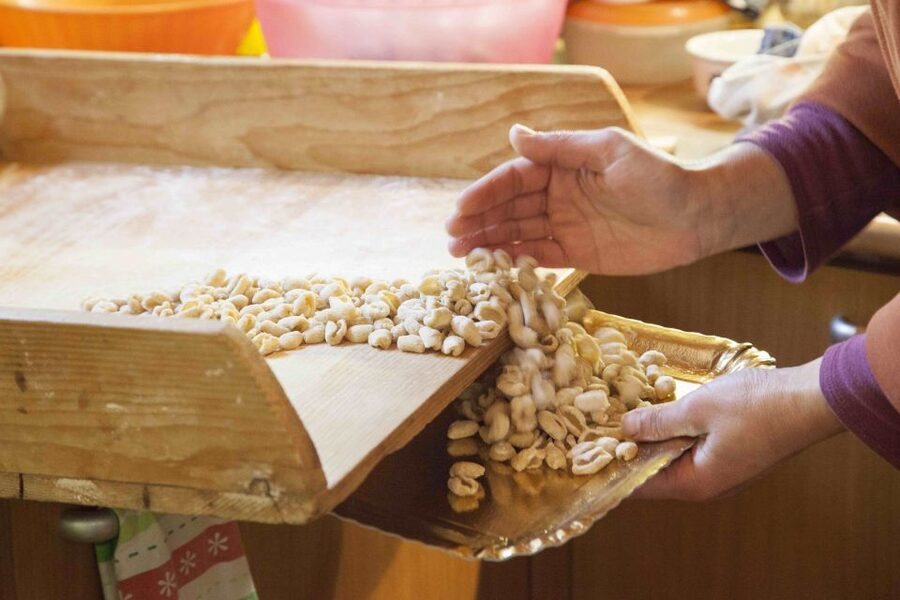
The main lesson covers three traditional regional pasta recipes. The exact dishes are not specified in advance, so you should book for the cooking process and the local connection rather than for one guaranteed pasta shape.
Each participant receives a workstation with utensils and ingredients. That detail makes a real difference. You can work with your own hands, repeat a technique, and ask for help without waiting for a crowded table to clear. If you are traveling with children or with friends who have different kitchen skills, the private format also makes it easier to keep everyone involved.
Your host explains the family methods behind the recipes and shows the small tricks that turn a list of ingredients into a finished dish. The value here is not just copying instructions. You get a sense of how a home cook thinks about the dough, the shaping, and the timing.
I would pay attention to the ordinary details. Ask how the recipe changes from one household to another. Ask which steps can be prepared ahead of time. Ask what the host cooks when there is no special occasion. Those questions often tell you more about regional food than a formal lecture.
The class is conducted in Italian and English, so English-speaking visitors can follow the instruction. Still, food demonstrations often include gestures and visual examples, which makes the hands-on format useful even when a phrase or two passes quickly.
From kitchen lesson to shared meal
Once the pasta is ready, you eat the three dishes you prepared. This is an important part of the schedule, not an afterthought. You see the result of your work, compare the dishes, and get to enjoy the food while it is fresh.
The meal includes local red and white wine, along with water and coffee. The wine gives the tasting a regional touch, while coffee brings the meal to a familiar Italian finish. Since all three pasta dishes are included, you are likely to leave with a fuller understanding of the recipes than you would get from sampling one plate.
The social side can be just as memorable as the food. Annalisa is named in the available feedback, and her hosts made a point of treating the visitors like family. The meal was paired with lively conversation, which is exactly where a home class earns its price. You are not simply eating in a private residence. You have time to talk with the people who cook these foods in their own lives.
I would not expect a silent, highly controlled restaurant service. The pace may be conversational and relaxed. That is good if you want contact with local life. It may be less appealing if you want a fast class with precise measurements and a quick exit.
More Hands-On Workshops in Italy:
- Florence: Pasta Cooking Class with Unlimited Wine
★ 5.0 · 6,413 reviews - Naples: Pizza-Making Workshop with Drink and Appetizer
★ 4.9 · 5,411 reviews - Cooking Class and Lunch at a Tuscan Farmhouse with Local Market Tour from Florence
★ 5.0 · 4,831 reviews - Authentic Pizza Making Class in Naples with Appetizers and Drink
★ 5.0 · 3,178 reviews
What the private format adds
The private-group setup is the strongest practical feature. You can ask questions without competing with a busload of people, and you can spend more time on a technique that gives you trouble. You also have more room for conversation with your host.
A private class can be especially useful for couples, families, and small groups of friends. It gives you a shared activity without forcing you into a public class with strangers. If you are traveling alone, the private setting may feel more personal, though the cost can be harder to justify for one person.
The home setting also changes the tone. You are seeing how hospitality works in a family environment, rather than watching an instructor perform in a commercial kitchen. That connection is one of the main reasons to choose this activity over a cheaper group cooking lesson.
There is a limit, however. The information does not specify the home’s size, layout, or exact neighborhood. If you need a fully detailed venue description before booking, this experience may feel too open-ended. You will have to rely on the address and instructions sent afterward.
Is $164.26 per person good value?
At $164.26 per person, this is not a budget meal or a simple pasta demonstration. The price makes more sense when you count the full package: three hours of instruction, a private group, three pasta dishes, wine, water, coffee, ingredients, equipment, and the home-hosted setting.
I would compare it with the price of a good dinner plus a separate cooking class. Here, the meal is the result of your own work, and the private format gives you more attention than a standard group lesson. You are also paying for access to a local household and for the chance to share a table with the host.
The value depends heavily on what you want from Bari. If you only want a plate of pasta, a restaurant will cost less and take less time. If you want a personal activity that gives you a recipe lesson and a social evening, the price is easier to defend.
For a couple or a small group, the cost buys a memorable shared event. For a solo visitor, I would think carefully about the private-group pricing. The included meal and beverages help, but the main value remains the personal contact and hands-on instruction.
Who will enjoy this most
I would recommend this class to you if food is one of the main reasons you travel. It suits curious cooks, couples, families, and anyone who prefers a local home to a polished tourist venue.
It is also a good choice if you want a slower activity between sightseeing days. Three hours is long enough to learn something and eat properly, but not so long that it takes over an entire day. The morning and late-afternoon starting options make it easier to fit into a Bari schedule.
Families should note that the experience is practical and social, not a quick child-focused workshop. Children who enjoy mixing, shaping, and eating their work may have a fine time. The booking information does not give a minimum age, so ask the provider if you are bringing young children.
You should think twice if you need an exact menu, a highly formal cooking school, or a fixed public meeting point. You should also contact the host early if you have dietary needs. The class can cater to several requirements, but only if those details are shared ahead of time.
How to get the most from the three hours
Come ready to work. You will have a station and ingredients, so this is not an activity where you sit back and watch the host prepare everything. Wear something comfortable and expect to spend part of the time handling food and following instructions.
Use the lesson to ask questions that will help you cook at home. Ask about substitutions, storage, cooking times, and the difference between the three recipes. The family cookbook angle is useful because it points toward food people actually make, not just dishes designed for a tourist demonstration.
Give the meal enough time. The food you prepare is the heart of the class, and rushing away after the last pasta shape would miss half the point. The combination of red and white wine, coffee, and conversation is what turns the lesson into a complete visit.
If you want the late-afternoon session, plan your day around dinner rather than adding another large meal afterward. If you choose the morning, allow room for a generous lunch and use the afternoon for a lighter schedule.
Should you book this Bari pasta class?
Book it if you want hands-on cooking, a private setting, and time with an Italian family. The strongest reason to choose it is not simply the pasta. It is the chance to learn three regional recipes, eat what you made, and share conversation in a real home.
The experience is particularly appealing with Annalisa, whose warm family welcome and lively table conversation are a major part of its appeal. Just remember that the host and exact home address are confirmed after booking, and the menu is not listed in advance.
I would skip it only if the price is beyond your food budget, you prefer a public venue with a fixed address, or you want a specific named dish. For everyone else, this is a thoughtful way to spend three hours in Bari, with a meal at the end that you helped create.
FAQ
How long does the pasta-making class last?
The activity lasts three hours.
What time does the class usually begin?
The class usually starts at 10:00 AM or 5:00 PM. Some flexibility may be possible if you contact the local partner in advance.
Where does the activity take place?
The class takes place in a local family’s home. You receive the exact address and meeting instructions after booking.
What food and drinks are included?
You prepare and taste three local pasta dishes. Water, local red and white wine, and coffee are included.
Can dietary requirements be accommodated?
Yes. Vegetarian, vegan, and gluten-free requests can be arranged, but you need to provide your requirements or preferences when booking.
Is this a private class?
Yes. The activity is offered for a private group, with instruction in Italian and English.
Just added around Italy
- Monopoli: Parco Rurale Guided Tour with Pasta-Making Lab★ 4.9 · 13 reviews
- Montepulciano: Pasta-Making Class with Tasting and Wine★ 4.7 · 39 reviews
- Montone: Pasta Making and Dinner at Cardaneto Castle★ 5.0 · 4 reviews
- Modena: Private Pasta-Making Class at a Local’s Home★ 4.3 · 3 reviews
- Modena: Home Cooking Class Tagliatelle and Ragu and Tiramisu★ 5.0 · 23 reviews
- Milazzo: Sicilian Pasta Making Class with Dinner★ 5.0 · 5 reviews
- Milan: Private Cooking Class at a Local’s Home★ 5.0 · 9 reviews
- Rome Pizza & Gelato Cooking Class★ 4.6 · 49 reviews
Pasta Making Classes, compared.
Florence: Pasta Cooking Class with Unlimited Wine
Read our review →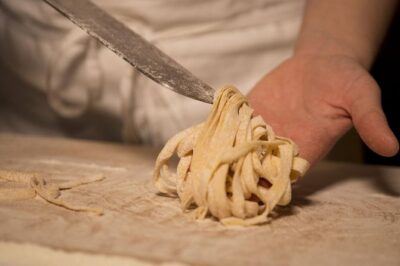
3 in 1 Cooking Class near Navona: Fettuccine, Ravioli & Tiramisu
Read our review →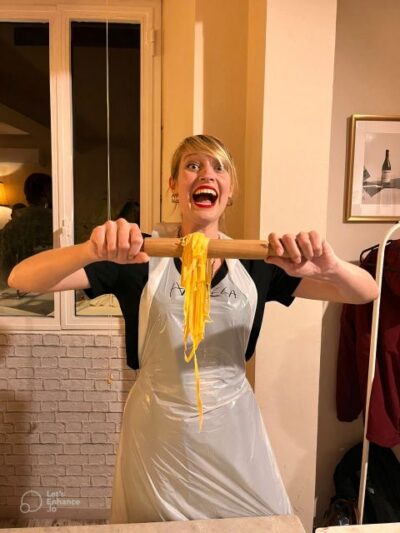
Rome: Pasta Making Class with Wine, Limoncello, and Dessert
Read our review →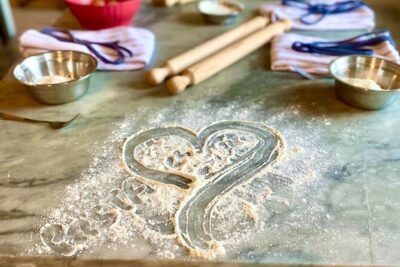
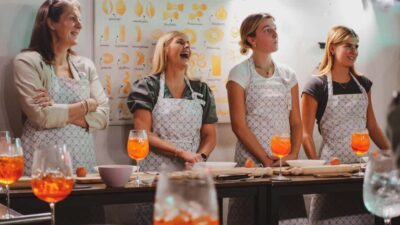
Rome Cooking Class: Make Pasta and 3 Spritz Cocktails
Read our review →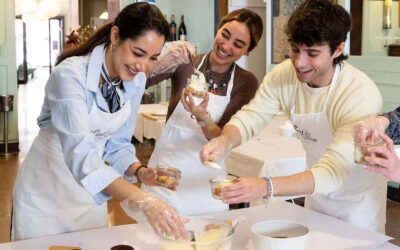
Rome: 3-in-1 Fettuccine, Ravioli, and Tiramisu Cooking Class
Read our review →
Rome: Fettuccine Pasta Cooking Class in Rome’s City Center
Read our review →Browse the lists this tour appears in