
Review · CHIANG MAI
Chiang Mai Lanna Northern Thai Cooking Experience with Locals
Cooking over a charcoal stove with a clay pot is the heart of this Chiang Mai experience. You begin at a local market, continue to a village home and organic garden, then prepare four Northern Thai dishes with your host and eat together in the countryside.
I like the hands-on teaching, especially the chance to chop, pound, slice, and measure every ingredient instead of watching a demonstration. I also like the small group limit of six, which gives host Lyn room to adjust the pace and explain how each spice changes the flavor. The main drawback is the long six-and-a-half-hour schedule, so this suits you best if you want a full cooking day rather than a quick class.
Key points to know before booking
- A market visit comes first: You shop for ingredients with your host before heading to the cooking location.
- The setting is rural: Expect rice fields, fruit orchards, and an organic farm rather than a city restaurant.
- You cook four dishes: The menu is Northern Thai Lanna food and includes dessert, with examples such as khao soi and gaeng hang lay.
- The cooking is genuinely hands-on: You chop, slice, pound, measure, taste, and adjust ingredients yourself.
- Groups are capped at six: That matters when you want personal help at the stove.
- The day runs 8:30 am to 3:00 pm, or 3:30 pm to 10:00 pm: Pickup, ingredients, tools, drinks, fruit, insurance, and a recipe book are included.
Why Lanna cooking feels different from standard Thai food
Many visitors arrive in Chiang Mai knowing pad Thai, green curry, and mango sticky rice. Lanna cooking gives you another view of Thai food, shaped by the cooler northern region and its own local traditions.
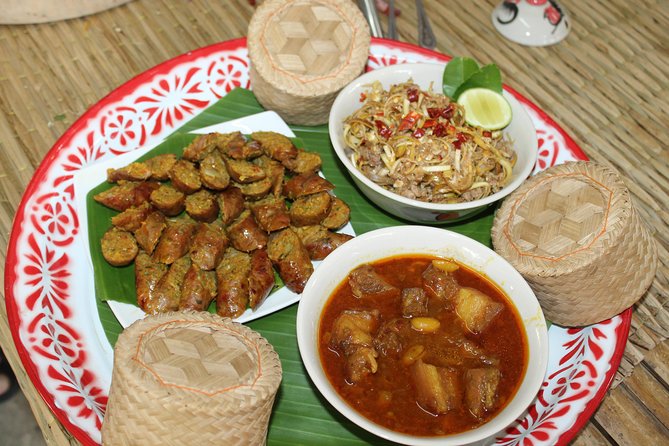
The dishes tend to feel hearty and aromatic. Khao soi, Chiang Mai noodles, combines noodles with a curry-style sauce and is one of the area’s best-known foods. Gaeng hang lay is another northern favorite, a curry with a deeper, more savory character than the coconut-based curries many people first associate with Thailand.
The class also includes examples such as abb moo, minced pork wrapped in banana leaves, and sai oua, Chiang Mai sausage. The exact selection can vary, but you should expect four dishes in total, including dessert.
I like that the focus is not just on following a recipe. You taste as you go. One especially useful part of the teaching is learning how the flavor shifts when spices are added one at a time. That small lesson can help you cook better at home because you begin to understand balance rather than simply copying measurements.
More Thai Cooking Classes in Chiang Mai:
- Half-Day Thai Cooking Class at Organic Farm in Chiang Mai
★ 5.0 · 19,087 reviews - Chiang Mai: Cooking Class, Market & Thai Herbs Garden Tour
★ 4.9 · 4,824 reviews - Thai and Akha Cooking Class in Chiang Mai
★ 5.0 · 4,358 reviews
The market visit gives the cooking real context
Your host picks you up and takes you to a local market before continuing to the house by local transport or private car. The market is not just a stop for atmosphere. It is where you see the raw ingredients before they reach the cooking table.
This helps you connect the finished food with the products used to make it. You can look at herbs, vegetables, curry ingredients, and other items with your host’s guidance. If you have ever bought a packet of northern curry paste without knowing what went into it, this part can make the flavors easier to understand.
The market also gives you a chance to ask questions early in the day. You can learn which ingredients are common in northern cooking and which items are used for a particular dish. The experience is more useful because shopping, preparation, cooking, and eating form one continuous story.
The pace may feel slower than a class that starts immediately at a kitchen. That is part of the tradeoff. You spend time getting there and looking around, but you gain a clearer sense of how local food is bought and prepared.
From the market to a village home and organic garden
After the market, you continue to a local village and an organic garden. The setting is in the countryside, surrounded by rice fields, fruit orchards, and an organic farm.
This is a good fit if you want more than a restaurant meal. You see where the class takes place and spend time in a home setting rather than a formal cooking school. The garden also gives the ingredients a more direct connection to the place where you are eating.
Do not expect a polished culinary studio with a staged design. The appeal is the domestic setting and the chance to share time with a local family. That can feel more personal, but it also means the surroundings may be simple and the day may follow a relaxed household rhythm.
For me, that is an important distinction when comparing cooking classes in Chiang Mai. Some classes focus on speed and presentation. This one is built around food, family conversation, and everyday life in the countryside.
Cooking four northern dishes over charcoal
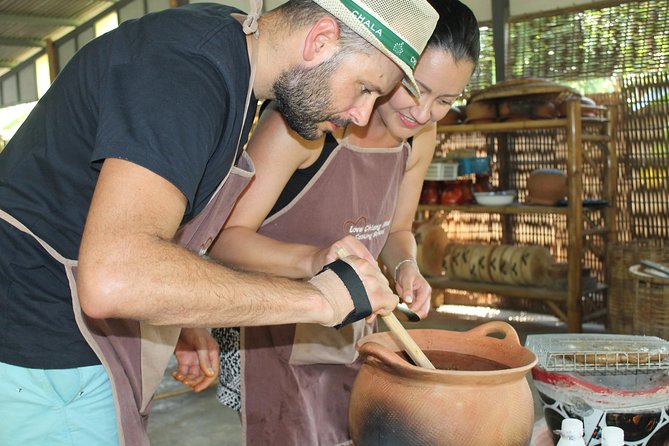
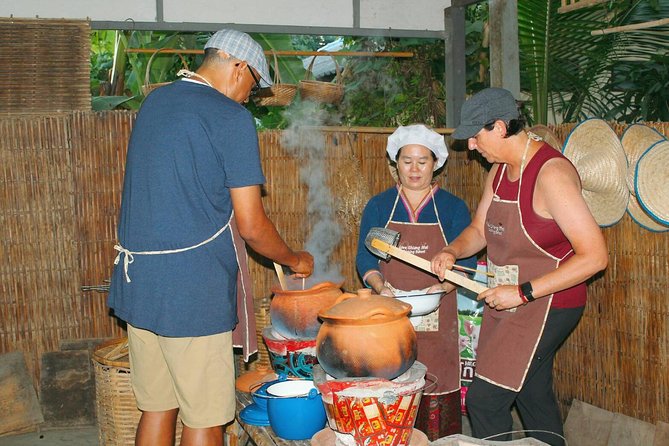
The class uses a charcoal stove and clay pot, which gives the cooking a traditional feel and changes the pace. You are not simply pressing buttons on a modern cooker. You need to pay attention to heat, timing, and the condition of the food.
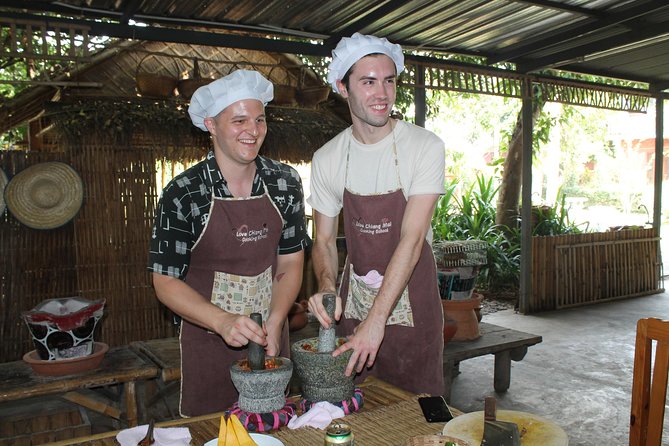
Your host guides you through the work, including chopping, slicing, pounding, and measuring. You also taste the food as spices are added. That hands-on approach is one of the best reasons to choose this experience.
It is especially useful for people who want to repeat the dishes at home. You learn what the ingredients look like, how they are prepared, and how the food develops during cooking. The recipe book included at the end gives you a written reference, though you should still take mental notes about texture and seasoning.
Lyn is described as adjusting the pace to suit the people in the class and giving careful assistance. That matters because cooking experience varies widely. A confident home cook may want to move ahead, while a beginner may need more time with a knife, mortar, or unfamiliar ingredient.
The small group limit of six supports this style. You are more likely to get help when you need it, and the instructor can see what is happening at each cooking station.
A few more cooking classes around Chiang Mai worth a look
- Chiang Mai: Authentic Cooking Class with Market & Farm Visit
★ 4.9 · 4,546 reviews - Chiang Mai: Cooking Class with Market and Pickup
★ 4.9 · 1,365 reviews - Chiang Mai: Cooking Class with Organic Farm at Mama Noi
★ 4.9 · 1,151 reviews - Full Day Thai Cooking at Farm (Chiang Mai)
★ 5.0 · 1,127 reviews
What you may cook during the class
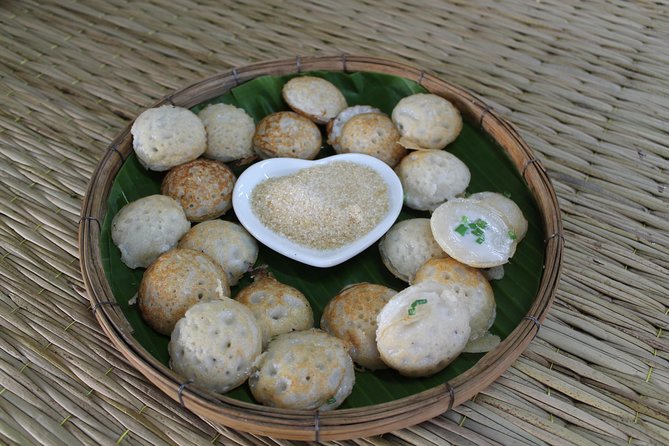
The sample dishes show the range of Lanna food:
- Khao soi: Chiang Mai noodles served with a northern curry-style preparation.
- Gaeng hang lay: Chiang Mai curry with a savory, spiced profile.
- Abb moo: Minced pork wrapped in banana leaves.
- Sai oua: Chiang Mai sausage.
The program includes four dishes, including dessert. Since the examples listed include four savory dishes, you should confirm the exact menu if a particular dish matters to you. The menu may depend on the day’s ingredients, the group, and dietary requests.
The class is not only about producing a large meal. It is also about learning the steps behind it. You may find the most useful part is the repeated adjustment of taste, since northern food can depend on careful balance between spice, salt, sour notes, and richness.
By the time you sit down, you have done the work yourself. That makes the meal feel different from ordering the same food in town. You know how the banana leaves were used, how the curry came together, and how much preparation went into each plate.
Sharing lunch or dinner with the host family
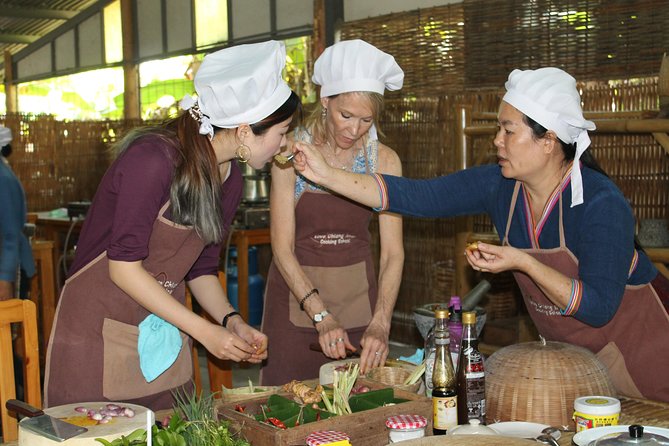
At the end, you eat the food with your hosts. The lunch schedule runs from 8:30 am to 3:00 pm. The dinner schedule runs from 3:30 pm to 10:00 pm.
The shared meal is the social center of the experience. You are encouraged to talk, exchange stories, and eat together as locals do. If you enjoy conversation and cultural exchange, this may be more rewarding than a class where everyone cooks and leaves separately.
The countryside setting adds to the meal. You are surrounded by rice fields, fruit orchards, and the organic farm rather than traffic and city buildings. The food is still the main event, but the surroundings help you slow down.
You should plan to eat a lot. The class includes several dishes, dessert, seasonal fruit, and water, coffee, or tea. One practical tip is to arrive hungry, because the portions and tasting during preparation can add up quickly.
What makes the small group useful
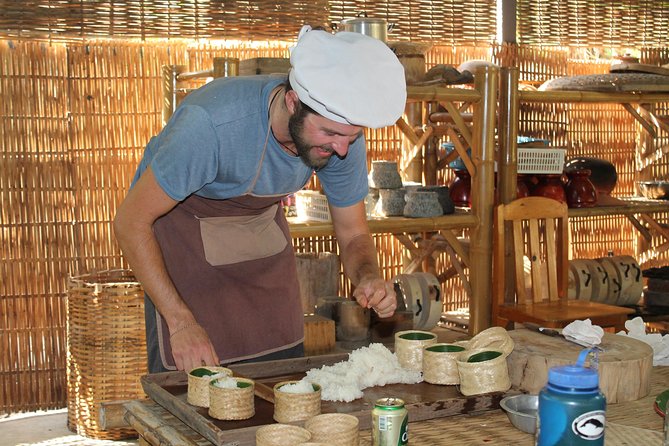
The maximum group size is six people. That is small enough for direct instruction without making the class feel like a private lesson.
I would value this most if I were new to Thai cooking. There are many moments when a teacher can make a difference: showing how to handle an ingredient, explaining when to add a spice, or helping correct a dish before it goes too far.
Lyn’s flexible pace is another plus. The teaching can respond to the wishes of the people in the class instead of forcing everyone through the same rushed sequence. That is helpful for beginners, families, and anyone who wants to ask plenty of questions.
The small group does not guarantee total quiet or a private experience. You will still be cooking with other people. But six is a reasonable limit for a class built around personal guidance.
Price, inclusions, and the value of a full day
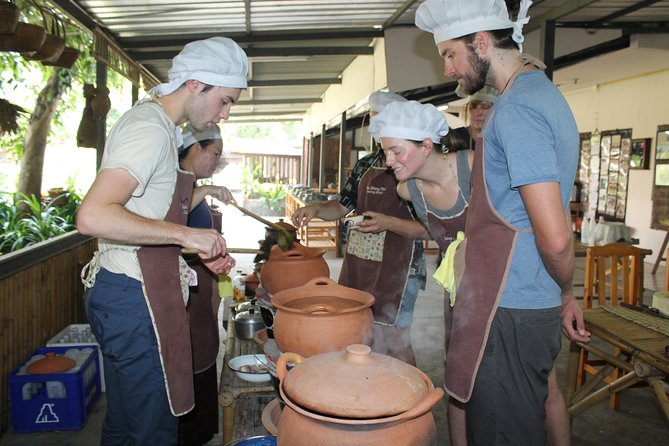
The price is $109.71 per person. That is more than a short city cooking class, but the length and range of activities make the comparison less direct.
You are paying for about six and a half hours, pickup, transportation during the outing, a market visit, a village and garden visit, instruction, all ingredients, kitchen tools, the meal, seasonal fruit, coffee or tea, a recipe book, and travel insurance required under Thai tourism regulations.
The value is strongest if you want a full cultural activity rather than only a cooking lesson. You get food instruction plus time in a rural setting and a shared meal with the host family.
The value is weaker if your only goal is to learn one quick recipe. In that case, a shorter and cheaper class may suit you better. This experience asks for most of a day or evening, so the price makes more sense when you care about the setting, the market, and the contact with local life.
Children under 12 and followers are charged 50 percent of the adult price. Vegetarian requests are welcome, which makes the class easier to arrange for mixed groups.
Timing, pickup, and practical planning
You can choose a morning lunch program or an afternoon dinner program. The morning option begins at 8:30 am and ends around 3:00 pm. The afternoon option begins at 3:30 pm and ends around 10:00 pm.
Pickup is offered, and the host takes you to the market before continuing to the house by local transport or private car. The meeting details should be checked carefully after booking because confirmation is sent within 48 hours, subject to availability.
The experience is near public transportation, but pickup may be more convenient because the itinerary moves between the market and the countryside. A mobile ticket is accepted, so you do not need a paper voucher.
Wear clothing that you do not mind using in a kitchen. The provided information does not specify a dress code, but a hands-on class involving chopping, pounding, and cooking is best approached practically. You should also leave room in your schedule for the full six-and-a-half-hour program.
Free cancellation is available up to 24 hours before the start time. Changes or cancellations inside that period are not accepted for a refund, and the cut-off uses Chiang Mai local time.
Who should book this cooking experience
I would recommend it most strongly to you if you want to understand northern Thai food through preparation, not just eating. It suits curious cooks, couples, families with older children, and small groups who enjoy talking with a host.
It is also a good choice if you have already taken a standard Thai cooking class and want something more specific to Chiang Mai. The Lanna focus, charcoal stove, clay pot, and rural home setting give it a different character.
You may want to choose another activity if you have limited time in Chiang Mai or dislike long, social outings. The market and garden visits are important parts of the day, so skipping them would remove much of what makes this experience different.
Vegetarians should ask for the request when booking. The program welcomes vegetarian needs, but the exact replacement dishes are not specified.
Should you book it?
Book this experience if you want a slow, personal introduction to Lanna food and local life. The best features are the six-person limit, the market visit, the organic garden, the hands-on preparation, and the meal shared with the host family.
I would be less inclined to book it for a rushed itinerary or if you want a polished restaurant-style class. At $109.71, the price is justified by the full-day format and broad set of inclusions, but you need to care about the cultural setting as much as the recipes.
If you do book, choose the session that fits your energy, arrive ready to eat, and ask about the exact four-dish menu in advance. That will help you decide if this is the right northern Thai food experience for you.
FAQ
How long does the Chiang Mai Lanna cooking experience last?
The experience lasts approximately 6 hours and 30 minutes.
What are the available start times?
The lunch program runs from 8:30 am to 3:00 pm. The dinner program runs from 3:30 pm to 10:00 pm.
Is pickup included?
Yes. Pickup is offered, and the host takes you to the local market before continuing to the house by local transport or private car.
How many people can join the class?
The activity has a maximum of six participants.
What food will I cook?
You will cook four Northern Thai Lanna dishes, including dessert. Examples include khao soi, gaeng hang lay, abb moo, and sai oua. The exact menu can vary.
Are vegetarian requests accepted?
Yes. Vegetarian requests are welcome.
Are ingredients and cooking tools provided?
Yes. All cooking ingredients and kitchen tools are included.
What else is included in the price?
The price includes coffee or tea, water, seasonal fruit, a recipe book, and travel insurance required under Thai tourism regulations.
Can I cancel for a refund?
Yes. You can cancel at least 24 hours before the experience start time for a full refund. Cancellations or changes made less than 24 hours before the start time are not refunded or accepted.
Just added around Chiang Mai
- Team Aim Thai Cooking School (#1 Cooking Class in Chiang Mai)★ 5.0 · 36 reviews
- Authentic Thai Cooking Class and Farm Visit in Chiang Mai★ 5.0 · 66 reviews
- Half Day Guided Thai Cooking Class in Chiang Mai★ 5.0 · 13 reviews
- Aroidee’s Farm-Fresh Thai Cooking Experience★ 5.0 · 8 reviews
- Private Half-Day Thai Cooking Class in Chiang Mai★ 5.0 · 4 reviews
- Signature Thai Cooking Course★ 5.0 · 79 reviews
- Traditional Northern Home Cooking Experience with Raunkaew Yanon Family★ 5.0 · 4 reviews
- Online Thai and Akha Cooking Class★ 5.0 · 70 reviews
Thai Cooking Classes, compared.
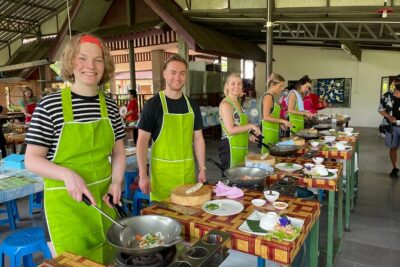
Half-Day Thai Cooking Class at Organic Farm in Chiang Mai
Read our review →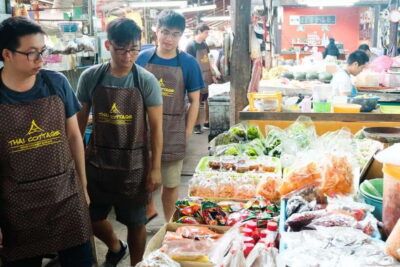
Chiang Mai: Cooking Class, Market & Thai Herbs Garden Tour
Read our review →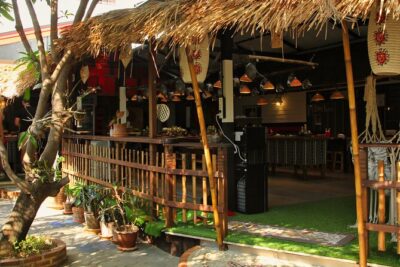
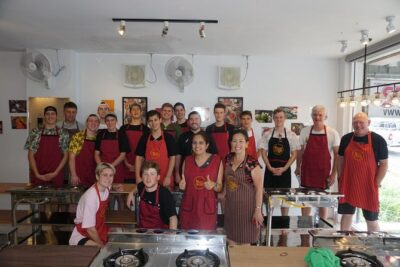
Phuket Thai Cooking Class with Market Tour Option
Read our review →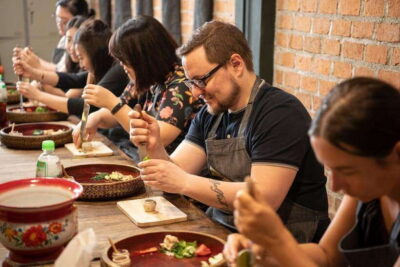
Bangkok: Hands-on Thai Cooking Class and Market Tour
Read our review →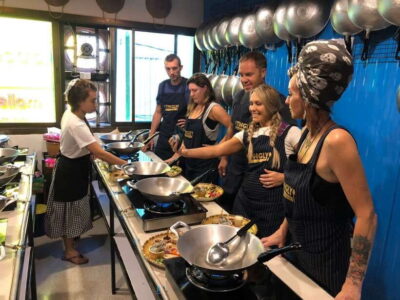
Bangkok: Tingly Thai Cooking School Half-Day Cooking Class
Read our review →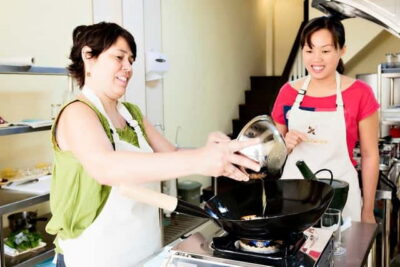
Bangkok: Maliwan Thai Cooking Class with Market Tour
Read our review →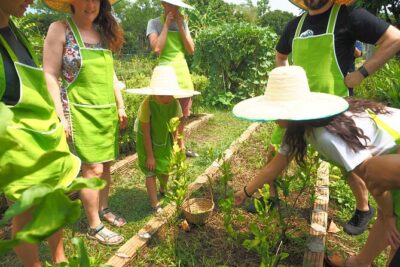
Browse the lists this tour appears in