
Review · CHIANG MAI
Traditional Northern Home Cooking Experience with Raunkaew Yanon Family
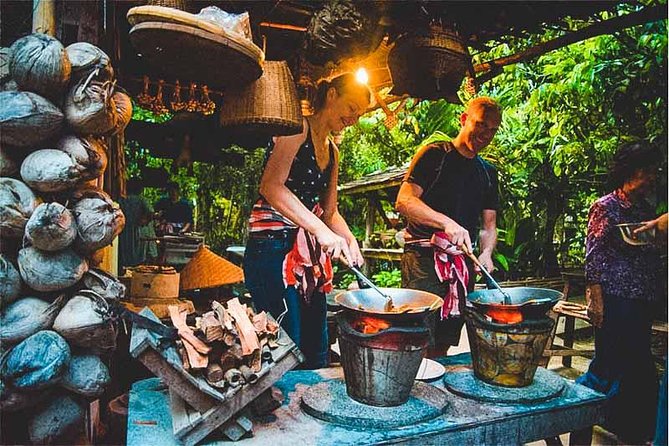
The best part of this Chiang Mai experience is not simply learning a few recipes. You spend time in the Raunkaew-Yanon family home, a traditional teak house with a rice barn and orchard, then cook with ingredients gathered from the backyard. I like that the food lesson is tied to daily life, and I like that the visit takes you beyond the city into a local neighborhood in Hangdong.
The main point to consider is the price: at $100.16 per person, this costs more than a standard cooking class. You are paying for a private, family-hosted visit with hotel transport, a meal, cultural background, and a four-hour schedule, so it makes the most sense if you value personal contact over a bargain class.
Key points at a glance
- A real family setting: Visit the Raunkaew-Yanon family’s traditional teak home rather than a commercial cooking school.
- Garden-to-table cooking: Pick ingredients from the family orchard and backyard garden for your meal.
- Lanna culture in context: Learn about local customs, herbs, house design, and the family’s long connection to the area.
- Private four-hour outing: Your own group takes part, with hotel or port pickup and drop-off included.
- Lunch or dinner choice: Select the meal time that fits your Chiang Mai plans.
- A strong choice for families: The visit combines food, stories, transport, and hands-on activity without requiring advanced cooking skills.
Leaving Chiang Mai for the Raunkaew-Yanon home
Your pickup takes you south from Chiang Mai toward Bandoo in Hangdong district. That change of setting matters. Instead of spending the full afternoon around the city’s familiar markets and restaurants, you see a quieter neighborhood where the cooking class is part of a family home visit.
The trip includes hotel or port pickup and drop-off, which is a useful part of the price. You do not need to arrange a separate taxi to a rural address, and your group can focus on the visit rather than finding the house. Pickup details should be checked carefully when booking, especially if your accommodation is outside the usual Chiang Mai area.
The outing lasts about four hours. That gives enough time for an introduction, a walk around the property, the cooking session, and the meal without turning the day into a long excursion. I would allow extra time around the stated duration if you have a flight, train, or tightly timed appointment afterward.
The experience requires at least two people per booking. It is a private activity, so only your group takes part. That is a major difference from a large cooking class, where the instructor must move at the pace of many people and conversation can be limited.
More Home Cooking Classes in Thailand
- Benny’s Home Cooking Chiang Mai
★ 5.0 · 328 reviews - Chiang Mai Home Cooking Class with Garden Tour & Hotel Transfers
★ 5.0 · 30 reviews - Lean cooking in A Thai atmosphere with Cookventure Home Cooking Studio
★ 5.0 · 8 reviews
A welcome at a traditional teak house
At the home, the Raunkaew-Yanon family welcomes you with flowers and drinks. The host then shows you around the house and explains parts of local culture and family life.
The home is made from teak wood, a material closely linked with traditional Northern Thai house design. You will also see the family’s rice barn, which gives the visit a useful connection to older farming life. These are not decorative set pieces added for a class. They are presented as part of the family property and its long-running way of life.
The family is described as Lanna, with traditions passed down over generations. Their ancestors may have arrived in the area almost 150 years ago by elephant-back. The wording matters here: that detail is part of the family story, not a claim that you will see elephants or recreate the journey. What you do receive is a sense of how one family connects its home, food, land, and customs.
I like this beginning because it gives the meal a setting. Herbs and recipes make more sense when you see the house, garden, and local surroundings that shaped them. If you only want to cook quickly and leave with a list of dishes, this visit may feel slower than necessary. If you want food tied to people and place, the slower pace is the point.
Walking through the orchard and garden
A walk through the family-owned orchard introduces you to the fruit trees and plants around the home. The property has several types of fruit, and ingredients for the cooking session come from the backyard garden.
This is one of the most useful parts for anyone curious about Northern Thai food. In a market or cooking studio, ingredients often arrive cleaned, measured, and separated into bowls. Here, you can connect the finished dish to the plants that supplied it. You also learn about local herbs, which can be difficult to understand from a recipe sheet alone.
The garden visit should not be mistaken for a formal botanical tour. The available information does not promise a complete list of plants or a set number of dishes. Instead, expect a practical introduction shaped around the meal you will prepare that day.
The orchard also helps explain the family’s traditional approach to keeping natural surroundings around the house. For me, this adds value because the experience is not only about consuming food. You are seeing part of the setting that supports it.
Wear comfortable shoes suitable for walking around a home garden. This is practical advice rather than a dress rule, since the visit includes movement through the property and orchard.
Cooking real Northern Thai recipes
After seeing the home and garden, you cook and taste a local recipe with the family. The experience focuses on authentic Northern Thai flavors that are difficult to find in commercial cooking classes.
The wording does not provide a fixed menu, so you should not book this expecting a particular dish unless the provider confirms it in advance. The meal depends on the session and the ingredients available. You can choose lunch or dinner, but the exact recipes are not specified.
That flexibility may be a plus. A fixed menu can be convenient, but a family-led class can reflect what the hosts actually cook and what is available in their garden. It also means you should share dietary requirements when booking. The provider specifically asks for that information in advance, giving the hosts a chance to consider your needs.
You do not need to arrive as an experienced cook. The activity is designed as a family-style session, and the focus is on learning local methods and tasting the result. Still, the available details do not promise a professional culinary certificate or an advanced technical lesson. Think of it as a home cooking experience with cultural context.
I would ask before arrival how much hands-on preparation is included, especially if one person in your group wants to do most of the cooking. The private format should make it easier to take part, but the exact division of tasks is not stated.
More Home Cooking Classes in Chiang Mai:
- Khmer Cooking Class at a Local’s Home in Krong Siem Reap
★ 5.0 · 2,731 reviews - Local Home Korean Cooking Class & Market Adventure in Seoul
★ 5.0 · 1,024 reviews - Marrakech: Moroccan Cooking Class with a Local Family
★ 4.9 · 668 reviews - Mexican Cooking from Scratch in a Local Home in Tulum
★ 5.0 · 585 reviews
Why the family setting matters
Many cooking classes teach recipes. This one adds a story about how a family lives, where its food comes from, and why certain house and garden traditions matter.
That difference is especially useful in Northern Thailand, where food is closely connected with local herbs, household routines, farming, and family gatherings. You are not just collecting a recipe to copy at home. You are seeing the kind of place where those recipes developed.
The family’s home has reportedly been maintained in a traditional style, with teak construction and natural surroundings. In a city that is changing quickly, such a property gives you a chance to see a less commercial side of the Chiang Mai area. The visit stays personal because your group is not combined with a large public class.
There is also a social benefit. A family of six previously found the cooking, family history, and transport to be highlights of their Thailand trip. That makes sense for a multigenerational group: older family members can focus on stories and architecture, while children can take part in the garden and food preparation.
At the same time, private does not mean fully customized in every detail. The activity has a set structure, and the family’s home is the center of the experience. If you want a highly polished school kitchen, printed recipes, or a long list of dishes, confirm those details before paying.
Lunch or dinner: choosing the better time
You can choose between a lunch session and a dinner session. Your choice should depend on the rest of your Chiang Mai schedule rather than on a stated difference in content, since the available details do not indicate that one meal includes more activities than the other.
Lunch works well if you want a daytime look at the house, orchard, and garden. It also leaves the evening open for Chiang Mai’s markets or a relaxed night at your hotel.
Dinner may suit you if you plan to spend the morning and afternoon in the old city or on another excursion. A family meal can be a calm way to end the day, though you should allow for the return journey after eating.
The meal included is tied to your chosen session. The inclusions list names both lunch and dinner, but you should read that as the meal appropriate to your selected time, not two separate full meals during one four-hour visit.
What the $100.16 price buys you
At $100.16 per person, this is not the cheapest way to learn Thai cooking. The value depends on how much you want the wider visit.
You are paying for roughly four hours, private participation, a professional guide, hotel or port transport, local insurance, the cooking activity, and lunch or dinner. You also receive access to a family home, the house tour, the orchard walk, the garden ingredient gathering, and the cultural explanation.
A cheaper class may offer more dishes or a larger teaching kitchen. It may also be easier to reach and more predictable in its menu. This experience offers something different: a private visit with a family whose home and traditions are part of the lesson.
For a group of friends or a family, the private format can improve the value because everyone shares the same host and meal. Group discounts may be available, though the amount is not stated. Ask about the discount before booking if you have several people in your party.
The price does not include private expenses or services not listed. Keep that in mind if you want to buy extra items or request additions. The core meal and transport are covered, but extras should not be assumed.
Who will enjoy this four-hour visit
I would choose this experience for you if you want:
- A personal introduction to Northern Thai food
- A quieter setting outside central Chiang Mai
- A family visit rather than a commercial cooking studio
- Time to learn about herbs, house design, and Lanna customs
- A private outing for your own group
- A meal built into the activity
- A useful option for families with different interests
It is also a good match for visitors who have already seen Chiang Mai’s main temples and markets and want to spend part of a day in a local neighborhood.
I would think twice if your main goal is to master many dishes in one session. The focus here is the family, the home, and the connection between garden and table. The cooking is important, but it is not the entire event.
Most people can take part, according to the participation information. You should still share dietary needs when booking, and ask about any specific mobility concern if walking around the house and orchard could be difficult for someone in your group.
Practical details before booking
The experience is available with mobile tickets, which is convenient for a phone-based itinerary. Confirmation normally arrives at booking. If you book within three days of the travel date, confirmation may take up to 48 hours and depends on availability.
Free cancellation is available if you cancel at least 24 hours before the local start time. Cancellations made inside that window are not refunded, and changes made inside it are not accepted. I would avoid booking this too close to another fixed appointment, since pickup, the home visit, and the return ride all form one connected outing.
You need at least two people to book. The activity is private, so your party will not be combined with strangers. Pickup and drop-off are offered from a hotel or port, but you should provide accurate location details at booking.
The provider is Idaytrip. The local family at the home is the Raunkaew-Yanon family, and the activity is guided as part of the visit.
Is the Raunkaew-Yanon cooking experience worth booking?
I would book it if you want a personal, food-centered look at Lanna life and are comfortable paying for more than a standard cooking lesson. The teak house, rice barn, orchard, garden ingredients, family story, private format, transport, and meal give the four hours a clear sense of place.
I would skip it if you only want the lowest-priced class or a guaranteed menu of several named dishes. The recipes are not specified, and the cost is higher than a basic group session.
For families, couples, and small private groups, this is one of the more appealing ways to connect a meal with Northern Thailand’s daily traditions. Choose lunch or dinner based on your schedule, give dietary requirements in advance, and keep the day flexible around the pickup and return journey.
FAQ
Where does the cooking experience take place?
The experience takes place at the Raunkaew-Yanon family home in Bandoo, in Hangdong district south of Chiang Mai.
How long does the activity last?
The activity lasts approximately four hours.
Is hotel pickup included?
Yes. Hotel or port pickup and drop-off are included.
Is the activity private?
Yes. Only your group participates in the private activity.
How many people are required to book?
A minimum of two people per booking is required.
Can I choose lunch or dinner?
Yes. You can choose between a lunch session and a dinner session.
Is a meal included?
Yes. The meal appropriate to your selected lunch or dinner session is included.
Can I provide dietary requirements?
Yes. You should advise the provider of any specific dietary requirements when booking.
What happens if I cancel?
You can receive a full refund if you cancel at least 24 hours before the experience start time. Cancellations or changes made less than 24 hours before the local start time are not accepted for a refund.
Just added around Chiang Mai
- Team Aim Thai Cooking School (#1 Cooking Class in Chiang Mai)★ 5.0 · 36 reviews
- Authentic Thai Cooking Class and Farm Visit in Chiang Mai★ 5.0 · 66 reviews
- Private Half-Day Thai Cooking Class in Chiang Mai★ 5.0 · 4 reviews
- Half Day Guided Thai Cooking Class in Chiang Mai★ 5.0 · 13 reviews
- Aroidee’s Farm-Fresh Thai Cooking Experience★ 5.0 · 8 reviews
- Signature Thai Cooking Course★ 5.0 · 79 reviews
- Online Thai and Akha Cooking Class★ 5.0 · 70 reviews
- Private Dinner Cooking Class with Benny in Chiang Mai★ 5.0 · 42 reviews
Home Cooking Classes, compared.
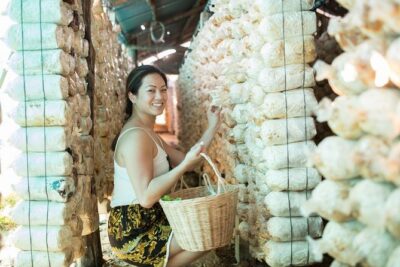
Khmer Cooking Class at a Local’s Home in Krong Siem Reap
Read our review →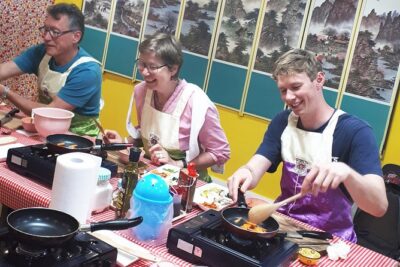
Local Home Korean Cooking Class & Market Adventure in Seoul
Read our review →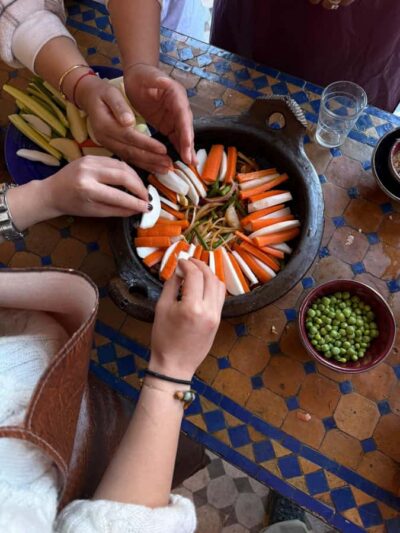
Marrakech: Moroccan Cooking Class with a Local Family
Read our review →
Mexican Cooking from Scratch in a Local Home in Tulum
Read our review →
Pastamama, Home Cooking Classes at Grace’s Home
Read our review →
Marrakech: Moroccan Cuisine Cooking Class in Local Home
Read our review →
Hoi An: Traditional Cooking Class & meal with Local Family
Read our review →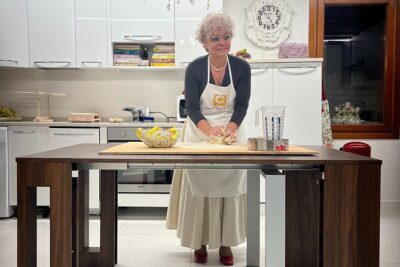
Browse the lists this tour appears in