
Review · ITALY
Civitavecchia Private Cooking Course to Make Pasta
Fresh pasta is the heart of this private class near Lake Bracciano. With Graziella guiding you, you will build dough on a wooden board, work it with a rolling pin, cut tagliatelle, fill ravioli, and use a guitar-shaped tool for spaghetti alla chitarra. This is hands-on cooking, not a demonstration where you simply watch.
I like two things right away: the menu gives you several classic pasta techniques in one sitting, and the meal turns your work into a proper lunch with wine, dessert, and coffee. Graziella and Giovanni also welcome you into their home, which gives the class a warm, personal feel. The main drawback is practical: private transportation is not included, and the meeting point is in Civitavecchia even though the experience is described as taking place around Lake Bracciano.
Key points at a glance
- Three pasta styles in one class: Make hand-cut tagliatelle, ricotta and spinach ravioli, and spaghetti alla chitarra.
- Graziella teaches the craft: Expect close instruction on dough texture, rolling, cutting, and filling.
- A private home meal follows the lesson: Your group eats the pasta you prepared around the hosts’ table.
- The guitar is a pasta tool: Spaghetti alla chitarra is cut with a traditional wire-string implement, not a machine.
- Wine and dessert are part of the experience: The class includes a welcome drink, wine, water, coffee, and a homemade dessert.
- Plan your own transport: Pickup or private transfers are not included, and the activity returns to the meeting point.
A pasta class built around doing, not watching
The best reason to choose this experience is simple: you do the work. Italian cooking classes often promise fresh pasta, but the details matter. Here, you are not only shown a finished sheet of dough. You start with flour and eggs on a wooden surface, make the classic fountain, work the mixture into dough, and use a rolling pin to reach the right consistency.
That last part deserves respect. Fresh pasta dough looks easy in a photograph. It is not always easy under your hands. The dough must become smooth and workable without turning sticky or tough. Graziella watches the process closely and helps you judge when it is ready. That kind of correction is useful because dough texture is hard to learn from a recipe alone.
The class lasts about three hours, enough time to cover several shapes without rushing through the meal. Since this is a private activity, only your group takes part. That gives you room to ask questions, make mistakes, and work at a comfortable pace.
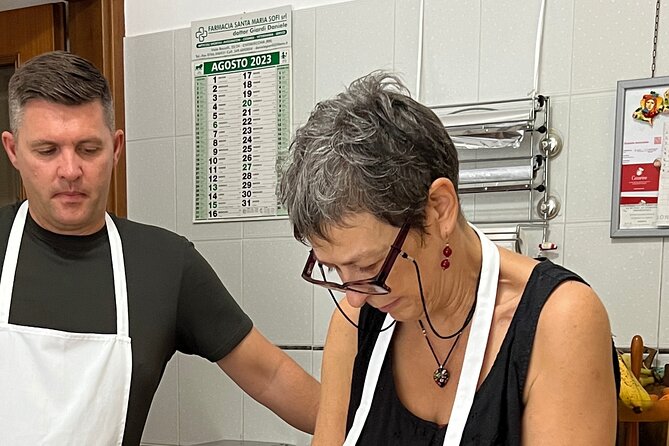
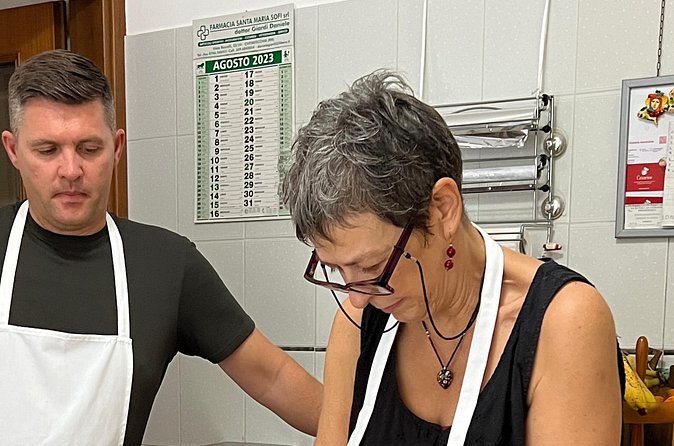
The class is offered in English, so you can follow the instruction without relying on kitchen gestures alone. Graziella leads the cooking, while Giovanni helps create the welcoming home setting. The warm hospitality is a major part of the appeal, especially if you want more than a standard restaurant meal during your time in the area.
More Pasta Making Classes in Italy:
- Florence: Pasta Cooking Class with Unlimited Wine
★ 4.9 · 10,285 reviews - 3 in 1 Cooking Class near Navona: Fettuccine, Ravioli & Tiramisu
★ 5.0 · 7,376 reviews - Florence: Pasta & Tiramisu Cooking Class with Unlimited Wine
★ 4.9 · 6,708 reviews
Starting with the fountain and rolling pin
The first important stage is making the dough by hand. You will work on a wooden surface and form the flour into a fountain before adding the other ingredients. This traditional method connects the food to the home kitchens of central Italy, where pasta was shaped by hand long before electric mixers and pasta machines became common.
You will then knead the dough and roll it out. The rolling pin is the only major aid for this part, so you get a clear sense of the labor involved. The work can be physical, especially when you are trying to make the sheet evenly thin. The class is not a quick craft activity. You need to pay attention to pressure, thickness, and the feel of the dough.
I like this stage because it gives you a useful skill to take home. You learn to read the dough through touch rather than simply following a timed instruction. The process may also be the most demanding part of the class, so keep your expectations realistic. Your first sheet may not look perfectly uniform. That is part of the lesson, not a failure.
One of the strongest details from the experience is Graziella’s close eye for consistency and smoothness. If you want a polished result without doing any work, this is not the right activity. If you want to understand why homemade pasta takes practice, it is a good fit.
Tagliatelle cut the old-fashioned way
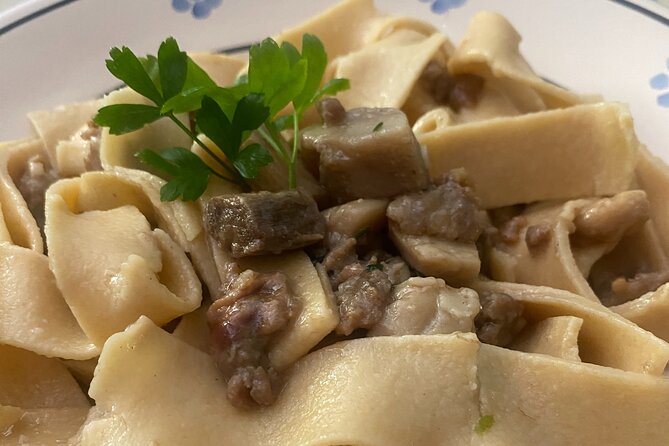
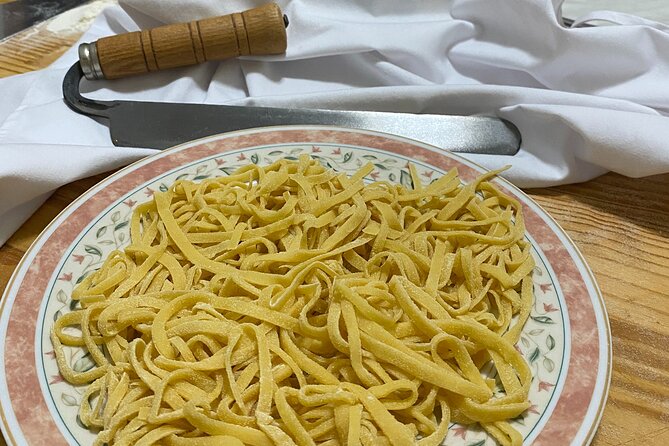
Once the dough is rolled, you will make tagliatelle. Rather than relying on a machine to produce identical strips, you cut the pasta with a knife. This gives the noodles a handmade character, with small differences in width that make the finished dish feel personal.
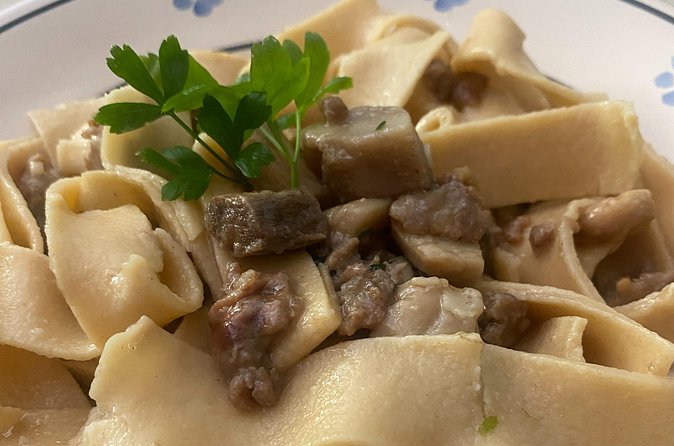
The tagliatelle is served with a classic meat sauce in the sample menu. The combination is familiar, but that is exactly why it works. A simple ragù gives you a clear taste of the pasta itself. You can notice its texture, thickness, and ability to hold sauce in a way that is harder to appreciate with dried pasta from a packet.
The timing also matters. You prepare the pasta, then eat it as part of the meal, so the cooking lesson leads directly to the table. Your effort is not packed away for later. It becomes the first major dish you taste.
Expect the meal to include more than one pasta course. That makes the experience generous, but it also means you should arrive ready for a substantial meal. This is not a light snack followed by a short demonstration.
Ravioli with ricotta and spinach
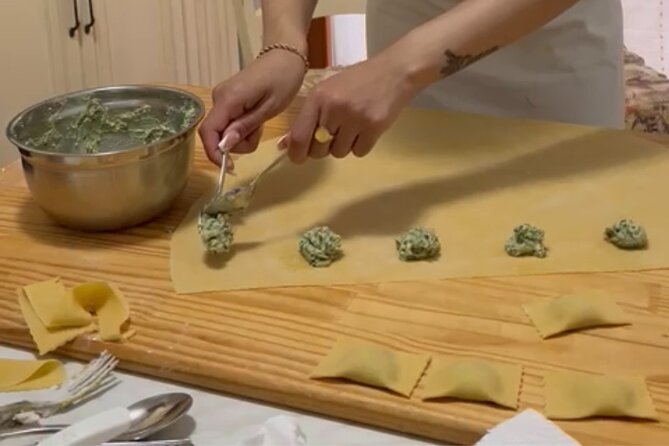
The next technique is stuffed pasta. You will prepare ricotta and spinach ravioli, fill the pasta, and seal the pieces by hand. This is a different skill from cutting tagliatelle. You must use enough filling to make the ravioli satisfying, but not so much that the edges fail to close.
The sample preparation pairs the ravioli with butter and sage. That sauce is deliberately restrained. It lets the ricotta, spinach, and pasta remain the focus instead of covering them with a heavy topping.
This course also gives you a look at the practical side of Italian home cooking. Ravioli is often associated with special occasions, but the ingredients are straightforward. The value comes from the time, care, and technique. Graziella’s instruction helps you understand how to handle the filling and seal the pasta properly.
For many people, this may be the most rewarding part of the class because the finished ravioli look more elaborate than tagliatelle while using familiar ingredients. It is also a point where patience matters. Work carefully and the pieces should hold together. Rush the sealing step and you may lose filling during cooking.
A few more cooking classes around Italy worth a look
- Rome: Pasta Making Class with Tiramisu & Wine PRIVATE OPTION
★ 4.8 · 404 reviews - Semi-Private Pizza Making Experience in Naples with Drink
★ 5.0 · 324 reviews - Rialto Market Tour & Private Cooking Class in the Heart of Venice
★ 5.0 · 106 reviews - Semi-Private Gluten-Free Cooking Class in Florence
★ 5.0 · 70 reviews
The guitar and spaghetti alla chitarra
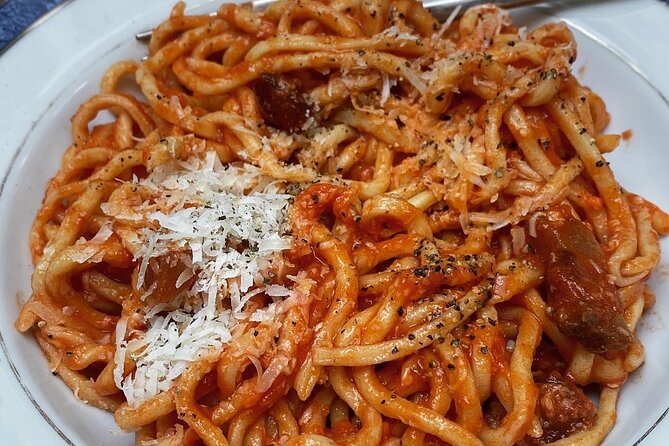
The most distinctive tool in the class is the chitarra, or guitar. It is a traditional pasta cutter with taut strings, and you press the rolled dough over it with a rolling pin. The strings slice the dough into square-edged spaghetti.
This is not the same as ordinary round spaghetti. Spaghetti alla chitarra has a firmer, more textured shape, which helps it carry a strong sauce. In the sample menu, it is served alla Amatriciana with Amatrice bacon, tomato, and pecorino romano.
The guitar gives the class a memorable hands-on feature. It is also the kind of tool you might not encounter in a basic pasta lesson focused only on tagliatelle. You get to see how a traditional household implement turns a sheet of dough into a distinct pasta shape.
The three pasta preparations work well together because each teaches something different. Tagliatelle shows you how to roll and cut. Ravioli introduces filling and sealing. Spaghetti alla chitarra adds the special tool and a different shape. You leave with a better sense of how pasta form affects texture and sauce.
From aperitif to homemade dessert
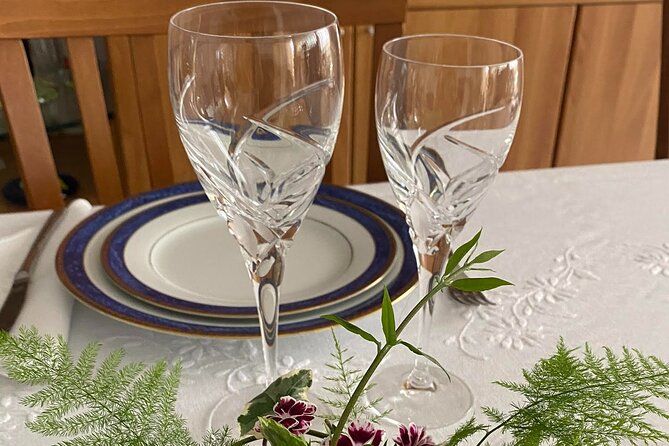
The meal begins with a welcome drink and an aperitif. The sample menu includes a glass of Valdobbiadene Prosecco Cartizze with small bites such as pizzas, olives, and cherry tomatoes in oil. It is a pleasant way to settle in before the dough work begins, though the exact appetizers may change.
Wine is included, with a bottle for every two people according to the experience details. The wine may be a Tuscan red such as Chianti Classico or a white such as Frascati Superior. The sample menu specifically lists Prosecco for the opening drink, while the meal wine can vary.
Unlimited bottled water is included, either still or sparkling, along with coffee. Alcohol is served only to participants aged 18 and over. Younger participants receive soft drinks instead, so the class can work for mixed-age groups.
Dessert is made by Graziella and chosen from family or local traditions. Tiramisu is one sample option, made with coffee-soaked ladyfingers and mascarpone cream. The dessert is a fitting finish because the class is built around family cooking rather than restaurant theatrics.
I particularly like that the meal does not stop at the pasta. The aperitif, wine, coffee, and dessert turn the class into a full social occasion. Keep in mind that the menu can reflect the season and Graziella’s imagination, so the sample dishes should be treated as a guide rather than an absolute promise.
What the $193.49 price really covers
At $193.49 per person, this is not a budget meal. The price makes more sense when you separate it into its parts: a three-hour private cooking lesson, several pasta techniques, a full meal, wine, water, coffee, dessert, and personal instruction in a home setting.
You are also paying for the small-group format. Since only your party participates, the class can focus on your questions and pace. That is different from a large group where you may spend much of the time trying to see over someone’s shoulder.
The value depends on what you want from a shore-day or day trip near Civitavecchia. If your priority is the lowest-cost way to eat pasta, a restaurant will cost less. If you want a memorable activity that combines food, instruction, and conversation, the price is easier to justify.
The meal itself is also the result of your work. You are not simply paying for dishes prepared by someone else. You are learning how the dough is made and then eating the pasta while the process is fresh in your mind. For someone interested in Italian food, that makes the cost more reasonable.
The experience is booked an average of 118 days in advance, which suggests that you should plan early if it fits your schedule. Its rating is five out of five from three published ratings, a small sample but a consistent one. The praise centers on the quality of the ingredients, family recipes, Graziella’s instruction, and the warm welcome from Graziella and Giovanni.
Civitavecchia meeting point and transport planning
The listed starting point is Via San Liborio, Via S. Liborio, 00053 Civitavecchia RM, Italy. The activity ends back at the meeting point. Private transportation is not included, so you need to arrange your own way there and back.
The experience is associated with Lake Bracciano, while the meeting details identify Civitavecchia. That makes it important to check the exact route and timing before booking, especially if you are coming from a cruise ship or working around a fixed port schedule. Do not assume a transfer is provided.
The mobile ticket is useful for keeping the booking details on your phone. Confirmation arrives at booking, and the meeting point is near public transportation. Still, allow enough time for your own transport plan. A cooking class is far more enjoyable when you are not watching the clock because of a difficult return connection.
The activity is private, but the transport is not. That distinction is easy to miss. The private format refers to the class and meal, not to a vehicle or door-to-door service.
Who will enjoy this class most
I would choose this experience if you care about how Italian food is made, not only how it tastes. It suits couples, families, and small private groups who want a shared activity with a proper meal at the end.
It is also a good choice for anyone who has already seen the major sights around Rome and Civitavecchia and wants a quieter food-focused experience. You get a taste of local home cooking without being limited to a restaurant table.
This class may be less suitable if you want a fast activity with little physical work. Rolling and kneading dough takes effort, and making three types of pasta requires attention. People with cat allergies should also note the stated warning that the experience is not recommended for them.
Alcohol is included, but it is not essential to the experience. Participants under 18 receive soft drinks, so age differences within your group do not prevent you from taking part.
The class is offered in English, which makes it practical for English-speaking visitors. If you enjoy learning through touch and repetition, you will get more from it than someone who prefers a short cooking show followed by lunch.
Booking advice and cancellation terms
You can cancel for a full refund up to 24 hours before the local start time. Cancellations or changes made less than 24 hours in advance are not accepted for a refund.
That policy is fairly manageable, but the transport issue deserves equal attention. Confirm how you will reach Via San Liborio and return afterward before you commit. Since the experience is often booked well ahead, reserve early once your day in Civitavecchia is settled.
Should you book the Civitavecchia pasta class?
Book it if you want a private, personal food experience and enjoy learning by doing. The strongest features are Graziella’s close pasta instruction, the chance to make three distinct shapes, and the family-style meal with Giovanni and Graziella afterward.
I would be especially keen on it for someone who wants to remember Italy through a skill rather than a photograph. The guitar-shaped pasta tool, hand-cut tagliatelle, and ricotta and spinach ravioli give the class more range than a basic one-dish lesson.
Skip it if your schedule is too tight for an approximately three-hour class, if you do not want to arrange transport, or if the $193.49 price is more than you want to spend on a meal and activity. For the right person, though, the cost buys instruction, food, wine, and a genuine seat at a local table.
FAQ
Where does the cooking class meet?
The listed meeting point is Via San Liborio, Via S. Liborio, 00053 Civitavecchia RM, Italy.
How long does the experience last?
The cooking class lasts approximately three hours.
What types of pasta will I make?
You will make hand-cut tagliatelle, ricotta and spinach ravioli, and spaghetti alla chitarra using the traditional guitar-shaped tool.
Is transportation included?
No. Private transportation is not included. The activity ends back at the meeting point.
What food and drinks are included?
The experience includes a welcome drink, wine, bottled still or sparkling water, coffee, and a homemade dessert. The sample menu includes Prosecco with appetizers, tagliatelle with meat sauce, ricotta and spinach ravioli with butter and sage, spaghetti alla Amatriciana, and tiramisu.
Is the class offered in English?
Yes. The experience is offered in English.
Can I cancel for a refund?
Yes. You can cancel at least 24 hours before the local start time for a full refund. Cancellations or changes made less than 24 hours before the start time are not refunded or accepted.
Just added around Italy
- Cooking Class with a View in Lake Como★ 5.0 · 6 reviews
- Traditional Cooking Class with Views of Lake Como and the Alps★ 5.0 · 22 reviews
- Cesarine: Small group Pasta-Making class in Como★ 5.0 · 22 reviews
- Pasta Fresca Hands-on Cooking Class with a Local in Como★ 5.0 · 35 reviews
- Cooking Lesson in Bellagio with famous Chef Luigi Gandola★ 4.5 · 23 reviews
- Market Tour & Cooking Class at Local’s Home in Como★ 5.0 · 8 reviews
- Neapolitan DOC Pizza Class And Cooking in a Wood Oven at a Local’s house★ 5.0 · 4 reviews
- Private Lake Como Cooking Class from Como★ 4.0 · 4 reviews
Pasta Making Classes, compared.
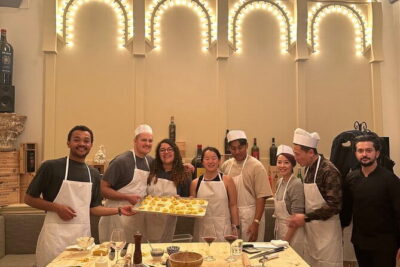
Florence: Pasta Cooking Class with Unlimited Wine
Read our review →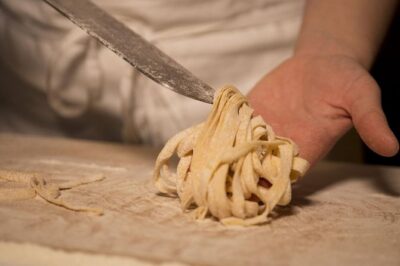
3 in 1 Cooking Class near Navona: Fettuccine, Ravioli & Tiramisu
Read our review →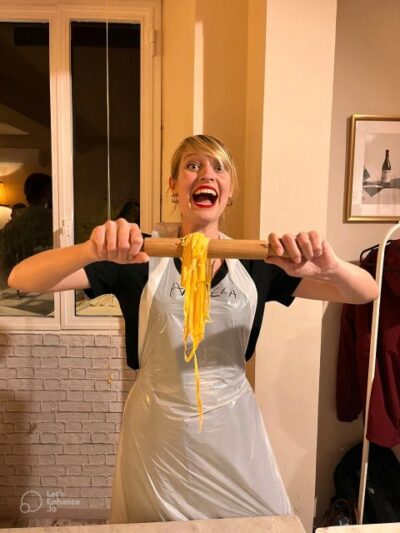
Rome: Pasta Making Class with Wine, Limoncello, and Dessert
Read our review →
Rome Cooking Class: Make Pasta and 3 Spritz Cocktails
Read our review →
Rome: 3-in-1 Fettuccine, Ravioli, and Tiramisu Cooking Class
Read our review →
Rome: Fettuccine Pasta Cooking Class in Rome’s City Center
Read our review →Browse the lists this tour appears in