
Review · GREECE
Phyllo Pies Baking Class @ Lefkada Micro Farm
The best part of this Lefkada experience is that you do not simply eat Greek food, you learn the hands-on skill behind it. At Lefkada Micro Farm, Andreas and his mother guide you through homemade dough, a farm walk, and four traditional pies baked in a wood-burning oven. I like the useful recipes you can take home, and I like the shared lunch at the end. The main drawback is the price, $144.05 per person, which is a serious spend for a four-hour class.
I also like the small group size, limited to 10 people, because phyllo dough needs room and patient instruction. The peaceful countryside offers a welcome change from Lefkada’s beaches. Keep in mind that the class begins at 10:00 a.m. at the farm, lasts about four hours, and depends on good weather.
Key points at a glance
- Four recipes in one class: Make wild greens with feta, goat cheese with sun-dried tomatoes and olives, sweet squash with walnuts and raisins, and baklava.
- A real wood-fired oven: Help light the oven, prepare the dough, and bake the pies rather than watching a cooking demonstration from the sidelines.
- Farm-to-table context: Walk around Lefkada Micro Farm to see its trees, vegetables, herbs, and animals.
- A personal teaching team: Andreas and his mother lead the class and share the practical method for making phyllo from scratch.
- Small group setting: The maximum of 10 people allows for more direct help with kneading, stretching, filling, and rolling.
- Lunch is part of the class: Sit around the dining table and eat the pies you prepared together.
From morning coffee to homemade phyllo
Your class starts at 10:00 a.m. at Lefkada Micro Farm, along the road between Nidri and Vafkeri. The first touch is simple and useful: coffee or tea while you settle in and meet the people who will be cooking with you.
That opening matters. A cooking lesson can feel rushed if the instructor launches straight into measurements and instructions. Here, the morning drink gives you time to get comfortable before the work begins. The class has a reported 4.6 rating from 10 reviews, with 90 percent recommending it, and the strongest praise centers on the hosts and the pleasure of learning phyllo from scratch.
Andreas and his mother lead the session. The available feedback specifically praises their warmth and the way they make the class enjoyable from start to finish. I would expect the teaching to feel personal rather than like a large commercial demonstration, partly because the group is capped at 10 people.
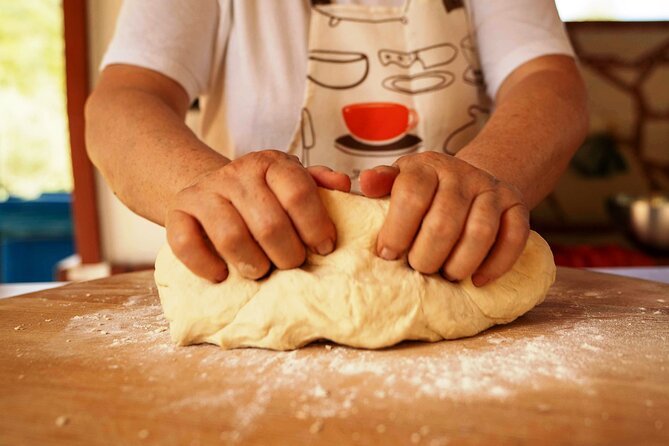
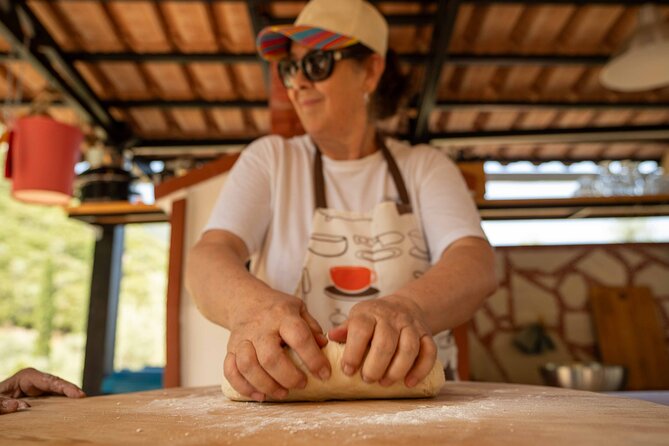
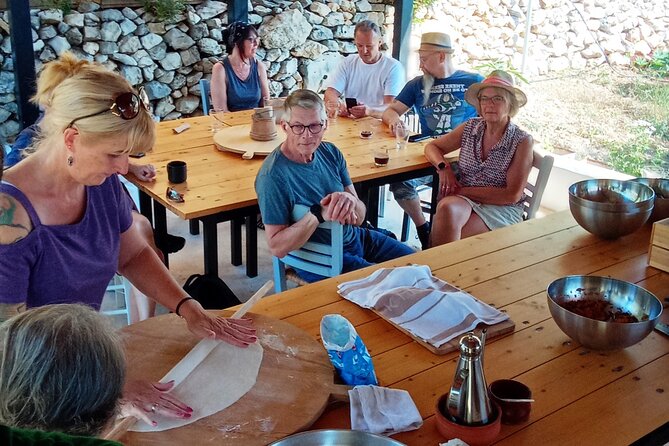
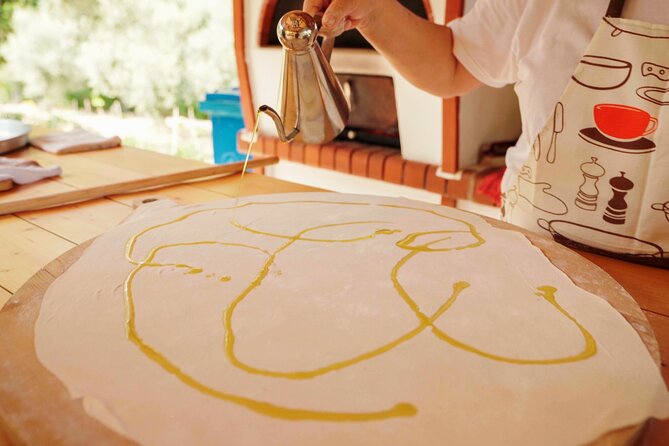
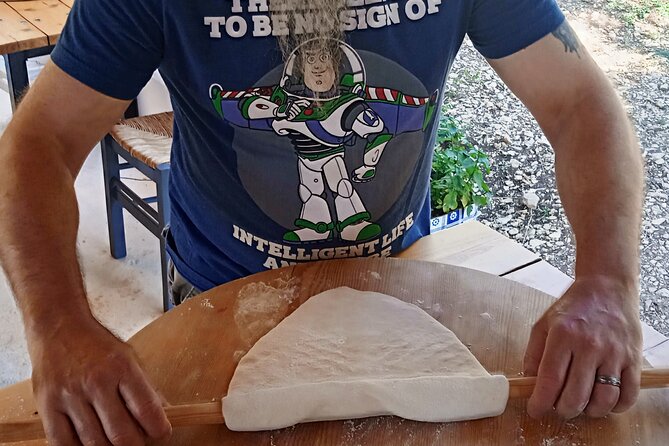
You then get to work on the dough. The class begins by lighting the fire in the wood-burning oven and kneading the phyllo. This is the part that separates the experience from a standard food tasting. You are learning a technique that depends on touch, timing, and practice, not just a printed list of ingredients.
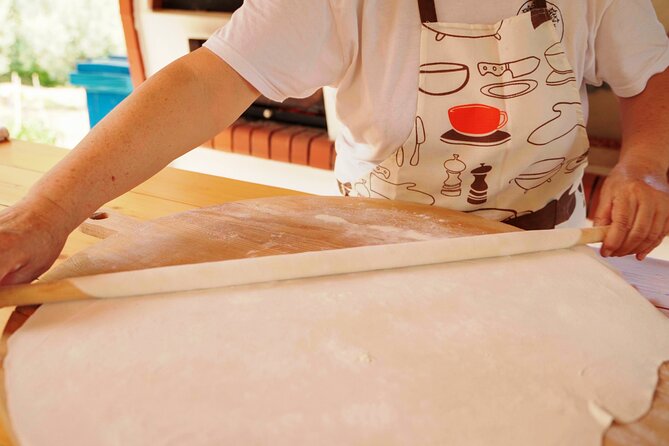
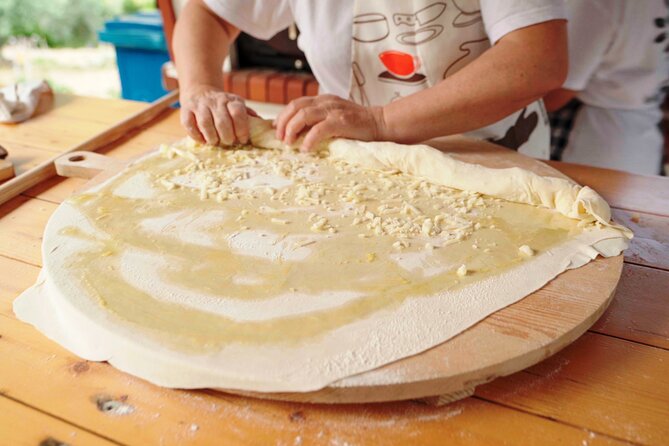
Fresh phyllo can be intimidating. The dough must be kneaded, stretched, filled, and rolled without tearing it into useless scraps. The class is designed to show you those stages in order, so you can understand the process before trying it again at home.
More Farm Cooking Classes in Greece
- Naxos Perivoli Farm Experience & Wood-fire Cooking Class
★ 5.0 · 339 reviews - Melanes: Naxos Perivoli Farm & Cooking Class with Wood Fire
★ 5.0 · 177 reviews - Santorini Family Farm Food & Wine Tour with Cooking Class
★ 5.0 · 107 reviews
A farm walk beyond Lefkada’s beaches
While the oven heats and the dough rests, you walk around the micro farm. The purpose is not simply to fill time while the fire gets hot. You see how the farm grows food using traditional organic methods and get introduced to its trees, vegetables, herbs, and animals.
I like this section because it gives the pies a sense of place. The class is not just a kitchen activity transplanted onto an island. It connects Greek baking with the food culture around it, from garden herbs to farm produce and the countryside outside Nidri.
The walk also creates a natural pause in the morning. Kneading and stretching dough demand concentration, while a short look around the farm lets you step away from the work and see the setting. The information provided does not specify the exact length of the walk or list the individual crops and animals, so you should treat it as a farm introduction rather than a formal agricultural tour.
This is a countryside experience, not a beach excursion. If your ideal Lefkada day means staying beside the sea, the farm may feel like a detour. If you have already had plenty of sun and swimming, the green setting gives your itinerary a useful change of pace.
Four fillings, four different kinds of Greek pie
When you return to the open-air kitchen, the oven should be hot and the dough ready to stretch. The class prepares four recipes, with a good balance between savory pies and sweets.
Wild greens with feta
The first filling combines wild greens and feta cheese. This pairing is closely tied to Greek home cooking, where leafy greens are folded into pies with salty cheese and thin pastry.
The useful lesson here is flexibility. The recipe shows you how phyllo works with a moist, savory filling, and it gives you a model you can adapt at home. The available details do not name the exact greens, so you should not expect a fixed list in advance. You can ask about the ingredients during the class, especially if you have food restrictions.
More Baking Classes in Greece:
- Naxos Town: Olive Oil Tasting & Baking in the Heart of Town
★ 5.0 · 69 reviews - Chania Sourdough Bread Class – Olive Oil Tasting
★ 5.0 · 31 reviews - From Mykonos: Mykonian Farm Baking Class with Brunch
★ 4.7 · 29 reviews - Chania Sourdough Bread Class – Olive Oil Tasting
★ 5.0 · 6 reviews
Goat cheese, sun-dried tomatoes, olives, and oregano
The second pie has a more pronounced island flavor. Goat cheese brings a firm, tangy base, while sun-dried tomatoes, olives, and oregano add salt, sweetness, and herbal character.
This is a helpful recipe for cooks who want something more distinctive than a basic cheese pie. It also shows how a few strongly flavored ingredients can do the work without a long ingredient list. Since the recipe includes dairy, olives, and other specific ingredients, tell the farm about allergies or dietary restrictions when you book.
Squash, walnuts, cinnamon, and raisins
The third recipe shifts into sweet territory. Squash, walnuts, cinnamon, and raisins create a filling that is earthy, gently sweet, and textured.
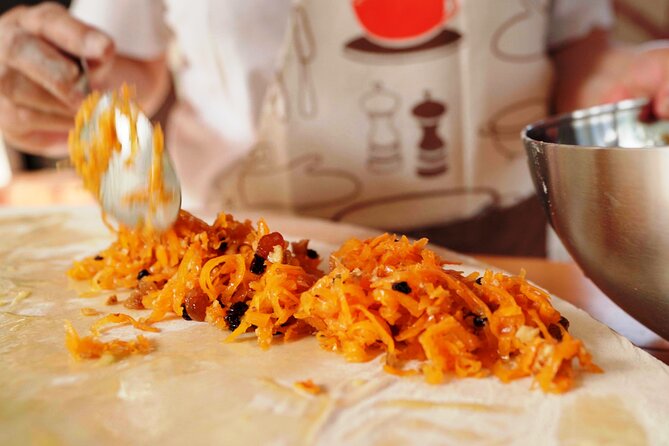
This pie gives you a chance to see how the same phyllo method changes when the filling is not based on greens or cheese. Walnuts add crunch, raisins add sweetness, and cinnamon provides the familiar warm note. It is the sort of recipe that can work as a dessert or a substantial snack.
Baklava with honey, cinnamon, and walnuts
The final preparation is baklava, made with honey, cinnamon, and walnuts. It is a fitting finish to the baking portion because it puts the thin pastry to work in its most recognizable sweet form.
The class does not promise a full pastry-school lesson, so you should not expect to master every subtle variation of baklava in one morning. You will, however, get to handle the pastry, work with the filling, and see how it bakes in the farm oven. The result is also part of the lunch, which gives the recipe an immediate reward.
Why the oven and lunch matter
A wood-fired oven changes the rhythm of the class. You are not simply setting a timer on a modern appliance. You help start the fire, wait for the heat, prepare the pies, and bake them together. That process connects the cooking to the farm setting and makes the meal feel like the result of the morning’s work.
The four-hour duration is long enough for this sequence to make sense. You have time to drink coffee or tea, knead dough, walk around the farm, prepare several fillings, bake, and eat. It is not a quick stop between sightseeing plans.
At the end, everyone sits around the dining table for lunch. The menu is the food you prepared together, so the meal is both the finish line and a practical test of what you made.
I consider this one of the strongest parts of the experience. Learning a recipe is useful, but eating the finished pies with the people who made them gives the class a social side. The strongest praise for the experience focuses on the hosts, the shared time, and the delicious pies at the end.
The meal may also help you compare the four recipes. You can taste how the dough behaves with greens, cheese, vegetables, nuts, honey, and dried fruit. That is more instructive than taking home a recipe sheet without knowing the texture or balance you are aiming for.
What $144.05 buys you
At $144.05 per person, this is not a budget activity. The price makes sense only if you want a full cooking experience rather than a short tasting or a quick bakery visit.
You are paying for about four hours of instruction, a morning drink, a farm visit, hands-on work with dough, four recipes, baking, and lunch. The maximum group size of 10 also matters. A class with fewer people generally gives you a better chance to ask questions and get help with the tricky parts of stretching phyllo.
I would compare the price with the rest of your Lefkada plans. If you want the least expensive way to sample Greek food, choose a bakery or taverna. If you value an activity that teaches a skill, includes a meal, and takes you into the countryside, the cost is easier to justify.
The value is strongest for people who will actually use the recipes later. You get more from the class if you plan to make phyllo pies at home, cook with family, or use the techniques as a starting point for your own fillings.
The price is harder to defend if you dislike group cooking, rarely bake, or mainly want sightseeing. This is a hands-on morning, not a passive food tour.
Timing, meeting point, and practical planning
The meeting point is Lefkada Micro Farm, E.O. Nydriou Vavkeris Rachi, Nidri 311 00, Greece. The activity ends at the same place, and it begins at 10:00 a.m.
The experience is available with a mobile ticket, and it is near public transportation. The supplied details do not specify the exact transport route or whether pickup is included, so you should not assume hotel pickup. Plan around reaching the farm meeting point on your own unless the provider confirms another arrangement.
The experience is usually booked about seven days ahead. That is a useful planning clue, especially because the group limit is 10 people and the activity depends on suitable weather. I would reserve it before your Lefkada schedule fills up, then keep the morning free rather than pairing it with a tightly timed excursion.
Allow the full four hours. The class includes several stages, and the meal comes at the end. Booking a boat trip, airport transfer, or another fixed appointment immediately afterward would leave little room for delays.
The activity requires good weather. The class uses an open-air kitchen and includes time around the farm, so poor weather can affect the day. If the provider cancels for weather, you are offered another date or a full refund.
You can cancel for a full refund up to 24 hours before the start time. Changes or cancellations made less than 24 hours before the start are not accepted for a refund. Cutoff times follow local time in Greece.
Who will enjoy this class most
I would recommend this to home cooks, food-focused visitors, couples, families, and anyone who wants a slower morning away from the coast. It is also a good fit if you like meeting other people during a trip, since the cooking and lunch are shared.
The class suits beginners because it teaches the dough step by step. You do not need to arrive as an experienced baker. The point is to learn the method, try the fillings, and leave with recipes you can repeat.
It may also suit people who want a more personal experience. Andreas and his mother are directly involved, and the small group size should make it easier to speak with them during the work.
I would hesitate to recommend it to someone who wants a private class, a fast activity, or a guaranteed indoor program. The open-air kitchen, farm walk, and weather requirement are central to the experience, not minor details.
Service animals are allowed. You should tell the provider about allergies or dietary restrictions before the class, since the recipes include wheat, dairy, nuts, olives, honey, and other ingredients.
Should you book Lefkada Micro Farm?
Book it if you want to learn a real Greek cooking skill, spend time in the countryside, and eat a meal you helped prepare. The combination of phyllo from scratch, four varied recipes, a farm walk, and a wood-fired lunch gives the morning more substance than a simple food sampling.
Skip it if $144.05 feels too high for a half-day activity, if you are not interested in baking, or if your Lefkada schedule is already packed with boat trips and beach time. The class asks for time, attention, and some willingness to work with your hands.
For the right person, I see the value in the format. You learn from Andreas and his mother, meet a small group, taste the results, and leave with recipes that can outlast the holiday. The reported 4.6 rating and 90 percent recommendation support that appeal, while the price and weather dependence are the two points to weigh carefully before booking.
FAQ
Where does the phyllo pie class take place?
The class takes place at Lefkada Micro Farm, E.O. Nydriou Vavkeris Rachi, Nidri 311 00, Greece.
What time does the activity start?
The activity starts at 10:00 a.m.
How long does the class last?
The experience lasts approximately four hours.
What recipes will I make?
You will prepare wild greens with feta, goat cheese with sun-dried tomatoes, olives and oregano, squash with walnuts, cinnamon and raisins, and baklava with honey, cinnamon and walnuts.
Is lunch included?
Yes. After baking, you sit around the dining table and eat the pies prepared during the class.
Who leads the class?
Andreas and his mother lead the experience.
How many people can join?
The activity has a maximum of 10 participants.
Is the meeting point also the end point?
Yes. The activity ends back at Lefkada Micro Farm.
What happens if the weather is poor?
The experience requires good weather. If it is canceled because of poor weather, you are offered a different date or a full refund.
More Hands-On Workshops in Greece
- Athens: Classic Cooking Class with Market Visit and Wine
★ 5.0 · 1,101 reviews - Athens: Food Market Visit and Cooking Class with Wine
★ 4.9 · 1,087 reviews - Greek Cuisine Cooking Class in Santorini with Recipes and Wine
★ 5.0 · 969 reviews - Naxos: Half-Day Cooking Class at Basiliko Family Tavern
★ 5.0 · 887 reviews
Just added around Greece
- Traditional Greek Cooking Class @ Lefkada Micro Farm★ 5.0 · 28 reviews
- Private Greek Cooking Class in Kos with Lunch★ 5.0 · 26 reviews
- Cooking Class & Private Dining with Head Chef in Kalamata Messinia, Greece!★ 5.0 · 7 reviews
- Village cooking class in an Agritourism Unit in Arcadia, Greece!★ 5.0 · 4 reviews
- Ioannina Food & Culture Tour with Cooking Lesson★ 5.0 · 5 reviews
- Zagori Adventure Off-Road & Cooking Experience★ 5.0 · 5 reviews
- Ios: Cooking Experience with Cheese and Wine Tasting★ 5.0 · 6 reviews
- Cretan Flavors – Cooking Lessons and Wine Olive Oil Tasting★ 5.0 · 9 reviews
Baking & Bread Classes, compared.
Group Tour: Garni, Symphony of Stones, Geghard, Lavash Baking
Read our review →
Paris Croissant Small-Group Baking Class with a Chef
Read our review →
Garni & Geghard Small-Group Day Trip with Lavash Baking
Read our review →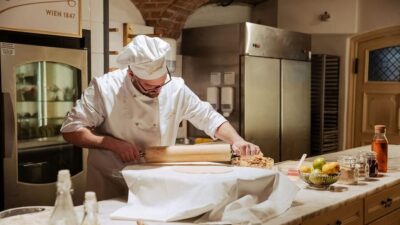
Vienna: Gerstner KuK Hofzuckerbäcker Baking Show & Tasting
Read our review →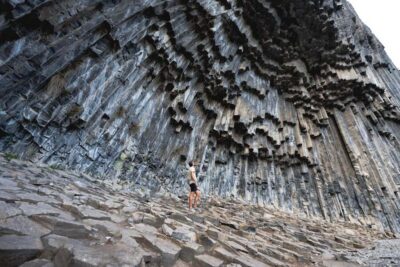
Yerevan: Garni, Geghard, Symphony of Stones & Lavash Baking
Read our review →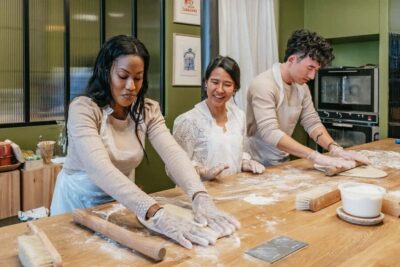
Paris: French Croissant Baking Class with a Chef
Read our review →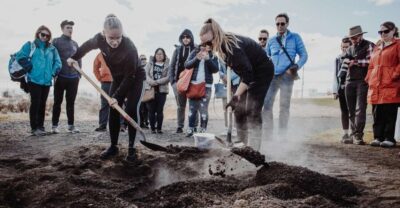
Laugarvatn Fontana: Geothermal Bread-Baking Experience
Read our review →Browse the lists this tour appears in