
Review · BARI
Cooking Class for Pasta Lovers in Polignano a Mare
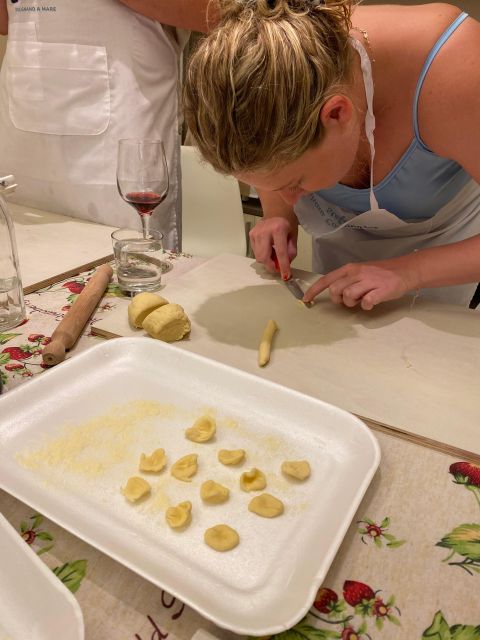
Making pasta from flour and water is the heart of this 2.5-hour cooking class in Polignano a Mare. With Stefania, you learn two Apulian shapes, orecchiette and cavatelli, then eat the dishes you made. It is a hands-on way to meet local food beyond the restaurant table.
I like the personal family recipes and the fact that each person gets a workstation, apron, tools, and ingredients. I also like the relaxed social side: drinks are included, and the class ends around a shared tasting. The main consideration is simple: this is a pasta-focused experience, not a broad lesson in all of Apulian cooking.
Key points to know before booking
- Two classic pasta shapes: Learn to form orecchiette and cavatelli from basic ingredients.
- A home-style setting: The host welcomes you into a personal, family-oriented cooking experience.
- Stefania leads the class: Instruction is available in English and Italian.
- You eat what you make: The class finishes with prepared pasta dishes and drinks.
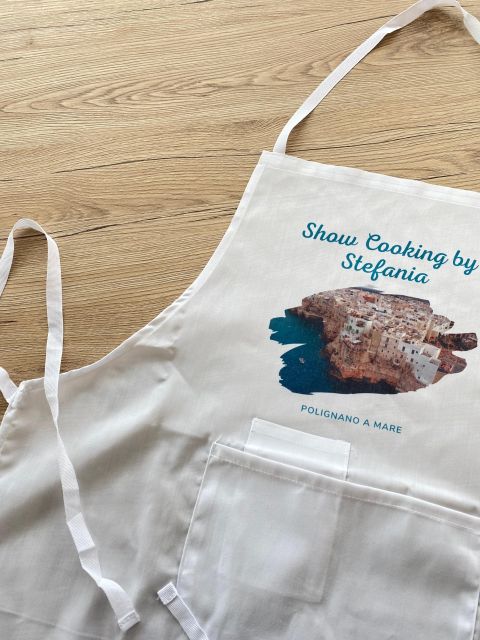
- Your own work area: Each participant receives a workstation, apron, tools, recipes, and ingredients.
- Flexible booking: You can cancel up to 24 hours before the experience for a full refund.
Why handmade pasta is the right lesson in Polignano a Mare
Apulian pasta does not need a long ingredient list to make an impression. Flour and water form the base, but the real lesson is in touch, pressure, rhythm, and shape. That makes this class more useful than a simple demonstration. You are not just watching someone produce perfect pasta. You are trying to make it yourself.
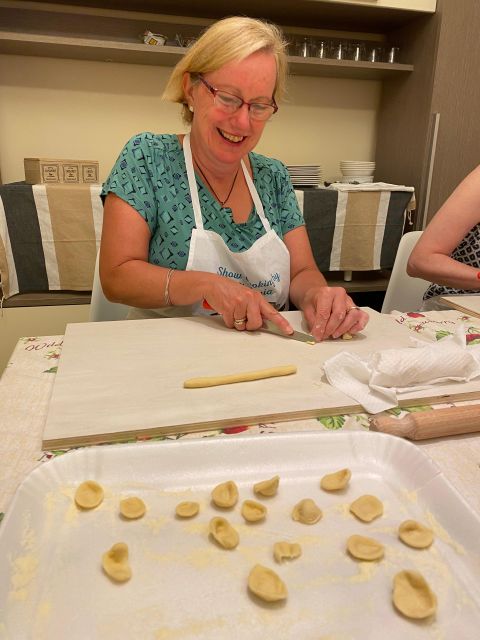
The two shapes give you a good introduction to southern Italian pasta. Orecchiette, whose name refers to little ears, is shaped by pressing and turning a small piece of dough. Cavatelli has a different form and handling technique. Working with both lets you compare how small changes in shaping create different textures and ways for sauce to cling.
I like this format because the food lesson stays practical. You begin with humble ingredients, work through the dough, shape the pasta, and finish by eating the results. You leave with recipes as well as a better sense of what handmade pasta requires.
The class also gives you a window into the food culture of Apulia. The host presents family recipes handed down through generations, so the emphasis is on food made at home rather than restaurant performance. That matters in a region where pasta is closely tied to everyday life, family tables, and local identity.
More Pasta Making Classes in Italy:
- Florence: Pasta Cooking Class with Unlimited Wine
★ 4.9 · 10,285 reviews - 3 in 1 Cooking Class near Navona: Fettuccine, Ravioli & Tiramisu
★ 5.0 · 7,376 reviews - Florence: Pasta & Tiramisu Cooking Class with Unlimited Wine
★ 4.9 · 6,708 reviews
What happens during the 2.5-hour class
The experience is built around cooking together. You receive an individual workstation, an apron, and the tools needed for the lesson. Having your own place to work keeps the class hands-on and gives you room to practice instead of simply watching from the side.
The class begins with the pasta-making process. You work with simple ingredients and learn how to bring them together into dough. The appeal is partly tactile. You can feel when the mixture begins to hold, and you can see how a few basic ingredients change as you work them.
Next comes shaping. Orecchiette and cavatelli require different movements, so you get two chances to practice. Do not expect every piece to look identical at first. That is part of the fun, and the host is there to guide your hands and explain the process.
The instruction is offered in English and Italian. That makes the class accessible to English-speaking visitors, while the Italian setting and language add a local touch. The strongest praise for the experience focuses on clear instruction, good organization, and Stefania’s kind, attentive approach.
Drinks are included during the class. The information provided does not specify a particular wine, but the experience describes enjoying a glass of wine while cooking, along with other drinks. That small addition helps the class feel social rather than purely instructional.
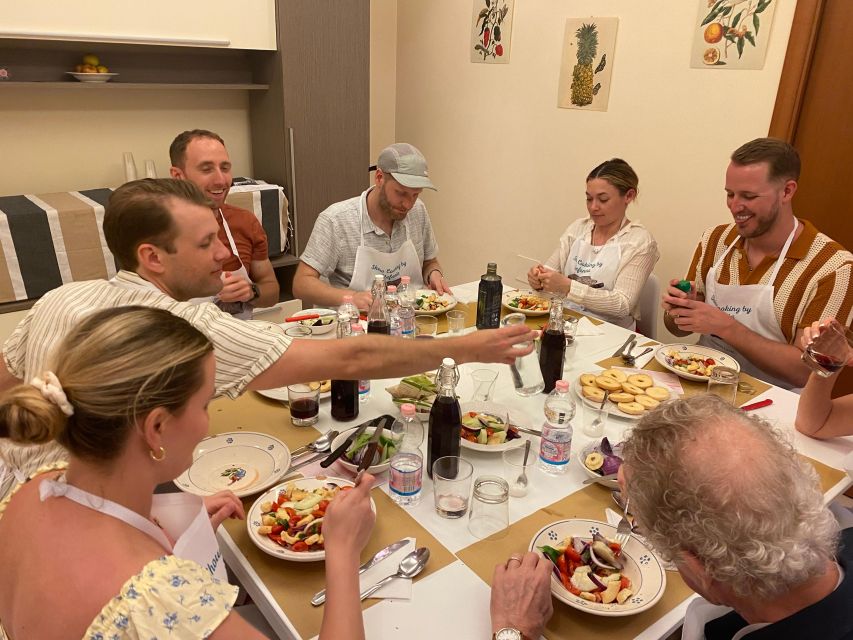
At the end, your pasta is prepared and served for tasting. This is an important part of the experience. You are not sent away with uncooked dough or a recipe card alone. You sit down to eat dishes made with your own hands.
Orecchiette and cavatelli give you two different skills
Orecchiette is likely to be the shape most closely associated with Apulia, and learning it gives the class a strong regional focus. The finished pieces are small and rounded, with a center that can hold sauce. The process looks simple, but getting a consistent shape takes practice.
Cavatelli gives you a second technique and keeps the lesson from feeling repetitive. Its shape is made with a different motion, so you have to adjust your pressure and timing. For someone who has never made fresh pasta, this is useful practice in how dough responds to your hands.
I would pay attention to the instructor’s hand movements rather than trying to rush. Pasta shaping is one of those skills that becomes easier after you watch it once, try it slowly, and repeat it. The class is designed for participation, so you have time to make mistakes without turning the lesson into a formal cooking exam.
The supplied tools and workstation also matter here. You do not need to arrive with special equipment. The host provides the tools needed for the experience, plus an apron to protect your clothing.
Family recipes and a personal welcome
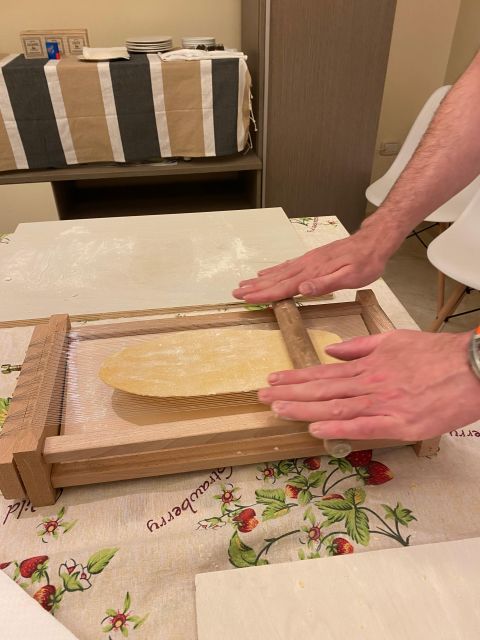
The tone of this experience is more personal than a large commercial cooking demonstration. The host describes welcoming everyone into her home and sharing recipes passed through her family. That points to a setting built around hospitality and conversation as much as technique.
Stefania is named in the strongest comments about the class. Her role seems to combine teacher and host. The praise centers on her warmth, attention, and ability to make the process both enjoyable and informative.
That personal approach suits you if you want food to be the main way you connect with a place. You may learn a little less about a wide range of Apulian dishes than you would in a full regional cooking course, but you get more time with the specific pasta shapes and the people around your table.
The class also has a good social balance. You work individually, but you cook in company, share drinks, and finish with a meal. Food unites people here in a direct, practical way. You do not need to be an experienced cook or a serious pasta enthusiast to take part.
More Hands-On Workshops in Italy:
- Florence: Pasta Cooking Class with Unlimited Wine
★ 5.0 · 6,413 reviews - Naples: Pizza-Making Workshop with Drink and Appetizer
★ 4.9 · 5,411 reviews - Cooking Class and Lunch at a Tuscan Farmhouse with Local Market Tour from Florence
★ 5.0 · 4,831 reviews - Authentic Pizza Making Class in Naples with Appetizers and Drink
★ 5.0 · 3,178 reviews
What the $67.97 price includes
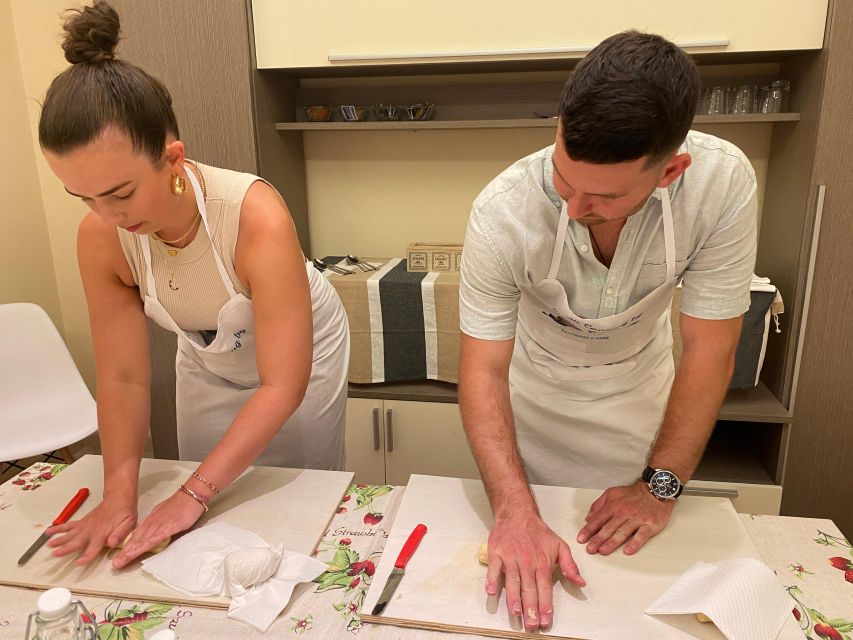
At $67.97 per person, the price is reasonable if you value instruction and a complete food experience rather than simply a meal. Your fee covers the workstation, apron, tools, ingredients, recipes, drinks, instruction, a souvenir photo taken with your smartphone, and tasting of the prepared dishes.
The value comes from the combination. A restaurant meal would give you cooked pasta, but not the skill of making it. A short demonstration might teach you less and leave you without the same sense of participation. Here, you receive a lesson, food, drinks, recipes, and a shared activity within two and a half hours.
The use of high-quality ingredients is part of the experience as presented. Since you work directly with the ingredients, their quality matters more than it would in a quick demonstration. You can see, touch, and taste the materials at each stage.
I would book this for someone who wants a meaningful food activity without committing half a day. The price may feel high if you only want a cheap lunch or if you already make these pasta shapes confidently at home. For most visitors looking for a local cooking activity, the combination of practical teaching and a finished meal makes the cost easier to justify.
Who will enjoy this class most
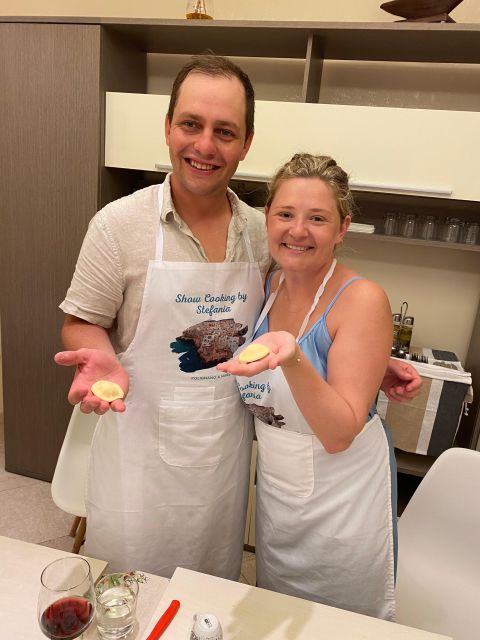
This class is a good match for pasta lovers, first-time cooks, couples, friends, and solo visitors who enjoy meeting people through food. It also suits anyone who wants a slower activity between sightseeing stops in Apulia.
You do not need to bring cooking tools or ingredients. The host supplies them, and each participant has a workstation. The class is conducted in English and Italian, so English-speaking visitors can follow the teaching.
Children under six are not permitted. Families with older children should consider the amount of hands-on work involved. Shaping fresh pasta can be fun, but it requires attention and patience. The experience will work best for children who enjoy following instructions and working with their hands.
This is less suitable if you want a class centered on meat, seafood, desserts, or a large selection of regional dishes. The subject is focused and clear: fresh handmade pasta, especially orecchiette and cavatelli.
What to bring and how to prepare
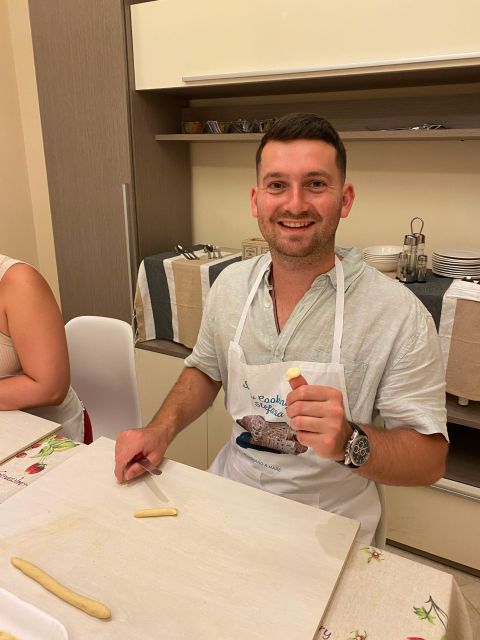
Wear comfortable clothing that you do not mind getting a little dusty with flour. An apron is supplied, but practical clothes are still the sensible choice for a hands-on kitchen activity.
Come ready to work rather than simply observe. The best part of the class is shaping the pasta yourself, so your experience will be better if you accept that your first pieces may look uneven.
You may also want to keep space on your phone for the souvenir photo. The host includes a photo taken with your smartphone, which gives you a simple record of the experience without adding a separate photography service.
Starting times vary, so check availability when selecting your date. The activity lasts two and a half hours, a useful length for planning around other time in Polignano a Mare.
The strongest reason to book
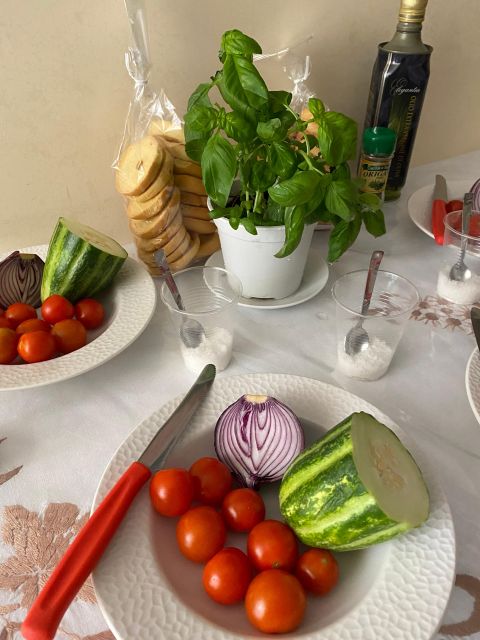
The class earns its appeal through a combination of clear instruction and personal hospitality. The high rating of 4.7 from 13 ratings reflects a consistently strong response, and the most praised points are the organization, Stefania’s kindness, and the sense that you are learning while having a genuinely pleasant afternoon.
That balance is important. Some cooking classes feel like production lines, with little time to ask questions or practice. This experience is presented as a welcoming, family-recipe lesson with a workstation for every participant. That should give you a more active role.
The final tasting also gives the class a satisfying finish. You see the full path from raw ingredients to handmade pasta on your plate. It is a small but complete food story.
Booking flexibility and practical limits
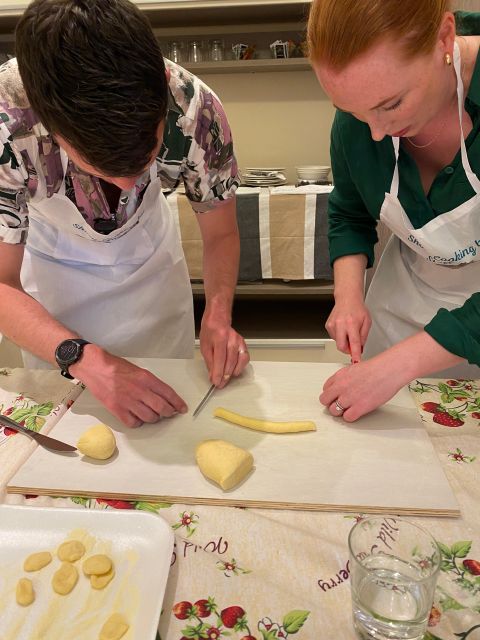
You can cancel up to 24 hours in advance for a full refund. You can also reserve now and pay later, which helps if your Apulia plans are still shifting.
The class is available in English and Italian. The exact meeting details and starting times are not provided here, so check the booking information carefully before you confirm.
There is no stated group size, so do not assume this is a private lesson. The individual workstation means you will have your own place to work, but the activity is designed for people cooking together.
Should you book the Polignano a Mare pasta class?
Book it if you want to make and eat traditional Apulian pasta, enjoy personal instruction, and prefer a food activity with a social feel. The two pasta shapes give you enough variety for a worthwhile lesson, while the 2.5-hour length keeps the commitment manageable.
I would especially recommend it to visitors who have already seen the main sights and want an activity tied to daily life in the region. Stefania’s warm teaching style, family recipes, included drinks, and final tasting give the class more substance than a quick cooking demonstration.
Skip it if you are looking for a broad culinary survey, a formal chef-training course, or a sightseeing tour. This is a focused pasta workshop. For $67.97, it offers good value when you want a personal, hands-on introduction to Apulian cooking and a meal made by you.
FAQ
Where does the pasta cooking class take place?
The experience takes place in Polignano a Mare in Apulia, Italy.
How long does the class last?
The class lasts 2.5 hours.
What pasta will I learn to make?
You will learn to prepare two types of fresh pasta: orecchiette and cavatelli.
Is the class available in English?
Yes. Instruction is available in English and Italian.
Is food included?
Yes. You will taste pasta dishes prepared during the class using the pasta you made.
Are drinks included?
Yes. Drinks are included, and the experience describes enjoying a glass of wine while cooking.
Do I receive cooking equipment?
Yes. Tools needed for the experience are provided, along with a workstation for each participant.
Is an apron provided?
Yes. An apron is available to help protect your clothes.
Are recipes included?
Yes. Recipes are included as part of the experience.
Can children under six attend?
No. The class is not suitable for children under six.
Can I cancel for a refund?
Yes. You can cancel up to 24 hours in advance for a full refund.
Can I reserve now and pay later?
Yes. The reserve-now, pay-later option lets you book without paying immediately.
Just added around Italy
- Monopoli: Parco Rurale Guided Tour with Pasta-Making Lab★ 4.9 · 13 reviews
- Montepulciano: Pasta-Making Class with Tasting and Wine★ 4.7 · 39 reviews
- Montone: Pasta Making and Dinner at Cardaneto Castle★ 5.0 · 4 reviews
- Modena: Private Pasta-Making Class at a Local’s Home★ 4.3 · 3 reviews
- Modena: Home Cooking Class Tagliatelle and Ragu and Tiramisu★ 5.0 · 23 reviews
- Milazzo: Sicilian Pasta Making Class with Dinner★ 5.0 · 5 reviews
- Milan: Private Cooking Class at a Local’s Home★ 5.0 · 9 reviews
- Rome Pizza & Gelato Cooking Class★ 4.6 · 49 reviews
Pasta Making Classes, compared.
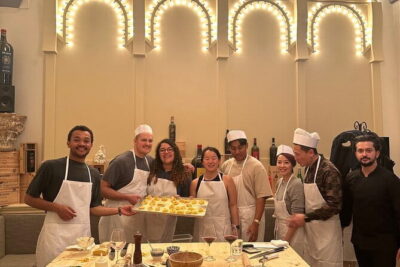
Florence: Pasta Cooking Class with Unlimited Wine
Read our review →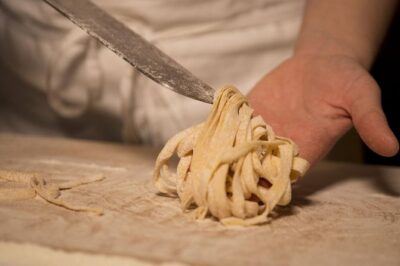
3 in 1 Cooking Class near Navona: Fettuccine, Ravioli & Tiramisu
Read our review →
Rome: Pasta Making Class with Wine, Limoncello, and Dessert
Read our review →
Rome Cooking Class: Make Pasta and 3 Spritz Cocktails
Read our review →
Rome: 3-in-1 Fettuccine, Ravioli, and Tiramisu Cooking Class
Read our review →
Rome: Fettuccine Pasta Cooking Class in Rome’s City Center
Read our review →Browse the lists this tour appears in