
Review · THESSALONIKI
Thessaloniki: Greek Cooking Class, Market visit and Lunch
Thessaloniki’s best food lesson begins before you reach the stove. You’ll visit Kapani and Modiano markets, choose fresh ingredients, then use them in a Greek lunch. I like that the market visit gives the meal a clear local setting, and I like that you do the cooking instead of simply watching a chef work.
The class also teaches dishes with real roots in Greek home cooking, especially gemista and dolmadakia. Guides have included Maria, Kostas, Thelis, and Konstantina, and the class has been held by a chef who also owns the local taverna. The main consideration is time: at about three and a half hours, this is a substantial midday activity, not a quick tasting stop.
Key points to know before you book
- Two central food markets: Visit Kapani, also called Vlali Market, and Modiano Market before cooking.
- A hands-on Greek lunch: Prepare tzatziki, dolmadakia, Greek salad, gemista, and chocolate salami.
- A chef-led setting: The cooking takes place at a taverna with an instructor who is also the chef and owner.
- A small maximum group: The class accepts up to 16 people, allowing room for participation without promising a private lesson.
- A useful midday schedule: Meet at 11:30 am at Electra Palace Thessaloniki and finish at the same point.
- Good value for food lovers: The $110.54 price includes market visits, instruction, cooking, and the meal you help prepare.
Starting at Thessaloniki’s food markets
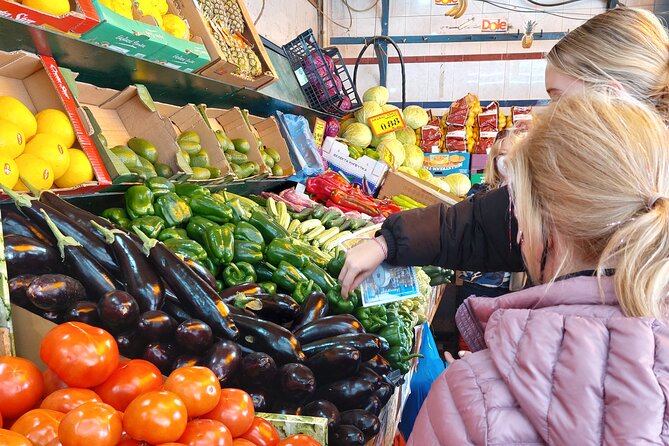
The tour begins at 11:30 am outside the Electra Palace Thessaloniki on Aristotelous 9. From there, the food story starts at the Kapani, or Vlali, Market. This is a sensible first stop because Greek cooking makes more sense when you see the produce and everyday ingredients before handling them in class.
You can expect the market portion to focus on buying ingredients for lunch. The point is not only to look at food stalls. You are following the path from shopping to cooking, which gives the later meal more meaning. A tomato, herb, grape leaf, or cucumber is no longer just part of a finished plate. You have seen it as an ingredient chosen for the meal.
The second stop is Modiano Market. Visiting two markets gives you a wider look at Thessaloniki’s food culture than a single market visit would. It also adds variety to the morning, though the available details do not specify exactly which ingredients are purchased at each market or how much time is spent in either one.
This is useful to keep in mind if you prefer a highly structured food tour with a precise list of tastings. The experience is built around shopping and cooking rather than a long sequence of samples. You may taste Greek products during the market portion, but the clearest food payoff comes later, when lunch is ready.
More Market Tour Cooking Classes in Greece
- Athens: Classic Cooking Class with Market Visit and Wine
★ 5.0 · 1,101 reviews - Athens: Food Market Visit and Cooking Class with Wine
★ 4.9 · 1,087 reviews - Athens Market Tour and Cooking Class in a Beautiful Garden
★ 5.0 · 122 reviews
Why the market visit matters
A market stop can easily become a quick walk with a few facts attached. Here, it has a job to do. The ingredients purchased in the markets become part of the class, so the experience connects Thessaloniki’s daily food trade with the meal on your plate.
That connection is especially helpful if you are new to Greek cooking. You’ll see how a meal can be built from simple ingredients: vegetables, rice, herbs, yogurt, cucumber, grape leaves, tomatoes, olives, feta, and chocolate biscuits or similar ingredients for dessert. The menu is not based on hard-to-find restaurant tricks. It focuses on familiar Greek staples and the small steps that make them work.
The two markets also give you a sense of place before the cooking begins. You are not being taken straight into a classroom with no link to the city around it. Instead, the morning starts in central Thessaloniki and then moves toward the kitchen.
One practical note: the experience requires good weather. If poor weather causes cancellation, you are offered another date or a full refund. That condition matters because the market visits are part of the core experience, not an optional extra.
Cooking tzatziki, dolmadakia, and Greek salad
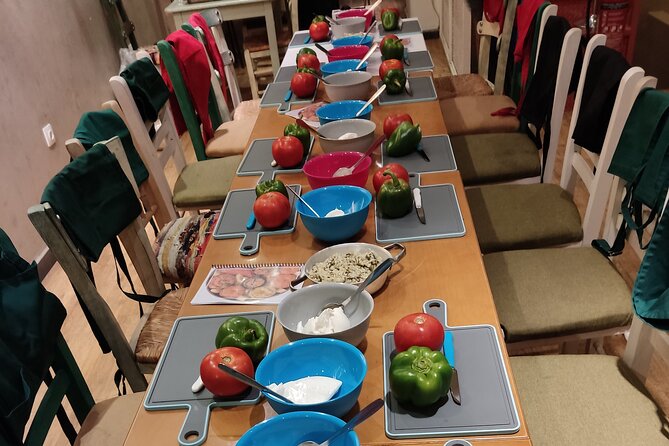
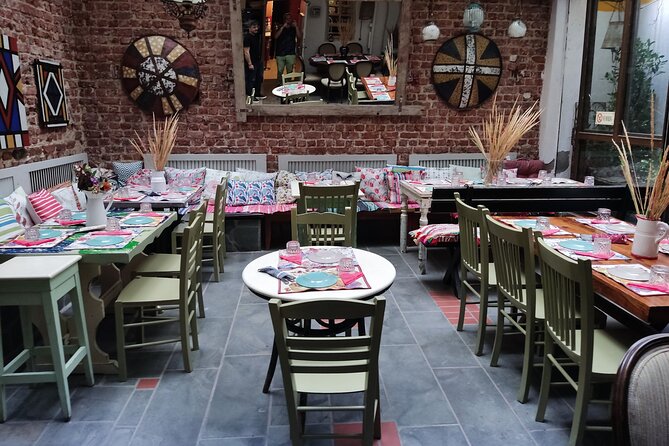
Once the shopping is finished, the group moves to the cooking setting. The class has been described as taking place in a taverna run by the chef and owner who leads the instruction. That arrangement can give the lesson a more personal feel than a large demonstration kitchen, though you should still remember that the maximum group size is 16.
The first dishes are straightforward but important. Tzatziki is made from the familiar combination of yogurt, cucumber, garlic, and herbs. It may appear simple, yet it is one of the most useful Greek preparations to learn because it works as a cold starter, a side dish, or a sauce for souvlaki and gyros.
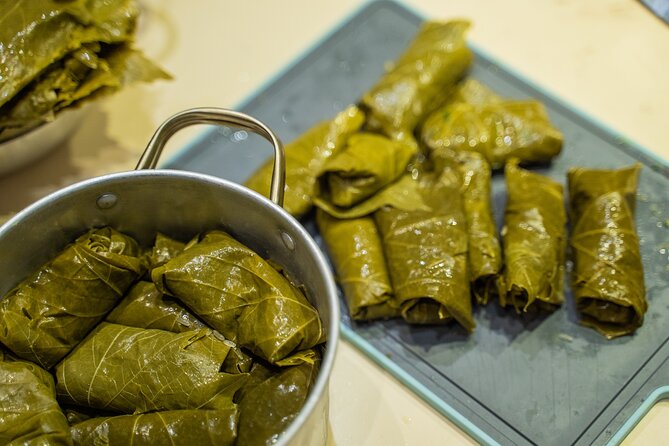
You also prepare dolmadakia, stuffed grape leaves filled with rice and fresh herbs. This is the kind of dish that benefits from instruction. Rolling the leaves and filling them neatly takes some practice, and the class gives you a chance to learn the method rather than only order the finished dish at a restaurant.
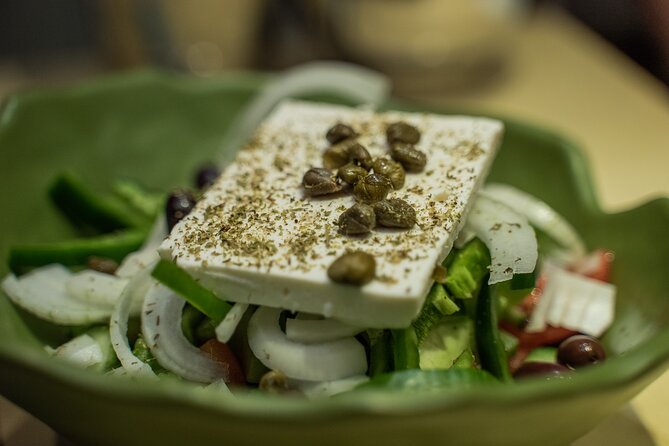
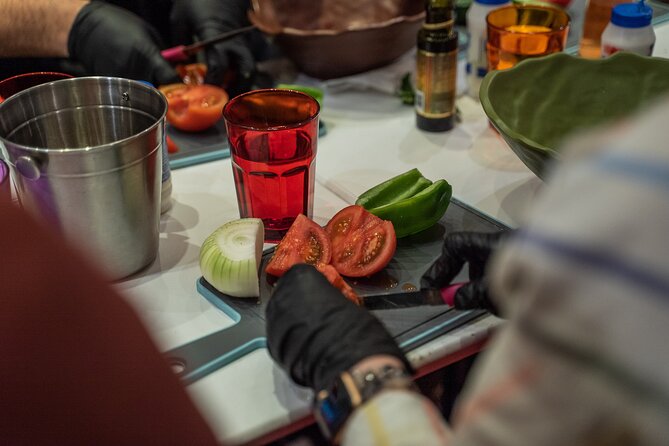
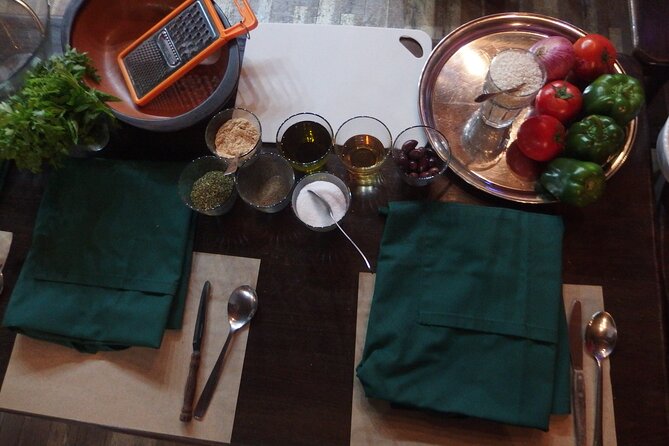
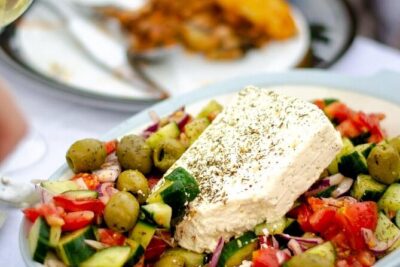
The Greek salad is another lesson in restraint. The listed ingredients are tomatoes, cucumber, red onion, olives, and feta, with an herby dressing. There is no long ingredient list to hide behind. The quality and balance of the basic foods matter most.
I like this part of the menu because it gives you three different kinds of kitchen work. Tzatziki involves mixing and seasoning. Dolmadakia require careful assembly. Greek salad teaches you how to bring fresh ingredients together without overworking them.
Making gemista the main event
The main dish is gemista, vegetables stuffed with rice and herbs, then baked with potatoes and tomato sauce. It is one of the strongest reasons to choose this class. Gemista may look humble, but it involves several steps and shows how Greek cooks turn vegetables, rice, herbs, and sauce into a complete meal.
The cooking process also gives you a useful lesson in texture. The filling needs to cook properly inside the vegetables, while the potatoes and tomato sauce help form the base of the dish. You are not simply assembling a salad or stirring a dip. You are learning a baked dish that takes more care and benefits from the chef’s guidance.
One person who took the class specifically learned new techniques for making gemista and prepared dolmadakia for the first time. That is a good clue about the level of the activity. You do not need to arrive as an experienced cook, but you should be ready to take part, follow instructions, and handle several simple preparations.
The recipes are not presented as elaborate restaurant cuisine. Their value is practical. You can imagine making them again after returning home, especially if you already cook basic rice, vegetables, or salads. The instructor’s tips may be more useful than a long lecture because they focus on how to make simple food taste better.
More Greek Cooking Classes in Greece:
- Greek Cuisine Cooking Class in Santorini with Recipes and Wine
★ 5.0 · 969 reviews - Greek Cooking Class in Athens Including Rooftop Dinner with Acropolis View
★ 5.0 · 826 reviews - Greek Small-Group Athens Cooking Class & Dinner
★ 5.0 · 574 reviews - Athens: Greek Cooking Class & Dinner on a Rooftop
★ 5.0 · 383 reviews
Finishing with chocolate salami or kormos
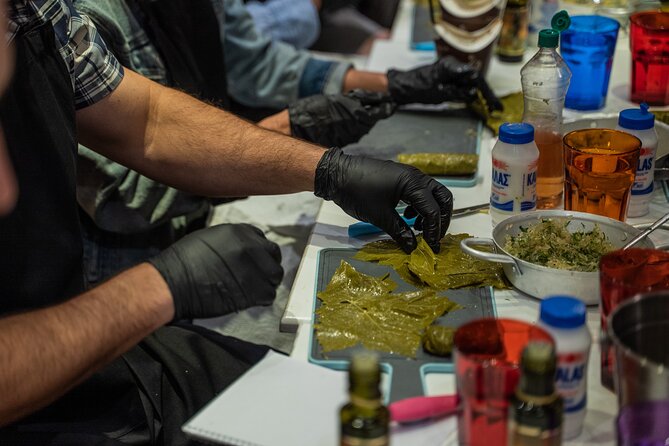
Dessert is chocolate salami, also called kormos or mosaico. Kormos means tree log in Greek, a reference to the dessert’s shape. The different names are useful to know because you may see this sweet listed in several forms during your time in Greece.
The dessert provides an easy finish after the savory dishes. It is not presented as a complicated pastry workshop. Instead, it is a familiar home-style treat with a playful name and an appearance unlike a standard cake or pudding.
Including dessert also makes the meal feel complete. You help prepare starters, a main dish, and something sweet, rather than stopping once the gemista comes out of the oven. Since the activity ends back at the meeting point, lunch is the natural closing point before you return to the Electra Palace.
What the guides add to the class
Several guide names are associated with this experience. Maria has led the activity, and Kostas and Thelis have guided market visits and explained how local history has shaped the food. Konstantina has also been praised for her understanding of the market and traditional Greek cooking.
The guide’s role matters here because the tour has two parts that need to connect. At the markets, you want more than directions from one stall to the next. In the kitchen, you want more than someone handing you a recipe. The best version of this experience links the ingredients, the city, and the dishes.
You can also expect a social class rather than a private cooking appointment. With a maximum of 16 people, there may be enough space for direct participation, but the number is large enough that you will share the work and attention. If you want one-to-one coaching throughout, a smaller private class may suit you better.
The reported scores are uniformly strong, with a five-star rating and recommendation from all 15 listed participants. That is a small sample, so I would not treat it as a guarantee. Still, the repeated praise focuses on specific features: the two markets, the hands-on cooking, the traditional lunch, and guides who make the activity friendly and informative.
Is $110.54 a fair price?
At $110.54 per person, this is not a cheap way to grab lunch in Thessaloniki. You are paying for more than the food itself, though. The price covers about three and a half hours, two market visits, instruction, ingredients, and a meal that you help prepare.
The value is strongest if you want to learn. A restaurant meal would cost less, but it would not show you how to roll dolmadakia, prepare gemista, or make the dishes yourself. A standard market walk might also cost less, but it would not end with a full Greek lunch in a taverna.
The price is less compelling if you mainly want a quick introduction to Greek food or a long list of market tastings. The class spends its time on participation, and the menu uses simple ingredients. You are buying access to the process, not a luxury dining experience.
I would see the activity as good value for a food-focused visitor who wants one substantial cultural activity in Thessaloniki. It can also be worthwhile for a parent, grandparent, or family pair looking for something shared and practical. The activity has been enjoyed by a grandmother and granddaughter together, which fits the format well.
Timing, group size, and practical details
The 11:30 am start makes this a midday plan. You should avoid scheduling another fixed activity too close afterward, since the class lasts about three hours and 30 minutes and ends at the starting point. That return to the meeting point is convenient if you are staying near Aristotelous Square or using the area as your base.
The tour is offered in English and uses a mobile ticket. Confirmation arrives at booking. It is near public transportation, and service animals are allowed.
The group maximum is 16 people. That is small enough to keep the class focused compared with a large bus-style activity, but it is not the same as a private lesson. Your experience may depend partly on how actively the group takes part.
Cancellation is free up to 24 hours before the start time for a full refund. Changes or cancellations inside that window are not accepted, and the amount paid is not refunded. Cutoff times use local Thessaloniki time, so check carefully if you are arranging plans across time zones.
Who should book this cooking class?
I would recommend it to you if you want to connect food with place. The two markets provide a city setting, while the kitchen work gives you a skill to take home. It is also a good choice if you prefer a meal with a story behind it instead of simply sitting down at a restaurant.
This class suits curious beginners. The menu is traditional but approachable, and the activity includes dishes that teach different skills. You do not need advanced cooking experience based on the information provided, but you should enjoy taking part rather than watching from the side.
It is a particularly good fit for couples, friends, and family members who like doing an activity together. The three-and-a-half-hour length gives the outing enough time to feel substantial, though it may be too long if your schedule is packed or you want a short food stop between sightseeing plans.
I would be more cautious about booking if you have strict dietary needs, since the available information does not describe substitutions or allergy arrangements. It also does not provide a full ingredient list for every dish. Ask the provider before booking if that detail affects your decision.
Should you book it?
Book this experience if you want to shop in Thessaloniki’s central markets, learn several Greek dishes, and sit down to a lunch you helped prepare. The strongest parts are the market-to-kitchen connection, the gemista and dolmadakia lesson, and the chance to cook in a taverna led by a chef-owner.
Skip it if you only want a fast tasting walk, a private cooking session, or a low-cost lunch. For most food-minded visitors, though, the combination of local markets, practical instruction, and a complete Greek meal gives the $110.54 price a reasonable return.
FAQ
Where does the Thessaloniki cooking class begin?
It begins at Electra Palace Thessaloniki, Aristotelous 9, Thessaloniki 546 24, Greece.
What time does the activity start?
The start time is 11:30 am.
How long does the cooking class and market visit last?
The activity lasts about three hours and 30 minutes.
Which markets are included?
The tour visits Kapani, also called Vlali Market, and Modiano Market.
What food will I prepare?
The sample menu includes tzatziki, dolmadakia, Greek salad, gemista, and chocolate salami, also called kormos.
What happens if the weather is poor?
The experience requires good weather. If it is canceled because of poor weather, you are offered a different date or a full refund.
More Shopping Trips in Greece
- Cooking Class in Athens with Shopping in Central Market & Lunch
★ 5.0 · 55 reviews - Hanoi Cooking Class: Culture, Local Market & Meaning CSR Impact
★ 5.0 · 5,147 reviews - 5 Traditional Dishes Hanoi Cooking Class with Market Trip
★ 5.0 · 4,890 reviews - Cooking Class and Lunch at a Tuscan Farmhouse with Local Market Tour from Florence
★ 5.0 · 4,831 reviews
More Lunch Experiences in Greece
- Santorini: Cooking Class with Lunch and Wine Tasting
★ 4.8 · 289 reviews - Traditional Greek cooking class and lunch or dinner with an Acropolis view
★ 5.0 · 250 reviews - Half-Day Greek Cooking Class of Zakynthian Culture with Lunch
★ 5.0 · 215 reviews - Oia: Greek Cooking Class and Lunch with a Local Grandmother
★ 4.9 · 208 reviews
Just added around Greece
- Thessaloniki: Cooking & Dining Experience with Greek Family★ 4.9 · 85 reviews
- 5 Hours Private Cooking Classes in Langadas Thessalonikis★ 5.0 · 14 reviews
- Cook & Dine With a Local Greek Family in Thessaloniki★ 5.0 · 26 reviews
- Rhodes: Cooking Lesson and Wine Tasting with Lunch★ 4.9 · 93 reviews
- Tasting Rhodes: Cooking Class, Wine Tasting & more in an Authentic Greek village★ 5.0 · 66 reviews
- Rhodes Wine & Food Tour: 10 Meal Course Lunch, Wine Tasting, Cooking Class★ 5.0 · 109 reviews
- Cooking Classes in Mykonos Greece★ 5.0 · 180 reviews
- Athens Market Tour and Cooking Class in a Beautiful Garden★ 5.0 · 122 reviews
Greek Cooking Classes, compared.
Greek Cuisine Cooking Class in Santorini with Recipes and Wine
Read our review →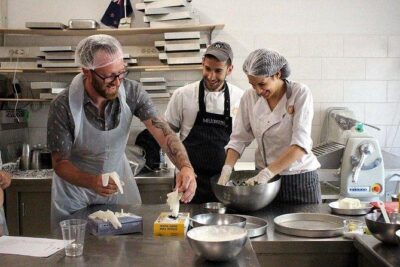
Greek Cooking Class in Athens Including Rooftop Dinner with Acropolis View
Read our review →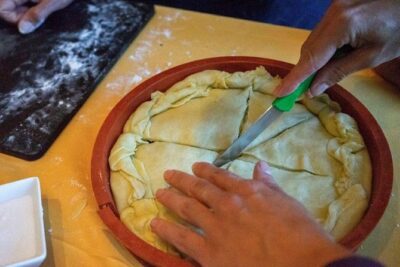
Greek Small-Group Athens Cooking Class & Dinner
Read our review →
Athens: Greek Cooking Class & Dinner on a Rooftop
Read our review →
Athens: Greek Cuisine Cooking Class and 3-Course Dinner
Read our review →
Traditional Greek cooking class and lunch or dinner with an Acropolis view
Read our review →
Greek Cooking Class with a Local Chef, Wine, & Meal in Drios
Read our review →
Half-Day Greek Cooking Class of Zakynthian Culture with Lunch
Read our review →Browse the lists this tour appears in