Review · ITALY
Abruzzo Traditional Pasta Making with 85y old local Grandma
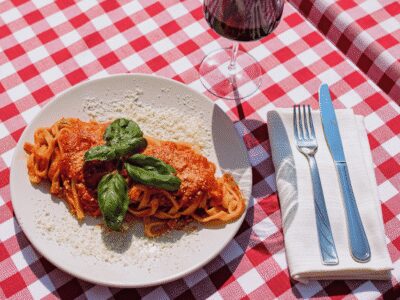
The star here is pasta alla chitarra, Abruzzo’s square-edged pasta made by pressing dough across an old wooden chitarra. Marino and his 85-year-old grandmother, Nonna Amina, show you the slow, traditional method that a pasta machine cannot quite copy.
I like the family setting and the meal that follows, with local cheese, honey, olive oil, bread, and the pasta you helped make. I also like that you leave with practical recipes, not just a full stomach. The main drawback is the price: at $360.46 per person, this is a costly five-hour food experience, and the non-refundable booking terms require firm plans.
Key points to know
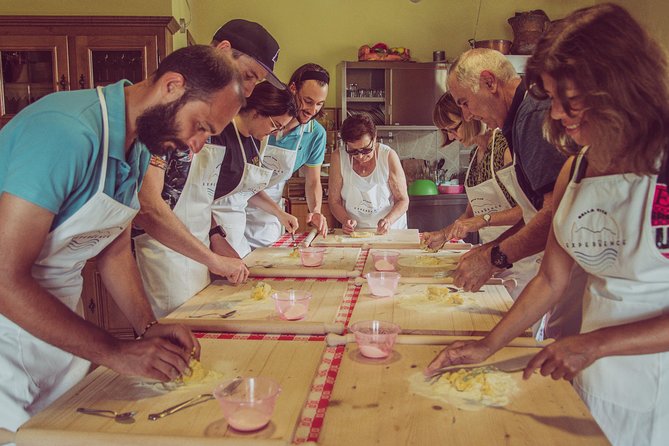
- An 85-year-old nonna leads the pasta lesson: Nonna Amina shares family methods for pasta alla chitarra and tomato sauce.
- The wooden chitarra is the main attraction: You make Teramo-style pasta by hand instead of relying on a modern pasta machine.
- The food goes beyond the cooking class: You taste cheese, honey, extra-virgin olive oil, fresh bread, and a four-course meal.
- The setting is Campovalano near Teramo: The meeting point is Frazione Campovalano SP 16, in Campli.
- The group is capped at 10 people: That keeps the family-style format more personal than a large cooking demonstration.
- The cost suits a special occasion: Group discounts may be available, but the price is high for a half-day activity.
Making pasta the old Abruzzo way
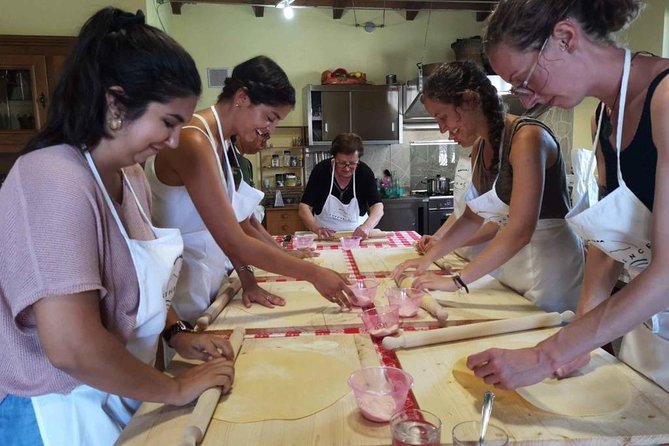
This is not a quick lesson in rolling dough, sprinkling flour, and posing with a plate. The heart of the experience is pasta alla chitarra, a traditional pasta from the Teramo area of Abruzzo.
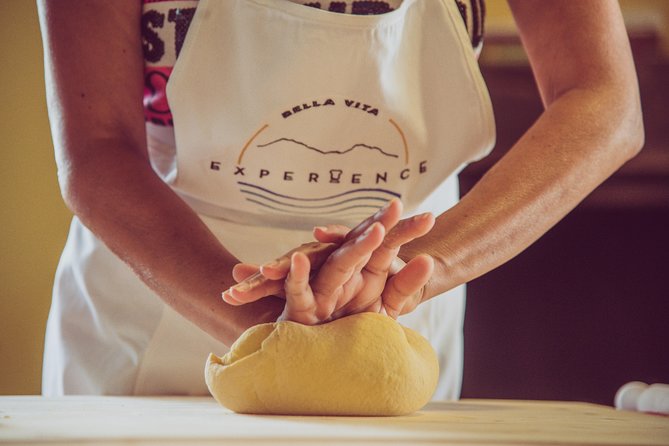
The name comes from the wooden tool used to cut the dough. Its fine wires turn a sheet of pasta into long, square-edged strands. You work with the dough by hand, then press it across the chitarra to create the shape.
That detail matters. A standard pasta machine gives you speed and evenness. The wooden tool gives you a direct connection to the food and to an older household method. You can see why this pasta has a different character once you have made it yourself.
Nonna Amina is 85 years old, and her role gives the lesson its strongest sense of place. She carries family recipes passed down through generations, while Marino helps explain the process in English. The result is less like a formal culinary school and more like being shown a household skill that still has meaning.
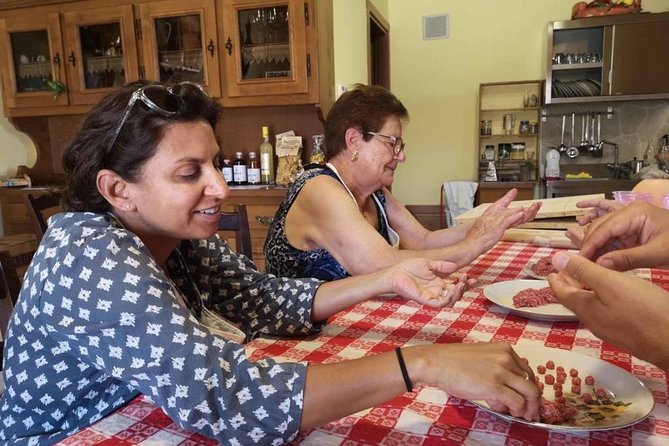
You should expect to work, not simply watch. The supplied description says you will prepare the pasta from scratch, so this suits anyone who wants a hands-on activity. If you prefer a polished demonstration with little participation, this may feel slower and less predictable than a restaurant-based cooking class.
More Pasta Making Classes in Italy:
- Florence: Pasta Cooking Class with Unlimited Wine
★ 4.9 · 10,285 reviews - 3 in 1 Cooking Class near Navona: Fettuccine, Ravioli & Tiramisu
★ 5.0 · 7,376 reviews - Florence: Pasta & Tiramisu Cooking Class with Unlimited Wine
★ 4.9 · 6,708 reviews
What happens at Campovalano
The activity begins at Frazione Campovalano SP 16, 64012 Campli, in the province of Teramo. The experience is listed under Pescara, but the actual meeting point is in Campovalano near Campli, so check the address carefully before booking your day.
The itinerary identifies Campovalano as the stop, and the activity ends back at the same meeting point. No transport from Pescara is included in the details provided. You should plan your own way to the start and allow enough time to arrive without rushing the lesson.
Once there, Marino and Nonna Amina guide you through a typical family day from Abruzzo. The emphasis is on shared preparation. You learn how the pasta is made, how the sauce comes together, and why the handmade method matters at home.
The group limit is 10 people. That is a useful number for this sort of activity because everyone should have a chance to take part, ask questions, and see the work at close range. It also fits the family atmosphere better than a large class with several dozen people.
The experience lasts about five hours. That is long enough for a proper meal and conversation, but it is not a brief stop you can squeeze between several major sights. Treat it as a main event for half a day.
Eggs, vegetables, and tomato sauce
The ingredients are part of the lesson, not just decoration. You prepare the pasta with organic farm eggs, then work with vegetables and olive oil. These details help you understand the food as an everyday regional tradition rather than a dish invented for visitors.
The tomato sauce lesson is another central piece. Marino and Nonna Amina explain the family method for making a good sauce, with the aim of giving you something you can repeat at home. That practical value makes the class more useful than an activity where the recipe disappears the moment lunch is over.
You will want to pay attention to texture and handling. Handmade pasta is affected by the dough, the way it is rolled, and the way it is cut. The supplied information does not give exact quantities or cooking times, so I would not book this expecting a printed technical course with precise professional formulas. Its strength is the family method and the explanation of why the traditional approach works.
The dish associated with the meal is chitarra con pallottine, pasta alla chitarra served with small meatballs. The meal is built around what you help prepare, which gives the cooking a clear payoff. You do not simply sample someone else’s finished dish. You sit down to eat the result of the work.
From local tasting to a four-course meal
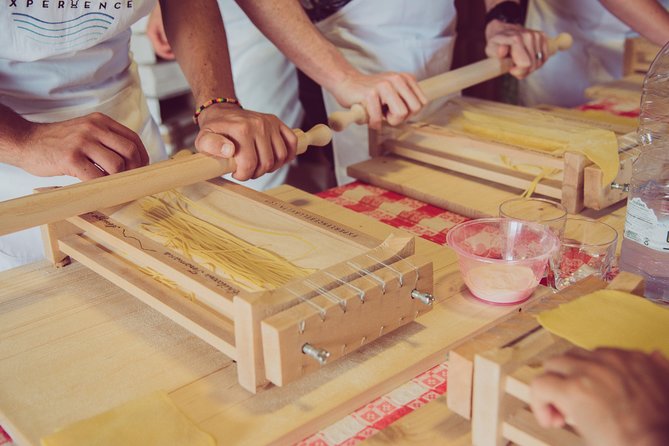
Before or alongside the meal, you taste several local products: cheese, honey, extra-virgin olive oil, and freshly baked bread. This is a useful part of the experience because it gives you more than one flavor to remember from Abruzzo.
The tasting also helps explain how a family meal is built. Bread and olive oil are simple, but the quality of the ingredients matters. Cheese and honey add a small local pantry lesson, while the vegetables and eggs connect the cooking to the farm.
The main meal is described as a four-course family meal featuring the food you prepared. The exact courses are not listed, so you should not expect a fixed menu with every dish announced in advance. What is clear is that the pasta is the centerpiece and that the meal extends well beyond a single bowl.
The family element is important here. Marino’s mother and father may join the meal, creating the feel of eating with family friends rather than sitting at a detached cooking-school table. That can be a major plus if you value conversation and personal contact. It may be less appealing if you want a quiet, tightly scheduled lunch with minimal social interaction.
The meal also makes the five-hour duration easier to understand. Time is used for preparation, tasting, cooking, and eating. You are paying for an afternoon built around food and family connection, not only for a lesson measured by the amount of pasta produced.
Same place, a different menu:
- Florence: Pasta Cooking Class with Unlimited Wine
★ 5.0 · 6,413 reviews - Naples: Pizza-Making Workshop with Drink and Appetizer
★ 4.9 · 5,411 reviews - Cooking Class and Lunch at a Tuscan Farmhouse with Local Market Tour from Florence
★ 5.0 · 4,831 reviews - Authentic Pizza Making Class in Naples with Appetizers and Drink
★ 5.0 · 3,178 reviews
Why the handmade chitarra matters
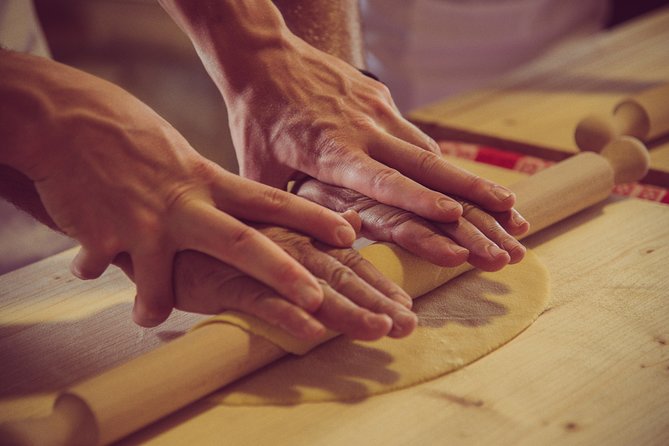
You can find pasta-making classes in many Italian cities. The reason to choose this one is its focus on a particular Abruzzo tradition and a tool that is increasingly uncommon in ordinary kitchens.
Restaurants and home cooks often use pasta machines because they are faster. Here, the wooden chitarra is the point. You learn how the tool works and why the result differs from machine-made pasta. That gives the activity a clear identity.
It also connects the dish to Teramo. Pasta alla chitarra is not presented as a generic Italian recipe. It is tied to the local area and to the family’s way of preparing it. For a food-focused visit to Abruzzo, that regional focus is more useful than a broad class covering several famous Italian dishes in a single afternoon.
The lesson may also change how you approach pasta at home. You will understand that handmade pasta is not only about equipment. It is about feel, rhythm, and knowing when the dough is ready. You may not reproduce Nonna Amina’s results immediately, but you will take home a method and a reason to try.
Price, group size, and overall value
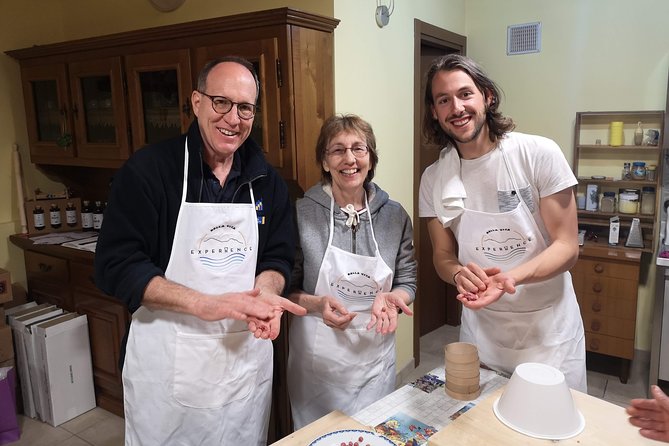
The listed price is $360.46 per person. That is a serious amount for a five-hour activity, especially when you compare it with a standard cooking lesson in a city. The value depends on what you want from the day.
You are paying for a small group capped at 10, an English-language experience, hands-on preparation, local ingredients, tastings, a four-course meal, and time with an 85-year-old local grandmother. You are also paying for access to a private family setting and a tradition that is difficult to experience through a normal restaurant meal.
I would consider it better value for a couple, family, or small group treating the class as a special event. Group discounts may help if you are booking with friends, though the amount of the discount is not specified.
For a solo visitor on a tight budget, the cost is harder to justify. You may be able to eat several good meals for the same amount. The strongest case for booking is not quantity of food. It is the combination of instruction, family contact, regional identity, and a meal tied to your own work.
The five-hour length is also part of the calculation. If you want a quick activity, this is too long and too expensive. If you want one memorable food-centered half-day, the format makes more sense.
Who should book this experience
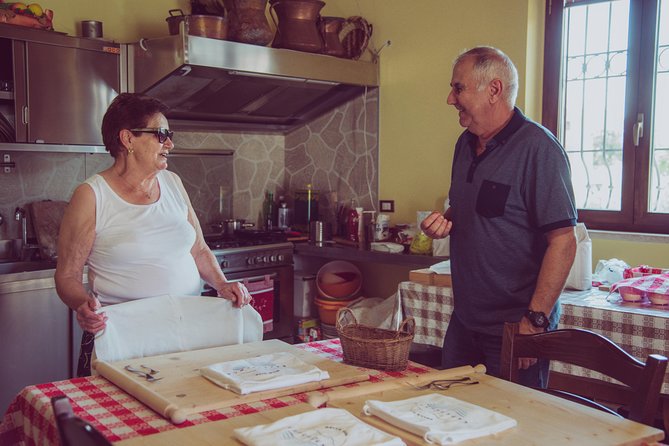
I would point this toward people who care about regional food traditions, not just Italian food in general. It is especially suitable if pasta alla chitarra is unfamiliar to you and you want to learn how Abruzzo differs from the better-known food centers farther north and south.
Families can also fit well here. The activity is described as suitable for families with children, and the small group size should make participation easier. Still, the details do not state a minimum age or specific arrangements for children, so ask before booking if you have young children or need special planning.
Food-focused couples and groups of friends are another good match. The meal and family contact give the afternoon a social quality, and Marino has shown flexibility in arranging the time. That flexibility is useful, but you should confirm any requested timing before you pay.
You should think twice if you dislike fixed commitments, because the booking is non-refundable and cannot be changed for any reason. You should also check the meeting location carefully if you are staying in Pescara, since the start point is in Campovalano near Campli, not a central Pescara address.
Service animals are allowed. The experience is offered in English, and confirmation is sent within 48 hours of booking, subject to availability.
A few practical points before booking
Bring an appetite and plan to give the activity most of your day. The five-hour schedule includes cooking and a full meal, so it is not simply a short workshop followed by a quick tasting.
Confirm the meeting point as Frazione Campovalano SP 16, 64012 Campli TE, Italy. The activity returns to that location, and no included transfer is described.
Ask about the group discount if you are booking with others. The maximum group size is 10, but the exact discount terms are not provided.
Also be ready for an experience shaped by a real family rather than by a stage-managed show. That is part of the appeal, but it means the rhythm may be personal and relaxed rather than tightly timed.
Should you book Nonna Amina’s pasta lesson?
Book it if you want to learn one specific Abruzzo tradition from the family that keeps it alive. The handmade chitarra, the organic eggs and local products, the four-course meal, and the chance to eat with Marino’s family give this experience a clear sense of purpose.
Skip it if you are mainly looking for a cheap cooking class, a central Pescara activity, or flexible cancellation. At $360.46 per person, the price demands that you value the personal setting as much as the food.
For the right person, this is not just lunch and not just a lesson. It is a half-day built around a regional recipe, an old wooden tool, and a family willing to share its table.
FAQ
Where does the pasta-making experience begin?
It begins at Frazione Campovalano SP 16, 64012 Campli TE, Italy.
Where does the activity end?
The activity ends back at the meeting point in Campovalano.
How long does the experience last?
It lasts approximately five hours.
What pasta will I make?
You will make pasta alla chitarra, the traditional pasta associated with the Teramo area of Abruzzo.
Who leads the cooking lesson?
The lesson is led by Marino and his 85-year-old grandmother, Nonna Amina.
Is the experience offered in English?
Yes. The experience is offered in English.
What food is included?
You will prepare pasta and sauce, taste local cheese, honey, extra-virgin olive oil, and freshly baked bread, then enjoy a four-course meal featuring what you prepared.
How many people can join the activity?
The maximum group size is 10 people.
Can I cancel or change my booking?
No. The experience is non-refundable and cannot be changed for any reason. Confirmation is provided within 48 hours of booking, subject to availability.
Just added around Italy
- Private Cooking Class at a Cesarina’s Home in Salerno★ 5.0 · 11 reviews
- Private cooking class with lunch or dinner in Vietri sul Mare★ 5.0 · 3 reviews
- Private cooking class with lunch or dinner in Cava De Tirreni★ 4.5 · 5 reviews
- Dining Experience at a local’s Home in Salerno with Show Cooking★ 5.0 · 21 reviews
- Cortecorbo winery: Pizza Cooking class, lunch & wine tasting★ 5.0 · 34 reviews
- Cooking Class Plus Wine Tasting Experience★ 5.0 · 15 reviews
- Vegetarian Cooking class in the Roman countryside★ 5.0 · 3 reviews
- Trastevere Food Tour with Pasta-Making Class★ 5.0 · 5 reviews
Pasta Making Classes, compared.
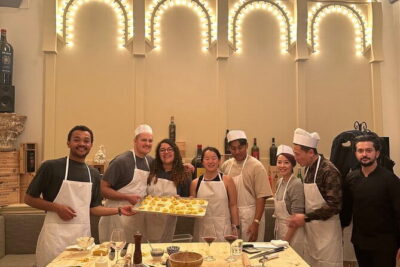
Florence: Pasta Cooking Class with Unlimited Wine
Read our review →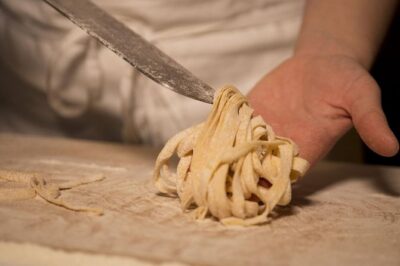
3 in 1 Cooking Class near Navona: Fettuccine, Ravioli & Tiramisu
Read our review →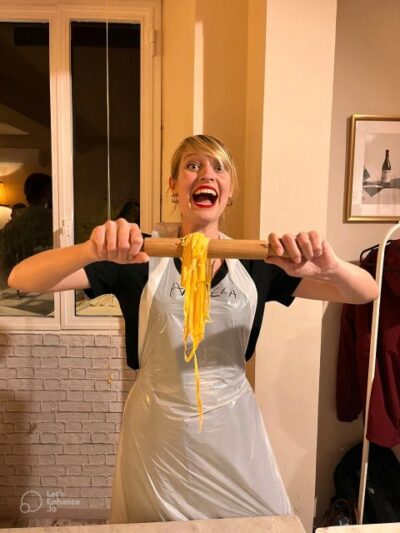
Rome: Pasta Making Class with Wine, Limoncello, and Dessert
Read our review →
Rome Cooking Class: Make Pasta and 3 Spritz Cocktails
Read our review →
Rome: 3-in-1 Fettuccine, Ravioli, and Tiramisu Cooking Class
Read our review →