
Review · CHIANG MAI
Chiang Mai: Local Northern Thai Cooking Class at Grandma’s
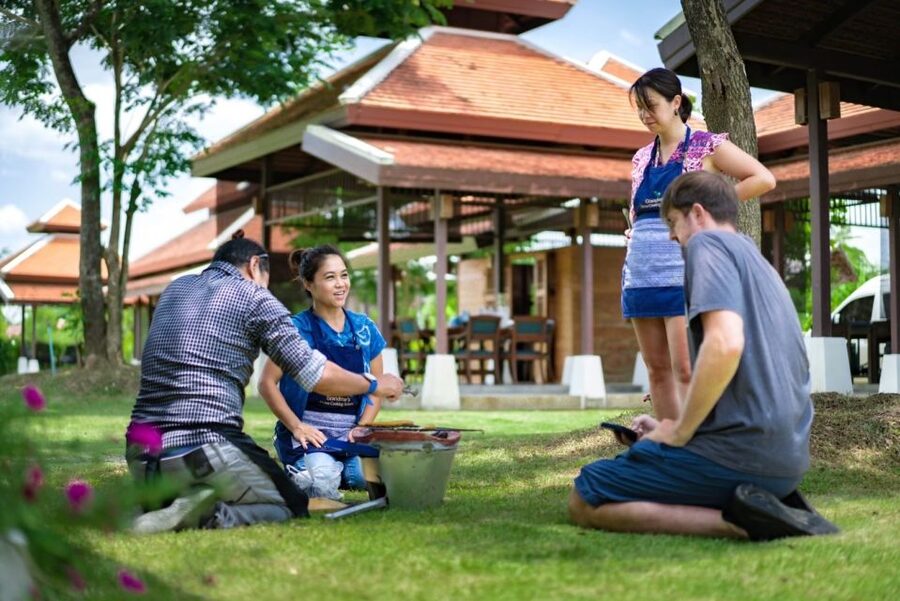
Northern Thai cooking gets wonderfully hands-on here. You visit a local market, pick herbs from an organic farm, collect eggs, light a charcoal grill, and prepare your own food instead of simply watching a demonstration. I especially like the traditional tools, including a millstone and coconut grater, and the small-group feel reported by recent participants, with five or eight people in some classes.
I also like the care taken with individual portions. You help make the food, then receive the dishes prepared by your group, and leftovers can be packed to take home. The main consideration is the menu wording: some details describe Thai coconut pancakes, while the included menu also names stuffed dough pyramids, so confirm the exact sweet course if that matters to you.
Key points to know before booking
- A six-hour Northern Thai food day: The class runs from morning pickup through lunch, dessert, and refreshments.
- Market and farm learning: You see seasonings at a local market, then pick herbs and vegetables from the organic farm.
- Old-style kitchen work: You can mill flour with a stone mill and grate coconut by hand.
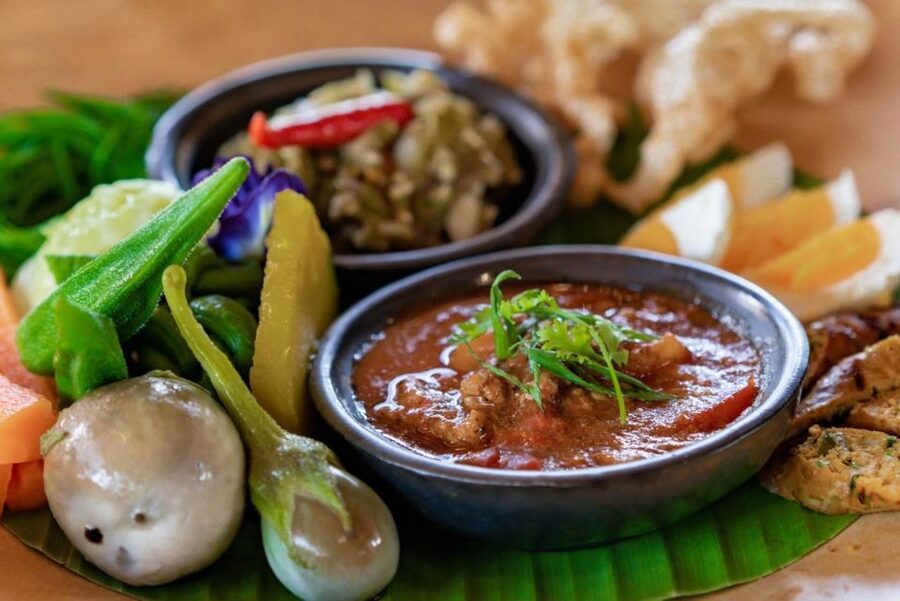
- Choice of chili dip: The menu includes Nam Prik Ong or Nam Prik Num, depending on your selection.
- Small groups may be possible: Recent bookings included groups of five and eight, though your group size can vary.
- Good for mixed diets: Special dietary requirements can be accommodated, and children aged 0 to 10 may join as observers.
A full morning at Grandma’s Home Cooking School
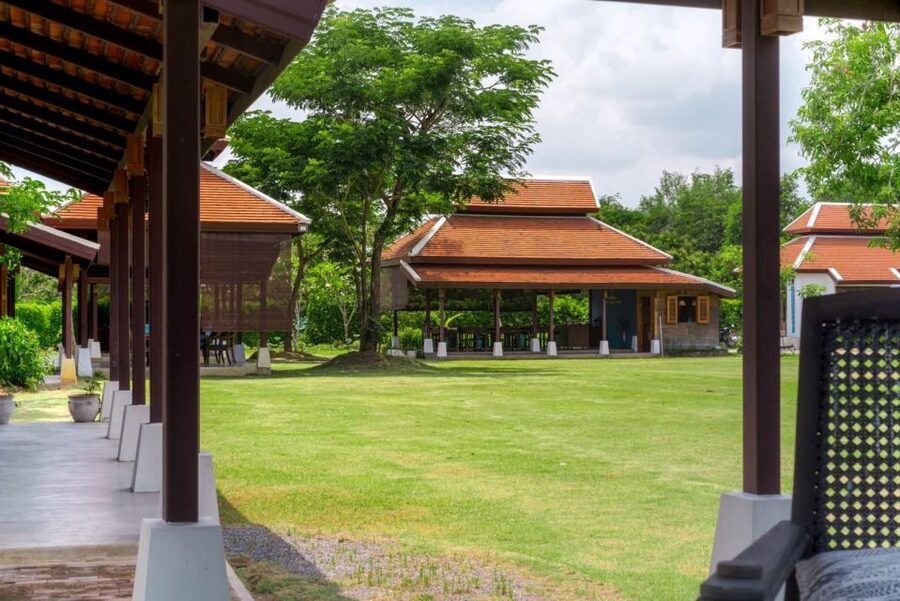
Grandma’s Home Cooking School offers more than a standard recipe lesson. The day links food with the work behind it: choosing ingredients, washing vegetables, preparing fuel, grinding flour, and making sweets by hand.
That matters in Northern Thailand, where flavor often depends on small details. Fresh herbs, chilies, garlic, coconut, and local vegetables are not just items on a shopping list. You learn what they look like, how they are handled, and where they fit in the finished dish.
The experience lasts about six hours and includes hotel pickup, a welcome drink and snack, lunch, dessert tasting, refreshments, and an electronic recipe book. At $48 per person, the price is reasonable if you want a full half-day activity with transport and several food experiences built in. A cheaper cooking lesson may exist, but few include the market, farm, chicken coop, old tools, lunch, and dessert session in one package.
More Thai Cooking Classes in Chiang Mai:
- Half-Day Thai Cooking Class at Organic Farm in Chiang Mai
★ 5.0 · 19,087 reviews - Chiang Mai: Cooking Class, Market & Thai Herbs Garden Tour
★ 4.9 · 4,824 reviews - Thai and Akha Cooking Class in Chiang Mai
★ 5.0 · 4,358 reviews
Starting with Chiang Mai’s local market
Pickup is usually around 8:30 to 9:00 in the morning. You should be ready in your hotel lobby at 8:30, since the stated pickup window may vary.
The first real stop is a local market. This is a useful beginning because you see the ingredients before they are chopped and cooked. English-speaking instructors explain the seasonings used in Northern Thai food and help you understand what each item contributes.
You can expect the market visit to focus on ingredients for the day’s dishes rather than general sightseeing. That keeps the outing practical. Instead of walking through stalls without context, you get a direct link between what you see and what you will soon prepare.
If you are new to Thai food, pay close attention to the chili ingredients. Nam Prik Ong uses pork and tomato, while Nam Prik Num is a Northern Thai green chili dip. The difference is not only color. You are choosing between two distinct styles of dip, so tell the instructors about your preference and dietary needs early.
The market portion also gives you a better sense of Northern Thai cooking as a regional style. The food is not simply a generic version of Thai restaurant fare. The focus is on Lanna dishes and home-style methods.
Picking herbs and meeting the chickens
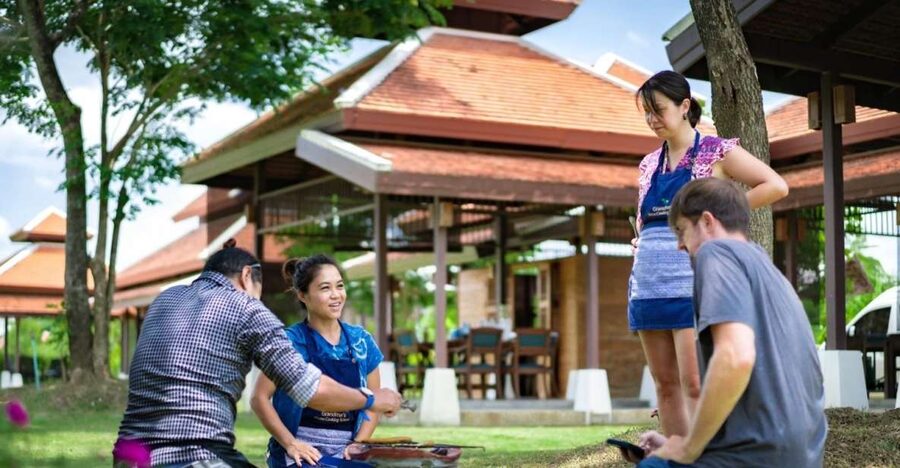
After the market, you tour the organic farm. The instructors explain the herbs and vegetables used in cooking, and you pick some of them for your own dishes.
I like this part because it turns the farm into part of the lesson. You are not only told that an herb is important. You see it growing, handle it, and then use it later. That simple sequence helps the ingredients stay in your memory.
The farm visit also includes the chicken coop, where you can collect eggs. This is a small detail, but it adds a clear connection between the raw ingredient and the food on your plate.
Do not expect a long farm tour with every plant identified. The useful point is the direct introduction to Thai herbs and vegetables used in the class. Wear comfortable shoes, as advised, and bring sunglasses for the outdoor portions.
Cooking five Northern Thai dishes
The central part of the day is hands-on cooking with guidance from English-speaking instructors. You work with the other people in your group, but the portions are handled carefully so you can eat the food made by your own team.
The included menu names five main cooking projects:
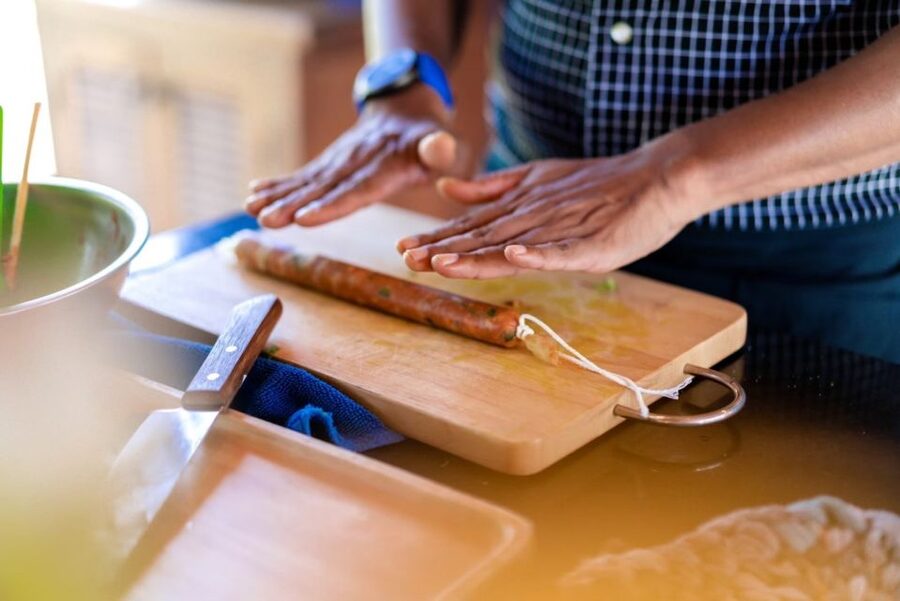
- Northern Thai sausage
- Nam Prik Ong, a spicy Northern Thai pork and tomato dip, or Nam Prik Num, a green chili dip
- Northern pork belly curry, also called Hang Lay curry
- Curry young jackfruit, or Kraeng Khanun-on
- Stuffed dough pyramid, listed as Ka Nhom Tian or Kanomjok
The class description also highlights grilled egg in a banana leaf and Thai coconut pancakes. Since the published menu uses slightly different names for the sweet and egg dishes, ask for the day’s exact sequence when you arrive. This is not a major concern, but it is useful if you are booking specifically for coconut pancakes or the stuffed dough pyramid.
More Hands-On Workshops in Chiang Mai:
- Chiang Mai: Authentic Cooking Class with Market & Farm Visit
★ 4.9 · 4,546 reviews - Chiang Mai: Cooking Class with Market and Pickup
★ 4.9 · 1,365 reviews - Chiang Mai: Cooking Class with Organic Farm at Mama Noi
★ 4.9 · 1,151 reviews - Chiang Mai: Evening Cooking Class and Local Market Visit
★ 4.9 · 648 reviews
Northern Thai sausage
Northern Thai sausage is one of the class’s main specialties. Making it yourself gives you a better feel for seasoning and texture than simply ordering it in a restaurant.
The dish also helps show how Northern Thai food differs from familiar international versions of sausage. You work with the ingredients under the instructor’s direction, then cook and eat the result as part of lunch.
Nam Prik Ong or Nam Prik Num
The chili dip choice gives you some control over the meal. Nam Prik Ong combines pork and tomato. Nam Prik Num is based on green chili.
Both are meant to be part of a larger meal, not necessarily eaten alone. The dip adds a strong Northern Thai element to lunch and gives you a practical recipe to repeat at home with the downloadable e-recipe book.
If you do not handle spicy food well, mention it before cooking begins. The class can accommodate special dietary requirements, but the instructors need to know what you require.
Hang Lay curry
Northern pork belly curry, or Hang Lay curry, is another major lesson. The class lets you work through the steps rather than receiving a finished curry with no explanation.
This is a good dish to learn in a cooking school because curries involve several stages. You need to understand the order of ingredients and how the seasoning develops. The instructors guide the group as you prepare it, making the process manageable even if you have limited cooking experience.
Curry young jackfruit
Young jackfruit gives the menu a vegetable-focused dish with a distinctly Northern Thai identity. You learn how a local ingredient can become part of a curry rather than being treated as a substitute for meat.
This is particularly useful if you want more variety than the usual pad Thai lesson. The menu includes pork, eggs, chili, curry, jackfruit, and sweets, so the class shows several sides of Northern Thai home cooking.
Charcoal, banana leaves, and old kitchen tools
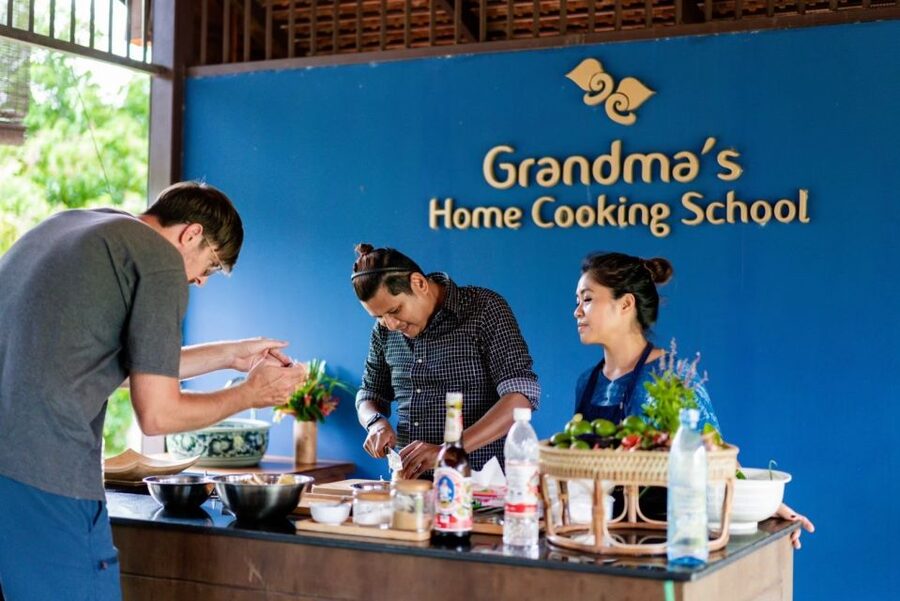
A major strength of the class is that it includes small tasks often skipped in modern cooking lessons. You learn to light a charcoal grill and wash vegetables, then use the grill in preparing food such as the egg cooked in a banana leaf.
These jobs may sound basic, but they explain how cooking works in a traditional home setting. Fire control, clean preparation, and natural wrapping all affect the final result.
You also mill flour with a traditional millstone. This takes more time than opening a bag of prepared flour, which is exactly why it is worth doing once. You see the effort behind a staple ingredient and gain a better sense of the tools used in older kitchens.
The coconut grater is another memorable detail. You grate coconut meat by hand for the sweet-making session. This is practical, physical work, so the class is not a passive demonstration where you sit and take notes.
Some people will love this slower approach. If you prefer a quick class that produces food with minimal effort, these tasks may feel old-fashioned. For most people interested in food culture, they are part of the value.
Lunch made by your own group
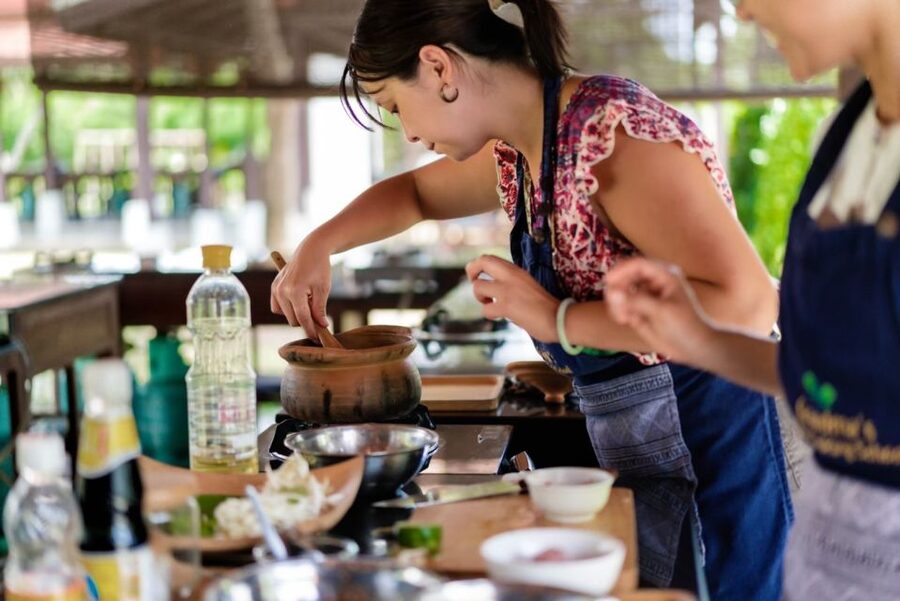
Lunch is the reward for the work. You sit down to taste the dishes you helped prepare, including the selected chili dip, curry, sausage, jackfruit dish, and other items included in the day’s menu.
The portion system is worth noting. Participants have described each person or group receiving the portions they prepared, with care taken to keep the food matched to the right cooks. That is helpful if you have dietary restrictions or simply want to judge your own cooking.
If you cannot finish everything, disposable containers are available for leftovers. This is a practical touch and makes the generous meal less wasteful.
The food is not the only point of lunch. You now recognize the ingredients from the market and farm, and you have handled them through several stages. That gives the meal more meaning than a restaurant stop between sightseeing activities.
The dessert session and coconut work
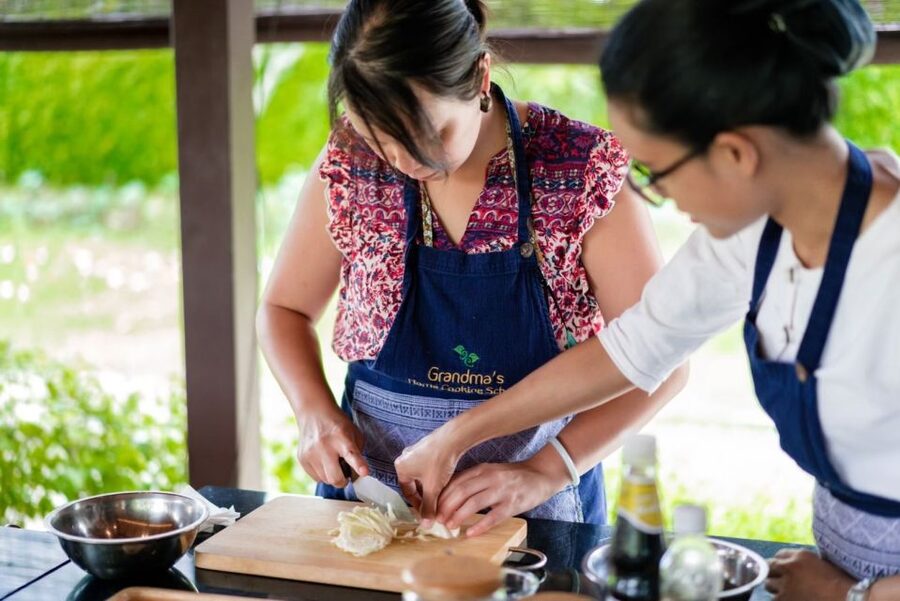
The dessert portion brings the old tools back into play. You grate coconut meat and mill flour, then prepare a traditional Thai sweet.
The class description specifically highlights Thai coconut pancakes made in the traditional way. The included menu also names stuffed dough pyramids, Ka Nhom Tian or Kanomjok. Since those are different preparations, check which one your class will make.
You also receive traditional Thai desserts and refreshments during the session. This gives you a slower finish after lunch, with time to taste sweets rather than rushing straight to the return transfer.
I would consider this section especially useful for families and first-time cooks. Children aged 0 to 10 can join as observers, although they are not listed as active cooking participants. The hands-on tasks are interesting to watch, and the sweet course provides an easy way to end the food lesson.
The instructors and group atmosphere
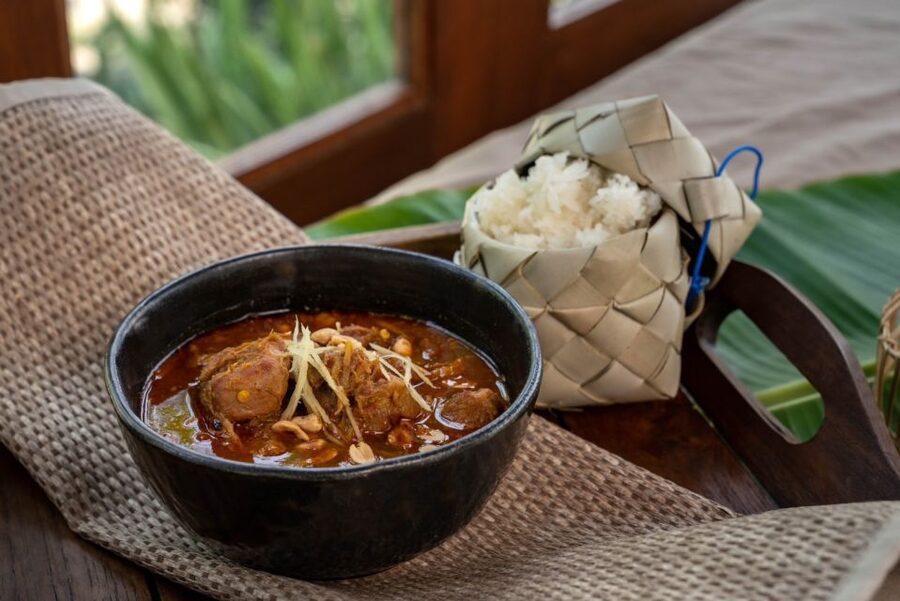
The instructors speak English and guide the group through each stage. Recent class reports single out an instructor named Best for being friendly, humorous, helpful, and attentive.
Group size can make a big difference in a cooking class. Recent bookings included groups of five and eight, which allowed people to work in a more private setting. The property itself is described as large, while the cooking area can still feel separate from other classes.
Your group may not be the same size. If you strongly prefer a small class, ask about the expected number of participants before booking. Still, the structure of the class encourages people to help one another, so you are not left alone with a complicated dish.
The teaching style sounds suited to beginners. You receive direct instruction, then take part in the work. You do not need advanced kitchen skills to enjoy the day.
What the $48 price includes
The $48 price covers more than ingredients and instruction. You receive:
- Round-trip hotel transfers
- A welcome drink and snack
- A local market visit
- An organic farm tour
- Chicken coop access for egg collection
- Hands-on cooking instruction
- Lunch
- Dessert and refreshments
- An electronic recipe book
That is a solid package for a six-hour activity. Transport is especially useful if the school sits outside central Chiang Mai or is inconvenient to reach independently, though the exact transfer area is not specified.
The value is strongest if you want a cultural activity rather than only a meal. You are paying for the food, but also for the market, farm, old tools, instruction, and time spent preparing everything.
The main limitation is that the day is long and food-centered. If you are not interested in cooking, the six-hour schedule may feel like too much. It also includes outdoor portions, so comfortable shoes and sunglasses are sensible.
Dietary needs, accessibility, and booking details
The activity can accommodate special dietary requirements. Tell the school what you need before the class so the kitchen can plan properly.
The venue is wheelchair accessible. The class is conducted in English, and children aged 0 to 10 may attend as observers.
Free cancellation is available up to 24 hours before the activity for a full refund. You can also reserve now and pay later, which helps if your Chiang Mai schedule is still changing.
Do not bring valuables. The practical items are comfortable shoes and sunglasses, especially for the market and farm sections.
Who should book this cooking class?
I would choose this class if you want to understand Northern Thai food through action. It suits first-time cooks, couples, families with older children, and anyone who likes local food more than polished sightseeing.
It is also a good match for people who want recipes to take home. The e-recipe book gives you a way to repeat the dishes after Chiang Mai, though you may need to adapt ingredients depending on what is available in your home country.
You may prefer another activity if you want a short, highly polished demonstration, a restaurant-style meal, or a class focused on only one dish. The market, farm, charcoal, millstone, and coconut grater make this a fuller day with a traditional feel.
Should you book it?
Book it if you want a practical Northern Thai food experience with a good amount of local context. The strongest reasons are the market and farm visits, the hands-on work with traditional tools, the chance to cook several regional dishes, and the possibility of a small group with attentive instruction from guides such as Best.
Before paying, confirm the exact dessert and egg dishes, since the menu descriptions name both coconut pancakes and stuffed dough pyramids. If that detail is clear and you enjoy spending six hours with food, this is a strong-value choice at $48, especially with transfers, lunch, refreshments, and recipes included.
FAQ
How long does the cooking class last?
The activity lasts six hours, including the market visit, farm tour, cooking lesson, lunch, dessert session, and refreshments.
What time is hotel pickup?
Pickup is usually between 8:30 and 9:00 in the morning. You should be ready in your hotel lobby at 8:30.
Which dishes will I learn to cook?
The included menu lists Northern Thai sausage, Nam Prik Ong or Nam Prik Num, Northern pork belly curry, curry young jackfruit, and stuffed dough pyramid. The class information also highlights grilled egg in banana leaf and Thai coconut pancakes, so confirm the exact menu when you arrive.
Is lunch included?
Yes. You eat the dishes prepared during the class during the lunch break.
Can the class accommodate dietary requirements?
Yes. The activity can accommodate special dietary requirements. Provide your needs when booking or before the class.
Is the activity suitable for children?
Children aged 0 to 10 may join as observers. The activity is also wheelchair accessible.
What should I bring?
Bring comfortable shoes and sunglasses. Valuables are not allowed.
Just added around Chiang Mai
- Chiang Mai: Half Day Morning Cooking Class with Market Tour★ 4.9 · 10 reviews
- Half-Day Thai Cooking Class on a Local Farm Near Chiang Mai★ 4.9 · 32 reviews
- Half-Day Cooking Class with Market Tour★ 5.0 · 163 reviews
- Chiang Mai: Half Day Cooking Class at Organic Farm★ 4.8 · 96 reviews
- Full Day Thai Cooking Class in Organic Farm and Market★ 5.0 · 3 reviews
- Chiang Mai: Traditional Thai Cooking Class with Market Tour★ 4.8 · 137 reviews
- Chiang Mai: Traditional Thai-Akha Cooking Class& Market Tour★ 5.0 · 25 reviews
- Chiang Mai: Morning Cooking Class with Market Visit★ 4.9 · 81 reviews
Thai Cooking Classes, compared.
Half-Day Thai Cooking Class at Organic Farm in Chiang Mai
Read our review →
Chiang Mai: Cooking Class, Market & Thai Herbs Garden Tour
Read our review →
Phuket Thai Cooking Class with Market Tour Option
Read our review →
Bangkok: Hands-on Thai Cooking Class and Market Tour
Read our review →
Bangkok: Tingly Thai Cooking School Half-Day Cooking Class
Read our review →
Bangkok: Maliwan Thai Cooking Class with Market Tour
Read our review →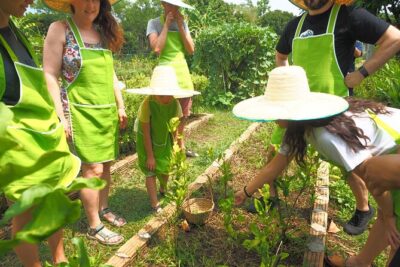
Browse the lists this tour appears in