
Review · ROME
Cooking Class in Rome: Make Fettucine & Tiramisù with Chef Paolo
The best part of this Rome cooking class is turning just flour and eggs into fresh fettuccine by hand. Chef Paolo or another member of the cooking team leads you through the process in English, then you sit down to eat the pasta and tiramisu made during the class.
I like the easy, social format, which works well for families and solo visitors who want to meet people. I also like the practical takeaway: you leave with recipes, a certificate, and enough confidence to repeat the dishes at home. The main thing to know is that you do not make every part of the meal alone. The tiramisu and pasta are prepared as a group, and the chef makes the sauce.
Key points at a glance
- Make pasta by hand: Learn how flour and eggs become fresh fettuccine using the traditional method.
- Tiramisu is a group project: Everyone helps prepare the dessert, rather than making an individual portion.
- Choose your pasta sauce: Options include amatriciana, cacio e pepe, and tomato with basil, though the sauce itself is prepared by the kitchen.
- Finish with a Roman-style meal: Eat your pasta with wine or a soft drink, then enjoy coffee or limoncello.
- Good for families: Children from age seven can take part, and younger children must stay with a parent.
- Allow extra time to find the entrance: The class meets at a restaurant on Via della Croce, and the doorway can be easy to miss.
Making fettuccine from flour and eggs
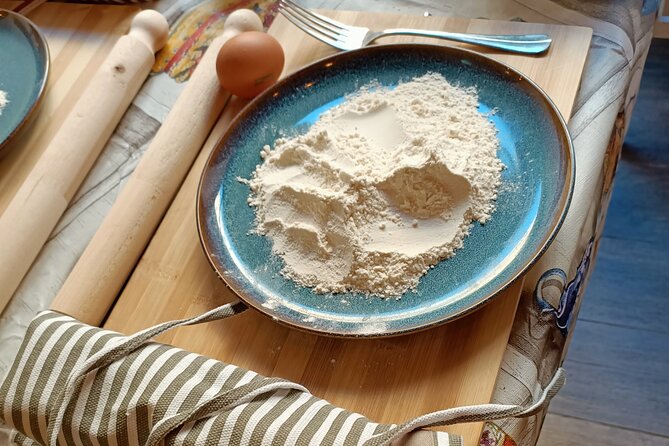
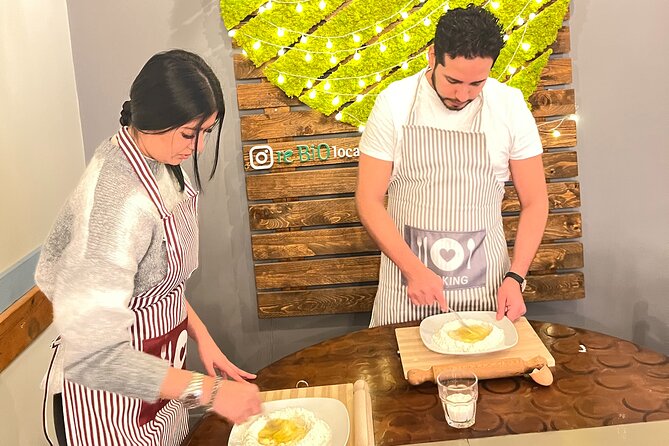
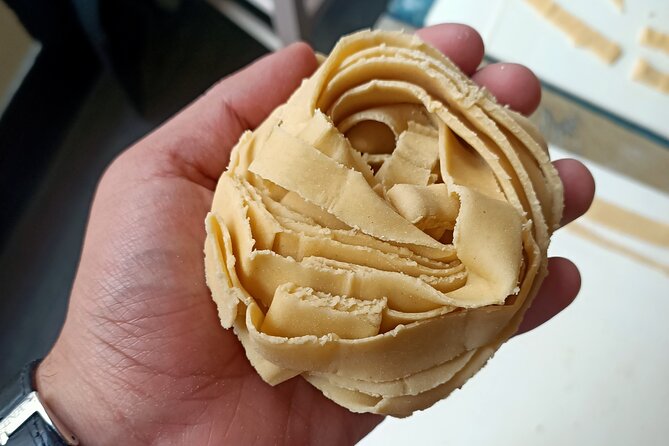
This is a hands-on class, but it is aimed at beginners rather than serious pasta students. You start with the basic dough, using your hands to combine flour and egg, then work it until it becomes smooth enough to roll and cut.
That simple process is the heart of the experience. Fresh pasta can look like a restaurant trick, but the ingredients are ordinary. The useful lesson is learning how the dough should feel, when it needs more work, and how much effort goes into turning it into thin noodles.
The class is taught in English, so you do not need to worry about a language barrier during the instructions. The teachers explain each step and move around the group to help. Several instructors connected with the class, including Paolo, Ricardo, Irene, and Roberto, are praised for keeping the tone friendly and making time for individual help.
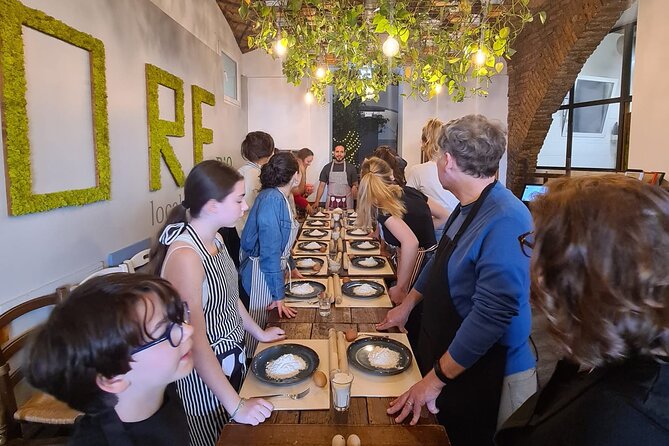
You should expect a shared cooking table rather than a private lesson. The maximum group size is 20 people, though some sessions are smaller. A large group can make the class lively and social, but it also means the amount of individual practice depends on how busy the room is.
More Dessert Classes in Rome
- 3 in 1 Cooking Class near Navona: Fettuccine, Ravioli & Tiramisu
★ 5.0 · 7,376 reviews - Rome: Pasta Making Class with Wine, Limoncello, and Dessert
★ 4.9 · 3,177 reviews - Rome: 3-in-1 Fettuccine, Ravioli, and Tiramisu Cooking Class
★ 4.9 · 2,704 reviews
The pasta-making portion is active, not decorative
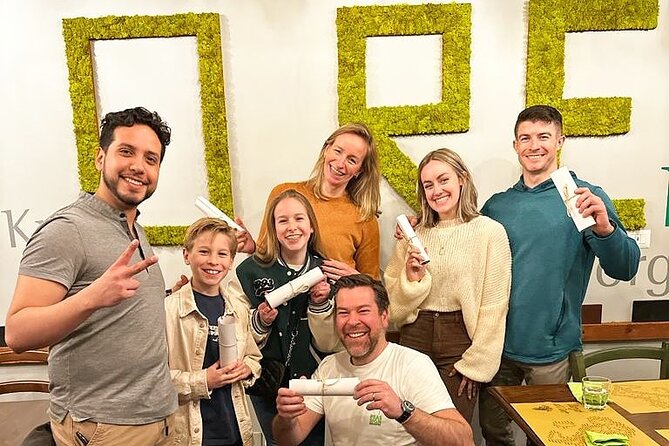
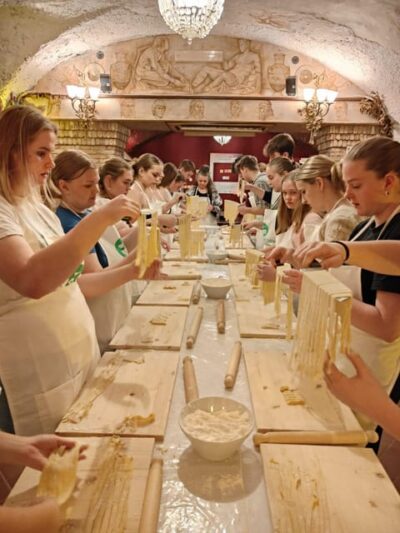
Making pasta takes more effort than simply mixing ingredients in a bowl. You knead the dough, roll it, and shape it into fettuccine. That physical work is part of the fun, especially for children and people who have never made fresh pasta.
The teachers also use the process to explain basic cooking ideas. You may learn how salt, sugar, eggs, and flour affect flavor and texture. It is not a technical culinary school lesson, but it gives you a useful foundation for making pasta at home.
Families seem especially well suited to this format. Children aged 10, 12, and 13 have taken part successfully, and the class is designed to be simple enough for first-time cooks. The stated minimum age is seven. A child younger than seven cannot attend independently and must follow the class with a parent.
If you are an experienced cook hoping to study advanced pasta shapes, regional dough formulas, or professional sauce work, this class may feel basic. It teaches the essentials well, but the goal is a fun Roman activity, not a full chef-training session.
Choosing a sauce for your meal
You can choose one sauce for your pasta from three Roman favorites:
- Amatriciana
- Cacio e pepe
- Tomato with basil
This is an important distinction: you choose the sauce, but the sauce is not a separate cooking lesson. The kitchen prepares the sauces, then the pasta is cooked together and divided according to your selection.
That arrangement keeps the two-hour schedule manageable. Fresh pasta cooks quickly, and preparing three sauces for a group would add a lot of time and equipment. It also means you are mainly learning the pasta itself, not a complete sauce recipe.
Cacio e pepe gives you a classic Roman choice built around cheese and pepper. Amatriciana offers a stronger, more savory option, while tomato with basil is the simplest choice. The food quality can vary by session and personal taste. Most people find the meal satisfying, but anyone expecting a carefully plated fine-dining dish should set expectations lower.
One useful point: you do not eat only the noodles you personally cut. The class cooks the pasta as a group and serves it with the chosen sauces. That is practical and efficient, but it may surprise you if you expect an individual cooking station and a private portion from your own batch.
Preparing tiramisu together
The dessert portion is more relaxed. The group prepares tiramisu together, with the chef guiding the mixing and assembly. It is an approachable recipe, which makes it a good choice for children and anyone new to cooking.
Tiramisu is also a nice change of pace after the work of kneading pasta. You can take part without needing advanced skills, and the dessert gives the group another task to share before sitting down to eat.
The class does not provide a separate tiramisu for each person to prepare alone. Instead, everyone contributes to one group preparation. That is part of the social design, but it is worth knowing before you book if your main goal is to practice a full dessert recipe independently.
At the end, you eat the tiramisu with the rest of the meal. Some people find the dessert surprisingly easy to reproduce at home, and recipes are provided afterward. That gives the class more value than a meal alone because you can use what you learned once you return home.
Same place, a different menu:
- Rome Cooking Class: Make Pasta and 3 Spritz Cocktails
★ 5.0 · 2,937 reviews - Rome: Fettuccine Pasta Cooking Class in Rome’s City Center
★ 4.8 · 2,414 reviews - Fettuccine & Tiramisù: Cooking Class with Wine & Limoncello
★ 4.9 · 2,103 reviews - Pasta Cooking Class Near the Colosseum with 3 Spritz Cocktails
★ 5.0 · 1,686 reviews
Sitting down for pasta, wine, and limoncello
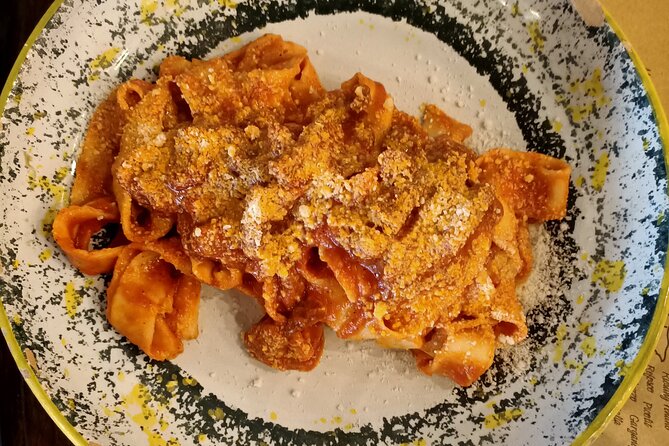
After the cooking, you sit down at the restaurant and eat the meal together. The included food is the pasta you helped prepare, followed by the shared tiramisu. Bottled water is included, and you can choose a glass of red or white wine.
If you do not want alcohol, you can choose a soft drink instead. At the end of the meal, the inclusions describe a choice between coffee and limoncello, with some information also referring to an espresso or a shot of limoncello. The practical expectation is that you receive one of these finishing drinks, rather than several separate beverages.
The meal is where the class becomes a social evening. You share a table with the group, talk while the pasta is cooked, and enjoy the results together. This works particularly well for solo visitors, couples, and families who want an activity that includes conversation rather than a quiet demonstration.
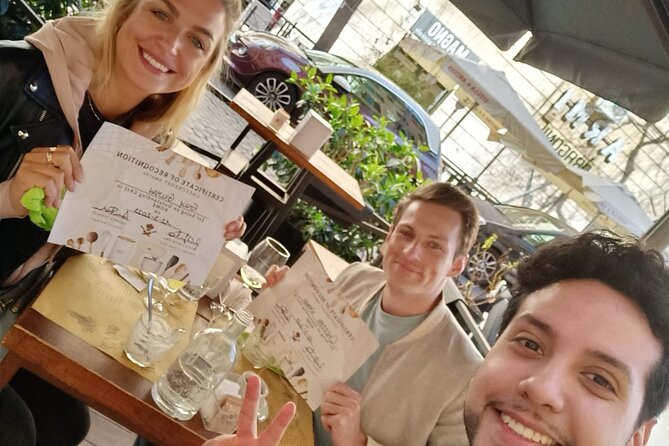
The class also gives you a small award certificate. It is a lighthearted souvenir, not a professional qualification, but children often enjoy having a tangible reminder of the evening.
A central location with one practical warning
The meeting point is Via della Croce 34, 00187 Rome, in the center of Rome. The activity ends at the same place, so you do not need to arrange transport between a cooking school and a restaurant.
The location is near public transportation, which helps if you are coming from another part of the city. Still, give yourself extra time to find the entrance. There is not always an obvious cooking-class sign outside, and the restaurant doorway can be easy to walk past.
This matters most if you are booking the class after a full day of sightseeing. Arriving late could mean missing the dough instructions, which are the part you most want to catch. Check the address carefully, keep the booking confirmation available, and do not assume the cooking venue will look like a dedicated school.
Service animals are allowed. The activity is offered in English, and confirmation is provided when you book.
How the two-hour schedule feels
The class lasts about two hours. That is a good length for a Rome itinerary because it gives you a real activity without taking an entire afternoon or evening.
You begin with the cooking instruction, move into the shared tiramisu preparation, and then eat the meal. The pace is active but not designed to rush you through a long list of dishes.
The group size can reach 20 people. In a full class, you will probably spend part of the session watching a demonstration and part of it working with the ingredients. The instructors are expected to assist people who need help, but a large group cannot provide the same attention as a private lesson.
The class also has a relaxed, informal tone. Some instructors are playful and entertaining, which helps families and first-time cooks feel comfortable. If you prefer strict structure, quiet concentration, and detailed technical instruction, the group atmosphere may feel less focused than you want.
What the $116 price includes
At $116.14 per person, this is not the cheapest meal in Rome. You are paying for more than a plate of pasta, though. The price includes the cooking class, ingredients for the shared meal, kitchen equipment, pasta with your selected sauce, tiramisu, bottled water, a wine or soft drink choice, a finishing drink, and the certificate.
The value improves if you treat it as both dinner and an activity. A typical restaurant meal would not give you the pasta-making lesson, the recipe, or the chance to work with a chef. The class can also replace another evening plan, which makes the cost easier to justify.
The value is weaker if you mainly want a high-end meal or advanced cooking instruction. The sauces are prepared for you, the dishes are made as a group, and the food is intended to be enjoyable rather than elaborate. A confident home cook may learn more from a specialized pasta workshop.
For families, the price can make sense because the children are actively involved instead of simply waiting through an adult meal. For solo visitors, the group setting adds a built-in social element. For couples, it offers a shared activity and dinner in one booking.
The best fit for families and first-time cooks
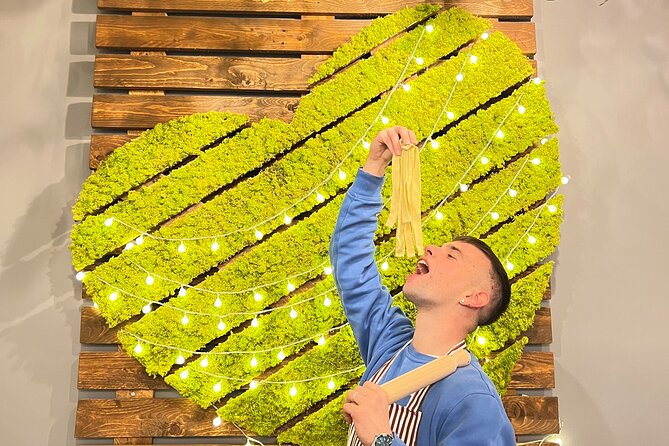
I would point families toward this class first. The instructions are simple, children can take part, and the activity gives young visitors a break from museums and monuments. The cooking also creates a natural way to meet other people at the table.
It suits solo visitors who want an easy evening activity, but only if they plan carefully for the meeting point. One person who had trouble finding the restaurant missed the class and did not receive a refund, so navigation is not a minor detail here.
Couples can expect a fun, practical date-night format. You will not each make a separate full meal, but you will work through the steps together and then sit down with wine and dessert.
This class is less suitable for advanced cooks, people who want to prepare every sauce from scratch, or anyone looking for a private experience. It is also not the right pick if you dislike group dining or shared food preparation.
A balanced look at the teaching style
The strongest part of the teaching is the personal help. The instructors are described as friendly, funny, and willing to visit each person at the table. Several names connected with the class receive warm praise, including Paolo, Ricardo, Irene, and Roberto.
The tone can depend on the individual instructor and the mood of the group. Most sessions appear to be welcoming and low-stress, but one account describes an instructor as impatient and sarcastic with people who needed more time. That is worth keeping in mind if you are anxious in the kitchen or traveling with someone who learns at a slower pace.
The class works best when you accept that mistakes are part of the activity. You are not being tested. Still, if you need patient one-to-one instruction, tell the teacher early in the session that you would appreciate extra help.
Should you book the Rome pasta class?
Book it if you want a friendly, beginner-level cooking activity that ends with dinner. The hand-made pasta, group tiramisu, wine or soft drink, and limoncello make it a pleasant use of two hours, especially for families, couples, and solo visitors.
Skip it if you want advanced technique, private instruction, or to prepare every part of the meal yourself. Also, take the address seriously and arrive early enough to find the restaurant.
For most visitors, the strongest reason to choose this class is not the food alone. It is the chance to learn a basic Italian skill, meet people around a table, and leave Rome with a recipe you can actually make at home.
FAQ
Where does the cooking class meet?
The class meets at V. della Croce 34, 00187 Rome, Italy.
Where does the activity end?
The experience ends back at the meeting point.
How long does the class last?
The cooking class lasts approximately two hours.
Is the class offered in English?
Yes. The experience is offered in English.
What pasta sauces can I choose?
You can choose amatriciana, cacio e pepe, or tomato with basil.
Do I make the sauce myself?
No. The sauce is prepared by the kitchen. You make the pasta, then choose the sauce served with it.
Is tiramisu prepared individually?
No. The tiramisu is prepared by the whole group together.
What drinks are included?
You can choose a glass of red or white wine, or a soft drink. The experience also includes bottled water and a choice involving coffee or limoncello at the end.
Can children join the class?
Yes. Children can participate from age seven. Children younger than seven must follow the class together with one parent.
How large can the group be?
The activity has a maximum of 20 participants.
Is cancellation allowed?
Yes. You can cancel at least 24 hours before the start time for a full refund. Cancellations or changes made less than 24 hours before the start are not accepted for a refund.
More Hands-On Workshops in Rome
- Rome: Pasta & Tiramisu Cooking Class near the Spanish Steps
★ 4.8 · 1,395 reviews - Rome Tipsy Cooking Class: Make Pasta and Mix 3 Spritz Cocktails
★ 5.0 · 1,357 reviews - Cooking Class in the Heart of Rome: Pizza and Tiramisu Making
★ 5.0 · 1,330 reviews - Rome Cooking Class: Make Pasta, Dine & Drink Wine With Local Chef
★ 5.0 · 1,263 reviews
Just added around Rome
- Testaccio: Home Cooking Cacio e Pepe, Amatriciana, Carbonara★ 4.9 · 57 reviews
- Super Fun Pasta and Gelato Cooking Class by the Vatican★ 5.0 · 6 reviews
- Spritz and Spaghetti Traditional Cooking Class in Rome★ 4.9 · 30 reviews
- Rome: Vatican Food Tours, Cooking classes & Free Tours★ 4.9 · 11 reviews
- ROME:Hands-On Lasagna & Marsala Tiramisu Cooking Experience”★ 5.0 · 3 reviews
- Rome: Traditional Pasta and Tiramisu Cooking Class★ 5.0 · 4 reviews
- Rome: Small Group Pasta cooking class near Piazza Navona★ 4.9 · 8 reviews
- Rome: Trastevere Pasta Making Class★ 4.9 · 33 reviews
Tiramisu & Dessert Classes, compared.
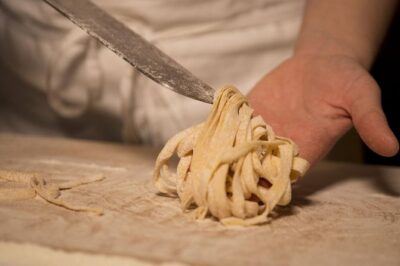
3 in 1 Cooking Class near Navona: Fettuccine, Ravioli & Tiramisu
Read our review →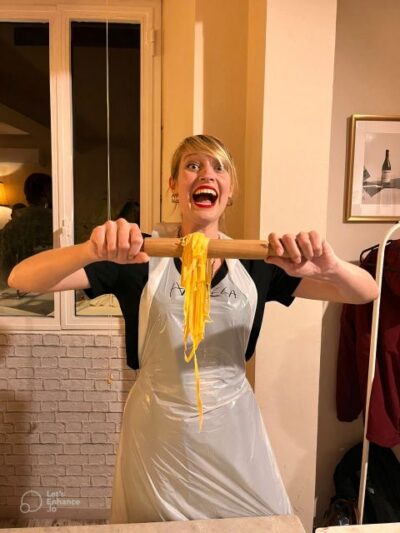
Rome: Pasta Making Class with Wine, Limoncello, and Dessert
Read our review →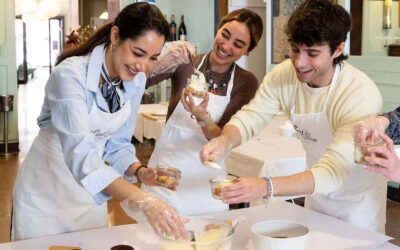
Rome: 3-in-1 Fettuccine, Ravioli, and Tiramisu Cooking Class
Read our review →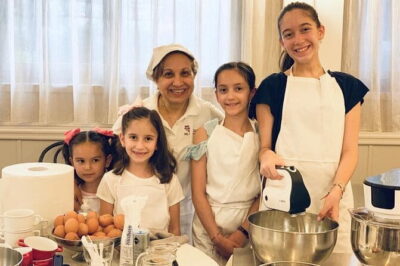
Florence: Cooking Class Pasta & Tiramisu Making Unlimited Wine
Read our review →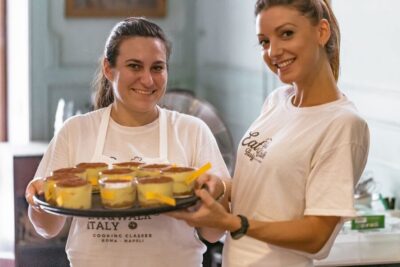
Fettuccine & Tiramisù: Cooking Class with Wine & Limoncello
Read our review →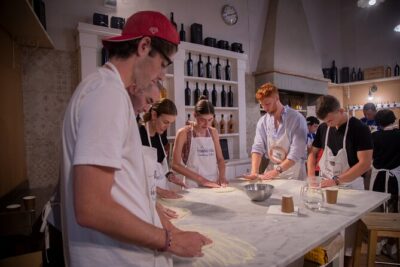
Florence Cooking Class The Art of Making Gelato & Authentic Pizza
Read our review →
Rome: Pasta & Tiramisu Cooking Class near the Spanish Steps
Read our review →Browse the lists this tour appears in