
Review · SPANISH & PAELLA
Malaga: Authentic Paella Cooking Class with Sangría
The best part of this Malaga experience is that you do not simply sit down to eat paella. You help make it, from chopping vegetables to stirring the pan, then sit with your group to enjoy the meal. Chef Alba is often praised for her calm, clear instruction, while guides such as Elise, Javi, Jose, and Anais add local food and city background.
I especially like the Atarazanas Market visit in morning sessions and the short olive oil tasting before the cooking begins. Both give the meal a local starting point instead of treating paella as a generic Spanish dish. The main consideration is time: at 210 minutes, this is a substantial activity, and evening or holiday sessions miss the market because it is closed.
Key points at a glance
- Morning market visit: Monday through Saturday morning sessions include Atarazanas Market, with local produce, olives, almonds, and background on Malaga.
- Hands-on cooking: You help prepare paella, gazpacho or salmorejo, sangría, and, in some sessions, extras such as churros or salad.
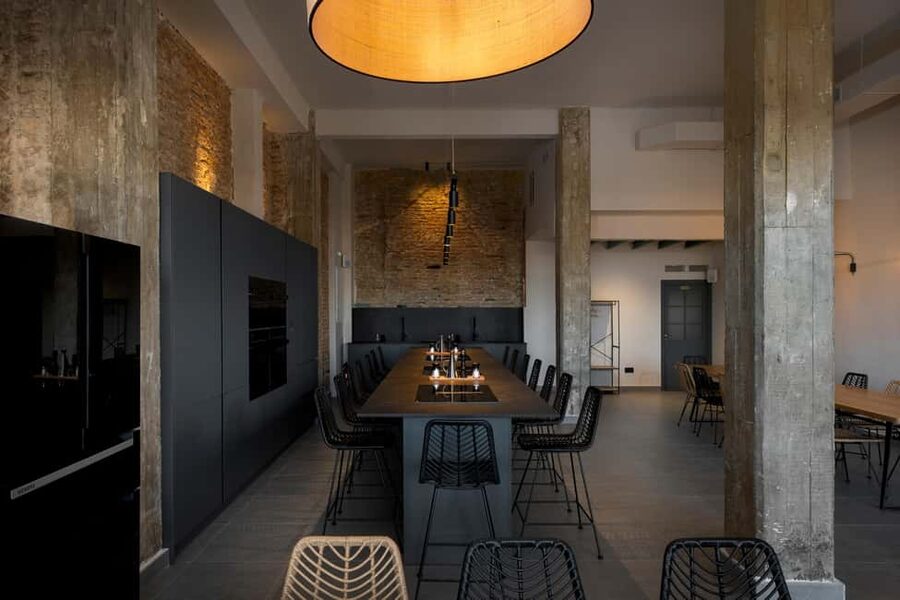
- Clean modern kitchen: Kulinarea’s cooking space is in Malaga’s Soho District near the market and port.
- Drinks are part of the meal: Regional wine, beer, soft drinks, and sangría are included.
- Useful take-home gift: You receive a Kulinarea apron, along with recipes and techniques you can try at home.
- Good group activity: The format suits couples, families with older children, and solo visitors who enjoy meeting people over food.
Starting at Atarazanas Market in Malaga
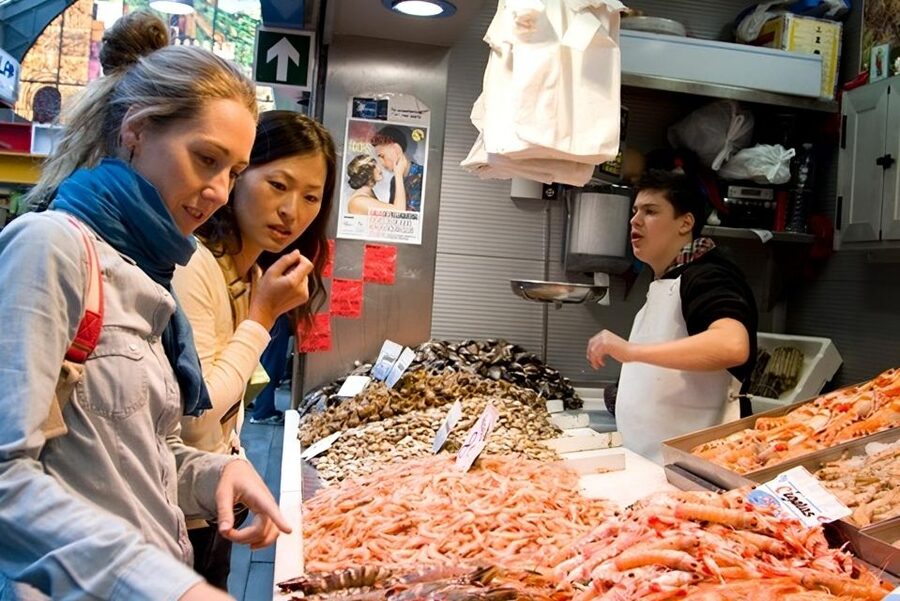
For morning sessions from Monday through Saturday, the experience begins with a short walk to Atarazanas Market. This is more than a quick photo stop. Your guide uses the market to introduce the ingredients that later appear in the kitchen, including seasonal produce, olives, and almonds.
Guides such as Elise and Javi have been praised for explaining the market building, the surrounding area, and how Malaga has changed over time. Jose has also been singled out for offering practical advice about restaurants and places to visit after the class. That local orientation is useful on your first day in town, especially if you want food recommendations that go beyond the main tourist streets.
You should expect the market visit to be a guided introduction rather than a long shopping session. You will see the ingredients and hear how they fit into local cooking, but the class information does not promise a personal market-shopping allowance or a chance to choose every item for your own paella.
The market is closed on Sundays, national holidays, and during evening classes. On those dates, the tour goes directly to the kitchen. You lose the market walk, but not the central cooking experience.
More Paella and Spanish Classes in Spain:
- Barcelona: Paella Cooking Experience & Boqueria Market Tour
★ 4.8 · 3,661 reviews - Barcelona Paella Cooking Class with Market Visit, Tapas & Sangria
★ 5.0 · 2,531 reviews - Barcelona Interactive Spanish Cooking Experience
★ 4.5 · 2,155 reviews
Olive oil tasting before the apron goes on
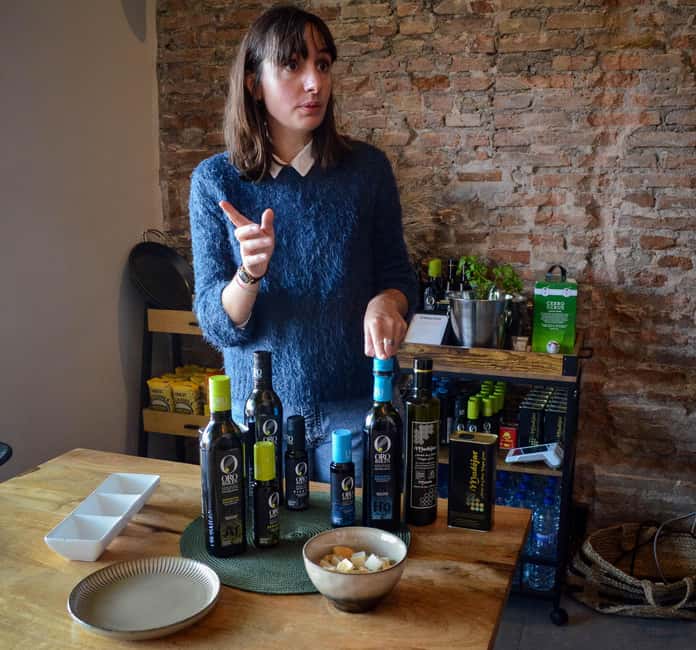
Back at Kulinarea, the class begins with a brief tasting of extra virgin olive oil and traditional snacks. This is a small part of the schedule, but I think it earns its place. Olive oil is one of the basic building blocks of Spanish cooking, and tasting several oils side by side gives you a better idea of how much flavor can come from the same simple ingredient.
The tasting also slows the pace before the chopping starts. You can settle in, meet the other people at your work station, and listen to the chef explain what you will prepare. Some sessions also include olives and almonds during the market visit, which gives the food introduction a pleasant through line.
Do not expect a formal olive oil certification course. The value is practical: you taste local oils, learn to notice differences, and then use that understanding during the meal. For many people, this is more useful than a long lecture about production methods.
Cooking paella with Alba and the local chefs
The centerpiece is the paella class. You are not watching a chef prepare one large pan while standing at the edge of the room. The format gives participants jobs, with the chef making sure everyone has something to do.
Chef Alba is repeatedly praised for her patient instruction and for helping people who do not feel confident in the kitchen. Other chefs, including Alma and Pepo, have also been described as encouraging and attentive. The staff adjusts guidance to the group, so you can expect demonstrations, explanations, and help when you need it.
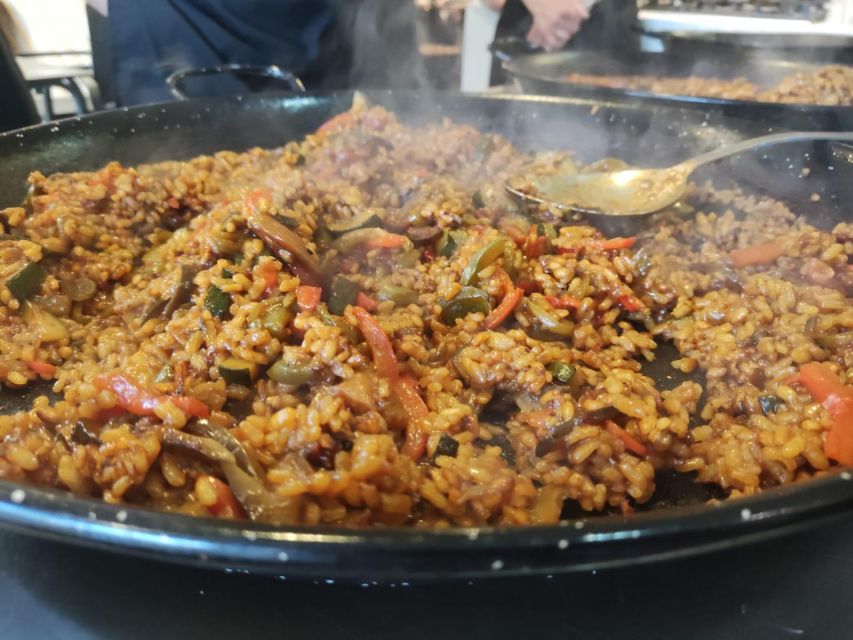
The exact paella ingredients can vary. The class information describes a classic Spanish paella, while one pescatarian participant had a version without meat apart from seafood. If you have allergies or dietary restrictions, tell Kulinarea before the day of the class. The kitchen cannot promise to make changes requested only after you arrive.
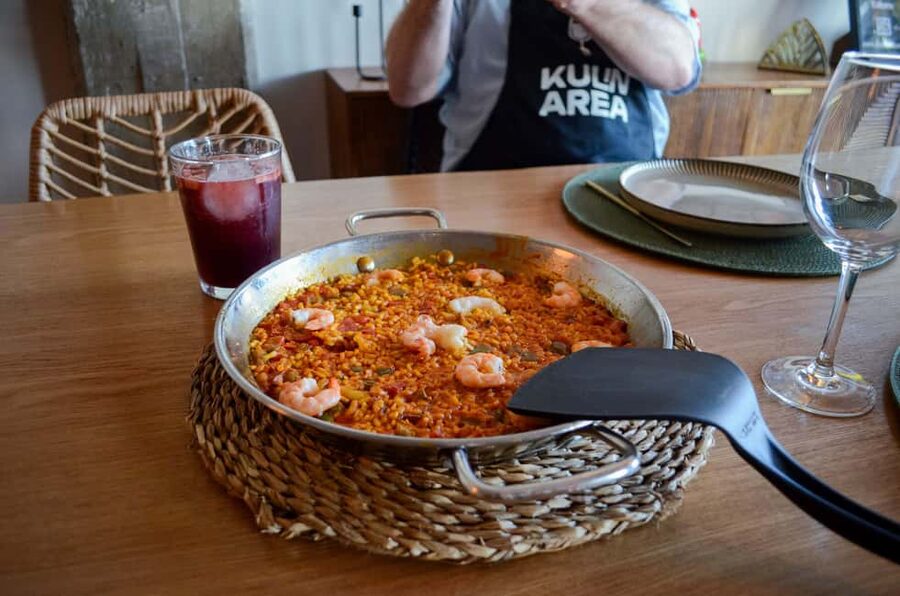
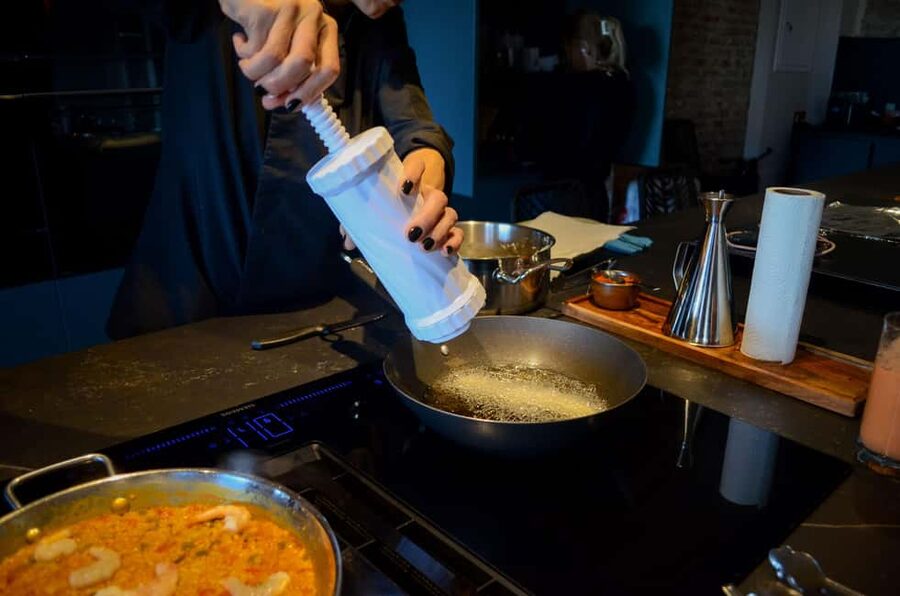
A useful feature is that each person has a real role in the preparation. You might chop onions and peppers, work on the base, add ingredients, or help monitor the rice. This gives you techniques you can repeat at home, rather than just a recipe card with no sense of timing.
The final results may not all taste exactly alike. That is part of the fun. Different hands produce slightly different paellas, even when everyone follows the same instructions. The chef’s help keeps the process on track, but you still have a genuine part in the result.
Gazpacho, sangría, and extra dishes
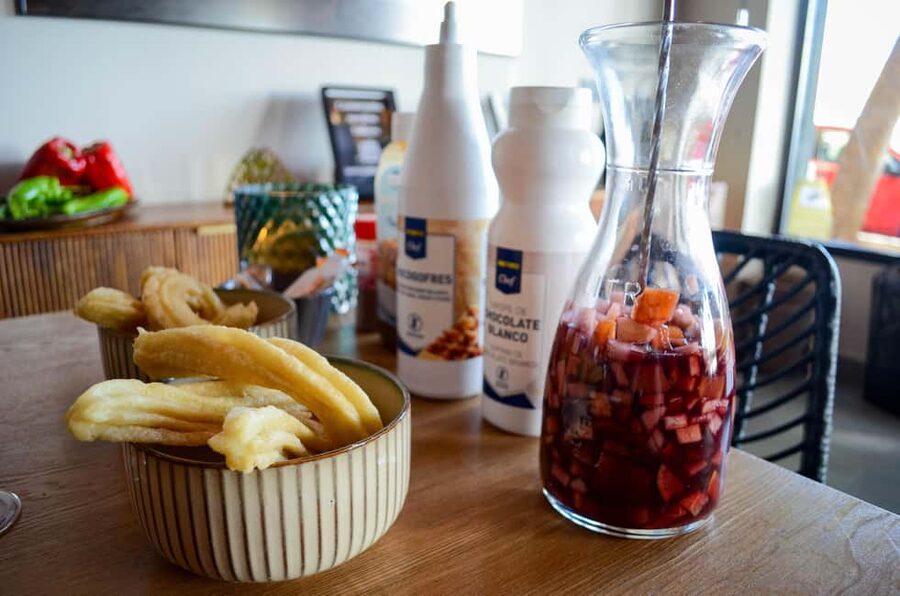
Paella is not the only thing on the table. The class includes homemade gazpacho or salmorejo, depending on the session, plus sangría. Several sessions have also included churros, and some groups prepared a roasted pepper salad or fresh vegetable salad.
These extra dishes matter because they make the experience feel like a full meal rather than a single cooking demonstration. Gazpacho gives you a cold, vegetable-based dish to balance the rice, while sangría turns the preparation into a shared social occasion. Churros, when included, provide a sweet finish and have been a particularly welcome surprise.
The exact menu appears to have some flexibility, so I would not book solely on the promise of churros or a particular salad. The listed core elements are paella, homemade gazpacho, sangría, olive oil tasting, and drinks. Additional dishes may depend on the session or the chef.
You can expect regional wines, beer, or soft drinks during the activity. Sangría is also included. This makes the $77 price easier to assess, since your meal and several drinks are part of the experience rather than extra purchases.
More Hands-On Workshops in Spain:
- Spanish Cooking Class Paella Tapas and Sangria in Madrid
★ 5.0 · 1,340 reviews - Paella Cooking Class, Wine Tasting & Central Market in Valencia
★ 5.0 · 1,150 reviews - Paella Cooking Class in Madrid with Bottomless Wine Pairing
★ 5.0 · 985 reviews - Seville: Spanish Cooking Class with Dinner
★ 4.9 · 900 reviews
A modern kitchen in Soho
Kulinarea’s kitchen is at Av Manuel Agustín Heredia 24, in the Soho District. It is close to Atarazanas Market and not far from the port, making it easy to pair with a walk through central Malaga afterward.
The kitchen is described as spacious, modern, fully equipped, and very clean. That is important for a class lasting three and a half hours. You will be working with food, moving around a cooking area, and eventually sitting down to eat, so a well-organized room makes the afternoon much more comfortable.
The address is also practical for drivers. Parking de La Marina, an underground car park, is directly opposite the meeting point. There is no hotel pickup or drop-off, so you need to make your own way to the kitchen.
The Soho setting adds some character without turning the class into a sightseeing tour. You are in an artistic district, close to the port and city center, with the cooking space serving as the main base.
What 210 minutes feels like
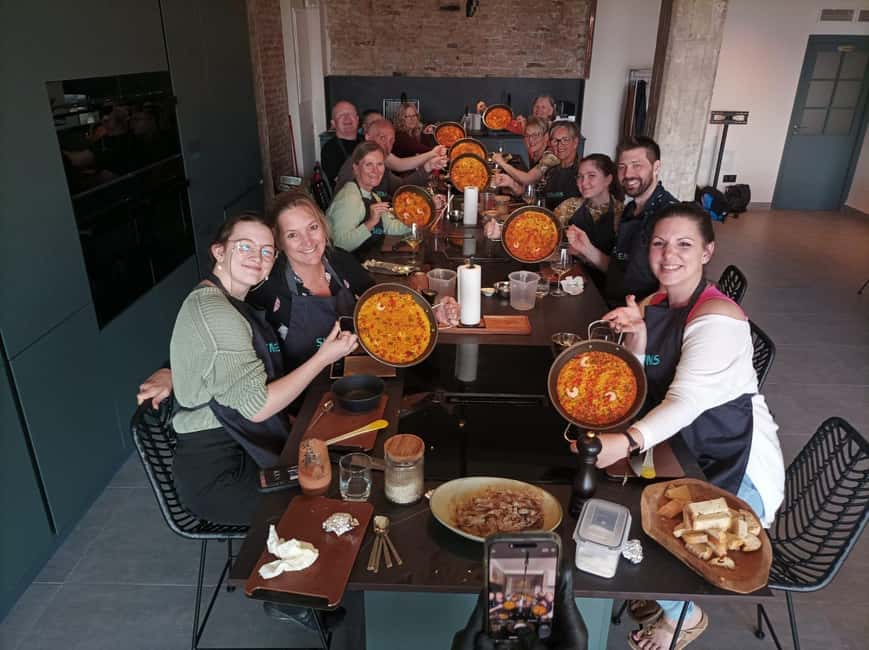
Three and a half hours gives the class enough room to include the market, tasting, preparation, cooking, and meal. You are not being rushed through a short demonstration, and there is time for conversation with the chef and other participants.
That length is a strength if you enjoy food activities. You can ask questions, take part in several stages, and eat what you have prepared. It also works well for a family activity on a rainy day, although the provider does not accept children under four or babies under one.
The pace may feel long if you want a quick lunch or have a tightly packed sightseeing plan. One small group finished early because there were only two couples, so the length can vary slightly with group size and how quickly the cooking proceeds. Still, you should reserve most of the 210 minutes rather than planning another fixed appointment immediately afterward.
Morning sessions offer the fullest version because of the market visit. Evening classes skip the market but still include the kitchen work, tastings, food, and drinks. If the market matters to you, check the start time carefully.
The social side of the cooking class
This is a shared class, not a private lesson. You cook alongside other participants and sit down together at the end. That setup has two effects: it makes the experience more social, and it means you may need to share workspace and attention with people who have different cooking speeds.
The class has worked well for couples, families, and groups of friends. A family with two teenage boys found that the boys became more interested once the cooking began. Another family group included people who usually did not cook, and everyone still found a role.
Solo visitors can also fit in easily because the food gives you a natural reason to talk. Guides and chefs help keep the group involved, and the shared meal gives the experience a relaxed finish. If you prefer quiet, private instruction, this may not be your ideal cooking format.
One practical improvement would be name tags for both participants and hosts. With several staff members and a mixed group, names can be easy to lose early in the session. That is a minor issue, but worth knowing if you value a highly personal, one-to-one class.
Is $77 a good value?
At $77 per person, this is not the cheapest way to eat paella in Malaga. It is also not simply a restaurant meal. You are paying for 210 minutes of guided instruction, a market visit in daytime sessions, an olive oil tasting, several prepared dishes, sangría, regional drinks, and the use of a modern kitchen.
The value is strongest if you want to learn something you can repeat at home. The chefs explain techniques, ingredient choices, and ways to avoid common tourist versions of Spanish food. You also leave with a Kulinarea apron, which is a practical gift rather than a decorative souvenir.
The price works less well if you mainly want a quick taste of paella. In that case, a restaurant will be faster and probably cheaper. But if you count the meal, drinks, instruction, city orientation, and market visit together, the cost is reasonable for a half-day activity in central Malaga.
The class also includes enough food to function as a proper meal. Several participants described leaving full, with paella, sangría, wine or other drinks, and sweet dishes such as churros when offered.
Dietary needs, children, and timing
Tell Kulinarea about allergies and dietary restrictions before the class. The chef may be able to guide your preparation, but restrictions cannot be handled for the first time on the day itself.
The experience is not suitable for children under four or babies under one. Older children and teenagers can take part, and the hands-on format may work particularly well for families who want an activity beyond sightseeing.
The teaching language is English. Guides and chefs may have different levels of English, but the class is designed for English-speaking participants. Instructions, cooking demonstrations, and explanations are central to the experience, so this is not just a meal with a few words of translation.
You can cancel up to 24 hours before the activity for a full refund. A reserve-now, pay-later option is also available, which helps if your Malaga plans are still changing.
Who should book this Malaga class?
I would choose this class if you enjoy eating local food and want to understand how it is made. It is especially good for couples, families with older children, solo visitors, and anyone who likes meeting people through a shared activity.
Book a morning session if the Atarazanas Market is important to you. Choose an evening class if you care more about the kitchen and meal, or if the market is closed during your visit.
I would hesitate only if you dislike group activities, need a highly controlled dietary menu, or have little room in your schedule for a three-and-a-half-hour commitment. Also remember that no transport is provided, so you must reach Av Manuel Agustín Heredia 24 yourself.
Should you book it?
Yes, if you want more than a plate of paella. The strongest elements are the hands-on cooking, the patient chefs, the market connection in morning sessions, and the generous food and drink included in the price.
For the best version, book Monday through Saturday in the morning, arrive ready to participate, and report dietary needs in advance. You will leave with a full meal, a Kulinarea apron, and enough practical advice to try paella, gazpacho, and sangría in your own kitchen.
FAQ
Where does the Malaga paella class meet?
The meeting point is Kulinarea at Av Manuel Agustín Heredia 24 in Malaga’s Soho District.
How long does the experience last?
The activity lasts 210 minutes, or three and a half hours.
Is the class taught in English?
Yes. The instructor language is English.
Does the experience include a market visit?
Morning sessions from Monday through Saturday include a visit to Atarazanas Market. The market is closed during evening classes, Sundays, and the listed national holidays.
What food and drinks are included?
The activity includes paella, homemade gazpacho or salmorejo, sangría, an extra virgin olive oil tasting, and regional wine, beer, or soft drinks. Some sessions may also include dishes such as churros or salad.
Do I get to cook my own paella?
Yes. The class is hands-on, and you prepare paella with guidance from a local chef.
Is an apron included?
Yes. You receive a Kulinarea apron to take home at the end of the class.
Can dietary restrictions be accommodated?
You must tell Kulinarea about dietary restrictions before the class. Restrictions cannot be handled for the first time on the day of the activity.
Are children allowed?
Children under four are not accepted, and babies under one are not suitable for the activity.
Is transportation included?
No. Pickup and drop-off are not included. Parking de La Marina, an underground car park, is located opposite the meeting point.
Can I cancel for a refund?
You can cancel up to 24 hours in advance for a full refund.
Can I reserve now and pay later?
Yes. A reserve-now, pay-later option is available.
Just added around Spain
- Private visit to a ham factory with show cooking in Salamanca★ 5.0 · 122 reviews
- Basque Pintxos and Tapas Cooking Class in Bilbao★ 5.0 · 73 reviews
- Paella and Burnt Basque Cheesecake Cooking Class (in Bilbao)★ 5.0 · 46 reviews
- Small-group Immersive Basque Cooking Class in Bilbao with Open Bar★ 5.0 · 65 reviews
- Pintxos and Tapas Cooking Class in Bilbao★ 5.0 · 38 reviews
- Private Authentic Paella Cooking Class in Barcelona with Josh★ 5.0 · 3 reviews
- Private Barcelona Market Tour & Paella Cooking Class with Josh★ 5.0 · 4 reviews
- Rooftop Paella Seafood Cooking Class Experience in Barcelona★ 5.0 · 59 reviews
Spanish & Paella Cooking Classes, compared.
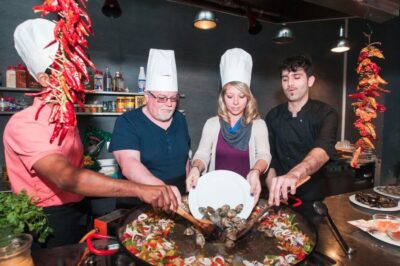
Barcelona: Paella Cooking Experience & Boqueria Market Tour
Read our review →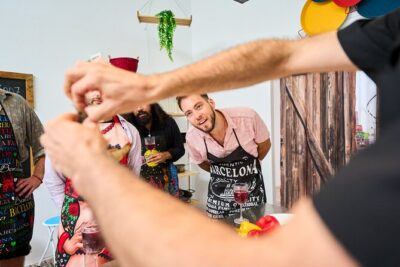
Barcelona Paella Cooking Class with Market Visit, Tapas & Sangria
Read our review →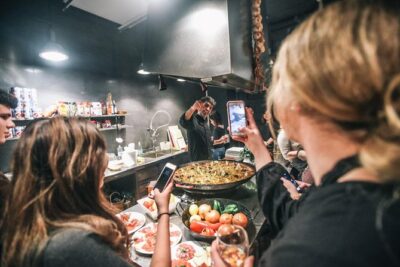
Barcelona Interactive Spanish Cooking Experience
Read our review →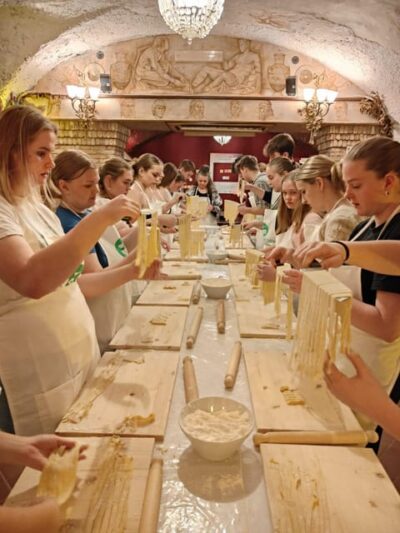
Rome: Pasta & Tiramisu Cooking Class near the Spanish Steps
Read our review →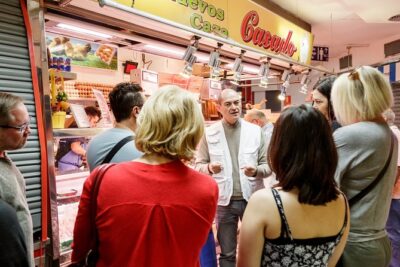
Spanish Cooking Class Paella Tapas and Sangria in Madrid
Read our review →
Paella Cooking Class, Wine Tasting & Central Market in Valencia
Read our review →
Paella Cooking Class in Madrid with Bottomless Wine Pairing
Read our review →
Browse the lists this tour appears in