
Review · MEXICO CITY
Multi-Variety Mole Class in a Condesa home or art gallery rooftop
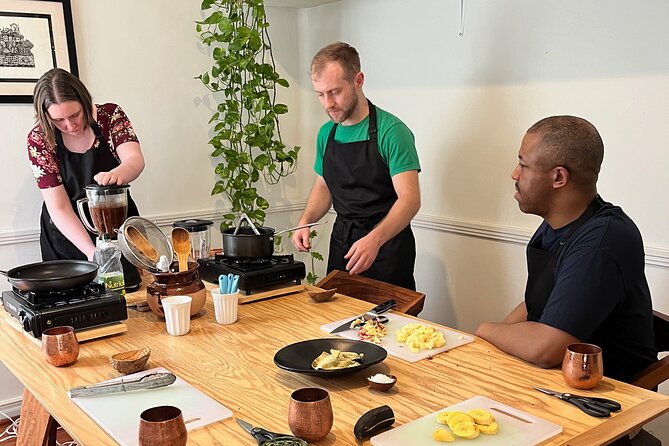
Mole is not one sauce but a whole family of them, and this small-group cooking class gives you a useful taste of that range. In a Condesa home, or sometimes on an art-gallery rooftop, you’ll turn a long list of ingredients into two very different moles, then sit down to eat what you made.
I like the clear contrast between sweet, fruity manchamanteles and fresh, leafy mole verde. I also like the hands-on format, the local plates, the drinks, and the cap of eight people. The main caution is practical: the class is held in a private home without an elevator, and two cats live there, which matters if you have allergies.
Key points at a glance
- Two moles in one class: Prepare manchamanteles with pineapple, plantain, and apple, then make a green mole with spinach, cilantro, parsley, and epazote.
- A real home setting: The class takes place at Av Nuevo León 4 in Condesa, unless your booking directs you to the art-gallery rooftop.
- Useful food context: You learn how the ingredients and cooking steps create different styles of Mexican mole.
- Small group size: The class allows no more than eight people, giving you a better chance to work directly with the ingredients.
- Drinks are part of the meal: Adults over 18 receive Mexican beer and mezcal, while younger participants receive traditional local soft drinks.
- Recipes arrive later: You receive the recipes by email, so you can try the dishes again at home.
Why two different moles make this class worthwhile
Many visitors first meet mole through mole poblano, the dark sauce often associated with chocolate, dried chiles, nuts, spices, and long cooking. This class takes that familiar idea and shows you another side of it.
The first dish is mole manchamanteles, a red sauce with fragrant spices and fresh fruit. Pineapple, plantain, and apple bring sweetness and a soft, almost celebratory quality. The name refers to a sauce so colorful and generous that it can stain the tablecloth, which gives you a sense of its character before you even taste it.
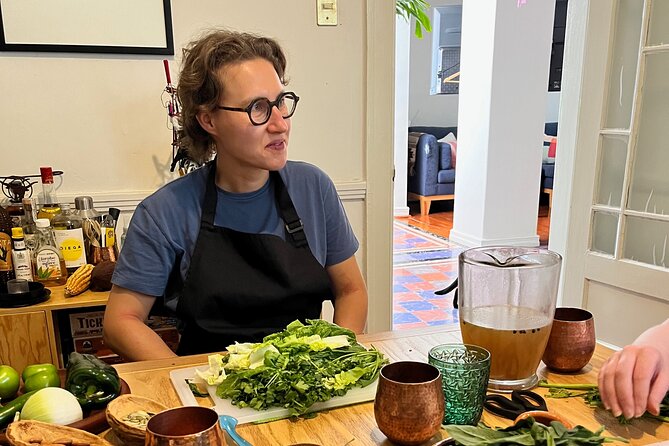
The second is mole verde, built around green leaves and herbs. Spinach, cilantro, parsley, and epazote give it a lighter, fresher taste than the red mole. The contrast is the real lesson here. You are not simply learning one famous recipe twice. You are seeing how Mexican cooking can move from deep and fruity to crisp and herbal.
I like this approach because it gives you something to compare. One dish has pineapple and plantain. The other depends on fresh greens and herbs. After four hours, you should have a better sense of why mole cannot be reduced to a single flavor or recipe.
More Mexican Cooking Classes in Mexico:
- Cabo San Lucas Mexican Cooking Class Experience and Local Markets
★ 5.0 · 915 reviews - Mexican Cooking from Scratch in a Local Home in Tulum
★ 5.0 · 585 reviews - Authentic Mexican Legacy Cooking Class in Cabo San Lucas
★ 5.0 · 530 reviews
Arriving at the Condesa home
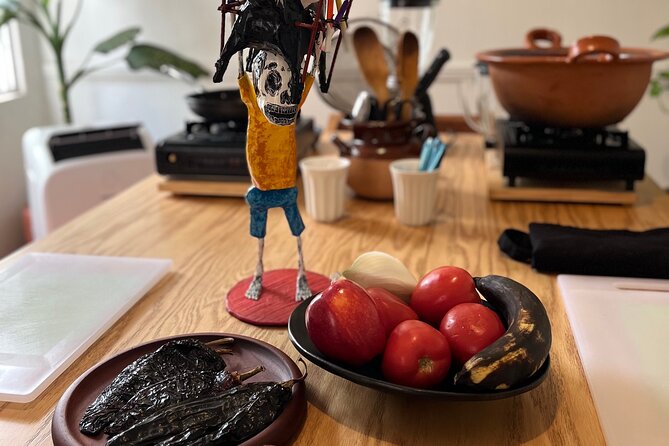
The listed meeting point is Av Nuevo León 4 in Colonia Condesa, in the Cuauhtémoc area of Mexico City. The location is near public transportation, which makes it practical to reach without arranging a private ride.
The setting is part of the appeal. Rather than cooking in a large commercial kitchen, you enter a private Condesa home. That can make the class feel more personal and less like a staged demonstration. You should be ready for a domestic setting, with the ordinary limits that come with it.
The building does not have an elevator. Wheelchair users have attended the class before, but you should confirm that the stairs and entrance work for your needs before booking. Service animals are allowed.
Some bookings take place on the rooftop of an art gallery instead. If that applies to your date, check your inbox after booking for the exact location details. Do not assume that the Condesa address is always the final meeting point.
There are two cats in the home. If you have a serious allergy, this is an important consideration, not a minor footnote. An allergy can turn an otherwise enjoyable four-hour meal into an uncomfortable afternoon.
The first two hours: learning how mole comes together
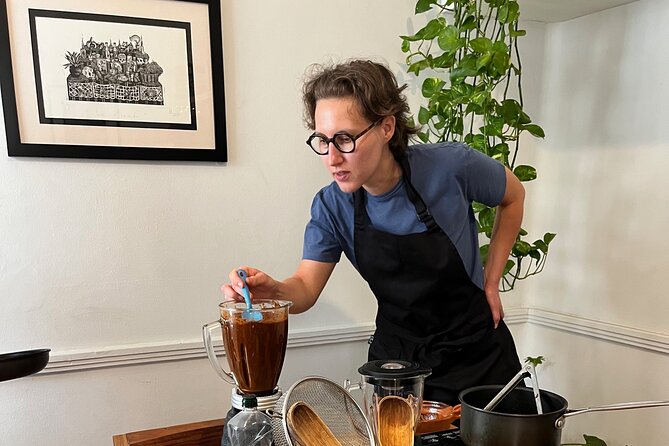
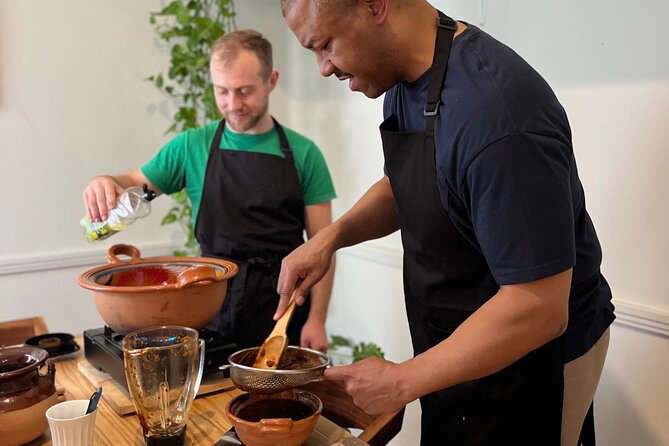
The cooking portion takes about two hours before the meal is served. You receive the ingredients, equipment, and guidance needed to prepare both sauces from scratch.
That phrase matters. You are not simply watching someone blend a finished sauce while you take notes. The appeal is in seeing the process unfold, from the separate ingredients to the final combination. Mole can look intimidating because the ingredient list is long and the flavors are layered. A good instructor helps you understand the job of each part.
The class also gives you a chance to ask questions as you work. The guide explains how to select and prepare the ingredients, and how the steps fit together. You may find that the process feels less mysterious once you see it in sequence.
The group limit of eight is helpful here. It is small enough to keep the session from feeling like a lecture in a crowded room, but large enough for a social meal at the end. If you enjoy cooking with other people, this size should give the class a friendly rhythm. If you prefer complete privacy, a group class is not the right format.
The hands-on work also makes the lesson more useful at home. A recipe card alone cannot show you how a sauce should look or how the different ingredients affect the final taste. Paying attention to texture, color, and balance during the class will help when you try the dishes again.
Manchamanteles: a red mole with fruit at its center
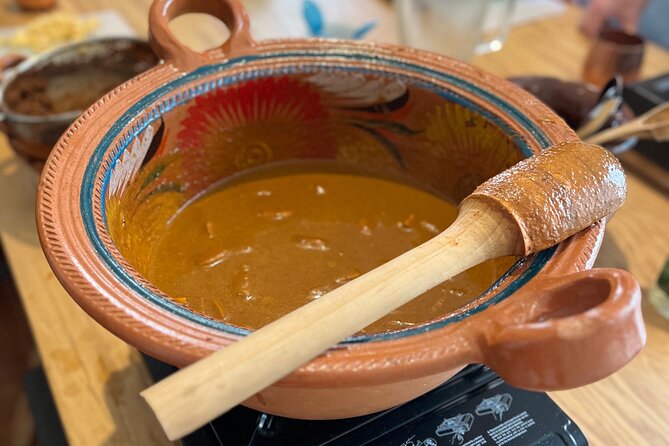
Manchamanteles is the more dramatic of the two main dishes. It shares some ingredients and methods with mole poblano, but it gets much of its sweetness from fruit rather than chocolate.
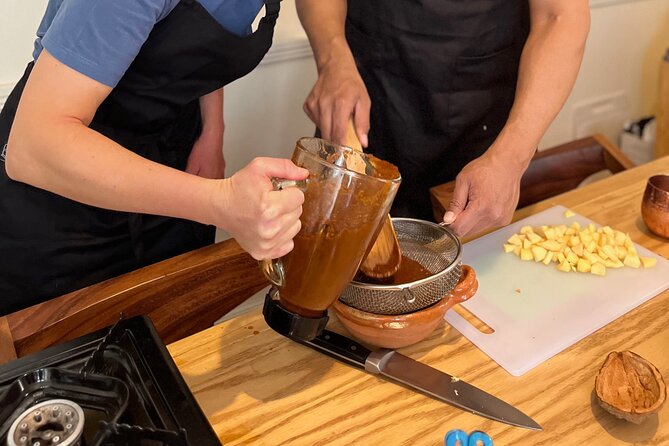
Pineapple, plantain, and apple give the sauce a different personality from the darker moles you may already know. The fruit is not just decoration added at the end. It is part of the dish’s identity, and the generous pieces bring bursts of sweetness to the spiced red sauce.
This is a good dish for someone who thinks all mole tastes heavy or chocolate-like. Manchamanteles can still have the warmth and depth you expect from a red mole, but the fruit changes the balance. You will want to pay attention to how the spices and fruit work together rather than treating the sauce as a generic topping.
The meal includes the manchamanteles as a main course. You prepare it during the class, then eat it at the table after the cooking is finished. The instructor has also received praise for getting the seasoning right, which matters with a dish that contains so many competing flavors.
More Hands-On Workshops in Mexico:
- Puerto Vallarta Cooking Class Experience with Market Tour
★ 5.0 · 698 reviews - Mexican Cooking Class with Food Market Visit in Mexico City
★ 5.0 · 506 reviews - Authentic Mayan Cooking Class in Cozumel
★ 5.0 · 344 reviews - Flavors of Oaxaca: Cooking Class with No Set Menu and Local Market Tour
★ 4.5 · 333 reviews
Mole verde: a fresher counterpoint
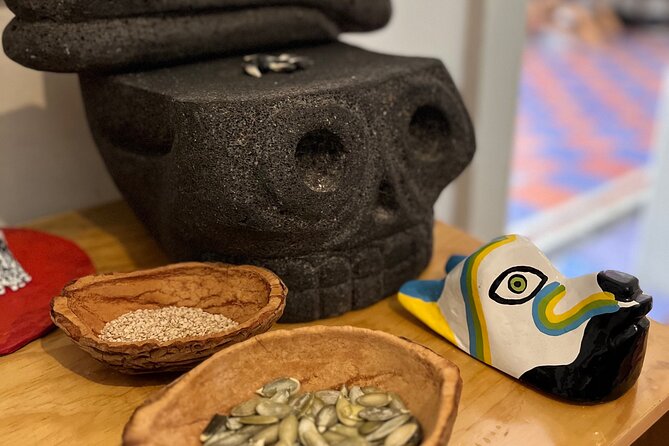
Mole verde gives the class its needed change of pace. Its base includes spinach, cilantro, parsley, and epazote, so it tastes more like a fresh herb sauce than a dark, sweet mole.
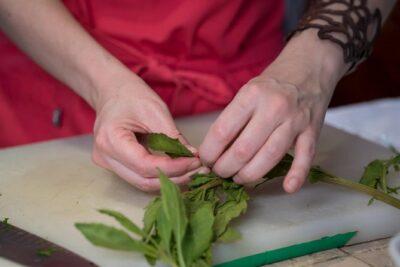
Epazote is especially useful in this context because it is a familiar Mexican herb that may be less common in home kitchens outside Mexico. Working with it gives you a more direct connection to the local cooking style than simply reproducing a sauce with widely available supermarket ingredients.
The green mole also helps you understand that Mexican food is not always about heat or heaviness. The description emphasizes its light, refreshing quality, and that makes it a smart pairing with the fruit-based red mole. If you enjoy herbs, greens, and brighter flavors, this may be the dish you remember most clearly.
Making both sauces in one session lets you compare them while the process is still fresh. You can think about the role of color, fruit, herbs, and spices as you eat, rather than trying to recall separate meals from different days.
Sitting down to eat in a local setting
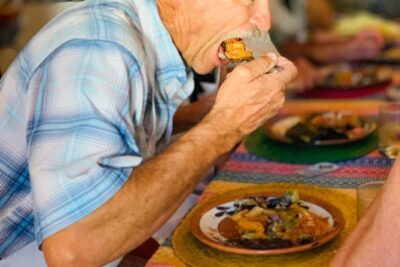
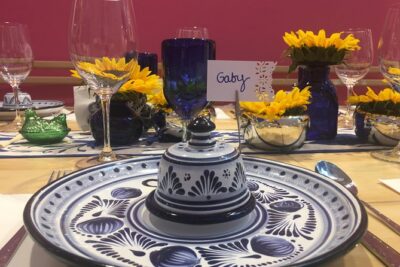
After the cooking, you set the table with locally made dinnerware and eat the meal you prepared. That small detail gives the final part of the class a sense of place. You are not just standing at a counter sampling spoonfuls. You are moving into a shared meal.
Lunch includes both mole dishes and dessert. The dessert is prepared before you arrive, so your work focuses on the two moles rather than every course. That is a sensible division. Dessert provides a finished treat without adding another long cooking project to an already full afternoon.
Adults age 18 and older are offered Mexican beer and mezcal. Younger participants receive traditional local soft drinks. The minimum drinking age is 18, so do not count on alcoholic drinks for anyone younger than that.
The meal gives you time to ask more questions and talk about the food after the busy preparation is finished. One past class conversation even extended into discussion of cacao and places to visit in Mexico City, along with encouragement for a new farm project. That suggests the instructor can connect the cooking lesson with wider food interests, although the exact conversation will depend on your group.
Price, group size, and what you receive
The price is $107.60 per person. That is not a budget cooking lesson, so you should judge it as a full four-hour food experience rather than as a simple recipe workshop.
The value comes from several parts working together:
- All ingredients and equipment are provided.
- You prepare two substantial mole dishes.
- Lunch, dessert, and drinks are included.
- The group is limited to eight people.
- Recipes are sent by email after the class.
- The setting is a private Condesa home or an art-gallery rooftop rather than a standard classroom.
For someone who wants only a quick meal, the price may feel high. For someone who wants instruction, food, drinks, cultural context, and recipes to use later, it is easier to justify.
One important price note deserves attention. Other people may pay less for the same experience when booking directly through the Martaja website. Compare the available rates before you commit. A third-party booking can still be useful for familiar payment and cancellation terms, but there is no reason to pay more without checking the direct option.
The class is often booked about 25 days ahead. That does not guarantee it will sell out on your dates, but it is a good sign that you should plan ahead if your Mexico City schedule is fixed.
Dietary needs and access details
Most dietary requirements can be accommodated. Tell the provider about your needs when booking, and do not wait until you arrive. The more specific you are, the easier it will be to confirm what can be changed.
The class is near public transportation and ends back at the meeting point. You do not need to arrange a second pickup location.
The home has no elevator. Wheelchair users have attended before, but access remains something you should discuss directly if stairs could be a problem. Service animals are allowed.
The cats are the bigger concern for people with allergies. If you react to cats, the private-home format may not suit you even if the cooking itself sounds perfect.
Who will enjoy this mole class most
I would choose this experience if you want to understand Mexican food through its ingredients and methods, not just eat a finished plate. It suits curious cooks, couples, families with older children, and anyone who wants a meal connected to local food traditions.
It is also a strong choice if you have already tried mole poblano and want a wider view. The manchamanteles and mole verde give you two clear alternatives, with enough contrast to make the lesson memorable.
You may want to skip it if you dislike group cooking, have a severe cat allergy, need a fully step-free building, or want a fast tasting rather than a four-hour activity. It is also less appealing if you are looking for a class focused on one single signature recipe.
The small group helps, but the class still depends on shared timing. You will be cooking alongside other people, waiting for steps to come together, and eating a set menu. That is part of the social value, but it means you should not expect a private chef lesson built entirely around your own pace.
Should you book it?
Book this class if you want two very different moles, a meal in a personal setting, and recipes you can attempt again at home. I especially like the pairing of fruity manchamanteles with herb-filled mole verde. It gives you a useful lesson in range, not just a famous dish to photograph.
Before paying, compare the direct Martaja price with the listed rate. Confirm the final location, especially if your class will be on the art-gallery rooftop, and check the access and cat situation if either affects you.
For food-focused visitors with four hours to spare, this is a thoughtful and practical Mexico City experience. For a quick lunch or a low-cost cooking class, choose something simpler.
FAQ
How long does the mole cooking class last?
The class lasts approximately four hours. The cooking portion takes about two hours, followed by setting the table and eating lunch with dessert.
Where does the class meet?
The listed meeting point is Av Nuevo León 4, Colonia Condesa, Cuauhtémoc, Mexico City. Some bookings take place on an art-gallery rooftop, so check your inbox after booking for the exact location.
How many people can attend?
The class has a maximum of eight participants.
What food will I prepare?
You will prepare mole manchamanteles, a red mole with pineapple, plantain, and apple, and mole verde, made with spinach, cilantro, parsley, and epazote.
Are drinks included?
Yes. People aged 18 and older are offered Mexican beer and mezcal. Younger participants receive traditional local soft drinks.
Can I cancel for a full refund?
Yes, if you cancel at least 24 hours before the experience starts. Cancellations made less than 24 hours before the start time are not refunded, and changes within that period are not accepted.
More Museums in Mexico
- Multi-Variety Tamal Class in a Condesa home or rooftop gallery
★ 5.0 · 8 reviews - Private Tour: Grand Palace,Wat Phra Kaew, Museum&Cooking Class
★ 5.0 · 7 reviews - Tuscan Cooking Class in an Art Gallery in Florence
★ 5.0 · 6 reviews - Dalí Museum + Market to Fork hands-on cooking class with Chef Yves
★ 5.0 · 5 reviews
Just added around Mexico
- Virtual Mexican Cooking Class (private and personalized)★ 5.0 · 3 reviews
- Four-course vegan Mexican hands-on cooking class + Market Tour★ 5.0 · 5 reviews
- Multi-Variety Tamal Class in a Condesa home or rooftop gallery★ 5.0 · 8 reviews
- Market Tour and Home Cooking Class in Mexico City with Margarita★ 5.0 · 30 reviews
- Private Market Tour, Cooking Class in Mexico City with Alex & Ale★ 5.0 · 25 reviews
- Private San Angel Tour & Cooking Class in Mexico City with Lucia★ 5.0 · 56 reviews
- Traditional Cooking Class in Mexico City at Margarita’s Home★ 5.0 · 23 reviews
- Private Home Cooking Experience in Mexico City with Alex and Ale★ 5.0 · 13 reviews
Mexican Cooking Classes, compared.
Cabo San Lucas Mexican Cooking Class Experience and Local Markets
Read our review →
Mexican Cooking from Scratch in a Local Home in Tulum
Read our review →
Mexican Cooking Class with Food Market Visit in Mexico City
Read our review →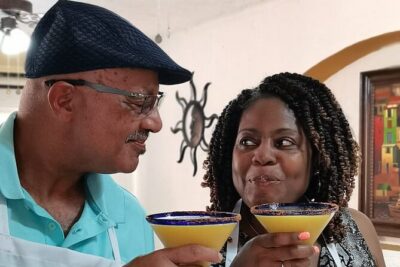
Essence of Mexico: Authentic Mexican Cooking Class & Market Tour
Read our review →
Mexican Cooking Class with fresh Local Market ingredients selection and transpor
Read our review →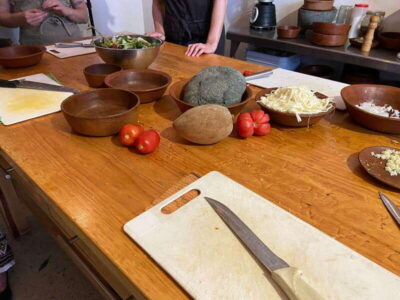
Oaxaca: Oaxacan Mole Workshop with a Traditional Cook
Read our review →Browse the lists this tour appears in