
Review · PHUKET
Phuket: Authentic Thai Cooking Class
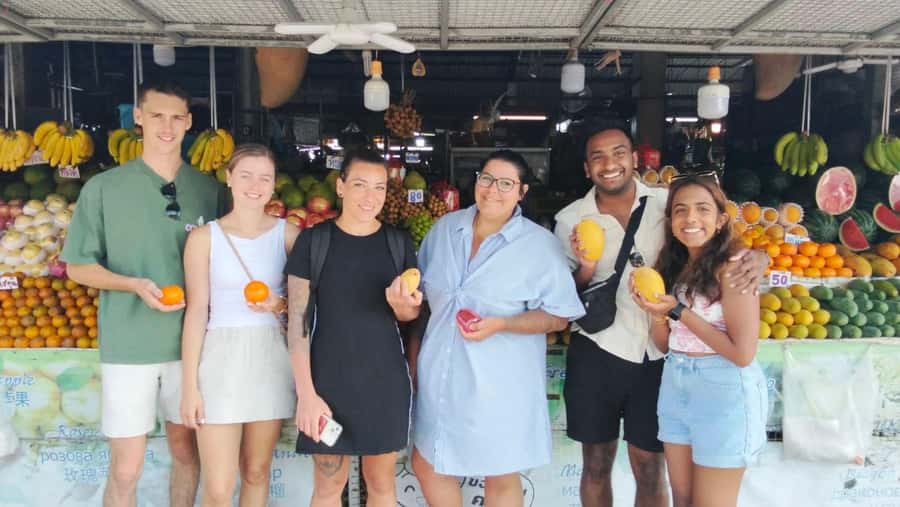
The best part of this Phuket experience happens before the first pan hits the stove: you walk through a local market with a chef who explains the herbs, spices, vegetables, and proteins that give Thai food its character. Then you cook four dishes of your choice at a lakeside school near Patong Beach.
I like the freedom to choose your own menu, and I like that each person has an individual cooking station. The market tour is short but useful, and the digital recipe book means your Pad Thai, curry, or mango sticky rice does not have to remain a holiday memory.
The main consideration is the pace. You spend about three and a half hours moving from market to demonstration to cooking and eating, so there is not much time for long cultural conversation between dishes. Pickup and drop-off are included for groups of three or more, while one- or two-person bookings pay an extra 400 Baht per person.
Key points to know before booking
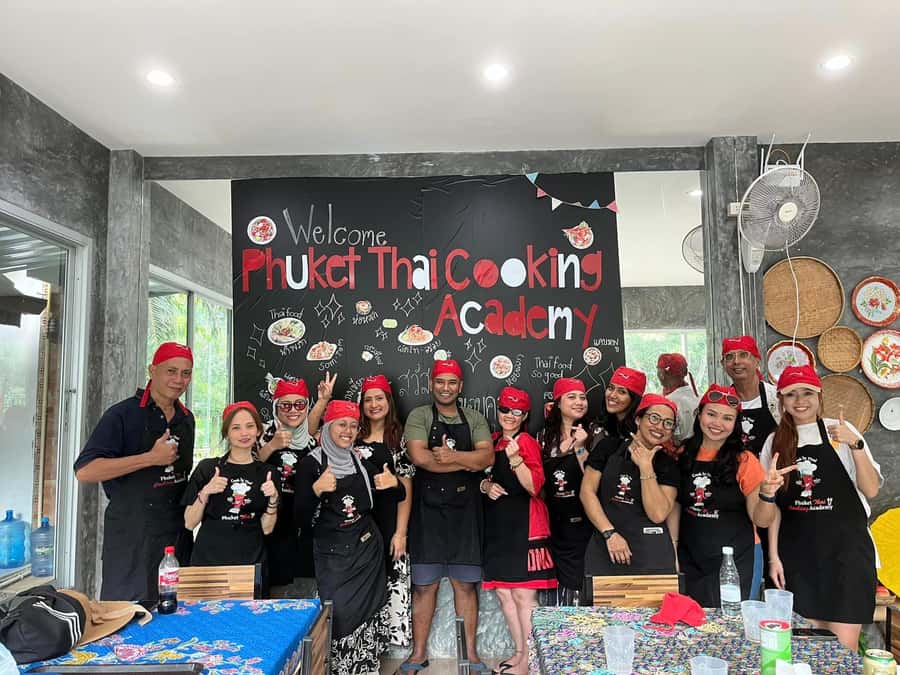
- Choose four dishes yourself: Select from more than 16 Thai recipes, with meat, seafood, vegetarian, noodle, curry, salad, and dessert options.
- Start at a real local market: Learn how to identify the ingredients you will later use in class.
- Cook at your own station: The chef demonstrates each step before you prepare your dishes with supplied equipment and pre-portioned ingredients.
- Enjoy a generous final meal: You cook enough food for a substantial sit-down feast, and some participants have had leftovers.
- Look for Ploy: Ploy has led several highly praised classes, bringing calm instruction, humor, and help with photographs and market shopping.
- Budget carefully for small bookings: Transfers are included for three or more people, but smaller bookings carry a 400 Baht per-person transport fee.
A Thai cooking class that begins at the market
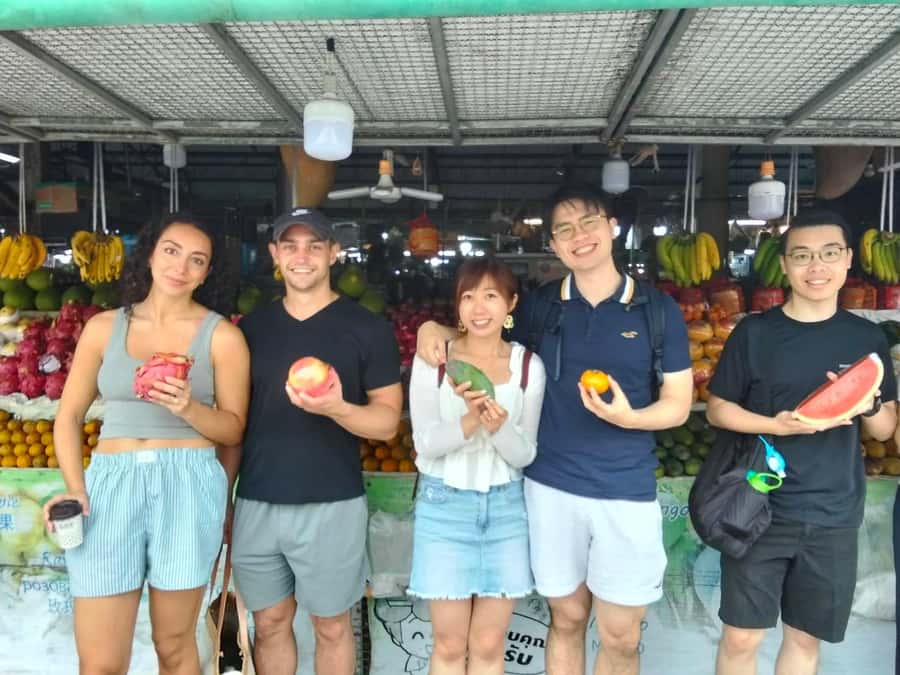
This is not simply a lesson in following recipes. It starts with the raw materials, which is exactly where Thai cooking makes the most sense.
After hotel pickup, your English-speaking chef takes you to a local market. The tour is not designed as a long sightseeing walk. It is a practical introduction to the ingredients used in your class. You learn the names and uses of herbs, spices, vegetables, and proteins, along with the flavors they bring to a dish.
That matters because many Thai ingredients can look unfamiliar when you first see them on a market table. The chef helps connect those ingredients to the finished food. You begin to understand what creates Thai cuisine’s familiar balance of sweet, sour, salty, and spicy flavors.
The market portion is described as short and effective, so keep your expectations in check. You are not getting a full food tour or a detailed lesson on every market stall. Instead, you get enough context to shop with more confidence and recognize ingredients later.
I consider this one of the most useful parts of the outing. A cooking class can feel detached from local life if every ingredient arrives already prepared. Seeing the produce and seasonings first gives the recipes a clearer place in Thai daily life.
More Thai Cooking Classes in Thailand:
- Half-Day Thai Cooking Class at Organic Farm in Chiang Mai
★ 5.0 · 19,087 reviews - Chiang Mai: Cooking Class, Market & Thai Herbs Garden Tour
★ 4.9 · 4,824 reviews - Thai and Akha Cooking Class in Chiang Mai
★ 5.0 · 4,358 reviews
From Patong Beach to a lakeside cooking school
After the market, you continue to the Phuket Thai Cooking Academy, located a short distance from Patong Beach. The school has an air-conditioned kitchen, which is a practical advantage in Phuket’s heat. Cooking over burners is much more pleasant when you are not also fighting the temperature.
The setting is another part of the appeal. The school overlooks a lake, giving you a calmer place to sit and eat after the market and cooking session. One participant also walked around a nearby waterfall after class, so the location may offer a little extra scenery if you have time and energy afterward. The waterfall is not presented as part of the formal class, so treat it as a possible nearby add-on rather than a promised stop.
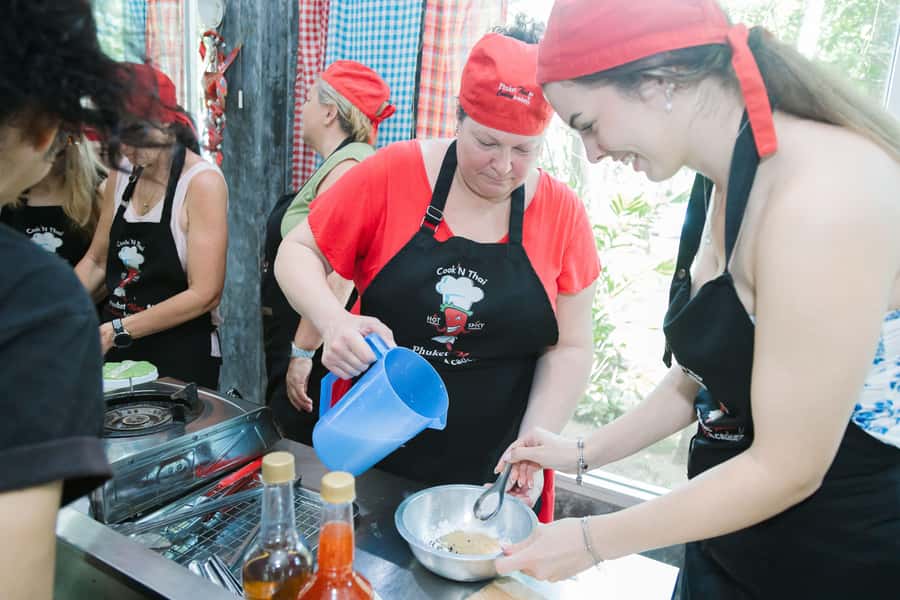
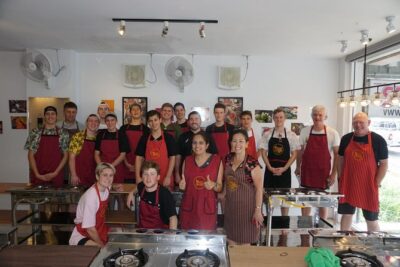
You receive a welcome drink, with tea or coffee included, before the cooking begins. The chef then introduces the recipe choices and explains how the class will work. Each person gets a station, equipment, ingredients, and guidance.
This individual setup makes the class work well for couples, families, and mixed groups. You do not have to prepare the same menu as the person beside you. One person can choose seafood while another selects a vegetarian dish, then everyone can share at the meal.
Choosing four dishes from a wide menu
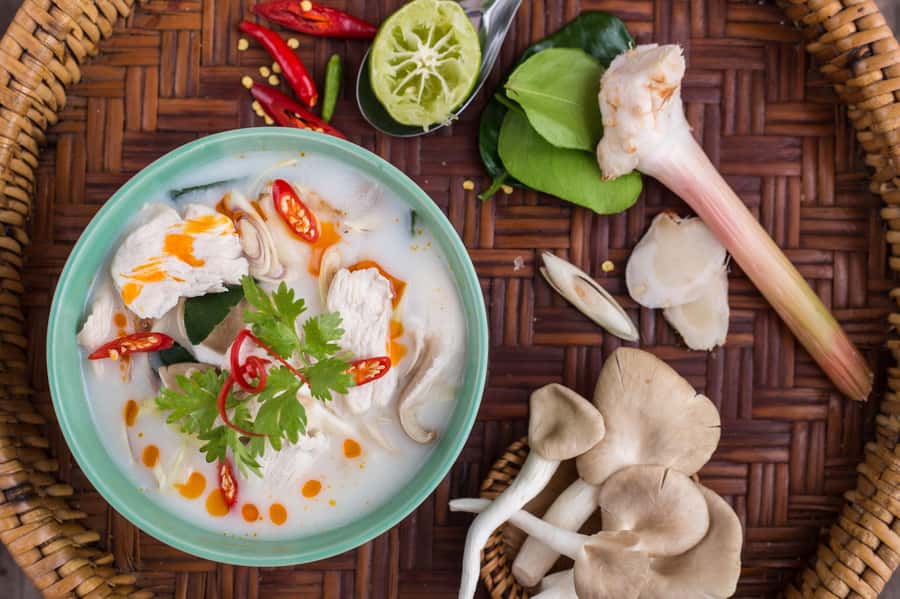
The menu includes more than 16 authentic Thai recipes. Choices include well-known favorites such as Pad Thai, Tom Yum Goong, green curry, papaya salad, fried rice noodles, mango with sticky rice, and deep-fried bananas.
The four-dish format gives you a useful mix of control and structure. You are not forced to cook a meal chosen by the school, but you also do not have to design a Thai menu from scratch. You simply pick what interests you most.
I suggest choosing dishes that use different techniques. For example, pair a stir-fried noodle dish with a curry, a salad, and a dessert. That way, you learn more than four versions of the same method. If you are attending with a partner or friend, choose different dishes so you can taste a wider range at the end.
The selection also works for people with different diets and preferences. Vegetarian choices are available, and participants have been able to mix vegetarian and meat dishes within the same class. The information provided does not list every dietary substitution, so you should confirm special requirements when booking.
Some dishes are especially useful for home cooks. Pad Thai teaches you about noodle texture and sweet-sour seasoning. Papaya salad shows how Thai food can build strong flavor from a small number of fresh ingredients. Green curry gives you a lesson in curry preparation, while mango sticky rice offers a simple dessert you can repeat at home.
What happens at your cooking station
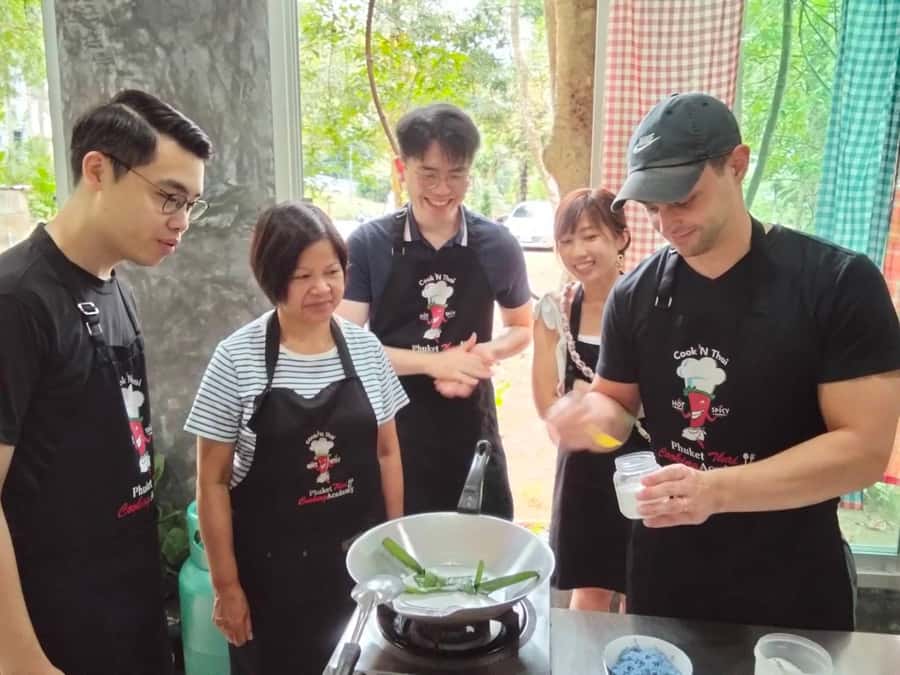
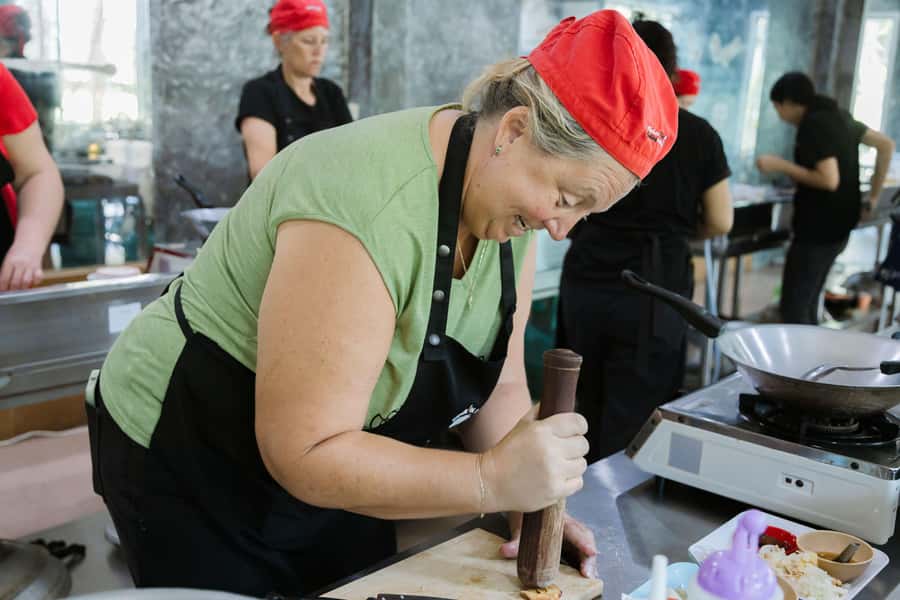
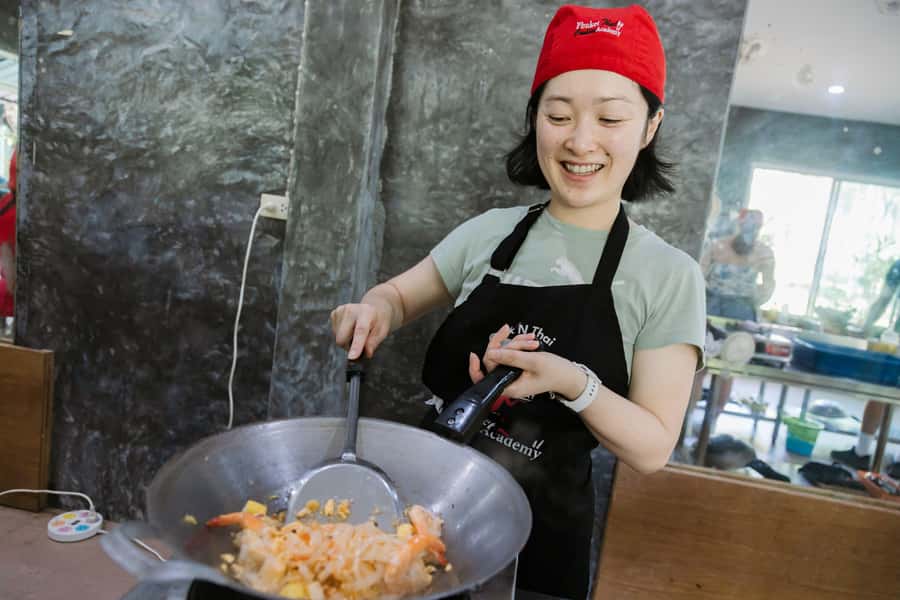
The chef demonstrates each technique before you start. The class covers knife skills, stir-frying, curry preparation, and seasoning. You then prepare the dishes yourself, with the instructor helping as you move through each step.
This is hands-on rather than a demonstration where you sit and watch someone else do all the work. Ingredients and equipment are supplied, and the ingredients are prepared for each cooking station. That keeps the class moving and lets you focus on cooking instead of measuring every item from the beginning.
The chef also encourages you to taste and adjust the food. This is an important lesson. Thai cooking is not only about copying quantities. It is about finding the balance that suits your palate, especially with spicy, sour, salty, and sweet flavors.
Ploy has been praised for being calm, funny, and helpful while guiding participants through the dishes. She has also helped people understand market ingredients and taken photographs during the market visit. Another instructor may assist, especially with larger groups. A class of six, for example, had two instructors, which helped keep the cooking organized.
The teaching style should suit beginners. You do not need advanced kitchen skills to take part, and experienced cooks can still pick up useful details about Thai ingredients and seasoning. The instructors demonstrate the process and then remain available as you work.
More Hands-On Workshops in Thailand:
- Chiang Mai: Authentic Cooking Class with Market & Farm Visit
★ 4.9 · 4,546 reviews - Phuket Thai Cooking Class with Market Tour Option
★ 5.0 · 2,665 reviews - Bangkok: Hands-on Thai Cooking Class and Market Tour
★ 4.9 · 1,614 reviews - Chiang Mai: Cooking Class with Market and Pickup
★ 4.9 · 1,365 reviews
A meal that can be larger than expected
Once the dishes are finished, everyone sits down to eat what they prepared. This is more than a small sample at the end of a lesson. The class produces a substantial meal, and several participants found the quantity large enough to leave leftovers or carry some back to the hotel.
For that reason, arrive hungry. Eating a full breakfast or late lunch right before the class could make the final meal uncomfortable. The four-dish structure also means the table may hold a wide mix of noodles, curry, soup, salads, and sweets, especially when people choose different recipes.
The shared meal adds a social element, though the class is primarily organized around cooking. One practical criticism is that the experience moves fairly directly from market to cooking to eating and departure. If you want a slow, chatty food evening with wine and long group discussion, this may feel more structured than you prefer.
If your priority is learning recipes and eating a great deal of food, that structure is a benefit. You spend less time waiting and more time working with ingredients. If you want a broader cultural conversation about Thai dining customs, ask questions as you cook, since there may not be a long separate discussion period.
What you take home besides a full stomach
The most useful souvenir is the digital recipe access provided after the class. It includes the recipes taught during the experience, so you can try them again after returning home.
That makes the 70-dollar price easier to assess. You are paying for hotel transport, a market visit, instruction in an English-language kitchen, ingredients, equipment, drinks, a certificate, and a large meal. You also receive a recipe resource that can help you repeat the experience in your own kitchen.
The value is strongest if you plan to cook after your holiday. One participant was inspired to buy a wok after the class, while another found the recipes useful enough to make the dishes repeatedly at home. Those details point to the class’s main strength: it is not only entertainment for one afternoon.
The certificate is a pleasant extra, though it is unlikely to be the reason you book. Fruit carving or coconut milk preparation is also included. The exact activity may vary with the day and group, but it gives the class an additional Thai food skill beyond the four main recipes.
Transport, timing, and small-group costs
The total duration is 210 minutes, or three and a half hours. That is long enough for a market visit, recipe briefing, cooking, and a full meal without taking up an entire day in Phuket.
Hotel pickup and drop-off are included for bookings of three or more people. For one or two participants, an additional 400 Baht per person applies. This is worth checking before you compare the price with other cooking schools, since the transfer charge changes the final cost of a small booking.
Transport has been rated highly, and the experience includes a driver as well as the classroom transfer. One participant even received help stopping at a grocery store on the way back to buy ingredients. That was an individual convenience, not a listed stop, so you should not assume it is always available.
Starting times vary, and you need to check availability when selecting the class. Free cancellation is available up to 24 hours before the activity for a full refund. You can also reserve now and pay later, which helps if your Phuket schedule is still changing.
Who will enjoy this Phuket class most
I would recommend this class to first-time Thai cooks who want clear instruction without giving up the pleasure of choosing their own food. It also suits experienced home cooks looking for local ingredients, new seasoning ideas, and a practical way to understand Thai dishes.
Families can work well here, too. Teenagers have enjoyed choosing and cooking their own dishes, and the individual stations give younger participants a real job rather than leaving them to watch from the side.
Couples and friends can make the most of the menu by choosing different recipes and sharing everything at the end. Solo participants can also book, though the additional transport fee applies to bookings of one or two people. A small booking may feel more personal, but you should compare the added cost before paying.
This is less suitable if you want a market tour as the main event, a long sit-down cultural lecture, or an evening class with drinks and unhurried conversation. The experience is organized around cooking efficiently and eating the results.
Should you book the Phuket Thai Cooking Academy?
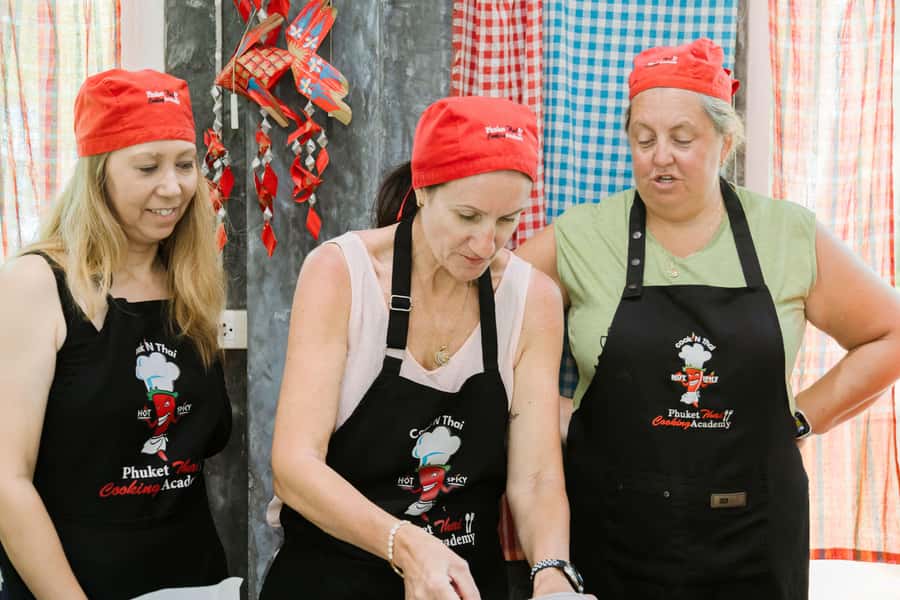
Book it if you want to cook a generous amount of real Thai food, choose your own four dishes, and leave with recipes you can use at home. The market visit adds useful context, the air-conditioned school keeps the kitchen comfortable, and the instructors provide enough help for beginners without taking the work away from you.
At 70 dollars per person, the package offers solid value for a half-day activity, especially with transfers, ingredients, equipment, and the final meal included. Small groups should add the 400 Baht per-person transport fee to the calculation.
Skip it only if you want a slow food-and-culture tour rather than a focused cooking lesson. For most people who enjoy Thai food and want more than a quick demonstration, this is a practical and satisfying choice in Phuket.
FAQ
How long does the Phuket cooking class last?
The activity lasts 210 minutes, or three and a half hours. This includes the market tour, cooking instruction, preparation of your selected dishes, and the final meal.
How many dishes can I choose?
You can select four dishes from a menu of more than 16 authentic Thai recipes. Options include Pad Thai, Tom Yum Goong, green curry, papaya salad, fried rice noodles, mango with sticky rice, and deep-fried bananas.
Is hotel pickup and drop-off included?
Hotel pickup and drop-off are included for bookings of three or more people. Bookings of one or two participants require an additional fee of 400 Baht per person.
Is the class taught in English?
Yes. The instructor language is English, and the chef explains the market ingredients, cooking methods, and recipes in English.
What is included in the price?
The price includes the instructor, market tour, hotel transportation under the stated group conditions, tea or coffee, all ingredients and equipment, a certificate of achievement, and either fruit carving or coconut milk preparation. Digital recipe access is also provided so you can recreate the dishes later.
Can I cancel or pay later?
You can cancel up to 24 hours in advance for a full refund. Reserve-now, pay-later booking is also available, allowing you to hold a place without paying immediately.
Just added around Thailand
- Railay: Hands-On Thai Cooking Class at Railay Beach★ 4.9 · 30 reviews
- Phuket: Half Day Thai Cooking Experience with Market Tour★ 5.0 · 11 reviews
- Phuket foodie tour+ Thai cooking class + Local food tasting★ 5.0 · 4 reviews
- Phuket: Pum Thai Cooking School with Meal★ 5.0 · 3 reviews
- Phuket – Blue Elephant Thai Cooking Class with Market Tour★ 5.0 · 11 reviews
- Phuket: Rawai Thai Cooking Class with Local Chef★ 4.8 · 23 reviews
- Chiang Mai: Local Northern Thai Cooking Class at Grandma’s★ 5.0 · 33 reviews
- Krabi: Ya’s Cookery Late Afternoon Thai Cooking Class★ 4.7 · 35 reviews
Thai Cooking Classes, compared.
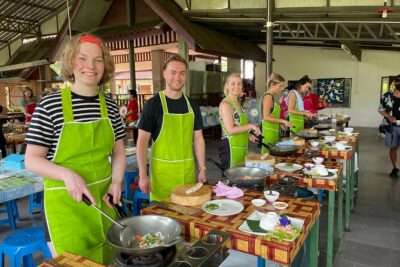
Half-Day Thai Cooking Class at Organic Farm in Chiang Mai
Read our review →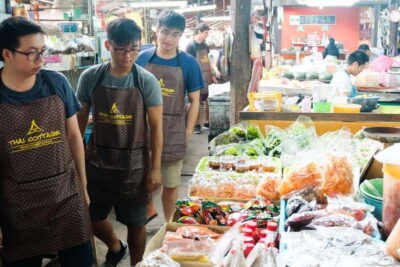
Chiang Mai: Cooking Class, Market & Thai Herbs Garden Tour
Read our review →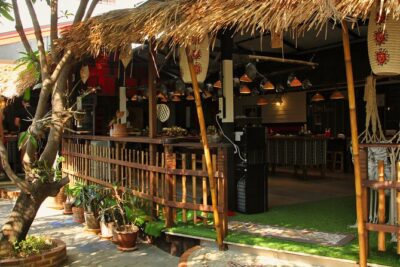
Phuket Thai Cooking Class with Market Tour Option
Read our review →
Bangkok: Hands-on Thai Cooking Class and Market Tour
Read our review →
Bangkok: Tingly Thai Cooking School Half-Day Cooking Class
Read our review →
Bangkok: Maliwan Thai Cooking Class with Market Tour
Read our review →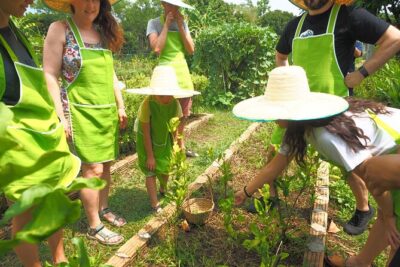
Browse the lists this tour appears in