
Review · CHENNAI
Private tour to learn Traditional Indian Art, craft & Cooking
The best part of this Chennai experience is its setting: you learn inside a traditional family home, not in a polished workshop built for tourists. Nivi and Ganesh guide you through kolam, flower garlands, Pallanguzhi board games, saree or dhoti dressing, mehendi, doll making, Udukkai craft, and South Indian cooking.
I like the hands-on format, since you make a small kolam, string your own garland, play the games, and try your hand at vadas. I also like the broad mix of activities, which lets you see how art, clothing, food, and family pastimes fit together. The one drawback is that five hours can feel packed if you want a long lesson in every craft.
Key points to know before booking
- A real home setting: You visit a traditional Chennai family home for an indoor cultural session.
- Nivi and Ganesh host the experience: Their friendly, engaging approach helps the activities feel personal rather than formal.
- You make things yourself: Try a small kolam, a flower garland, an Udukkai drum, dolls, mehendi, and crispy vadas.
- Pallanguzhi adds a playful break: This traditional Mancala-style board game offers a glimpse into an older style of family entertainment.
- Clothing becomes part of the lesson: Learn basic saree draping for women or dhoti wearing for men.
- The $80 price covers about five hours: Pickup, private participation, and a long list of activities make the value strongest for people who want active cultural learning.
Entering a Chennai family home
This is not a quick demonstration followed by a souvenir-shop stop. You arrive at a traditional family home, settle into an indoor setting, and spend roughly five hours learning through small practical tasks.
That setting matters. At home, the activities connect more naturally. Kolam belongs with household ritual and decoration. Flower garlands connect craft with worship and celebration. Sarees, dhotis, games, food, and handmade objects become parts of ordinary cultural life rather than isolated museum subjects.
Nivi and Ganesh are the hosts named for this experience. Their role is important because the day covers many subjects. You need clear instruction and a relaxed pace when moving from drawing to cooking, then from clothing to games. Their warm, engaging style has been especially praised, and the atmosphere is meant to feel like time spent with a local family.
The indoor format is also practical. Chennai can be hot, and several activities require sitting, concentrating, or working with small materials. You are not racing from one outdoor stop to another. Still, the pace may feel full. This is a sampler of many traditions, not a specialist course in one art form.
More Indian Cooking Classes in India:
- Indian Cooking Class in an Authentic Local Home – Learn 6 Dishes
★ 5.0 · 195 reviews - Authentic Indian Cooking Classes at Palolem Beach Road Goa
★ 5.0 · 132 reviews - New Delhi: Indian Cooking Class in a Local Home
★ 5.0 · 65 reviews
Drawing your first kolam
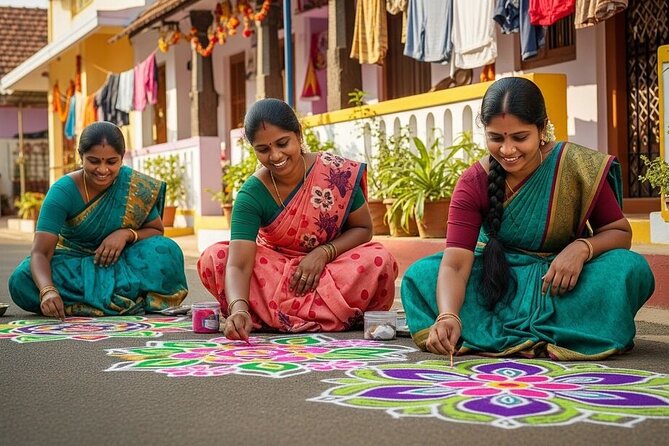
Kolam is one of the most recognizable traditional art forms in Tamil Nadu. It uses lines and patterns arranged into a design, often made at the entrance of a home. Here, an instructor first shows you how the design is formed, then gives you a chance to create your own small kolam.
This is a good early activity because it is visual, practical, and easy to understand even if you have no art background. You are not expected to produce a large floor design. The smaller exercise lets you focus on balance, repeated shapes, and the careful movement needed to keep the pattern neat.
I like this part because it gives you something to do with your hands right away. It also teaches you to look at Indian decoration differently. What may seem like a simple pattern from a distance requires control and patience up close.
Do not book this expecting a long advanced lesson in kolam. The session includes many other crafts, so the kolam portion is best seen as an introduction and a chance to make a small design yourself.
Stringing flowers into a personal souvenir
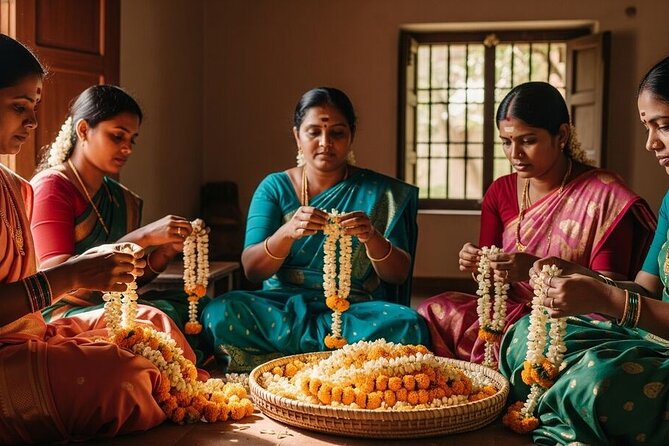
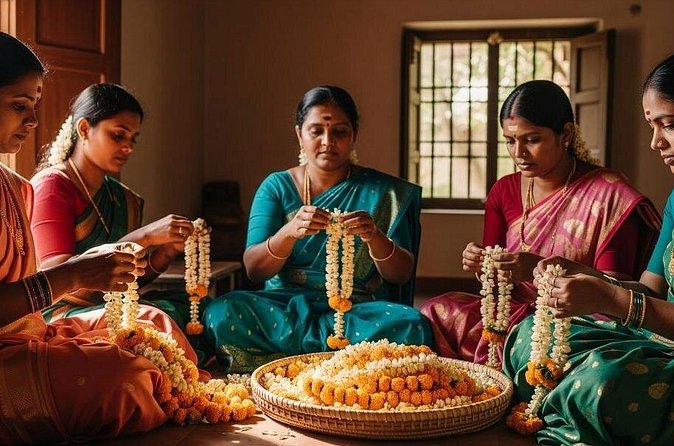
Next, you learn to string fresh flowers, leaves, and other natural materials into a garland. You then make your own fragrant garland to take home.
This activity has a pleasant rhythm. You handle the materials, arrange the colors and shapes, and learn how separate flowers become one long decoration. It is also one of the clearest links between craft and daily life. A garland is not just a pretty object. It can be connected with worship, celebration, and personal adornment.
The take-home garland gives this lesson a practical finish. It is a small souvenir, but a better one than a generic trinket because you made it during the session. Keep in mind that flowers are natural materials, so the garland is a temporary memento rather than a permanent keepsake.
For me, this is one of the strongest parts of the day. It is simple enough for beginners, sensory without being complicated, and rooted in a familiar South Indian tradition.
Playing Pallanguzhi and older board games
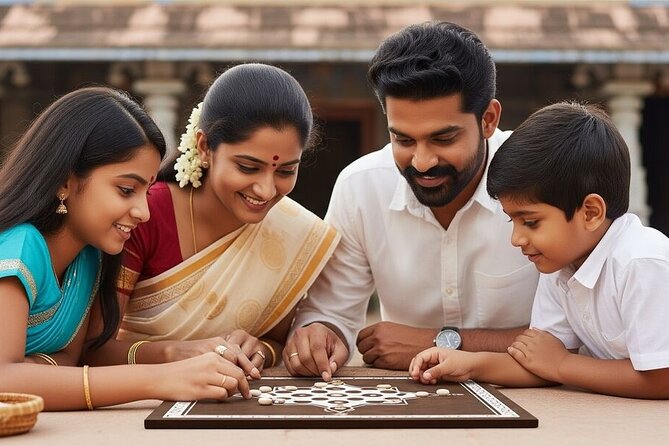
The experience also turns to traditional Indian board games, including Pallanguzhi, a Mancala-style game played with pits and counters. You learn how the board works, then play it yourself.
Pallanguzhi offers a welcome change of pace after the concentration of kolam and garland making. It is social, easy to approach, and gives you a taste of the games that once filled family time before phones and digital entertainment took over.
The value here is not only learning rules. Games reveal how people spend time together. You see a tradition through play instead of through a lecture, and the interaction helps keep the five-hour session lively.
The possible limitation is that the exact amount of time depends on how quickly your group learns. If you already enjoy board games, you may want to linger. If you prefer art or food, this section may feel less important. Either way, it is a useful part of the mix and one of the activities most often singled out for its originality.
A few more cooking classes around India worth a look
- Veg and Non veg : Private Cooking Class in Delhi home (7 meal)
★ 5.0 · 226 reviews - Private Cooking Class in Jodhpur With Pick Up & Drop Off
★ 5.0 · 37 reviews - Private Cooking and Dining Experience in Bengaluru
★ 5.0 · 35 reviews - Private South Indian Tamil Cooking Class in Chennai with Srividya
★ 5.0 · 24 reviews
Trying saree draping and dhoti wearing
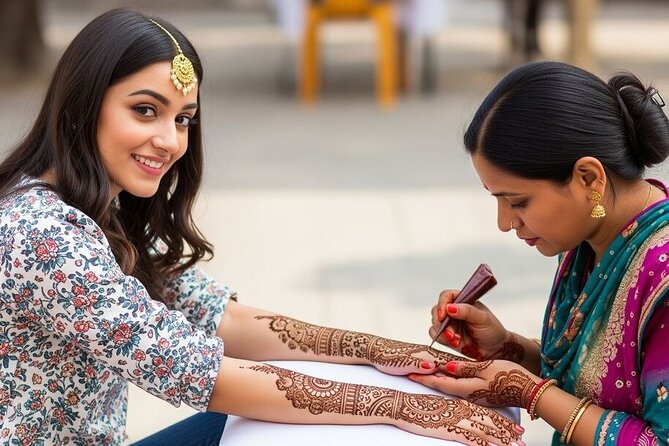
Clothing is taught as a practical skill rather than simply shown. Women learn the basics of saree draping, while men learn how to wear a dhoti. An instructor guides you through the styles and techniques.
This can be a revealing part of the session. A saree may look effortless when worn by someone experienced, but the folds and arrangement require practice. The dhoti also has its own method. Learning the basics helps you understand why traditional dress involves technique, not just fabric.
The activity works especially well for people who have admired Indian clothing but never had a chance to handle it. You get a closer look at the form and function of the garments, and you can ask questions while trying the method yourself.
It is worth keeping expectations sensible. This is an introduction, not a professional dressing lesson, and the full day includes many other subjects. If you want more time with one garment, tell the hosts early so you can use the available time well.
Adding mehendi designs by hand
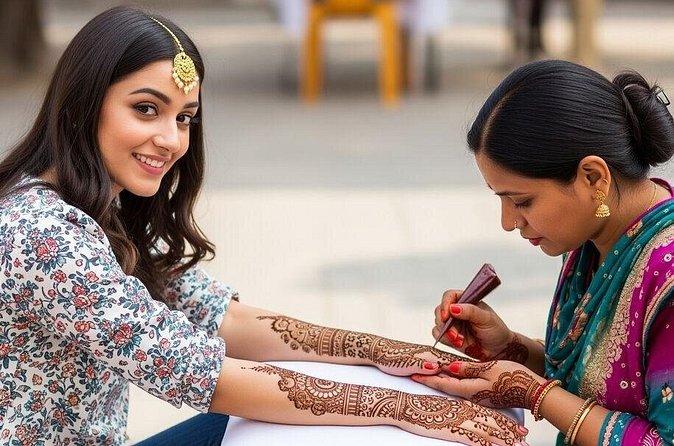
You also learn the basics of applying mehendi, or henna, on hands and feet. The focus is on understanding the method and trying simple designs.
Mehendi requires a steady hand, so this short lesson adds another kind of concentration to the day. Unlike the kolam, which uses a larger surface and repeated patterns, mehendi calls for finer lines and careful control.
This is a useful activity if you enjoy decorative arts and want a personal result on your skin. The session gives you an introduction, not a full ceremonial design. Since the tour includes only the basics, anyone hoping for elaborate bridal-style work should not treat this as a substitute for a dedicated henna appointment.
Still, it adds another link between art and celebration. You are not just looking at finished decoration. You are learning how a design begins.
Making an Udukkai and traditional dolls
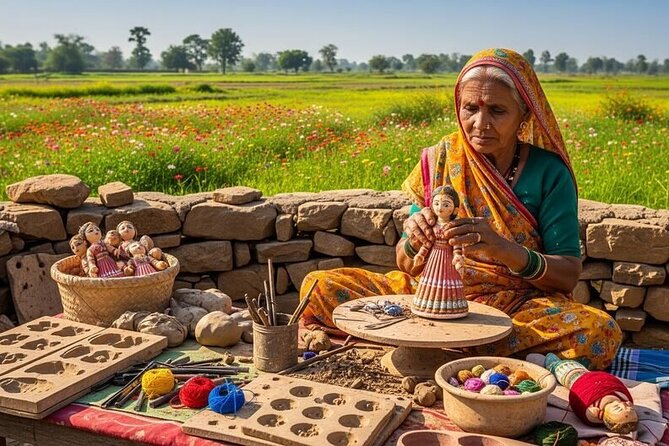
The craft portion includes making an Udukkai, also called an Udukku, a small hourglass-shaped drum. You also learn the fine art of traditional doll making.
These are among the more unusual activities in the program. Many cultural outings stop at food and clothing, but this one also introduces objects made for music and display. The Udukkai gives you a sense of how shape and construction affect an instrument. Doll making shifts the focus to small-scale handwork and traditional form.
Because both activities involve making rather than simply watching, they are likely to appeal to anyone who enjoys crafts. They also help balance the more familiar elements of cooking and saree dressing.
The tradeoff is time. Learning to make an instrument and dolls in the same five-hour session means you should expect basic instruction. You might not produce a perfect finished object, and the experience does not promise a long specialist workshop. Its value lies in getting your hands on the materials and seeing how these traditions are made.
Frying vadas and preparing South Indian coffee
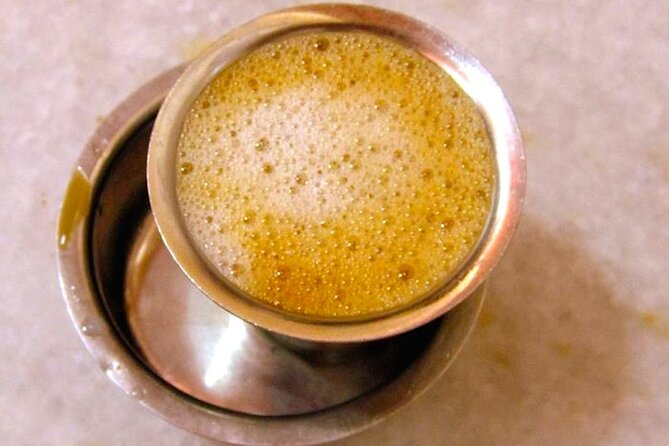
Food provides the most appetizing part of the program. You learn the secrets behind crispy Indian vadas, savory fried fritters, and also make South Indian filter coffee.
Vadas are a useful choice for a cooking lesson because they show how a simple snack depends on texture and technique. The aim is not just to fry something, but to understand how the mixture becomes crisp and flavorful. You take part rather than simply eating a prepared dish.
Filter coffee adds a drink to the cooking section and gives you another familiar South Indian tradition to try. Together, the vadas and coffee make a satisfying finish to a day of crafts and games.
The cooking lesson is best for people who want a taste of local food culture without committing to a full cooking school. If you are a serious cook hoping to master several dishes, the range of activities means the instruction will be limited. If you want to make one snack, prepare coffee, and understand more about home food, the balance works well.
What $80 means for the value
The listed price is $80 per person for about five hours. That is not the cheapest way to spend an afternoon in Chennai, but the comparison needs to include the private format, pickup option, and number of activities.
You are paying for instruction across art, crafts, clothing, games, and cooking. You also get direct access to a local home setting and the chance to make a flower garland to take with you. For someone who would otherwise book separate activities for food, crafts, and cultural demonstrations, the package offers solid value.
The value is weaker if you want depth in one subject. A dedicated kolam class, cooking lesson, or mehendi appointment could give you more practice in that single skill. This experience is designed for variety and personal contact.
Group discounts may improve the price for larger parties. Since the tour is private, your own group participates rather than joining a mixed crowd. That makes it a good fit for families, couples, and friends who want to ask questions freely and set a comfortable pace.
Timing, pickup, and who should book
The session lasts approximately five hours, so allow a large part of your day. Pickup is offered, and the home is near public transportation, giving you two practical ways to reach the starting point.
Confirmation is provided at booking. Most people can participate, and the activity is private for your group. The indoor format may suit you if you prefer a cultural activity without extended walking or outdoor exposure, though the supplied information does not give detailed accessibility specifications.
I would choose this for a first cultural activity in Chennai, especially early in a longer South India trip. It gives you a broad introduction to local customs and leaves you with useful context for things you may see elsewhere, from kolam designs to flower garlands and traditional clothing.
Families may like the variety, but younger children could find some fine handwork demanding. The day works best when everyone is willing to try several different tasks rather than insisting on one polished result.
You should also check your schedule before booking. Cancellation is free up to 24 hours before the start time, with a full refund. Cancellations or changes made within 24 hours are not accepted for a refund.
Should you book this Chennai art and cooking experience?
Book it if you want an active, personal introduction to Tamil culture and enjoy learning by doing. The strongest reasons are the home setting, the warm guidance from Nivi and Ganesh, the private format, and the unusual range of activities. The most praised elements are the traditional board games, garland making, kolam, cooking, and the sheer amount you get to try in one day.
Skip it if you want a quiet museum visit, a focused master class, or a tightly timed food tour. Five hours covers a lot, so each subject receives an introduction rather than expert-level training.
For most people who want to meet local hosts, make things with their hands, and understand Chennai through ordinary traditions, the $80 price is reasonable. Bring curiosity, accept that your first kolam or vada may not be perfect, and enjoy the process.
FAQ
How long does the traditional art and cooking experience last?
The experience lasts approximately five hours.
How much does the experience cost?
The price is $80 per person. Group discounts are offered.
Is pickup available?
Yes, pickup is offered. The experience is also near public transportation.
Is this a private activity?
Yes. Only your group participates in the activity.
What activities are included?
You can learn kolam, flower garland making, Pallanguzhi and other traditional board games, saree draping or dhoti wearing, mehendi, Udukkai making, traditional doll making, vadas, and South Indian filter coffee.
What is the cancellation policy?
You can cancel at least 24 hours before the start time for a full refund. Cancellations or changes made less than 24 hours before the start time are not accepted for a refund.
Just added around India
- Traditional Hyderabadi Cooking Class in a Local Home★ 5.0 · 4 reviews
- Bake Bread With 80 Years Old Baker In Majorda★ 5.0 · 140 reviews
- Chef Kamal’s Indian Cooking Classes★ 5.0 · 8 reviews
- Culinary Experiences by Fierce Kitchens (Cooking class)★ 5.0 · 18 reviews
- Private Market Visit and Cooking Class in Goa with a Local Family★ 5.0 · 11 reviews
- Traditional Indian Cooking Class in Goa, Anjuna [vegetarian]★ 4.5 · 39 reviews
- Traditional Chettinad Cooking Class in a Local Home near Chennai★ 4.5 · 12 reviews
- Chennai Super Market Tour and Cooking Class with a Fun Local★ 5.0 · 9 reviews
Indian Cooking Classes, compared.
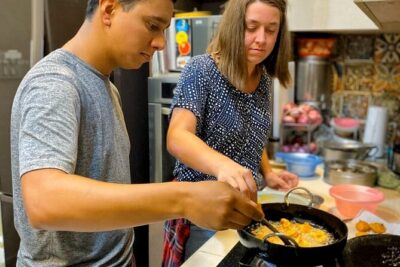
Indian Cooking Class in an Authentic Local Home – Learn 6 Dishes
Read our review →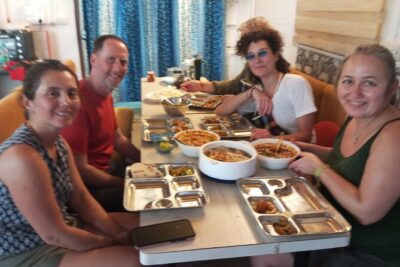
Authentic Indian Cooking Classes at Palolem Beach Road Goa
Read our review →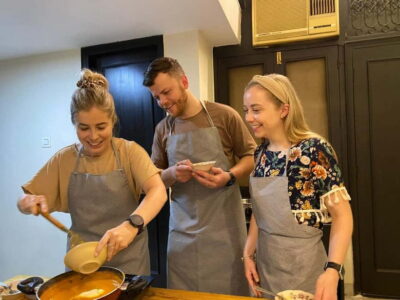
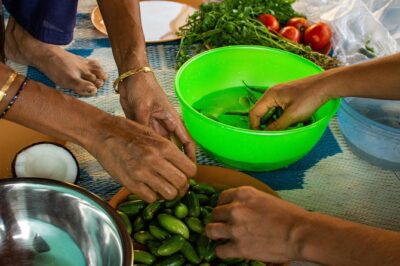
Traditional Indian Cooking Class in Goa, Anjuna [vegetarian]
Read our review →
Mumbai: Indian Cooking Class & Cultural Delights
Read our review →
New Delhi: Traditional Indian Cooking Class & Market Visit
Read our review →
Private South Indian Tamil Cooking Class in Chennai with Srividya
Read our review →
Browse the lists this tour appears in