
Review · INDIAN
Traditional Indian Cooking Class in Goa, Anjuna [vegetarian]
The best part of this Anjuna cooking class is its setting. You leave the beach roads behind and cook with local women in a small village community, using traditional methods, local ingredients, and aromatic spices. I like the five-dish vegetarian menu and the chance to share the finished meal at the end. I also like that the class supports Project Tres, a program built to support women’s economic development.
There is one important catch: this may feel more like a home cooking visit than a formal lesson. Some sessions are very hands-on, while others involve mostly chopping vegetables and watching the cooking. Clear communication and active participation can vary, so this suits you best if you are open to a relaxed cultural experience rather than a tightly scripted class.
Key points at a glance
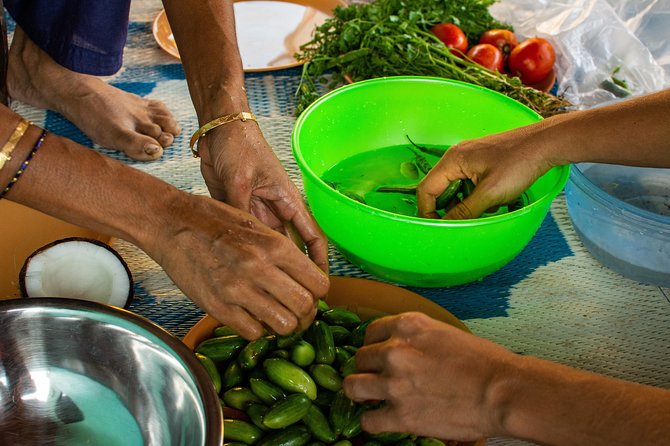
- Five vegetarian dishes: Cook a full menu with local ingredients and Indian spices, then eat the food together.
- A small village setting: The class takes place behind Anjuna’s busy streets at the Project Tres Centre.
- A social purpose: Your booking contributes directly to a project supporting women in India and Kenya.
- Small group format: The class has a maximum of six people, which can make participation easier.
- Traditional seating: You may sit on the floor, though chairs and bench seating are available if needed.
- Three-hour afternoon plan: The experience starts at 3:30 pm and finishes back at the meeting point.
A village kitchen behind Anjuna
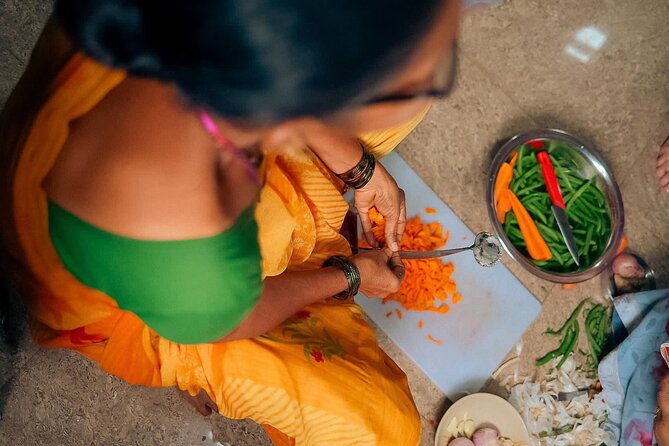
This is not a restaurant demonstration in a polished hotel kitchen. Project Tres places you in a small community setting behind the main activity of Anjuna, where local women prepare food in a more traditional way.
That setting gives the class its character. You are not just learning which spice goes into which dish. You are seeing how food preparation fits into a local home setting, meeting the women involved in the project, and getting a sense of everyday Goan cooking.
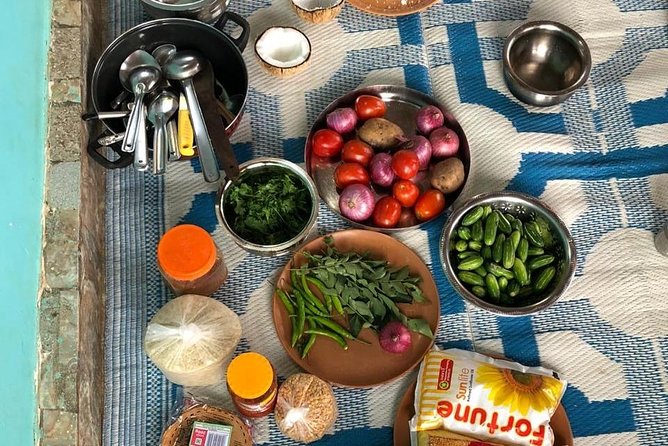
I like this approach because the food has a clear connection to place. The class focuses on southern Indian flavors, local ingredients, and the use of aromatic spices. You also hear about the ayurvedic properties of those spices, so the session covers more than simple recipes.
The experience is limited to six people. That matters here. A small group gives you more room to ask questions, handle ingredients, and follow the cooking, although the amount of hands-on work can depend on how the session is run.
More Vegan Cooking Classes in India
- Jaipur Market Tour & Vegetarian Rajasthani Home Cooking Class
★ 5.0 · 113 reviews - Private Vegetarian Indian Cooking Class in Mumbai
★ 5.0 · 17 reviews - South Indian Vegetarian Cooking Class in Chennai with Meena
★ 5.0 · 17 reviews
What happens during the three-hour class
The class begins at 3:30 pm at the Project Tres Centre in Dmello Vaddo, Anjuna. The full activity takes about three hours and ends back at the same location.
The exact order of the cooking is not set out in detail, but you can expect to work through a five-dish vegetarian menu. The women prepare the food with mineral water, which is also served to you during the class.
You may help with chopping and preparation, and the class encourages you to take part in the cooking. In some sessions, the local women explain the process clearly and allow participants to prepare much of the meal. In others, they complete most of the cooking themselves, leaving visitors to chop vegetables and watch.
That difference is worth understanding before booking. If you want a precise, step-by-step cooking school, you may find the teaching style too informal. If you prefer to watch traditional methods, ask questions, and join in when invited, the relaxed format may suit you well.
The food is then served as a shared meal. This final part gives the experience a natural finish. You have spent the afternoon preparing several dishes, and you get to taste how the spices, vegetables, and cooking methods work together.
Five dishes, local ingredients, and Indian spices
The menu is vegetarian, and the dishes are made with local ingredients. The specific recipes are not listed in advance, so you should not book this expecting a named menu of particular curries or breads.
What you can count on is variety across five preparations. The class introduces Indian flavors through spice, aroma, color, and cooking technique. You also learn how spices are used in relation to ayurvedic food traditions.
This is useful if you already enjoy Indian food but want to understand more about how it is prepared at home. It is also a friendly introduction if you are new to the cuisine. The cooking is not presented as a restaurant version designed for a foreign audience. Methods and spice levels may differ from what you are used to.
You should tell Project Tres about allergies and dietary needs before the class. All food is vegetarian, but that does not automatically cover every allergy or restriction. The provider specifically asks you to share this information in advance.
The use of mineral water for cooking and serving may also matter to you. It is a small detail, but it gives you clarity about the water used during the experience.
The women behind Project Tres
Project Tres was created to support the economic development of women in India and Kenya. The cooking project is still developing, and the organization openly describes it as a work in progress.
That honesty helps set the right expectations. You are supporting a community project rather than buying a highly polished commercial production. The women leading the class are described as warm and welcoming, and the session includes an explanation of the project and, in some cases, the personal stories of the women involved.
I value that connection because it gives the meal a human element. You are not only learning about food. You are meeting the people who prepare it and contributing to a program designed to create economic opportunity.
Communication can be uneven. One account of the experience describes clear explanations and easy conversation. Other feedback indicates that the women sometimes spoke mainly in their own language, which made it harder to follow the lesson. If detailed instruction is important to you, ask questions early and be patient with differences in language and teaching style.
More Indian Cooking Classes in India:
- Indian Cooking Class in an Authentic Local Home – Learn 6 Dishes
★ 5.0 · 195 reviews - Authentic Indian Cooking Classes at Palolem Beach Road Goa
★ 5.0 · 132 reviews - New Delhi: Indian Cooking Class in a Local Home
★ 5.0 · 65 reviews - Mumbai: Indian Cooking Class & Cultural Delights
★ 5.0 · 38 reviews
How hands-on is the cooking?
This is the biggest point to consider.
The class description presents it as a cooking experience in which you prepare a five-dish meal. In practice, the balance between cooking and watching may change. You could be encouraged to join in with much of the preparation, or you may mainly chop vegetables while the women complete the dishes.
That is not necessarily a weakness. Watching a local cook work quickly can teach you plenty about rhythm, heat, seasoning, and kitchen habits. It may also feel closer to being welcomed into a home than attending a professional cooking school.
Still, I would not book this if your main goal is to master five recipes independently. The cooking can move quickly, and explanations may be limited during busy parts of the session. You will get more from it if you speak up, ask what each spice does, and request a turn when you want to handle a particular step.
The small group size helps. With no more than six people, you have a better chance of being noticed than in a large demonstration. Even so, the experience depends on the teaching style of the women leading that particular session.
Eating together at the end
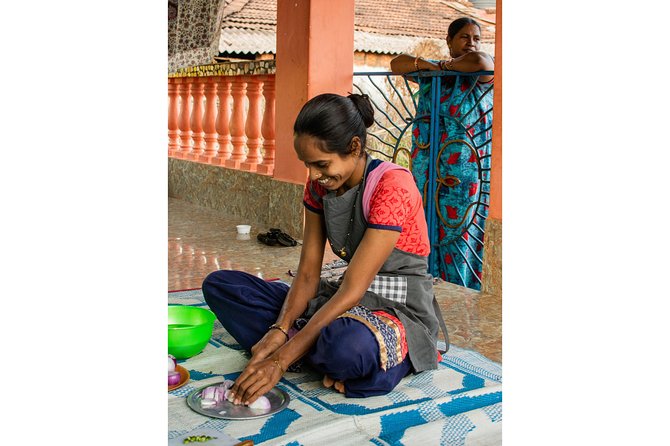
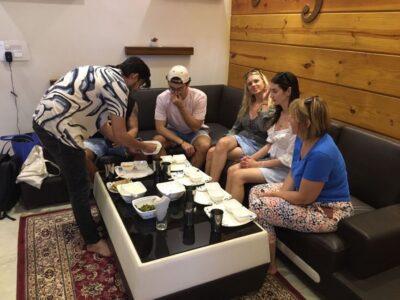
The shared meal is one of the strongest parts of the experience. After spending time preparing the food, you sit down and eat what has been made.
The meal gives you a chance to notice the results of the cooking rather than simply collecting a recipe sheet and leaving. It also turns the class into a social afternoon. The atmosphere is described as relaxed, with plenty of laughter and conversation in some sessions.
This format works especially well for couples, friends, and solo visitors who enjoy food as a way to meet people. You may not leave with a perfectly measured recipe for every dish, but you will have a better feel for the ingredients, flavors, and methods used.
The class is vegetarian only. If you want seafood, Project Tres offers a separate seafood option, so this particular booking is not the right choice for a fish or shellfish menu.
Sitting on the floor and other practical details
The class is prepared in a traditional style, and you may be asked to sit on the floor. If getting down or standing up is difficult, tell one of the women that you need a chair. Chairs and bench seating are available, and one session specifically had enough seating for participants who could not sit on the floor comfortably.
I would mention this need before the cooking begins rather than waiting until the group is settled. The class lasts around three hours, so seating comfort matters.
The meeting point is Project Tres Centre, HPPW+MM, Dmello Vaddo, Anjuna, Goa 403509, India. The location is near public transportation, but the information provided does not include a transfer service or hotel pickup. You need to make your own way to the meeting point.
The afternoon start at 3:30 pm leaves the earlier part of the day free. You can pair the class with other time in Anjuna, though you should allow enough time to reach the center without rushing.
Is the $39.27 price good value?
At $39.27 per person, the price covers about three hours, a five-dish vegetarian menu, instruction or demonstration, mineral water, and the meal you prepare.
I consider that fair value if you care about the social purpose and the local setting. You are paying for more than food. The fee supports Project Tres and gives you access to a small community-based activity that would be hard to recreate on your own.
The value is less clear if you measure the experience only by the amount of cooking you personally do. A formal culinary class might provide more structured teaching, clearer recipes, and a more consistent hands-on format. Here, the return is a mix of food, conversation, cultural contact, and community support.
Group discounts are available, which may improve the price for families or friends booking together. The group size is capped at six, so the class does not feel like a large tour operation.
Who should book this class?
I would recommend it to you if you:
- Enjoy vegetarian food and Indian spices
- Want a local home-style setting rather than a restaurant kitchen
- Like meeting people through food
- Are comfortable with an informal teaching style
- Care about supporting community projects
- Can sit on the floor or arrange a chair in advance
- Are happy to ask questions and take part when invited
I would be more cautious if you need a strict recipe-based lesson, guaranteed hands-on work, or detailed instruction in fluent English throughout the session.
Families and small groups may like the manageable size and shared meal. Solo visitors can also fit in well, since the class naturally creates conversation. Anyone with allergies or dietary requirements should contact the provider before booking, not simply explain the issue after arriving.
Cancellation and booking notes
You receive confirmation within 48 hours of booking, subject to availability. The experience offers free cancellation if you cancel at least 24 hours before the start time.
Changes or cancellations made less than 24 hours before the 3:30 pm start are not accepted for a refund. The class also requires good weather and a minimum number of participants. If the provider cancels for either reason, you can choose another date or experience, or receive a full refund.
Private bookings or another start time may be possible if you contact Project Tres directly.
Should you book this Anjuna cooking class?
Book it if you want an informal afternoon built around vegetarian food, local women, and a community project. The small group, shared meal, traditional setting, and five-dish menu give you a genuine taste of home-style cooking in Anjuna.
Go in with realistic expectations. This is not guaranteed to be a polished cooking school, and you may do less cooking than expected. If you approach it as a chance to watch, help, eat, and connect with the women behind Project Tres, the experience offers good value and a memorable change from Goa’s usual beach activities.
FAQ
Where does the cooking class take place?
It takes place at the Project Tres Centre, HPPW+MM, Dmello Vaddo, Anjuna, Goa 403509, India.
What time does the class start?
The class starts at 3:30 pm.
How long does the experience last?
The cooking class lasts approximately three hours.
How many people can join?
The activity has a maximum of six participants.
Is the food vegetarian?
Yes. The class prepares a five-dish vegetarian menu using local ingredients.
Is seafood included?
No. This experience is vegetarian. Project Tres offers a separate seafood cooking option.
Do I need to sit on the floor?
The class is prepared traditionally, so floor seating may be part of the experience. Chairs and bench seating are available if you need them, but you should tell one of the women.
Is mineral water provided?
Yes. Mineral water is used for the cooking and served to participants.
Can I advise the provider about allergies or dietary requirements?
Yes. You should tell Project Tres about allergies or dietary requirements before the class.
Can I cancel for a full refund?
Yes, if you cancel at least 24 hours before the experience start time. Cancellations made less than 24 hours in advance are not refunded.
More Hands-On Workshops in India
- Pink City Cooking Class
★ 5.0 · 452 reviews - Five Course Cooking Class & Meal
★ 5.0 · 250 reviews - Veg and Non veg : Private Cooking Class in Delhi home (7 meal)
★ 5.0 · 226 reviews - Cooking Class in Jaipur – Family Experience with Meal & Transport
★ 5.0 · 101 reviews
Just added around India
- Traditional Hyderabadi Cooking Class in a Local Home★ 5.0 · 4 reviews
- Bake Bread With 80 Years Old Baker In Majorda★ 5.0 · 140 reviews
- Chef Kamal’s Indian Cooking Classes★ 5.0 · 8 reviews
- Culinary Experiences by Fierce Kitchens (Cooking class)★ 5.0 · 18 reviews
- Private Market Visit and Cooking Class in Goa with a Local Family★ 5.0 · 11 reviews
- Private tour to learn Traditional Indian Art, craft & Cooking★ 5.0 · 4 reviews
- Traditional Chettinad Cooking Class in a Local Home near Chennai★ 4.5 · 12 reviews
- Chennai Super Market Tour and Cooking Class with a Fun Local★ 5.0 · 9 reviews
Indian Cooking Classes, compared.
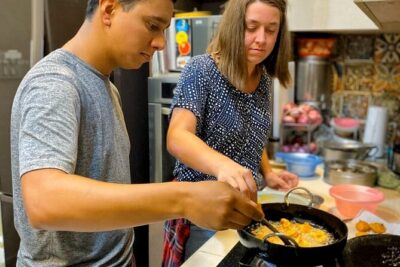
Indian Cooking Class in an Authentic Local Home – Learn 6 Dishes
Read our review →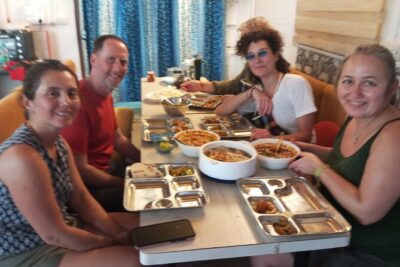
Authentic Indian Cooking Classes at Palolem Beach Road Goa
Read our review →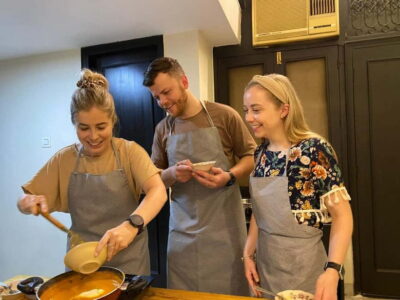
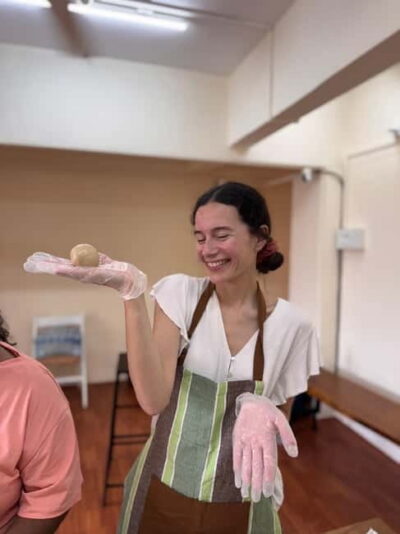
Mumbai: Indian Cooking Class & Cultural Delights
Read our review →
New Delhi: Traditional Indian Cooking Class & Market Visit
Read our review →
Private South Indian Tamil Cooking Class in Chennai with Srividya
Read our review →
Browse the lists this tour appears in