Review · JAIPUR
Jaipur Market Tour & Vegetarian Rajasthani Home Cooking Class
Jaipur’s best food lesson may begin before you reach the kitchen. Shalini first takes you through a local market, helping you identify spices, produce, and ingredients that can be hard to sort out on your own. Then you return to her home and cook a vegetarian Rajasthani meal with her and her mother-in-law.
I especially like the market-to-table format, since you learn how ingredients are chosen before you learn how they are used. I also like the warm family setting, where tea, snacks, conversation, and a shared meal make this feel like a visit rather than a formal demonstration. The main consideration is that the menu changes with the season, and this is strictly vegetarian.
Key points
- A local market comes first: Choose fresh seasonal vegetables and learn how everyday Jaipur ingredients are used.
- Shalini and her mother-in-law teach together: Expect patient guidance on spices, techniques, chapatis, parathas, dal, and vegetable dishes.
- You cook in a real family home: This gives you a practical look at daily food traditions, not just a staged restaurant class.
- The meal is personalized: Shalini can adjust the spice level, and dietary restrictions or cooking preferences should be shared when booking.
- The four-hour schedule is flexible: Pick a lunch or dinner session, with the activity beginning and ending at the Crystal Mall meeting point.
- The experience is private: Only your own group takes part, which makes it easier to ask questions and work at your own pace.
Why the Jaipur market is the right starting point
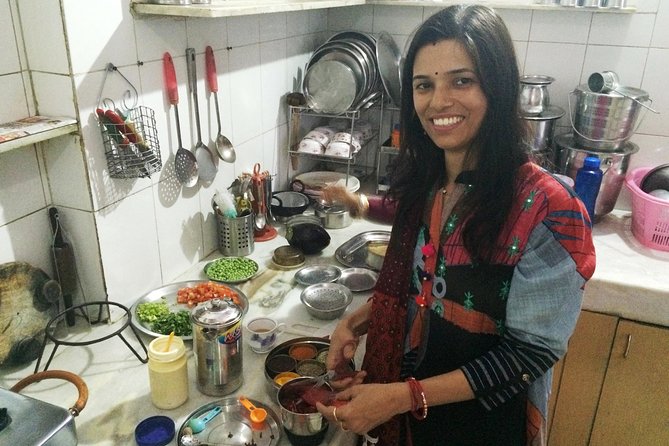
The experience begins at Crystal Mall in Jaipur’s Barodia Scheme, near Gopalbari. From there, Shalini takes you to a local street market and grocery area where she regularly shops for food.
This first stop gives the cooking lesson some useful context. Instead of meeting a pile of prepared ingredients in a kitchen, you see the raw materials in their everyday setting. Shalini helps you recognize seasonal produce and explains the spices used in Rajasthani cooking. If you do not know the difference between unfamiliar vegetables or have no idea which spice belongs in which dish, her guidance saves guesswork.
You also get to choose some of the vegetables for the meal. That small decision matters. It gives you a hand in shaping the menu and lets you ask about ingredients that catch your eye. You might find yourself selecting produce you have seen throughout Jaipur but never thought to buy.
The market visit is also useful for dealing with the language barrier. Shopping in an Indian market can be lively and confusing when you do not know local names or customary quantities. With Shalini beside you, you can focus on the food instead of trying to communicate every question through gestures.
Do not expect a sightseeing stop with a long list of formal attractions. The point is ordinary local shopping. That is exactly what makes it valuable. You see where a family gets its food, how seasonal choices affect a meal, and how cooking begins with selecting good ingredients.
More Home Cooking Classes in India
- Indian Cooking Class in an Authentic Local Home – Learn 6 Dishes
★ 5.0 · 195 reviews - Interactive Cooking Class with a Local Family in Jaipur
★ 5.0 · 90 reviews - Delhi: AI Cooking Class and Much More in a Local Family Home
★ 5.0 · 85 reviews
Returning to Shalini’s home for a family lesson
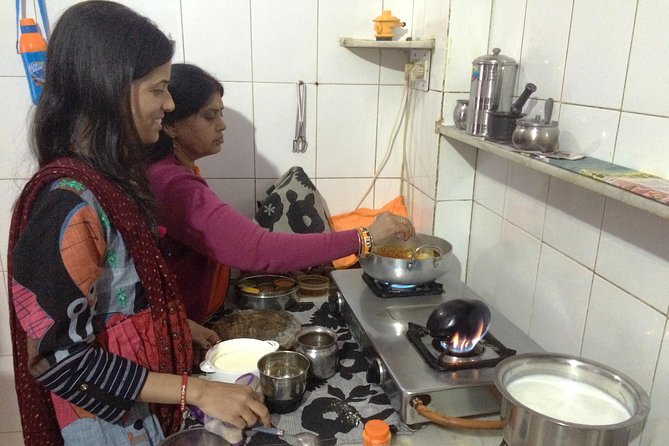
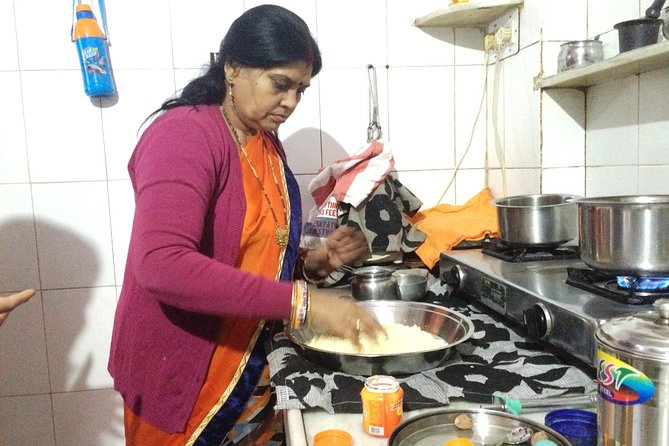
After the market, you return to Shalini’s home for the hands-on portion. The class takes place in her family setting, with Shalini and her mother-in-law guiding you through the cooking.
This is not a polished restaurant kitchen built for large groups. You learn with the equipment and ingredients available in a local home. That can mean the experience feels more personal and practical, though it may be less predictable than a commercial cooking school. If you are looking for precise professional measurements and a printed syllabus, this may not be your ideal class. If you want to understand how a family cooks, it is a strong fit.
The teaching style is patient and encouraging. You do not need to arrive as a confident cook. Shalini’s mother-in-law has helped beginners make a satisfying meal, including people who rarely cook. The lesson is built around doing the work yourself, with help when you need it.
You may prepare dal, vegetable dishes, chapatis, and parathas, though the exact menu changes with the season. Some additional family recipes may already be prepared for you to try alongside the food you make. That gives the meal more range and lets you taste dishes that would take too long to cook during a four-hour class.
Learning the building blocks of Rajasthani cooking
The strongest part of this experience is its attention to basic technique. You are not just handed a recipe and told to copy it. You learn how spices and produce work together, and you get a chance to practice methods you can repeat at home.
A lesson in dal, for example, is useful because it teaches more than one dish. You begin to see how lentils are seasoned and how a few simple ingredients can become a central part of a meal. Vegetable dishes show you how seasonal produce can be handled without relying on meat or elaborate equipment.
Chapatis and parathas add a practical challenge. Making flatbreads takes some patience, especially if you have little experience with dough. The class gives you a chance to try under friendly supervision, rather than struggling alone after you return home.
The cooking also helps explain why Indian food can taste so different from a restaurant version. You can ask when spices are added, how much heat is appropriate, and how the family adjusts a recipe for personal taste. Shalini has accommodated people who do not enjoy highly spiced food, so tell her your preference when you book and again at the start of the class.
The instruction is especially useful for home cooks who want repeatable recipes. You are not simply watching an expert perform. You are handling ingredients, practicing techniques, and learning enough to try the dishes again after your trip.
Tea, snacks, conversation, and the shared meal
The food is only part of the appeal. The family setting creates space for conversation and a slower exchange about daily life in Jaipur.
Tea and breakfast snacks may be served during the visit, adding a relaxed pause before the main cooking begins. The experience can include time with Shalini’s husband, children, and mother-in-law, giving you a sense of a real household rather than a one-person classroom.
That family contact is one reason this class feels different from a standard food tour. You can talk about similarities and differences between home life in Jaipur and life where you live. The cooking gives the conversation a natural focus, so you are not simply sitting across from a host trying to think of questions.
After the lesson, you sit down to eat the meal you helped prepare. This is a satisfying end to the class, but it also changes how you taste the food. You know which vegetables you selected, which spices you handled, and which techniques gave you trouble. Even a simple dish becomes more memorable when you took part in making it.
The meal is traditional home cooking, not a luxury dining experience. That distinction is important. If you want elaborate plating or a long restaurant menu, choose a different food outing. If you want to understand how a family prepares and eats vegetarian food, this setting offers far more personal contact.
More Market Tour Cooking Classes in India
- Spice Knight (Cooking Class -> Meal -> Local Market walk)
★ 5.0 · 59 reviews - New Delhi: Traditional Indian Cooking Class & Market Visit
★ 5.0 · 32 reviews - Pondicherry: Indian Cooking Class with Market Visit
★ 4.7 · 18 reviews - Indian Cooking & Market Tour in Pondicherry with Manisha Ray
★ 5.0 · 12 reviews
What makes the private format worth $60
The price is $60 per person for about four hours. That is more than you would spend on a casual Jaipur meal, so the value depends on how much you want from the experience.
You are paying for several things at once: a guided market visit, help with ingredient selection, private cooking instruction, access to a family home, the meal itself, and direct time with Shalini and her family. Since the activity is private, your group does not have to compete with a large class for attention.
For a first visit to Jaipur, that combination can be worthwhile. You get an introduction to local ingredients, a lesson in vegetarian Rajasthani food, and a personal cultural exchange in one half-day activity. It also gives you useful cooking skills rather than a meal that disappears as soon as the plate is cleared.
The value is lower if you already have extensive experience with Indian cooking or mainly want a market tour. In that case, the cooking lesson may cover familiar ground. It is also not the right choice if anyone in your party expects meat or seafood, since Shalini serves only vegetarian food.
The private setup makes the price easier to justify for couples, families, and small groups who value individual attention. You can ask more questions, request a milder spice level, and spend time practicing without feeling rushed by strangers.
Lunch or dinner: choosing the better time
You can choose between a lunch and dinner session. The best option depends on the rest of your Jaipur plans.
A lunch class works well if you want your main meal in the middle of the day and prefer to keep the evening free for Jaipur’s forts, palaces, or markets. It also lets you carry what you learn into the rest of the day, perhaps by paying closer attention to Indian food at dinner.
A dinner class may feel more social. You finish by sharing a family meal in the evening, which suits people who want the cooking class to be one of the main cultural moments of their day.
The tour lasts about four hours, so allow enough time before and after it. The meeting point is Crystal Mall, and the activity ends back at that same meeting point. The location is near public transportation, which helps if you are arranging your own way around Jaipur.
Because the market and home visit are central to the experience, confirm the meeting details carefully when booking. The mobile ticket and booking confirmation make the arrangement straightforward, but you still need to arrive at the stated starting point on time.
Seasonal menus and dietary needs
The menu is not fixed. It changes with the season and depends on the produce available at the market. This is a strength if you want food that reflects what a Jaipur family can buy at that time of year, but it means you should not book expecting one exact list of dishes.
The meal is vegetarian. That includes the food served by Shalini, so people who want to learn meat-based Rajasthani cooking should choose another class.
You should report allergies, dietary restrictions, and cooking preferences when you book. Spice tolerance is especially worth mentioning. Shalini has adjusted dishes for people who prefer less heat, and doing so in advance gives her a fair chance to plan.
You should also tell the host about any ingredients you cannot eat. The available information does not promise a separate allergy-free kitchen or a specific substitute menu, so clear communication is important.
Who will enjoy this Jaipur cooking class most
I would recommend this experience to first-time visitors who want a gentle introduction to Jaipur food and family life. You get enough structure to feel guided, but enough personal contact to make the visit feel informal.
It is also a good pick for:
- Couples looking for a private cultural activity
- Families who want a shared hands-on experience
- Home cooks interested in Indian spices and flatbreads
- People who prefer vegetarian food
- Beginners who want patient instruction
- Visitors who would rather meet a local family than attend a large group class
You do not need advanced cooking skills. The instruction is designed to help beginners take part, and the family setting makes mistakes less serious.
I would hesitate to recommend it to anyone seeking a fast, highly organized class with exact timings for every step. The market visit, conversation, and family interaction are part of the appeal, so the pace is likely to feel relaxed rather than tightly programmed.
Practical details before you book
The experience is offered as a private activity, and only your group participates. Booking confirmation is provided at the time of reservation.
The activity requires good weather because the market visit takes place outdoors. If poor weather forces a cancellation, you can choose another date or receive a full refund. The provider may also cancel if the minimum number of participants is not reached, with the same choice of another date or a refund.
You can cancel for a full refund up to 24 hours before the local start time. Cancellations or changes made within 24 hours are not accepted for a refund, so check your Jaipur schedule before committing.
The tour is typically booked about 31 days ahead. That is a useful sign to plan early, especially if you want a particular lunch or dinner slot. The high rating, 5 out of 5 from 113 ratings, also means last-minute availability may be limited.
Should you book Shalini’s home cooking experience?
Book this if you want more than a meal. The market visit, ingredient lessons, family recipes, and shared dinner or lunch give you a practical look at Jaipur’s food culture. I especially value the chance to make chapatis and parathas, learn from both Shalini and her mother-in-law, and adjust the food to suit your spice preference.
Skip it if you need a meat-based menu, a formal restaurant kitchen, or a fixed list of dishes. For most first-time visitors who enjoy vegetarian food and want personal contact with a Jaipur family, the $60 price is fair for four hours of instruction, shopping, cooking, and conversation.
FAQ
Where does the Jaipur cooking experience begin?
It begins at Crystal Mall in Barodia Scheme, Gopalbari, Jaipur, Rajasthan 302006, India.
Where does the activity end?
The activity ends back at the meeting point.
How long does the experience last?
The experience lasts approximately four hours.
Can I choose lunch or dinner?
Yes. The experience offers both lunch and dinner options.
Is the cooking class private?
Yes. This is a private activity, so only your group participates.
Is the food vegetarian?
Yes. Shalini only serves vegetarian food.
Will the menu be the same for every booking?
No. The menu can change with the season and the ingredients available.
Can dietary restrictions or allergies be accommodated?
You should advise the provider about allergies, dietary restrictions, and cooking preferences when booking. Spice preferences should also be shared.
What is the cancellation policy?
You can cancel up to 24 hours before the local start time for a full refund. Cancellations or changes made less than 24 hours before the start are not refunded. If bad weather or insufficient participation causes cancellation, you will be offered another date or a full refund.
More Shopping Trips in India
- Hanoi Cooking Class: Culture, Local Market & Meaning CSR Impact
★ 5.0 · 5,147 reviews - 5 Traditional Dishes Hanoi Cooking Class with Market Trip
★ 5.0 · 4,890 reviews - Cooking Class and Lunch at a Tuscan Farmhouse with Local Market Tour from Florence
★ 5.0 · 4,831 reviews - Chiang Mai: Cooking Class, Market & Thai Herbs Garden Tour
★ 4.9 · 4,824 reviews
More Vegan Cooking Classes in India
- Private Vegetarian Indian Cooking Class in Mumbai
★ 5.0 · 17 reviews - South Indian Vegetarian Cooking Class in Chennai with Meena
★ 5.0 · 17 reviews - Traditional Vegetarian Cooking Class in Chennai with Gayathri
★ 5.0 · 14 reviews - Authentic local vegetarian Kerala cooking class in Wayanad
★ 5.0 · 3 reviews
Just added around India
- Discover Bangalore’s Cuisine: Private Half-Day Cooking Experience★ 5.0 · 3 reviews
- Traditional Gowda Cooking Class and Meal in a Bangalore Home★ 5.0 · 31 reviews
- Private South Indian Cooking Class in Bangalore with a Local★ 5.0 · 11 reviews
- Private Cooking and Dining Experience in Bengaluru★ 5.0 · 35 reviews
- Cooking experience in Bangalore, a half day tour★ 5.0 · 5 reviews
- Bangalore: Traditional Cooking Classes & Dinner with Chef Family★ 3.5 · 4 reviews
- Agra Cooking Classes (Pick up and Drop available)★ 5.0 · 34 reviews
- Talk & Enjoy with Delhi locals at their home while Cooking★ 5.0 · 19 reviews
Vegan & Vegetarian Cooking Classes, compared.
Marrakech: Moroccan Cooking Class for vegetarians and vegan
Read our review →
Hoi An: Vegetarian Cooking Class w Local Family and transfer
Read our review →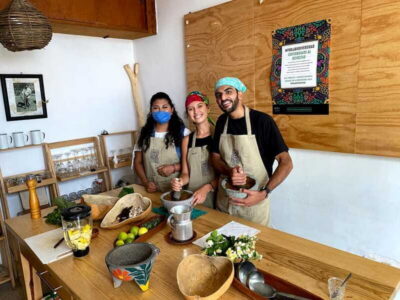
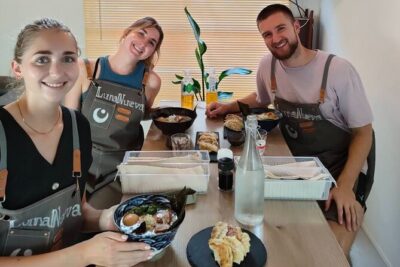
Ramen & Dumpling Cooking in Tokyo with Chef/Vegan possible
Read our review →
Hoi An/Da Nang: Vegetarian Cooking Class & Basket Boat Ride
Read our review →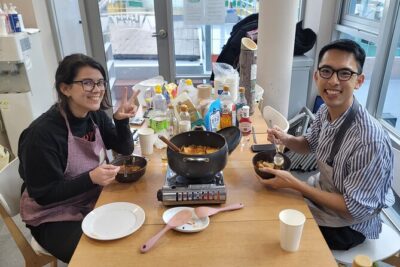
Busan Tailored Korean cooking class (Vegan OK)with market tour
Read our review →