
Review · MARRAKECH
Marrakech: Moroccan Cooking Class for vegetarians and vegan
Marrakech cooking classes often promise a quick tagine lesson, but this one gives you four full hours in a Moroccan family home. You’ll learn about spices, chop and cook several dishes, then sit down with the family to eat what you made. Chef Fatima and her brother Yasser lead the sessions, depending on the day.
I like the careful attention to vegetarian and vegan cooking, and I like that you are involved in every stage rather than watching a demonstration. The class also offers real cultural contact: tea, conversation, and a look at family life inside the Medina. The main caution is that finding the meeting point and final house can be tricky, and some sessions include people preparing meat.
Key Points
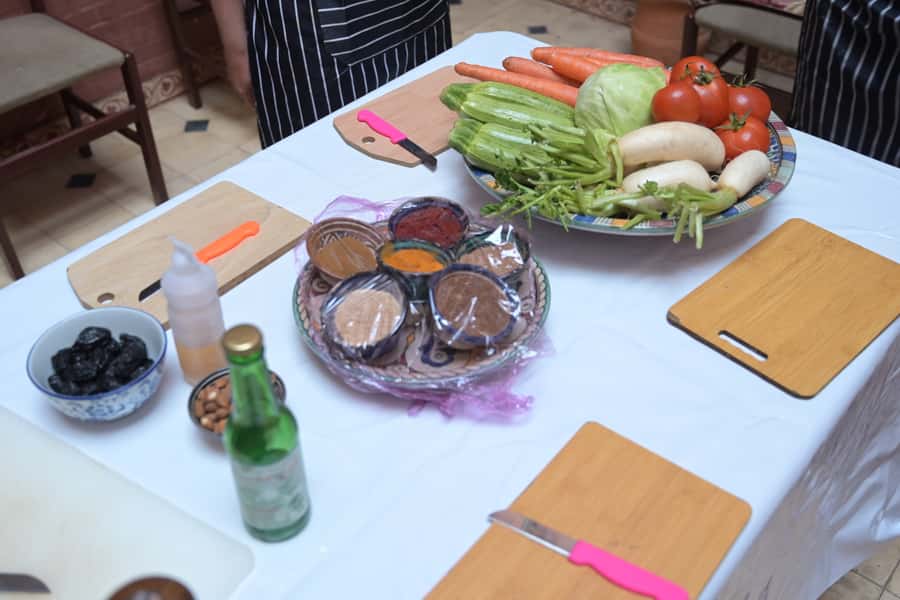
- Four-hour cooking session: Prepare a starter, main dish, side dishes, and Moroccan dessert at an unhurried pace.
- Family-home setting: Cook on a terrace or inside an authentic Moroccan house in the Medina, with tea, juice, coffee, and conversation.
- Vegetarian and vegan friendly: Vegetable tagine and vegan sides are available, with dietary restrictions discussed before cooking.
- Practical spice lesson: Learn how to recognize and choose Moroccan spices before buying them in the souks.
- Hands-on from start to finish: You chop, season, stir, and cook rather than simply watch the chef.
- Good value at $30: The price includes the lesson, drinks, cookies, and a complete meal, but not transportation.
A Moroccan Meal Begins With the Spices
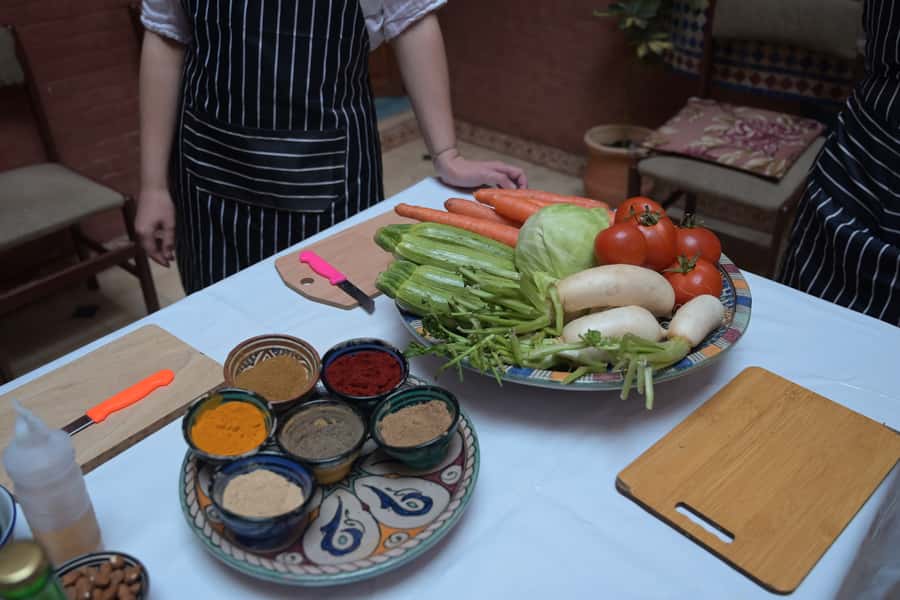
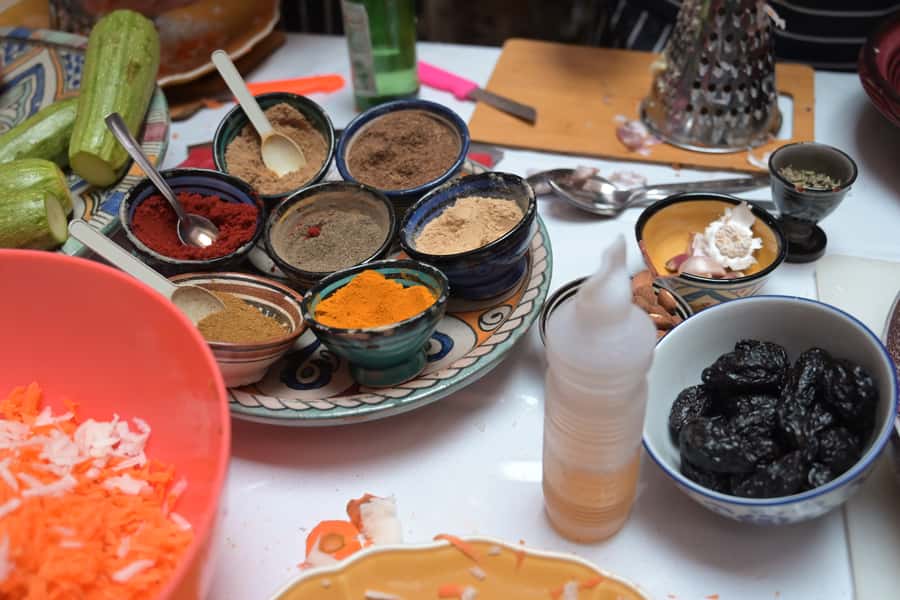
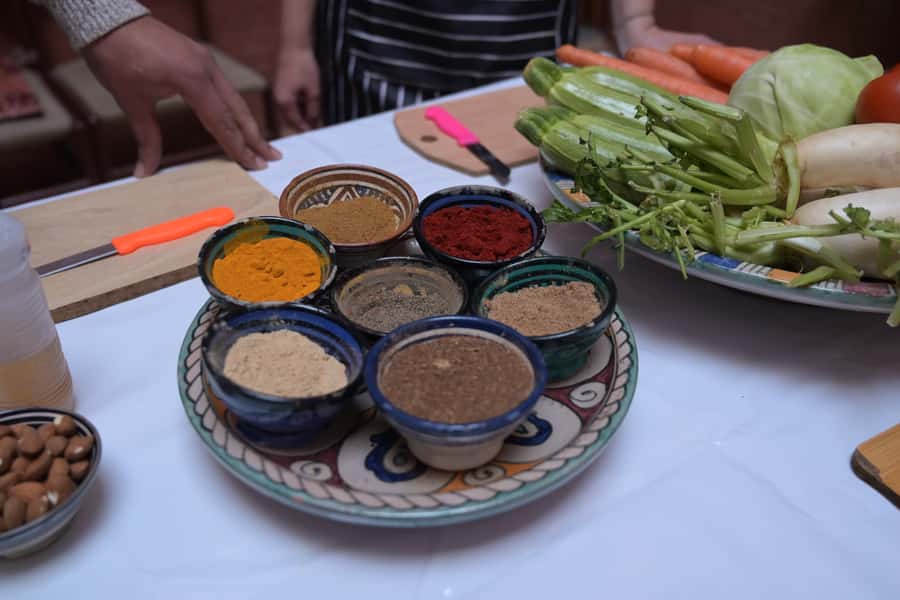
The most useful part of this class starts before the cooking itself. Chef Fatima or Yasser introduces the spices used in Moroccan food and explains how they affect a dish. That matters in Marrakech, where the souks offer piles of colorful powders and dried ingredients but not always much guidance on what you are actually buying.
You’ll learn the difference between spices that provide warmth, fragrance, color, or depth. The lesson is practical rather than decorative. If you plan to take saffron, spice mixes, or other seasonings home, you’ll have a better idea of what to look for.
The family also makes some of its own spice blends. Several sessions have included the chance to buy spices, tea, and saffron afterward. You are not required to purchase anything, but this can be a useful souvenir because you have already tasted the ingredients in the food.
The atmosphere begins with Moroccan tea, coffee, juice, and cookies. This gives you time to meet the family and ask about Moroccan food and daily life before everyone starts chopping. The setting is important. You are not in a polished restaurant kitchen built for tourists, but in a home connected to the people teaching you.
More Moroccan Cooking Classes in Marrakesh:
- Marrakech: Moroccan Cooking Class with Pickup
★ 4.6 · 1,862 reviews - Marrakech: Traditional Moroccan Cooking Class & Market Visit
★ 4.8 · 1,861 reviews - Marrakesh: Moroccan Dishes Cooking Class with a Local Chef
★ 5.0 · 1,615 reviews
Finding the Family Home in the Medina
The advertised meeting point is next to Andalusia Restaurant. The chef is scheduled to be there about 30 minutes before the class time, which helps because the Medina can be confusing even when you have a map. The final walk to the house may lead through narrow back passages, and one previous participant found the location difficult enough that a family member had to come and guide the group the last few steps.
I would arrive early and keep the meeting-point description available on your phone. Do not assume a taxi can take you directly to the house. Transport is not included, so you handle your own way to the meeting point.
Once inside, the mood changes quickly. You are welcomed into a family home, often with cooking on a terrace or at a nearby riad such as Riad Sultan. The exact room and instructor can vary. Chef Fatima has led sessions with her family, while Yasser has taught others in English and several additional languages.
That variation is worth knowing. You are booking the cooking experience and family setting, not a guaranteed performance by one named chef in one identical room. The common thread is the hands-on format and the family connection.
Cooking the Starter, Main Dish, and Dessert
The class generally builds a complete meal in stages. You may begin with Moroccan salads or briwat, a filled pastry that is folded and cooked. These starters teach you how Moroccan meals often use several small dishes rather than one large plate arriving all at once.
The main course can include a vegetable tagine, couscous, or another Moroccan preparation such as tanjia. The exact menu is suggested by the chef, so it may change with the day or the group. You will receive the ingredients needed for the recipe, and the chef explains the choices as you work.
The tagine lesson is especially useful because it covers more than a list of ingredients. You take part in preparing the dish while learning how seasoning, cutting, and cooking order affect the final result. Guests have also received advice on cutting technique and general cooking methods, not just Moroccan recipes.
The class does not rush through the food. Four hours gives the group time to prepare several dishes, talk, and eat without turning the experience into a hurried 90-minute demonstration. That longer schedule is one of the strongest reasons to choose this activity over a shorter class.
Dessert is included, although expectations should be sensible. One participant found the dessert a little basic, while the main dishes and sides received far more attention. If you are choosing the class mainly for pastry work, this may not be the ideal match. If you want a broad introduction to Moroccan home cooking, the dessert is a pleasant part of a larger meal.
How Vegetarian and Vegan Cooking Works
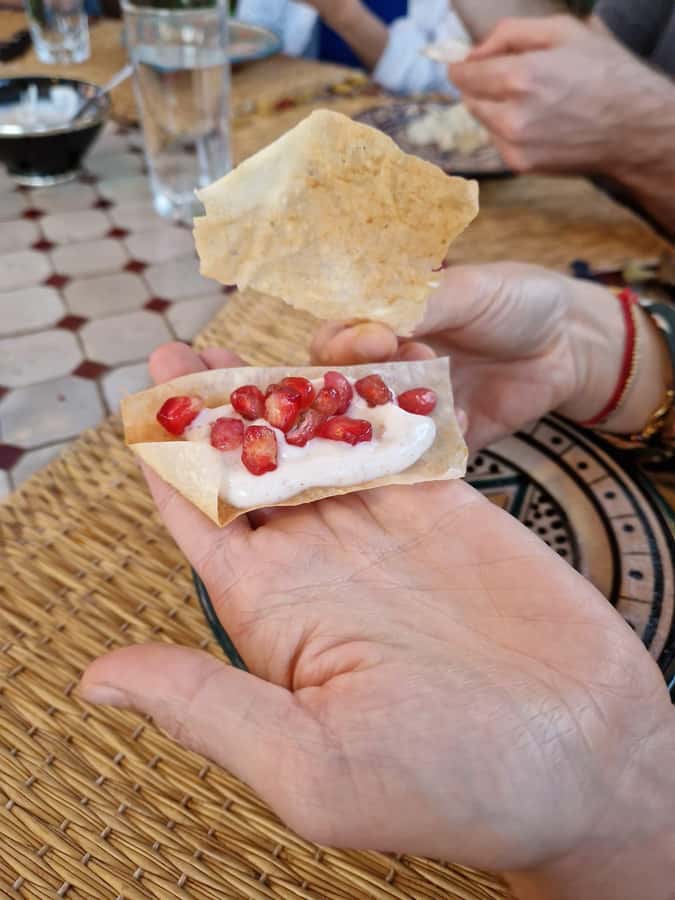
This class is designed for vegetarians and vegans, and the kitchen has handled allergies and other dietary restrictions. You should explain your needs clearly when booking or at the start of the session. Chef Yasser has been especially attentive about preferences, and Chef Fatima has prepared meals with plenty of vegan variety.
A useful detail is that the class can be mixed. Some people in the same group may prepare chicken or another meat dish while you make a vegetable tagine. The meat and vegetable work are kept separate, but the experience is not always an entirely vegetarian or vegan class.
That distinction matters if you avoid being near meat for ethical or religious reasons. For many vegetarians, the arrangement works well: you cook your own vegetable main dish and still share vegan salads, sides, and dessert. One vegetarian group had a vegetable tagine while others prepared chicken, with no problem keeping their work apart.
The food is not reduced to a single vegetable plate. Vegan participants have prepared a vegetable tagine, three side dishes, and dessert, with enough variety to make the meal feel like a complete Moroccan spread. This is a strong choice if you are tired of asking restaurants to remove meat from an existing dish.
The class also suits families. A parent and 12-year-old daughter found the activity easy to enjoy together, and the shared chopping and cooking gives children a real role. Keep in mind that the group may include adults and children with different cooking speeds, but the pace has generally been described as comfortable.
More Vegan Cooking Classes in Marrakesh:
- Oaxacan Vegetarian Cooking Class
★ 5.0 · 235 reviews - Hoi An: Vegetarian Cooking Class w Local Family and transfer
★ 4.9 · 145 reviews - Oaxaca: Vegetarian Cooking Class
★ 4.8 · 139 reviews - Jaipur Market Tour & Vegetarian Rajasthani Home Cooking Class
★ 5.0 · 113 reviews
Learning Through Conversation With the Family
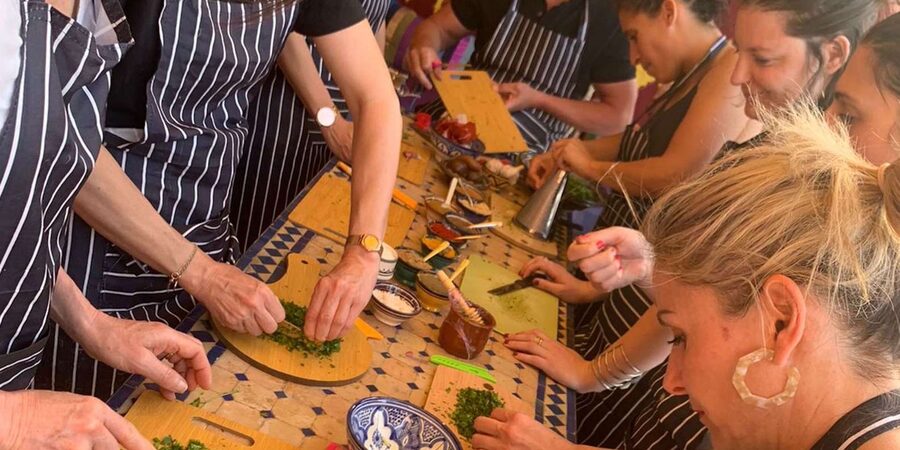
The food is only half of the experience. The family conversation gives you a chance to ask about Moroccan routines, food customs, spices, and ordinary life. This is more personal than eating at a restaurant, where you may taste good food but learn little about the people who prepare it.
Chef Fatima is described as warm, funny, and patient. Yasser brings a relaxed style, clear English, and an ability to explain the reason behind each cooking step. Their family connection helps the class feel informal rather than like a formal school lesson.
The language options are French and English, with an English and French audio guide included. Yasser has also been praised for speaking several languages. You should still expect a social group setting, not private one-to-one instruction.
Conversation continues during the meal. You eat together with the family and the other participants, which is a natural way to compare dishes and talk about Marrakech. The atmosphere depends partly on the group. Most sessions sound lively and friendly, but one report noted smoking during a class, which was uncomfortable around children. If this matters to you, it is reasonable to ask the host to keep the cooking area smoke-free.
Eating What You Prepared
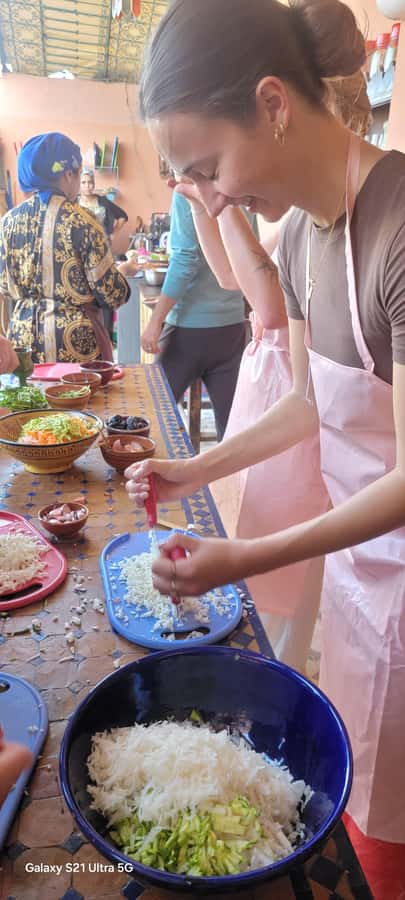
The meal at the end gives the class its satisfying payoff. You have watched raw ingredients become several dishes, and you understand why particular spices and techniques were used. That makes the food more memorable than a restaurant meal, even if the recipe is simple.
The strongest praise goes to the tagine, side dishes, and homemade spice blends. The food is usually described as fresh, well-seasoned, and generous. You may find that the meal becomes one of your most satisfying in Marrakech because you know the work behind it.
The class includes drinks and cookies, as well as the cooked meal. You sit down together after the kitchen work is finished, often on a terrace. The group setting turns the meal into a shared event rather than a private restaurant service.
You should not expect every dish to suit your taste perfectly. Moroccan food often uses sweet, savory, herbal, and earthy notes in the same meal. The dessert may be simpler than the main courses, and the menu is determined by the chef rather than chosen from a long list.
At the end, you receive a gift. The exact gift is not specified, so treat it as a small personal extra rather than part of the financial value of the booking.
Is Four Hours Worth $30?
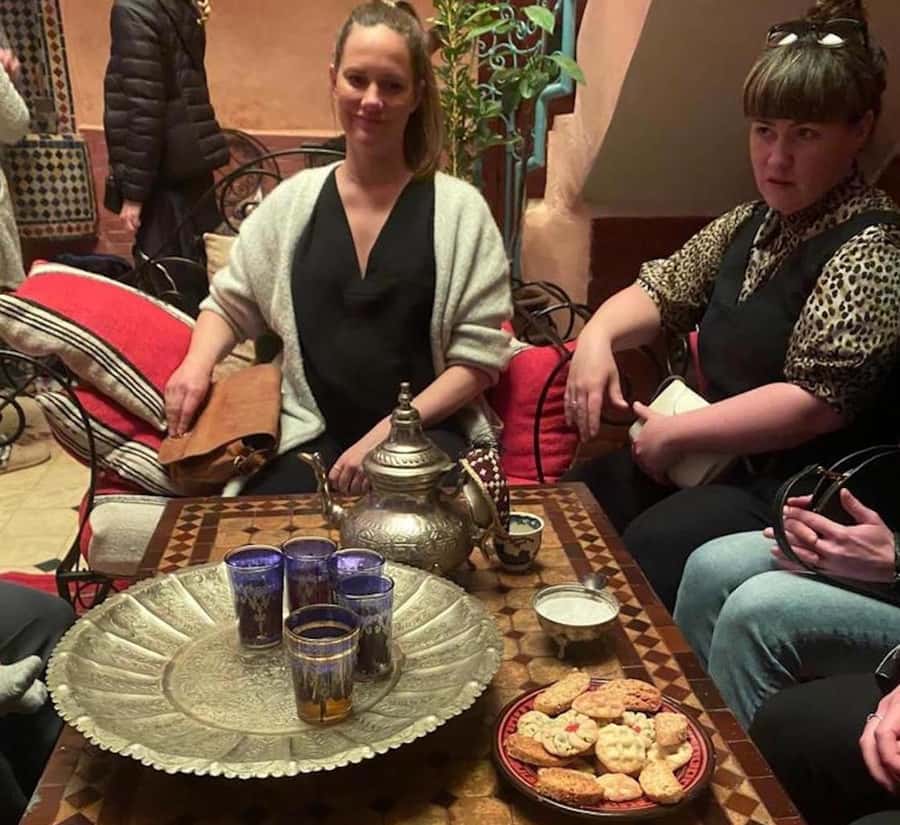
At $30 per person, this is strong value if you want more than a quick recipe lesson. The price includes the cooking instruction, ingredients for the meal, drinks, cookies, and the food you prepare. A four-hour activity also gives you time for cultural conversation and a relaxed meal.
Transportation is not included, and you may wish to budget separately for a taxi or other way to reach the meeting point. You might also be tempted to buy spices, tea, or saffron after class, but those purchases are optional and separate.
The value comes from the combination of parts. You receive a practical cooking lesson, a substantial meal, local food guidance, and time in a Moroccan home. A shorter class might cost less, but it can feel rushed if you want to prepare a starter, main course, and dessert.
The class is less useful if you want a highly structured culinary school with a fixed menu, individual workstations, or a guaranteed private session. This is a social home-based experience. You share tasks and space with the group, and the chef may adjust the menu to suit the people attending.
Free cancellation is available up to 24 hours before the activity for a full refund, and you can reserve now and pay later. The experience is listed as wheelchair accessible, but the Medina route and home layout may still be worth confirming directly if you have specific mobility needs.
Who Should Book This Cooking Class?
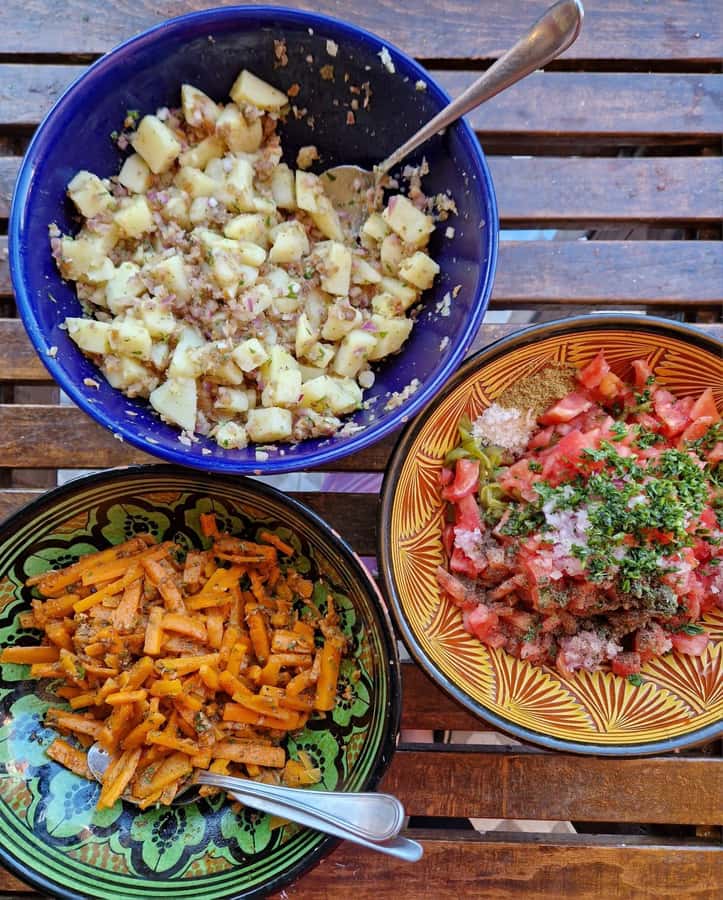
I would choose this class for a vegetarian or vegan visitor who wants a proper meal rather than a token meat-free alternative. It is also a good fit for couples, families, and solo visitors who enjoy meeting people around a table.
You’ll get the most from it if you like asking questions, helping with preparation, and learning by doing. The class rewards curiosity about spices and everyday Moroccan life as much as interest in recipes.
I would think twice if you dislike group activities, cannot tolerate a mixed meat and vegetarian kitchen, or need a precise menu in advance. The meeting point can also take some patience, so leave time to find the chef before the scheduled start.
Should You Book It?
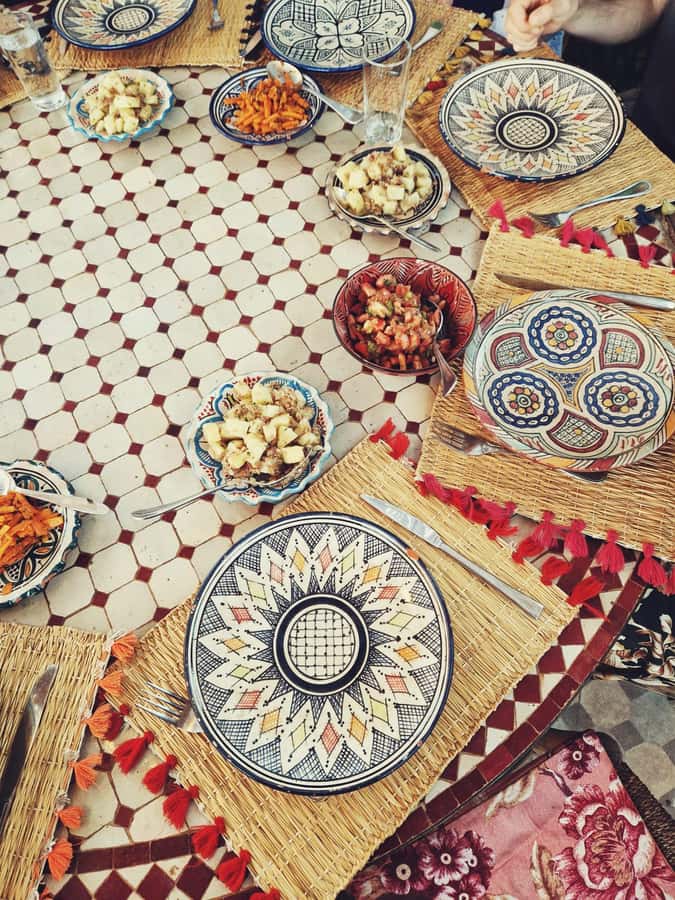
Book it if you want hands-on cooking in a family home, generous vegetarian or vegan food, and a lesson that covers more than one dish. The four-hour length, patient instruction from Fatima or Yasser, and chance to learn about spices make the $30 price easy to justify.
Skip it if your priority is a private class with a fixed menu and complete separation from meat preparation. For everyone else, this is a practical and personable way to connect Moroccan food with the people and home life behind it.
FAQ
How long does the Marrakech cooking class last?
The class lasts four hours, including the cooking lesson and the meal you prepare.
How much does the cooking class cost?
The listed price is $30 per person.
Where is the meeting point?
The meeting point is next to Andalusia Restaurant. The chef is expected to be there about 30 minutes before the scheduled start time.
Is transportation included?
No. Transportation to the meeting point is not included.
Is the class suitable for vegans?
Yes. Vegan participants can be accommodated, with vegetable tagine, vegan side dishes, and dessert available.
Is the class suitable for people with allergies?
Yes. Allergies and dietary restrictions can be accommodated. Tell the chef about your needs before cooking begins.
What dishes will I prepare?
The menu can include Moroccan salads or briwat, a main dish such as vegetable tagine or couscous, and a Moroccan dessert. The chef suggests the menu.
Which languages are available?
The instructors speak English and French. An English and French audio guide is included.
Can I cancel the booking for a refund?
Yes. You can cancel up to 24 hours in advance for a full refund. Reserve now and pay later is also available.
More Hands-On Workshops in Marrakesh
- Marrakech: Moroccan Cooking Class with a Local Family
★ 4.9 · 668 reviews - Marrakech: Moroccan Cuisine Cooking Class in Local Home
★ 4.8 · 508 reviews - Marrakech: Moroccan Cooking Workshop at La Maison Arabe
★ 5.0 · 446 reviews - Marrakech: Tajine Cooking Class in a Traditional Riad
★ 4.8 · 424 reviews
More Food Experiences in Marrakesh
- Moroccan Food Cooking Class with a Local Chef in Marrakech
★ 4.7 · 90 reviews - Small Group Cooking Class & Market Food Tour in Florence
★ 5.0 · 1,574 reviews - Athens: Food Market Visit and Cooking Class with Wine
★ 4.9 · 1,087 reviews - Undiscovered Charleston: Half Day Food, Wine & History Tour with Cooking Class
★ 5.0 · 948 reviews
Just added around Marrakesh
- Marrakech: 3-Hour Open-Air Moroccan Cooking Course★ 4.9 · 74 reviews
- Moroccan Food Cooking Class with a Local Chef in Marrakech★ 4.7 · 90 reviews
- Edgy 8 Dish Private, Fusion Cooking Class, Menu Plan, Market★ 4.9 · 31 reviews
- Moroccan cooking class in Marrakech with berber chef★ 5.0 · 16 reviews
- Marrakesh: Private Cooking Class & Local Market Shopping★ 4.7 · 15 reviews
- Marrakech: Moroccan Cooking Class with Amazing Local Chef!★ 4.9 · 100 reviews
- Marrakech: Moroccan Cooking Class with Local Chef★ 4.6 · 87 reviews
- Marrakech: Cooking Class and Market Visit★ 4.4 · 5 reviews
Moroccan Cooking Classes, compared.
Marrakech: Moroccan Cooking Class with Pickup
Read our review →
Marrakech: Traditional Moroccan Cooking Class & Market Visit
Read our review →
Marrakesh: Moroccan Dishes Cooking Class with a Local Chef
Read our review →
Moroccan Cooking Class & Marrakech Market Visit with Chef Khmisa
Read our review →
Marrakech: Moroccan Cooking Class with a Local Family
Read our review →
Marrakech: Moroccan Cuisine Cooking Class in Local Home
Read our review →
Marrakech: Moroccan Cooking Workshop at La Maison Arabe
Read our review →
Marrakech: Tajine Cooking Class in a Traditional Riad
Read our review →Browse the lists this tour appears in