
Review · MARRAKECH
Edgy 8 Dish Private, Fusion Cooking Class, Menu Plan, Market
The best part of this Marrakesh cooking class happens before the cooking. With Edwina, you plan your own eight-dish Moroccan fusion menu, write the shopping list in Arabic, then head into the souk to choose fish, chicken, herbs, nuts, and vegetables yourself. I like that this turns lunch into a hands-on food day rather than a simple demonstration.
I also like the private format and the freedom to push beyond standard Moroccan dishes. Edwina can work around your tastes, while chef Hesna and Rosie may provide kitchen support. The small scale means plenty of personal instruction, though eight dishes prepared by one or two people can make the six-hour day feel full.
Key points at a glance
- A menu built around you: Choose the dishes and steer the class toward traditional Moroccan cooking or more adventurous fusion.
- Market shopping in Arabic: Learn useful food words, write your list in Arabic, and buy produce from souk traders and barrow men.
- Tea gets serious attention: Prepare mint tea three times, learning how washing, sugar, and pouring affect the final drink.
- A real cooking session: You chop, slice, grate, stir, mix, and cook instead of standing back and watching.
- Spice shopping after lunch: Visit a spice trader and select fresh spices to take home.
- A useful edible souvenir: Make tomato salt from tomato peelings and salt, then take some home with you.
House of Fusion Marrakech: a cooking day with room to experiment
This is not a fixed menu class where everyone makes the same tagine and leaves after lunch. At House of Fusion Marrakech, the day begins with a conversation over coffee at about 08:50. You discuss what you want to learn, what you like to eat, and how far you want to move beyond familiar Moroccan dishes.
That opening conversation matters. If you want traditional Moroccan food, Edwina can guide you in that direction. If you prefer something less expected, you can create a fusion menu using Moroccan ingredients with different combinations and techniques. The class is designed for people who want to cook, not just collect photographs of someone else doing it.
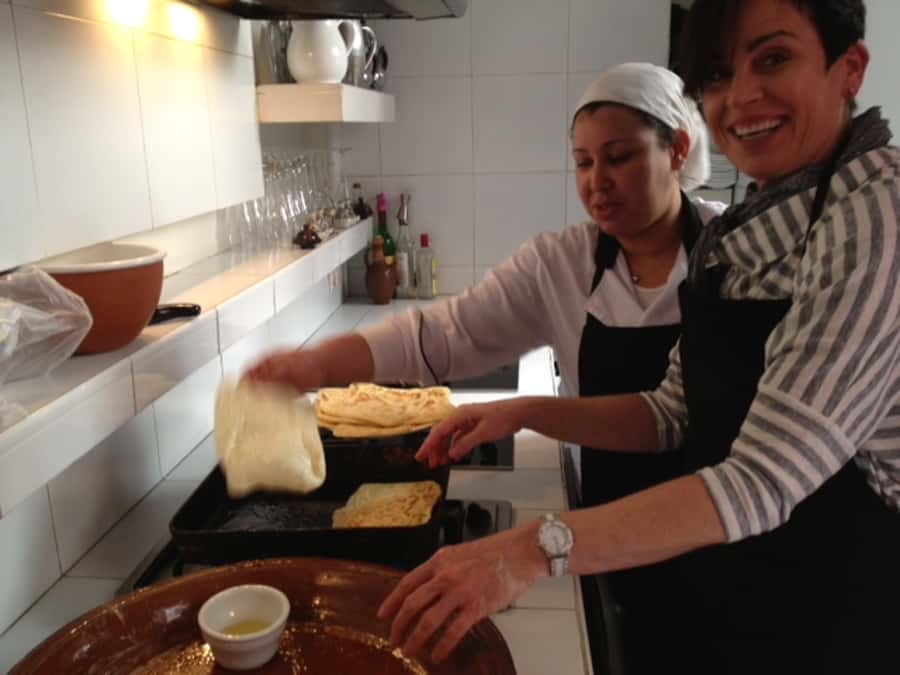
Edwina is the central host and instructor. Chef Hesna provides kitchen support, and Rosie may assist during the day. English is the teaching language, so you can ask questions as you work. The private format also gives you more control than a large group class. You are not waiting for six other people to finish chopping before moving on.
The catch is the same feature that makes the class appealing: eight dishes is a lot. If only one or two people are cooking, each dish takes time, and the day can run at a measured pace. That is good news if you want practice and explanation. It is less ideal if you want a quick, relaxed lunch with minimal kitchen work.
More Market Tour Cooking Classes in Marrakech
- Marrakech: Traditional Moroccan Cooking Class & Market Visit
★ 4.8 · 1,861 reviews - Marrakech: Moroccan Cooking Class with Market Visit and Meal
★ 4.9 · 347 reviews - Marrakesh: Private Cooking Class & Local Market Shopping
★ 4.7 · 15 reviews
Writing the shopping list in Arabic
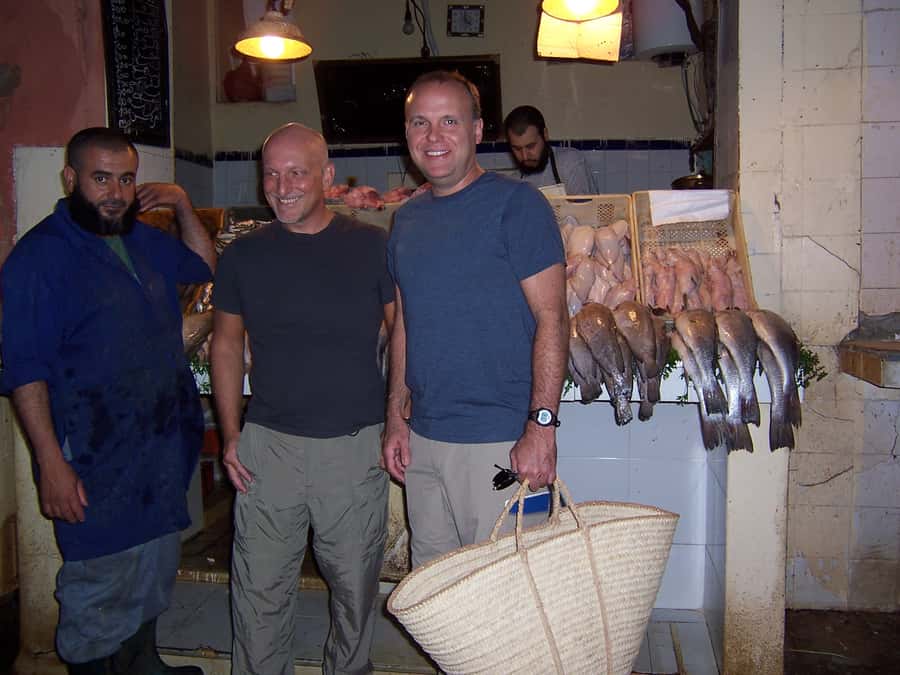
After choosing the menu, you write the shopping list in Arabic. This is a small detail, but it gives the market visit a purpose. You are not simply following a guide through the souk while someone else handles the buying. You have a list in hand and a reason to notice the names, shapes, and quality of the ingredients.
You then use the new words in the market. The class starts at the herb tea man near the entrance. You slap bundles of mint against your arm to release their aroma, then choose the varieties you prefer. It is a memorable, practical way to compare herbs, and it makes clear that mint tea is not just a sachet dropped into hot water.
From there, the shopping list may lead you to fish, chicken, nuts, vegetables, herbs, onions, oranges, and aubergines. The emphasis is on selecting produce yourself. You look for a small, unblemished aubergine for blistering, oranges with the right zest, and fresh chicken. The market stop is part food lesson and part introduction to how ingredients are chosen in Marrakesh.
I like this section because it links the dish on your plate to the person selling the ingredient and the choices you make. It also gives you a little Arabic practice without turning the morning into a language course. You are learning words because you need them.
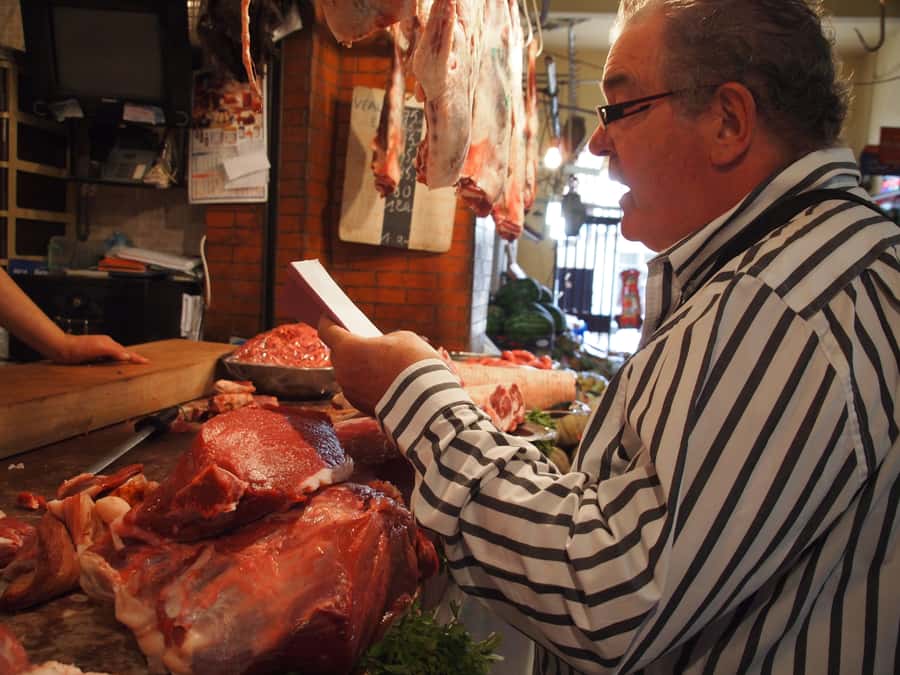
Keep in mind that a souk is an active working market, not a tidy cooking-school pantry. You should expect a more direct, practical shopping experience, with the class leader helping you make decisions. The precise ingredients depend on the menu you create, so the morning will not look identical for every booking.
Moroccan mint tea, made three times
The tea lesson is one of the most distinctive parts of the day. You learn how to prepare Moroccan mint tea properly, including the three washes of the tea. You also learn how sugar can be used to aerate and infuse the drink rather than simply cover up poor tea.
This is useful because tea is treated here as a process, not a token refreshment. You will work with the leaves, mint, sugar, and pouring technique, then taste the changes. The goal is a clear, fragrant drink rather than a heavy, overly sweet cup.
The tea is made during the preparation period, so it is woven into the cooking rather than added as a quick break. You can stop chopping, start the tea, return to the preparation table, and learn how the ceremony fits into everyday Moroccan hospitality.
If you already know Moroccan tea, this may feel familiar rather than revolutionary. For most people, though, the chance to prepare it under close instruction is more useful than simply being served a glass in a restaurant. You can repeat the method at home, provided you can find suitable tea and mint.
Eight dishes and a hands-on kitchen
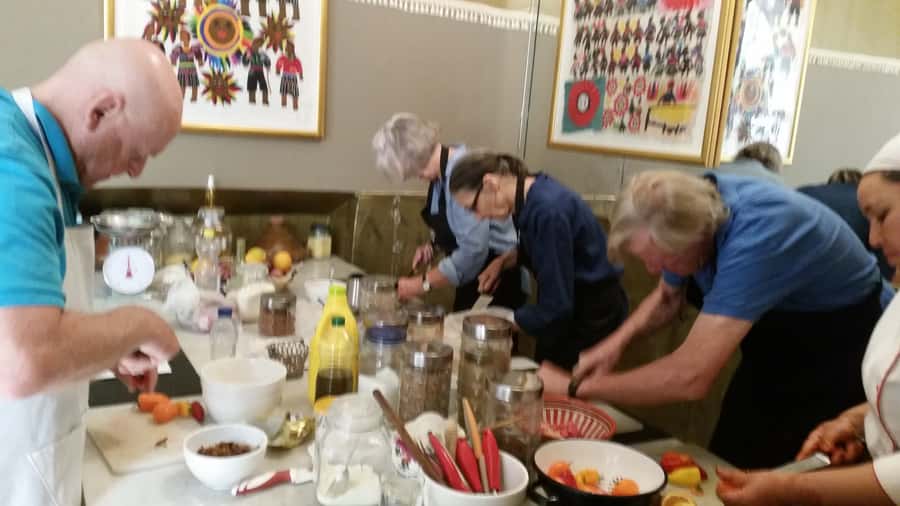
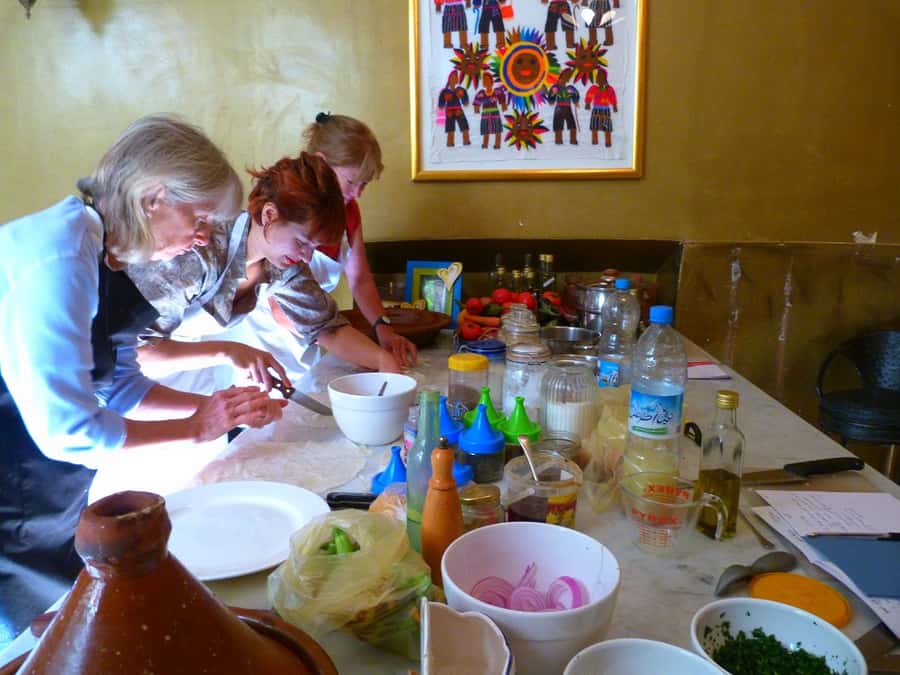
Once you return to House of Fusion Marrakech, you put on an apron and keep a tasting spoon close. The class uses traditional Moroccan methods while encouraging combinations that go beyond the standard menu.
You may chop herbs, slice ingredients, grate, shake, stir, and mix. The wording of the class promises full participation, and that is the right way to approach it. You should expect to handle the food yourself, with Edwina explaining why a spice, utensil, or technique is being used.
The dishes can be shaped around your preferences. That could mean a more classic Moroccan lunch, or a menu built with wider use of local ingredients and less predictable pairings. The point is not to copy a single recipe perfectly. It is to understand how Moroccan flavors work and how you can use them in new ways.
The class also introduces utensils used in traditional Moroccan cooking. That practical detail has value because Moroccan recipes often depend as much on preparation and timing as on the ingredients themselves. Learning when to slice, grate, mix, or season helps you recreate the food later.
Eight dishes will not all receive equal attention. Some may be prepared at the same time, while others require longer cooking or more detailed assembly. That is why the class works best for someone who enjoys the process. You should not book it expecting a polished restaurant kitchen to produce a fast tasting menu while you sit at the table.
More Market Tour Cooking Classes in Morocco
- Marrakech: Cooking Class and Market Visit
★ 4.4 · 5 reviews - Moroccan Cooking Class & Marrakech Market Visit with Chef Khmisa
★ 5.0 · 1,504 reviews - Moroccan Cooking Class with Market Visit and Meal
★ 5.0 · 196 reviews - Fez: Souk Tour and Traditional Home Cooking Class
★ 4.9 · 186 reviews
Lunch is the reward, not the whole point
The finished meal is the payoff, but I would not judge this class only by how much food appears at lunch. The stronger value lies in the work that leads to it: choosing the menu, shopping for ingredients, handling the tools, learning the tea, and tasting as you go.
The food is designed to be eaten together after the preparation. Because the menu is private and flexible, it should reflect your preferences more closely than a standard group class. Edwina can also offer restaurant advice, which adds a useful local-food angle to the day.
Wine is not included, so plan around that if you want an alcoholic drink with lunch. Coffee and bottled water are included, along with all ingredients, tuition, recipes, and a certificate. The certificate is a pleasant extra, but the recipes are the more useful item. They let you repeat the food once the Marrakesh dust has settled.
The spice trader and the edible souvenir
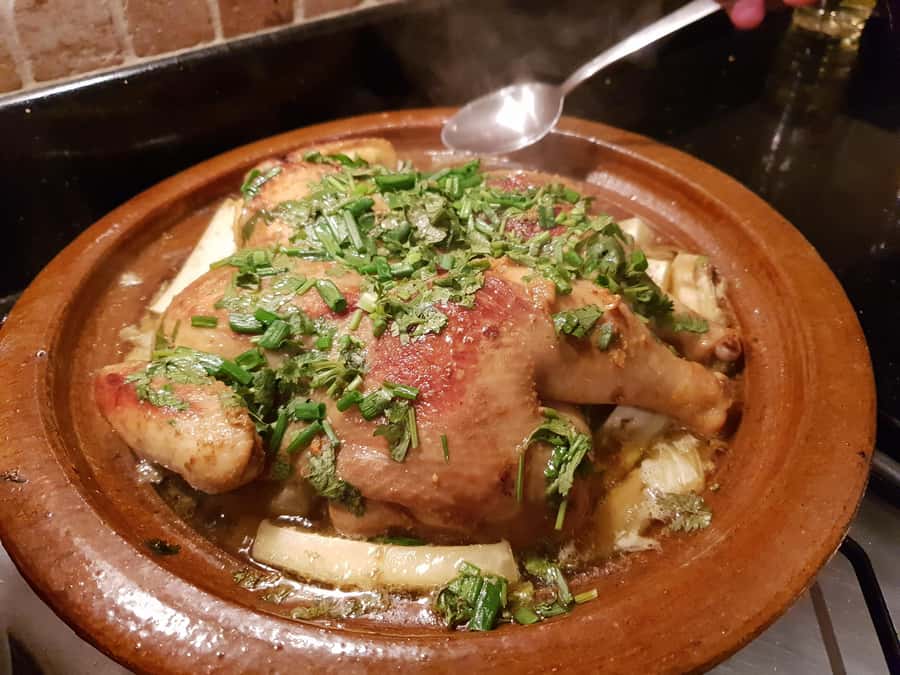
After lunch, you visit a spice trader to choose spices to take home. This is a smart ending because you have just used spices in the kitchen and can now make more informed choices. You are not buying a random decorative packet because it smells strong. You can consider what you actually want to cook.
The day also includes tomato salt, made from tomato peelings and salt from salt pans visited on outings some distance from Marrakesh. You take some home. It is a small souvenir, but it connects kitchen economy with flavor. Peelings become an ingredient rather than waste.
The spice stop is especially useful if you are unsure how to shop for Moroccan seasonings. You can ask about applications and select what suits your home cooking. There is no need to buy a large haul simply because the colors look good. Your own menu gives you a better guide.
What the private format means at $112
The price is $112 per person, and the value depends on how actively you take part. For a private six-hour experience that includes ingredients, instruction, a market visit, coffee, bottled water, recipes, and a certificate, the price is reasonable for someone who wants a full culinary day rather than a short demonstration.
You are paying for access to a host who adjusts the menu to your preferences, not just for the food you eat. The private format is a major part of the cost. It gives you freedom to choose the dishes and ask questions without a larger group setting the pace.
I would compare it with the price of a restaurant lunch only if you are clear about the purpose. A restaurant may be cheaper and easier, but it will not teach you how to select the aubergine, write the ingredient in Arabic, prepare the tea, and use the spice. On the other hand, if you dislike cooking or want only a brief cultural activity, $112 may feel high.
There is no wine included. That is not a problem for most people, but it is worth knowing when comparing the total cost with other food experiences.
Who will enjoy this most
This class suits a keen home cook, a food-focused couple, or a small private group that wants control over the menu. It is also a good fit if you have already seen the main Marrakesh sights and want a day built around local food rather than monuments.
You will get the most from it if you are willing to work. The class is participatory, and the best lessons come from taking the knife, spoon, grater, or mixing bowl yourself. You should also be comfortable with a long morning and afternoon, because the market, preparation, cooking, lunch, and spice shopping fill six hours.
The class is less suitable if you want a fixed timetable with every dish ready at a precise hour. It is also not the right choice for someone seeking only traditional recipes with no experimentation. The whole idea is to let you choose between classic Moroccan food and more adventurous combinations.
Wear closed-toe shoes. Open-toed shoes are not allowed, and you should bring a hair tie. Book at least 24 hours in advance.
Practical details before you book
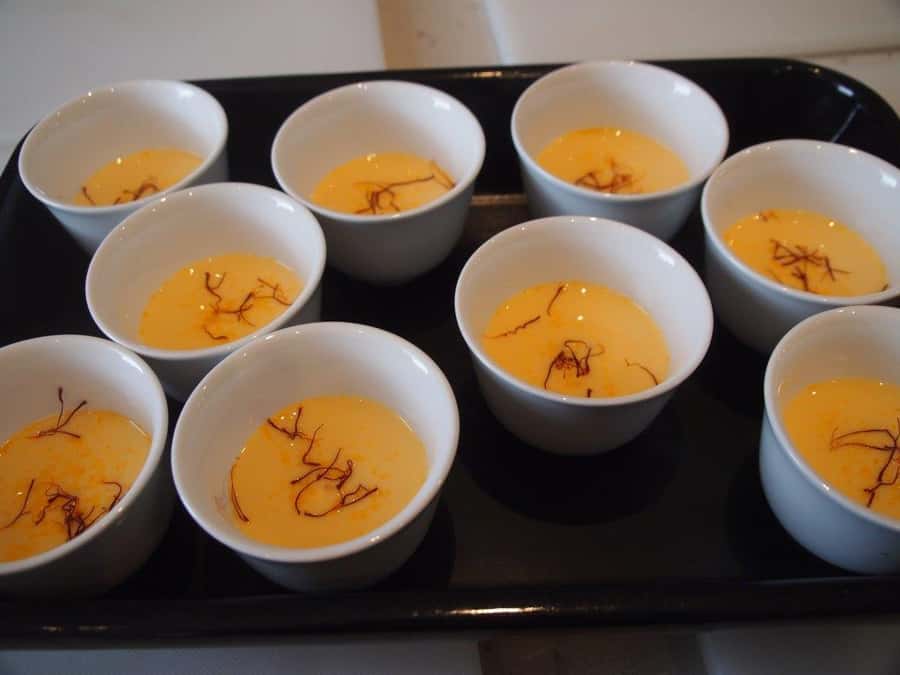
The meeting point is House of Fusion Marrakech, Derb Jdid 81, Marrakesh. The class is conducted in English and is for a private group.
The stated start time is around 08:50, while the full activity lasts six hours. Check the available date and start time when booking, since availability can vary.
You can cancel up to 24 hours in advance for a full refund. A reserve-now, pay-later option is also available, which helps if you are still arranging the rest of your Marrakesh schedule.
The recipes and certificate are emailed after the class. Make sure you provide a usable email address, since those are the most practical take-home items. Ingredients, tuition, coffee, and bottled water are included.
Should you book the House of Fusion class?
Book it if you want an active food day with a private menu, a real market visit, and plenty of kitchen work. The Arabic shopping list, mint selection, tea lesson, spice stop, and homemade tomato salt give it more character than a basic cooking demonstration.
Think twice if you want a short activity, a preset menu, or a meal with no effort required. Eight dishes can take time, especially with only one or two people working. For the right person, though, that slower pace is the point: you leave with recipes, new techniques, a certificate, spices, and a better sense of how Moroccan food is built.
FAQ
Where does the cooking class take place?
The class takes place at House of Fusion Marrakech, at Derb Jdid 81 in Marrakesh.
How long does the experience last?
The activity lasts six hours. The stated start time is around 08:50, but you should check availability for the exact starting time.
Is the class private?
Yes. It is offered as a private group experience, with the menu planned around your preferences.
What language is used during the class?
The instructor teaches in English.
What is included in the price?
The $112 per person price includes all ingredients, tuition, recipes, a certificate, bottled water, and coffee.
Is wine included?
No. Wine is not included.
What should I bring and wear?
Bring a hair tie and wear closed-toe shoes. Open-toed shoes are not allowed.
More Shopping Trips in Marrakesh
- Chiang Mai: Authentic Cooking Class with Market & Farm Visit
★ 4.9 · 4,546 reviews - Barcelona: Paella Cooking Experience & Boqueria Market Tour
★ 4.8 · 3,661 reviews - Cooking Class Hoi An:Local Market, Basket Boat, Fishing & Cooking
★ 5.0 · 3,660 reviews - Hoi An Cooking Class(Market,BasketBoat Crabfishing&Cooking Class)
★ 5.0 · 3,386 reviews
More Market Tour Cooking Classes in Marrakesh
- Hanoi Cooking Class: Culture, Local Market & Meaning CSR Impact
★ 5.0 · 5,147 reviews - 5 Traditional Dishes Hanoi Cooking Class with Market Trip
★ 5.0 · 4,890 reviews - Cooking Class and Lunch at a Tuscan Farmhouse with Local Market Tour from Florence
★ 5.0 · 4,831 reviews - Chiang Mai: Cooking Class, Market & Thai Herbs Garden Tour
★ 4.9 · 4,824 reviews
Just added around Marrakesh
- Marrakech: 3-Hour Open-Air Moroccan Cooking Course★ 4.9 · 74 reviews
- Moroccan Food Cooking Class with a Local Chef in Marrakech★ 4.7 · 90 reviews
- Moroccan cooking class in Marrakech with berber chef★ 5.0 · 16 reviews
- Marrakesh: Private Cooking Class & Local Market Shopping★ 4.7 · 15 reviews
- Marrakech: Moroccan Cooking Class for vegetarians and vegan★ 4.9 · 156 reviews
- Marrakech: Moroccan Cooking Class with Amazing Local Chef!★ 4.9 · 100 reviews
- Marrakech: Moroccan Cooking Class with Local Chef★ 4.6 · 87 reviews
- Marrakech: Cooking Class and Market Visit★ 4.4 · 5 reviews
Cooking Classes with a Market Tour, compared.
Hanoi Cooking Class: Culture, Local Market & Meaning CSR Impact
Read our review →
5 Traditional Dishes Hanoi Cooking Class with Market Trip
Read our review →
Cooking Class and Lunch at a Tuscan Farmhouse with Local Market Tour from Florence
Read our review →
Chiang Mai: Cooking Class, Market & Thai Herbs Garden Tour
Read our review →
Chiang Mai: Authentic Cooking Class with Market & Farm Visit
Read our review →
Barcelona: Paella Cooking Experience & Boqueria Market Tour
Read our review →
Cooking Class Hoi An:Local Market, Basket Boat, Fishing & Cooking
Read our review →
Hoi An Cooking Class(Market,BasketBoat Crabfishing&Cooking Class)
Read our review →Browse the lists this tour appears in