
Review · HANOI
5 Traditional Dishes Hanoi Cooking Class with Market Trip
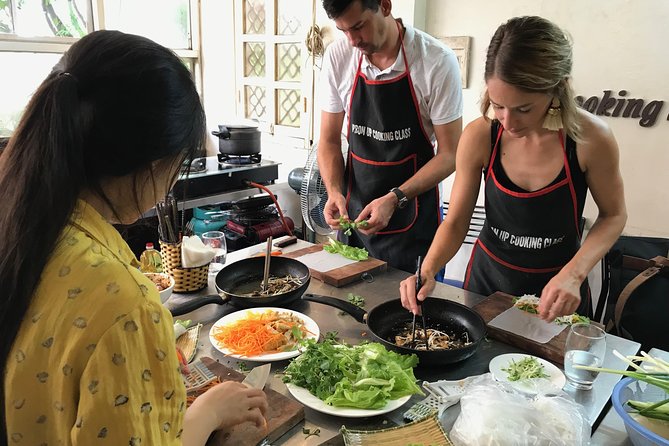
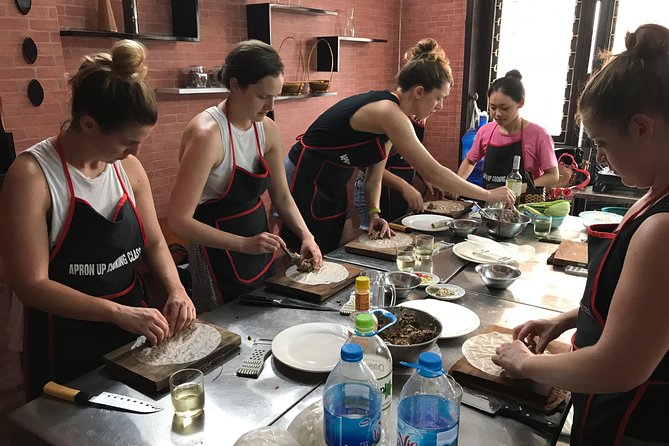
Hanoi’s best cooking lessons begin before the stove is turned on. Here, you walk through a local market with your chef, choose produce and spices, then return to the cooking studio to prepare five Vietnamese dishes and eat them together.
I like the market visit because it gives you useful context for Vietnamese food. I also like the small maximum of 10 people, which makes it easier to take part rather than watch from the back. The main consideration is pace: five dishes in about three hours means some preparation, such as cooking the barbecue pork, may be handled for you.
The chefs, including Perla, Vy, Emmy, Sunny, Coco, Lynn, Bella, Kim, and Winnie, are praised for clear English, humor, patience, and help with dietary needs. You should still expect a busy kitchen and shared work rather than a slow, private lesson.
Key points to know before booking
- Five classic dishes: You prepare pho bo, bun cha, fried spring rolls, papaya salad, and egg coffee or chocolate.
- Market first, kitchen second: The class begins with shopping at Hanoi’s largest market and an explanation of ingredients.
- Small group format: The maximum is 10 people, with specific tasks shared among participants.
- Hands-on but efficiently run: You take part in preparation, though the chef or kitchen staff may handle some longer cooking steps.
- Good dietary flexibility: Vegetarians and people who do not eat red meat can learn adapted versions.
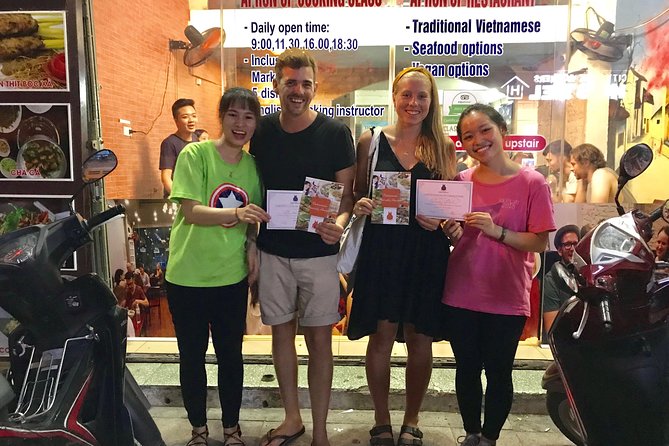
- Useful take-home items: You receive a cookbook and certificate after the class.
A Hanoi cooking class that starts with the market
This is not just a recipe demonstration. The first part takes place around the market near the Old Quarter, where you meet your English-speaking chef and learn how Vietnamese cooks choose ingredients.
The market visit matters because many Vietnamese recipes depend on small details: fresh herbs, good produce, spices, noodles, and the balance of sweet, sour, salty, and fresh flavors. Your guide helps you identify what you need and explains the ingredients before you cook with them.
You meet at 8 P. Gia Ngư, in Hàng Bạc, Hoàn Kiếm. The meeting point is in the Old Quarter, and the activity ends back there after the meal. Hotel pickup and drop-off are not included, so plan your own way to the starting point.
The market section is not a long sightseeing tour. It is practical preparation for the kitchen. You shop for ingredients with the group, then return to the cooking facility. If you are curious about Vietnamese food but do not know the difference between the herbs and seasonings on a market stall, this is one of the most useful parts of the experience.
More Market Tour Cooking Classes in Hanoi
- Hanoi Cooking Class: Culture, Local Market & Meaning CSR Impact
★ 5.0 · 5,147 reviews - Vietnamese Food Cooking Class in Hanoi with Market Experience
★ 5.0 · 778 reviews - Hanoi: 5 Local Dishes Cooking Class with Meal & Market Visit
★ 5.0 · 420 reviews
Five dishes, from pho to egg coffee
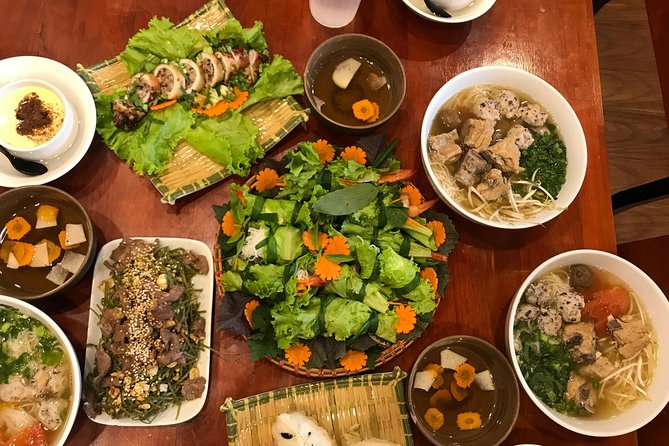
The menu gives you a broad introduction to Hanoi cooking rather than focusing on one recipe. You prepare:
- Pho bo, beef noodle soup
- Bun cha, Hanoi-style grilled pork with noodles
- Nem ran, fried spring rolls
- Papaya salad
- Egg coffee or chocolate
Pho bo is the dish most associated with the meal, but bun cha gives you a distinctly Hanoi taste. It combines grilled pork, noodles, and a dipping sauce, and it shows how Vietnamese cooking can be both light and filling.
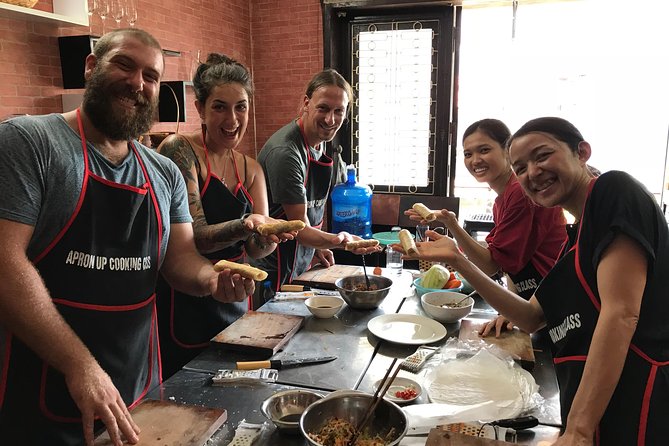
The spring rolls add a hands-on element. Rolling them yourself is simple enough for beginners, but the finished result depends on how tightly and evenly you work. Papaya salad brings a fresh, crisp contrast to the cooked dishes.
The final item is egg coffee or chocolate. Egg coffee is one of Hanoi’s signature drinks, with a sweet, creamy topping over coffee. If coffee is not suitable for you, the chocolate option gives you another choice.
You should arrive hungry. The food is not merely a sample. You prepare the dishes and then eat the meal together, with complimentary Vietnamese rice vodka and coffee or tea included.
What the cooking session is really like
The class runs for about three hours and 15 minutes. Some past sessions have moved through the five dishes in roughly two and a half hours, so the schedule is organized and fairly quick.
You will not necessarily make every component from start to finish on your own. The barbecue pork, for example, may be cooked for you while the group works on other steps. Kitchen staff may also do some preparation and clearing up.
That is worth knowing before you book. If you want a slow, private lesson where one chef watches only your work, this is not that format. If you want to touch the ingredients, prepare several recipes, and eat a full Vietnamese meal in one session, it is a better fit.
The group works together, often in pairs. This makes the class social and helps the chef manage several dishes at once. It also means solo participants may be paired with someone else. A group of six has been described as comfortable, while the maximum of 10 keeps the room from becoming too crowded.
The best approach is to stay involved. Ask questions, take notes, and volunteer for different jobs rather than waiting for the chef to hand you each step. Some parts may move quickly because several dishes are underway at the same time.
The teaching style and the chefs
The cooking class uses several instructors, so your experience depends partly on who leads your session. Perla is praised for strong English, clear explanations, and adjustments for dietary needs. Vy is described as funny, patient, and good at making the group feel comfortable.
Emmy is noted for being friendly and helpful, including with allergies. Sunny is praised for enthusiasm and teaching skill, while Coco is described as especially good at getting everyone involved, including children.
Other named instructors include Lynn, Bella, Kim, and Winnie. The common thread is an approachable teaching style. You can expect explanations of the dishes, cooking methods, and ingredients rather than a silent demonstration.
The class is suitable for beginners. You do not need advanced kitchen skills to prepare the menu. Still, you should be comfortable working in a shared cooking area and following instructions while other dishes are being prepared around you.
The English-language teaching is an important practical advantage. The chefs explain the steps in English, and the feedback describes the instructions as clear enough to follow. The pace can still feel brisk when several recipes overlap, so do not hesitate to ask for a step to be repeated.
More Market Tour Cooking Classes in Vietnam
- Hanoi Cooking Class and Market Tour in Ancient House
★ 5.0 · 379 reviews - Rose Kitchen Hanoi: Market, Cooking & Culture Tour + Free PickUp
★ 5.0 · 342 reviews - Hanoi: Cooking Class in a Local Villa with Market Tour
★ 4.9 · 320 reviews - Hanoi Maya Kitchen: Traditional Cooking Class & Market Tour
★ 5.0 · 287 reviews
How authentic is the food?
The menu is firmly tied to Vietnamese home and street food. Pho bo and bun cha are familiar national favorites, while egg coffee connects the class to Hanoi’s cafe culture.
The value of the lesson is not that you receive a restaurant-style cooking performance. It is that you learn how several everyday Vietnamese flavors work together. You see the fresh ingredients at the market, handle them in the kitchen, and then taste the finished food.
The dishes are also practical choices for cooking at home. Spring rolls, papaya salad, and egg coffee do not require you to recreate an entire restaurant kitchen. The cookbook gives you a way to try the recipes again after returning home.
You may notice that the class gives more attention to some dishes than others. With five recipes in one session, not every preparation can receive a long explanation. The class offers a broad introduction rather than a specialist lesson in pho broth or barbecue technique.
Dietary needs and food choices
Vegetarians and people who do not eat red meat can learn adapted versions of the menu. This is a useful feature, but you should mention your needs when booking or at the beginning of the class so the instructor can make the proper adjustments.
The experience also has positive feedback for allergy awareness. Still, the supplied information does not give a full list of ingredients or guarantee a completely allergen-free kitchen. If you have a serious allergy, explain it clearly before cooking and confirm which dishes can be changed.
The listed menu includes beef and pork, so people avoiding red meat should not assume the standard recipes are suitable. The class specifically offers vegetarian and non-red-meat versions, which is helpful, but advance notice remains sensible.
What is included for $35.07?
At $35.07 per person, the price covers a market visit, an English-speaking chef, the cooking session, the meal you prepare, coffee or tea, rice vodka, a cookbook, and a certificate.
That is good value if you plan to eat a full meal and want an activity that teaches something rather than simply filling an evening. You are also paying for the market guidance and the chance to ask questions about Vietnamese ingredients.
The price does not include hotel transportation. Because the class begins and ends at 8 P. Gia Ngư, you need to arrange your own transport in Hanoi. The Old Quarter location makes it practical if you are staying nearby, but it is an extra planning point if your hotel is elsewhere.
The small group adds to the value. A maximum of 10 people gives you a reasonable chance to participate, although the experience is still communal and some tasks will be shared.
The meal, rice vodka, and take-home recipes
Once the cooking is finished, you sit down and eat what the group prepared. This is the payoff of the session, and it also lets you compare the dishes as a complete meal.
Rice vodka is included, along with coffee or tea. The alcohol is part of the social element, not a requirement for taking part. If you do not drink, the class still includes plenty of food and nonalcoholic refreshments.
The cookbook is one of the most useful extras. It includes recipes for dishes such as pho and spring rolls, along with the other items prepared in class. The certificate is a pleasant souvenir, but the recipes are the item you are most likely to use.
One small practical concern is cleanliness. The class takes place in an active kitchen, and one participant raised a hygiene concern. That does not define the experience, but if kitchen sanitation is a major priority for you, it is worth keeping in mind.
Who will enjoy this class most?
I would recommend this class to first-time visitors who want a friendly introduction to Vietnamese food without committing to a full-day activity. It is also a good choice for food-focused couples, families, and solo visitors who enjoy meeting people over a shared meal.
Children can take part, though the experience involves several steps and a busy kitchen. An instructor has been praised for including younger participants, but parents should decide if their children are comfortable following cooking instructions in a group.
The class also suits people who want to learn recipes they can repeat at home. The market explanation, cookbook, and five-dish menu give you more to take away than a single tasting.
It may not suit you if you want a quiet, highly private lesson or deep technical training in one dish. The class is designed for variety, social cooking, and efficient instruction. Some preparation is done for you, and the chef may need to move the group along.
Timing, cancellations, and useful planning tips
Allow the full three hours and 15 minutes, even if the active cooking sometimes moves faster. The experience starts and ends at the same Old Quarter meeting point, with no hotel transfer included.
Book with enough notice if your Hanoi schedule is tight. You can cancel for a full refund up to 24 hours before the start time. Cancellations or changes made within 24 hours are not refunded or accepted.
Wear something comfortable for cooking and arrive ready to participate. You will get more from the class if you treat the market visit as part of the lesson, not as time to rush through before the recipes begin.
The activity is offered with a mobile ticket, which keeps arrival simple. Confirmation is provided when you book, and the group maximum is 10 people.
Should you book Apron Up Cooking Class?
Yes, if you want a reasonably priced Hanoi food experience that combines shopping, cooking, and a proper meal. The strongest reasons are the market visit, the five-dish menu, the small group, and the practical cookbook you take home.
Book it especially if you enjoy learning by doing. The class is not fully hands-off, but it is not a private chef lesson either. Expect shared tasks, some preparation handled by the kitchen, and a lively pace.
If your priority is a detailed masterclass in pho broth or bun cha alone, choose a narrower cooking course. For a first taste of Vietnamese cooking, with friendly English-speaking chefs and plenty to eat, this class makes a sound use of three hours in Hanoi.
FAQ
Where does the cooking class begin?
The class begins at 8 P. Gia Ngư, Hàng Bạc, Hoàn Kiếm, Hanoi, Vietnam.
Where does the activity end?
The activity ends back at the meeting point.
How long does the experience last?
The stated duration is approximately three hours and 15 minutes.
How many people can join the class?
The maximum group size is 10 people.
Which dishes will I learn to cook?
The menu includes pho bo, bun cha, fried spring rolls, papaya salad, and egg coffee or chocolate.
Is the class suitable for vegetarians?
Yes. Vegetarian versions are available.
Can people who do not eat red meat take part?
Yes. The class provides a non-red-meat version of the menu.
Is hotel pickup included?
No. Hotel pickup and drop-off are not included.
What drinks are included?
Coffee or tea and Vietnamese rice vodka are included.
Is cancellation allowed?
Yes. You can cancel up to 24 hours before the start time for a full refund. Cancellations within 24 hours are not refunded.
More Hands-On Workshops in Hanoi
- Hanoi: Handcrafted Wood Carving Workshop with Local Artisan
★ 5.0 · 733 reviews - Hanoi Cooking Class: Pho/Bun Cha/Banh Xeo…+Free Egg/Salt Coffee
★ 5.0 · 267 reviews - Private Cooking Class with 5 dishes of your choice
★ 5.0 · 227 reviews - Experience Hanoi Cooking Class with Free Wine Tasting
★ 5.0 · 210 reviews
More Shopping Trips in Hanoi
- Hanoi: Maya Traditional Cooking Class & Market Tour
★ 4.9 · 243 reviews - Hanoi: Old Quarter Market Tour and Cooking Class with Meal
★ 4.8 · 192 reviews - Hanoi Cooking Class: Market Tour, Free Recipe & Beverages
★ 5.0 · 10 reviews - Hanoi’s Culinary: Authentic Cooking Class and Local Market
★ 4.8 · 5 reviews
Just added around Hanoi
- Hanoi Vegan Cooking Class: A Vietnamese Culinary Adventure★ 4.8 · 5 reviews
- Hanoi: Vegan Vietnamese Cooking Class in a Local Villa★ 5.0 · 42 reviews
- Hanoi Farm Tour and Cooking Class with Local Family★ 4.9 · 14 reviews
- Hanoi’s Culinary: Authentic Cooking Class and Local Market★ 4.8 · 5 reviews
- Hanoi: Village Farm Tour and Cooking Class with Lunch★ 5.0 · 7 reviews
- Hanoi Cooking Class in Haven of Tranquility – Thom culinary★ 5.0 · 3 reviews
- Hanoi Cooking Class: Market Tour, Free Recipe & Beverages★ 5.0 · 10 reviews
- Hanoi Food Adventure: Vietnamese Market Tour & Cooking Class★ 4.8 · 5 reviews
Cooking Classes with a Market Tour, compared.
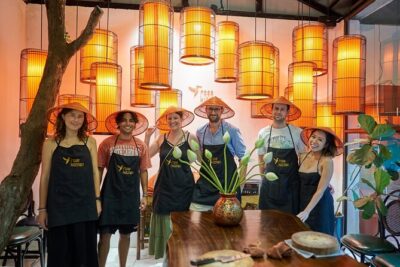
Hanoi Cooking Class: Culture, Local Market & Meaning CSR Impact
Read our review →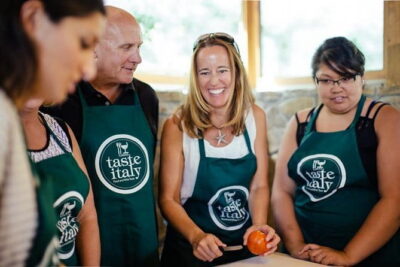
Cooking Class and Lunch at a Tuscan Farmhouse with Local Market Tour from Florence
Read our review →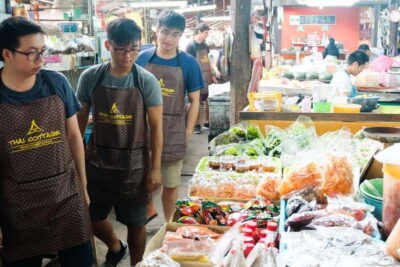
Chiang Mai: Cooking Class, Market & Thai Herbs Garden Tour
Read our review →
Chiang Mai: Authentic Cooking Class with Market & Farm Visit
Read our review →
Barcelona: Paella Cooking Experience & Boqueria Market Tour
Read our review →
Cooking Class Hoi An:Local Market, Basket Boat, Fishing & Cooking
Read our review →
Hoi An Cooking Class(Market,BasketBoat Crabfishing&Cooking Class)
Read our review →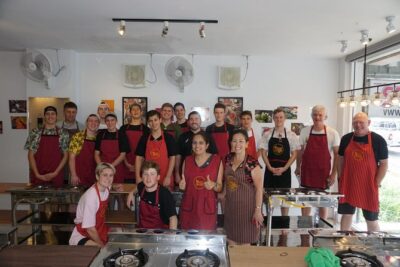
Phuket Thai Cooking Class with Market Tour Option
Read our review →Browse the lists this tour appears in