
Review · HANOI
Hanoi Cooking Class in a Haven of Tranquility – Thom culinary
Hanoi’s streets are noisy, fast, and full of food. Thom Culinary gives you a calm counterpoint: a garden house where you pick herbs, learn why Vietnamese cooks balance sweet, sour, salty, bitter, and fresh flavors, then prepare four authentic dishes with close guidance. The cyclo ride and market visit make this more than a kitchen lesson.
I especially like the market-to-table route, which connects ingredients to the finished meal, and the small maximum of eight people. Hosts including Trang and Mango add a personal touch, explaining local produce and eating customs. The main consideration is time: at 4 hours 30 minutes, this is a substantial half-day outing, not a quick cooking demo.
Key details at a glance
- A cyclo start through Hanoi: Ride to Dong Xuan Market and see the Old City Gate, Cau Dong Market, and Thanh Ha Market along the way.
- Four dishes you prepare yourself: Chop, sauté, season, and plate with guidance from the Thom Culinary team.
- A garden lesson with edible plants: Pick fresh herbs and see exotic fruit growing beside the cooking space.
- A peaceful family setting: Visit a worship hall and fish pond before sitting down to eat.
- Food beyond the main dishes: Enjoy street food tastings, homemade dessert, sweet treats, fruit, herbal drinks, and rice wine.
- Small-group format: The activity accepts no more than eight people and includes pickup and return transportation.
A calm garden after Hanoi’s busy streets
The appeal of Thom Culinary begins with contrast. You start amid Hanoi’s traffic and market activity, then reach a quieter place filled with tropical fruit, herbs, a fish pond, and a family worship hall. That change of pace is important. You are not simply moving from one indoor cooking room to another. You are seeing how food, family, gardening, and daily life fit together.
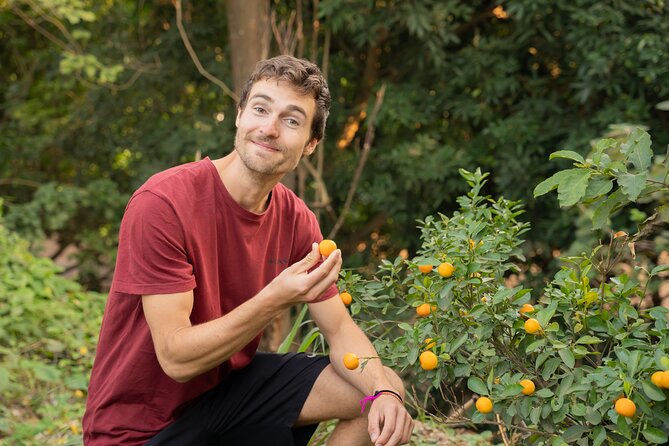
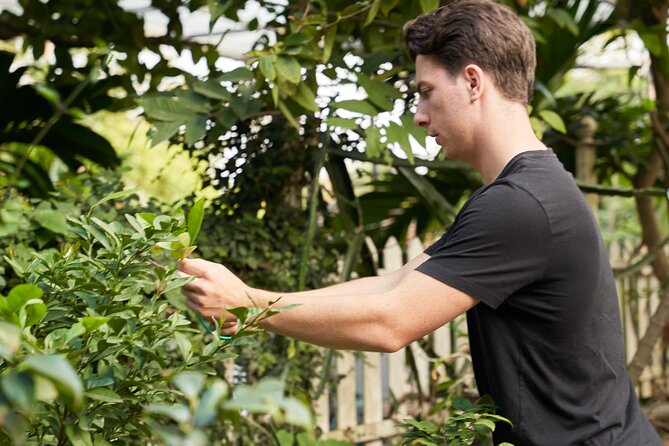
The garden also gives the cooking class a useful sense of place. Instead of treating herbs as decoration on a recipe sheet, the host shows you plants growing nearby and invites you to harvest them. You learn that Vietnamese cooking often depends on fresh leaves and herbs for aroma, texture, and balance.
I would not expect a formal culinary school setting. This is a personal, home-style experience, with friendly hosting and stories tied to the property. That makes it appealing if you want food knowledge delivered through conversation rather than technical instruction alone.
More Hands-On Workshops in Hanoi:
- Hanoi Cooking Class: Culture, Local Market & Meaning CSR Impact
★ 5.0 · 5,147 reviews - 5 Traditional Dishes Hanoi Cooking Class with Market Trip
★ 5.0 · 4,890 reviews - Vietnamese Food Cooking Class in Hanoi with Market Experience
★ 5.0 · 778 reviews
Starting with a cyclo ride and Hanoi markets
The outing begins with pickup and a cyclo ride toward Dong Xuan Market. The cyclo is a fitting way to enter the old city. You move at a gentler pace than a car, with more time to notice shopfronts, street activity, and the changing rhythm of Hanoi.
The market portion is not just a shopping stop. You taste street food and learn about ingredients used in Vietnamese cooking. The route includes Dong Xuan, Cau Dong, and Thanh Ha markets, along with the Old City Gate. These places give you context before you start cooking. You can see the difference between fresh produce, dried goods, herbs, and other pantry items, then understand how they may appear later on your plate.
Host Mango is specifically associated with a market visit that covers wet-market and dry-market ingredients. Host Trang is also praised for explaining Vietnamese food and guiding the cooking session. Since hosts may vary, you should treat these names as examples rather than a guarantee for your date.
There is one practical point to keep in mind: markets are active working places, not polished food museums. Conditions can be crowded and sensory, and the focus is on ordinary local trade. That is precisely the value for many people, but anyone seeking a quiet, controlled introduction to Vietnamese cuisine may find this part more demanding.
Learning the logic of Vietnamese flavor
Before you cook, the host explains the role of herbs and spices and how Vietnamese dishes balance contrasting tastes and textures. This is one of the strongest parts of the activity because it helps you understand why the food works, not just what to add.
Vietnamese cooking often depends on restraint. Fresh herbs can brighten a dish. A salty element can sharpen other flavors. Sweet, sour, and savory notes need to sit together rather than compete. The class presents this as a form of simplicity, where the quality and role of each ingredient matter.
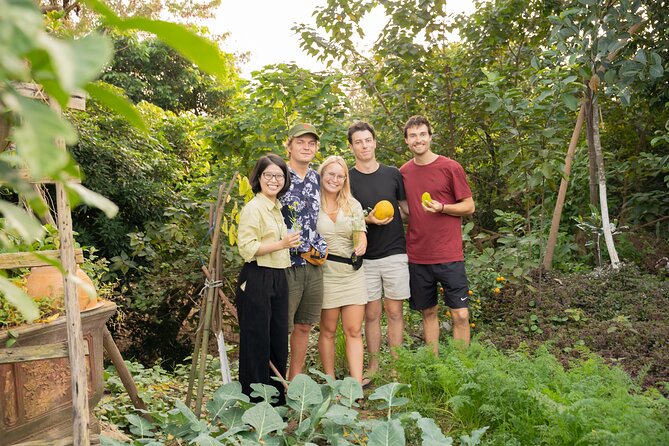
You also get a closer look at the plants in the garden. Harvesting herbs gives you a direct connection to the meal, from living plant to chopped ingredient to finished dish. If you cook Vietnamese food at home later, this lesson may be more useful than memorizing one recipe. You begin to recognize how herbs and seasonings change the character of a plate.
The exact four dishes are not specified in the available information, so you should not book this expecting a particular menu unless the provider confirms it. The benefit is a broad cooking session, but the lack of a fixed published menu may matter if you have your heart set on pho, spring rolls, or another named dish.
Four dishes, prepared from chopping to plating
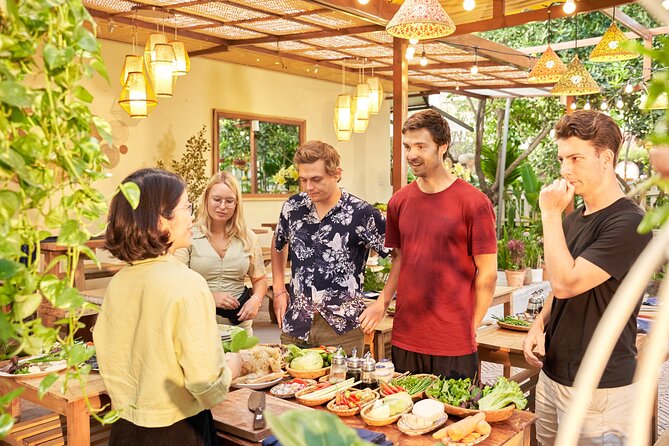
The cooking session is hands-on. You chop, sauté, season, and plate the food instead of watching a host do all the work. With a maximum of eight participants, the format should allow for direct guidance and a more personal exchange than a large group class.
That small size matters in practical terms. You can ask why a step is done in a certain order, check seasoning, and get help with knife work or presentation. It also gives the host room to talk about the stories behind dishes and the customs attached to eating them.
The class is best understood as a shared kitchen session rather than a race to produce restaurant-perfect plates. You are there to learn the rhythm of Vietnamese cooking and take part in each stage. If you prefer a highly technical lesson focused on exact measurements and professional techniques, the friendly, tradition-led approach may feel less structured.
For most visitors, the four-dish format offers good variety without turning the afternoon into a blur. You do enough preparation to feel involved, then sit down and eat what you made. Since the recipes are described as authentic but not listed, ask about dietary needs and the day’s dishes when booking.
A few more cooking classes around Hanoi worth a look
- Hanoi: 5 Local Dishes Cooking Class with Meal & Market Visit
★ 5.0 · 420 reviews - Hanoi Cooking Class and Market Tour in Ancient House
★ 5.0 · 379 reviews - Rose Kitchen Hanoi: Market, Cooking & Culture Tour + Free PickUp
★ 5.0 · 342 reviews - Hanoi: Cooking Class in a Local Villa with Market Tour
★ 4.9 · 320 reviews
Eating in a family worship setting
Once the food is ready, you eat at Thom Culinary with homemade dessert, a traditional sweet treat, exotic fruit, herbal drinks, and homemade rice wine. The meal is part of the lesson. You learn about eating etiquette and the stories connected with the dishes, so the table becomes a place for cultural context as well as lunch or dinner.
The family worship hall and fish pond add to the setting. They help explain why this is called a haven of tranquility rather than simply a cooking venue. You get a glimpse of a family-centered space, not just a commercial kitchen arranged for visitors.
Drinks and fruit are included, which improves the value of the experience. The meal is not limited to the four dishes you prepare. You also have small extras that let you try more flavors and make the final sitting feel generous.
Rice wine is included, so keep that in mind if you do not drink alcohol. The supplied information does not specify nonalcoholic alternatives beyond the herbal drinks, but those drinks are included without limit. Personal expenses and anything not listed are extra.
What the $64.31 price covers
At $64.31 per person, this is priced above a basic cooking demonstration, but it includes far more than kitchen time. You receive pickup and return transportation, a cyclo ride, market visits, street food tastings, a garden tour, herb and fruit harvesting, four cooked dishes, dessert, fruit, herbal drinks, and rice wine.
The price makes the most sense if you value a complete half-day outing rather than a single activity. You are paying for transport, hosting, food, and access to a setting that combines market exploration with a private garden and meal. If you only want to learn one or two recipes, a shorter local class could be better value.
Pickup is another part of the calculation. Hotel transfers remove some of Hanoi’s transport fuss, and direct pickup has been especially useful for people who do not want to arrange their own way across the city. The tour offers a mobile ticket, and confirmation is provided at booking.
The average booking lead time is 31 days. That does not guarantee that every date sells out, but it suggests that you should not leave this until the final morning of your Hanoi stay, particularly if your schedule is tight.
Who will get the most from this cooking class
I would recommend Thom Culinary to you if you want food to be a doorway into local customs. The experience suits first-time visitors who want a guided introduction to Hanoi markets, as well as confident home cooks who enjoy learning through ingredients and conversation.
It is also a good fit for couples, families, and small groups who prefer a personal outing. The eight-person limit keeps the scale manageable, while pickup makes the day easier to arrange. The garden and family setting give the activity a softer pace than a market-only food tour.
You should think twice if you want to stay entirely in the Old Quarter, avoid alcohol, or finish quickly. The cyclo, markets, transfer, garden visit, cooking, and meal add up to around four and a half hours. This is a planned block of your day, not something to squeeze between two short sightseeing stops.
People with food allergies or strict dietary requirements should contact the provider before booking. The supplied details do not list the ingredients in the four dishes or promise specific substitutions, so it is better to clarify before you commit.
Pickup, group size, and cancellation details
Pickup and round-trip transportation are included, along with the cyclo ride. The activity is near public transportation, but the included transfer means you do not need to build the day around finding the cooking venue yourself.
The maximum group size is eight. Confirmation arrives at the time of booking, and a mobile ticket is accepted. The experience lasts approximately 4 hours 30 minutes.
Free cancellation is available if you cancel at least 24 hours before the local start time. Cancellations or changes made less than 24 hours ahead are not accepted for a refund. Personal expenses and costs not specifically listed are excluded.
Should you book Thom Culinary?
Book this if you want a market, garden, and cooking experience in one outing, with enough time to understand the food instead of rushing through a recipe. The strongest reasons are the small group, hotel pickup, personal guidance from hosts such as Trang and Mango, and the rare shift from Hanoi’s traffic to a quiet garden and family setting.
Skip it if you only want a short class, need a guaranteed menu, or prefer a polished cooking studio with tightly measured instruction. For everyone else, the $64.31 fee is fair for the amount included, especially when transport, tastings, drinks, and a full shared meal are counted. Keep half a day free, arrive ready to taste, and ask about the menu and dietary needs before confirming.
FAQ
How long does the Thom Culinary experience last?
The activity lasts approximately 4 hours 30 minutes.
How much does the cooking class cost?
The listed price is $64.31 per person.
Is hotel pickup included?
Yes. Pickup and round-trip transportation are included.
How many people can join the activity?
The maximum group size is eight people.
Does the experience include a cyclo ride?
Yes. A cyclo ride is included at the beginning of the outing.
Which markets are visited?
The route includes Dong Xuan, Cau Dong, and Thanh Ha markets. It also includes a visit to the Old City Gate.
How many dishes will I cook?
You will prepare four authentic Vietnamese dishes with guidance from the host.
What food and drinks are included?
The experience includes street food tastings, a homemade dessert, a traditional sweet treat, exotic fruit, bottomless herbal drinks, and homemade rice wine.
Can I cancel for a full refund?
Yes, if you cancel at least 24 hours before the experience start time. Cancellations or changes made less than 24 hours before the start time are not accepted for a refund.
Just added around Hanoi
- Hanoi Market & Villa Cooking Class: Free Old Quarter Transfer★ 5.0 · 20 reviews
- Hanoi Cooking Class in Hidden Villa with Free Pick-Up★ 5.0 · 9 reviews
- Hanoi Cooking Class and Market Tour with Chef Tien★ 5.0 · 35 reviews
- Vietnamese Home Cooking Class in Hanoi★ 5.0 · 7 reviews
- Authentic Cooking Class in Hanoi with a Vietnamese Grandmother★ 5.0 · 11 reviews
- Local Market Tour and Private Cooking Class★ 5.0 · 104 reviews
- Hanoi Cooking Class: Market Tour, Free Liquor & Coffee Tasting★ 5.0 · 86 reviews
- Private cooking class and rural market visit with chef★ 5.0 · 31 reviews
Cooking Classes, compared.
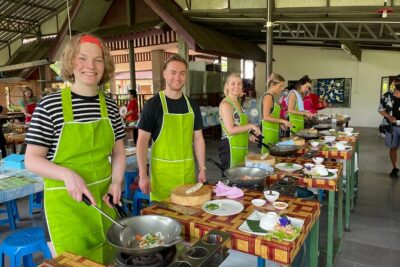
Half-Day Thai Cooking Class at Organic Farm in Chiang Mai
Read our review →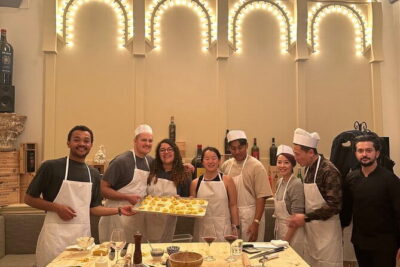
Florence: Pasta Cooking Class with Unlimited Wine
Read our review →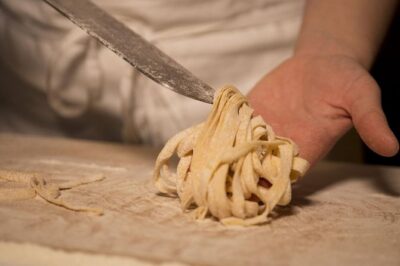
3 in 1 Cooking Class near Navona: Fettuccine, Ravioli & Tiramisu
Read our review →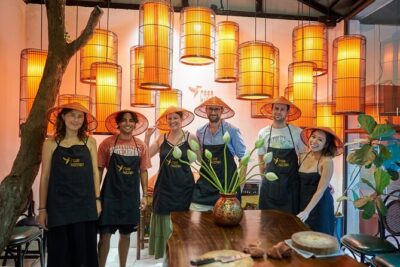
Hanoi Cooking Class: Culture, Local Market & Meaning CSR Impact
Read our review →
5 Traditional Dishes Hanoi Cooking Class with Market Trip
Read our review →
Cooking Class and Lunch at a Tuscan Farmhouse with Local Market Tour from Florence
Read our review →
Chiang Mai: Cooking Class, Market & Thai Herbs Garden Tour
Read our review →Browse the lists this tour appears in