Review · MARRAKECH
Marrakech: Moroccan Cooking Class with Market Visit and Meal
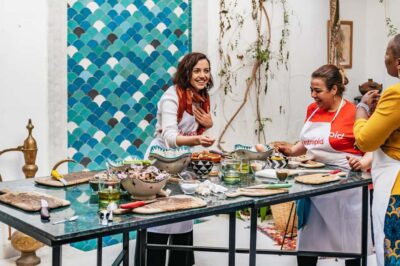
The best part of this Marrakech cooking class happens before the first knife hits the cutting board: you walk into a local market, help choose the vegetables and other ingredients, then return to prepare a full Moroccan meal. The market-to-table format gives the food a clear connection to daily life in the Medina. I also like the small groups, with no more than 10 people, and the warm local team, including instructors such as Kaoutar, Leyla, Bouchra, and Fatiha.
I especially like two things here. First, you do real kitchen work rather than watching a demonstration. Second, the recipes arrive by email afterward, so your tagine does not have to remain a one-trip wonder. The main consideration is timing: the morning session includes the market visit, while the 4:30 pm class goes straight to the kitchen. There is also no transport, so you must reach Flavors of Marrakech on your own.
Key points to know before booking
- Morning means market time: The 10:30 am session includes a walk to a local market to help select vegetables, herbs, chicken, and other ingredients.
- You cook a full menu: Depending on the class, expect tajines, Moroccan salads, starters such as zaalouk and taktouka, tea, and dessert.
- Small groups make it hands-on: The maximum is 10 people, and recent groups have often been smaller.
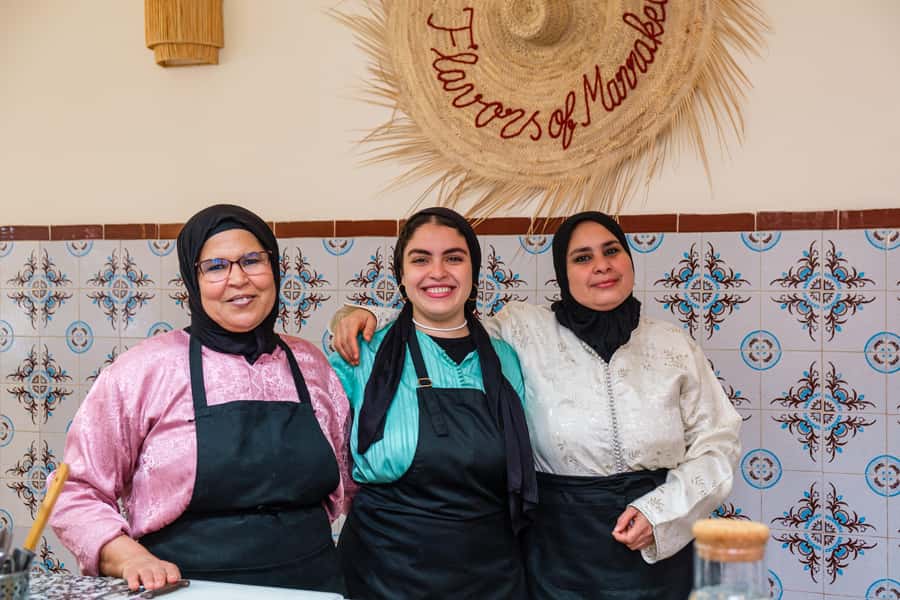
- Local cooks lead the class: Kaoutar, also called Cookie or Kooky, Leyla, Bouchra, Fatiha, Fatima, and other team members have hosted sessions.
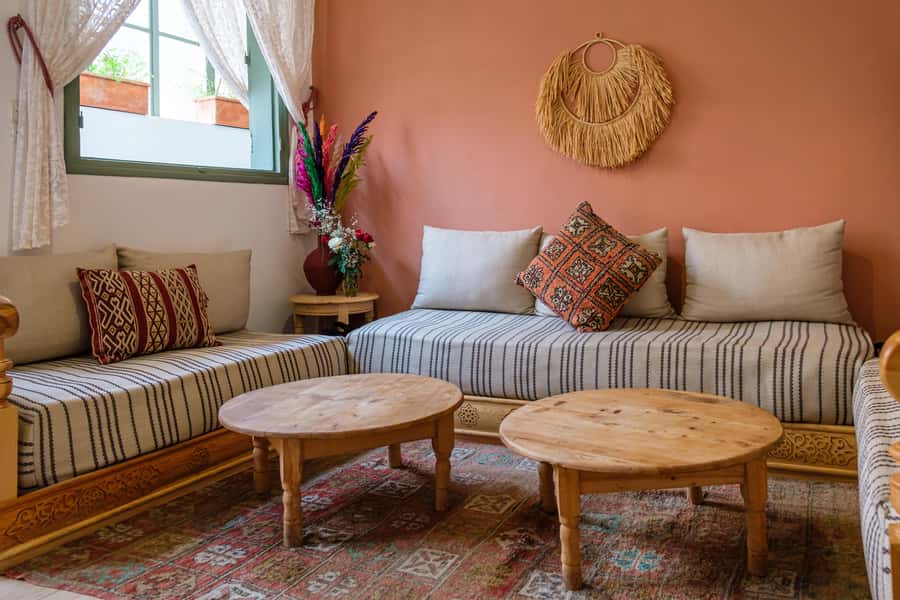
- You eat what you prepare: The final meal is served in a comfortable Moroccan salon, with coffee, tea, and bottled mineral water included.
- The price covers most of the day: At $57 per person, you get the guide, ingredients, tools, cooking class, meal, market visit in the morning, Wi-Fi, and emailed recipes.
A market visit that gives the meal a starting point
The morning class begins at 10:30 am at Flavors of Marrakech, next to the BIM store. From there, you walk with your guide to a nearby local market. This is not a decorative stop added for photos. You help choose some of the food that will later appear on your plate.
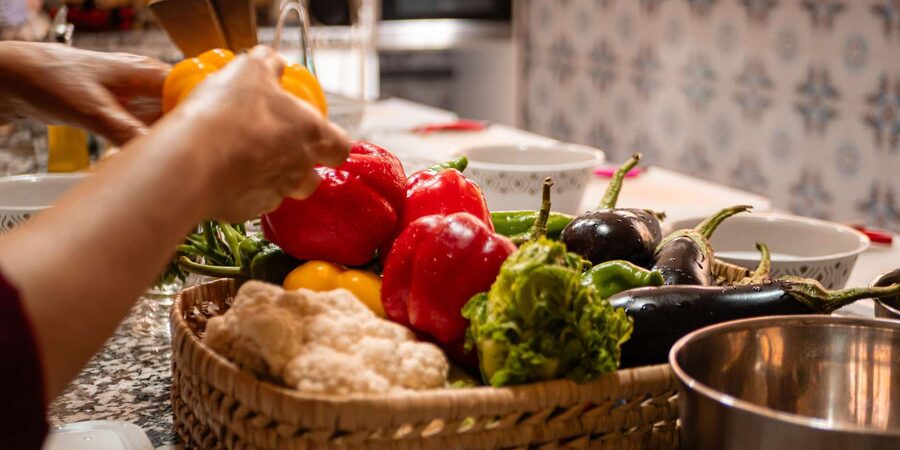
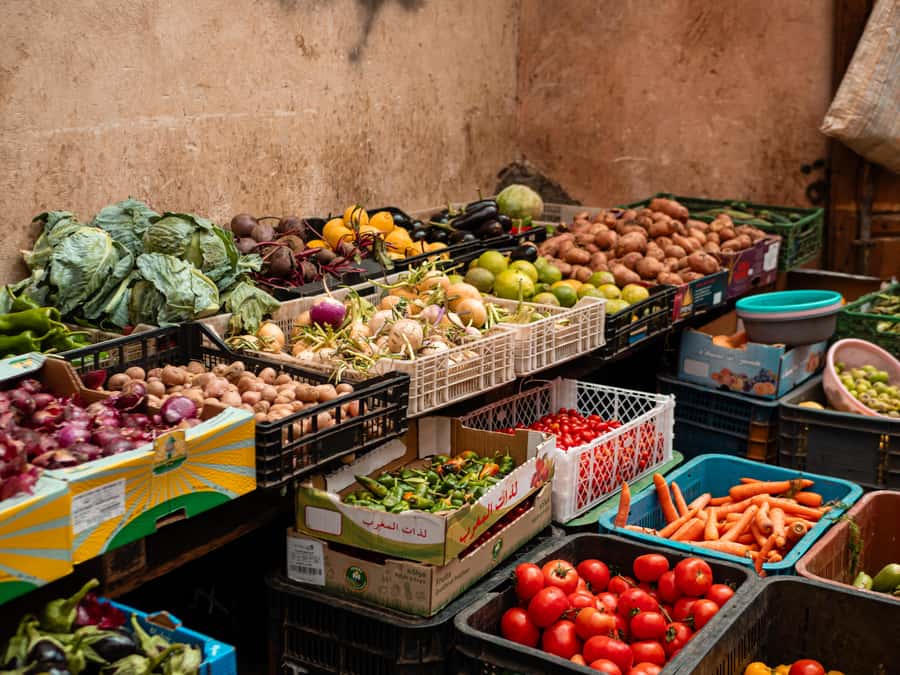
You may be assigned a vegetable or another ingredient to collect in a small basket. The market portion can include vegetables, herbs, chicken, and fresh filo dough for dessert. Your guide explains what you are buying and how the ingredients fit into Moroccan cooking. That simple act of choosing the produce makes the later preparation feel less like a staged class and more like a household meal being planned.
The market also gives you useful food context. Guides have explained halal food preparation and the way chicken is processed. If you are curious, you may watch this part, but it is not required. If you prefer to keep your market visit focused on produce and spices, you can do that.
The main drawback is that a market is a working food market, not a polished cooking-school showroom. You should expect a lively, practical setting and perhaps a few sights that are not for everyone. Comfortable clothes and sensible walking shoes are a good idea. Bring a camera if you want pictures, but keep your hands free enough to walk and shop.
The evening session does not include the market visit. That is an important difference when you compare the two start times. The 4:30 pm option still offers the class, food, tea, and shared meal, but the ingredient-shopping connection is missing.
More Cooking Classes with Lunch in Morocco
- Moroccan Cooking Class with Market Visit and Meal
★ 5.0 · 196 reviews - Moroccan Cooking Class and Fez Market Visit and Meal
★ 5.0 · 40 reviews - Cooking Course with Lunch & Pool Access in Day Pass
★ 5.0 · 32 reviews
Entering a bright kitchen in the Medina
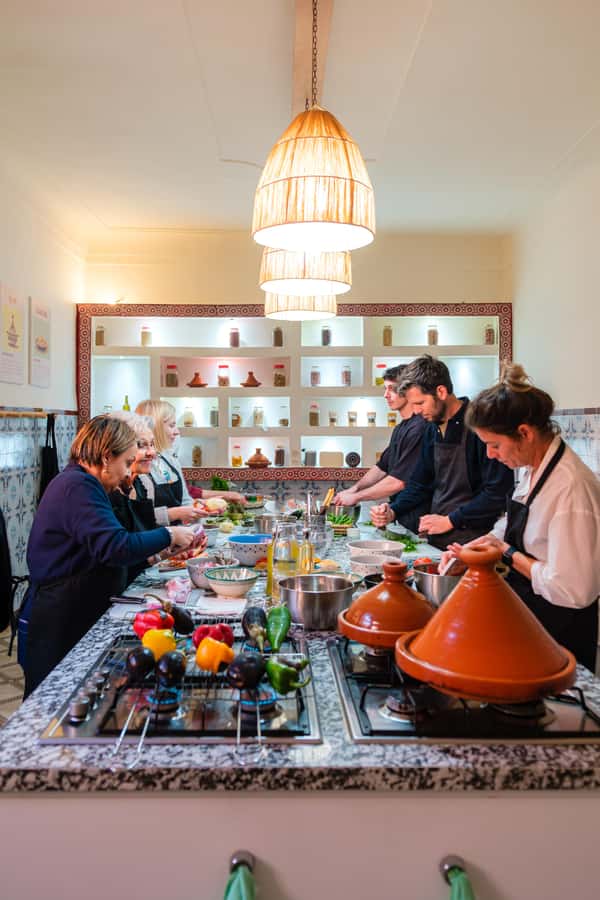
After the market, the group returns to the Flavors of Marrakech kitchen. The space is described as spacious, clean, bright, and well equipped, with Moroccan touches and a separate salon for eating. That matters in a four-hour class. You need room to chop, season, move around, and work with other people without feeling packed against the counter.
The class is limited to 10 participants. Groups of six or seven have been common, and that is a useful size for this kind of activity. You get enough people for a social meal, but not so many that you spend the whole session watching someone else hold the knife.
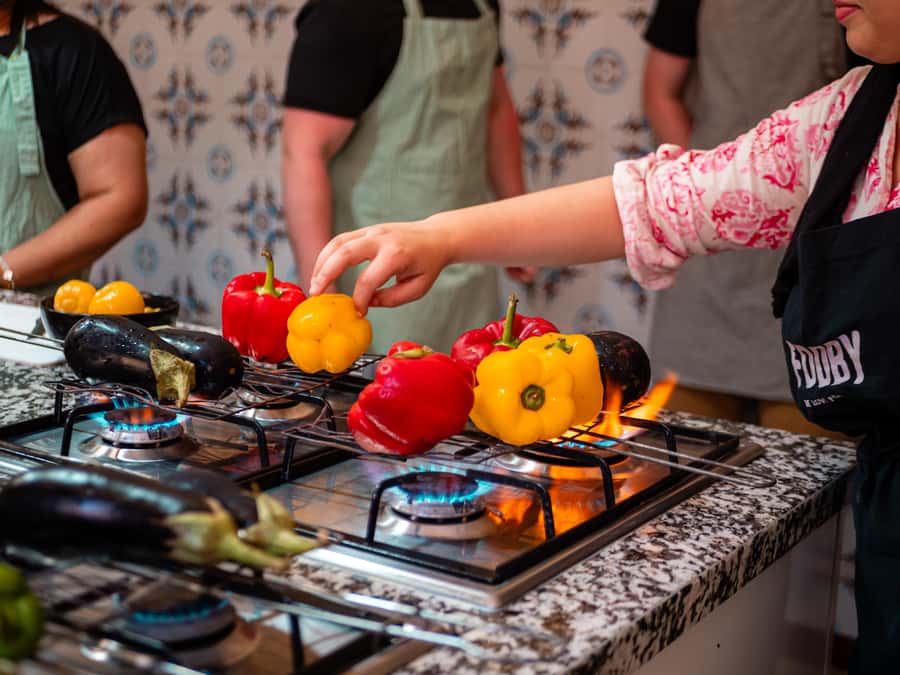
The staff do much of the early washing and organizing, then bring you into the preparation. That keeps the class moving. You are not waiting around for every basic chore, but you still get hands-on work with the vegetables, herbs, spices, and tagines.
Tea breaks help set the tone. Several sessions begin or continue with Moroccan tea before the cooking gets serious. Guides such as Kaoutar and Bouchra have been praised for keeping the mood relaxed, using music and humor, and helping first-time cooks feel comfortable. The class is social, but you do not need previous cooking experience.
Learning Moroccan technique through a full menu
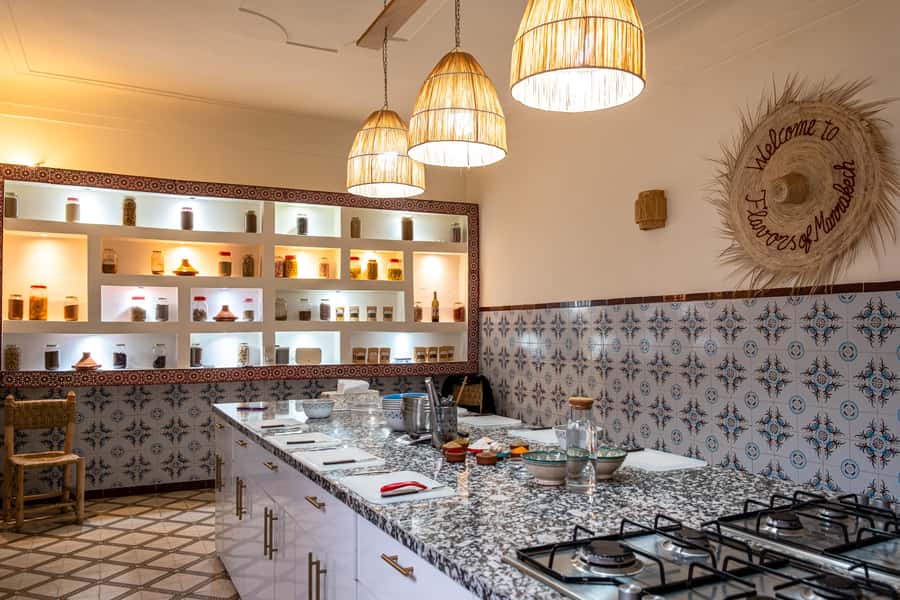
The class is more useful than a single recipe demonstration because it shows how several dishes fit together. You might prepare lemon chicken tagine, a vegetable tagine, Moroccan salad, zaalouk, taktouka, and an almond filo dessert. The exact menu can vary, but the pattern is clear: you work on several courses rather than one main dish.
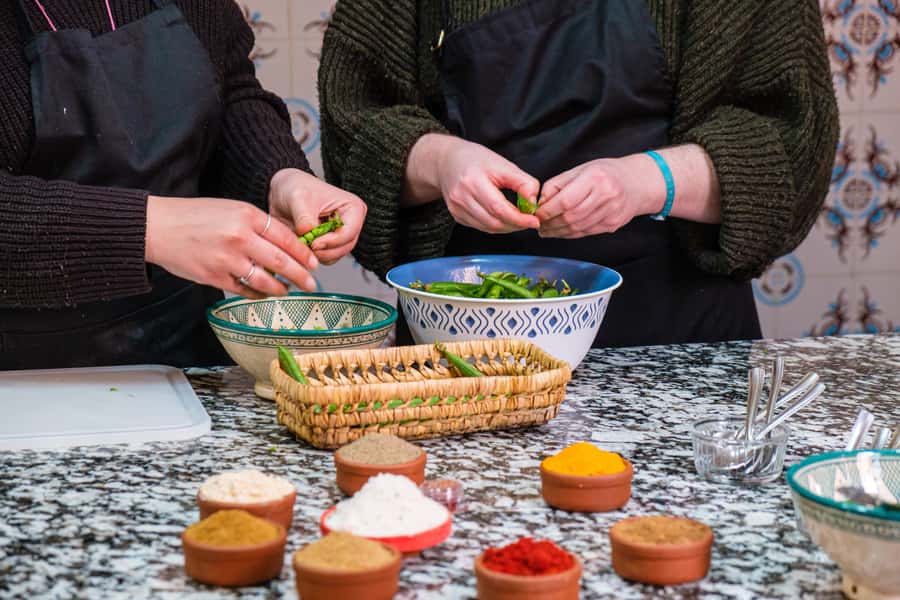
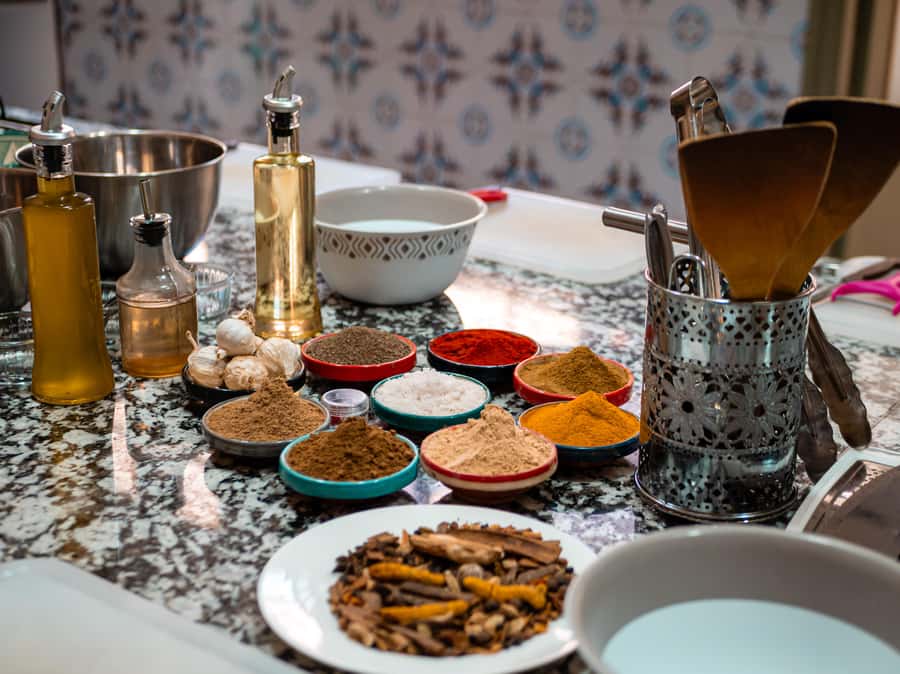
The most important lesson is seasoning. Moroccan cooking depends on balance, not simply piling on spices. You may work with Ras El Hanout, saffron, paprika, cumin, herbs, and other seasonings. The instructors explain when ingredients go into the pot and how the flavors develop while the tagines cook.
You also learn the rhythm of a Moroccan meal. Some items need time on the stove, while others can be prepared during that waiting period. The team coordinates the work so you can prepare starters and dessert while the main dishes cook. This makes the four-hour schedule feel full without being frantic.
The tagines are the main attraction. You prepare the ingredients, arrange them for cooking, and later sit down to eat the result. That direct path from cutting board to dinner is satisfying, especially if you have only eaten tagine in restaurants and want to understand how the dish comes together.
Dessert adds a useful change of pace. Several classes have included almond filo pastry, and the market visit may include buying fresh filo dough. If you have a nut allergy, tell the team before cooking. One class substituted a nut-free dessert, so the kitchen has shown flexibility, but you should still make your needs clear in advance.
Why the cultural conversation matters
This is not only a recipe class. Guides talk about Moroccan food, family cooking, spices, food traditions, and local customs while you work. That conversation gives you a better sense of why Moroccan meals are prepared and shared in a certain way.
The local women assisting in the kitchen are part of the experience. You may work with a lead instructor and several helpers, including family members or members of the regular team. Their role is practical: they guide your chopping, answer questions, help with timing, and keep the meal on track.
The language setup is straightforward. The class is offered in English and Arabic. English-speaking guides such as Leyla, Kaoutar, Bouchra, and Fatiha have led sessions, though the exact instructor depends on the date. You should still expect different accents and a cooking class rather than a formal lecture. The useful information comes through demonstration, conversation, and doing the task yourself.
I like this balance. A polished food tour can tell you about Moroccan cuisine without letting you touch anything. Here, the cultural information is tied to an action: smelling cumin, handling filo dough, choosing vegetables, or learning why a particular spice goes into a dish.
More Market Tour Cooking Classes in Marrakech
- Marrakech: Traditional Moroccan Cooking Class & Market Visit
★ 4.8 · 1,861 reviews - Edgy 8 Dish Private, Fusion Cooking Class, Menu Plan, Market
★ 4.9 · 31 reviews - Marrakesh: Private Cooking Class & Local Market Shopping
★ 4.7 · 15 reviews - Marrakech: Cooking Class and Market Visit
★ 4.4 · 5 reviews
Sitting down to a feast you helped make
At the end, the group eats together in the salon. Coffee, tea, and bottled mineral water are included, and the meal is the main reward for all the preparation. The food is served in a comfortable setting rather than handed over in disposable containers.
The menu can be substantial. Some sessions have produced two tagines, several starters, salad, dessert, and tea. That is a lot of food for four hours, so arrive ready for a long meal rather than a quick tasting.
The shared table is part of the appeal. You cook beside people you may not know, then sit down with them to eat. This works especially well for couples, families, solo visitors, and small groups who enjoy talking while they work. One parent brought a 9-year-old daughter, and the class was described as suitable for different cooking skill levels.
The food itself is likely to be the highlight. The point is not restaurant plating. You are eating a communal meal made by the group, with guidance from local cooks. That makes the final dishes feel personal. You can compare the tagines, ask about the spices, and remember which part you chopped or seasoned.
Keep your expectations sensible. You are not receiving a private chef experience with a custom menu. You are joining a small group and sharing the work. If you want a quiet, highly formal meal, this may not be your best choice. If you enjoy food more when you have helped make it, the format makes good sense.
What the $57 price really covers
At $57 per person, this is not the cheapest way to eat lunch or dinner in Marrakech. You could order a Moroccan meal for less. The value comes from the four-hour package: a guide, market visit for morning bookings, ingredients, equipment, instruction, the meal, tea and coffee, water, Wi-Fi, and a PDF of the recipes.
The recipe file is an important extra. It gives you a chance to repeat the dishes at home instead of leaving with only a memory of the spice mix. One participant did not receive the recipes because of temporary internet problems, so check your email after the class and follow up if needed.
The class also saves you from buying ingredients in unfamiliar quantities and figuring out the preparation alone. You receive instruction while the meal is being made, and the food you prepare becomes lunch or dinner. For anyone who values an activity as much as a meal, the price is fair.
The strongest value comes with the morning booking. The market visit adds a cultural element and helps you understand the ingredients. If you choose the evening class because it fits your schedule, you still receive the cooking experience, but you are paying the same listed price without that market portion.
Practical details for a smoother visit
You must arrange your own way to the meeting point. Go to Flavors of Marrakech next to the BIM store and enter to meet the staff. The activity does not include pickup or drop-off, so allow extra time to find the location in the Medina.
The class lasts four hours. The morning session begins at 10:30 am, and the evening session begins at 4:30 pm, subject to availability. Choose the morning if the market is important to you. Choose the evening if you prefer to cook later or have other morning plans.
Wear comfortable clothes. Cooking involves chopping, seasoning, and moving around the kitchen, and the market visit adds walking. A camera is welcome, but it is not essential.
Free cancellation is available up to 24 hours before the activity for a full refund. You can also reserve now and pay later, which helps if your Marrakech schedule is still changing. The class is offered in English and Arabic, and the group limit is 10.
Who should book this Marrakech cooking class?
I would choose this experience if you want more than a restaurant meal and enjoy learning by doing. It suits first-time cooks because the instructors guide each step, but experienced home cooks will also pick up ideas about spice use, tagine preparation, and Moroccan side dishes.
It is a particularly good choice for:
- Couples who want a shared food activity
- Families with older children who can take part in preparation
- Solo visitors who enjoy meeting a small group
- Anyone curious about Moroccan markets and halal food customs
- People who want recipes they can use at home
- Visitors who want a cultural activity close to Jemaa el-Fna
You might skip it if you dislike group activities, cannot spend four hours on one meal, or want a market visit in the evening. You should also tell the team about allergies before the class, especially if nuts are a concern.
Should you book Flavors of Marrakech?
Yes, if you want a friendly, practical introduction to Moroccan food. The morning class is the better pick because the market visit adds real value, but the evening option still delivers the core cooking and dining experience.
At $57, you are paying for instruction, ingredients, a full meal, and a cultural activity, not just lunch. The strongest reasons to book are the small group, local cooking team, hands-on menu, and recipes for home. The one clear limitation is that the market visit is available only in the morning, and transport is not included.
Book this when you want your Marrakech meal to come with a story, a little work, and a recipe you can make again.
FAQ
How long does the Marrakech cooking class last?
The activity lasts four hours. The morning session starts at 10:30 am, and the evening session starts at 4:30 pm, subject to availability.
Does every session include a market visit?
No. The local market visit is included with the morning session. The evening session focuses on the cooking class and shared meal.
Where does the experience meet?
Meet at Flavors of Marrakech, located next to the BIM store. Enter the venue and meet the staff inside.
What food will I cook?
The menu can include Moroccan salads, zaalouk, taktouka, two tagines such as lemon chicken and vegetable tagine, dessert, and tea. The exact dishes may vary.
Are ingredients and cooking equipment included?
Yes. Ingredients and cooking tools are included, along with the guide, cooking class, meal, coffee, tea, bottled mineral water, and Wi-Fi.
Will I receive the recipes afterward?
Yes. A PDF of the recipes used in the class is sent by email. If you do not receive it, check your email and contact the provider.
More Moroccan Cooking Classes in Marrakesh
- Marrakech: Moroccan Cooking Class with Pickup
★ 4.6 · 1,862 reviews - Marrakesh: Moroccan Dishes Cooking Class with a Local Chef
★ 5.0 · 1,615 reviews - Marrakech: Moroccan Cooking Class with a Local Family
★ 4.9 · 668 reviews - Marrakech: Moroccan Cuisine Cooking Class in Local Home
★ 4.8 · 508 reviews
More Market Tour Cooking Classes in Morocco
- Moroccan Cooking Class & Marrakech Market Visit with Chef Khmisa
★ 5.0 · 1,504 reviews - Fez: Souk Tour and Traditional Home Cooking Class
★ 4.9 · 186 reviews - Flavors of Fez: Market visit, and a hands-on cooking class.
★ 4.6 · 112 reviews - Old local Market visit+Moroccan cooking class with a local family
★ 5.0 · 84 reviews
Just added around Marrakesh
- Moroccan Food Cooking Class with a Local Chef in Marrakech★ 4.7 · 90 reviews
- Marrakech: 3-Hour Open-Air Moroccan Cooking Course★ 4.9 · 74 reviews
- Edgy 8 Dish Private, Fusion Cooking Class, Menu Plan, Market★ 4.9 · 31 reviews
- Moroccan cooking class in Marrakech with berber chef★ 5.0 · 16 reviews
- Marrakesh: Private Cooking Class & Local Market Shopping★ 4.7 · 15 reviews
- Marrakech: Moroccan Cooking Class for vegetarians and vegan★ 4.9 · 156 reviews
- Marrakech: Moroccan Cooking Class with Amazing Local Chef!★ 4.9 · 100 reviews
- Marrakech: Moroccan Cooking Class with Local Chef★ 4.6 · 87 reviews
Moroccan Cooking Classes, compared.
Marrakech: Moroccan Cooking Class with Pickup
Read our review →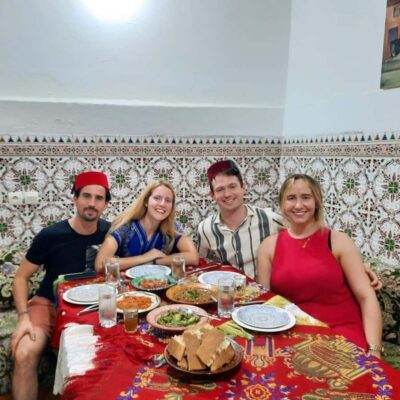
Marrakech: Traditional Moroccan Cooking Class & Market Visit
Read our review →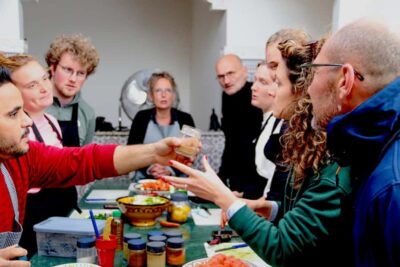
Marrakesh: Moroccan Dishes Cooking Class with a Local Chef
Read our review →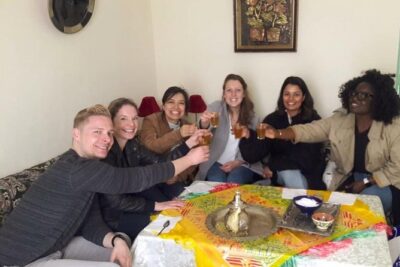
Moroccan Cooking Class & Marrakech Market Visit with Chef Khmisa
Read our review →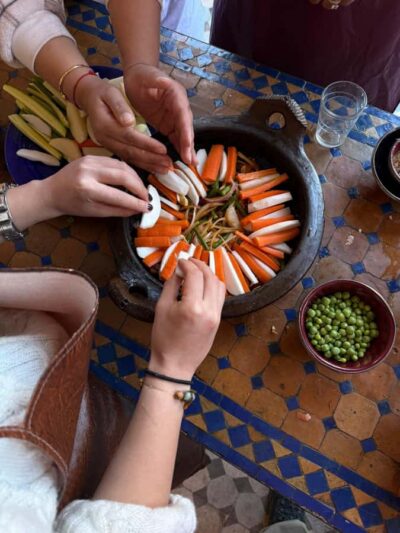
Marrakech: Moroccan Cooking Class with a Local Family
Read our review →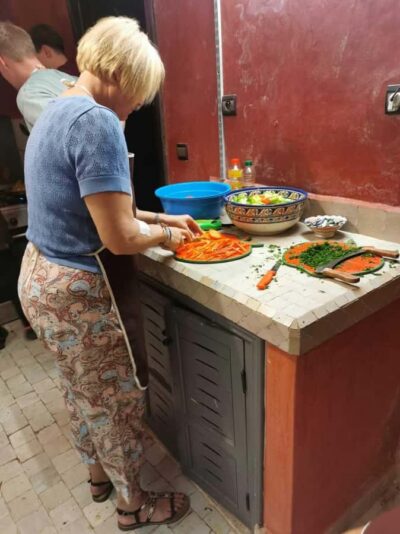
Marrakech: Moroccan Cuisine Cooking Class in Local Home
Read our review →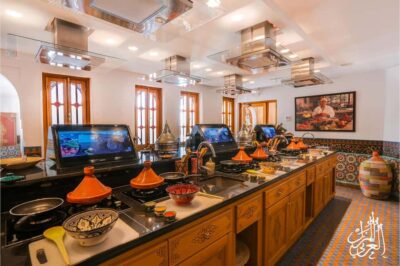
Marrakech: Moroccan Cooking Workshop at La Maison Arabe
Read our review →