Review · CHINESE
Ramen & Dumpling Cooking in Tokyo with Chef/Vegan possible
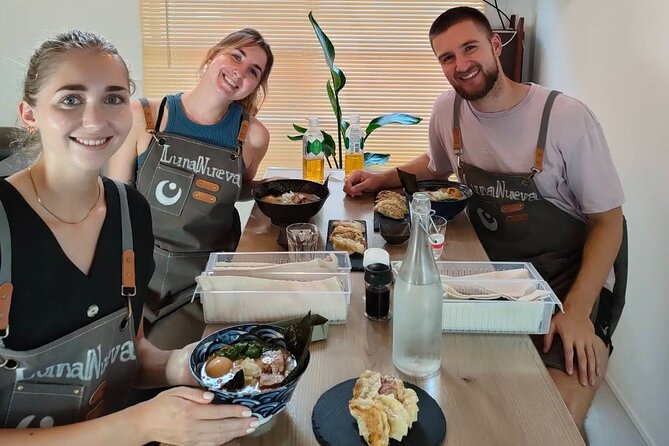
The best part of this Tokyo food class is that you do not simply watch someone cook ramen. You make fresh noodles, fold gyoza, season eggs, prepare toppings, and assemble a bowl under the guidance of Yoshi and Amo. The class takes place in a clean, cozy Japanese home near Ekoda Station, away from Tokyo’s busiest tourist streets.
I like the small group limit of 12, which gives you a real chance to ask questions and get cooking tips. I also like the practical result: you leave with techniques you can use at home, plus recipes intended for you to recreate later. The main consideration is the location outside the central sightseeing areas, and the class lasts about two hours, so you need to allow time for the train ride and meeting point.
Key points to know before booking
- Fresh noodles are part of the hands-on work, not just a demonstration.
- Ramen and gyoza make a filling meal, so arrive hungry.
- Yoshi and Amo teach in a friendly, personal setting with plenty of conversation.
- Vegetarian, vegan, and other food restrictions may be accommodated when arranged ahead of time.
- The class meets at Ekoda Station in Nerima City and ends at the same meeting point.
- Morning and noon start times make it easier to fit the class into a Tokyo sightseeing day.
Why this ramen class feels different from a restaurant meal
Tokyo gives you endless chances to eat ramen. You can find tiny noodle shops, polished department-store counters, and famous bowls with long lines. But eating a finished bowl tells you little about how the dish comes together.
This class gives you the missing steps. You get to see how noodles, broth, meat or other ingredients, toppings, and seasoning work together. You also learn that ramen is not one single recipe. It is a set of techniques and choices that can be adjusted to suit your taste.
I especially like the fact that the class includes both ramen and gyoza. These dishes belong together on many Japanese menus, but they involve different skills. Ramen teaches you about broth, noodles, toppings, and final presentation. Gyoza gives you a more tactile task as you fill and fold dumplings.
The setting adds something that a large cooking school cannot. The class takes place in the hosts’ Japanese home, rather than in a commercial kitchen built for a crowd. That makes the experience feel more personal and gives you a glimpse of a quieter residential part of Tokyo.
More Vegan Cooking Classes in Japan
- Ramen Making from Scratch with Tokyo Mom(Vegan Option Available)
★ 5.0 · 39 reviews - Shibuya Tokyo: Sushi Making Class (Vegan/Vegetarian/Halal)
★ 4.7 · 29 reviews - Vegan/Vegetarian Ramen and Gyoza by Bentoya cooking
★ 5.0 · 59 reviews
Meeting Yoshi and Amo near Ekoda Station
Your starting point is Ekoda Station, at 1 Chome-78 Asahigaoka, Nerima City, Tokyo 176-0005. The activity ends back at the meeting point, so you do not need to arrange a separate return transfer.
The station is near public transportation, but this is not a class in the middle of Tokyo’s main sightseeing zone. You should allow enough time to reach Ekoda without rushing. The hosts may meet you at the station and walk with you to the home, which is useful if you are unfamiliar with the neighborhood.
I see the location as a tradeoff rather than a problem. You give up some convenience, but you gain a look at a less commercial side of Tokyo. Several people who enjoyed the class also liked getting out of the main tourist areas and seeing a more local residential setting.
Use the station meeting point carefully. Tokyo has many stations with similar names, and a small error can create needless stress. Keep the meeting details available on your phone, and arrive with a little spare time.
The first kitchen lesson: ingredients and broth
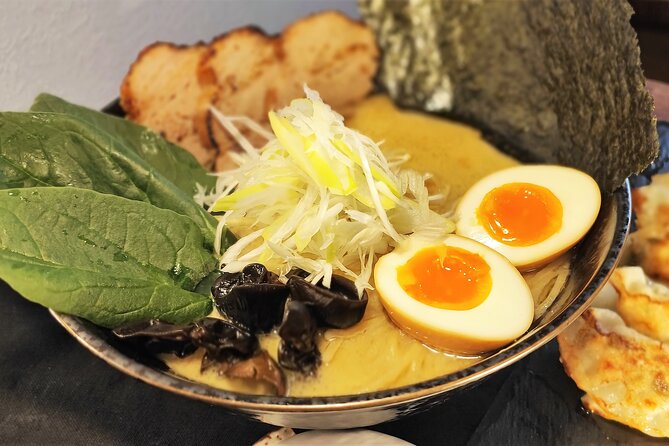
The class begins by bringing you into the basic building blocks of ramen. You learn about local ingredients and the role each part plays in the finished bowl.
One useful detail is that some of the broth and meat preparation may be completed in advance. That is not a shortcut that weakens the class. Serious broth can take a long time, and doing every stage from the beginning would not fit into a two-hour session.
Instead, you get a practical view of the full process while spending your hands-on time on the steps that teach the most. You can ask about the broth process, see how its flavor supports the noodles and toppings, and then work on the components you can realistically repeat at home.
Yoshi’s cooking knowledge is a major part of the experience. The class also includes stories and tips from the restaurant world, so you are not only following instructions by rote. You learn why a technique matters and how small changes affect the final dish.
The hosts explain the process in English, according to the information provided. The tone is conversational and patient, which helps if you are a beginner rather than an experienced home cook.
Making noodles, toppings, and seasoned eggs
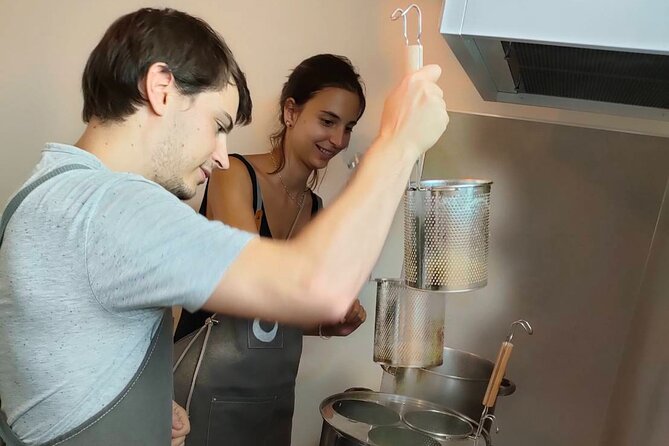
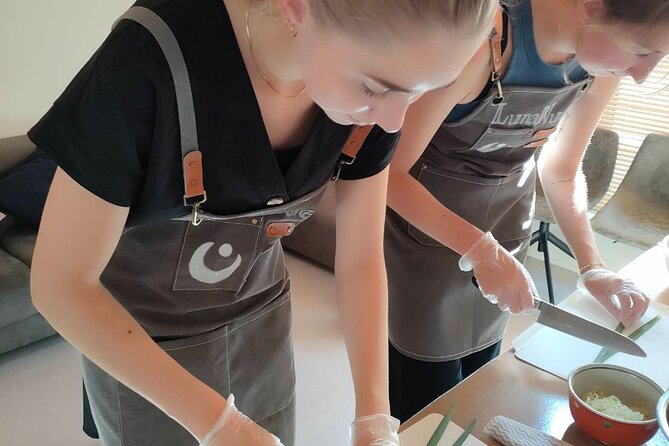
Fresh noodles are one of the most memorable parts of the class. You get to work with the dough and see how the noodles become part of the finished bowl. For many people, this is more satisfying than simply adding packaged noodles to a pot.
You also prepare seasoned eggs and colorful toppings. These steps show how ramen gets its character from more than broth alone. Texture, color, salt, and presentation all matter.
I like this part because it gives you choices. A finished restaurant bowl arrives already decided by the chef. Here, you can build a bowl around what you enjoy, and picky eaters can adjust their toppings. That makes the class a good fit for families with different tastes.
Do not expect a full professional culinary apprenticeship in two hours. You will learn selected techniques rather than every possible ramen style. The value comes from focused instruction and the chance to repeat the core tasks, not from covering an entire cooking curriculum.
More Sushi and Japanese Classes in Tokyo:
- Sushi Making Tokyo Roll and Authentic Japanese Sushi Class
★ 5.0 · 3,971 reviews - Tokyo: Roll and Authentic Sushi Making Class in Asakusa
★ 4.9 · 1,957 reviews - Tokyo: Sushi Making Class in a Happi Coat near a Famous Spot
★ 4.9 · 1,377 reviews - Sushi Making Tokyo! Popular Maki Sushi & Japanese Sushi(+Recipe!)
★ 5.0 · 1,314 reviews
Folding gyoza like a local
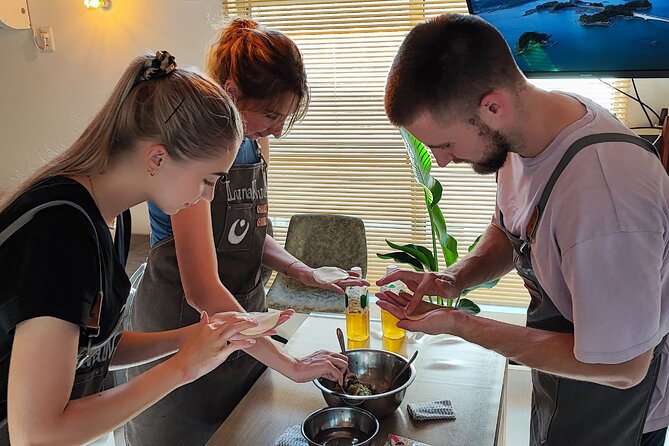
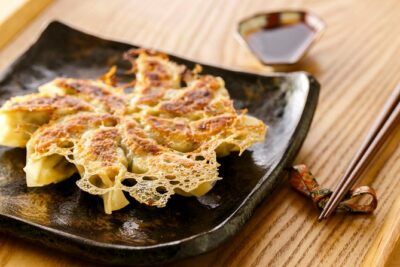
Gyoza adds a second hands-on activity and breaks up the noodle work. You prepare the filling and practice folding the dumplings into their familiar shape.
Folding looks simple until you try to make several dumplings that match. The class gives you feedback as you work, so you can improve your technique instead of struggling alone. This is also a relaxed activity for families and groups because everyone can take part at the same time.
The dumplings are not an extra sample on the side. They form part of the meal, along with the ramen. That is why I would follow the advice to arrive hungry. The food adds up quickly, especially when you are tasting ingredients during the process.
The gyoza section also gives the experience a useful afterlife. Once you learn the folding method, you can use it with different fillings at home. You do not need a special Tokyo kitchen to repeat that part.
Building your own ramen bowl
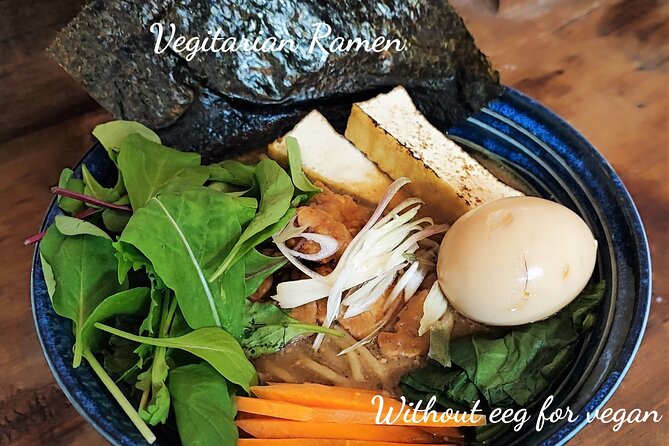
The class finishes with the most rewarding stage: putting everything together. You plate the noodles, broth, seasoned egg, and toppings to create your own ramen bowl.
This final step shows why timing matters. Noodles need to meet the soup at the right moment, and toppings need to look appealing without burying the bowl. You get to see how a restaurant-style presentation is built from several separate preparations.
The finished meal is the payoff, but it is also a useful test of what you learned. You can taste how the broth works with the noodles and toppings, and you can notice the difference between a bowl assembled with care and one thrown together quickly.
The class is designed around a substantial meal, not a small cooking sample. If you have a large breakfast before a morning session, you may be too full to enjoy the food. I would keep your earlier meal light.
Food restrictions and vegan planning
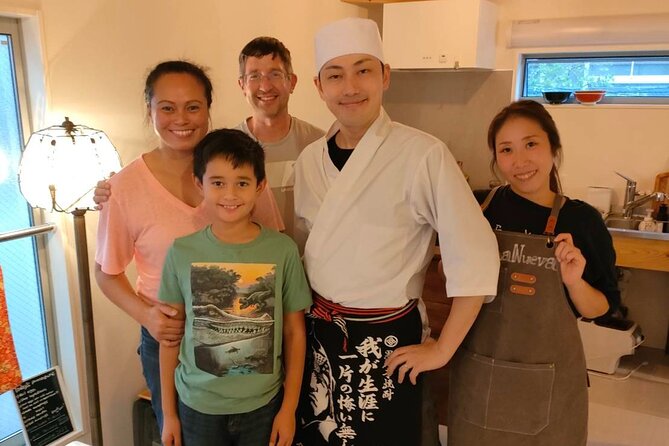
The activity description says vegan options are possible, and the class has accommodated vegetarian diets and meals without fish or seafood. This is encouraging for anyone who cannot eat the standard ingredients often found in ramen and gyoza.
Still, you should contact the provider before the class and explain your needs clearly. Ramen broth can include meat, fish, seafood, or other ingredients that are not obvious at first glance. A request made early gives Yoshi and Amo time to prepare suitable choices.
Do not assume that a general vegetarian request automatically covers every restriction. State whether you need vegetarian, vegan, no fish, no seafood, or another specific adjustment. The more precise you are, the easier it is for the hosts to plan.
The class is also a good choice for families with different diets, since separate options may be prepared. That is more useful than a generic promise of flexibility because it lets each person enjoy the meal rather than simply watch others eat.
A small group with room for questions
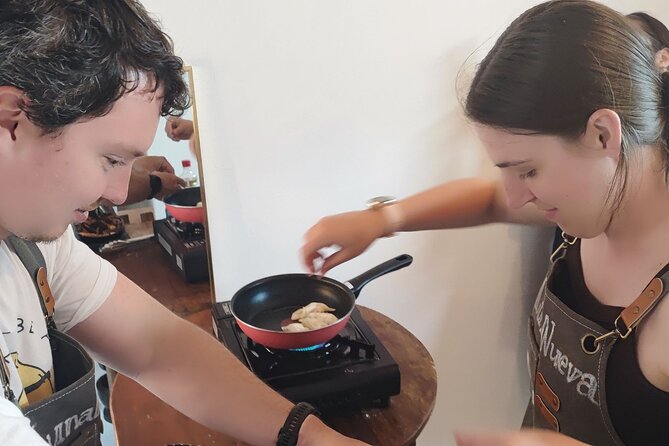
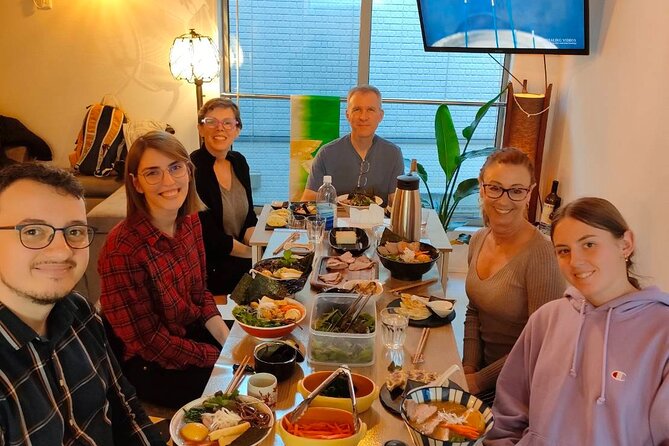
The maximum group size is 12 people. That is small enough to allow personal help, though the actual number on your date may be lower.
A group of 12 is not the same as a private class. You may share the kitchen with other people, and the pace will include some waiting while everyone completes a step. Still, the format gives you more contact with the instructor than a large demonstration.
The class works especially well for couples, families, and small friend groups. Children around the early teen years have enjoyed the cooking, and the tasks are varied enough to keep the session moving. Younger children may need help with hot food, sharp tools, or the folding work, but the supplied information does not set a minimum age.
I like the social side of the class. Cooking together creates easy conversation, and the hosts share tips about other things to do in Tokyo. The setting is friendly without requiring you to spend a full day with a group.
Is the $102.41 price good value?
At $102.41 per person, this is not a cheap bowl of ramen. If your only goal is to eat noodles, you can spend far less at a Tokyo restaurant.
The price makes more sense when you count the full experience. You get about two hours of instruction, the ingredients, fresh noodles, gyoza, toppings, and a complete meal. You also get personal guidance, cultural context, and recipes that can help you make the dishes again at home.
A restaurant meal gives you convenience and perhaps a more polished bowl. This class gives you participation and useful skills. I would consider it good value for people who enjoy food, cooking, and meeting local hosts, but less worthwhile for someone who wants a quick lunch between major attractions.
The small group format improves the value. You are paying for access to an instructor and a hands-on session, not only for ingredients. The more questions you ask and the more carefully you practice, the more you get from the price.
How to fit the class into your Tokyo day
You can choose a morning or noon class. The morning option works well if you want a hearty meal before an afternoon of sightseeing, while the noon session can serve as a late lunch and cultural activity.
Because the class takes about two hours and starts at a station outside the main tourist core, do not place it between two tightly timed reservations. Give yourself enough time to reach Ekoda, meet the hosts, cook, eat, and return to the station.
The experience is best treated as a destination for part of the day, not as a quick stop. You may also want to walk around the residential area before or after class. The neighborhood gives you a different view of Tokyo than the large shopping and entertainment districts.
Your mobile ticket is useful for keeping the booking details available while you travel. Confirmation is sent within 48 hours of booking, subject to availability, so do not assume the reservation is final until you receive it.
Free cancellation is available if you cancel at least 24 hours before the start time. Cancellations or changes made inside that 24-hour window are not accepted for a refund, with cut-off times based on local Tokyo time.
Who should book this experience?
I would recommend this class to food-focused visitors who want more than a restaurant meal. It suits people who like to learn by doing, families seeking a shared activity, and couples looking for a personal experience in a residential part of Tokyo.
It is also a sensible choice for anyone who wants to recreate Japanese food at home. The recipes and techniques give you something useful to take back, especially the noodle work, dumpling folding, toppings, and bowl assembly.
You may want to skip it if you dislike cooking, have very limited time, or want to stay near Tokyo’s best-known sightseeing districts. The class requires a train ride and a two-hour commitment, and the value depends on your interest in the process.
My booking advice
I would book this class if ramen and gyoza are high on your list and you want to understand how they are made. Yoshi and Amo offer a warm, personal setting, and the combination of fresh noodles, dumplings, toppings, and a full meal gives the session real substance.
Before paying, confirm your meeting details and send all dietary requirements in advance. Pick the morning or noon slot that leaves breathing room around the rest of your day, then arrive hungry. At $102.41, this is a food lesson and cultural visit, not simply lunch, and it is worth the price when you want skills and memories to take home.
FAQ
Where does the ramen and gyoza class meet?
The class meets at Ekoda Station, at 1 Chome-78 Asahigaoka, Nerima City, Tokyo 176-0005, Japan.
Where does the activity end?
The activity ends back at the meeting point.
How long does the class last?
The experience lasts approximately two hours.
Are morning and noon start times available?
Yes. You can choose between a morning class and a noon class.
How large is the group?
The activity has a maximum of 12 travelers.
Can the class accommodate vegan or vegetarian diets?
Vegan options are possible, and vegetarian and no-fish or no-seafood meals have been accommodated. Contact the provider in advance with your exact dietary requirements.
What will I make during the class?
You will make ramen and gyoza, including fresh noodles, seasoned eggs, toppings, dumpling folds, broth, and a finished ramen bowl.
Can I cancel for a full refund?
Yes. You can cancel at least 24 hours before the experience start time for a full refund. Cancellations or changes made less than 24 hours before the start time are not accepted for a refund.
More Vegan Cooking Classes in Tokyo
- Oaxacan Vegetarian Cooking Class
★ 5.0 · 235 reviews - Marrakech: Moroccan Cooking Class for vegetarians and vegan
★ 4.9 · 156 reviews - Hoi An: Vegetarian Cooking Class w Local Family and transfer
★ 4.9 · 145 reviews - Oaxaca: Vegetarian Cooking Class
★ 4.8 · 139 reviews
More Chinese Cooking Classes in Tokyo
- Tokyo: Real Ramen & Dumpling Cooking with Master Chef
★ 5.0 · 10 reviews - Warsaw’s No 1 cooking class-Polish dumplings with liqueur tasting
★ 5.0 · 576 reviews - Gyoza Cooking Class in Kyoto: Traditional Japanese Dumplings
★ 5.0 · 210 reviews - Flavors of Beijing: Eat Like A Real Chinese
★ 5.0 · 78 reviews
Just added around Tokyo
- Tokyo: Tsukiji Market Walking Tour & Sushi Cooking Class★ 4.6 · 122 reviews
- Tokyo: Sushi Cooking Class with Sake Tasting★ 4.8 · 55 reviews
- Sushi-Making Experience★ 4.7 · 4 reviews
- Tokyo: Tsukiji Market Guided Tour & Sushi-Making Experience★ 4.4 · 11 reviews
- Tokyo: Sushi and Ramen Cooking Class with Sake Pairing Set★ 5.0 · 81 reviews
- Tokyo: Kawaii Bento Cooking Class – Cute Character Lunchbox★ 4.9 · 55 reviews
- Tokyo: Learnt to cook Bento, Oyakodon and More!★ 5.0 · 5 reviews
- Tokyo: Real Ramen & Dumpling Cooking with Master Chef★ 5.0 · 10 reviews
Japanese & Sushi Cooking Classes, compared.
Sushi Making Tokyo Roll and Authentic Japanese Sushi Class
Read our review →
Tokyo: Roll and Authentic Sushi Making Class in Asakusa
Read our review →
Ramen Cooking Class at Ramen Factory in Kyoto
Read our review →
Tokyo: Sushi Making Class in a Happi Coat near a Famous Spot
Read our review →
Sushi Making Tokyo! Popular Maki Sushi & Japanese Sushi(+Recipe!)
Read our review →
Sushi Making Osaka Roll and Authentic Japanese Sushi Class
Read our review →
Tokyo Sushi Making Class in Tsukiji with Professional Chef
Read our review →