
Review · VEGAN & VEGETARIAN
Ramen Making from Scratch with Tokyo Mom(Vegan Option Available)
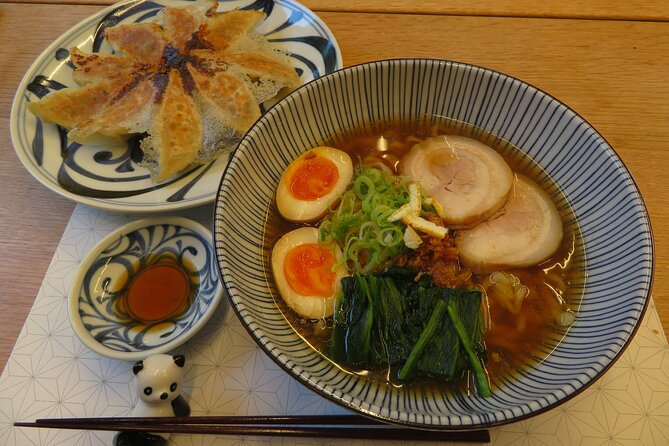
The best part of this class is that you do not simply eat ramen, you learn how the bowl comes together. Aki, a Japanese mother and former backpacker, guides you through handmade noodles, broth, and gyoza in a small kitchen near Shinjuku Gyoenmae Station. Everything starts with basic ingredients, not MSG or artificial flavorings.
I like the personal scale, with no more than six people, and I like that the recipes are practical enough to repeat at home. Aki and her helper Kanna have also handled family groups well, including children and mixed dietary needs. The main consideration is the price: at $120 per person, this is more costly than a casual ramen meal, so you are paying for instruction, ingredients, and time with a local host.
Key points at a glance
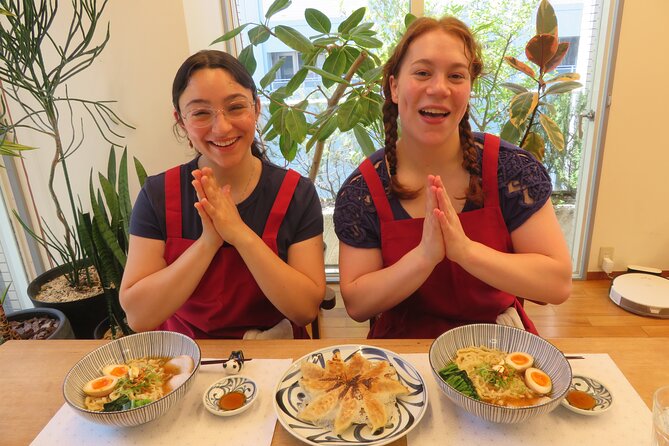
- Handmade from start to finish: Knead, roll, and cut your own ramen noodles, then prepare broth and gyoza.
- Aki leads the class: Her English-speaking instruction is warm, patient, and easy to follow.
- Small group setting: The kitchen accepts a maximum of six people, which allows room for questions and individual help.
- Natural Japanese flavors: Learn to use kombu, katsuobushi, and shiitake mushrooms for umami without MSG.
- Good for families: Children have been welcomed, and the relaxed setting keeps the work friendly rather than formal.
- Convenient Shinjuku location: The kitchen is about a five-minute walk from Shinjuku Gyoenmae Station and ends where it begins.
Why this ramen class feels different from a restaurant meal
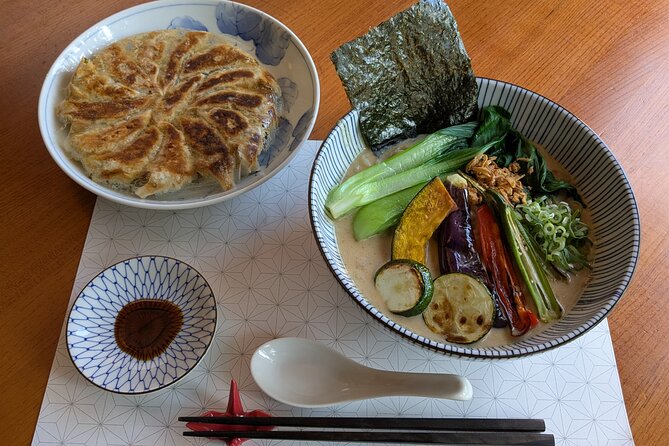
Ramen is easy to eat and harder to understand. A good bowl depends on the noodles, the broth, the seasoning, and the timing all working together. This class gives you a look at those parts instead of presenting the finished dish as a mystery.
Aki teaches you how texture affects the noodles and how Japanese ingredients build flavor. Kombu, katsuobushi, and shiitake mushrooms each bring a different kind of savoriness. You get to see how natural ingredients can create a full-tasting broth without relying on MSG or artificial flavoring.
That makes the class useful beyond your time in Tokyo. You receive a digital recipe sheet, and the methods are meant to be manageable in a home kitchen. You may not reproduce every detail perfectly on your first try, but you leave with a better sense of what to look for: noodle thickness, broth balance, and the right amount of seasoning.
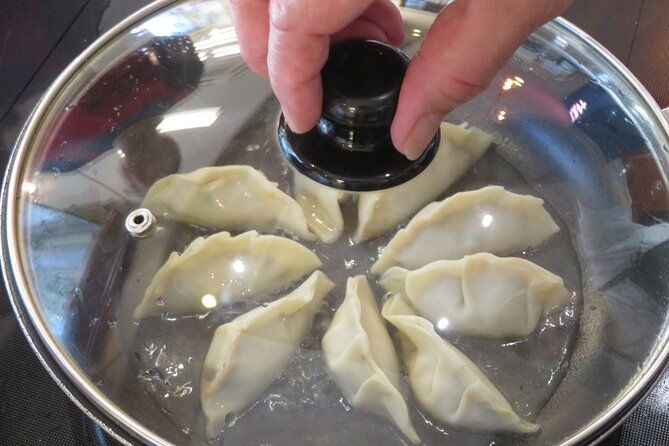
The second dish matters, too. Gyoza gives you a different kind of hands-on work. You prepare the filling, shape the dumplings, and cook them as part of the same session. Ramen can feel technical, while gyoza is tactile and social. Together, the two dishes make the class feel like a full Japanese cooking lesson rather than a single recipe demonstration.
More Vegan Cooking Classes in Japan
- Ramen & Dumpling Cooking in Tokyo with Chef/Vegan possible
★ 5.0 · 107 reviews - Shibuya Tokyo: Sushi Making Class (Vegan/Vegetarian/Halal)
★ 4.7 · 29 reviews - Vegan/Vegetarian Ramen and Gyoza by Bentoya cooking
★ 5.0 · 59 reviews
Arriving near Shinjuku Gyoenmae Station
The kitchen is about a five-minute walk from Shinjuku Gyoenmae Station, in the Shinjuku area of Tokyo. You come directly to the meeting point, since transportation is not included. The activity begins and ends at the same location.
That setup works well for a half-day plan. You can visit Shinjuku Gyoen Park before or after the class, or continue into the shops and entertainment areas of Shinjuku. The location gives you a useful break from the usual sightseeing rhythm. Instead of moving from one major attraction to another, you spend a few hours in a local kitchen and then return to the city with a meal under your belt.
Use the mobile ticket and allow enough time to find the address. The meeting point is listed at Bridal Unison, 1-chome-24-7 Shinjuku, Shinjuku City, Tokyo 160-0022. Since you are responsible for reaching the venue, checking the route before class is sensible.
The kitchen is on the top floor and is described as bright, spacious, and open to a gentle breeze. That sounds simple, but it matters when you are working with flour, dough, and several cooking steps. A cramped kitchen can make a hands-on class tiring. Here, the setting is intended to feel relaxed and home-like.
Kneading and cutting the ramen noodles
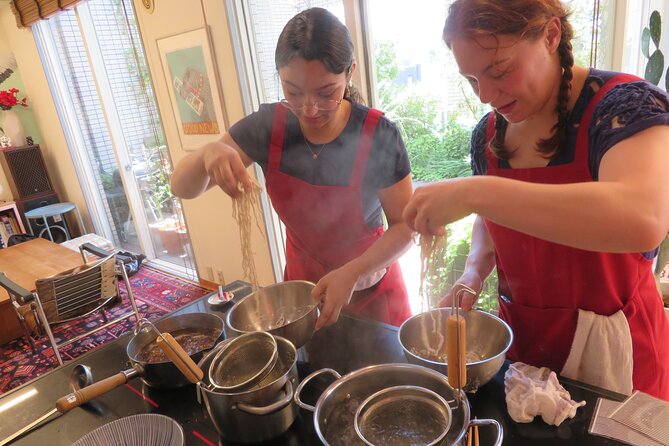
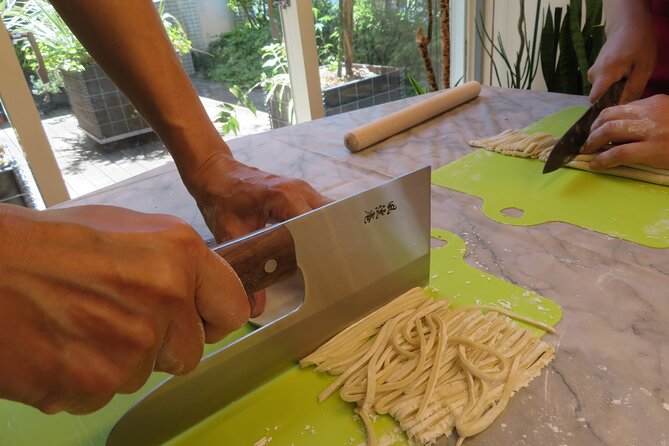
The noodle work is likely to be the most memorable part of the class. You knead the dough, work on its texture, and cut the noodles by hand with a knife. That last step gives you a direct feel for why noodle thickness matters. A thin cut cooks differently from a thick one, and the texture changes what you notice in the finished bowl.
You should not expect every noodle to come out perfectly even. That is part of the appeal. One person who took the class was especially pleased with improved knife skills and the chance to make every part of the meal by hand. The activity is not designed to make you a professional ramen chef in one afternoon. It gives you a clear foundation and a better understanding of the craft.
Aki’s teaching style is important here. Her English instruction is described as clear, and she takes time to explain each step. Families with children have found the pace patient and welcoming, which suggests that the class does not assume advanced cooking ability.
Still, you should be comfortable with basic kitchen work. Kneading, cutting, shaping, and cooking all require participation. If you want to sit back and watch someone else do the work, this is not the right choice. The value comes from making the food yourself.
Building broth with natural umami
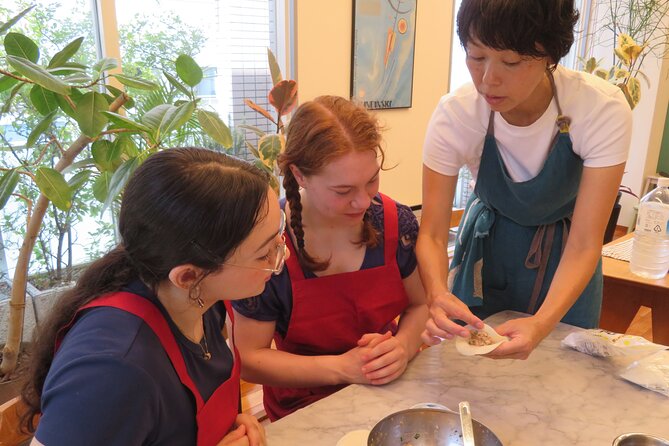
The broth section gives the class its strongest food lesson. Japanese cooking often builds flavor in layers, and Aki introduces you to ingredients such as kombu, katsuobushi, and shiitake mushrooms. Each one contributes to the savory quality known as umami.
The class also uses chicken and pork to create a rich broth. That detail is important for anyone choosing the experience mainly for a traditional meat-based ramen lesson. The result is intended to be satisfying without artificial flavorings.
Dietary needs require planning. The class can try to adjust ingredients for vegan, vegetarian, halal, and allergy-related requests, but the host cannot promise every request can be met. You should include your needs when booking rather than waiting until you arrive.
The mixed-diet example is encouraging. A family received one meat ramen and one vegetarian version, showing that the menu can sometimes be adapted within the same group. Still, vegan diners should treat the option as subject to confirmation, not as an automatic guarantee. Katsuobushi is made from bonito, and chicken and pork are part of the standard broth, so ask clearly about substitutions.
More Sushi and Japanese Classes in Tokyo:
- Sushi Making Tokyo Roll and Authentic Japanese Sushi Class
★ 5.0 · 3,971 reviews - Tokyo: Roll and Authentic Sushi Making Class in Asakusa
★ 4.9 · 1,957 reviews - Tokyo: Sushi Making Class in a Happi Coat near a Famous Spot
★ 4.9 · 1,377 reviews - Sushi Making Tokyo! Popular Maki Sushi & Japanese Sushi(+Recipe!)
★ 5.0 · 1,314 reviews
Folding gyoza and sharing the meal
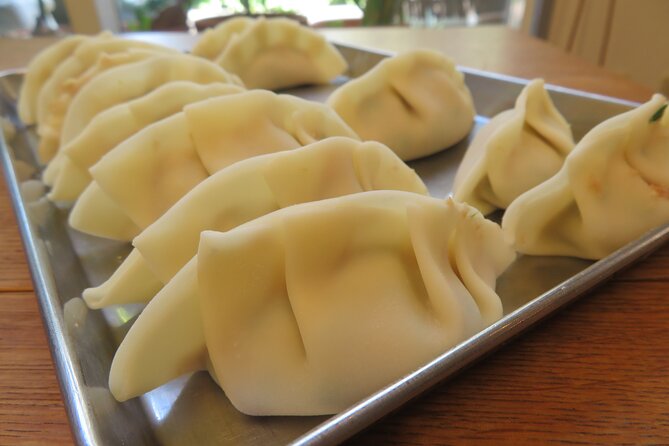
Gyoza adds a second rhythm to the class. After working with dough for the ramen, you handle wrappers and filling for dumplings. Folding gyoza is easy to understand but takes practice, and it gives you something concrete to improve during the session.
This is also where the class feels most social. You are preparing food beside a small number of other people, then sitting down to eat what you made. Aki’s role is not limited to giving technical directions. She aims to make the kitchen feel like a home, and the personal welcome is one of the strongest reasons to choose this activity over a standard cooking school.
The class has worked well for couples, solo visitors, and families. One family joined close to the end of a Japan trip and still found the experience worthwhile before heading to the airport. That is a useful planning point: the session can fit near the end of a trip, but you should not schedule it so tightly that you are watching the clock before a flight.
The meal itself is the payoff, but it is also a chance to see where your technique needs work. Your noodles may vary in thickness. Your dumplings may look different from Aki’s. That is fine. You are learning a process, not entering a cooking contest.
What the $120 price includes
At $120 per person, this class sits well above the cost of ordering ramen at a Tokyo restaurant. The comparison is not quite fair, though. You are paying for about two and a half hours, all ingredients, kitchen tools, an apron, instruction in English, and a digital recipe sheet.
The group limit of six improves the value. A larger class might offer the same menu but less personal help. Here, Aki has more opportunity to watch your technique, answer questions, and adjust the pace for families or mixed experience levels.
I would consider the price fair for someone who values food instruction and personal contact. It is less attractive if your main goal is simply to eat an excellent bowl of ramen. Tokyo has many cheaper ways to do that. This class makes sense when you want a skill, a story, and a meal together.
The recipe sheet also gives the experience some lasting value. You can try the dishes at home instead of leaving Japan with only photographs. Since the recipes are designed to be easy to follow, you do not need to treat the class as a one-time food spectacle.
Families, couples, and dietary needs
This class is a strong choice for families. Aki has worked with children and has been praised for making them feel comfortable. Cooking gives younger children something active to do, and the process is easier to follow than a long museum visit.
Couples may like the balance of instruction and shared food. It is also a good rainy-day plan, since the main activity takes place indoors in the kitchen. Solo participants should find the small group format less awkward than a large public class, though the exact group makeup can vary.
Food restrictions need more care. Vegan and vegetarian adjustments may be possible, and halal requests can be discussed. However, the standard menu includes chicken, pork, and bonito flakes, so you should provide complete information when booking and wait for confirmation if your diet is strict.
The host also asks for allergy information in advance. No cooking class can promise every adjustment, and this one clearly notes that some requests may not be possible. That honesty is useful. If you have a serious allergy, communicate it before paying and confirm that the ingredients and preparation will be safe for you.
Timing, cancellation, and practical planning
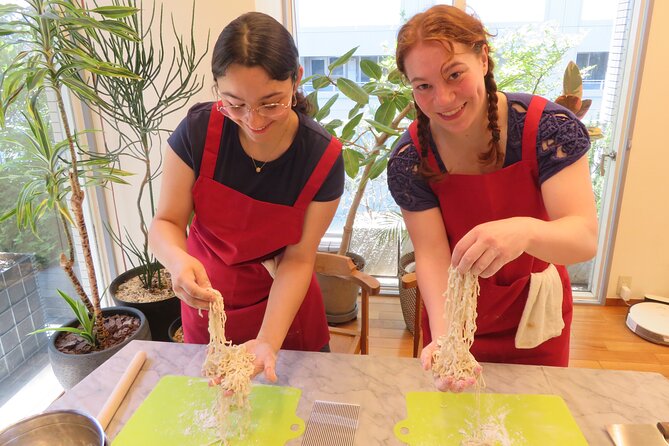
The session lasts about two to two and a half hours. That is long enough for several cooking stages without taking up your whole day. You can pair it with Shinjuku Gyoen Park or other Shinjuku plans, but leave a cushion around the class if you have a train or flight to catch.
The experience is confirmed at booking in most cases. If you book within two days of the date, confirmation may take up to 48 hours and depends on availability. The class accepts a maximum of six people, so last-minute spaces cannot be assumed.
Cancellation is free up to 24 hours before the start time for a full refund. Cancellations or changes made later are not accepted for a refund, and the cut-off follows local Tokyo time. Keep that in mind when building a packed itinerary.
You do not need to arrange private transportation. You simply make your way to the kitchen and return there at the end. The mobile ticket is convenient, but it does not replace checking the meeting address and station route in advance.
Who should book this class
I would book this for you if you want a personal food experience rather than another restaurant meal. It is especially well suited to:
- Families who want an activity that keeps children involved
- Couples looking for a shared cooking session
- Visitors who want to learn recipes they can repeat at home
- Ramen fans curious about noodles, broth, and umami
- People who prefer a small group over a large cooking school
- Anyone needing a flexible rainy-day plan near Shinjuku
I would think twice if you dislike hands-on cooking, have a strict diet that has not been confirmed, or mainly want the cheapest possible ramen. The price reflects the instruction and personal attention, not just the food on the plate.
Should you book Tokyo Mom’s Kitchen?
Yes, if you want to spend a few hours cooking with a friendly local host and leave with more than a full stomach. Aki’s class combines handmade noodles, natural broth, gyoza, and a recipe sheet in a setting that feels personal rather than mass-produced.
The strongest reasons to book are the small group size, the patient guidance, and the chance to make every part of the meal yourself. Families have also found the atmosphere comfortable, which is not always true of cooking classes that move too quickly.
Before booking, confirm any vegan, vegetarian, halal, or allergy needs. Also compare the $120 cost with your priorities. If you want a lesson, a warm meeting with Aki, and skills you can use after Japan, the price has a clear purpose. If you only want noodles, order ramen and spend the difference elsewhere.
FAQ
Where does the ramen-making class take place?
The kitchen is about a five-minute walk from Shinjuku Gyoenmae Station in Tokyo. The listed meeting point is Bridal Unison, 1-chome-24-7 Shinjuku, Shinjuku City, Tokyo 160-0022, Japan.
How long does the experience last?
The session lasts approximately two to two and a half hours.
What food will I make?
You will make ramen and gyoza from scratch. The class includes handmade noodles, broth, and dumplings.
Is there a vegan or vegetarian option?
Dietary adjustments may be possible, including vegan and vegetarian options. You must mention your needs when booking, and the host notes that not every request can be accommodated.
Does the class use MSG?
The class uses fresh, natural ingredients and does not use MSG or artificial flavorings.
Is the class suitable for children?
Yes. Families with children have joined the class, and Aki aims to create a patient, comfortable setting.
How many people can attend?
The maximum group size is six people.
What is included in the price?
The price includes all ramen and gyoza ingredients, kitchen tools, apron rental, a digital recipe sheet in PDF format, and an English-speaking Japanese host. Transportation to the venue is not included.
More Food Experiences in Tokyo
- Small Group Cooking Class & Market Food Tour in Florence
★ 5.0 · 1,574 reviews - Athens: Food Market Visit and Cooking Class with Wine
★ 4.9 · 1,087 reviews - Undiscovered Charleston: Half Day Food, Wine & History Tour with Cooking Class
★ 5.0 · 948 reviews - Vietnamese Food Cooking Class in Hanoi with Market Experience
★ 5.0 · 778 reviews
More Vegan Cooking Classes in Tokyo
- Oaxacan Vegetarian Cooking Class
★ 5.0 · 235 reviews - Marrakech: Moroccan Cooking Class for vegetarians and vegan
★ 4.9 · 156 reviews - Hoi An: Vegetarian Cooking Class w Local Family and transfer
★ 4.9 · 145 reviews - Oaxaca: Vegetarian Cooking Class
★ 4.8 · 139 reviews
Just added around Tokyo
- Tokyo: Tsukiji Market Walking Tour & Sushi Cooking Class★ 4.6 · 122 reviews
- Tokyo: Sushi Cooking Class with Sake Tasting★ 4.8 · 55 reviews
- Sushi-Making Experience★ 4.7 · 4 reviews
- Tokyo: Tsukiji Market Guided Tour & Sushi-Making Experience★ 4.4 · 11 reviews
- Tokyo: Sushi and Ramen Cooking Class with Sake Pairing Set★ 5.0 · 81 reviews
- Tokyo: Real Ramen & Dumpling Cooking with Master Chef★ 5.0 · 10 reviews
- Tokyo: Kawaii Bento Cooking Class – Cute Character Lunchbox★ 4.9 · 55 reviews
- Tokyo: Learnt to cook Bento, Oyakodon and More!★ 5.0 · 5 reviews
Japanese & Sushi Cooking Classes, compared.
Sushi Making Tokyo Roll and Authentic Japanese Sushi Class
Read our review →
Tokyo: Roll and Authentic Sushi Making Class in Asakusa
Read our review →
Ramen Cooking Class at Ramen Factory in Kyoto
Read our review →
Tokyo: Sushi Making Class in a Happi Coat near a Famous Spot
Read our review →
Sushi Making Tokyo! Popular Maki Sushi & Japanese Sushi(+Recipe!)
Read our review →
Sushi Making Osaka Roll and Authentic Japanese Sushi Class
Read our review →
Tokyo Sushi Making Class in Tsukiji with Professional Chef
Read our review →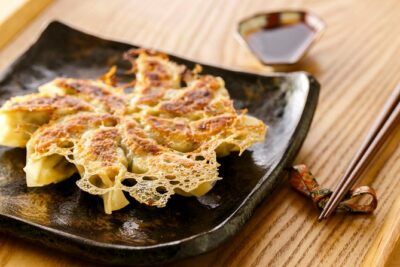
Ramen & Gyoza Cooking Class in Tokyo with Local Supermarket Visit
Read our review →Browse the lists this tour appears in