
Review · MUMBAI
Small Group Authentic Mumbai Virtual Cooking Class with Dessert
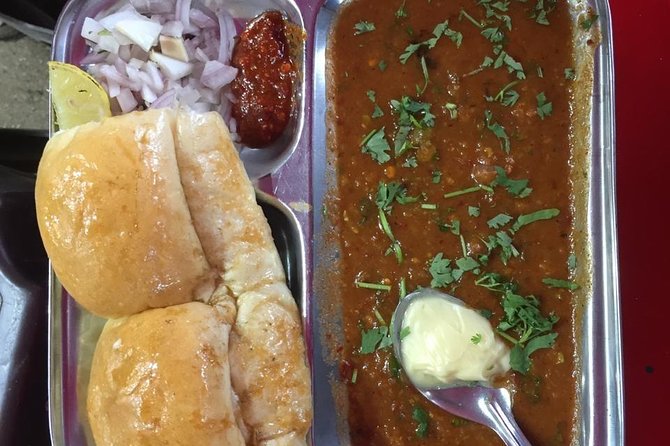
Mumbai arrives at your kitchen table in this live class from Kajal’s home, where you learn to make pav bhaji and rice kheer rather than watch a polished cooking show. The small group, capped at six, gives you room to ask questions while Kajal shares family recipes, food customs, and stories from Mumbai.
I like the family connection and the fact that you receive the ingredient list ahead of time. I also like the modest $20 price for a 90-minute private-at-home activity, especially if you join with family members in different places. The main drawback is simple: this is a home kitchen on Skype, not a professional studio, so video quality may be basic.
I especially appreciate that the class works well for a birthday surprise or a shared family event. Kajal speaks very good English, and the recipes come from her mother and older sister. You should keep the time difference in mind, since all available sessions use Indian Standard Time.
Key points at a glance
- Cook two Mumbai favorites: Make pav bhaji, a buttery bread roll served with thick vegetable curry, and rice kheer, a traditional sweet.
- Learn with Kajal: Your host learned these recipes from her mother and older sister and began leading food tours in 2017.
- Keep the group small: The class allows no more than six people, making questions and conversation easier.
- Prepare before class: You receive the ingredient list in advance, so you can shop and set up your kitchen before connecting.
- Join from anywhere: Family members can take part from separate homes, making this a useful birthday or group activity.
- Expect a home-style production: The focus is on food, culture, and conversation, not high-end filming or restaurant technique.
A Mumbai kitchen lesson built around family recipes
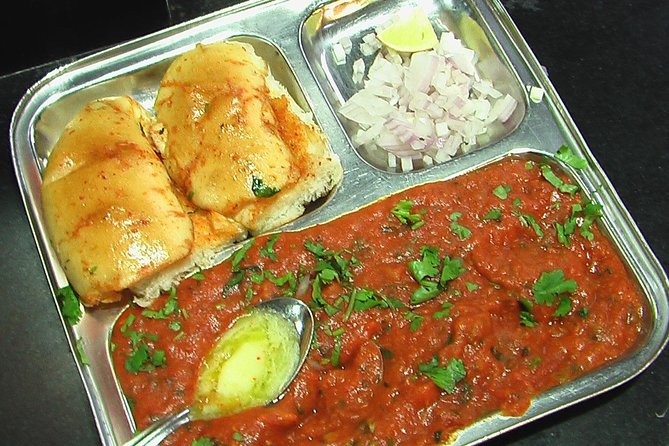
The appeal here is not fancy equipment. It is access to a home cook who learned by watching family members and now passes those recipes on to you. Kajal’s cooking has a personal starting point: her mother and older sister taught her the dishes that became part of her own kitchen practice.
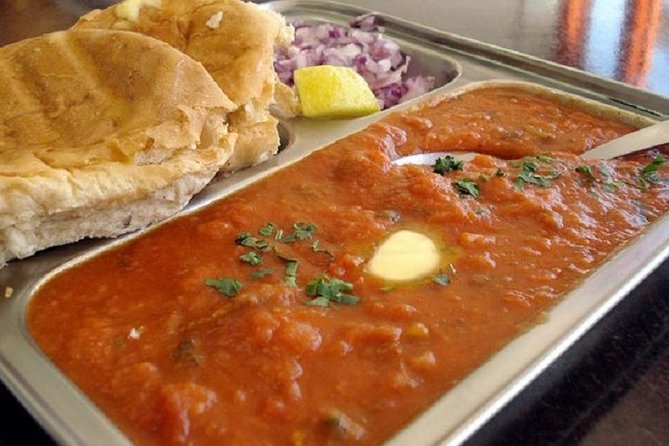
That matters because pav bhaji is not just a generic vegetable curry. It is a well-known Maharashtra dish served in hotels, roadside eateries, and homes across Mumbai. The bhaji is a thick mixture of seasonal vegetables, potatoes, tomatoes, and onions. You eat it with pav, a bread roll topped with butter.
The name also carries a small piece of history. Pav comes from the Portuguese word for bread, while bhaji means a vegetable dish in Marathi. You will not simply learn what goes into the pan. You will also get a little context for why the dish has the name it does and why it is so closely tied to Mumbai food culture.
Kajal’s English is described as very good, which is important in an online class. Cooking instructions need to be clear, especially when you are measuring, chopping, or adjusting the texture of a dish at the same time as your host. The live format also lets you stop and ask questions instead of trying to decode a recording later.
More Dessert Classes in India:
- 3 in 1 Cooking Class near Navona: Fettuccine, Ravioli & Tiramisu
★ 5.0 · 7,376 reviews - Florence: Pasta & Tiramisu Cooking Class with Unlimited Wine
★ 4.9 · 6,708 reviews - Rome: Pasta Making Class with Wine, Limoncello, and Dessert
★ 4.9 · 3,177 reviews
Before the call: shop, set up, and check the clock
The class lasts about 90 minutes. Before you join, you receive the ingredients list, giving you time to shop and lay everything out. I consider this one of the strongest practical parts of the setup. You are not asked to guess what you need or scramble to replace an item once the cooking has begun.
You should read the ingredient list carefully and tell Kajal about any allergies. The class information specifically asks you to share this in advance. That does not mean every recipe can be changed to suit every restriction, so you should raise the issue before the session rather than waiting until the first pan is hot.
You also need a working internet connection. Since the class is live on Skype, your kitchen is part of the technical setup. Check that you can connect before the start time and keep your device positioned so you can see the demonstration while cooking. The available times are listed in IST, Indian Standard Time. Convert the start time before booking, particularly if you are arranging a birthday class or coordinating people in several countries.
The activity begins from Mumbai, Maharashtra, but you do not travel to a meeting point. You join online from your own home and finish there. That makes this a practical choice for a rainy evening, a family scattered across different cities, or anyone who wants an Indian food lesson without planning a trip.
The first dish: Mumbai-style pav bhaji
Pav bhaji is the main savory lesson. Kajal shows you how to turn vegetables, potatoes, tomatoes, and onions into a thick curry, then serve it with buttered pav. The dish is intended to be eaten hot, so the final stage has the feel of a proper meal rather than a preparation exercise.
The recipe also gives you a useful introduction to Indian home cooking. You are working with everyday vegetables and a bread roll, but the result depends on how the ingredients are cooked together and brought to the right consistency. A live class is useful here because you can ask about texture and timing as the dish takes shape.
I would treat the lesson as a chance to learn the method, not just to copy a list of ingredients. Kajal’s role is that of a local home chef, not a restaurant instructor. She can explain how the dish fits into Mumbai life and why pav bhaji is found in both large hotels and roadside eateries.
The class description does not promise a professional culinary qualification or restaurant-level technique. That is a strength if you want a friendly introduction to a popular local dish, but a limitation if you are looking for knife skills, formal instruction, or a structured chef-training course. The food and the stories around it are the point.
The sweet finish: rice kheer and Indian celebrations
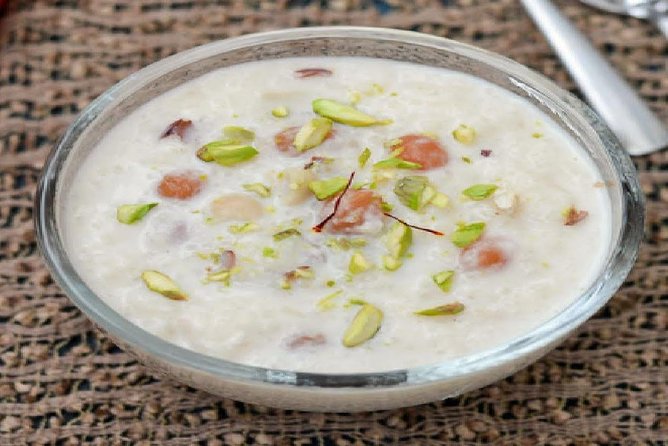
The second recipe is rice kheer, a traditional Indian dessert made for festivals and special occasions. It gives the session a natural finish, moving from a savory street and home favorite to something associated with celebration.
This is also why the class works nicely as a birthday activity. You are not just making dinner. You are preparing a meal with a sweet course while sharing the process with other people. One family used the online class as a surprise birthday present, and three family members joined from different locations. That format makes sense for people who want an activity together without needing to be in the same kitchen.
Rice kheer also helps explain how food carries family meaning. Kajal learned her recipes from close relatives, and this dessert is connected with festivals and occasions. You get a recipe, but you also get a glimpse of when and why that recipe matters in Indian households.
The supplied details do not specify every step, cooking time, or ingredient for the kheer. You should therefore think of the session as a guided live lesson rather than a printed recipe course. The ingredient list arrives before class, and Kajal leads you through the preparation in real time.
More Dessert Tours in India:
- Mekong Delta 4 Islands, TukTuk, Boat, Try Khot Cake Local Cooking
★ 5.0 · 1,148 reviews - Florence: Handmade Pasta & Dessert Class with Unlimited Wine
★ 4.8 · 788 reviews - Rome Cooking Class: Make Pizza and Pasta with Wine & Dessert
★ 4.5 · 651 reviews - Garda: Cooking Class with Dessert
★ 4.9 · 129 reviews
What the 90-minute format feels like
Ninety minutes is enough time to prepare two dishes, talk with the host, and ask questions without turning the session into an all-day project. You will need to stay engaged, since this is not a recording you can pause while the class continues. At the same time, the small group allows the pace to remain conversational.
With a maximum of six people, you are not joining a large online audience. That matters when you need clarification or want to ask about an ingredient. It also makes the class better suited to a small family group, a couple, or a few friends than to a large party.
The class is likely to feel more like cooking alongside a local family than attending a formal demonstration. Kajal may talk about the food, her home, her family, and local culture as she cooks. That conversation is a core part of the value, not extra filler between recipe steps.
You should not expect a perfectly framed camera view or studio lighting. The host is upfront that the class comes from a small home and does not offer professional-level videography. If you need a crisp, close-up view of every chopping motion, this may frustrate you. If you care more about personal contact and a home setting, the informal production is easier to accept.
Why the small group matters
A six-person limit is more than a booking detail. It shapes the class. A small group gives Kajal a better chance to answer questions and notice when someone needs help. It also keeps the social side manageable, especially when people are connecting from separate kitchens.
This format is especially useful for a family event. Three family members can join from different locations and still share the same activity, meal, and conversation. You might use it for a birthday, an anniversary, or a simple evening when everyone wants to do something together.
The group size does not make the session fully private. Other people may be present, since the activity allows up to six participants. If you want an entirely private cooking lesson, confirm the booking arrangements before paying.
I also like that the class does not require you to travel to Mumbai. You still get a connection to a local home kitchen and a host who knows the dishes personally, but you avoid flights, transport, and the cost of eating out. For $20 per person, that is a fair price for a live 90-minute activity, ingredient guidance, and a shared cultural exchange.
Price, value, and the limits of a virtual class
At $20 per person, this is good value if you use the live format fully. You are paying for instruction, conversation, two dishes, and a chance to meet a Mumbai family from your own kitchen. The value rises when two or more people join together, since the class becomes both a cooking lesson and a social event.
The price does not buy a professional video course. You will not get a studio kitchen, polished camera work, or the feel of a restaurant workshop. The host clearly sets that expectation, and you should book with the same understanding.
I would compare this class with the cost of a casual online activity rather than with a high-end culinary school. If your goal is a formal certificate, advanced technique, or exact restaurant replication, spend your money elsewhere. If your goal is to learn two recognizable Mumbai dishes and hear the stories behind them, the price makes sense.
The strongest value comes from the personal element. Kajal’s recipes come through her family, and the class takes place from her home in Mumbai’s largest slum. That setting gives the activity a local point of view that a generic recipe video cannot provide. You are meeting a person and seeing food in its everyday cultural setting, even though the connection is remote.
Who should book this Mumbai cooking class?
I would recommend it to home cooks who enjoy learning by doing. You should be willing to prepare ingredients in advance, follow a live demonstration, and ask questions when something is unclear. You do not need to be an expert cook, and the class is not presented as professional chef training.
It also suits families and friends who live apart. The birthday example shows how well the format can work as a shared surprise. Since people can join from different locations, you can turn an ordinary evening into a meal made together, even when nobody shares the same address.
Food-focused visitors who have already been to Mumbai may enjoy the class as a way to connect the dishes with a local family. People who have never visited India can use it as a gentle introduction to Mumbai flavors, Marathi language details, and the way family recipes move between generations.
I would be more cautious if you dislike online classes or need a polished visual presentation. The basic videography is a known limitation, and the quality of your experience will partly depend on your own internet connection and screen setup.
The cancellation policy is straightforward: cancel at least 24 hours before the local start time for a full refund. Cancellations or changes inside that 24-hour window are not accepted for a refund. Since the class uses IST, check that local time carefully before making plans.
Should you book it?
Book this class if you want a friendly, small-group introduction to Mumbai food with a real home chef. Kajal’s family recipes, clear English, advance ingredient list, and live question time give the session more value than a standard cooking video. Pav bhaji and rice kheer also make a satisfying pair, with a savory dish followed by a festival dessert.
Skip it if you want formal culinary instruction or professional filming. The class is intentionally personal and home-based. For most people, that is the reason to book, not a flaw. At $20, it is a sensible pick for a family activity, birthday surprise, or relaxed evening of cooking from home.
FAQ
Where does the cooking class take place?
The class is hosted live from Mumbai, Maharashtra, India, while you take part from your own home.
How long does the class last?
The virtual cooking class lasts approximately 1 hour and 30 minutes.
Which dishes will I prepare?
You will learn to make pav bhaji, a thick vegetable curry served with buttered pav, and rice kheer, a traditional Indian dessert.
Who teaches the class?
Kajal teaches the class. She learned the recipes from her mother and older sister and began leading food tours in 2017.
How many people can join?
The activity has a maximum of six participants.
What platform is used?
The live class takes place on Skype. You should make sure your internet connection works properly before the session.
What happens if I need to cancel?
You can receive a full refund if you cancel at least 24 hours before the experience start time. Cancellations or changes made less than 24 hours before the start are not accepted for a refund.
More Hands-On Workshops in India
- Pink City Cooking Class
★ 5.0 · 452 reviews - Five Course Cooking Class & Meal
★ 5.0 · 250 reviews - Veg and Non veg : Private Cooking Class in Delhi home (7 meal)
★ 5.0 · 226 reviews - Indian Cooking Class in an Authentic Local Home – Learn 6 Dishes
★ 5.0 · 195 reviews
Just added around India
- Discover Bangalore’s Cuisine: Private Half-Day Cooking Experience★ 5.0 · 3 reviews
- Traditional Gowda Cooking Class and Meal in a Bangalore Home★ 5.0 · 31 reviews
- Private South Indian Cooking Class in Bangalore with a Local★ 5.0 · 11 reviews
- Private Cooking and Dining Experience in Bengaluru★ 5.0 · 35 reviews
- Cooking experience in Bangalore, a half day tour★ 5.0 · 5 reviews
- Bangalore: Traditional Cooking Classes & Dinner with Chef Family★ 3.5 · 4 reviews
- Agra Cooking Classes (Pick up and Drop available)★ 5.0 · 34 reviews
- Talk & Enjoy with Delhi locals at their home while Cooking★ 5.0 · 19 reviews
Tiramisu & Dessert Classes, compared.
3 in 1 Cooking Class near Navona: Fettuccine, Ravioli & Tiramisu
Read our review →
Rome: Pasta Making Class with Wine, Limoncello, and Dessert
Read our review →
Rome: 3-in-1 Fettuccine, Ravioli, and Tiramisu Cooking Class
Read our review →
Florence: Cooking Class Pasta & Tiramisu Making Unlimited Wine
Read our review →
Fettuccine & Tiramisù: Cooking Class with Wine & Limoncello
Read our review →
Florence Cooking Class The Art of Making Gelato & Authentic Pizza
Read our review →
Rome: Pasta & Tiramisu Cooking Class near the Spanish Steps
Read our review →Browse the lists this tour appears in