
Review · BANGKOK
Sompong Thai Cooking School in Bangkok
The best part of Sompong Thai Cooking School is that you do not just watch a chef work. You prepare four dishes yourself, including curry paste from scratch, then sit down to eat what you made. The morning class adds a local market visit, where you learn how to choose ingredients and connect them to Thai cooking.
I like the individual cooking station, which gives you room to work instead of taking turns around one shared counter. I also like the practical recipe book. It gives the class a life beyond Bangkok, since you can try the techniques again at home.
The main trade-off is timing. The market visit is included only in the morning class, while the afternoon option skips it. The menu also changes by day, so you should book this for the cooking experience rather than for one specific dish.
Key points about the Sompong Thai cooking class
- Morning market visit: Shop for fresh ingredients and learn about the culinary background of the dishes before cooking.
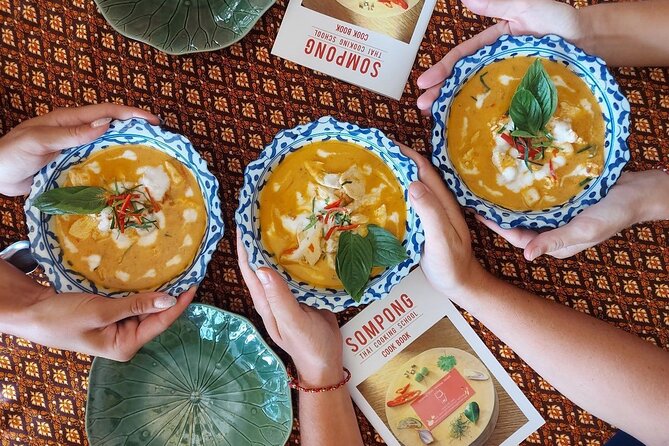
- Four-part menu: Prepare three main dishes, a dessert, and homemade curry paste.
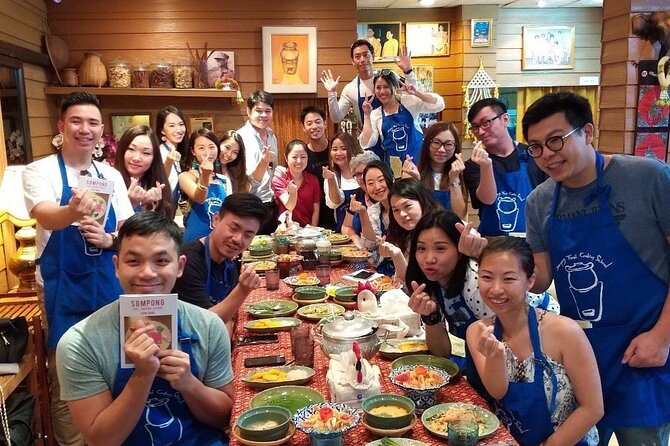
- Your own station: Each person receives individual equipment and ingredients for hands-on practice.
- Small class size: The group is limited to 10 people, allowing more direct help from the instructor.
- Flexible for food preferences: Vegetarian choices and dietary restrictions can be accommodated.
- Useful take-home material: A recipe book helps you repeat the dishes after your holiday.
Why this class works better than a cooking demonstration
Thai food can look simple on the plate, but the balance of sweet, salty, sour, spicy, and aromatic flavors takes practice. A demonstration may show you the finished technique, but it does not always teach you how the ingredients should feel, smell, or change during cooking.
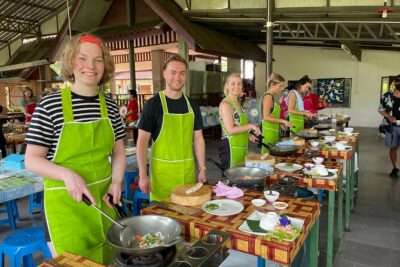
Here, you get your own cooking station and equipment. That matters because you can chop, pound, mix, and season at your own work area while the instructor offers individual help. You are not simply watching a professional move quickly through a recipe.
The class lasts about four hours and 45 minutes. That is long enough to cover several dishes without turning the session into a rushed tasting. You also get meals and beverages, so the food you prepare is part of the experience rather than an extra purchase afterward.
The group limit of 10 people keeps the setting fairly personal. It is not a private lesson, but it is small enough for the chef-instructor to keep an eye on your work and help when a step goes wrong. June and the Sompong team are named as the instructors connected with the session, and the class is designed for beginners as well as people who already cook.
More Thai Cooking Classes in Bangkok:
- Bangkok: Hands-on Thai Cooking Class and Market Tour
★ 4.9 · 1,614 reviews - Bangkok: Tingly Thai Cooking School Half-Day Cooking Class
★ 4.9 · 1,191 reviews - Bangkok: Maliwan Thai Cooking Class with Market Tour
★ 4.9 · 1,133 reviews
Starting at the local market in the morning
The morning class begins with a visit to a local market. This is one of the most useful parts of the experience if you want to understand Thai food beyond a restaurant menu.
You learn how to select fresh ingredients and hear about the culinary background of the dishes you will prepare. That gives context to ingredients that may be unfamiliar at home. Instead of seeing herbs, vegetables, curry components, or other produce as a list of items, you begin to understand their role in a finished Thai meal.
I like this market visit because it connects the cooking class to everyday Bangkok. You are not only handling prepared ingredients in a classroom. You are seeing where the cooking process begins and learning how freshness affects the food.
There is one important catch: the market tour is offered only with the morning timing. If you choose the afternoon session, you go directly to the school. That option may suit your schedule better, but it removes the market portion and some of the local food context.
The supplied information does not specify the exact market, the dishes chosen for a particular date, or the length of the market stop. The menu changes depending on the day, so you should expect the market portion to support that day’s recipes rather than follow a fixed shopping list.
Preparing curry paste from scratch
Making curry paste is a central reason to choose this class. Thai curry paste is not just a ready-made sauce poured into a pan. The flavor comes from combining several ingredients in the right balance and working them into a paste.
The class lets you prepare that paste yourself. This gives you a better sense of how Thai cooking builds flavor before the main ingredients even reach the heat. It is also a skill you can use later, especially if you want to recreate Thai food at home without relying entirely on a jar.
The exact curry style is not fixed in the information provided. Since the menu changes by day, you should not book with the expectation of preparing one named curry. The useful part is the method: learning how a paste is built and how it fits into the rest of the dish.
This is also where the individual station pays off. You can work through the paste-making steps yourself, ask for help, and compare the texture with the instructor’s guidance. That is more useful than simply tasting a finished curry and trying to guess how it was made.
Cooking three main dishes and a dessert
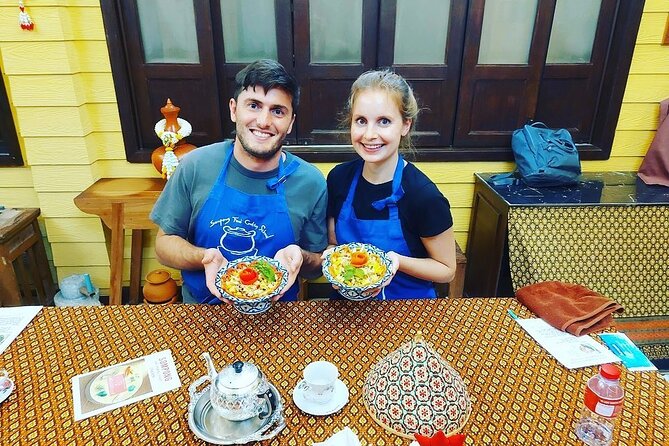
The class includes three authentic main dishes and a dessert, along with the curry paste. That is a substantial amount of cooking for a single session, but the hands-on format makes the time feel purposeful.
You should expect the menu to vary by day. This keeps the class connected to available ingredients, but it also means the experience is less predictable than a fixed menu workshop. If you have your heart set on pad Thai, green curry, mango sticky rice, or another specific dish, confirm the menu before booking, since no fixed list is provided.
Preparing several dishes also lets you see how a Thai meal works as a group. You are not learning one isolated recipe. You are working with different flavors and stages, then sitting down to eat the results together.
Dessert gives the session a welcome change of pace. Thai sweets often depend on texture and balance as much as sweetness, and making one after the main dishes rounds out the meal. The specific dessert is not stated, so consider it an additional part of the cooking lesson rather than a guaranteed named recipe.
The food you prepare is served as part of the experience, and meals and beverages are included. You may also take your food home to share, although the supplied details do not promise that every dish will be packed for takeaway. Plan to enjoy most of the meal at the school.
A few more cooking classes around Bangkok worth a look
- Hands on Thai Cooking Class and Market Tour
★ 5.0 · 660 reviews - Tingly Thai Cooking Class with Morning Market Tour
★ 5.0 · 589 reviews - Hands-on Thai Cooking Class & Market Tour in Sukhumvit
★ 5.0 · 571 reviews - Pink Chili – Thai Cooking Class and Market Tour in Bangkok
★ 5.0 · 416 reviews
Individual stations and help from the instructor
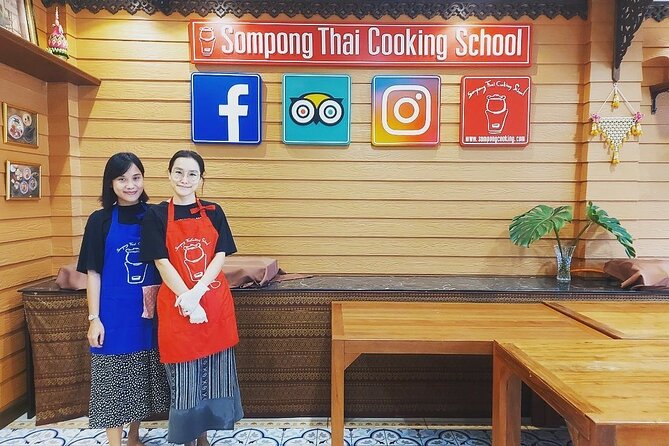
A cooking class can become frustrating when several people crowd around one work surface. Sompong avoids much of that problem by providing each person with an individual cooking station and the necessary equipment.
That setup gives you more control. You can keep track of your ingredients, follow the recipe at your own speed, and make mistakes without losing your place. The instructor can also see what you are doing and correct a technique before it affects the finished dish.
The class welcomes different skill levels. If you are new to Thai cooking, you can follow the steps with guidance. If you already cook, you may get more from the explanations of seasoning, curry paste, and ingredient selection.
The experience is described as hands-on and well organized, with the right amount of cooking technique alongside four recipes. That balance is important. You want enough instruction to understand what you are doing, but not so much lecture time that you spend the day watching someone else cook.
Vegetarian options are available, and dietary restrictions can be accommodated. You should provide those details when booking so the school can prepare properly. The available information does not list every possible substitution, so it is sensible to ask ahead if your needs are complex.
What the changing menu means for your booking
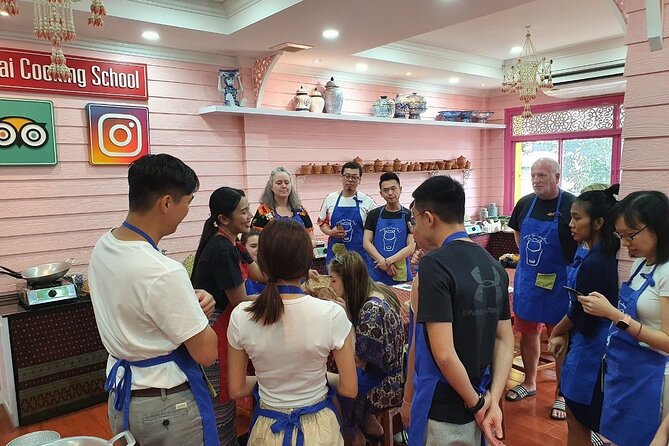
The changing menu is both a benefit and a limitation. On the positive side, the recipes can reflect the day’s ingredients and give the class a more natural connection to the market. You may also learn dishes that you would not have chosen from a fixed menu.
The limitation is simple: you cannot use this class as a guaranteed lesson in one particular recipe unless the school confirms it. The booking is best for someone who wants to understand Thai cooking methods and prepare a selection of dishes, not someone seeking one exact dish for a special culinary project.
I would also make a note of the morning and afternoon difference before paying. The morning session includes the local market tour and recipe book, while the afternoon tour does not include the market visit. The provided details list the recipe book among the inclusions generally, but specifically identify the market visit as morning-only. If the market is important to you, choose the morning.
Price and value at $58.69
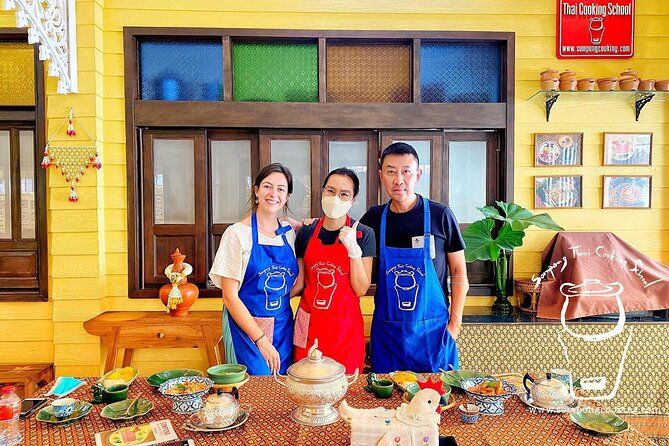
At $58.69 per person, this is not the cheapest way to eat Thai food in Bangkok. You can buy a good local meal for far less. The value here comes from the amount of instruction and participation packed into nearly five hours.
Your price includes an English-speaking instructor, ingredients, cooking equipment, meals, beverages, a recipe book, and the morning market tour when that timing is selected. There is no need to buy the ingredients separately or pay for a meal after the lesson.
The individual station also makes the cost easier to justify. You are paying for actual practice, not simply a short demonstration followed by a tasting. The recipe book adds value if you intend to cook Thai food again after returning home.
I think the price makes the most sense for food lovers, first-time visitors who want a focused Bangkok activity, and anyone who values a skill they can take home. It may feel less worthwhile if you mainly want a cheap lunch or if you dislike spending much of a holiday in a classroom.
Personal expenses and gratuities are not included. Roundtrip transportation is also not included, so factor in the cost of reaching the school and returning afterward.
Getting to the school in Si Lom
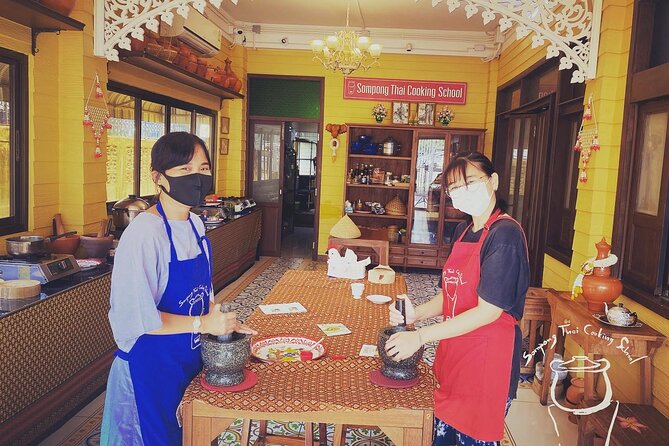
The meeting point is Sompong Thai Cooking School 2 at 6-2/7 Si Lom Soi 13, Si Lom, Khet Bang Rak, Bangkok 10500. The activity begins and ends at this meeting point.
The school is near public transportation, which is helpful in Bangkok, where traffic can make a short road journey unpredictable. You receive a mobile ticket, and confirmation is provided when you book. You still need to arrange your own way there, since roundtrip transfers are not included.
Allow enough time to reach Si Lom before the start. A cooking class has a fixed sequence, especially if the morning group visits the market first. Arriving late could mean missing part of the shopping or preparation, so I would not cut the journey close.
After the meal and final cooking steps, the activity ends back at the school. That makes it easy to continue sightseeing in the area, but you will need to make your own plans for the rest of the day.
Who should book this Bangkok cooking class
I would choose this class if you want to learn by doing. It suits beginners, food lovers, couples, families, and small groups looking for an activity with more substance than a restaurant meal.
It is also a good fit if you enjoy bringing home practical memories. The recipe book and the curry paste lesson give you something useful to work with after the holiday. You may not reproduce every dish perfectly at home, but you will have a clearer idea of how Thai flavors are assembled.
The class may not suit you if you need a private experience, have a very tight schedule, or want a guaranteed menu. The group can include up to 10 people, and the recipes change by day. Afternoon participants should also know that they will miss the market visit.
For dietary needs, vegetarian options and accommodations are available. Still, tell the school about your restrictions in advance rather than waiting until you arrive.
Booking, cancellation, and weather notes
You can cancel free of charge up to 24 hours before the local start time for a full refund. Cancellations or changes made within 24 hours are not accepted for a refund.
The experience requires suitable weather and a minimum number of participants. If poor weather or an insufficient group causes cancellation, you will be offered another date or experience, or a full refund. These conditions are worth noting if you are planning the class near the end of your Bangkok stay.
Should you book Sompong Thai Cooking School?
Book it if you want a hands-on Thai food lesson with your own station, several recipes, curry paste preparation, and a meal at the end. The morning option is the stronger choice because the market visit adds useful context and helps connect the ingredients to the dishes.
Skip it if your priority is a quick and inexpensive meal, a private cooking lesson, or one guaranteed recipe. For most food-minded visitors, though, the combination of market shopping, direct instruction, four prepared dishes, and a take-home recipe book gives the $58.69 price solid value.
FAQ
Where does the Sompong Thai Cooking School experience begin?
It begins at Sompong Thai Cooking School 2, 6-2/7 Si Lom Soi 13, Si Lom, Khet Bang Rak, Bangkok 10500, Thailand.
Where does the experience end?
The activity ends back at the meeting point at Sompong Thai Cooking School.
How long does the cooking class last?
The experience lasts approximately 4 hours and 45 minutes.
Is the local market visit included with every session?
No. The market visit is included with the morning class only. The afternoon tour does not include the market visit.
How many people can join the class?
The activity has a maximum of 10 participants.
What will I cook?
You will prepare three main dishes, a dessert, and curry paste from scratch. The menu changes depending on the day.
Is equipment provided?
Yes. Each participant receives an individual cooking station and the necessary equipment.
Are vegetarian options and dietary restrictions accommodated?
Yes. Vegetarian options are available, and dietary restrictions can be accommodated.
What is included in the price?
The price includes an English-speaking instructor, ingredients, meals, beverages, a recipe book, and the market tour for morning participants. Personal expenses, gratuities, and roundtrip transportation are not included.
Just added around Bangkok
- Bangkok Udomsuk Thai Cooking Class with local market tour★ 5.0 · 5 reviews
- Thai Cooking Class in Bangkok★ 5.0 · 23 reviews
- Hands-On Thai Cooking Class Bangkok with Local Chef (Small Group)★ 5.0 · 119 reviews
- Thai cooking class experience in Bangkok with Tingly Thai cooking school★ 5.0 · 59 reviews
- White Lotus Thai Cooking Class in Bangkok★ 5.0 · 31 reviews
- Thai Cooking Class★ 5.0 · 25 reviews
- Sompong Thai Cooking School: Hands-On Culinary Experience★ 5.0 · 4 reviews
- Baipai Thai Cooking School: Authentic Cooking Class Tour★ 5.0 · 3 reviews
Thai Cooking Classes, compared.
Half-Day Thai Cooking Class at Organic Farm in Chiang Mai
Read our review →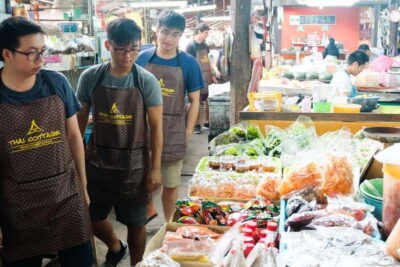
Chiang Mai: Cooking Class, Market & Thai Herbs Garden Tour
Read our review →
Phuket Thai Cooking Class with Market Tour Option
Read our review →
Bangkok: Hands-on Thai Cooking Class and Market Tour
Read our review →
Bangkok: Tingly Thai Cooking School Half-Day Cooking Class
Read our review →
Bangkok: Maliwan Thai Cooking Class with Market Tour
Read our review →
Browse the lists this tour appears in