
Review · VALENCIA
Valencia: Paella Cooking Class with Central Market Tour
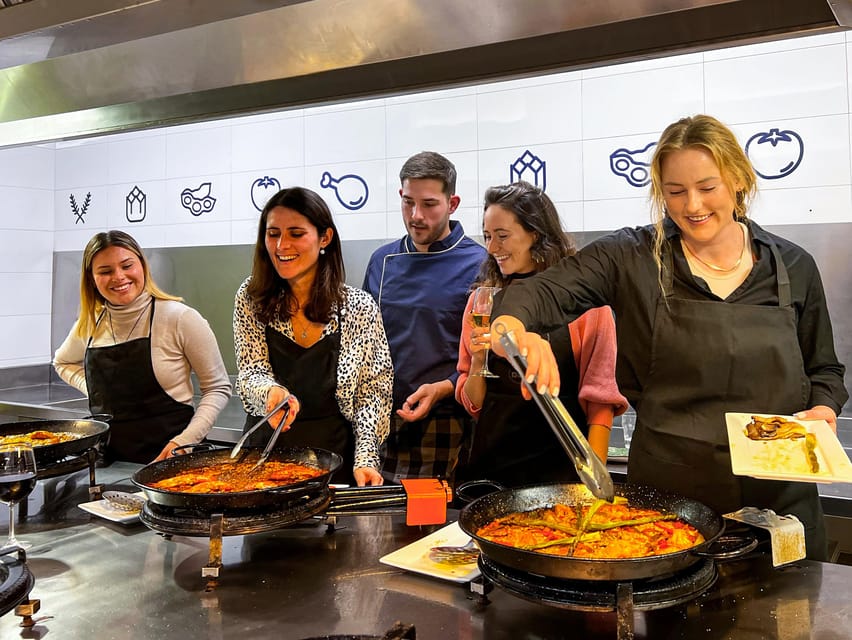
Valencia is the right place to learn paella. This is not a quick demonstration followed by a token taste. You walk through Central Market to buy ingredients, then cook your own pan with a professional chef guiding each stage. By the end, you understand why the rice, stock, heat, and timing matter.
I like two things in particular: the class connects food with Valencian culture, and the meal is generous enough to feel like a proper night out. You get tapas, several wines, your paella, and dessert. The main drawback is timing: evening sessions and Sunday bookings skip the market because it is closed, and last three hours instead of four.
Key points at a glance
- Market-to-table format: Morning sessions from Monday through Saturday include a visit to Mercado Central de Valencia to shop for fresh ingredients.
- Your own cooking station: Stations are set up for one to three people, so you take an active role instead of only watching the chef.
- Strong teaching team: Daniel, Reyes, Victor, Juan, and other English-speaking chefs and hosts lead different sessions, with assistants handling tapas, wine, and service.
- Food and drink are part of the lesson: Expect local tapas, Cava or wine, your finished paella, and a sweet course with dessert wine in some sessions.
- Social without being forced: You cook in a shared setting and eat at a communal table, making this a good choice for couples, solo visitors, and families.
- Good flexibility: The $82 price includes ingredients, equipment, cooking instruction, food, and drinks, with free cancellation up to 24 hours before the start.
Why Valencia is the proper place to learn paella
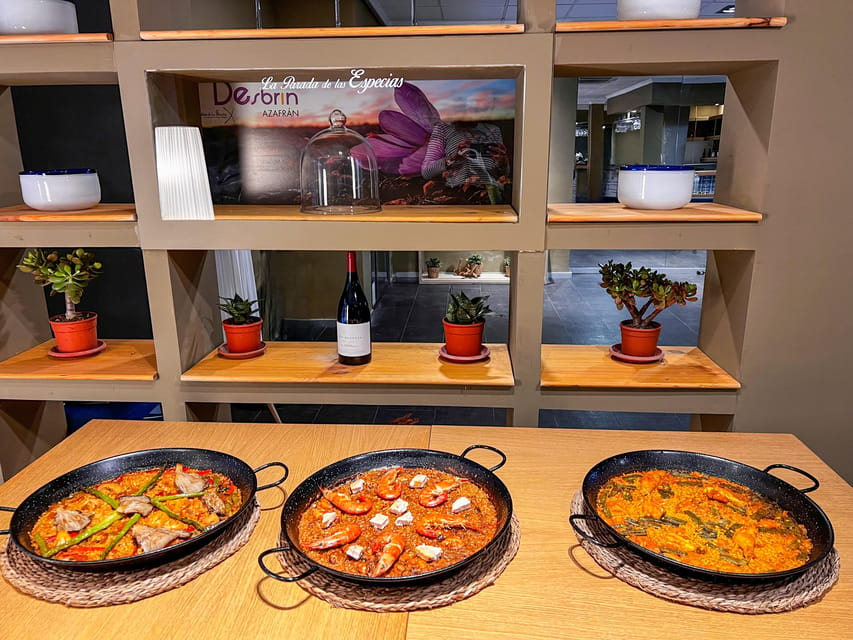
Paella is not simply a Spanish rice dish. In Valencia, it is tied to local ingredients, cooking habits, and the wide, shallow pan that lets the rice cook in an even layer. The class uses that local setting to explain the difference between Paella Valenciana, usually made with chicken and rabbit, and seafood versions.
That distinction matters. Many restaurants outside Valencia use paella as a broad label for almost any rice with seafood. Here, the chef explains what makes the traditional Valencian version different and why ingredients are added in a particular order.
The teaching style is practical. You are not expected to arrive with cooking skills. Several participants describe the chefs as patient and clear, with plenty of attention given to each station. Reyes, Daniel, and Victor receive especially warm praise for explaining not only what to do, but why you do it.
That is the useful part to take home. You learn how to build the dish step by step, rather than memorizing a recipe without understanding the process. One participant who had never made paella before felt confident enough to recreate it for a family Christmas meal. That is a fair measure of a good cooking class.
More Market Tour Cooking Classes in Spain
- Barcelona: Paella Cooking Experience & Boqueria Market Tour
★ 4.8 · 3,661 reviews - Barcelona Paella Cooking Class with Market Visit, Tapas & Sangria
★ 5.0 · 2,531 reviews - Paella Cooking Class, Wine Tasting & Central Market in Valencia
★ 5.0 · 1,150 reviews
Meeting near Plaza de la Virgen
The experience begins close to Plaza de la Virgen, a handy location in Valencia’s old town. Your guide meets you there before leading the group toward the market. The walk adds a small amount of city orientation, and guides sometimes point out facts about Valencia along the way.
This opening is not a full sightseeing tour. Think of it as a useful introduction before the food begins. You get a sense of the old center, hear a little about the city, and meet the other people in the group.
That social start helps. The class attracts couples, families, solo visitors, and friends, and the cooking setup encourages people to talk. Several groups continued for drinks after the class, but you should not count on that as part of the official experience.
Shopping inside Mercado Central de Valencia
The market visit is the best feature for morning bookings. Your guide takes you into Mercado Central, one of Valencia’s essential food stops, to select the ingredients used later in the kitchen. This gives you a direct link between the produce on display and the dish on your plate.
A chef such as Daniel or Victor may explain ingredients, local cooking customs, and the role each item plays in the recipe. The market also gives you a chance to see Valencia’s food culture before sitting down to cook it.
Keep your expectations sensible. The market portion is a guided ingredient-shopping visit, not a long specialist food tour. One participant felt it could have been more extensive, especially on a very busy New Year’s Eve. Crowds can make it harder to pause at every counter, so the quality of this part depends partly on the day and the market conditions.
Still, the visit adds real value. You are not merely handed premeasured ingredients in a classroom. You see where the food comes from and hear how local cooks think about it.
Important timing detail: Central Market is closed on Sundays and in the evening. The 5 PM and 8 PM sessions do not include the market, and Sunday sessions last about three hours rather than four. If the market matters to you, choose a morning Monday-to-Saturday booking.
Entering the paella kitchen
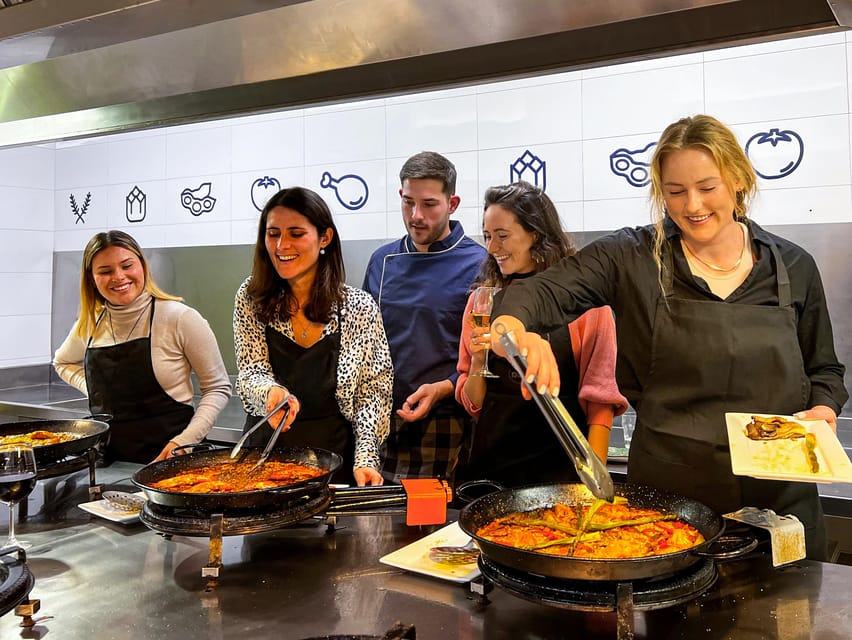
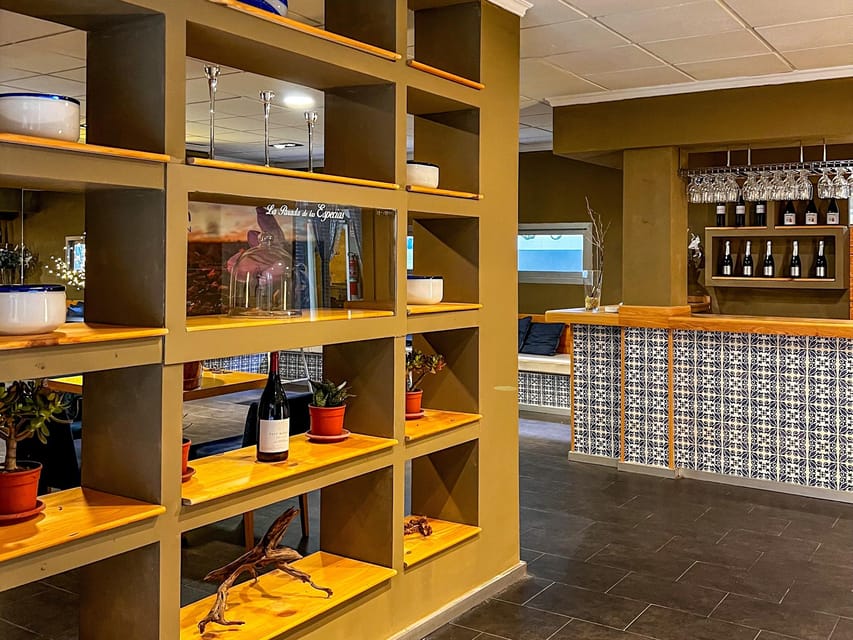
After the market, you go to the cooking venue. It is described as a clean, attractive restaurant or kitchen space with modern equipment and a pleasant dining area. The setup is made for group instruction, with each station shared by one to three people.
That arrangement is a good middle ground. You have enough room to take part, but you are not isolated from the rest of the class. The chef can move between stations, check progress, and correct small mistakes before they affect the rice.
The class is conducted in English. Guides and assistants vary by session, but names that appear often include Daniel, Reyes, Victor, Juan, Julia, Isabel, Emma, Sofia, and others. The exact team is not fixed, so book this for the format rather than one particular person.
Before the main cooking begins, the team serves tapas and drinks. Cava, local white wine, local red wine, and Mistella are among the drinks described during different sessions. The exact selection may vary, but the idea is consistent: you cook with something in your glass and small bites on the table.
More Paella and Spanish Classes in Spain:
- Barcelona Interactive Spanish Cooking Experience
★ 4.5 · 2,155 reviews - Spanish Cooking Class Paella Tapas and Sangria in Madrid
★ 5.0 · 1,340 reviews - Paella Cooking Class in Madrid with Bottomless Wine Pairing
★ 5.0 · 985 reviews - Seville: Spanish Cooking Class with Dinner
★ 4.9 · 900 reviews
Learning the paella method step by step
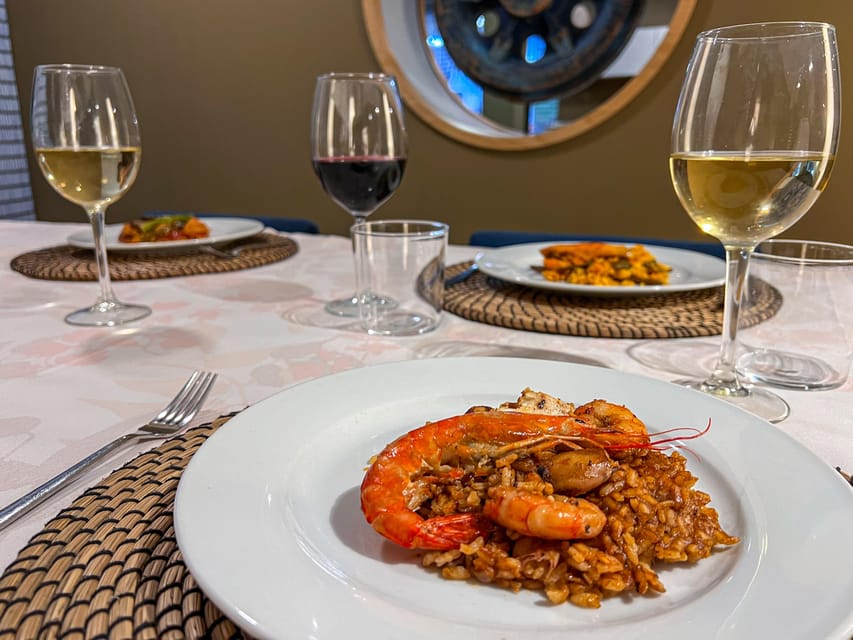
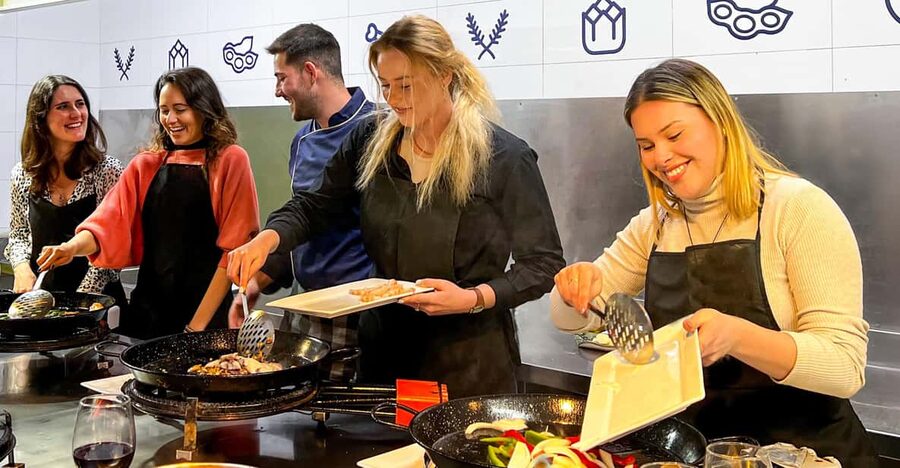
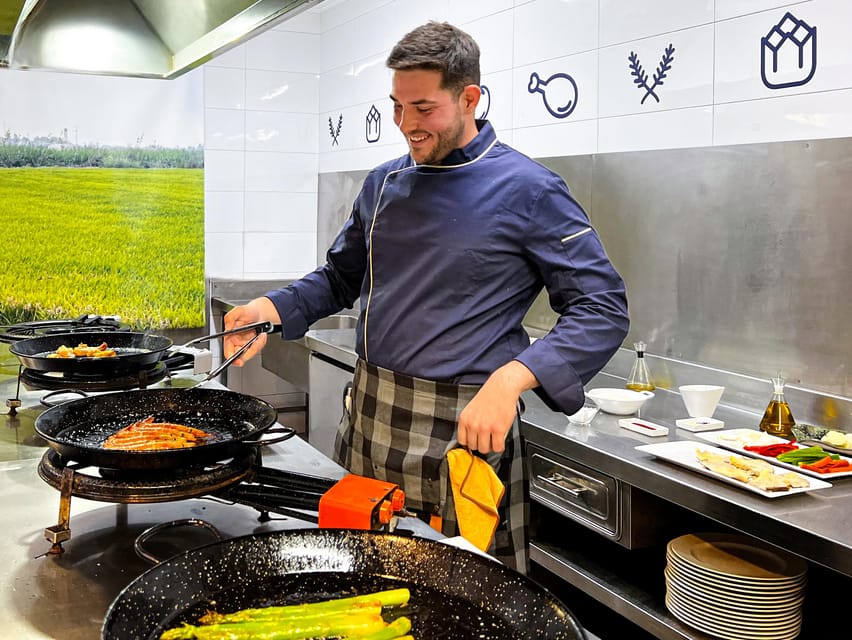
This is a hands-on class, not a stage show. Your chef explains the process, then gives you time to work at your station. The instruction covers the traditional Valencian recipe as well as the differences between chicken and rabbit paella and seafood paella.
The most useful lessons concern timing and heat. Paella can look simple, but the result depends on adding ingredients in the right order, letting flavors develop, and leaving the rice alone at the proper stage. The chef keeps an eye on the pans and helps each group stay on track.
You should also hear about socarrat, the prized toasted layer of rice at the bottom of the pan. One enthusiastic cook managed to produce a perfect socarrat under Reyes’s direction. That detail tells you the class goes beyond stirring ingredients together. It addresses the small technical points that make the finished dish better.
Do not expect to become a professional paella cook in one afternoon. You will learn a reliable method and useful principles, but home results depend on your equipment, pan size, and heat source. The class gives you a strong starting point, not a magic guarantee.
The instructors also add cultural context. You learn about the meaning of paella in Valencia, the local ingredients, and the differences between versions of the dish. That background makes the cooking more memorable and helps you recognize when a restaurant menu is using the word loosely.
Tapas, wine, and the finished paella
While the paella cooks, assistants bring out more tapas and wine. Julia, Isabel, Sharin, Belen, Mimi, and other hosts are singled out for keeping the food moving and making sure glasses stay filled. The service is part of the experience, not an afterthought.
The wine element is especially useful for people who want more than a cooking lesson. Some sessions include a short explanation of the wines and simple pairing guidance. You may taste Cava, white wine, red wine, and a sweet local drink such as Mistella.
The word bottomless appears in some descriptions from participants, but I would treat the included drinks as generous rather than assume unlimited alcohol under every condition. The confirmed inclusions are local tapas, wines, and dessert. If you do not drink, the important point is that the food and teaching remain central.
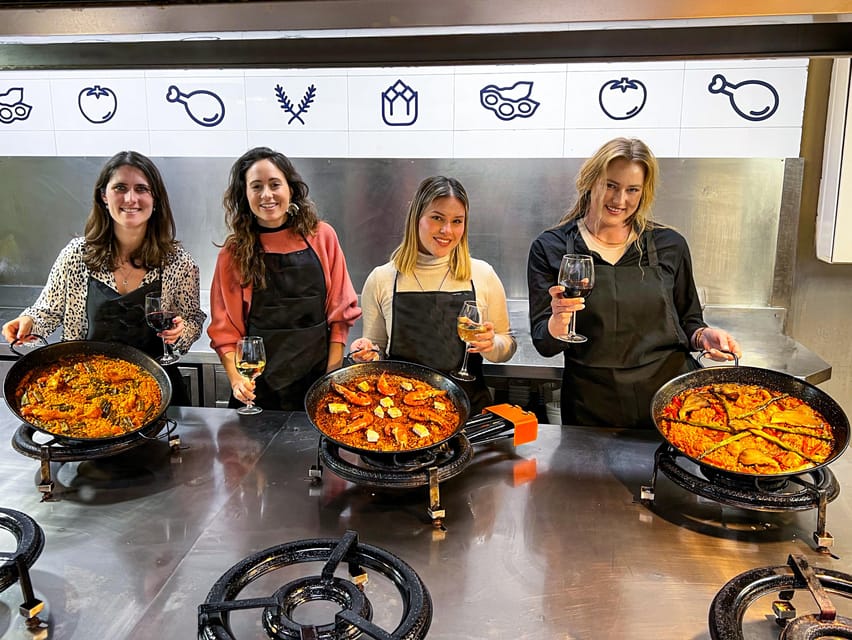
Once the paellas are ready, you sit down and eat what you made. This shared meal is one of the strongest parts of the class. You have worked beside the other participants, and the communal table gives the evening a natural finish.
The portions are described as substantial, with dessert served afterward. A sweet course and, in some sessions, dessert wine round out the meal. You should arrive ready for a full dining experience rather than a small cooking sample.
How the group setting affects the experience
The social atmosphere is a major reason this class works. You cook beside people from different countries, compare your pans, and sit together for the final meal. Solo visitors can meet people without needing to organize a separate dinner, while couples and families get a shared activity with a clear result.
The group format also means the class is not completely private. Your chef must divide attention among several stations, and the pace is set for the group. If you want one-on-one instruction or a quiet private meal, this is not the best match.
For most beginners, the format is helpful. You can watch how other stations handle a step, and the chef can repeat instructions when needed. The guides are praised for being patient and for checking that everyone is keeping up.
Families can also enjoy it. One participant described the class as a strong family activity, and another received useful food alternatives during pregnancy. Still, tell the provider about dietary or health needs in advance rather than assuming every substitution is automatic.
The activity is listed as wheelchair accessible. Since the experience includes a market walk and a kitchen venue, confirm the exact meeting and route details if you need specific access arrangements.
Is $82 a fair price?
At $82 per person, this is not the cheapest way to eat paella in Valencia. You can find a restaurant meal for less, especially if your goal is simply to taste the dish.
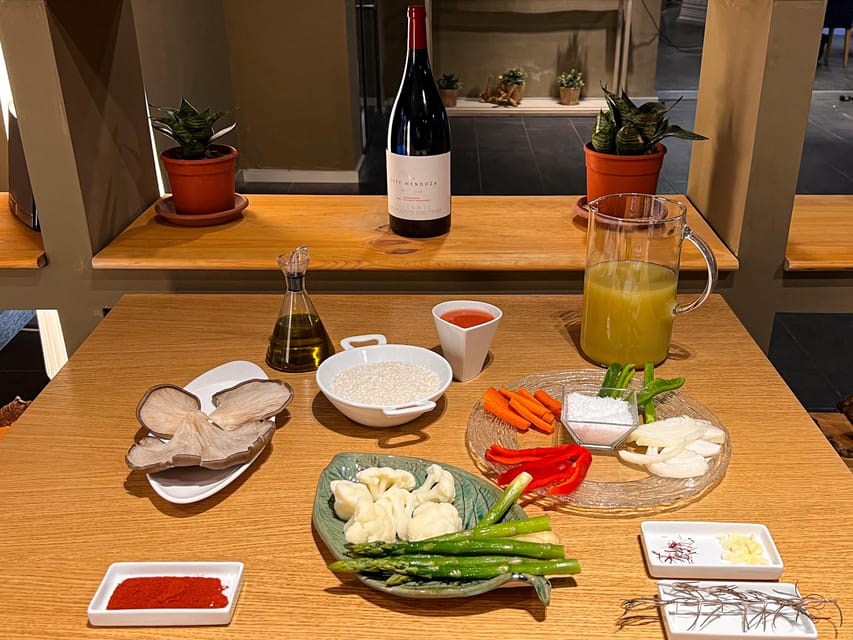
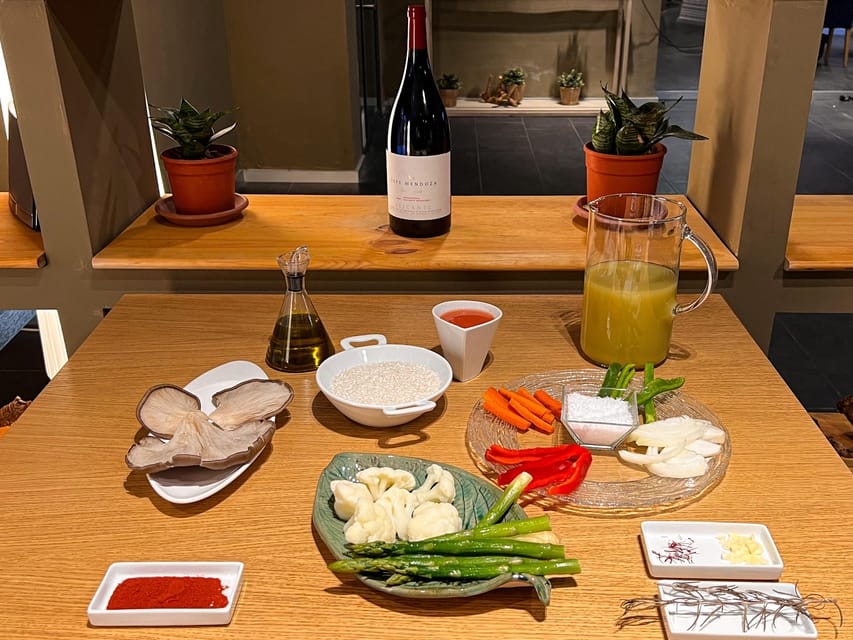
The value changes when you count what is included. Your fee covers the chef-led class, cooking materials, ingredients, market visit on eligible sessions, tapas, wine, paella, and dessert. You also receive several hours of instruction and a cultural introduction to the dish.
I consider it good value for someone who wants an activity, a meal, and a useful skill in one booking. The price is easier to justify for visitors who might otherwise pay separately for a market visit, a food tour, and dinner.
The value is weaker if you choose an evening or Sunday session mainly for the market. Those bookings still include the cooking class and meal, but they last three hours and omit Central Market. Pick your time carefully so you are paying for the version you actually want.
Who should book this paella class?
I would recommend it to first-time visitors who want a distinctly Valencian activity, not just another generic cooking lesson. It suits people who enjoy food, social settings, and a little participation.
It is also a strong choice for:
- Couples looking for an evening activity beyond sightseeing
- Solo visitors who want an easy way to meet people
- Families who can follow a guided cooking session
- Beginners who want clear instruction
- Food lovers interested in local wine and ingredients
- Anyone curious about the difference between Valencian and seafood paella
I would hesitate if you dislike group activities, do not drink alcohol and want a class built around nonalcoholic pairings, or want a detailed professional course. The format is friendly and hands-on, but it is still designed as a social culinary experience.
Book a morning session from Monday through Saturday if the market is important. Choose an evening session if the meal, wine, and social side matter more than seeing where the ingredients are bought.
Should you book the Sea Saffron experience?
Yes, if you want to understand paella rather than simply order it. The strongest parts are the ingredient shopping, clear instruction, personal cooking stations, and generous meal afterward.
The class earns its price through the full package. You get a local food lesson, a market visit when the schedule allows, several tastings, and dinner that you helped make. Guides such as Reyes, Daniel, and Victor bring different personalities, but the format remains consistent: practical cooking with plenty of food and conversation.
My main advice is simple: choose the morning market option, arrive ready to participate, and do not treat this as a restaurant meal with a short demonstration. The fun comes from cooking the rice yourself, learning the local rules, and then sitting down with the group to see how your pan turned out.
FAQ
How long does the paella cooking class last?
Morning sessions that include the Central Market visit last four hours. The 5 PM and 8 PM sessions, along with all Sunday sessions, last about three hours because the market is closed.
Is the Central Market visit included in every booking?
No. The market visit is included for morning sessions from Monday through Saturday. Evening sessions and Sunday bookings do not include it.
What food and drinks are included?
The price includes the paella you cook, local tapas, wines, and dessert. Some sessions also include drinks such as Cava, local white and red wines, and Mistella.
Is the class taught in English?
Yes. The instructor language is English, and the activity information lists English as the available language.
How many people share a cooking station?
Each cooking station is set up for one to three people. You take part in preparing your own paella while the chef guides the group.
Can I cancel the booking if my plans change?
You can cancel up to 24 hours before the activity for a full refund. The reserve-now, pay-later option also lets you hold a place without paying at the time of booking.
More Hands-On Workshops in Spain
- Málaga: Spanish Cooking Workshop with Paella and Sangria
★ 4.9 · 613 reviews - Paella Cooking Class with Professional Chef: Four Course Dinner
★ 5.0 · 561 reviews - Taste of Spain: Tapas Cooking Class with Bottomless Wine Pairing
★ 5.0 · 414 reviews - Half-Day Spanish Cooking Class & Boqueria Market Tour
★ 4.9 · 383 reviews
More Shopping Trips in Spain
- Valencian paella cooking class, tapas and visit to Ruzafa market.
★ 5.0 · 828 reviews - Spanish Cooking Class & Triana Market Tour in Sevilla
★ 5.0 · 760 reviews - Seville: 3.5-Hour Spanish Cooking Class & Triana Market Tour
★ 4.9 · 751 reviews - Barcelona: Paella Cooking Class with Market Visit and More
★ 4.9 · 711 reviews
Just added around Spain
- Basque Pintxos and Tapas Cooking Class in Bilbao★ 5.0 · 73 reviews
- Paella and Burnt Basque Cheesecake Cooking Class (in Bilbao)★ 5.0 · 46 reviews
- Small-group Immersive Basque Cooking Class in Bilbao with Open Bar★ 5.0 · 65 reviews
- Pintxos and Tapas Cooking Class in Bilbao★ 5.0 · 38 reviews
- Private Barcelona Market Tour & Paella Cooking Class with Josh★ 5.0 · 4 reviews
- Rooftop Paella Seafood Cooking Class Experience in Barcelona★ 5.0 · 59 reviews
- Private Authentic Paella Cooking Class in Barcelona with Josh★ 5.0 · 3 reviews
- Premium Paella & Tapas Feast: Unlimited Wine & Rambla Views★ 5.0 · 13 reviews
Spanish & Paella Cooking Classes, compared.
Barcelona: Paella Cooking Experience & Boqueria Market Tour
Read our review →
Barcelona Paella Cooking Class with Market Visit, Tapas & Sangria
Read our review →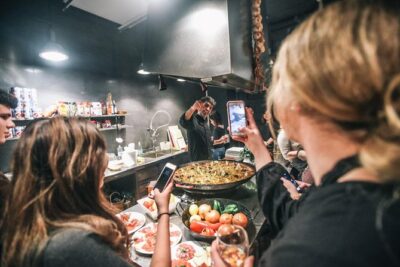
Barcelona Interactive Spanish Cooking Experience
Read our review →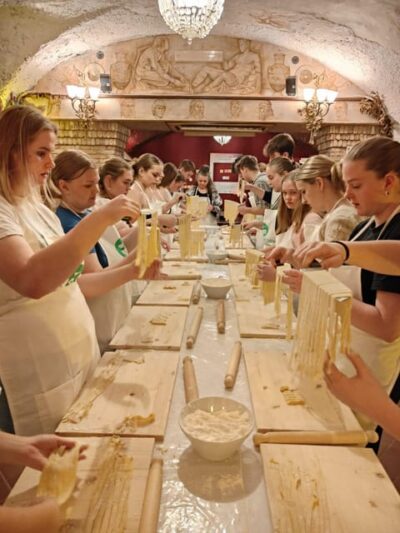
Rome: Pasta & Tiramisu Cooking Class near the Spanish Steps
Read our review →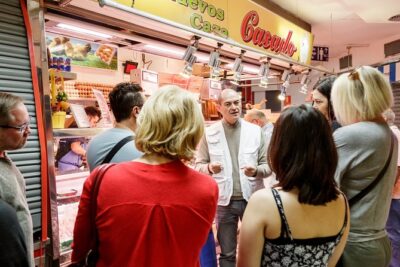
Spanish Cooking Class Paella Tapas and Sangria in Madrid
Read our review →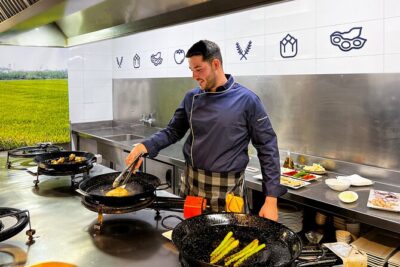
Paella Cooking Class, Wine Tasting & Central Market in Valencia
Read our review →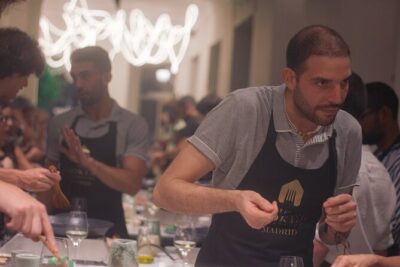
Paella Cooking Class in Madrid with Bottomless Wine Pairing
Read our review →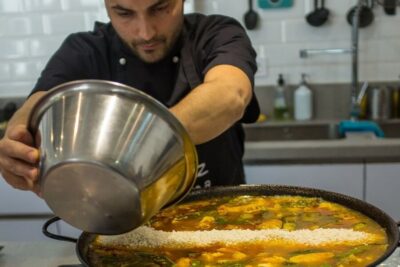
Browse the lists this tour appears in