
Review · VALENCIA
Valencia: Traditional Paella Cooking Class and Dinner
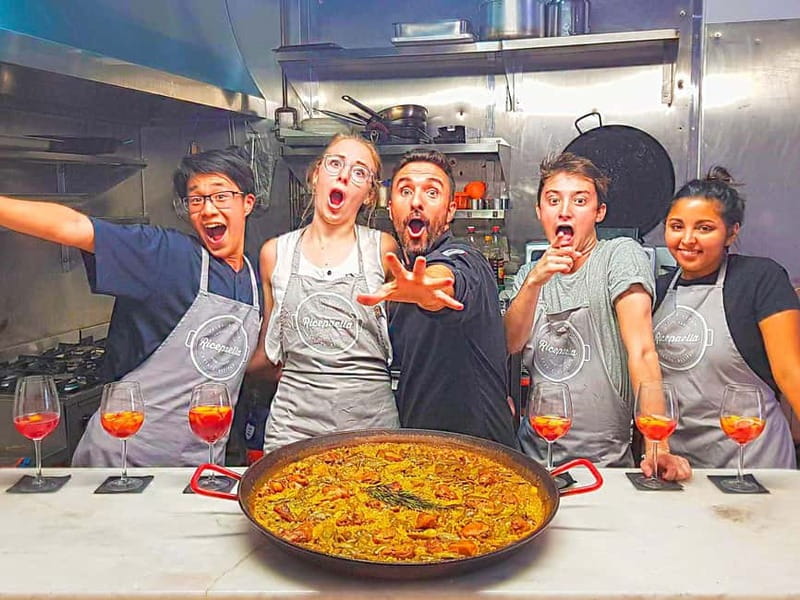
Valencia’s best-known dish is more than rice in a wide pan. In this small-group paella class, you learn the timing, ingredients, and local customs behind seafood paella, then sit down to eat what you helped prepare. Chefs including Antonio, Pepe, and Grego have led the class, and the tone is friendly rather than formal.
I like the hands-on cooking, since you do more than watch a demonstration. I also like the generous food lineup: snacks, Valencian starters, sangria, the paella, and dessert. The main consideration is the two-hour schedule. It is enough for a focused lesson and meal, but not a long market tour or a slow culinary workshop.
Key points to know
- Seafood paella from fresh local ingredients: Prepare fish and shellfish in a Valencian kitchen, with products sourced daily from the Central Market.
- A real lesson, not just a tasting: Learn about stock, rice, timing, and the differences between Valencian, seafood, and mixed paella.
- Chefs who teach as well as cook: Antonio and Pepe receive repeated praise for clear instruction, warmth, and practical tips you can use at home.
- More than one dish: Snacks, esgarraet, Russian salad, ham croquettes, sangria, and cheesecake or oranges are included.
- Eight people maximum: The small group gives you a better chance to participate and ask questions.
- Good value for a full meal: At $105 per person, the price is high for a two-hour activity, but it covers cooking, drinks, several courses, and dessert.
Why a Paella Class Makes Sense in Valencia
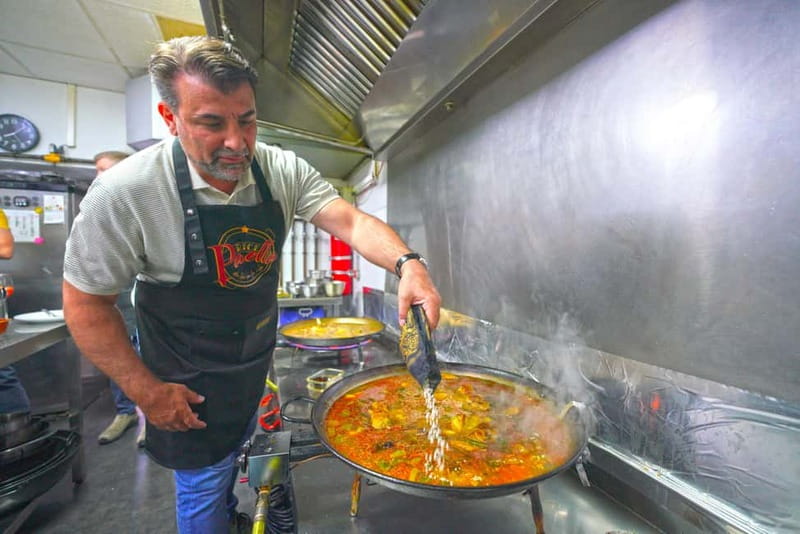
Paella began in the Valencian region, so learning it here gives the meal useful context. You are not simply ordering a pan of rice and hoping it is the local style. You hear why different versions exist and how seafood paella differs from paella Valenciana and mixed paella.
That distinction matters. Outside Valencia, the word paella often covers almost any rice dish cooked in a broad pan. This class gives you a clearer idea of what local cooks mean by the dish, including the importance of ingredient choices and cooking order.
The setting is described as an authentic Valencian kitchen, with a professional local chef guiding the work. You should expect a social lesson rather than a quiet restaurant meal. You will handle ingredients, follow instructions, and share the table with a small group.
More Paella and Spanish Classes in Spain:
- Barcelona: Paella Cooking Experience & Boqueria Market Tour
★ 4.8 · 3,661 reviews - Barcelona Paella Cooking Class with Market Visit, Tapas & Sangria
★ 5.0 · 2,531 reviews - Barcelona Interactive Spanish Cooking Experience
★ 4.5 · 2,155 reviews
The Welcome: Market Produce and Valencian Snacks
The session begins with an introduction to fresh products sourced daily from Valencia’s Central Market. That is a useful start because paella depends on the quality and balance of its ingredients, not only on a recipe printed on a card.
You also get light snacks while the class gets underway. These include Valencian cocoa, potatoes, and olives. They are simple foods, but they help set the local tone and give you something to enjoy before the main cooking begins.
The Central Market connection is one of the more appealing details here. You do not receive a vague promise of local flavor. You are told that the ingredients come from one of Valencia’s main food markets, giving the lesson a stronger link to the city’s everyday cooking culture.
Still, keep your expectations in check. The information does not promise a guided walk through the Central Market or a chance to shop there with the chef. The market is part of the ingredient story, not a separate market tour.
Preparing Seafood Paella With a Local Chef
The main lesson centers on seafood paella. You work with fish and shellfish from the region while the chef explains the traditional methods and the order in which ingredients should be added.
A good paella class is really a lesson in timing. The rice needs the right amount of liquid and attention, while the seafood must be handled with care. The chef’s job is to show you how those pieces fit together without making the process feel mysterious.
Antonio is repeatedly singled out for his instruction, humor, and practical advice. Pepe is also praised for making people feel at ease and for turning the cooking into a shared event. One particularly useful part of the class is the advice for recreating paella at home, since you leave with more than a pleasant dinner memory.
The class appears suited to mixed skill levels. You do not need to arrive as an experienced cook. The format lets everyone take part, and the chefs explain what is happening as the dish comes together.
You should also expect some variation in the chef leading your session. Antonio, Pepe, and Grego are all named in the available feedback, so the exact personality and teaching style may depend on the date. The consistent theme is personal guidance rather than a distant demonstration.
Paella Valenciana, Seafood Paella, and Mixed Paella
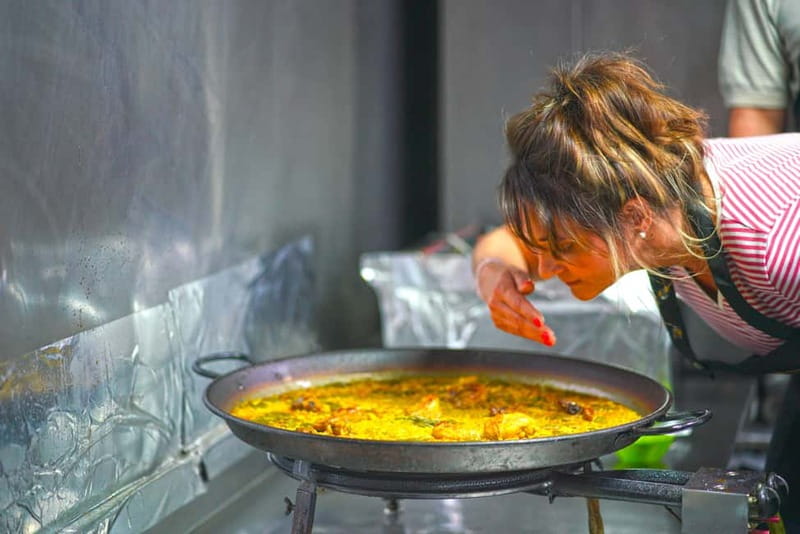
One of the most valuable parts of the lesson is the explanation of paella styles. The session focuses on seafood paella, but the chef also explains the differences between seafood, mixed, and Valencian versions.
That is worth your attention because the names can be confusing. A traditional Valencian version is not simply a seafood paella with a regional label. The ingredients and local expectations differ, and the chef uses the cooking lesson to explain those distinctions.
You also learn why the pan, rice, and cooking process matter. The provided details do not list every technical step, so you should not expect a full professional cooking course. You can expect practical instruction focused on the dish you are preparing that evening.
The class has a useful balance: enough cultural background to make the food meaningful, but enough hands-on work to keep you involved. Previous participants described learning the history of paella and Valencia alongside the cooking itself. That combination makes the meal easier to appreciate when it reaches the table.
More Dinner Experiences in Spain:
- Seville: Spanish Cooking Class with Dinner
★ 4.9 · 900 reviews - Paella Cooking Class with Professional Chef: Four Course Dinner
★ 5.0 · 561 reviews - Spanish Cooking Class and Dinner in Seville
★ 5.0 · 261 reviews - Pasta Making & Wine Tasting with Dinner in Frascati from Rome
★ 5.0 · 1,326 reviews
Sangria, Starters, and the Social Side of the Class
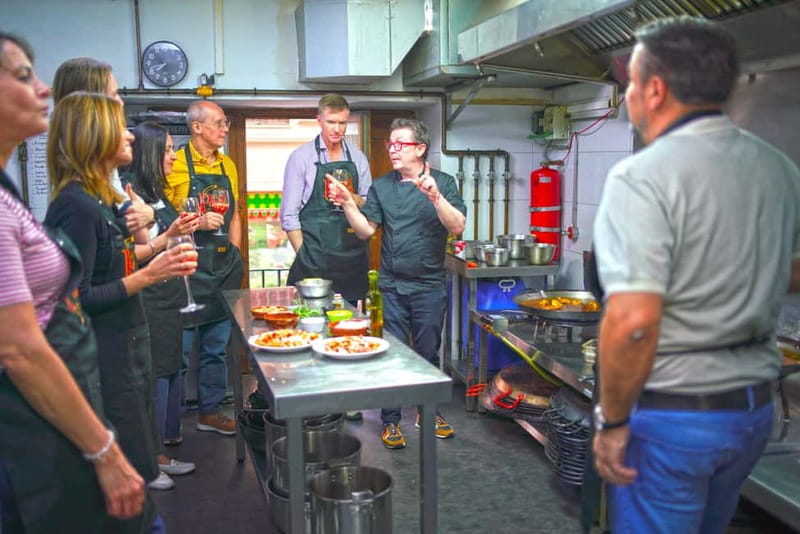
While the paella cooks, the class shifts into a relaxed meal. Homemade sangria is included, along with beer, soft drinks, and water. You can toast with the group without needing to arrange another drink order during the lesson.
The starters are more substantial than the opening snacks. The menu includes Valencian esgarraet, Russian salad, and a ham croquette. Esgarraet is a Valencian preparation, making it a particularly useful addition for anyone who wants to try something tied to the region rather than only the headline dish.
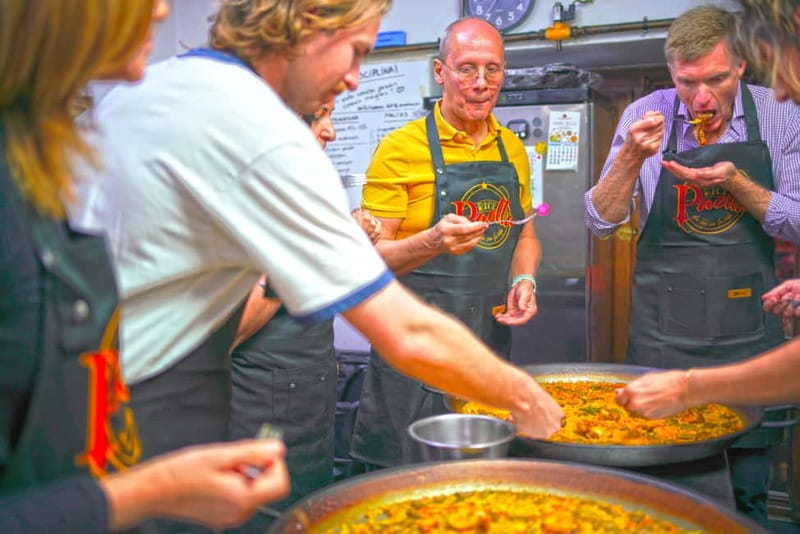
The social rhythm is part of the appeal. Cooking in a group of no more than eight creates room for conversation, questions, and shared tasks. The class is described as warm and convivial, and the repeated praise for Antonio and Pepe suggests that the chef plays a large role in setting that mood.
This is a good fit if you enjoy meeting people over food. It may be less suitable if you want a private, highly structured lesson with no group interaction. The small size helps, but it is still a shared class rather than a one-to-one appointment.
Sitting Down to Eat What You Made
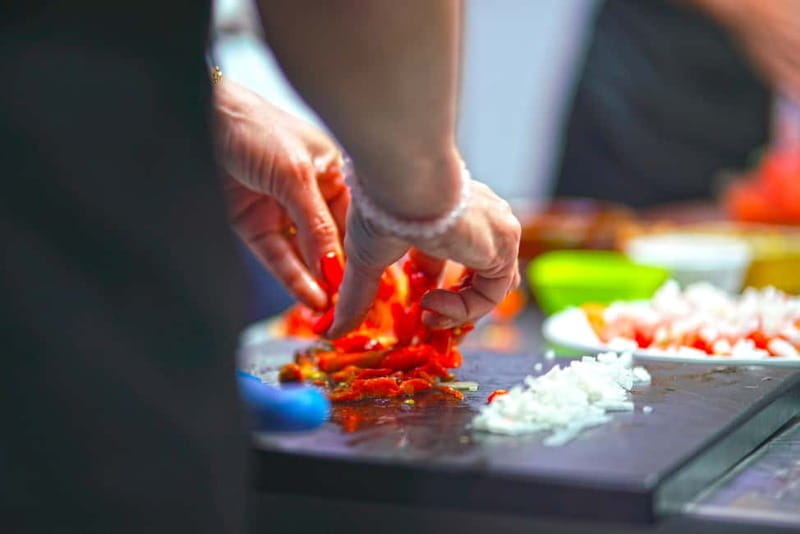
The final course is the seafood paella prepared during the lesson. That moment gives the class its payoff. You can taste the result with a better sense of what went into the pan, from the initial ingredients to the final cooking stage.
Several participants specifically praised the finished paella. One group ate both large pans prepared during the class, which gives you a useful sense of the meal’s scale. The food is not merely a token sample after the lesson.
Dessert is also included. You choose from traditional cheesecake, chocolate cheesecake, or Valencian oranges. The selection gives you a choice between something rich and sweet or a lighter regional fruit option.
The food and drink make the $105 price easier to assess. This is not just a two-hour cooking demonstration with a small taste at the end. You receive snacks, several starters, sangria or other drinks, the main course, and dessert. You are paying for instruction and a complete meal together.
Even so, the cost is not low. If your main goal is simply to eat paella, a restaurant meal will likely cost less. I would choose this class when you want the skill, stories, and shared cooking as part of the evening.
What the Strongest Feedback Tells You
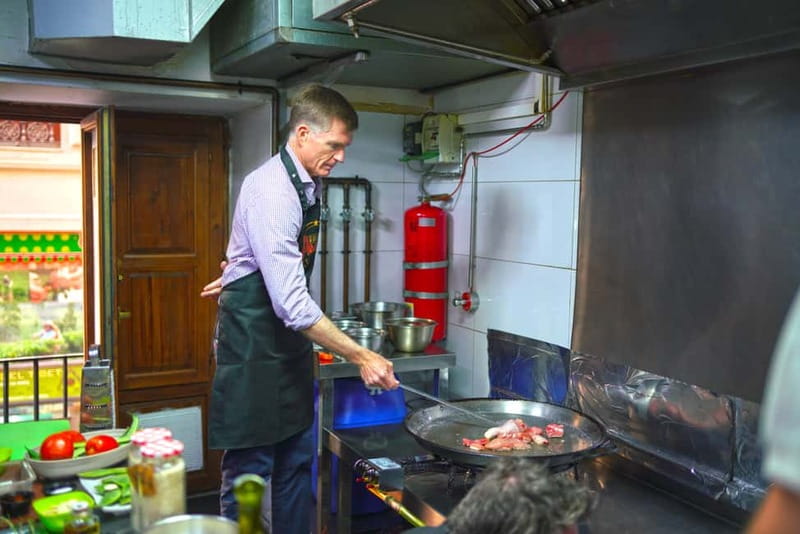
The most consistent praise goes to the chefs. Antonio is described as fun, helpful, charming, and full of useful paella advice. Pepe is praised for creating a family-like mood where people feel comfortable taking part. Grego is also described as a strong host, and one participant called his paella the best they had eaten in Spain.
The comments also point to a practical benefit: you can use what you learn after returning home. Several people said they felt ready to prepare paella for family and friends. That makes the lesson a better choice for home cooks than for someone who only wants an entertaining food show.
The food receives strong approval too. Participants enjoyed the tapas, sangria, dessert, and finished paella. One person noted that the tapas and dessert were an unexpected bonus, although those items are part of the stated package, so you should count on a full food experience rather than a bare-bones workshop.
The rating is 4.8 from 53 reviews, with the supplied comments overwhelmingly giving five stars. That is a strong record, but I would still remember that a cooking class depends partly on group chemistry and the chef assigned to your session.
Timing, Group Size, and Meeting Point
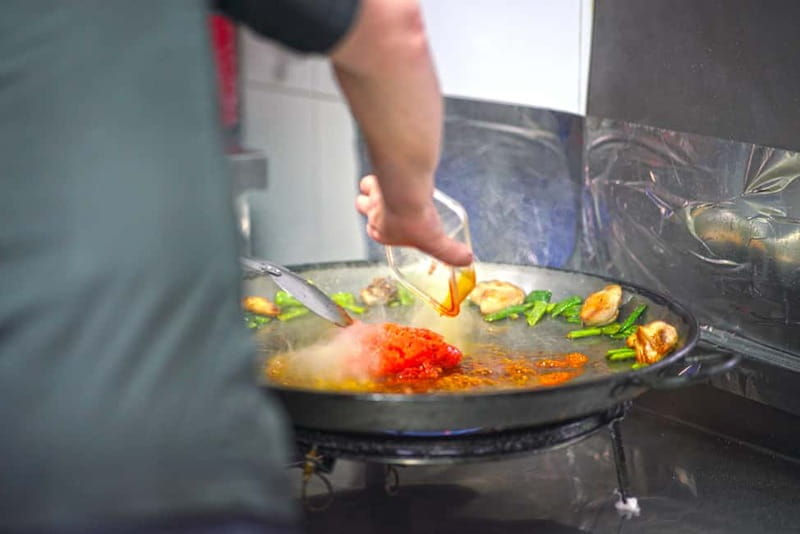
The activity lasts two hours. That compact schedule works well if you have limited time in Valencia or want to fit the class between sightseeing plans. It also means the session stays focused on cooking and eating.
The group is limited to eight participants. That is small enough for direct help, but the class may still feel communal rather than private. Couples, friends, solo visitors, and families who enjoy shared food should all find the format easy to join.
The meeting point needs careful attention. The entrance is identified as the local at Derecha 2, meaning the local on the right side, number 2. That wording is easy to misunderstand, so check your booking details closely before setting out and look for the correct entrance rather than assuming the first door is right.
The host or greeter speaks English and Spanish. That makes the class practical for English-speaking visitors, while Spanish speakers can also take part comfortably.
Cancellation is flexible enough for most holiday plans: you can cancel up to 24 hours ahead for a full refund. You can also reserve now and pay later, which helps if your Valencia schedule is still changing.
Who Should Book This Paella Class?
I would recommend it most strongly to people who want to learn a dish they can make at home. The practical instruction, small group, and repeated focus on tips and technique give the class lasting value beyond the meal.
It also suits first-time visitors who want one evening tied closely to Valencian food culture. You get local ingredients, regional starters, an explanation of paella styles, and a chef who connects the dish to Valencia.
Families and groups of friends should find plenty to enjoy, provided everyone is happy to participate. The food is shared, the drinks are included, and the mood is informal.
You may want to skip it if you are looking for a long market visit, a private lesson, or a formal chef-led course with advanced technical detail. Two hours goes quickly, and the focus is one main dish with accompanying food, not a full survey of Valencian cuisine.
Is the $105 Price Fair?
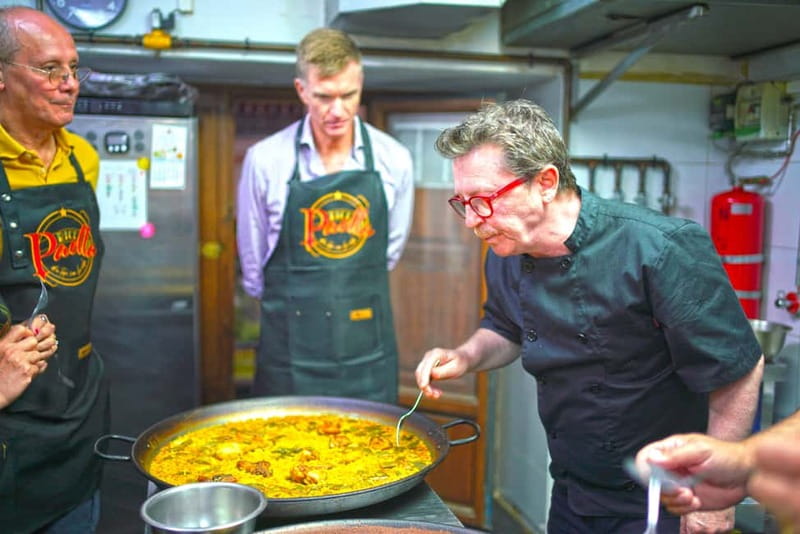
At $105 per person, this belongs in the special-activity part of your Valencia budget. It costs more than ordering paella at a restaurant, but the comparison is not quite one to one.
Your fee covers the workshop, snacks, three starters, paella, dessert, and drinks including homemade sangria, beer, soft drinks, and water. It also includes the guidance of a professional chef and a group capped at eight.
I think the value is solid if you care about participation and instruction. The price is harder to justify if you only want dinner or are traveling on a tight budget. In that case, order paella elsewhere and spend the difference on another part of your trip.
Final Verdict: Book It If You Want More Than Dinner
Book this class if you want a friendly, practical evening centered on Valencia’s signature dish. The strongest reasons are the small group, the hands-on format, the complete meal, and chefs such as Antonio and Pepe who make the lesson approachable.
Go in expecting a focused two-hour session, not an all-day food tour. Pay close attention to the Derecha 2 meeting-point wording, and remember that the chef leading your class may vary. For anyone who wants to understand paella and try making it at home, this is a worthwhile use of an evening in Valencia.
FAQ
How long does the paella cooking class last?
The class lasts two hours. Check availability for the exact starting time.
What kind of paella will I prepare?
The class focuses on seafood paella made with fish and shellfish from the region. The chef also explains the differences between seafood paella, paella Valenciana, and mixed paella.
What food and drinks are included?
The experience includes Valencian cocoa, potatoes, olives, esgarraet, Russian salad, a ham croquette, paella, dessert, homemade sangria, beer, a soft drink, and water.
What dessert choices are available?
You can choose traditional cheesecake, chocolate cheesecake, or Valencian oranges.
How many people are in the class?
The group is limited to eight participants.
What languages are available, and what is the cancellation policy?
The host or greeter speaks English and Spanish. You can cancel up to 24 hours in advance for a full refund, and you can reserve now and pay later.
More Hands-On Workshops in Spain
- Spanish Cooking Class Paella Tapas and Sangria in Madrid
★ 5.0 · 1,340 reviews - Paella Cooking Class, Wine Tasting & Central Market in Valencia
★ 5.0 · 1,150 reviews - Paella Cooking Class in Madrid with Bottomless Wine Pairing
★ 5.0 · 985 reviews - Valencian paella cooking class, tapas and visit to Ruzafa market.
★ 5.0 · 828 reviews
More Dining Experiences in Spain
- Rome: Pasta Making with Wine Tasting and Dinner in Frascati
★ 4.9 · 979 reviews - Palermo: Pizza and Gelato Cooking Class with Dinner and Wine
★ 4.9 · 951 reviews - Greek Cooking Class in Athens Including Rooftop Dinner with Acropolis View
★ 5.0 · 826 reviews - Tuscan Cooking Class and Dinner in Florence
★ 4.5 · 732 reviews
Just added around Spain
- Basque Pintxos and Tapas Cooking Class in Bilbao★ 5.0 · 73 reviews
- Paella and Burnt Basque Cheesecake Cooking Class (in Bilbao)★ 5.0 · 46 reviews
- Small-group Immersive Basque Cooking Class in Bilbao with Open Bar★ 5.0 · 65 reviews
- Pintxos and Tapas Cooking Class in Bilbao★ 5.0 · 38 reviews
- Rooftop Paella Seafood Cooking Class Experience in Barcelona★ 5.0 · 59 reviews
- Private Authentic Paella Cooking Class in Barcelona with Josh★ 5.0 · 3 reviews
- Private Barcelona Market Tour & Paella Cooking Class with Josh★ 5.0 · 4 reviews
- Premium Paella & Tapas Feast: Unlimited Wine & Rambla Views★ 5.0 · 13 reviews
Spanish & Paella Cooking Classes, compared.
Barcelona: Paella Cooking Experience & Boqueria Market Tour
Read our review →
Barcelona Paella Cooking Class with Market Visit, Tapas & Sangria
Read our review →
Barcelona Interactive Spanish Cooking Experience
Read our review →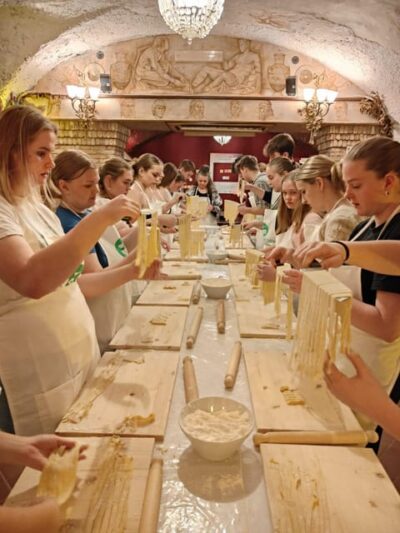
Rome: Pasta & Tiramisu Cooking Class near the Spanish Steps
Read our review →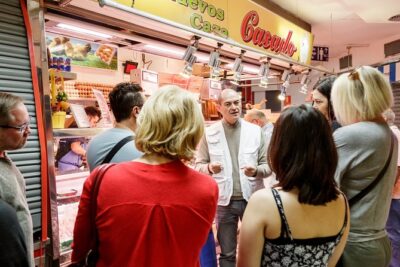
Spanish Cooking Class Paella Tapas and Sangria in Madrid
Read our review →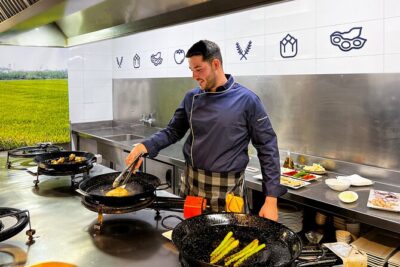
Paella Cooking Class, Wine Tasting & Central Market in Valencia
Read our review →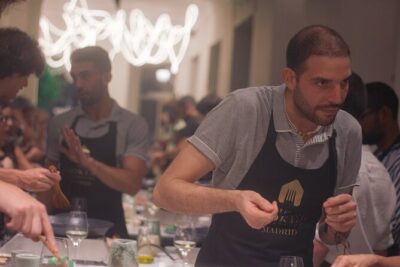
Paella Cooking Class in Madrid with Bottomless Wine Pairing
Read our review →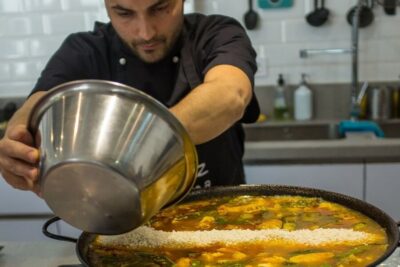
Browse the lists this tour appears in