
Review · VENICE
Venice: Cooking Class with Tiramisu and Pasta Making
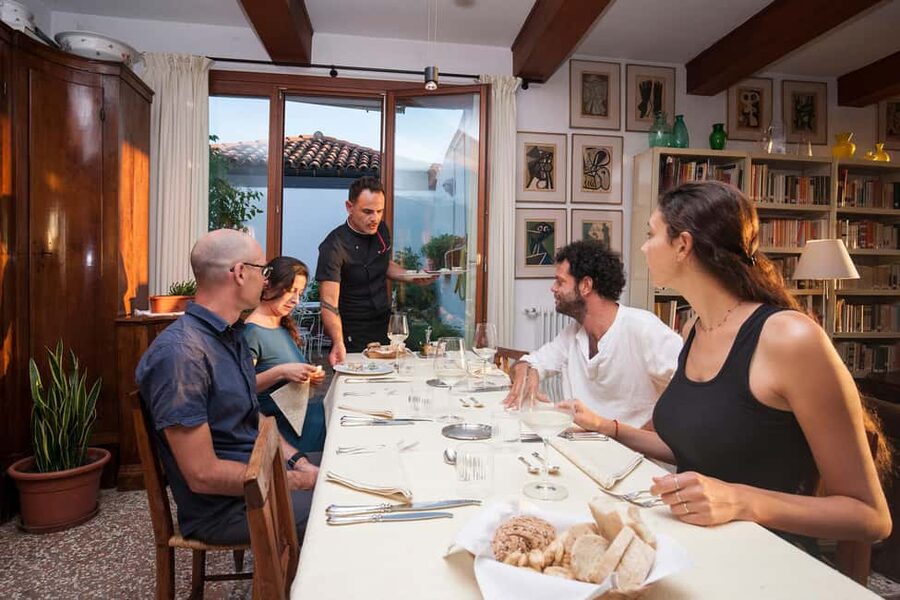
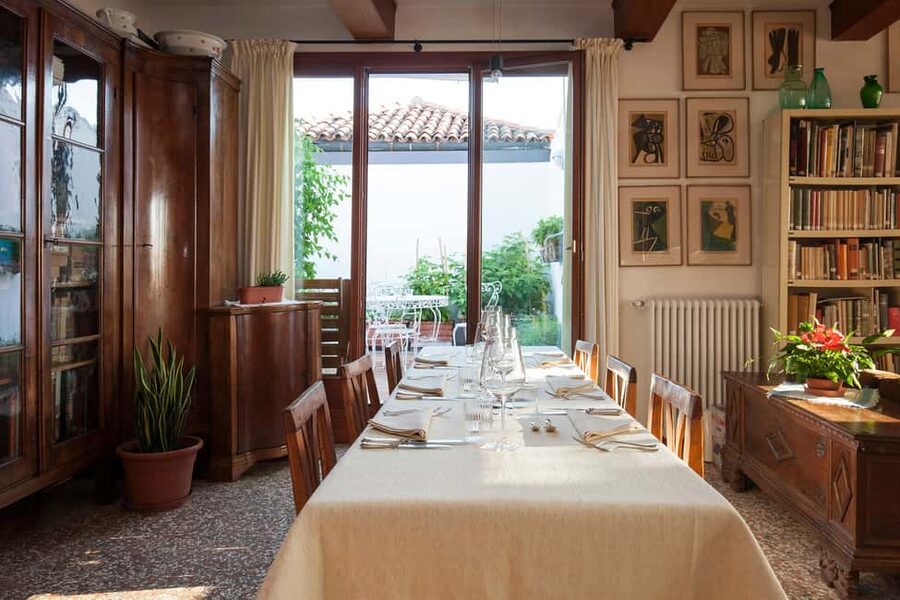
Making pasta in a family home is more personal than watching a chef perform in a restaurant kitchen. This 3.5-hour Venetian cooking class takes place on the top floor of a 16th-century palace, in the house where the chef grew up. You make fresh pasta and tiramisu, then eat what you prepared around a shared table.
I like the hands-on teaching and the easy social rhythm. The chef demonstrates each step, then lets you try it, and the small-group setup gives you room to ask questions. I also like the finish: wine, homemade limoncello, espresso, and a small farewell gift turn a cooking lesson into a full evening.
The main consideration is access. The apartment is on the third and top floor with no elevator, and you will stand for part of the class. The pace can also include pauses while pasta cooks, so this suits you best if you want a sociable meal rather than a tightly timed technical workshop.
Key points to know before booking
- Cook in a 16th-century Venetian palace: The class takes place in a family apartment on an upper floor, not a standard cooking school.
- Make two types of pasta and tiramisu: The lesson covers fresh pasta, a seasonal vegetable sauce with quality proteins, and traditional tiramisu.
- Learn by doing: Your chef demonstrates each stage, then guides you through your own dough, pasta, and dessert.
- Share a family-style meal: You sit down with the group to eat the food prepared during the class, with one bottle of wine for every three people.
- Finish with Italian after-dinner touches: Homemade limoncello, espresso, and a small gift are included.
- Plan for stairs and standing: The venue has no elevator, and dietary restrictions or allergies must be reported in advance.
A cooking class inside a Venetian family home
The setting does much of the work here. Instead of entering a purpose-built culinary studio, you climb to the top floor of a 16th-century Venetian palace, the home where the chef grew up. That gives the class a domestic feel from the start.
You are not simply being shown how pasta is made. You are welcomed into a family-run venture led by a professional chef and a small culinary team. The cooking is paired with stories about the recipes, local customs, and the way food fits into Venetian life.
That personal setting is especially useful if you want an evening that feels connected to the city. Venice can sometimes become a parade of landmarks and restaurant meals. Here, you spend time with local hosts, work beside other people, and learn something you can carry home.
The group size may vary. Some sessions have included around six or seven other participants, while one booking had only a couple and became a private lesson. You should expect a small, social class rather than a large demonstration.
More Dessert Classes in Venice
- Venice: Pasta and Tiramisu Cooking Class with Wine
★ 4.9 · 1,010 reviews - Pasta and Tiramisu Cooking Class with Wine in Venice
★ 5.0 · 945 reviews - Venice: Pasta and Tiramisu Cooking Class at a Local’s Home
★ 4.8 · 205 reviews
The opening welcome and kitchen teamwork
The class begins with an introduction to the chef and the other participants. A bottle of prosecco may be served while the host prepares the workspace, and snacks such as olives can help everyone settle in.
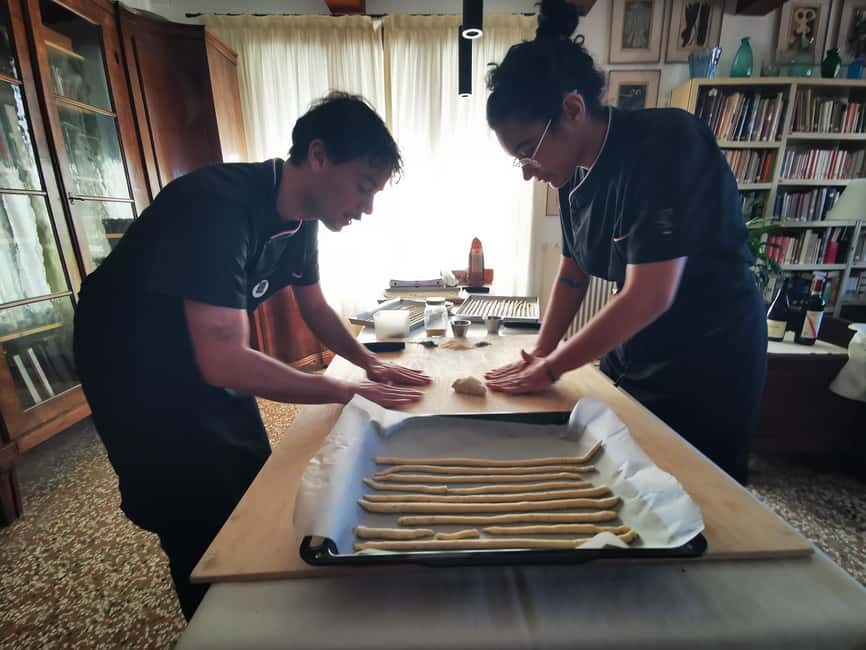
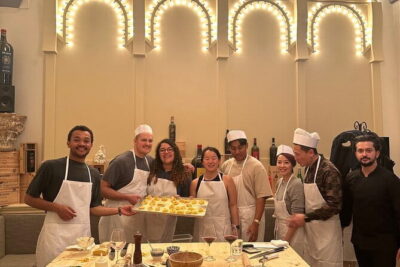
The social side is part of the design. You may be sharing a station with your partner or working beside people you have just met. The goal is to function like a small kitchen brigade, with everyone taking part rather than waiting passively for a finished plate.
That can make the evening lively, but it also means the experience is not built around silence or individual concentration. You need to be comfortable chatting and sharing equipment. If you enjoy meeting people over food, this is a real strength. If you want a private, highly technical lesson, ask about the group arrangement before booking.
The instructors named in past sessions include Mauro, Anthea, Marco, and Giacomo. The key quality to look for is the teaching style: each step is shown clearly, then you get a chance to repeat it. That approach works well for beginners and still leaves room for more experienced home cooks to ask about technique.
Tiramisu comes first
Tiramisu is one of the first major recipes. You learn how the dessert is assembled and how the ingredients are handled before it needs time to rest.
This is a smart choice for the order of the class. The dessert can be prepared early, then set aside while you work on the pasta. It also gives you a quick success at the beginning, before you tackle dough and shaping.
The class presents tiramisu as a traditional Italian recipe rather than a shortcut dessert. You can ask questions about the balance of cream, coffee, and biscuits, and the chef explains the reasoning behind the process.
Do not expect to leave with a full separate tiramisu to carry around Venice. The point is to prepare it with the group, then eat it as part of the shared meal. You will also receive the method and techniques needed to make it at home.
Rolling and shaping fresh pasta
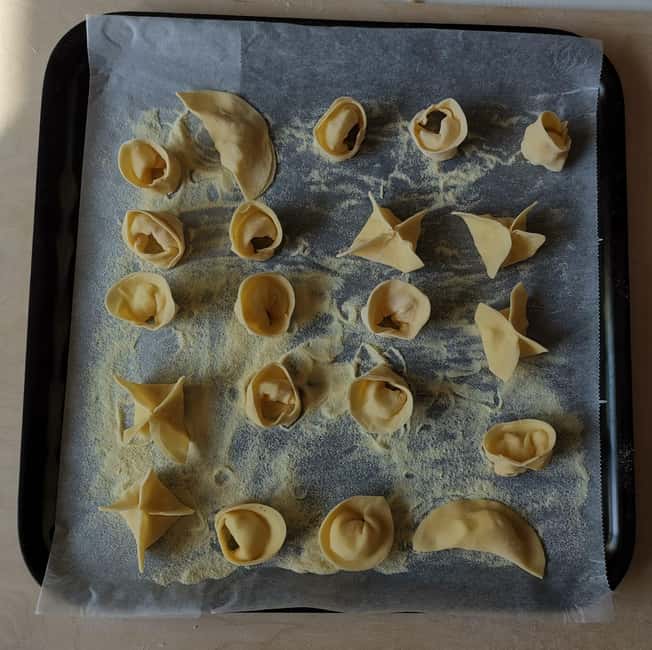
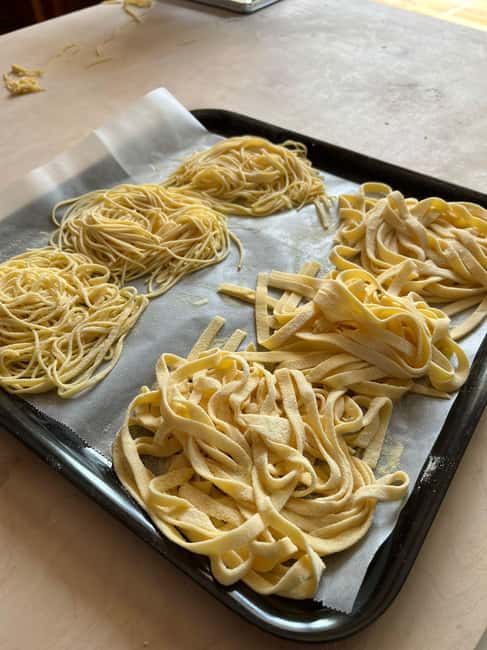
The pasta section is the practical heart of the class. You make fresh Italian pasta by hand and work through two pasta types. The chef demonstrates the process, then helps you handle the dough yourself.
This is where comfortable clothing and shoes matter. You will be standing for part of the lesson, and pasta making takes room, movement, and a little patience. Your first sheet may not look perfect. That is normal, and the chef’s job is to show you how to correct the texture and shape.
The class is suitable for all skill levels because you are not expected to arrive with pasta-making experience. Beginners get step-by-step help, while keen cooks can ask about dough, shaping, cooking, and the tools worth buying at home.
Several elements make this useful beyond the holiday itself. You learn the feel of the dough, not just a list of measurements. You also see how a home kitchen organizes several dishes at once. That practical sense of timing is often more helpful than a recipe card alone.
If you travel with a partner or family member, this is a good shared task. Couples have worked together at one station, and family groups have treated it as a bonding activity. You will need to cooperate, though. Pasta making is hands-on and occasionally messy.
Same place, a different menu:
- Florence: Pasta Cooking Class with Unlimited Wine
★ 4.9 · 10,285 reviews - 3 in 1 Cooking Class near Navona: Fettuccine, Ravioli & Tiramisu
★ 5.0 · 7,376 reviews - Florence: Pasta & Tiramisu Cooking Class with Unlimited Wine
★ 4.9 · 6,708 reviews - Florence: Pasta Cooking Class with Unlimited Wine
★ 5.0 · 6,413 reviews
Seasonal sauce and the Venetian connection
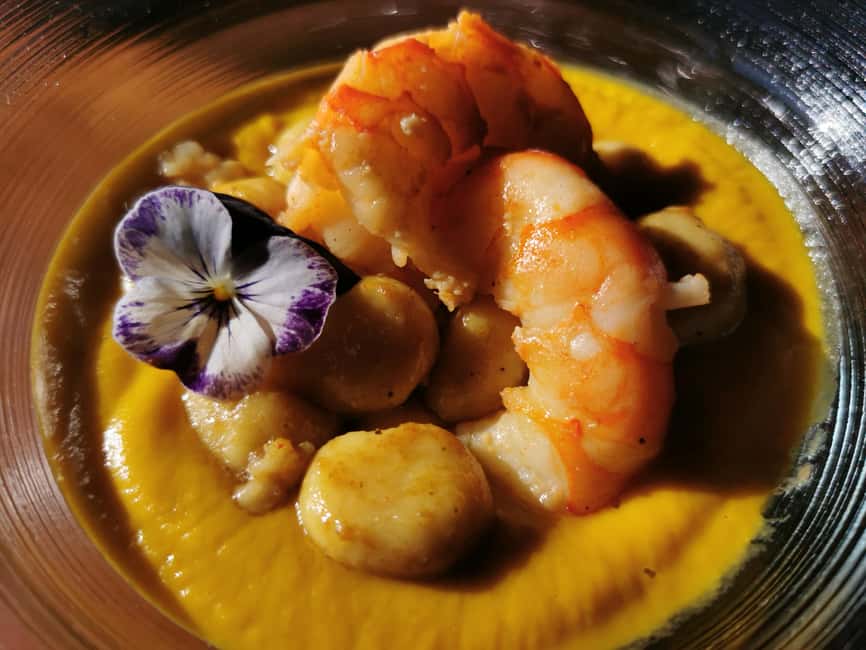
The pasta is served with a sauce based on seasonal vegetables and high-quality proteins. The style follows Venetian traditions, including seafood and other local ingredients.
The exact sauce may change, which is part of the value. You are not locked into one fixed restaurant menu. The chef can explain how the sauce relates to the season and how vegetables, seafood, or other proteins work with fresh pasta.
That flexibility also means you should not book expecting one guaranteed dish every time. The food depends on what is being prepared for the session. If you have allergies or dietary restrictions, tell the provider in advance so the kitchen can respond appropriately.
The strongest part of this section is the connection between technique and place. Venice is not only a city of canals and palaces. Its food traditions have long been shaped by the lagoon, nearby farms, and the need to make satisfying meals from fresh ingredients. A sauce lesson gives you a small, useful piece of that story.
Sitting down for the meal
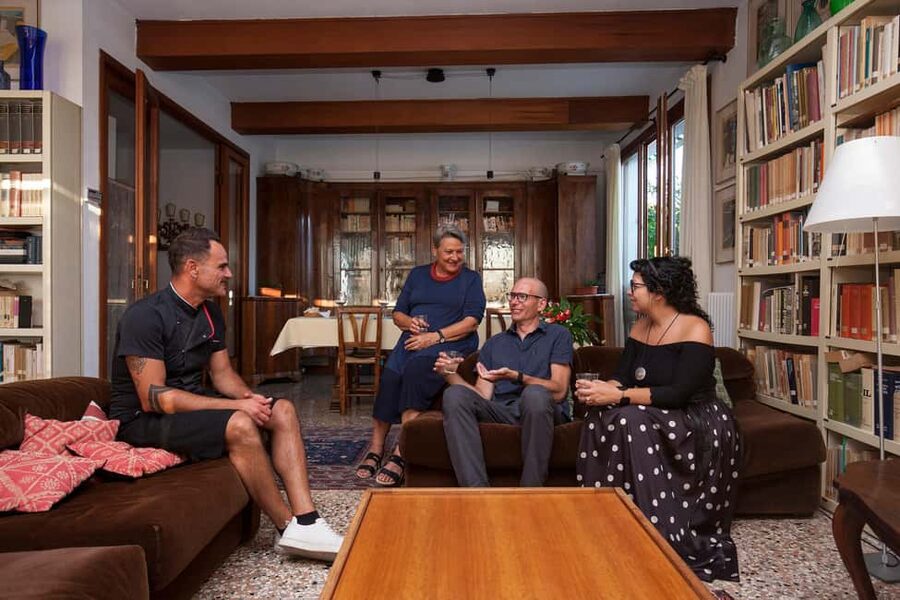
After the practical work, the class changes pace. The food is cooked, the table is set, and everyone sits together for a family-style meal.
This is not a quick taste at the kitchen counter. You get time to eat the pasta and tiramisu you helped prepare, along with snacks such as olives or similar table items. Wine is included at a rate of one bottle for every three people.
The meal is one of the best reasons to choose this experience over a shorter pasta workshop. You get to see the full result of your work, then enjoy it without rushing back into the lesson. It also gives the group time to talk and compare notes.
There is a possible trade-off. One session included a pause between the cooking stages while the host prepared the meal. If you want constant instruction from start to finish, that break may feel loose. If you see the class as a relaxed evening with food and conversation, it makes more sense.
The food has received especially strong praise, with pasta, sauces, carbonara-style preparations, and tiramisu described as the highlights of the meal. You should still keep expectations sensible: this is a communal cooking class, not a private restaurant tasting menu.
Limoncello, espresso, and a small farewell
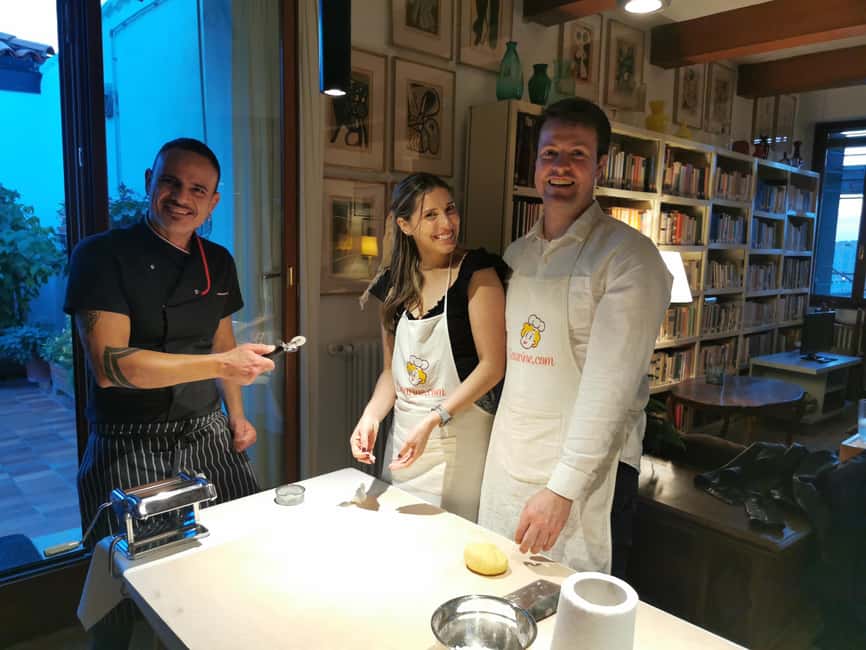
The evening ends in a very Italian way. You receive homemade limoncello and espresso after the meal, along with a small farewell gift.
These details are not the main reason to book, but they complete the experience nicely. The espresso gives the meal a proper close, while the limoncello adds a distinctly homemade touch. The gift is a modest reminder rather than a major souvenir, but it helps mark the evening.
You should bring a camera if you want photographs of the palace setting, your pasta, or the finished meal. Bring water as well, especially since you will be standing and working for part of the class.
What the $85 price includes
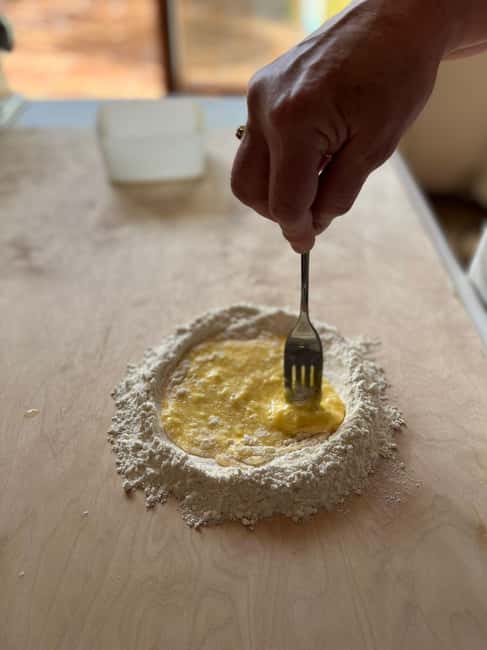
At $85 per person, the price is reasonable if you use the whole evening. You are paying for a professional chef, instruction, ingredients, two pasta preparations, tiramisu, a meal, wine, limoncello, espresso, and a small gift.
A cheaper restaurant dinner would not give you the cooking lesson or the time inside a private family home. A formal culinary school might offer more equipment and a more technical structure, but it may not provide the same personal setting or shared meal.
The value depends on what you want from Venice. If you only want to eat, spend your money at a restaurant. If you want a practical skill, a local setting, and a sociable evening, the class gives you several experiences for one price.
One bottle of wine is provided for every three people, so this is not a wine-focused activity. The wine supports the meal rather than turning the evening into a tasting. You should also note that the class is conducted in English, which makes it a workable choice for English-speaking visitors.
Who should book this class
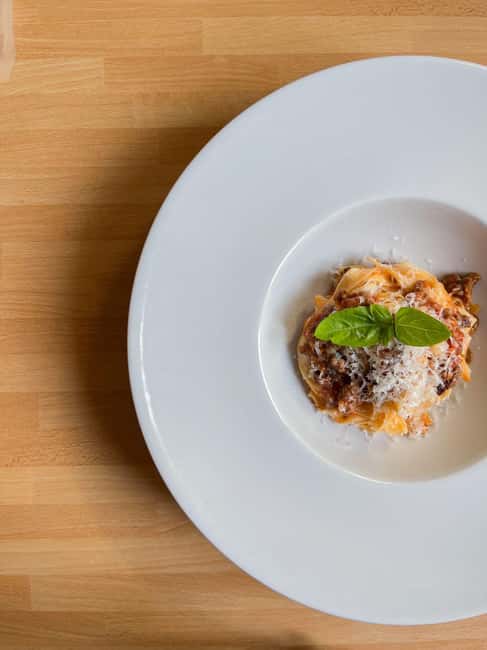
I would recommend it to couples, families with older children, solo visitors who enjoy meeting people, and home cooks who want to learn fresh pasta properly.
It is especially good near the beginning of a Venice visit. One past participant found it useful as an early activity because the chef also offered suggestions for the rest of the stay. You can book it for the evening and treat the finished meal as dinner, which simplifies your plans.
The class is less suitable if you have limited mobility or dislike stairs. The apartment is on the third and top floor without an elevator, and the venue is not suitable for wheelchair users. Children under two are not accepted.
The supplied booking information also lists several weight restrictions, ranging from over 120 kilograms to over 159 kilograms. The figures are inconsistent, so anyone affected should confirm the current limit before paying.
Practical details for a smooth evening
Wear comfortable shoes. You will be standing for a portion of the class, and the stairs to the apartment make sensible footwear even more important.
Notify the provider about allergies or dietary needs in advance. The menu includes pasta, tiramisu, seasonal vegetables, proteins, and possibly seafood, so advance notice matters.
Smoking and pets are not allowed. Bring a camera and water, but do not treat the apartment like a casual public venue. You are entering a historic home, so take care on the stairs and respect the premises.
The activity lasts 3.5 hours, though the pace may feel longer or shorter depending on group conversation and cooking time. Free cancellation is available up to 24 hours before the start for a full refund, and you can reserve now and pay later.
Should you book the Venice pasta and tiramisu class?
Book it if you want to do more than look at Venice. The combination of a historic family home, patient instruction, fresh pasta, tiramisu, wine, and a shared meal gives you a personal evening with a useful skill at the center.
I would be cautious only if stairs, standing, dietary issues, or group conversation could make the class uncomfortable. For everyone else, the $85 price is fair, particularly if you book an evening slot and count the meal as dinner.
The best reason to choose this class is its balance. You get instruction without a stiff classroom mood, local food without a restaurant-only experience, and social time without giving up the chance to learn. You leave with recipes, techniques, and a small memory of Venice that cannot be packed into a standard sightseeing schedule.
FAQ
Where is the cooking class held?
The class takes place on the third and top floor of a 16th-century Venetian palace, in the home where the chef grew up. There is no elevator.
How long does the experience last?
The cooking class and meal last 3.5 hours. Starting times depend on availability.
What food will I make?
You will make fresh Italian pasta, two types of pasta, traditional tiramisu, and a sauce using seasonal vegetables and quality proteins. Venetian-style preparations may include seafood.
Is the class taught in English?
Yes. The instructor language is English.
Is the meal included?
Yes. You eat the dishes prepared during the class in a family-style meal. The experience also includes one bottle of wine for every three people, homemade limoncello, and espresso.
Can I attend if I have food allergies or dietary restrictions?
Yes, but you must notify the provider in advance. This allows the kitchen to consider your needs before the class.
What should I bring and wear?
Bring comfortable shoes, water, and a camera. Comfortable shoes are important because you will stand during part of the class, and you will need to use the stairs to reach the apartment.
More Dessert Classes in Italy
- Florence: Cooking Class Pasta & Tiramisu Making Unlimited Wine
★ 5.0 · 2,234 reviews - Fettuccine & Tiramisù: Cooking Class with Wine & Limoncello
★ 4.9 · 2,103 reviews - Florence Cooking Class The Art of Making Gelato & Authentic Pizza
★ 5.0 · 2,053 reviews - Rome: Pasta & Tiramisu Cooking Class near the Spanish Steps
★ 4.8 · 1,395 reviews
More Pasta Making Classes in Italy
- Rome: Pasta Making Class with Wine, Limoncello, and Dessert
★ 4.9 · 3,177 reviews - Pastamania – Florence Pasta Making Class
★ 5.0 · 3,050 reviews - Rome Cooking Class: Make Pasta and 3 Spritz Cocktails
★ 5.0 · 2,937 reviews - Rome: 3-in-1 Fettuccine, Ravioli, and Tiramisu Cooking Class
★ 4.9 · 2,704 reviews
Just added around Italy
- Cesarine: Home Cooking Class & Meal with a Local in Brindisi★ 5.0 · 7 reviews
- Small Group Market tour and Cooking class in Brindisi★ 4.5 · 8 reviews
- Cooking class in a garden: handmade pasta★ 5.0 · 4 reviews
- Apulian cooking class and typical dinner★ 4.5 · 5 reviews
- Dining Experience at a local’s Home in Martina Franca with Show Cooking★ 4.5 · 7 reviews
- 3 Hour Private Italian Tradition Cooking Class in Brescia★ 5.0 · 21 reviews
- Dining experience at a local’s home in Brindisi with show cooking★ 4.0 · 6 reviews
- Italian Pasta Cooking Course★ 5.0 · 27 reviews
Pasta Making Classes, compared.
Florence: Pasta Cooking Class with Unlimited Wine
Read our review →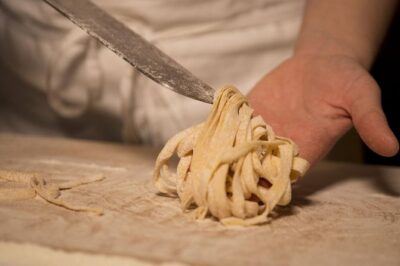
3 in 1 Cooking Class near Navona: Fettuccine, Ravioli & Tiramisu
Read our review →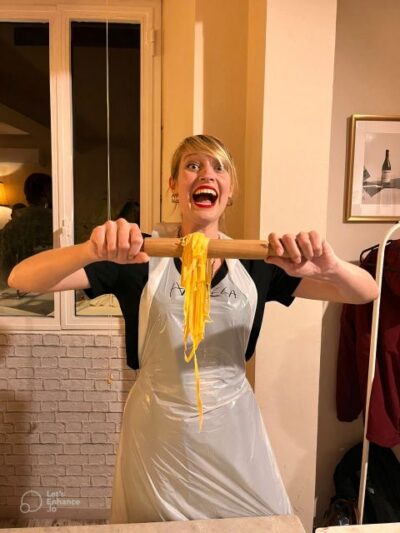
Rome: Pasta Making Class with Wine, Limoncello, and Dessert
Read our review →
Rome Cooking Class: Make Pasta and 3 Spritz Cocktails
Read our review →
Rome: 3-in-1 Fettuccine, Ravioli, and Tiramisu Cooking Class
Read our review →
Rome: Fettuccine Pasta Cooking Class in Rome’s City Center
Read our review →Browse the lists this tour appears in