
Review · CHIANG MAI
6-Hour Akha Tribe Culture and Cooking Class in Chiang Mai
The most interesting part of this six-hour Chiang Mai class is the mix of Thai and Akha food traditions. You do not just cook familiar dishes. You also learn about the Akha people, who moved into Thailand in the 1900s, and see how their food fits into the wider story of Thai culture.
I like the local-market stop on the morning course, where you shop for ingredients at ordinary prices rather than at a tourist-only stall. I also like the sheer amount of cooking: you prepare around 10 dishes, then sit down to eat the results. The main drawback is that the long menu can feel like a lot in one session, especially if you arrive without an appetite.
- Local market visit: The morning class takes you through a real Chiang Mai market to compare produce and prices.
- Two food cultures: Learn Thai cooking alongside Akha dishes such as Sapi Thong, Akha salad, and Akha soup.
- About 10 dishes: Prepare and eat a broad spread including soup, spring rolls, stir-fries, curry, and dessert.
- Morning or evening choice: Pick the market-focused morning schedule or the cooler evening class.
- Small maximum group: The class accepts no more than 15 people, allowing room for hands-on work.
- Recipe book included: You receive recipes so the class can continue in your own kitchen.
A cooking class with two Chiang Mai food traditions
Many Thai cooking classes focus on the best-known dishes and leave it there. This one adds Akha food, giving you a wider view of northern Thailand’s cooking culture.
The Akha are an ethnic community that moved into Thailand during the 1900s. Food offers a practical way to learn about that movement and cultural identity. You are not studying history in a classroom. You are handling ingredients, tasting sauces, and preparing dishes that reflect both Thai and Akha habits.
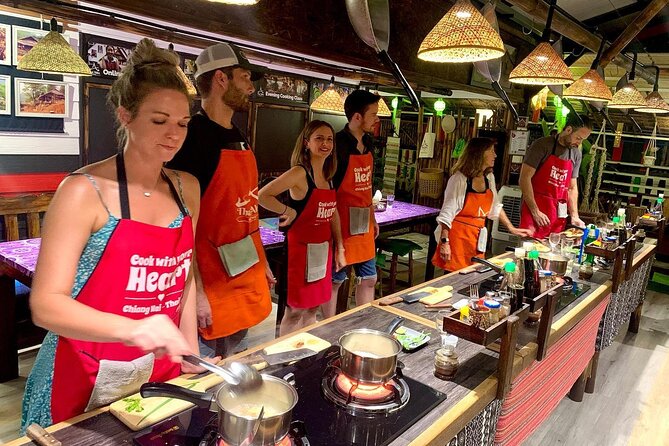
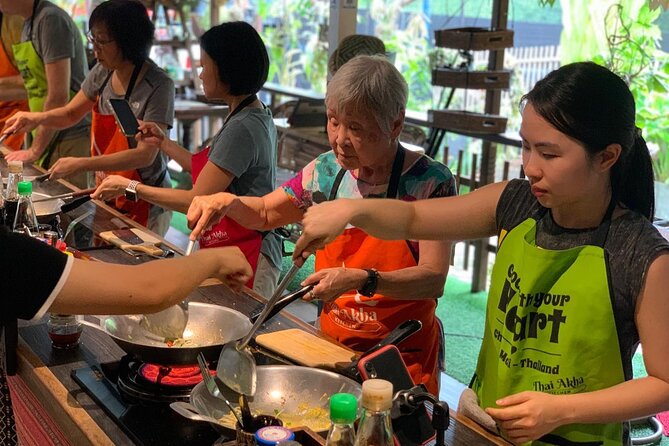
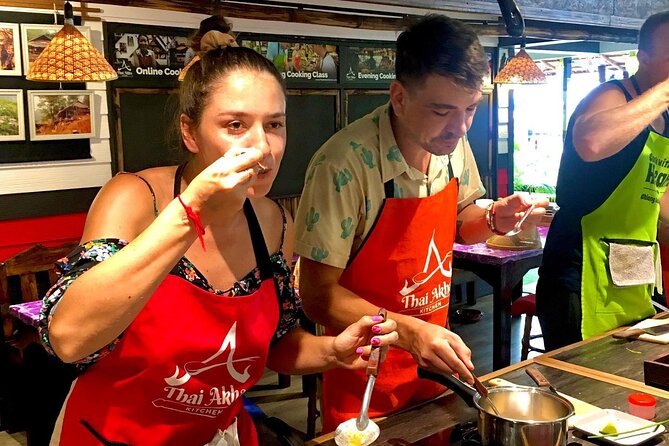
The class is built around participation. You are not simply watching a cook prepare lunch while you take photographs. You shop, chop, stir, season, and eat. The amount of food is one of the defining features, so arrive ready for a substantial meal rather than a light demonstration.
On is named as one of the instructors, and the available feedback gives the class a strong personal touch. The teaching is described as fun and easy to follow, with recipes simple enough to take home. That matters because a cooking class is only good value if you can repeat at least some of it later.
Morning market shopping at Wat Pan Whean
The morning option begins at Wat Pan Whean, at 50 Phra Pok Klao Road, Soi 4, in Chiang Mai’s Phra Sing area. The stated meeting point is also the end point, so you return there after cooking.
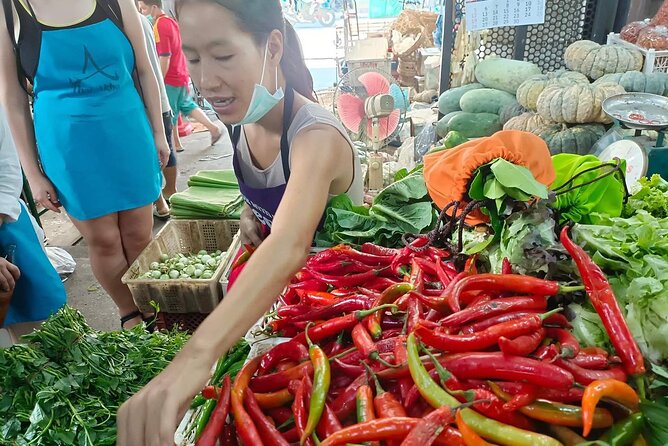
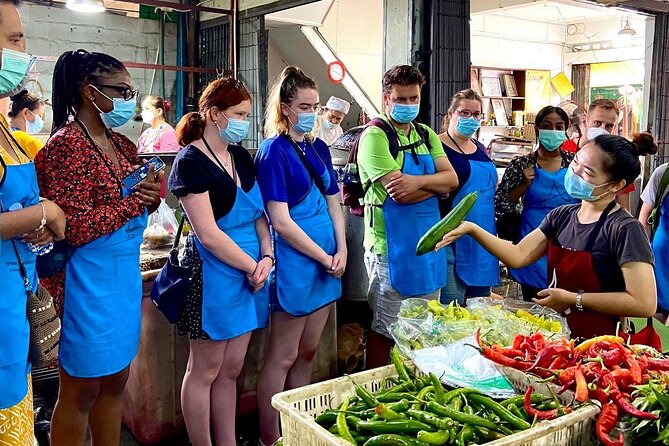
The market visit is more than a quick ingredient pickup. You see the produce local people buy and compare the same ingredient at different prices. The class describes this idea as same same, but different, a useful introduction to how Thai markets work.
That comparison is valuable for visitors used to fixed supermarket pricing. At a Thai market, quality, size, freshness, and the seller can all affect the cost. You also get a look at daily shopping habits rather than a staged food stop arranged only for visitors.
The market may be a lively sensory experience, and it will not be organized like a Western grocery store. You should expect unfamiliar displays and a different rhythm of buying food. That is part of the lesson, but it may feel less comfortable if you prefer clean lines, signs, and predictable prices.
The morning class is the better choice if you want the cultural side to carry equal weight with the cooking. It gives you a reason to pay attention to ingredients before you see them in the kitchen. You can also ask questions about how the products are used in Thai and Akha recipes.
Pickup is offered, but the published start point is Wat Pan Whean. Confirm the pickup arrangement when you book so you know if you should make your own way there or wait for transport.
More Hands-On Workshops in Chiang Mai:
- Half-Day Thai Cooking Class at Organic Farm in Chiang Mai
★ 5.0 · 19,087 reviews - Chiang Mai: Cooking Class, Market & Thai Herbs Garden Tour
★ 4.9 · 4,824 reviews - Chiang Mai: Authentic Cooking Class with Market & Farm Visit
★ 4.9 · 4,546 reviews
The evening class and its cooler cooking hours
The evening option is designed for a different kind of day. Instead of beginning with the market, you can spend your daytime hours sightseeing and come to the class for dinner.
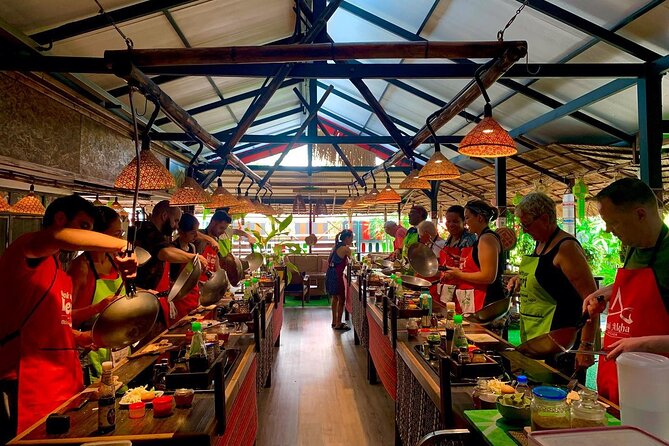
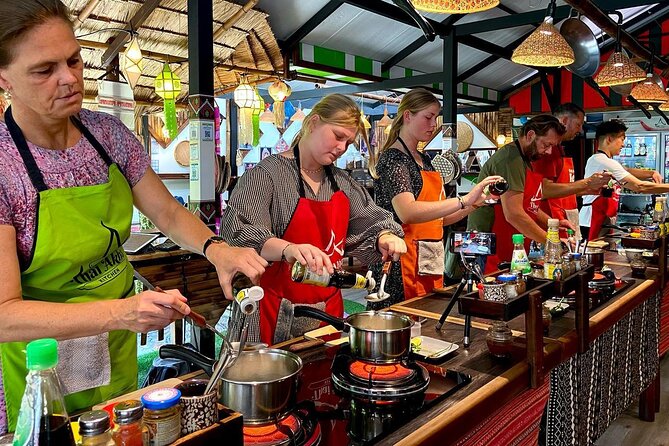
The outdoor kitchen is set up with a mix of Thai and Akha influences. Cooking outdoors can make the class feel more informal, and the cooler evening temperature is a practical advantage. Standing over a stove is simply easier after sunset than during Chiang Mai’s warmer hours.
After cooking, you eat in an air-conditioned dining room. That gives the evening schedule a useful rhythm: outdoor hands-on work followed by a cooler place to sit and eat.
The evening class also removes one small travel headache. You do not need to choose a restaurant or work out what to eat after a full day in the city. Your dinner is the food you have just prepared, and the kitchen becomes the evening’s main activity.
The trade-off is clear. You miss the local market, so you get less direct contact with everyday shopping and ingredient prices. If the market is one of your main reasons for booking, choose the morning course. If you want a cooking class that fits around temples, museums, or other daytime plans, the evening schedule makes more sense.
Ten dishes, from spring rolls to mango sticky rice
The class promises about 10 dishes, a large menu for six hours. The food is divided into several groups, giving you a broad sample rather than one narrow lesson.
You may work with appetizers such as papaya salad and spring rolls. These teach different skills. Papaya salad brings together fresh ingredients and a sharp dressing, while spring rolls require assembly and careful handling before cooking.
The stir-fry selection includes sweet and sour vegetables, cashew nut with chicken, chicken with hot basil, and Pad Thai. These are familiar Thai restaurant dishes, but making them yourself helps you understand how quickly they come together. Stir-frying rewards preparation, since ingredients need to be ready before the pan gets hot.
The soup choices include chicken in coconut milk, hot and sour prawn soup, and clear soup with egg tofu. They cover very different tastes, from creamy coconut to bright sour heat and a lighter broth. If you are sensitive to spice or seafood, tell the class in advance.
Curries include green curry, red curry, Panaeng curry, and Massaman curry, all listed with chicken. The selection gives you a useful look at different curry profiles, though the exact dishes prepared during your class may depend on the course format.
Dessert is mango with sticky rice or pumpkin in coconut milk. Either one gives the meal a sweet finish and shows how coconut milk appears in Thai cooking beyond savory dishes.
The Akha menu is the class’s most distinctive feature. It includes Sapi Thong, a tomato dipping sauce, along with Akha salad and Akha soup. These dishes are not simply extra items added to fill the menu. They are the part that sets the experience apart from a standard Thai cooking lesson.
Because the food list is extensive, do not expect to master every technique in depth. You will get a broad practical introduction. The payoff is variety, while the cost is that some dishes may receive less individual attention than they would in a class focused on only three or four recipes.
What the six-hour schedule means for you
Six hours is a serious block of time. That can be excellent value if you want cooking to be one of the main activities in your Chiang Mai day. It is less suitable if you are trying to fit several major attractions into the same morning or evening.
The schedule allows time for shopping on the morning course, instruction, cooking, and a full meal. You are not rushing through one demonstration and leaving with a single bowl of curry.
The class has a maximum of 15 people. That is not a private lesson, but it is small enough to make hands-on participation realistic. The named instructor, On, is described as making the class fun, and clear teaching matters when several dishes are being prepared at once.
You should also plan around the meal itself. The class produces a lot of food, so a small breakfast or lunch may be sensible before the session. You will want room for the meal at the end rather than arriving already full.
Special dietary needs can be accommodated, including allergies, gluten intolerance, vegetarian diets, and other requirements. Tell the operator when booking and repeat the request at the start of the class. Dietary accommodation is easiest when the kitchen has notice.
A few more cooking classes around Chiang Mai worth a look
- Thai and Akha Cooking Class in Chiang Mai
★ 5.0 · 4,358 reviews - Chiang Mai: Cooking Class with Market and Pickup
★ 4.9 · 1,365 reviews - Chiang Mai: Cooking Class with Organic Farm at Mama Noi
★ 4.9 · 1,151 reviews - Full Day Thai Cooking at Farm (Chiang Mai)
★ 5.0 · 1,127 reviews
Is $48.83 good value?
At $48.83 per person, this is not the cheapest way to eat Thai food in Chiang Mai. Street food and local restaurants will cost much less. The comparison is not really fair, though, because this price includes instruction, ingredient shopping on the morning course, a full cooked meal, cultural context, and recipes to take home.
The value is strongest if you plan to cook again. A recipe book turns the class into something more useful than a one-time meal. You can return to Pad Thai, curry, spring rolls, or mango sticky rice after your trip and remember the method rather than only the taste.
The price also covers range. You are not paying for one recipe and a small tasting plate. You prepare food from several categories, including Akha dishes that may be harder to find in a standard cooking class.
The value is weaker if you mainly want to eat. In that case, the six-hour commitment may feel long, and a market lunch plus a restaurant dinner would be cheaper and more flexible. Book this for the activity and the skills, not just for the meal.
The experience is often booked around 47 days in advance. That suggests planning ahead is sensible, particularly if you need a certain date or want the morning rather than evening schedule.
Who should choose the morning course?
Choose the morning class if you want the strongest connection to daily life in Chiang Mai. The local market gives you a look at how people buy ingredients, how prices vary, and how Thai markets differ from those in Western countries.
It is also the better fit for curious eaters who want context for the dishes. Seeing the ingredients first can make the cooking lesson easier to understand. You begin with the raw products, then follow them into sauces, soups, stir-fries, and curries.
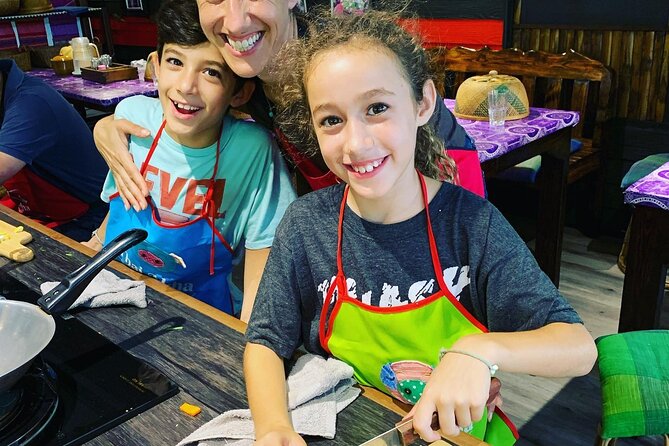
Families and mixed-age groups may also prefer the morning if market shopping sounds like an important part of the day. Be sure the booking details match the actual ages and group information. Extra charges can apply if the details provided at booking do not match what is presented at the activity.
Who should choose the evening course?
The evening schedule suits you if your daytime is already full. You can visit Chiang Mai’s sights first, then come to the class for a home-cooked Thai dinner.
It is also the practical choice during hot weather. The outdoor kitchen is cooler in the evening, and the air-conditioned dining room gives you a comfortable place to eat afterward.
Choose it if you want a relaxed evening with a clear plan. Skip it if the local market is the feature that interests you most. The two schedules are not identical in what they offer, so choose based on the experience rather than simply the time of day.
Practical details before you book
The activity starts and ends at Wat Pan Whean, 50 Phra Pok Klao Road Soi 4, Tambon Phra Sing, Chiang Mai 50200. It is near public transportation, and mobile tickets are accepted.
Confirmation is provided at booking. Pickup is offered, but you should confirm the exact arrangement because the stated meeting point remains Wat Pan Whean.
Free cancellation is available up to 24 hours before the local start time. Changes or cancellations inside that window are not refunded. Poor weather can also cause cancellation, in which case you are offered another date or a full refund.
The class requires good weather, which matters because the cooking setup is outdoors. Keep that in mind when planning around a short Chiang Mai stay.
Should you book the Akha cooking class?
Book it if you want more than a standard Thai food lesson. The combination of a local market, Thai recipes, Akha food, a substantial meal, and a take-home recipe book gives the six-hour schedule real purpose.
I would choose the morning course for the fuller cultural experience, especially if this is your first visit to Chiang Mai. I would choose the evening course if you value cooler cooking hours and need to keep the day open.
Skip it if you dislike long food sessions, have little interest in cooking, or only want a quick taste of Thai dishes. For everyone else, the class offers a useful, hands-on way to connect food with the people and daily habits behind it.
FAQ
How long is the Akha Tribe Culture and Cooking Class?
The activity lasts approximately six hours.
Where does the class start and finish?
It starts at Wat Pan Whean, 50 Phra Pok Klao Road Soi 4, Tambon Phra Sing, Chiang Mai 50200, Thailand, and ends back at the meeting point.
Is there a morning and evening class?
Yes. The morning class includes a visit to a local market. The evening class is designed to fit around daytime plans and takes place during cooler hours.
How many dishes will I prepare?
You will prepare about 10 dishes. The listed food includes appetizers, soups, stir-fries, curries, desserts, and Akha dishes.
Can the class accommodate dietary requirements?
Yes. The activity can accommodate allergies, gluten intolerance, vegetarian diets, and other dietary needs. Provide the details when booking.
How far in advance can I cancel for a full refund?
You can cancel at least 24 hours before the local start time for a full refund. Cancellations or changes made less than 24 hours in advance are not refunded.
Just added around Chiang Mai
- Team Aim Thai Cooking School (#1 Cooking Class in Chiang Mai)★ 5.0 · 36 reviews
- Authentic Thai Cooking Class and Farm Visit in Chiang Mai★ 5.0 · 66 reviews
- Private Half-Day Thai Cooking Class in Chiang Mai★ 5.0 · 4 reviews
- Half Day Guided Thai Cooking Class in Chiang Mai★ 5.0 · 13 reviews
- Aroidee’s Farm-Fresh Thai Cooking Experience★ 5.0 · 8 reviews
- Signature Thai Cooking Course★ 5.0 · 79 reviews
- Traditional Northern Home Cooking Experience with Raunkaew Yanon Family★ 5.0 · 4 reviews
- Private Dinner Cooking Class with Benny in Chiang Mai★ 5.0 · 42 reviews
Cooking Classes, compared.
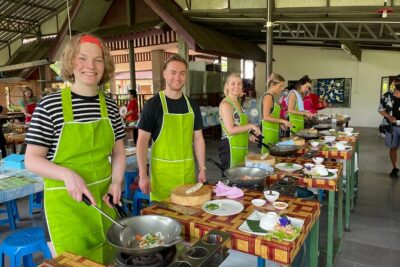
Half-Day Thai Cooking Class at Organic Farm in Chiang Mai
Read our review →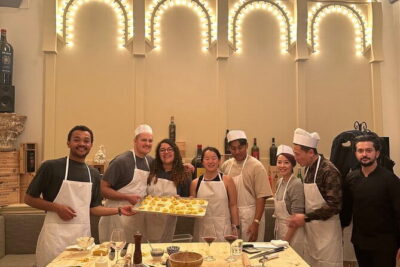
Florence: Pasta Cooking Class with Unlimited Wine
Read our review →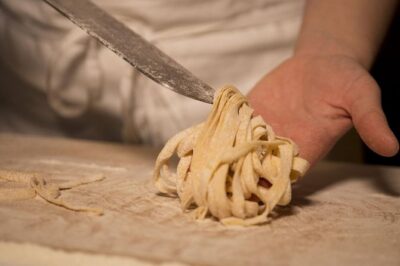
3 in 1 Cooking Class near Navona: Fettuccine, Ravioli & Tiramisu
Read our review →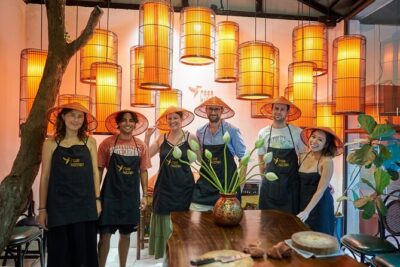
Hanoi Cooking Class: Culture, Local Market & Meaning CSR Impact
Read our review →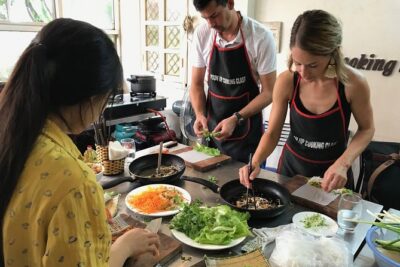
5 Traditional Dishes Hanoi Cooking Class with Market Trip
Read our review →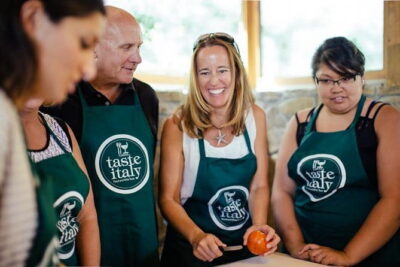
Cooking Class and Lunch at a Tuscan Farmhouse with Local Market Tour from Florence
Read our review →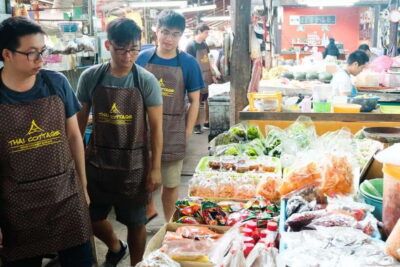
Chiang Mai: Cooking Class, Market & Thai Herbs Garden Tour
Read our review →Browse the lists this tour appears in