
Review · LISBON
Lisbon: Pastel de Nata Baking Class
Lisbon’s famous custard tart is easy to eat and harder to make well. In this two-hour class, you learn the key steps behind crisp pastry and soft, lemon-scented custard, then taste your work straight from the oven. The baking is hands-on, not just a chef demonstration.
I like the friendly, social setup, especially for solo visitors or couples. I also like the Portuguese drink pairings, from homemade juice and coffee to Porto wine and a small ginjinha tasting. The main drawback is location: the Homecooking Lisbon HUB is not right in central Lisbon, and some guests found a taxi the easiest way to reach it.
Key points
- You shape the pastry yourself: Learn how dough is folded and pressed into the small tart tins.
- The class explains the culture: Your English-speaking instructor covers the origins and place of pastel de nata in Portuguese food.
- You work in pairs: This makes the class social, but solo visitors may be paired with someone they have just met.
- Drinks are part of the lesson: Expect homemade juice, coffee, water, Porto wine, and a ginjinha tasting.
- Fresh pastries are the payoff: Eat warm tarts at the end, with some available to take away.
- The kitchen is clean and welcoming: Several instructors, including Marta, Beatrice, Bea, Miyuki, and Miguel, receive especially warm praise for clear teaching and good humor.
Why pastel de nata makes a good Lisbon class
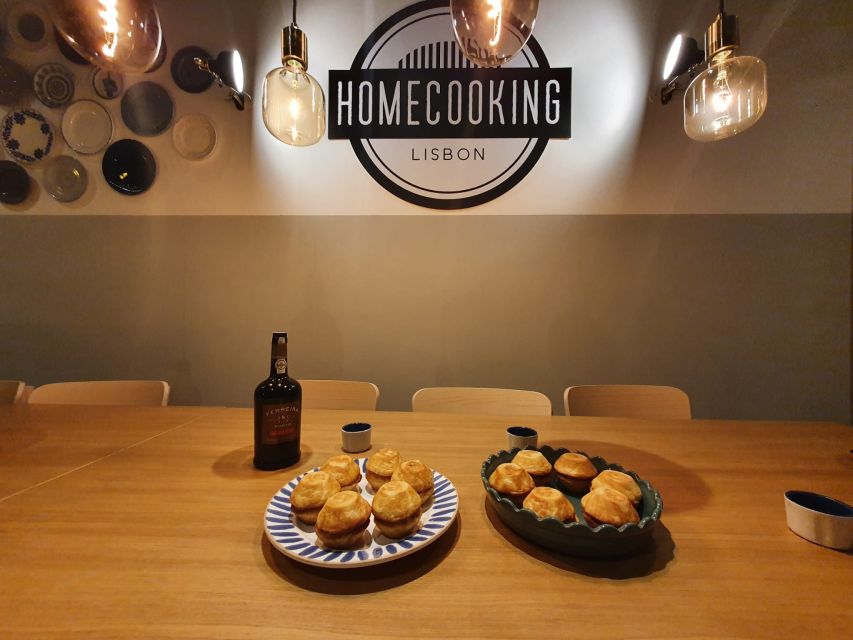
A pastel de nata looks modest: flaky pastry, yellow custard, and a few dark spots from the oven. But each part needs care. The pastry must be thin and layered. The custard must set without turning heavy. The surface should brown while the inside stays creamy.
That makes this a useful class for you if you want more than a quick food tasting. You are not just handed a tart and told that it is Portuguese. You work through the main stages and see why the finished pastry tastes the way it does.
The class also gives you a better eye for Lisbon bakeries. After shaping dough and watching custard bake, you will notice the difference between a crisp shell and a soft one. You will understand why a warm tart has such a fragile texture and why a good pastel de nata is best eaten soon after baking.
More Baking Classes in Portugal:
- Pasteis de Nata Baking Class from Lisbon
★ 5.0 · 248 reviews - Group Tour: Garni, Symphony of Stones, Geghard, Lavash Baking
★ 5.0 · 1,042 reviews - Paris Croissant Small-Group Baking Class with a Chef
★ 5.0 · 910 reviews
Arriving at Homecooking Lisbon HUB
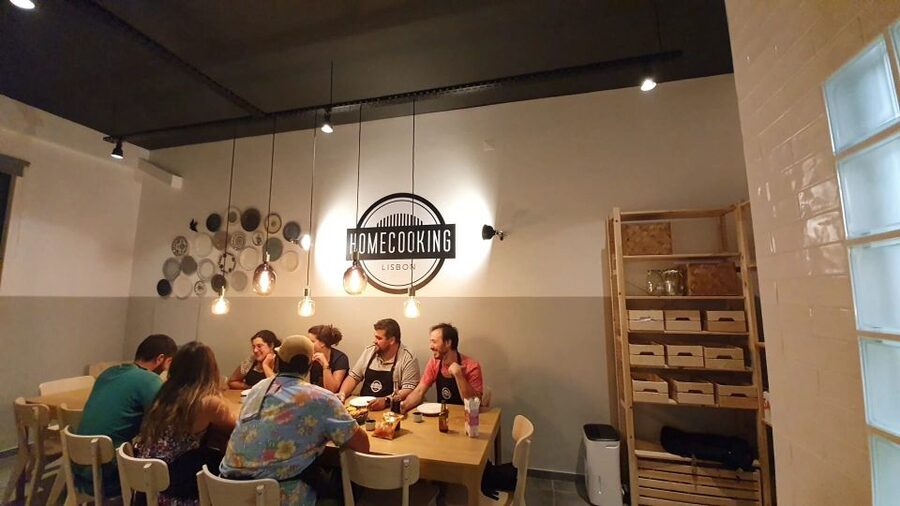
The meeting point is Homecooking Lisbon HUB in the Lisbon District. It is a cooking space rather than a sightseeing stop, so the quality of the room matters more than a grand view. The kitchen is described as clean, modern, well prepared, and easy to find, with one account noting a bus stop directly outside.
Plan your route before class. The location is not especially close to central Lisbon, and one person found a taxi both convenient and inexpensive. Another couple had a problem when the usual venue was affected by construction and the location changed without clear notice. That issue was sorted out quickly, but it is a good reason to check your booking details on the day.
The class lasts two hours, so arriving late can matter. You want enough time to find the building, wash your hands, and settle in before the dough work begins.
The first steps: Portuguese food and pastry basics
The opening part sets the scene. Your English-speaking instructor introduces pastel de nata and explains its place in Portuguese cooking. The exact teacher can vary. Marta, Beatrice, Bea, Miyuki, Miguel, and other members of the team have led sessions, and the teaching style may differ slightly from one class to another.
The best part of this introduction is that it connects the recipe to the country. You learn about the pastry’s origins and traditional methods, rather than treating it as an ordinary custard tart. Some instructors also offer tips on where to try pastel de nata in Lisbon, which is handy when you want to compare your own batch with bakery versions.
The language is English, and the teaching is aimed at mixed ability levels. You do not need to arrive as a baker. Instructions are given step by step, with staff nearby to help when the dough or custard needs attention.
Several people appreciated the way the class explains why some ingredients are prepared ahead of time. That matters because it keeps the two-hour session moving without pretending that every part of the recipe can be completed from scratch in a short class.
Making the pastry, not just watching it
The dough is where this experience earns its place on your schedule. You handle the pastry, feel its soft texture, and learn how it is folded and shaped for the tins. This is the practical skill that a simple tasting cannot give you.
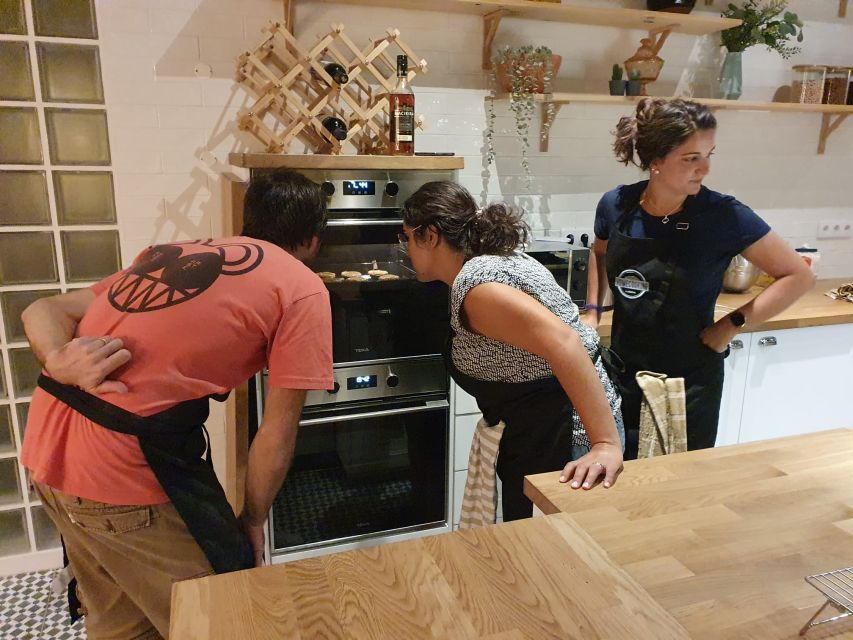
The class is organized for participation, though some preparation is done in advance. Ingredients are measured out, and in at least some sessions the finished pastries are placed in the oven by the staff. That keeps the timing under control, but it also means you are not handling every single stage alone.
I see this as a fair trade for a two-hour class. Puff pastry takes time and precision. If every stage were stretched out, the class could become slow and repetitive. Here, you get to do the parts that teach you the most, then receive help at the points where a professional kitchen can save time.
You may work in pairs. That helps with sharing tools and tasks, but it is worth knowing if you are booking alone. One solo participant was paired with another person and found the arrangement enjoyable. If you prefer to work alone, this may not be the ideal format.
The class size can reach about 12 people. That is large enough to create a social mood but still small enough for instructors to move around and help. Several accounts describe the group atmosphere as friendly, with people from different countries working together.
More Hands-On Workshops in Portugal:
- Porto: Pastel de Nata Cooking Class with Grandma’s Recipe
★ 5.0 · 1,565 reviews - Porto: Pastel de Nata Pastry-Making Workshop
★ 4.9 · 1,542 reviews - Porto: Pastel de Nata Cooking Class with Port Wine – Sé
★ 4.8 · 888 reviews - Lisbon: Traditional Portuguese Cooking Class
★ 4.9 · 592 reviews
Custard, shaping, and the oven
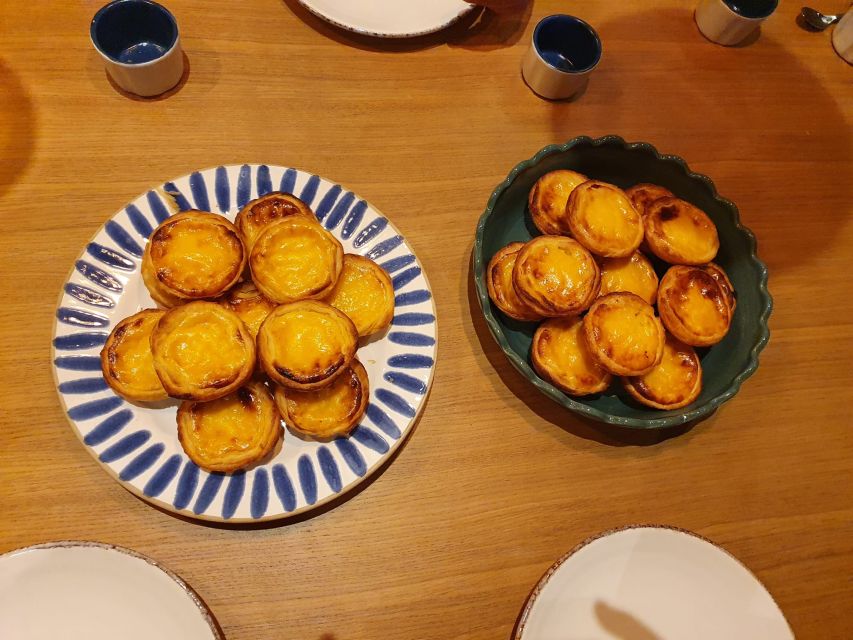
The custard is the other main lesson. Your instructor explains how it is prepared, how it fills the pastry, and how the tart comes together before baking. The emphasis is on traditional technique as well as ingredients, which gives the recipe more meaning than a list of quantities.
You will likely see the staff take charge of the oven stage. This is one of the small limits of the class. You learn the method and prepare the tarts, but you may not personally manage every baking detail.
Still, the oven moment is part of the fun. You smell the pastry as it bakes and watch the custard take on its familiar browned surface. The finished result is meant to be eaten warm, when the shell is crisp and the filling is soft.
The cooking is paced for beginners. Instructors are available to correct shaping, answer questions, and keep the group together. Marta is often described as clear and good-humored, while Beatrice and Bea are praised for patient explanations and an easy manner. Miyuki is remembered for making the class lively and welcoming, and Miguel for his enthusiasm and practical tips.
Names and teaching styles can change with the schedule, but the pattern is consistent: you should expect a guided workshop rather than a formal lecture.
Drinks that make the class feel Portuguese
The drink service adds useful local flavor. Included choices are homemade juice, coffee, water, Porto wine, and a ginjinha tasting. Ginjinha, often shortened to ginja, is a Portuguese sour-cherry liqueur. A small taste gives you something distinctly local to try alongside the pastry.
The drinks also make the end of the class more sociable. You sit, eat, and compare the results rather than rushing straight out with a tray of tarts. Coffee is a natural match for custard pastry, while Porto and ginjinha give the session a more distinctly Portuguese finish.
Do not assume every drink will be served at every session in exactly the same way. One person noted that wine was not provided on a particular visit. The listed drink selection includes Porto wine, but availability can vary.
If you do not drink alcohol, the homemade juice, coffee, and water give you alternatives. The class is about baking, not drinking, and the alcoholic tastings are an extra part of the experience.
Eating your own warm tarts
The final tasting is the reward. You eat the pastel de nata you have helped prepare, usually warm from the oven, with the provided drinks. That first bite gives the practical work a clear purpose: crisp pastry, creamy custard, and a lightly browned top.
The amount you take away can be generous. One family said it had enough tarts for the rest of the trip, while another person packed some back to the hotel and found they disappeared quickly. The exact quantity is not stated, so do not book this as a guaranteed pastry supply. Think of the take-home portion as a pleasant extra.
The end can feel a little rushed if the group is eager to finish on time. One person wished for more time to sit, eat, and chat. If you enjoy long meals and extended conversation, keep that in mind. The two-hour format gives you a tidy activity, but it does not leave endless time after baking.
Some sessions also provide recipes for the tarts and other Portuguese dishes. That makes the experience more useful after you return home, although recreating the pastry may still take practice. You will leave with a method and a better sense of what to look for, not a guarantee that your first home batch will match a Lisbon bakery.
What the class does particularly well
The strongest part is the teaching. Across the sessions, instructors are repeatedly described as patient, attentive, funny, and clear. That matters because pastry can make beginners nervous. A good teacher lets you try the work while stepping in before a small mistake ruins the batch.
The second strength is the atmosphere. People come as couples, families, friends, and solo visitors. You may end up working with someone you have just met, but the shared tasks give you an easy way to talk. This is a better social activity than a quiet food tour if you like doing something with your hands.
The third is the balance between information and action. You hear about Portuguese food and the origins of the pastry, but the class does not leave you sitting through a long talk. The time is spent on dough, custard, shaping, baking, tasting, and questions.
Families can enjoy it too, but check the age rule before booking. The activity is officially not suitable for children under six. Older children and teenagers have taken part successfully, and one family said children aged seven, nine, and twelve managed the process well. The stated restriction should guide your decision, especially if you are planning a family booking.
Who should book this experience
I would choose this class if you want a food activity with a clear result. It suits first-time bakers, couples, families with older children, and solo visitors who enjoy meeting people while working on a shared task.
It is also a good choice early in a Lisbon visit. Once you know how pastel de nata is made, later bakery stops become more interesting. You can compare pastry texture, custard, sweetness, and browning with a little more understanding.
You should think twice if you have limited mobility. The activity is not suitable for people with mobility impairments, and the information provided does not describe adapted access.
I would also skip it if you want a fully private lesson or a serious professional pastry course. The format is social, pair-based, and designed for a mixed group. You will learn useful techniques, but the goal is a fun introduction rather than advanced pastry training.
Is $64 a fair price?
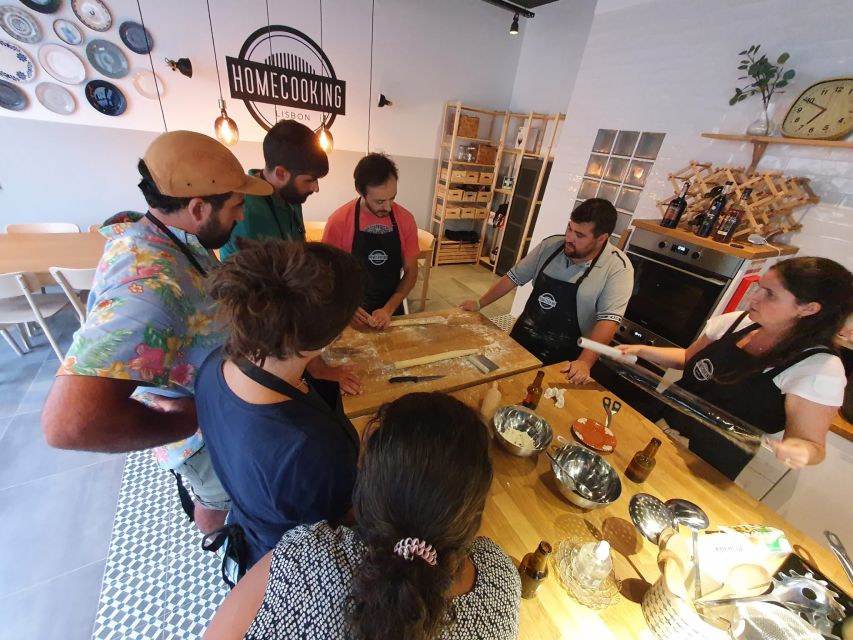
At $64 per person, this is not the cheapest way to eat pastel de nata in Lisbon. You can buy several tarts for far less. The value comes from the combination of instruction, ingredients, equipment, drinks, kitchen space, and the time spent making the food.
The price is easier to justify if you would otherwise book a paid tasting or a short cooking activity. You are not only consuming a local specialty. You are learning the recipe, taking part in the preparation, and receiving a social experience with an English-speaking instructor.
The value is strongest for people who will use the recipe later. If you return home and bake the tarts again, the class becomes a practical souvenir. If you only want to taste the pastry once, a bakery visit will be cheaper and simpler.
Insurance is included, as are all ingredients and cooking utensils. Hotel pickup and drop-off are not included, so add your own transport cost when comparing the total price with other activities.
Practical details before you book
The activity has free cancellation up to 24 hours before the start time, with a full refund. You can also reserve now and pay later, which helps if your Lisbon schedule is still changing.
Check the starting time and meeting point carefully. The activity page gives availability rather than one fixed daily departure, and the venue has occasionally been affected by construction or changes. A quick confirmation can prevent a needless dash across town.
The class is offered in English. If you need another language, this is not the right choice based on the information provided.
Wear clothes you can move comfortably in and expect to work with food. The class supplies the ingredients and equipment, so you do not need to bring baking tools.
Should you book the pastel de nata class?
Book it if you want to understand Lisbon through food, enjoy a hands-on activity, and like the idea of meeting other people over warm pastries. The instructors, especially Marta, Beatrice, Bea, Miyuki, and Miguel, are known for patient guidance, clear steps, and a relaxed tone.
The main cautions are the trip to the venue, the pair-work format, the limited two-hour finish, and the fact that some steps are prepared or handled by the staff. Those limits do not spoil the experience, but they help set the right expectations.
For most visitors, $64 buys more than dessert. It buys the chance to make a Portuguese classic, taste local drinks, and leave Lisbon with a recipe you can try again at home. If that sounds better than simply ordering another tart at a café, this is a worthwhile addition to your schedule.
FAQ
How long does the pastel de nata class last?
The class lasts two hours. Starting times vary, so check availability when you book.
Where does the class meet?
The meeting point is Homecooking Lisbon HUB in the Lisbon District.
What language is the class taught in?
The instructor teaches in English.
What drinks are included?
The included drinks are homemade juice, coffee, water, Porto wine, and a ginjinha tasting. Availability can vary by session.
Are ingredients and cooking equipment provided?
Yes. All ingredients and cooking utensils are included, along with an instructor or chef.
Is hotel pickup included?
No. Hotel pickup and drop-off are not included, so you must arrange your own way to and from Homecooking Lisbon HUB.
Can children join the class?
Children under six are not considered suitable for this activity. Older children and teenagers have taken part, but families should check the age requirements before booking.
Just added around Portugal
- Lisbon Cooking Class with Market Experience★ 5.0 · 13 reviews
- Market Tour, Cooking Class And Lunch At Mercado de Arroios★ 5.0 · 23 reviews
- Lisbon Market and Food Tour with Cooking Class and Lunch★ 5.0 · 117 reviews
- Private Lisbon Market Tour & Portuguese Cooking Class with Paula★ 5.0 · 89 reviews
- Porto Hands On Cooking Class-3 course-wine included-trained chef★ 5.0 · 34 reviews
- Portuguese Cooking Class in Porto with Portuguese Wine★ 5.0 · 110 reviews
- Porto Local Market Visit & Cooking Class / Showcooking★ 5.0 · 206 reviews
- Pasteis de Nata Baking Class from Lisbon★ 5.0 · 248 reviews
Baking & Bread Classes, compared.

Group Tour: Garni, Symphony of Stones, Geghard, Lavash Baking
Read our review →
Paris Croissant Small-Group Baking Class with a Chef
Read our review →
Garni & Geghard Small-Group Day Trip with Lavash Baking
Read our review →
Vienna: Gerstner KuK Hofzuckerbäcker Baking Show & Tasting
Read our review →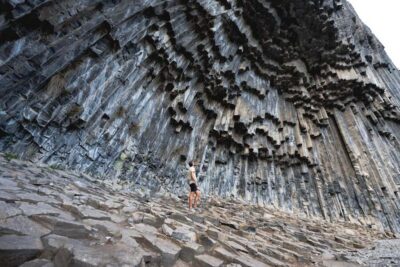
Yerevan: Garni, Geghard, Symphony of Stones & Lavash Baking
Read our review →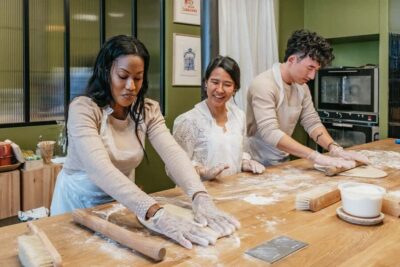
Paris: French Croissant Baking Class with a Chef
Read our review →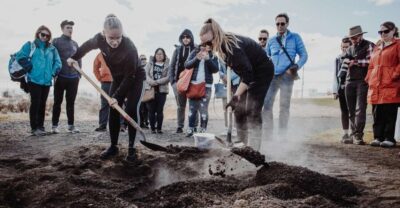
Laugarvatn Fontana: Geothermal Bread-Baking Experience
Read our review →Yerevan: Garni, Geghard, Symphony of Stones & Lavash Baking
Read our review →Browse the lists this tour appears in