
Review · LISBON
Lisbon: 2-Hour Pastel de Nata Cooking Class
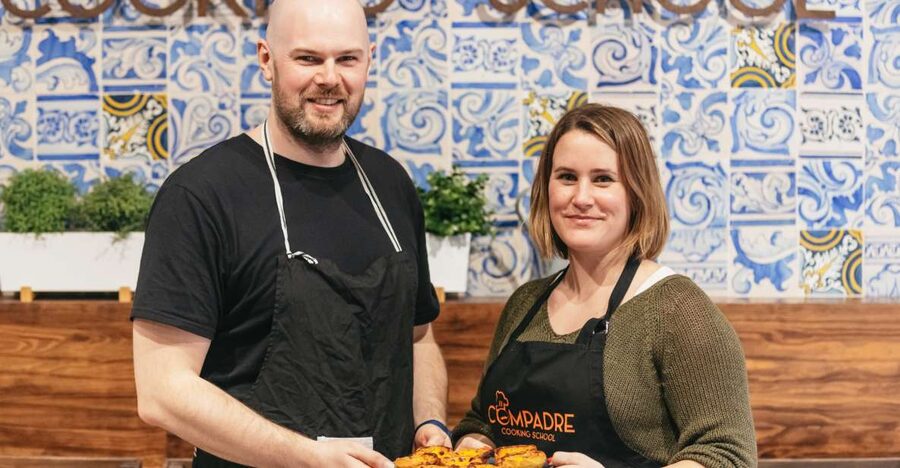
Lisbon’s famous egg tart is the star here, but the best part is learning the small tricks that make pastel de nata crisp, creamy, and properly Portuguese. Anna and Marta lead the English-language class with clear instructions, plenty of history, and an easygoing kitchen atmosphere.
I like the useful two-recipe format, and I like that you leave with instructions to make both treats at home. The main catch is that this is not a full baking apprenticeship: the pastry dough is prepared ahead of time, and the custard is quite simple, so expect guided assembly more than advanced pastry work.
- Two Portuguese treats in two hours: Make pastel de nata plus another local recipe, which may be a dessert or a savory favorite such as cod fritters.
- Anna and Marta teach in English: Expect clear demonstrations, practical tips, and stories about the tart’s convent origins.
- A social kitchen setting: You cook alongside other participants, then share the food at the table.
- Recipes go home with you: The class gives you two recipes so the experience can continue in your own kitchen.
- Standing is part of the class: You will be on your feet for about 1 hour and 20 minutes.
- Plan a real meal afterward: The food is tasty, but the light meal may amount mainly to the pastries you prepare.
Making Lisbon’s Most Famous Tart
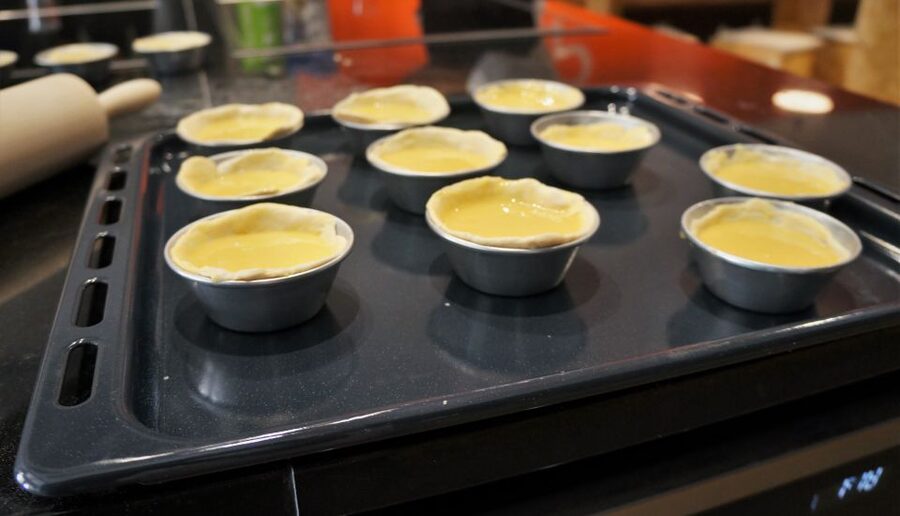
Pastel de nata is a small custard tart with a flaky pastry shell and a browned top. Its story reaches back to 19th-century monasteries, and it has become one of Portugal’s best-known food symbols.
That background gives the class more purpose than simply following a recipe. You learn why this pastry matters in Portuguese food culture, then get to make one with your own hands. I like that balance. You are not just eating a tart in a bakery. You are learning the basic method behind it.
The class takes place at the local partner’s kitchen in Lisbon. Be careful when entering the address into a map or booking form: the city should be listed as Lisbon. There is no hotel pickup or drop-off, so you make your own way to the kitchen.
You should wear comfortable shoes. This is a working kitchen class, not a seated demonstration, and the active part lasts about 1 hour and 20 minutes. If you have back problems, this is not a good fit.
What You Actually Cook in the Two Hours
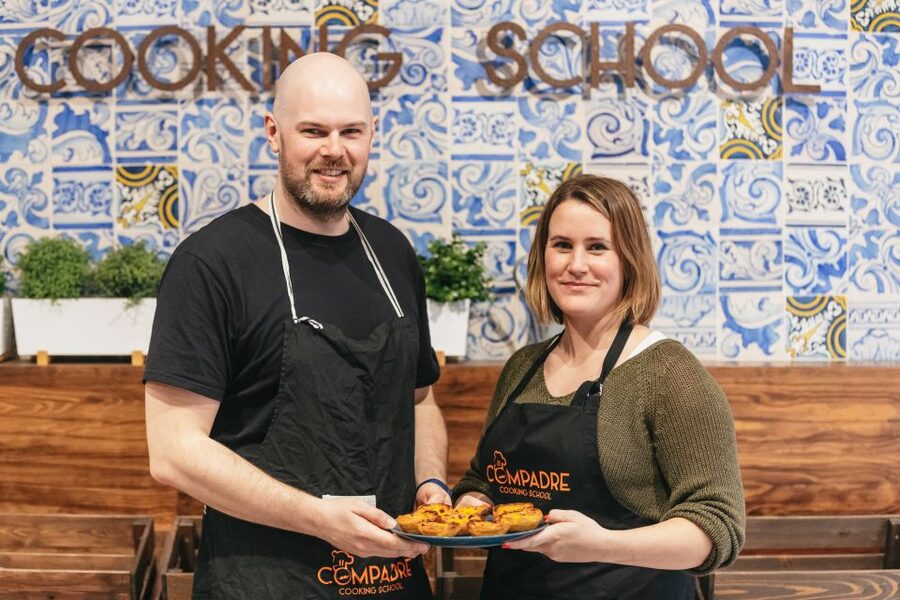
The session begins with the ingredients, equipment, and an explanation of the process. The instructors guide you through the pastry and filling, showing you how the tart comes together and pointing out the details that can make the difference between a soggy shell and a crisp one.
One useful point to understand before booking is that the dough is prepared in advance. You still take part in shaping and assembling the tarts, but you will not spend the class making laminated pastry from raw ingredients. The custard is also fairly simple.
That is good news for beginners. You can focus on the tricky parts without spending the entire session kneading and waiting. It also means the class is less suitable if you want a serious pastry course covering every stage from scratch.
The instructors keep the steps manageable. Anna is often praised for her energy and storytelling, while Anna and Marta together provide the practical guidance that keeps the class moving. You can expect them to explain the history of the tart as well as the method.
This is the sort of class where you can ask questions as you work. It is designed for ordinary home cooks, not professionals. Even if your baking record is poor, the recipe is broken into clear jobs.
More Hands-On Workshops in Lisbon:
- Lisbon: Pastel de Nata Baking Class
★ 4.9 · 2,106 reviews - Lisbon: Traditional Portuguese Cooking Class
★ 4.9 · 592 reviews - Lisbon Portuguese Cooking Class with 3-Course Dinner
★ 5.0 · 445 reviews
The Second Portuguese Recipe Adds Real Value
Pastel de nata alone would make a pleasant short class, but the second recipe gives you a broader taste of Portuguese cooking. The exact additional dish can vary. Past sessions have included a second dessert such as farófios or a meringue and custard preparation, while other sessions have included cod fritters.
That variety is worth keeping in mind. If you are booking because you specifically want to learn cod cakes, confirm the current menu before paying. The stated format promises two Portuguese recipes, but it does not guarantee one fixed second dish.
I like this part because it moves the class beyond Lisbon’s most famous pastry. You get a small look at the way Portuguese food can shift from sweet to savory, and you take home a second recipe with a different technique.
The additional recipe also helps families and couples. One person can focus on the tart while another takes interest in the second dish. A family class with an eight-year-old was described as manageable, and solo participation is allowed, which is useful if you are visiting Lisbon alone.
From Kitchen Work to Shared Table
After the cooking, you sit down and eat what you have made. Tea is included, and the activity description also refers to coffee and a light meal to share. In practice, you should not count on a substantial lunch or dinner.
The safest plan is to treat the food as a generous tasting session rather than a full meal. You will eat the tarts and the second recipe, and bags may be available for taking leftovers with you. One practical danger is obvious: the pastries may be too good to save.
There is a small point to clarify before you go. Tea is listed as included, while coffee and a light meal are mentioned in the description. At least one recent class did not offer the advertised tea and coffee, with water available at the end instead. If a hot drink matters to you, ask the local partner to confirm what will be served.
This does not ruin the class, but it affects your day plan. If you are booking around lunchtime, eat something beforehand or schedule a proper meal afterward.
The Social Side of Compadre Cooking School
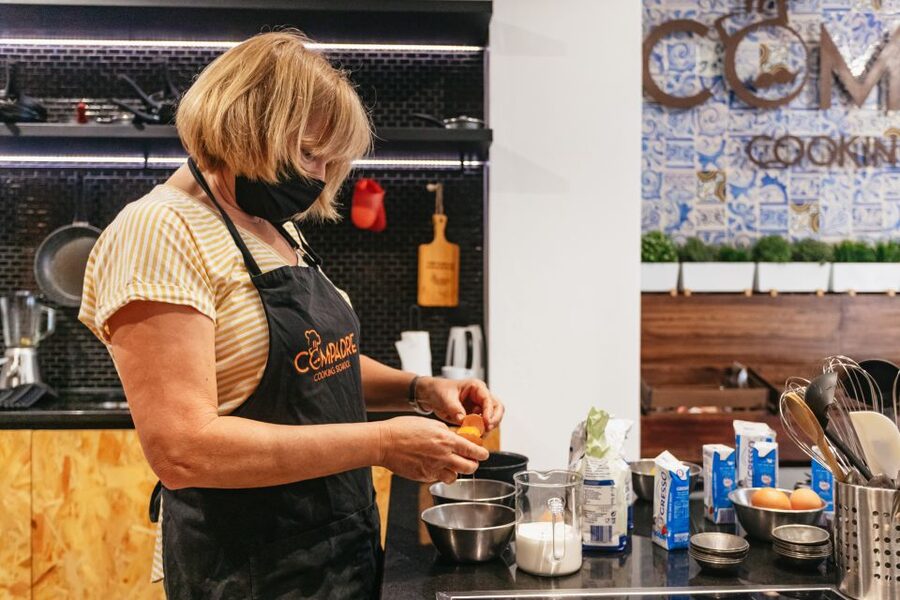
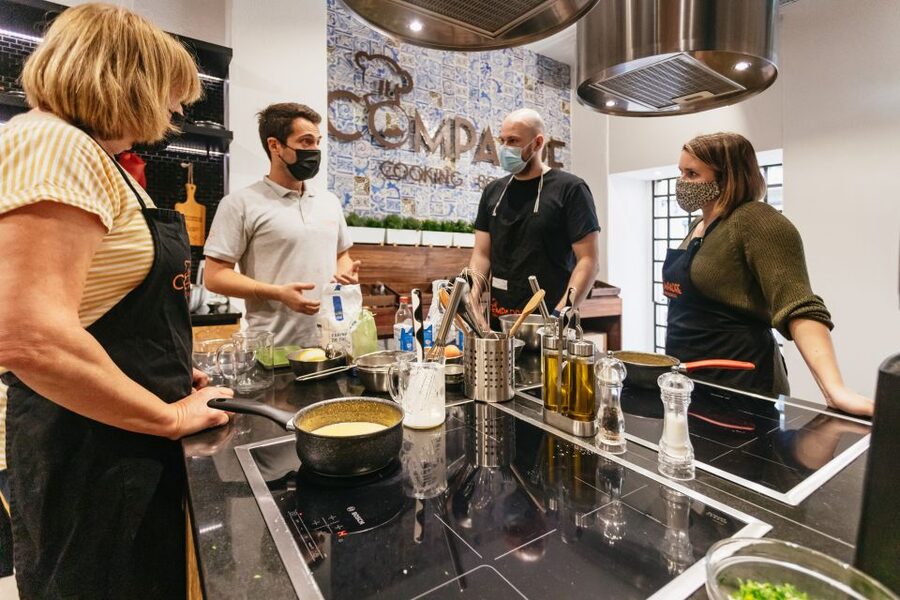
The kitchen format encourages conversation. You work beside people of different ages and nationalities, then sit together to try the food. That makes this a good choice if you want a low-pressure social activity rather than a private lesson.
The instructors help create that mood. Anna and Marta are described as friendly, lively, and patient, with a good sense of humor. They also offer practical food suggestions, including recommendations for pastel de nata shops to visit in Lisbon.
The class is casual, but it is still organized. Ingredients, utensils, and cooking equipment are supplied, so you do not need to bring anything except comfortable shoes and perhaps a container or bag if you hope to carry food away. Take-home bags have been available, but I would not assume unlimited leftovers.
One small improvement would be a formal introduction at the beginning, especially for solo participants. You can always introduce yourself to the people at your station, and the shared meal usually gives the group an easy chance to talk.
A few more cooking classes around Lisbon worth a look
- Cooking Class 2 Hour Spanish Steps – Fettucine and Tiramisù
★ 5.0 · 298 reviews - 2 Hour Florence Pizza and Gelato Small Group Guided Cooking Class
★ 5.0 · 54 reviews - Cooking Class and 2 hours Camel Ride
★ 5.0 · 7 reviews - Private 2 Hour Cooking Class with the Locals in Amman
★ 5.0 · 5 reviews
How Much Cooking Is Involved?
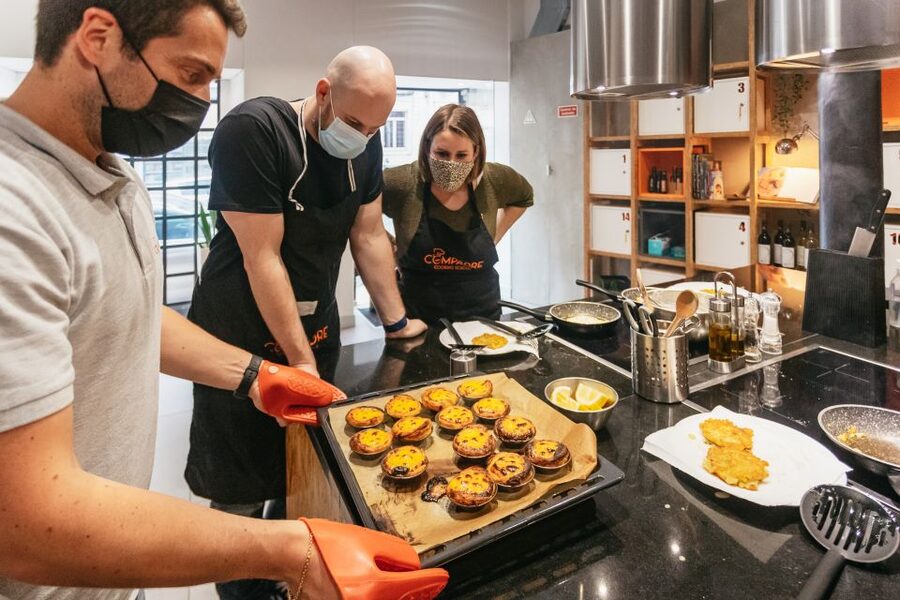
This depends on your expectations. If you want to learn how to mix custard, handle pastry, shape the shells, and understand the baking process, you should find the class useful. If you want to make every component completely from scratch, you may find it light.
The pre-made dough saves time and keeps the two-hour schedule realistic. It also removes one of the most demanding parts of traditional pastry making. You get the useful handling tips without waiting through long preparation stages.
For many people, that is the right trade. You are in Lisbon for a holiday, and two hours gives you a practical lesson without taking over your day. You can follow the recipe at home and try the full process later.
I would describe it as a guided pastry workshop, not a professional baking course. That distinction matters. Beginners and families should appreciate the simple format. Experienced bakers may want more detail on dough production, oven temperatures, ingredient ratios, and troubleshooting.
Price and Value at $64
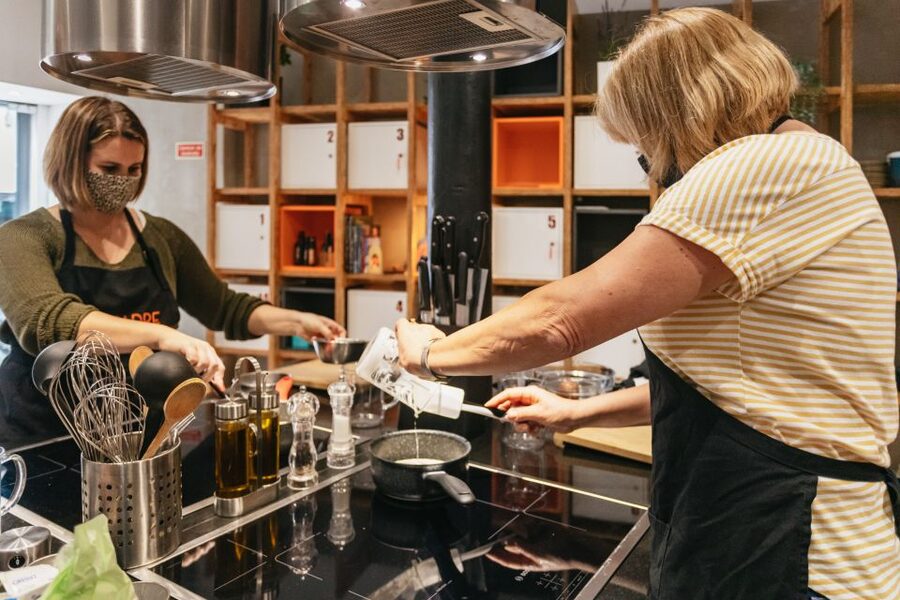
At $64 per person, the class is not the cheapest way to eat pastel de nata in Lisbon. You can buy the finished pastry for very little at bakeries and cafés. The value here comes from the instruction, the second recipe, the kitchen access, the shared meal, and the ability to repeat the experience at home.
I think the price is fair if you enjoy hands-on food activities. You get two hours with an instructor, all ingredients and equipment, two recipes, and a cultural lesson tied to one of Portugal’s most familiar foods. The class also gives you a break from sightseeing and a reason to talk with other people.
The value is weaker if you are mainly looking for lunch or a fully from-scratch pastry course. The food portion is light, and the dough is prepared ahead of time. You should book for the activity, not for the amount of food alone.
The flexible booking terms help with planning. You can reserve now and pay later, and cancellation is free up to 24 hours before the activity for a full refund. Starting times vary, so check availability for your Lisbon dates.
Who Should Book This Lisbon Class?
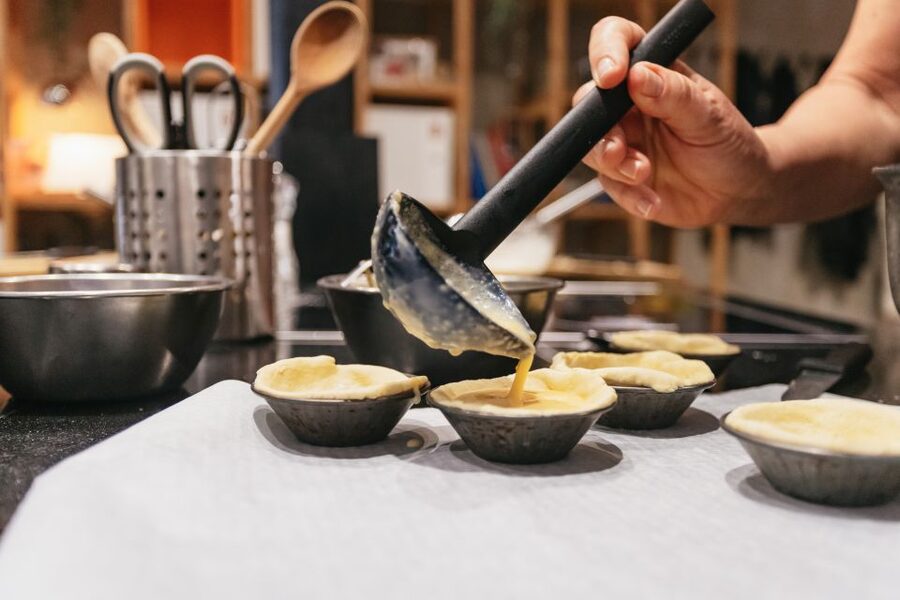
I would recommend it most strongly to:
- First-time visitors who want a direct introduction to Portuguese food.
- Couples looking for an activity beyond monuments and viewpoints.
- Families with older children who can follow kitchen instructions.
- Solo visitors who want a social setting and are permitted to book alone.
- Beginner cooks who enjoy simple, well-explained recipes.
- Pastry fans who want to understand how pastel de nata is assembled.
You should think twice if you have a back problem, dislike standing, or want a demanding technical baking course. Vegan visitors should contact the local supplier before booking because Portuguese cuisine used in this class is not very vegan-friendly.
Vegetarians may be accommodated, but you should still notify the supplier in advance. One vegetarian participant had the diet handled easily, but advance notice is the sensible approach.
The class is taught in English. If you need another language, this experience may not suit you.
Practical Tips Before You Go
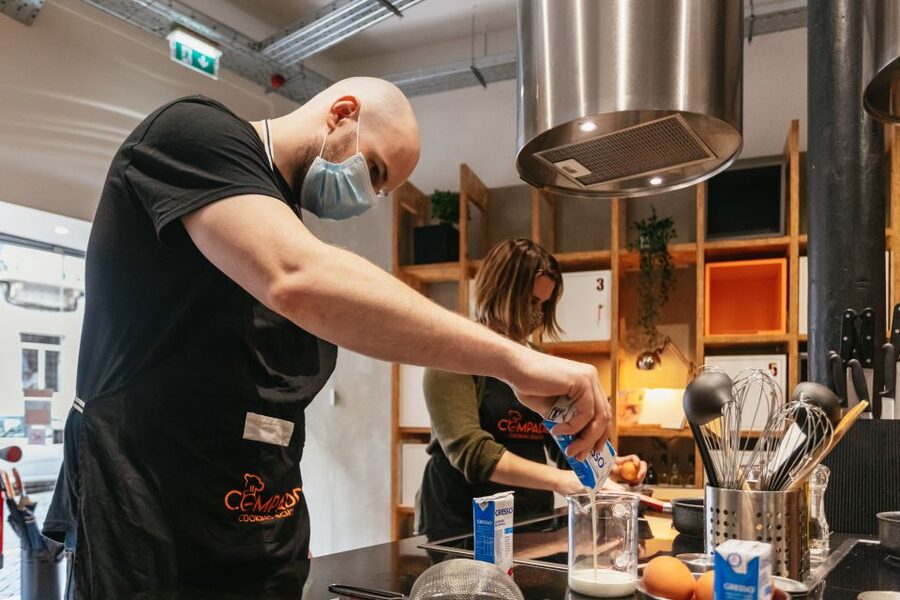
Arrive ready to work, not dressed for a formal meal. Comfortable shoes matter because you will spend much of the active portion standing.
Do not schedule a major meal immediately before or after without allowing flexibility. The cooking and tasting take two hours, but the food is better viewed as a light shared meal than a guaranteed lunch.
If you want to visit a famous pastel de nata bakery afterward, ask Anna or Marta for suggestions. You can also use the class as a useful introduction before visiting Belém and comparing the city’s best-known versions.
Pay attention during the shaping stage. That is where the hands-on value is strongest, and it is the part you will most want to remember when you try the recipe at home.
Finally, take notes or photograph the recipe instructions if permitted. The recipes are provided, but small reminders about texture, shaping, and timing can help when you are back in your own kitchen.
Should You Book the Pastel de Nata Class?
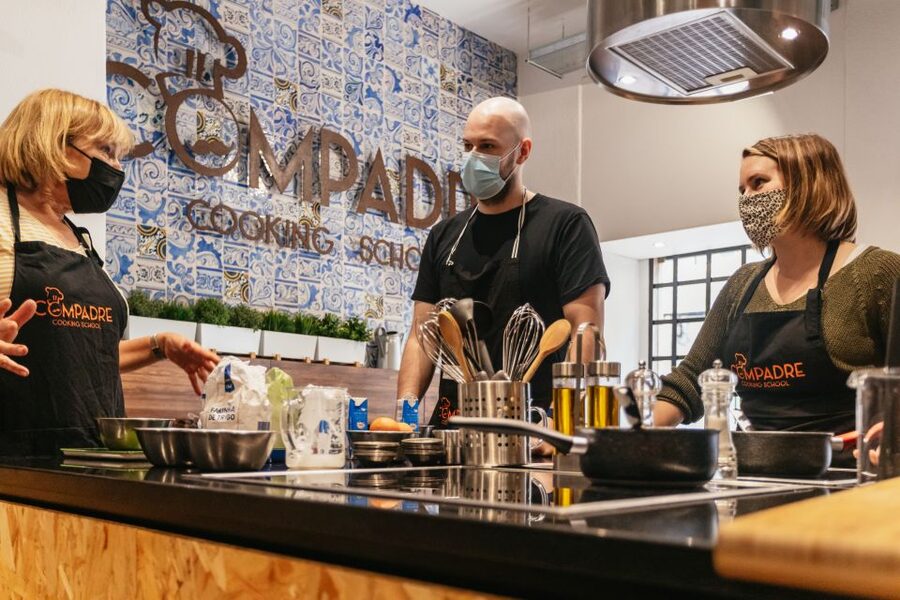
Book it if you want a friendly, short, food-focused activity with clear English instruction and a strong Portuguese connection. The best features are the lively teaching from Anna and Marta, the chance to make two local treats, and the recipes you can use after Lisbon.
Do not book it expecting a full meal or a complete pastry course from raw dough. The class is simple by design, and the second recipe can vary. For most visitors, that simplicity is a benefit: you learn enough to repeat the experience at home without giving up half a day of sightseeing.
At $64, I see it as a good-value cultural activity for people who enjoy cooking. It is especially appealing on a hot afternoon, a rainy day, or any day when you want to meet people and taste Portugal in a more active way than ordering another pastry at a counter.
FAQ
How long does the pastel de nata cooking class last?
The class lasts two hours. The active cooking portion involves standing for about 1 hour and 20 minutes.
Where does the class take place?
It takes place at the local partner’s kitchen in Lisbon District. When entering the address, make sure the city is listed as Lisbon.
Is the class taught in English?
Yes. The instructor language is English.
What recipes will I make?
You will make pastel de nata and one additional traditional Portuguese recipe. The second recipe can vary and may be a dessert or a savory dish.
Is a meal included?
A light shared meal is described as part of the activity, along with the food you prepare. Tea is included in the listed inclusions, while coffee and other beverages may not be available. Plan for a light tasting rather than a full meal.
Are ingredients and cooking equipment provided?
Yes. Cooking equipment, utensils, ingredients, and an instructor are included.
Can I attend if I am vegan or vegetarian?
Portuguese cuisine used in the class is not very vegan-friendly, so vegan participants should contact the local supplier before booking. Vegetarian arrangements may be possible, but advance notice is wise.
Can I cancel the booking?
You can cancel up to 24 hours in advance for a full refund. You can also reserve now and pay later, subject to the booking conditions.
Just added around Lisbon
- Lisbon: Traditional Portuguese Cooking Class★ 5.0 · 41 reviews
- Lisbon: Portuguese street food cooking class with Drinks★ 4.9 · 37 reviews
- Lisbon: Setúbal Market and Wine tour with Cooking class★ 5.0 · 4 reviews
- Lisbon: Pasteis de Nata Baking Class★ 5.0 · 134 reviews
- Lisbon: Portuguese Petiscos Cooking Class★ 4.7 · 6 reviews
- Lisbon: Portuguese Cooking Class with Wine Tasting★ 5.0 · 4 reviews
- Lisbon: Portuguese Cooking Class for Beginners★ 4.9 · 78 reviews
- Lisbon Cooking Class with Market Experience★ 5.0 · 13 reviews
Cooking Classes, compared.
Half-Day Thai Cooking Class at Organic Farm in Chiang Mai
Read our review →
Florence: Pasta Cooking Class with Unlimited Wine
Read our review →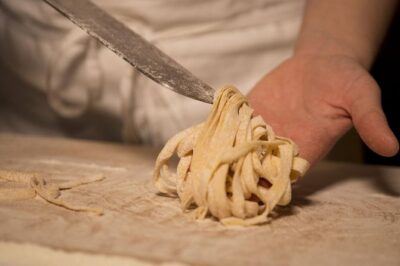
3 in 1 Cooking Class near Navona: Fettuccine, Ravioli & Tiramisu
Read our review →
Hanoi Cooking Class: Culture, Local Market & Meaning CSR Impact
Read our review →
5 Traditional Dishes Hanoi Cooking Class with Market Trip
Read our review →
Cooking Class and Lunch at a Tuscan Farmhouse with Local Market Tour from Florence
Read our review →
Chiang Mai: Cooking Class, Market & Thai Herbs Garden Tour
Read our review →Browse the lists this tour appears in