
Review · LUANG PRABANG
Luang Prabang: Bamboo Forest Cooking-class & Farm Visit
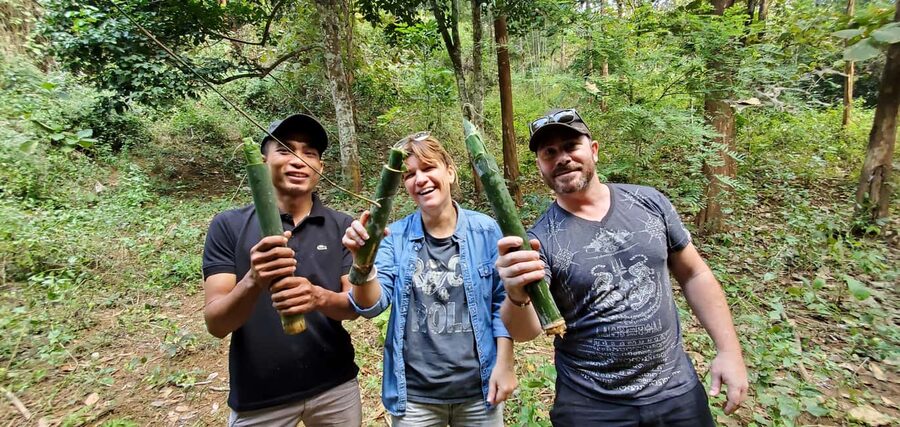
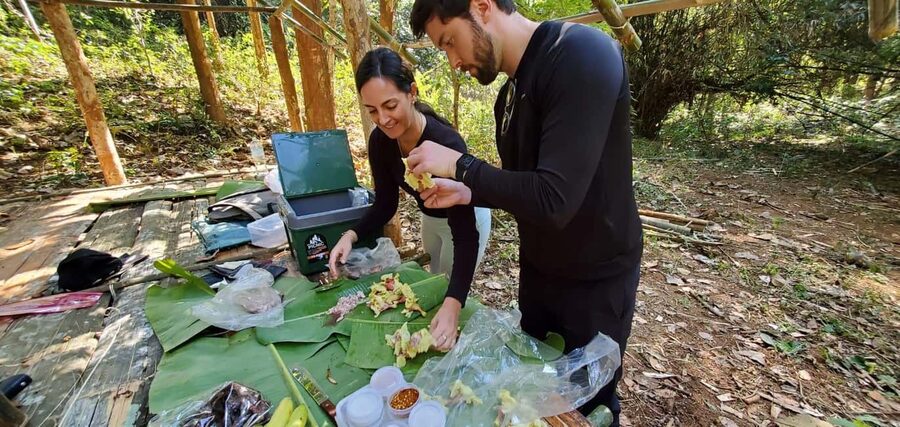
The most memorable part of this six-hour outing is also the least polished: you cut bamboo in the forest, turn it into cooking tools, and prepare lunch over a traditional fire. This is not a demonstration where you sit back and watch. You help build the cooking space, gather ingredients, and make the meal.
I like the Khmu focus, which gives the day a clear cultural purpose rather than making it a general Lao food lesson. I also like the farm visit and plant walk, since they show how cooking connects to daily life, medicine, and practical use. The main consideration is comfort: expect forest walking, insects, sun, and hands-on work rather than a tidy kitchen with modern equipment.
Key points to know before booking
- You make the cooking tools: Shape bamboo into a cup and chopsticks, then take them home.
- The meal begins at a farm: Pick vegetables and learn about edible, medicinal, and useful plants.
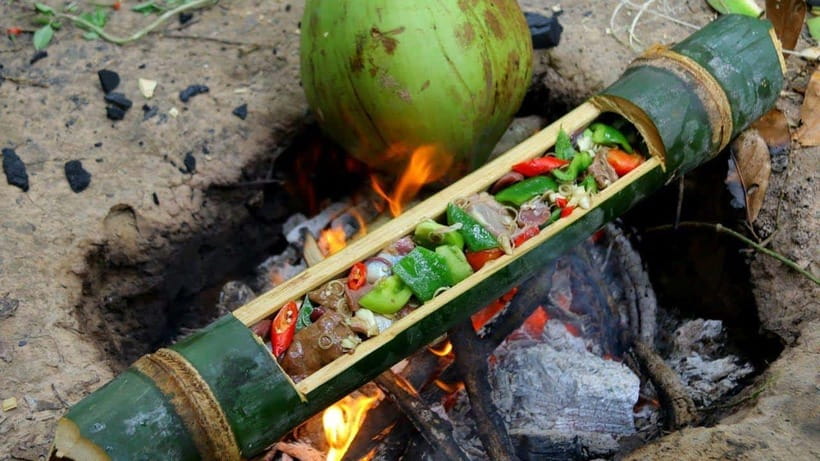
- Cooking takes place in the forest: Prepare fragrant rice, grilled meat or fish, and other food with bamboo.
- The Khmu tradition is central: Your guide explains methods still used by Khmu families.
- Small groups keep it personal: No more than 10 people take part.
- Plan for outdoor conditions: Wear long trousers, sturdy walking shoes, a hat, and mosquito spray.
A forest kitchen instead of a cooking studio
This experience takes place from 9 AM to 3 PM and is designed as a full cultural outing, not a quick class squeezed between sightseeing stops. You start from the provider’s showroom, then use included hotel transfers to reach the farm and forest areas.
The appeal is the setting. You are not simply learning how to season a Lao dish in a restaurant kitchen. You are learning how food, tools, fire, plants, and place fit together. That difference matters if you want a closer look at rural life around Luang Prabang.
The day follows Khmu cooking traditions. The Khmu are one of Laos’s ethnic groups, and the guide shares methods connected to village life and forest resources. You will not just hear about tradition. You will handle bamboo, select plants, prepare ingredients, and eat what you have helped make.
That hands-on format also means the pace can change. You may spend more time making a utensil or learning a plant than you would in a standard cooking class. I see that as a benefit for curious visitors, though it may feel slow if you want a fast list of recipes and a polished meal at the end.
More Farm Cooking Classes in the world:
- Half-Day Thai Cooking Class at Organic Farm in Chiang Mai
★ 5.0 · 19,087 reviews - Cooking Class and Lunch at a Tuscan Farmhouse with Local Market Tour from Florence
★ 5.0 · 4,831 reviews - Chiang Mai: Authentic Cooking Class with Market & Farm Visit
★ 4.9 · 4,546 reviews
Starting at the farm and learning the useful plants
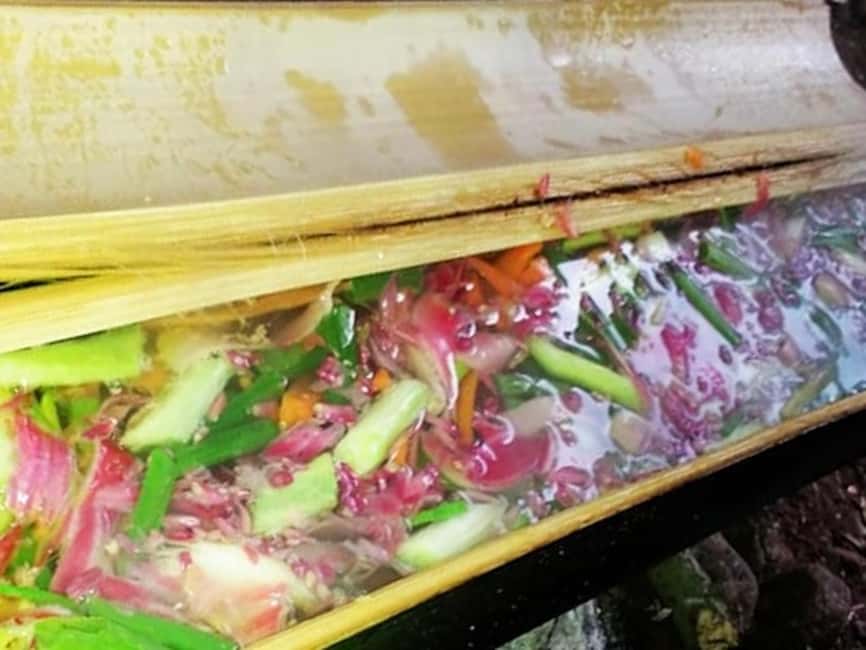
The first major stop is an authentic vegetable farm. Here, you pick the vegetables and plants needed for lunch rather than receiving every ingredient premeasured.
Your Khmu guide explains how to identify plants used for food, medicine, and everyday village needs. This is one of the strongest parts of the outing because it gives context to ingredients that might otherwise seem like decorations or unfamiliar greens on a plate.
You should pay close attention during this section. The value is not only in knowing what goes into one meal. It is in seeing how local plant knowledge works in practice, with different plants serving different purposes.
The farm visit is also a good fit for people who like food with a story behind it. You get a direct link between the growing ground and your lunch. That connection is easy to miss when ingredients arrive neatly arranged at a cooking school.
The information provided does not promise a specific menu, and that is sensible. The exact vegetables and plants can vary. Rice, meat, fish, fruit, and drinking water are supplied, while dietary needs can be discussed in advance so the meal can be adjusted.
Into the primary forest with bamboo in hand
After the farm, you head into the primary forest for the cooking part of the day. The forest is not just scenery around the class. It supplies the material for utensils and helps explain why bamboo has such a useful place in local life.
You learn how to select and prepare bamboo, then turn it into items for drinking, eating, and cooking. The included take-home pieces are a bamboo cup and chopsticks. They are simple objects, but you make them yourself, which gives them more meaning than a ready-made souvenir bought in a shop.
The process is physical. One person described cutting bamboo for the meal as something they never expected to do on a cooking outing. That is a useful warning and a good description of the experience’s character. You should be ready to work with your hands rather than simply pose beside a fire.
The guide can show you the steps and let you take part at your own level. One account describes the activity as flexible for people who wanted to be very involved and those who preferred to watch more. Still, the experience makes the most sense if you are willing to try the practical tasks.
Wear long trousers and footwear suitable for walking in the forest. Mosquito spray, a cap or hat, and any personal medication belong in your day bag. The advice is basic, but it will make the outdoor hours more comfortable.
Cooking rice, meat, and fish with traditional methods
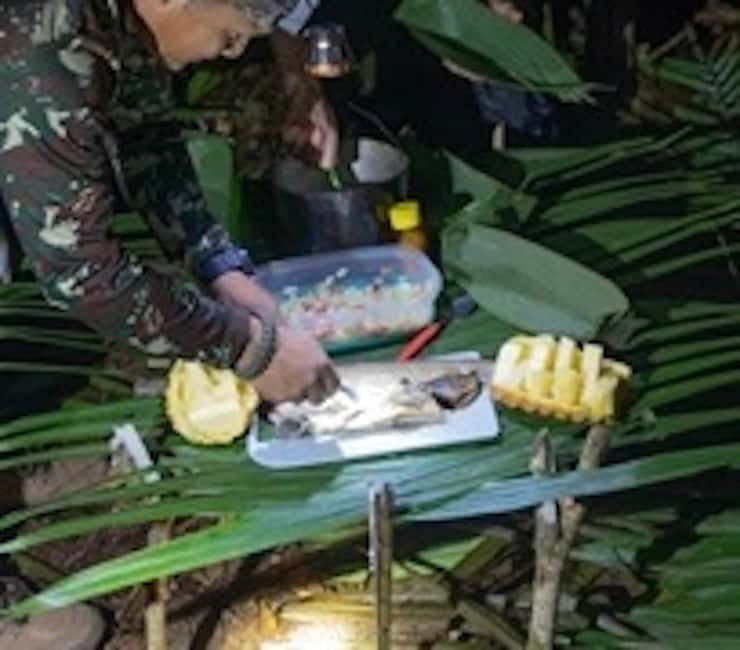
The cooking lesson centers on bamboo and fire. You learn how to prepare fragrant rice in bamboo, grill meat or fish, and arrange the dishes in the Khmu manner.
This is where the class becomes more than a foraging walk. You see how a single natural material can serve as a cup, utensil, cooking vessel, and part of the meal presentation. The method also makes you think about equipment differently. A modern kitchen gives you speed and control. A forest kitchen asks you to use what is available.
The exact dishes are not listed, so you should not book this expecting a fixed menu or a particular recipe. What is confirmed is that the main ingredients are provided, including rice, meat, fish, fruit, and water. Tell the operator about dietary restrictions or preferences before the outing so the meal can be planned around them.
I like the fact that lunch is the result of the morning’s work. You pick some of the plants, shape tools, prepare the cooking materials, and then eat in the same forest. That sequence gives the meal a sense of purpose.
There is also a practical limit to the format. If you need a fully equipped kitchen, indoor seating, or precise control over every part of your food, this will not be your ideal class. The charm comes from adapting to a traditional outdoor method.
More Hands-On Workshops in the world:
- Florence: Pasta Cooking Class with Unlimited Wine
★ 4.9 · 10,285 reviews - 3 in 1 Cooking Class near Navona: Fettuccine, Ravioli & Tiramisu
★ 5.0 · 7,376 reviews - Florence: Pasta & Tiramisu Cooking Class with Unlimited Wine
★ 4.9 · 6,708 reviews - Florence: Pasta Cooking Class with Unlimited Wine
★ 5.0 · 6,413 reviews
Lunch in the forest and the value of doing the work
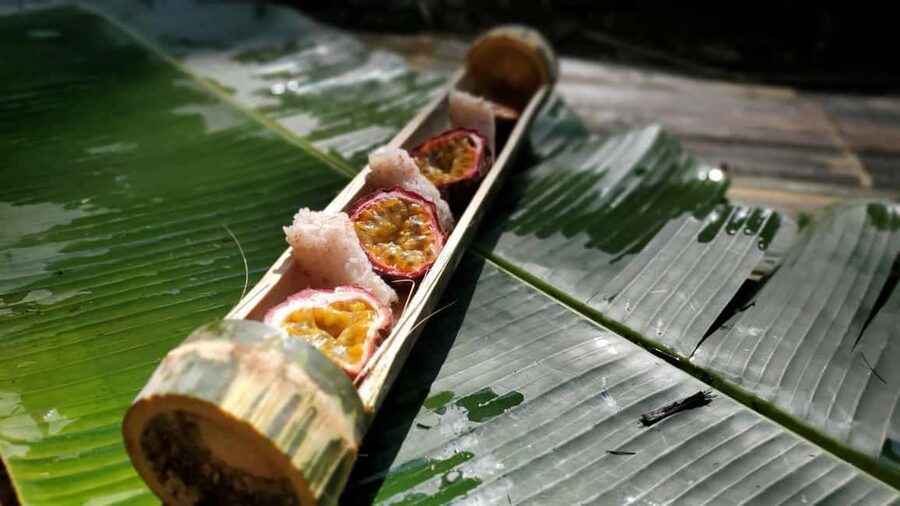
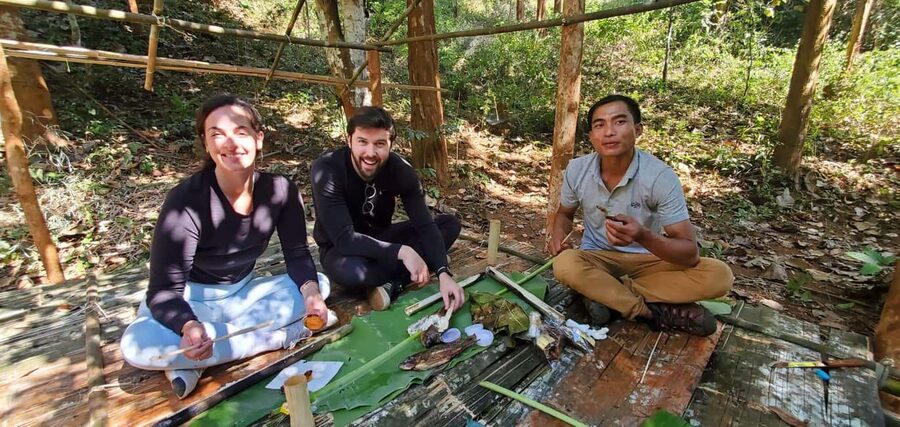
Lunch is eaten in the forest, surrounded by nature, after the cooking is complete. The meal is described as a shared moment, and the small-group limit of 10 people supports that atmosphere.
A smaller group matters here because the work is hands-on. With too many people, some would spend the day waiting while others cut bamboo or handle the food. A group of no more than 10 gives you a better chance to take part and ask questions.
The meal also offers a useful pause. You can sit with the results of the morning instead of rushing from one activity to the next. For me, that is the point of a class like this: not only to eat something good, but to understand the steps that made it possible.
You should keep your expectations grounded. This is not presented as a luxury meal or a restaurant-quality service. It is a traditional forest lunch. The setting, method, and shared work matter as much as the food itself.
Your guide and the cultural side of the day
Your guide speaks English, French, Thai, or Lao, depending on availability and group needs. The central guide is Khmu and has a farming background and an agriculture degree, according to the information supplied for the experience. Peng is also praised by name for making the day engaging and explaining the cooking techniques clearly.
That combination of personal background and formal agriculture training is valuable. You are not only being shown a staged activity. You can ask about plants, farming, cooking, and daily use, then connect the answers to what you are doing at that moment.
The guide also controls how much you take on. If you want to cut bamboo, prepare food, and ask plenty of questions, you can make the day very active. If you need a slower pace, you can take a lighter role. You should still be ready to participate, since the main purpose is learning by doing.
The strongest cultural benefit is that the activity presents Khmu cooking as living practice. You are not viewing a performance or buying a symbolic craft. You are learning a set of tasks that make sense within village life: finding food, using local plants, shaping available materials, and cooking outside.
How the $100 price compares
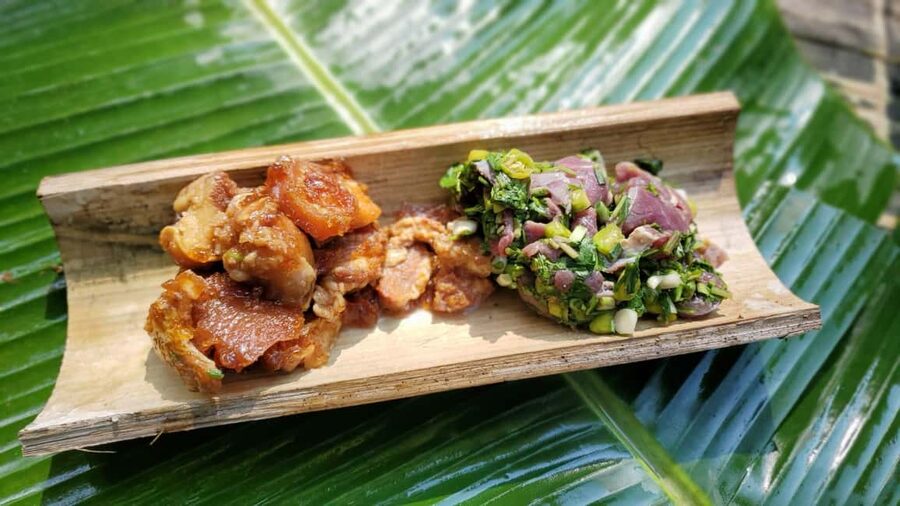
The price is $100 per person. That is not the cheapest food activity in Luang Prabang, but the value is broader than the meal.
The fee includes hotel transfers, all meal ingredients, the guide, taxes, entrance fees, and the bamboo cup and chopsticks you make. You are paying for six hours of instruction and cultural contact, not only for lunch. If you would otherwise pay separately for transport, a cooking class, a farm visit, and a guided nature activity, the package becomes easier to justify.
The small group also helps. A class capped at 10 people offers more direct contact than a large commercial outing. The experience has been described as feeling close to a private adventure, though the actual format is a small group rather than a guaranteed private tour.
The price will feel worthwhile if you value local knowledge, practical work, and an unusual setting. It may feel high if your main goal is simply to learn several Lao recipes in a modern kitchen. Food-focused visitors who care about technique and presentation should also know that the experience is more about traditional process than polished instruction.
Additional food and drink are not included, and gratuity is separate. Basic drinking water is provided, so you do not need to treat the day as a meal with a long list of extra purchases.
Comfort, clothing, and practical limits
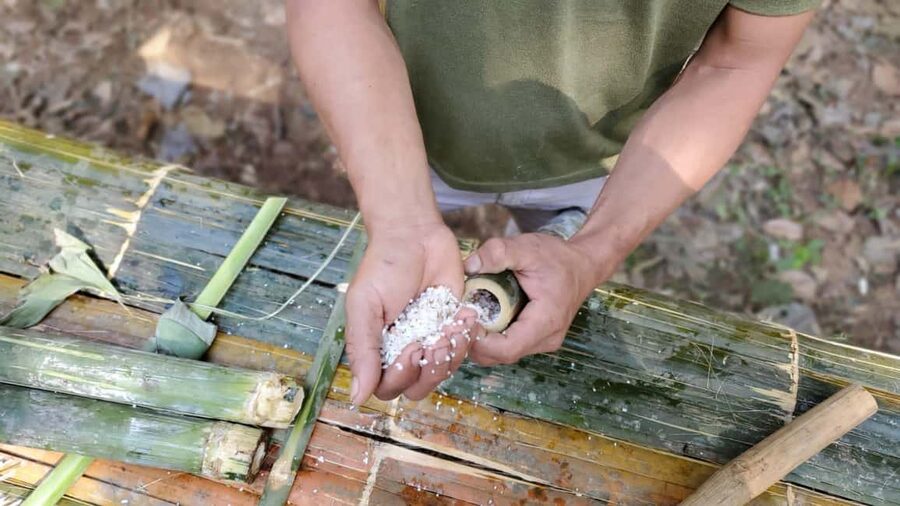
The forest setting shapes the entire day. You will be outside for much of the six-hour schedule, so wear long pants and footwear made for walking. A hat and mosquito spray are specifically recommended.
Bring personal medication and any other essential items you need. The provided details do not promise accessible paths, air-conditioned shelter, or a special arrangement for limited mobility, so ask before booking if walking or outdoor cooking could be difficult for you.
Hotel transfer to and from the activity is included, which removes one common hassle in Luang Prabang. The meeting point is the provider’s showroom, known as the Notre showroom. Confirm the pickup details when booking, especially if your hotel is outside the usual service area.
The optional craft-village stop on the way home is another useful touch. It gives you a chance to see local craft work after the cooking day, though the stop is optional and no further details are provided.
Free cancellation is available up to 24 hours before the start time, and you can reserve now and pay later. Those policies are useful if your Luang Prabang plans may shift, but they do not change the need to check starting times and availability before committing.
Who will enjoy this most
I would choose this for someone who wants an active cultural day, not a quick attraction. It suits food lovers, families with older children, photographers who enjoy process, and anyone curious about how local communities use plants and natural materials.
It is especially good for you if the words bamboo cup, forest fire, plant identification, and hands-on cooking sound appealing. The take-home cup and chopsticks add a lasting reminder of the day, but the real souvenir is the set of skills behind them.
It may not suit you if you dislike insects, uneven outdoor conditions, or getting your hands dirty. It is also less suitable if you want a strict timetable, a fixed menu, or a formal kitchen classroom.
Because the guide can adjust how actively you take part, you do not have to perform every task. Still, the more willing you are to help, the more you will get from the experience.
Should you book the Khmu forest cooking class?
Book it if you want your Luang Prabang food experience to include people, place, plants, and practical work. The combination of farm picking, forest cooking, bamboo craft, and a Khmu guide gives the day a clear sense of purpose.
Skip it if you only want a comfortable recipe class or a short food tour. For everyone else, $100 is a reasonable price for six hours of transport, guidance, ingredients, lunch, and cultural learning in a small group.
Bring long pants, good walking shoes, mosquito spray, and a curious attitude. If you do, this can become one of the more personal and memorable ways to understand food in northern Laos.
FAQ
How long does the cooking and farm experience last?
The activity lasts six hours, from 9 AM to 3 PM.
Where does the experience meet?
The meeting point is the provider’s showroom, called the Notre showroom. Hotel transfers to and from the activity are included.
What languages can the guide speak?
Guides may speak English, French, Thai, or Lao.
How large is the group?
The activity is limited to 10 participants.
What food and ingredients are included?
Rice, meat, fish, fruit, and drinking water are provided, along with the other basic meal ingredients.
Can dietary preferences or restrictions be accommodated?
Yes. You should provide your dietary preferences or restrictions in advance so the meal can be adjusted.
What should I bring?
Bring long trousers, suitable footwear for forest walking, mosquito spray, a cap or hat, and any essential personal medication.
What do I take home?
You can take home the bamboo cup and chopsticks you make during the activity.
Just added around the world
- Lucca: Market and Cooking Class at a Local’s Home★ 4.8 · 5 reviews
- Lucca: Cooking Class at a Local’s Home★ 4.3 · 12 reviews
- Mad Monkey Hoi An Cooking Class & Bamboo Boats★ 4.5 · 6 reviews
- London: Traditional Pork Pie Cookery Class★ 5.0 · 10 reviews
- Luang Prabang: Mekong River Cooking Class with Hotel Pickup★ 5.0 · 3 reviews
- London: Pizza Making Cookery Class★ 4.9 · 18 reviews
- Lombok: Tetebatu Walk, Waterfall, Monkey Forest & Cooking★ 5.0 · 7 reviews
- Los Cabos: Azteca Cactus Taco Farm to Table Cooking Class★ 5.0 · 9 reviews
Farm & Countryside Cooking Classes, compared.
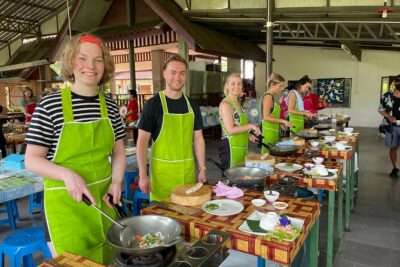
Half-Day Thai Cooking Class at Organic Farm in Chiang Mai
Read our review →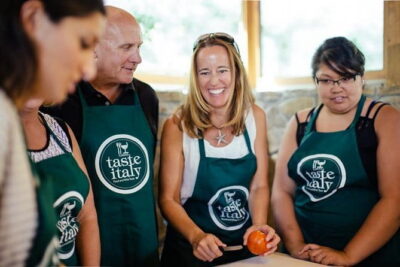
Cooking Class and Lunch at a Tuscan Farmhouse with Local Market Tour from Florence
Read our review →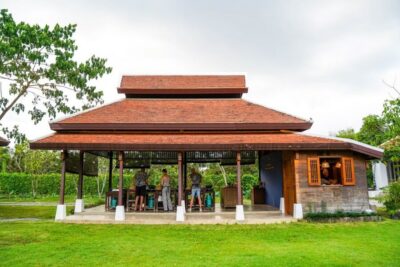
Chiang Mai: Authentic Cooking Class with Market & Farm Visit
Read our review →
Ubud: Balinese Cooking Class at an Organic Farm
Read our review →
Ubud: Authentic Cooking Class in a Local Village
Read our review →
Chiang Mai: Cooking Class with Organic Farm at Mama Noi
Read our review →

Hands-On Cooking Class & Farmhouse Tour on the Amalfi Coast
Read our review →Browse the lists this tour appears in