
Review · BALINESE & INDONESIAN
Ubud: Balinese Cooking Class at an Organic Farm
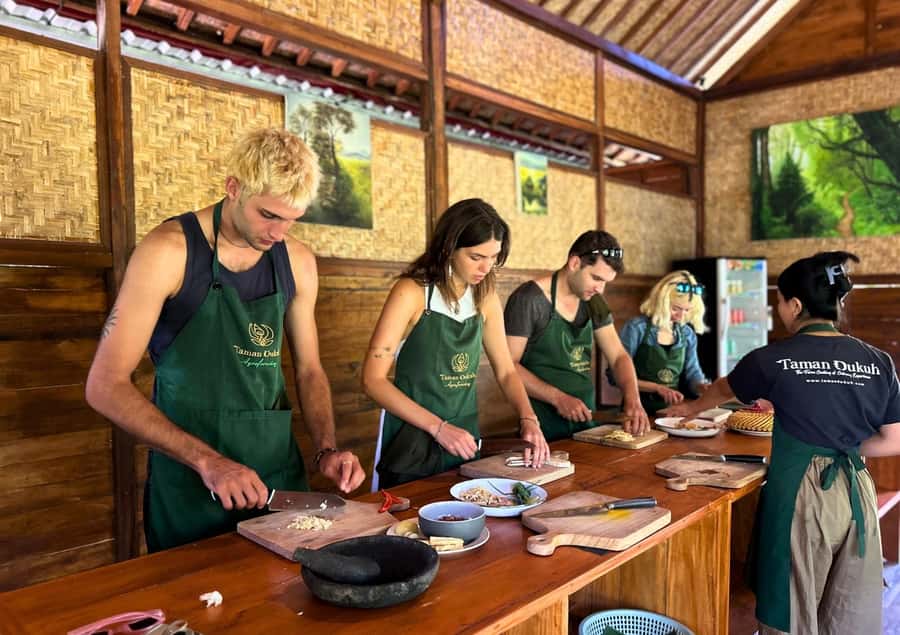
The best part of this Ubud cooking class happens before you touch a knife. You visit a local market, pick vegetables from an organic farm, and learn how Balinese families use spices, plants, and nearby produce in daily cooking. Then you cook six dishes in an open-air farm kitchen and sit down to eat them.
I like the morning market visit, which adds real local context instead of treating Balinese food as a list of recipes. I also like the farm-to-table setup: you collect ingredients yourself, then see how they become spice paste, curry, satay, vegetables, and dessert.
The main drawback is time. The class can take from 330 minutes to eight hours, and the farm may be about an hour from central Ubud in traffic. The morning option offers more to see, but it also makes for a very full day.
Key points to know before booking
- Six dishes, not a quick demonstration: You work through a full menu and eat what you prepare.
- The 7:15 a.m. option includes the market: Morning sessions add a local market tour and early-day shopping.
- Choose regular or vegetarian: The vegetarian menu includes gado gado, tempe curry, corn fritters, vegan satay, and dessert.
- The farm is part of the lesson: You tour the gardens and harvest some of the vegetables used in class.
- Small groups help, but stations are shared: Groups can reach 14 people, and each cooking station is shared by two.
- You get useful take-home material: A recipe book and a downloadable PDF help you repeat the dishes at home.
Why this class feels like more than a cooking lesson
Many cooking classes begin with ingredients already lined up on a counter. This one gives you a better sense of where the food starts. You first see produce at a local market, then walk through an organic farm, then prepare the meal in an open-air kitchen.
That order matters. You learn that Balinese cooking depends on fresh herbs, vegetables, coconut, chili, garlic, shallots, and spice pastes rather than one magic bottled sauce. You also get a small look at local routines, from early market trading to the way a family makes use of the plants around the home.
I especially like the balance between explanation and hands-on work. The chef guides the process, but you still chop, mix, pound, season, cook, and taste. The class is suitable for beginners, while more experienced cooks can pay attention to the logic behind the recipes.
The experience has earned a perfect rating from 1,786 reviews, and the praise is remarkably consistent: the instructors, food, farm setting, and organization receive the most attention. That does not mean every moment will suit every person. If you dislike long meals, shared workstations, or early starts, this may feel slow.
More Farm Cooking Classes in Indonesia
- From Ubud: Authentic Cooking Class in a Local Village
★ 4.9 · 1,325 reviews - Balinese Farm Cooking Class by Pemulan Bali
★ 5.0 · 410 reviews - From Ubud: Authentic Bali Farm Cooking School & Organic Farm
★ 5.0 · 122 reviews
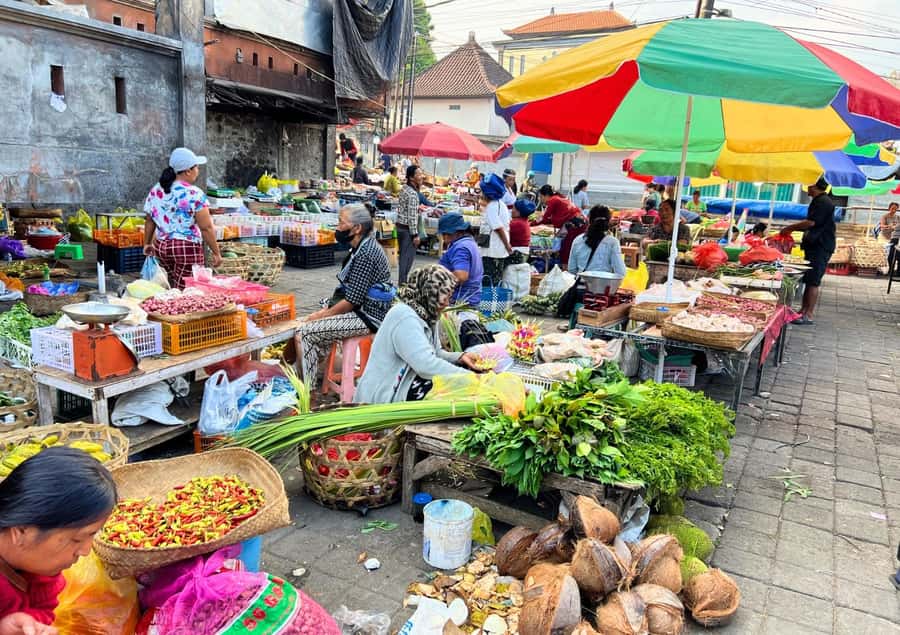
Start early at the local market
The morning class begins with a visit to a local market. This is one of the strongest reasons to choose the early option. You see the market at the start of the day, when people are buying and selling the ingredients used in ordinary Balinese meals.
Your guide explains local fruits, vegetables, and spices, and you may taste unfamiliar fruit along the way. One morning itinerary includes buying fruit for breakfast before heading to the farm. That makes the market stop feel practical rather than staged.
The market also gives you a useful introduction to Balinese food vocabulary and habits before the cooking starts. Instead of meeting ingredients only after they have been chopped and measured, you see them in their natural form and learn how they fit into local meals.
Do not expect a long market tour on every option. The market visit is listed for morning classes only. If you book an afternoon or evening session, you go directly into the farm portion instead.
The early start is worth considering for another reason: Ubud traffic. One class member noted that the farm can be about an hour from the meeting point, and the return journey may take longer in heavy traffic. An early departure gives you the market and may make the road journey easier to manage.
Ride from Ubud into the countryside
A shuttle from an Ubud meeting point is included, although the exact pickup location depends on the option you book. The transfer removes some of the hassle of finding a rural farm on your own.
The drive is part of the change in scenery. One pickup driver, Rudi, was praised for explaining Balinese culture while driving through villages, rice terraces, and jungle scenery. The exact route and driver can vary, so treat that as a possible bonus rather than a guaranteed commentary program.
The distance is worth planning around. This is not a short class tucked into central Ubud. You are choosing a half-day or full-day outing, depending on the option and traffic. If you have a tightly packed schedule, leave space before and after the activity.
At the end, the shuttle returns you to Ubud. Soft drinks and beer are not included, but they can be purchased. Mineral water, coffee, and tea are provided during the class.
Pick breakfast and vegetables on the organic farm
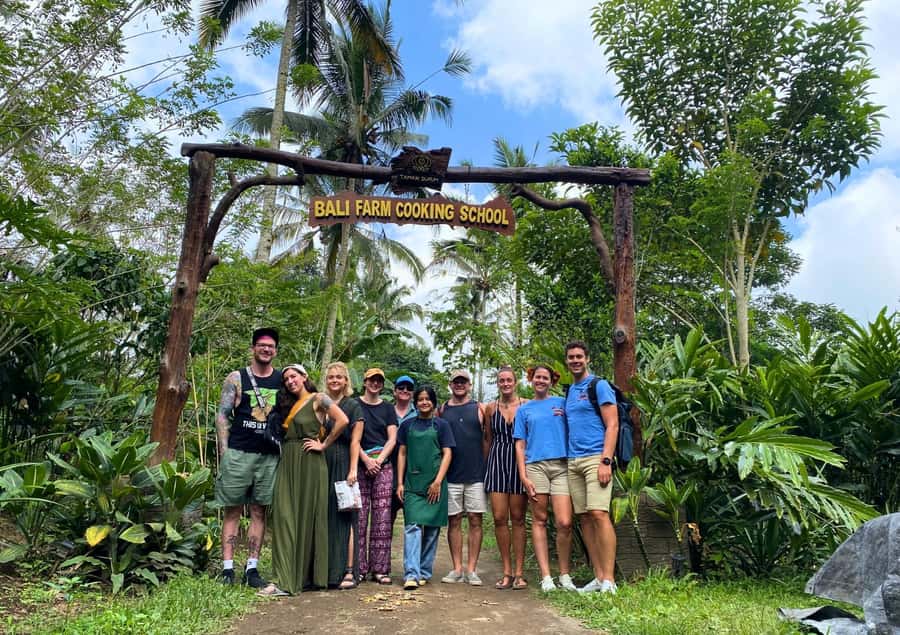
At the farm, you receive coffee or tea and a light breakfast. The food can include fresh fruit and small local bites, with one morning menu also offering cake. It is a pleasant pause after the early start and a chance to taste fruit before cooking begins.
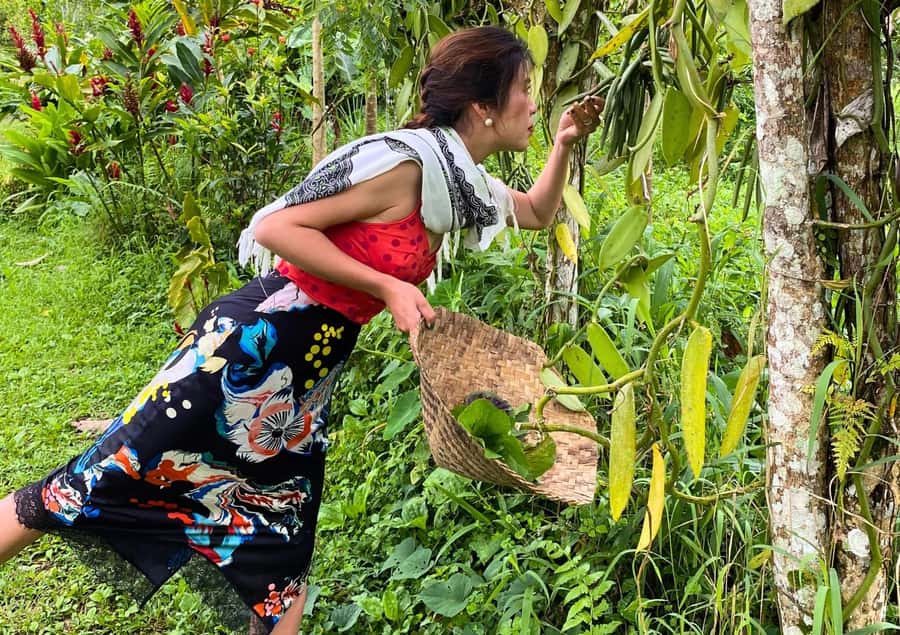
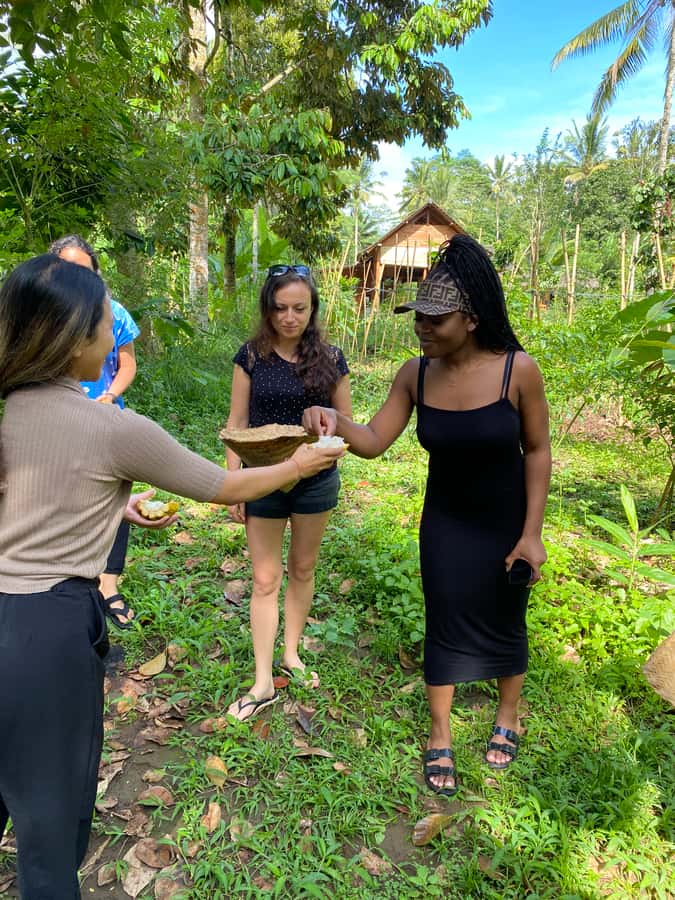
The farm tour is not just a walk past decorative plants. You learn how the property uses natural resources and which plants provide ingredients for the class. You then help collect vegetables for your menu.
The farm setting is one of the most praised parts of the experience. The cooking takes place in an open-air kitchen surrounded by trees, herbs, and growing produce. Several people valued the garden tour as much as the cooking itself, especially the chance to see ingredients on the plant.
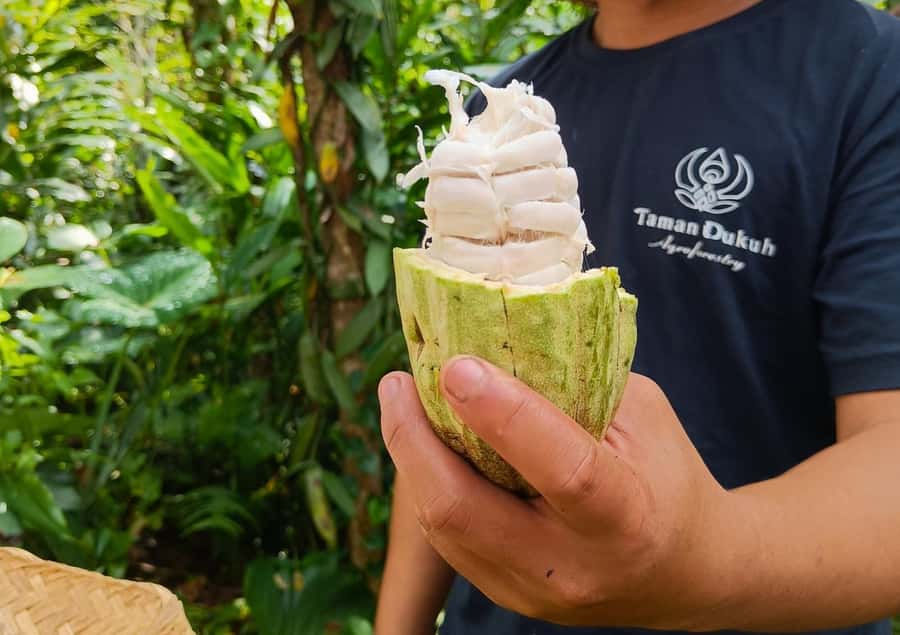
You may also encounter less familiar produce. One farm visit included tasting cacao fruit. That sort of small discovery is useful because it gives you a better feel for Bali than another standard restaurant meal.
The farm does not necessarily supply every ingredient. Some produce is obtained from the local market when needed. That is perfectly normal and gives you a more accurate picture of how local cooking works. A farm kitchen still depends on markets, seasons, and availability.
Rain should not ruin the day. Umbrellas were available during one wet class, although comfortable footwear and clothing that can handle a garden walk are sensible choices. The activity is not suitable for wheelchair users, and you should expect uneven outdoor areas as part of the farm visit.
More Balinese Cooking Classes in Indonesia:
- Ubud Cooking Class Bali with Balinese Chef
★ 5.0 · 1,609 reviews - PRIVATE Authentic Balinese Cooking Class in Ubud at Putu’s Home
★ 5.0 · 644 reviews - Balinese Ubud cooking school (9 Dish Cooking and Market Tour)
★ 5.0 · 540 reviews - Ubud: Balinese Cooking Class and Market Tour
★ 4.8 · 531 reviews
Cook the regular six-dish menu
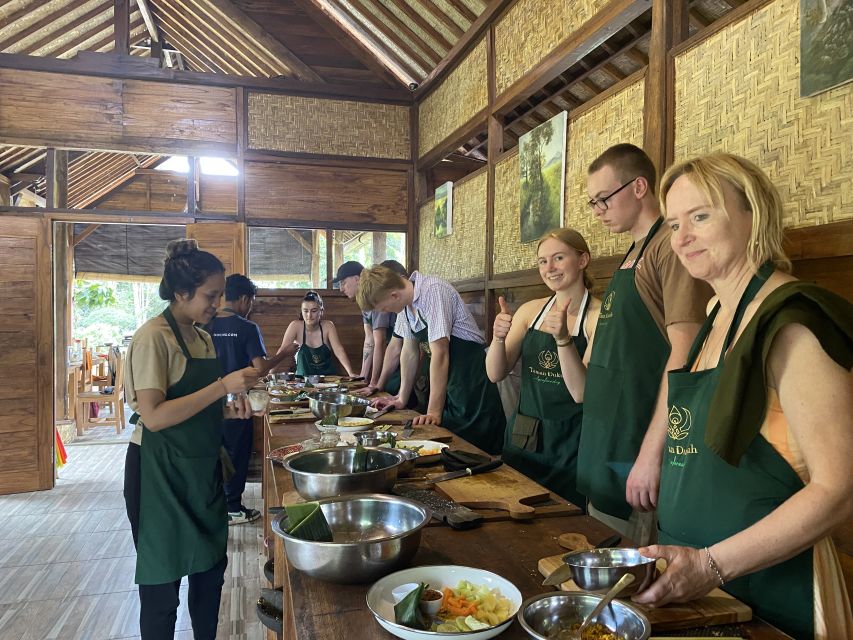
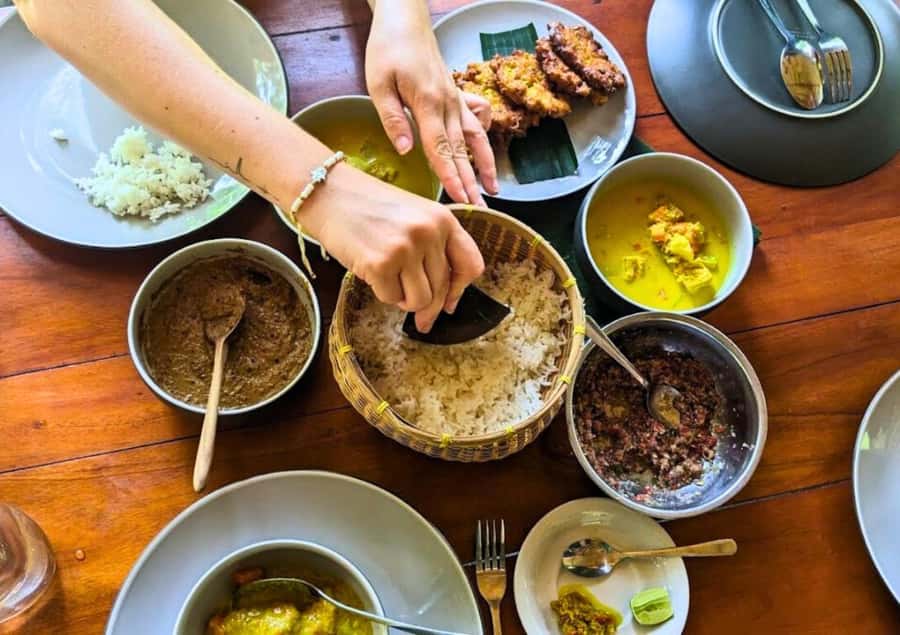
The regular menu begins with Base Gede, a traditional Balinese spice paste. This is the foundation of several dishes and one of the most useful things to learn if you want to recreate Balinese food at home.
You then prepare Sayur Urab, a mixed green salad with coconut and spices. This shows how vegetables can become a full-flavored dish without heavy cooking. The menu continues with Opor Ayam, a Balinese chicken curry, and sate lilit, a kebab made with meat, coconut, and spice paste.
The remaining savory dishes are pindang base tomat, fish with tomato sauce, and tempe asam manis, sweet and sour tempe. Dessert is either pisang goreng, banana fritters with coconut and palm sugar syrup, or bubur injin, a black rice pudding.
Six dishes sounds ambitious, but the format is designed to keep the class moving. The instructor handles the timing and explains the steps as you go. You are not left to figure out a full Balinese meal alone.
The portion of work you do can vary by task. One class member liked that the instructors handled some of the fiddly jobs while still allowing participants to do enough cooking to feel involved. That is a good arrangement for a group class, especially when several dishes must be ready in sequence.
Do not expect a private chef lesson. You share each cooking station with one other person, and the group can contain up to 14 people. At the farm there may also be two or three groups in a session. The setup remains manageable, but one-to-one instruction is not the point.
Choose the vegetarian menu without missing the full experience
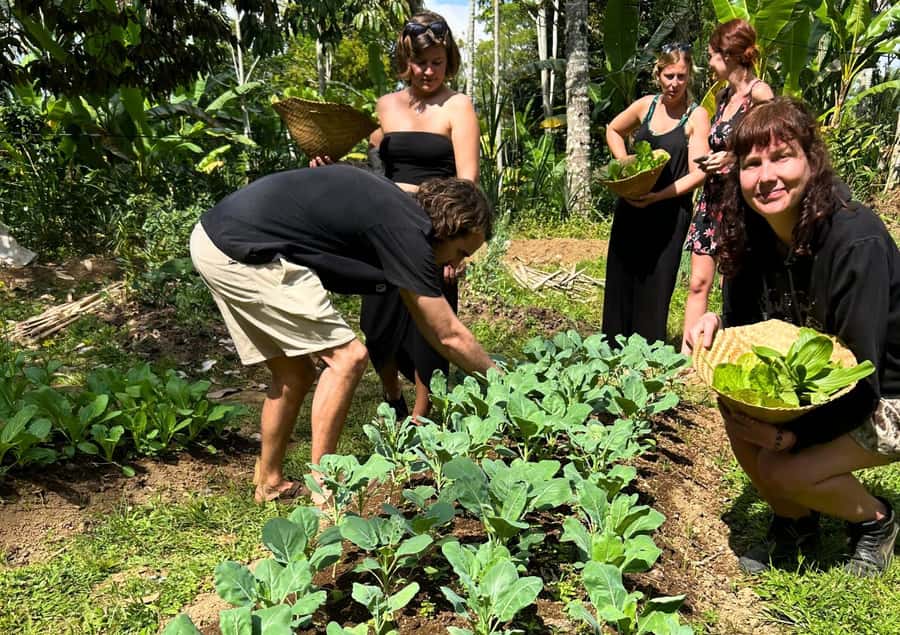
The vegetarian menu is not a shortened version of the regular class. It has its own set of dishes and plenty of work.
You begin with Base Gede, then make gado gado, a dish of blanched vegetables with traditional peanut sauce. Next comes opor tempe, a Balinese tempe curry, followed by bergedel, fried corn with Balinese spices.
You also prepare tempe asam manis and vegan sate lilit, a plant-based version of the traditional kebab made with jackfruit and spices. Dessert is pisang goreng or bubur injin.
This is a good choice if you want a genuinely vegetarian cooking lesson rather than a meat menu with one substitution. A vegetarian class also offers useful ideas for working with tempe, jackfruit, coconut, peanut sauce, and local vegetables.
Vegan participants received especially clear handling in one class, with non-vegan dishes cooked separately. If food separation matters to you, confirm your dietary needs when booking, but the experience does offer a specific vegetarian menu rather than leaving you with only side dishes.
Learn from warm, practical instructors
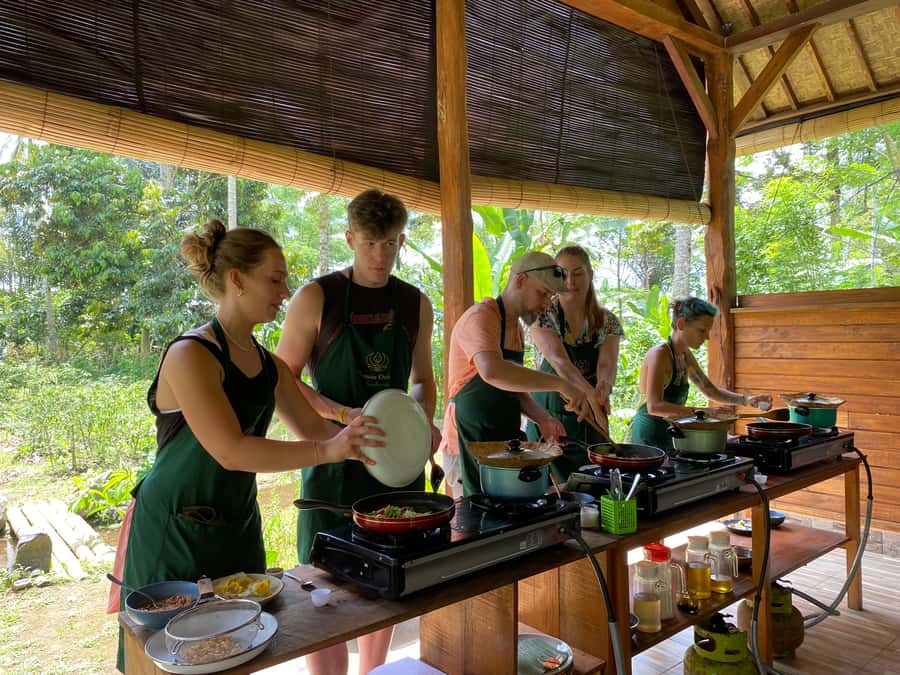
The cooking teachers are a major part of the experience. Names that appear across the sessions include Buda, Depi, Wayan, Wayun, and other local chefs. The strongest praise goes to instructors who explain each step clearly, answer questions, and keep the mood relaxed.
Buda is described as funny and engaging, while Depi is praised for clear English and patient instruction. Wayan and Wayun are also noted for their farm knowledge and friendly teaching. Staff may vary by date, so you should not book on the assumption that one named guide will lead your class.
The language of the tour is English and Indonesian. You should have enough explanation to follow the recipes and understand the role of the ingredients. The class is not only about following orders. Instructors explain why particular spices are used and how the dishes fit into Balinese cooking.
Some sessions include photos or a short video sent afterward. This appears to be an occasional extra rather than a listed guarantee, so enjoy it if provided but do not treat it as part of the core package.
Eat as you cook, then take the recipes home
The payoff is a large meal. You eat the dishes you prepare, sometimes as each part is finished rather than waiting until the very end. With starters, mains, and dessert, the food can be surprisingly filling.
The class gives you a more useful meal than a simple tasting. You learn the smell and texture of freshly made spice paste, the difference between cooked and raw ingredients, and how coconut and palm sugar shape Balinese flavors.
The recipe book is important here. It includes the dishes from the class, and a downloadable PDF provides the latest recipes. That makes the $32 price look especially strong. You are paying for transport, the market and farm visits where applicable, instruction, drinks, ingredients, the meal, and recipes.
Prices can change, but at the stated rate this is excellent value for a five-and-a-half to eight-hour activity. The value is highest if you take the recipe book seriously and cook at home later. If you only want to eat lunch in a scenic place, a restaurant will take less time and effort.
Who will enjoy this most
I would choose this for couples, families, solo visitors who like meeting people, and anyone who wants a food experience tied to local daily life. It works well for beginners because the chefs guide the timing and preparation.
The class is also a good fit for vegetarians and vegans, thanks to the separate menu and plant-based satay. Families have found the mix of farm walking, fruit tasting, cooking, and eating easy to enjoy, though younger children should be comfortable outdoors and around a shared kitchen.
You may want to skip it if you have limited mobility, need a private lesson, or have only a few free hours in Ubud. The farm transfer, outdoor walk, early start, and full menu make this a substantial outing.
Book the morning session if you want the fullest program. You get the market, breakfast, farm tour, harvesting, cooking, and a return to Ubud. Choose a later class if you prefer a slower start and care more about the farm and cooking than the market.
Should you book the Bali Farm Cooking School?
Yes, if you want a hands-on introduction to Balinese food and have enough time for a rural outing. The combination of market, farm, cooking, and meal gives you much more context than a class held only in a city kitchen.
At $32 per person, the package offers strong value, especially with transport, six dishes, drinks, a full meal, and recipes included. Just plan for the long duration, shared station, possible traffic, and outdoor walking. For most visitors to Ubud, the morning class is the best choice because it adds the local market and makes the day feel complete.
FAQ
How much does the Balinese cooking class cost?
The stated price is $32 per person. It includes the cooking class, farm tour, harvesting, the food you prepare, selected drinks, transport from an Ubud meeting point, and a recipe book.
How long does the experience last?
The duration ranges from 330 minutes to eight hours, depending on the option selected. Check the available starting times and exact option details when booking.
Is the local market visit included in every class?
No. The local market tour is included with the morning class. Later sessions focus on the farm and cooking experience.
Can I choose a vegetarian menu?
Yes. The vegetarian menu includes gado gado, opor tempe, bergedel, tempe asam manis, vegan sate lilit, and a choice of dessert.
How many people share a cooking station?
Each cooking station is shared by two people. The small group can contain up to 14 participants, and there may be two or three groups at the farm during a session.
Is the activity suitable for wheelchair users?
No. The activity is listed as unsuitable for wheelchair users, partly because it includes a farm tour and outdoor ingredient harvesting.
More Hands-On Workshops in Indonesia
- Ubud: Cooking Class with Transfers and Optional Market Visit
★ 4.9 · 824 reviews - Seminyak: Balinese Cooking Class & Market Tour
★ 4.9 · 458 reviews - Learn to cook Indonesian food at Gili Cooking Classes Trawangan
★ 5.0 · 352 reviews - Balinese Cooking Class in Seminyak
★ 5.0 · 281 reviews
Just added around Indonesia
- Spice Garden, Jamu & Cooking Class in Bali Village★ 5.0 · 5 reviews
- Pure Bali Village Experience, Cooking & Jamu Class+VIP Transfer★ 5.0 · 16 reviews
- The Authentic Balinese Cooking Experience★ 5.0 · 4 reviews
- Bali: Cooking Class with 5 Balinese Dishes★ 4.9 · 178 reviews
- Seminyak: Vegetarian Cooking Class★ 5.0 · 3 reviews
- Seminyak : cooking class traditional food bali★ 5.0 · 5 reviews
- Pure Bali Village Experience Cooking & Jamu Class, Transfer★ 4.8 · 5 reviews
- Quad ride, waterfalls & aunthentic cooking class in munduk★ 4.9 · 53 reviews
Balinese & Indonesian Cooking Classes, compared.
PRIVATE Authentic Balinese Cooking Class in Ubud at Putu’s Home
Read our review →
Balinese Ubud cooking school (9 Dish Cooking and Market Tour)
Read our review →
Learn to cook Indonesian food at Gili Cooking Classes Trawangan
Read our review →
Browse the lists this tour appears in