
Review · BALINESE & INDONESIAN
Seminyak: Balinese Cooking Class & Market Tour
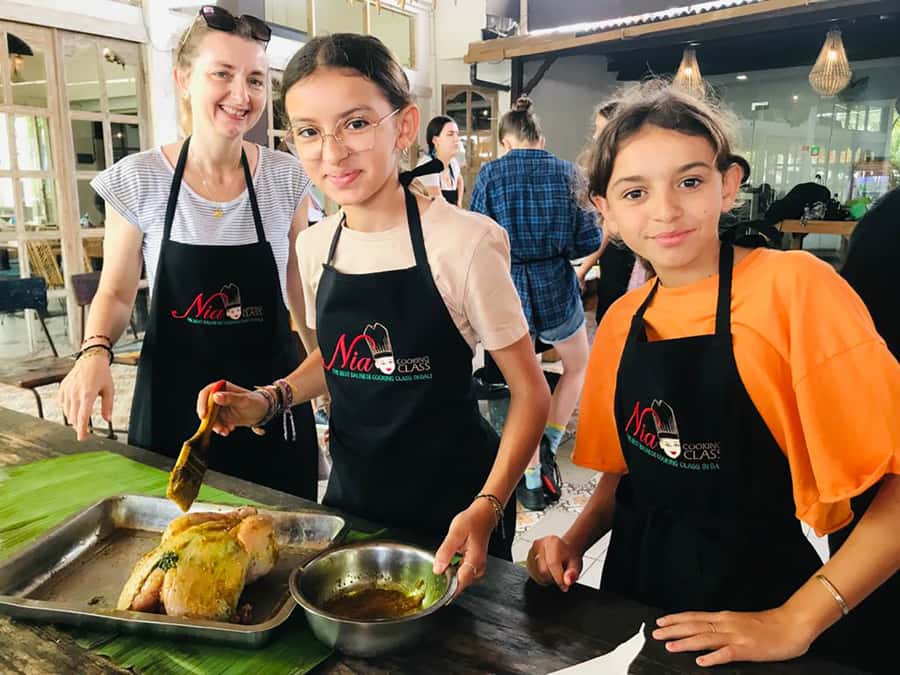
The best part of this Seminyak morning is that you do not begin with a printed recipe and a pile of mystery ingredients. You start at a local market, where your chef explains the herbs, spices, vegetables, fish, and meat that give Balinese food its character. Back at the cooking venue, you turn those ingredients into a full meal.
I like the hands-on format and the generous amount of food. You do real preparation, not just watch a demonstration, and the final meal can include six to twelve different items, depending on the session. I also like the practical recipe book, which includes tips for ingredient substitutions at home.
The main drawback is that the market visit can feel brief if you want a serious lesson in Balinese food shopping. The class is also popular, and the included pickup vehicle may feel crowded. Still, at $45 for four hours, the amount of cooking, food, instruction, and take-home material makes this a strong value.
Key points at a glance
- A market-first morning: Walk through a nearby market with your chef and identify the ingredients used in class.
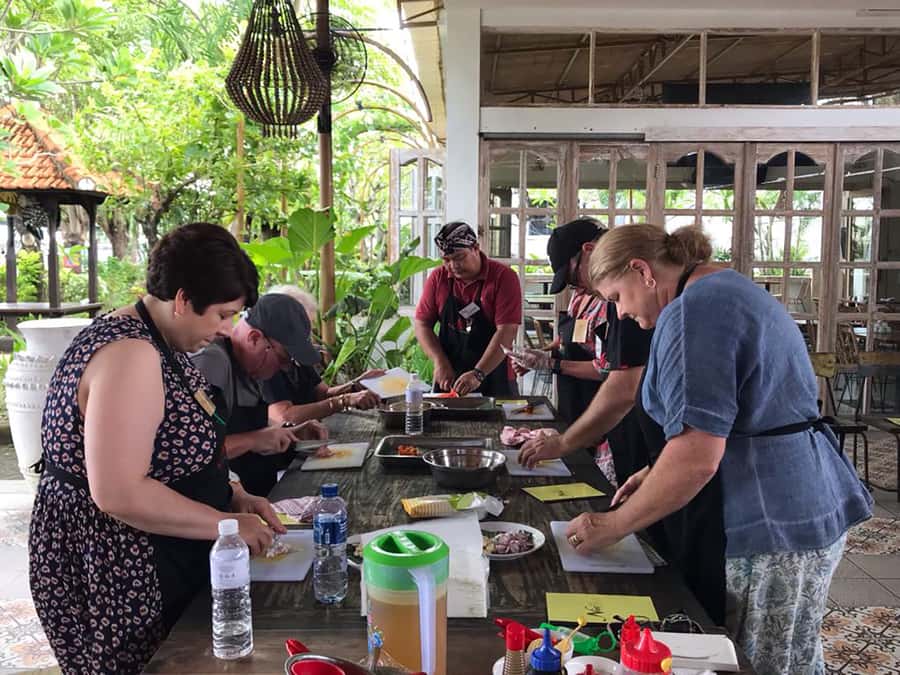
- Several dishes in one session: Prepare curry pastes, satays, vegetables, rice, fish, meat, and other Balinese or Indonesian dishes.
- Small-group support: Work at set stations with staff available to help rather than relying on one instructor alone.
- A banquet at the end: Sit down and eat the food you prepared, often far more than one person can finish.
- Useful souvenirs: Take home a recipe book and certificate, with some sessions also providing a short video through WhatsApp.
- Simple logistics: Hotel pickup is included from Seminyak, Legian, and Kuta at 8:00 AM, but there is no hotel drop-off.
Why the market visit matters
The morning starts with a trip to a local market near the cooking venue. If you are picked up from a hotel in Seminyak, Legian, or Kuta, the included transport brings you there at about 8:00 AM. If you stay outside those areas, you meet the group at Warung Nia on Jl. Kayu Aya in Seminyak.
This is not a long market expedition. Think of it as a useful introduction to the ingredients you will soon handle. Your chef takes you from stall to stall and points out local herbs, spices, fresh produce, fish, meat, and fruit. The valuable part is the explanation of purpose: which ingredients go into a spice paste, which ones add fragrance, and which are easy to replace once you are back home.
That advice can make Balinese cooking less intimidating. A recipe may call for ingredients that are difficult to find outside Indonesia, but the chef can suggest alternatives, often available at an Asian grocery store. You learn to look beyond a long ingredient list and understand the role each item plays.
The market is also the most direct connection to everyday food culture in this class. You see ingredients before they are chopped, mixed, and cooked. It gives you a better sense of why Balinese food depends so heavily on fresh aromatics and carefully prepared pastes.
I would like a little more time here. Several participants wanted a longer look at the market and more explanation of local shopping. If the market matters as much to you as the cooking, arrive with modest expectations. It is an orientation, not a dedicated market tour.
Wear comfortable shoes. You walk between stalls and may spend time standing. Leave large bags and luggage behind, since they are not allowed.
More Market Tour Cooking Classes in Indonesia
- Ubud: Cooking Class with Transfers and Optional Market Visit
★ 4.9 · 824 reviews - Balinese Ubud cooking school (9 Dish Cooking and Market Tour)
★ 5.0 · 540 reviews - Ubud: Balinese Cooking Class and Market Tour
★ 4.8 · 531 reviews
From curry pastes to a full Balinese meal
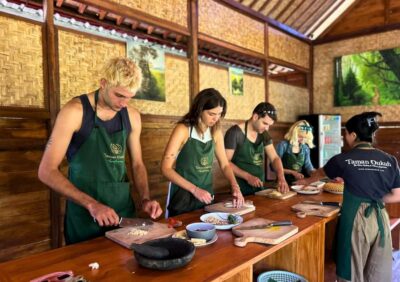
After the market, you return to the cooking venue and take your place at a prepared workstation. The setting is designed for participation. Ingredients and equipment are laid out, demonstrations are given in clear steps, and assistants help you move from one dish to the next.
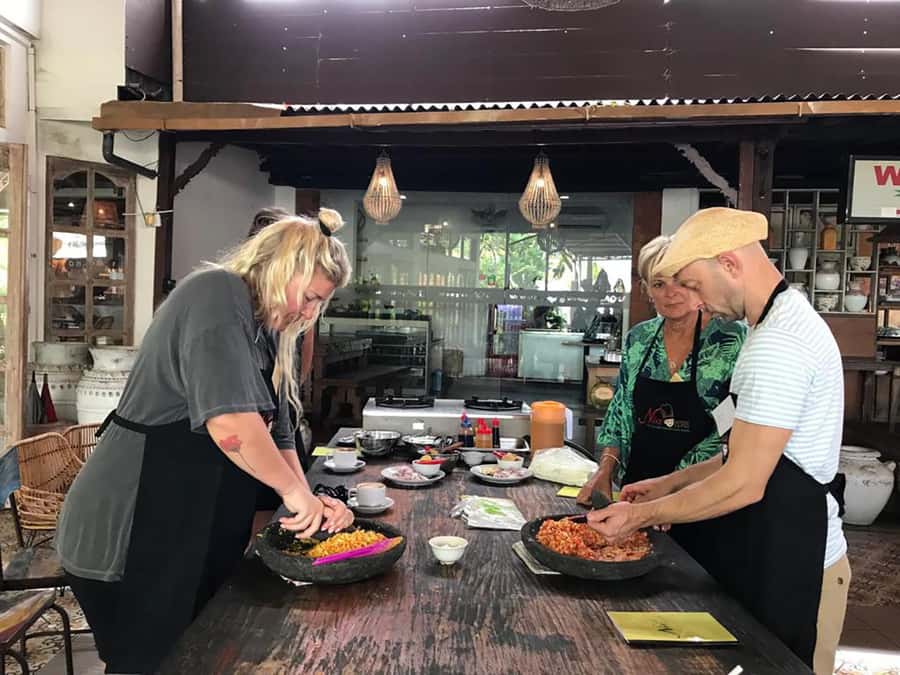
The exact menu can vary, but the amount of cooking is unusually generous for a four-hour class. Sessions have included four curry pastes followed by eight dishes, or roughly ten to twelve separate preparations. Other classes have made six or seven dishes. You might work with chicken, fish, pork, satay, vegetables, rice, and banana-leaf presentation.
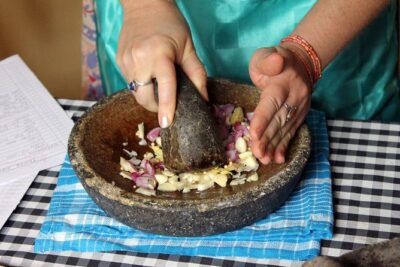
That variety is one of the strongest reasons to book. You are not spending the entire morning on one complicated dish. Instead, you get a taste of the larger Balinese cooking system: grinding or mixing spice pastes, preparing fresh ingredients, seasoning food, and handling different cooking methods.
The class is practical rather than precious. You learn knife technique, food preparation, and ways to balance seasoning. One instructor even impressed the group by detecting that a dish needed more salt simply by smelling it. That kind of small lesson is useful because it moves you beyond following instructions by numbers.
The English instruction has been clear and entertaining, with chefs such as Komang, Made, Tommy, Teddy, and Jim leading different sessions. Their style can vary, but the format gives you plenty of direct help. Komang, in particular, has been praised for encouraging every person to take part, while Made and Tommy have been noted for combining local information with humor.
You do not have to be an experienced cook. The recipes are set up for beginners, and the staff demonstrate each stage before you try it. At the same time, confident home cooks will find enough variety to stay interested.
Small stations and plenty of help
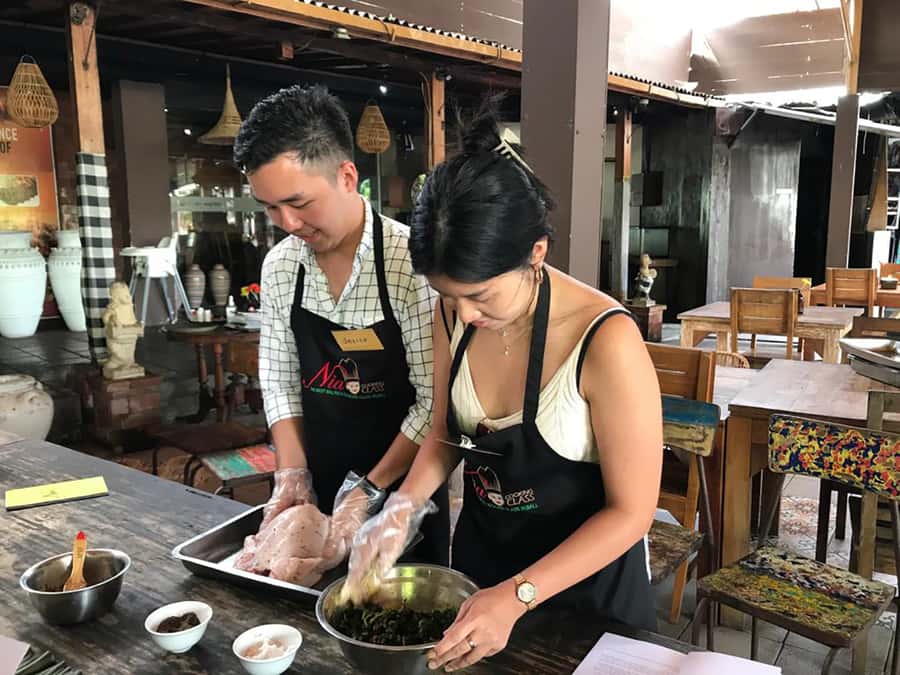
The class works best because the head chef is not left to manage every small task alone. Several assistants help with preparation, clear away completed ingredients, keep work areas tidy, and offer one-to-one guidance.
That matters in a cooking class with many dishes. Without support, you could spend half the session waiting for a knife, bowl, or answer. Here, the process is organized so the class keeps moving. When one part is finished, staff may take it away for cooking while you prepare the next item.
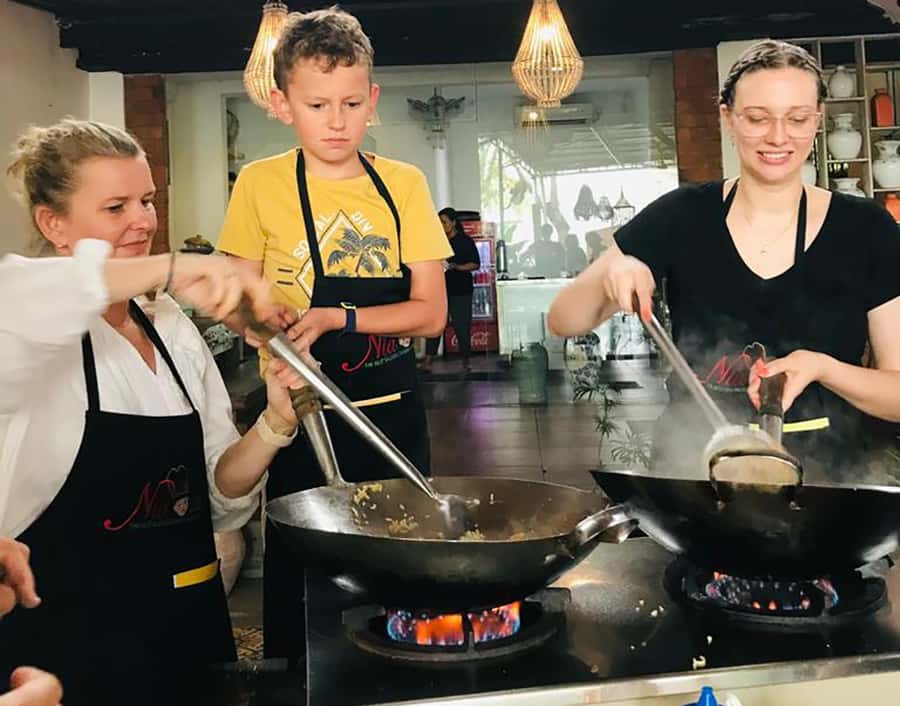
The small-group setup also makes a difference. You are not fighting for a place beside the instructor or trying to see a single cutting board from the back of the room. Workstations are arranged for groups, and the staff make an effort to involve solo participants, couples, families, and mixed-age groups.
Cleanliness receives regular attention. Staff clean the work areas between stages, and participants are reminded to wash their hands as the cooking progresses. That does not turn the class into a formal culinary school, but it creates a well-run environment for handling many ingredients.
The social side is easy to enjoy. You cook alongside other people, compare your results, and later share the meal. A solo visitor can join in without needing to arrive with a companion, while couples and families have enough work to do to keep everyone involved.
The one tradeoff is that a well-organized class can feel slightly choreographed. Staff prepare and remove ingredients quickly, so you may not spend long discussing every single dish. If you prefer a slow, deeply technical lesson, this may feel brisk. If you want to cook a lot in four hours, the pace works in your favor.
The reward is a Balinese banquet
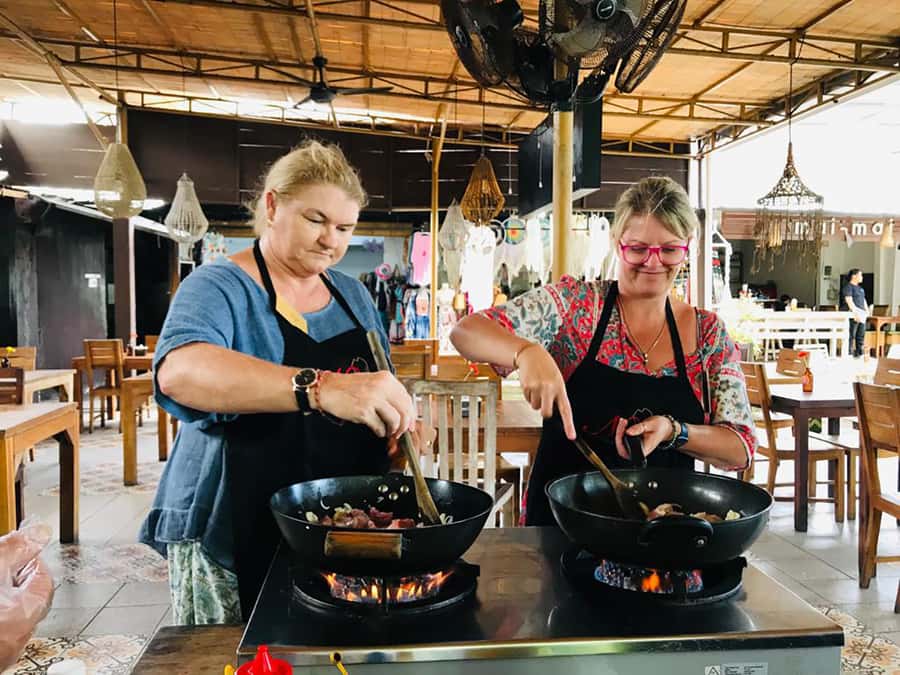
Once the cooking is finished, you sit down and eat what you made. This is more than a small tasting. The portions can add up to a full banquet, and many people find they cannot finish everything.
I consider this a major part of the value. You learn a dish, then immediately taste how the ingredients work together. You can compare the fresh pastes, satays, curries, vegetables, and other preparations while the instructions are still fresh in your mind.
The meal also gives the class a natural ending. After several hours of chopping and cooking, you are not hurried back into a vehicle. You sit with the group, enjoy the food, and talk about the morning. Some sessions have also included a voucher for a future visit to the restaurant, though you should confirm what is offered when booking.
Do not eat a large breakfast before you arrive. The class includes morning tea, and the food prepared during the session is substantial. The meal is part of the tour, not an afterthought.
One practical point: the menu is not presented as a fixed restaurant order in the information provided. The number and mix of dishes can change, so book this for the cooking format and broad Balinese menu rather than for one particular recipe.
More Balinese Cooking Classes in Indonesia:
- Ubud: Balinese Cooking Class at an Organic Farm
★ 5.0 · 1,786 reviews - Ubud Cooking Class Bali with Balinese Chef
★ 5.0 · 1,609 reviews - PRIVATE Authentic Balinese Cooking Class in Ubud at Putu’s Home
★ 5.0 · 644 reviews - Balinese Farm Cooking Class by Pemulan Bali
★ 5.0 · 410 reviews
The recipe book is more useful than a souvenir
A certificate of completion is included, but the recipe book is the item I would value most. It gives you a way to repeat the morning after your Bali trip, and the recipes are intended to be manageable outside Indonesia.
The best advice comes from the notes on substitutions. You may not find every Balinese ingredient at a regular supermarket back home, but the class explains which items can be sourced at an Asian grocery store and what alternatives can work. That makes the recipes more realistic than a souvenir booklet filled with ingredients you will never see again.
You also learn presentation ideas, including the use of banana leaves. These small details help recreate the feel of the meal without requiring a professional kitchen.
Some sessions have included a short video sent through WhatsApp. Treat that as an added benefit rather than a guaranteed part of every booking, since it is not listed among the standard inclusions.
Price, transport, and the four-hour schedule
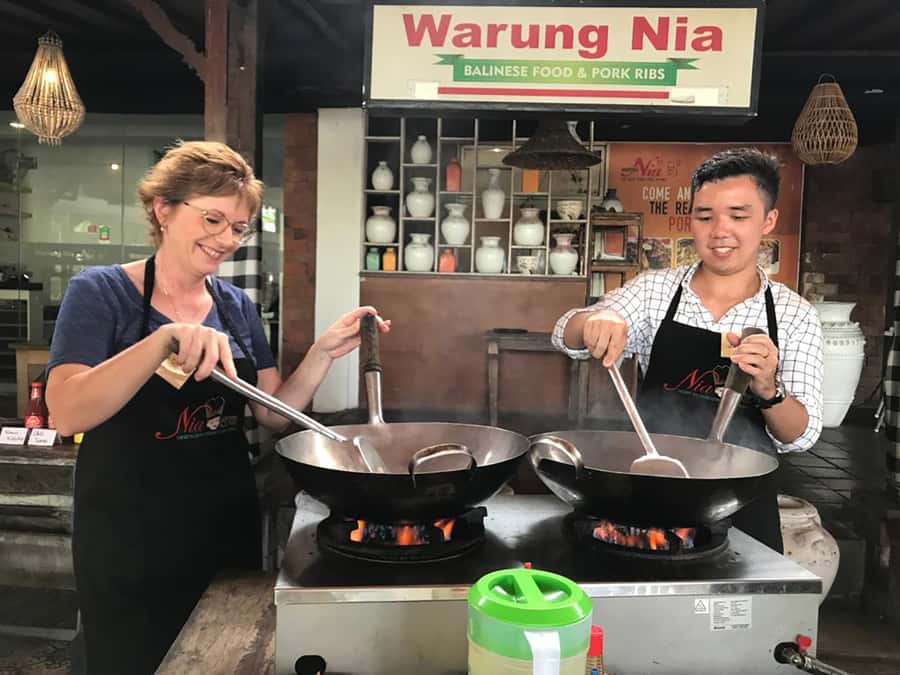
At $45 per person, this is good value if you want more than a demonstration. The price covers hotel pickup in Seminyak, Legian, and Kuta, the market tour, the cooking class, all ingredients, morning tea, the meal, and a certificate.
The strongest value comes from the food volume and staff support. A class that teaches several dishes and feeds you a large lunch can cost much more in other destinations. Here, you also receive a recipe book and a market introduction.
The included pickup is convenient, especially for an early start. However, one vehicle was described as overcrowded, and you may find it easier to walk if your hotel is close to the venue. Hotel drop-off is not included, so plan your return from Warung Nia after the class.
The meeting point is Warung Nia, Jl. Kayu Aya Square, No. 19-21, Jl. Kayu Aya, Seminyak. If you are not staying in the listed pickup zones, you need to make your own way there.
The full activity lasts four hours. That is enough time for a market introduction, hands-on preparation, and the final meal, but not enough for a leisurely market study plus a slow, advanced cooking course. I would set aside the whole morning and avoid scheduling another activity immediately afterward.
Free cancellation is available up to 24 hours before the start, and you can reserve now and pay later. Availability and starting times should be checked for your date.
Who will enjoy this class most
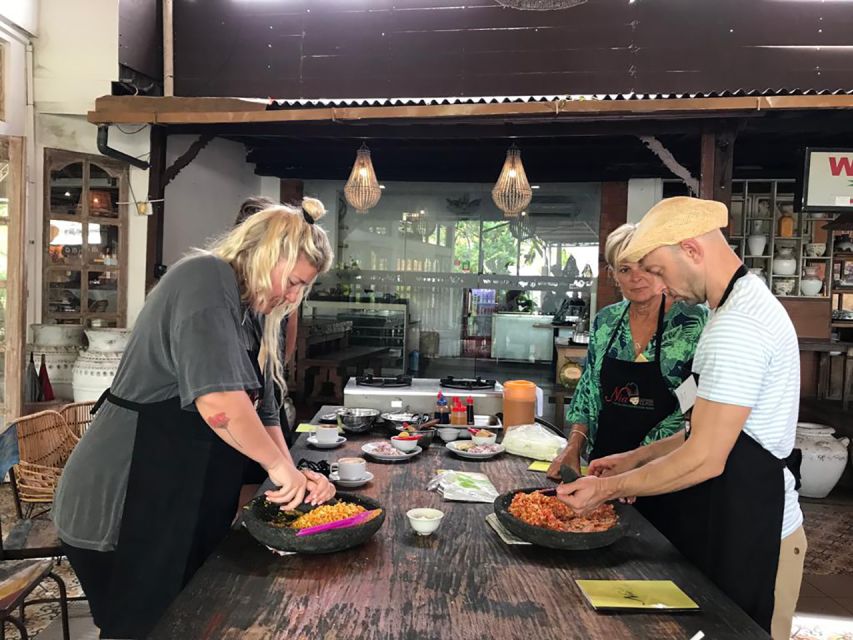
I would recommend this to first-time visitors who want a friendly introduction to Balinese food without committing to a full day. It also suits couples, families, solo participants, and small groups of friends.
You will get the most from it if you enjoy doing things rather than only watching. The class involves chopping, mixing, preparing, and tasting. It is also a good rainy-morning option, although heavy rain can affect the market portion. One participant skipped the market because of pouring rain and still found the cooking class worthwhile.
This is less suitable if you want a quiet, private lesson. You share the room and meal with other cooks, and the class has a social feel. It may also disappoint serious market enthusiasts who want long conversations with individual vendors.
Families should note that comfortable clothes and shoes are recommended. Large bags and luggage are not allowed. The English-language format makes the instructions accessible to English speakers, but no other language is listed.
Should you book the Seminyak cooking class?
I would book it if you want a practical, food-focused morning with a strong chance of eating well afterward. The combination of market visit, hands-on cooking, multiple dishes, helpful assistants, and take-home recipes gives you more substance than a simple demonstration.
I would book it especially early in your Bali stay. You can use the market tips and spice lessons during the rest of your visit, then decide which recipes to recreate at home.
The only reasons to skip it are a desire for a longer market tour, a private class, or a slower advanced lesson. For most people staying in Seminyak, the $45 price buys a sociable and useful introduction to Balinese cooking, with enough food to count as lunch and enough instruction to keep the memory alive after you leave Bali.
FAQ
How long is the Balinese cooking class and market tour?
The activity lasts four hours. It includes the market visit, cooking instruction, and a meal made from the dishes you prepare.
Is hotel pickup included?
Pickup is included from hotels in Seminyak, Legian, and Kuta at 8:00 AM. Hotel drop-off is not included.
Where do I meet the group if I stay outside Seminyak, Legian, or Kuta?
The meeting point is Warung Nia, Jl. Kayu Aya Square, No. 19-21, Jl. Kayu Aya, Seminyak.
What language is the class taught in?
The class is taught in English by an English-speaking instructor.
What should I bring?
Wear comfortable clothing and comfortable shoes. Large bags and luggage are not allowed.
What do I take home after the class?
You receive a recipe book and a certificate of completion. All cooking ingredients, the market tour, cooking class, and morning tea are included in the price.
More Hands-On Workshops in Indonesia
- From Ubud: Authentic Cooking Class in a Local Village
★ 4.9 · 1,325 reviews - Learn to cook Indonesian food at Gili Cooking Classes Trawangan
★ 5.0 · 352 reviews - Balinese Cooking Class in Seminyak
★ 5.0 · 281 reviews - Anggrek Putih Lombok Cooking Class
★ 5.0 · 253 reviews
More Shopping Trips in Indonesia
- Balinese Cooking class with traditional morning market visit
★ 5.0 · 161 reviews - Jambangan bali cooking class with morning market tour
★ 5.0 · 35 reviews - Bali: Balinese Cooking Class and Market Tour
★ 4.8 · 19 reviews - Balinese cooking class/Go shopping at the market, cook, eat
★ 5.0 · 12 reviews
Just added around Indonesia
- Spice Garden, Jamu & Cooking Class in Bali Village★ 5.0 · 5 reviews
- Pure Bali Village Experience, Cooking & Jamu Class+VIP Transfer★ 5.0 · 16 reviews
- The Authentic Balinese Cooking Experience★ 5.0 · 4 reviews
- Bali: Cooking Class with 5 Balinese Dishes★ 4.9 · 178 reviews
- Seminyak: Vegetarian Cooking Class★ 5.0 · 3 reviews
- Seminyak : cooking class traditional food bali★ 5.0 · 5 reviews
- Pure Bali Village Experience Cooking & Jamu Class, Transfer★ 4.8 · 5 reviews
- Quad ride, waterfalls & aunthentic cooking class in munduk★ 4.9 · 53 reviews
Balinese & Indonesian Cooking Classes, compared.
Ubud: Balinese Cooking Class at an Organic Farm
Read our review →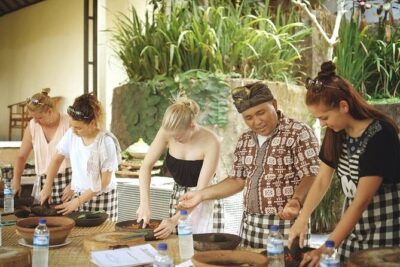
PRIVATE Authentic Balinese Cooking Class in Ubud at Putu’s Home
Read our review →
Balinese Ubud cooking school (9 Dish Cooking and Market Tour)
Read our review →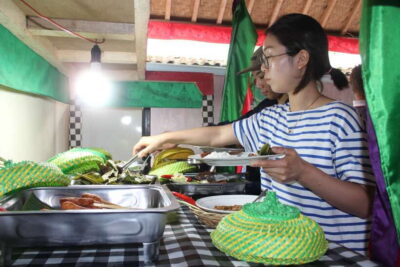

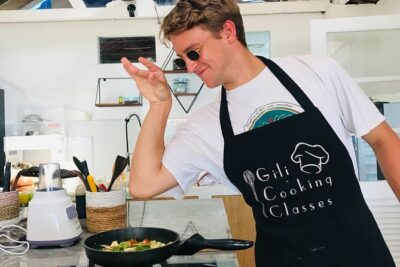
Learn to cook Indonesian food at Gili Cooking Classes Trawangan
Read our review →
Browse the lists this tour appears in