Review · UBUD
Balinese cooking class/Go shopping at the market, cook, eat
The best part of this Balinese cooking class happens before the first pot reaches the stove: you visit a local market, choose fresh ingredients, then turn them into a full home-style meal. By the end, you have cooked dishes such as coconut curry, satay, soup, and gado gado, not just watched someone else do it.
I like the hands-on format, since everyone gets involved with the ingredients and tools. I also like the useful recipe booklet, which gives you a fair chance of making the food again after Bali. The main drawback is that the market visit belongs to the morning class only, so the afternoon option is less complete.
At a glance
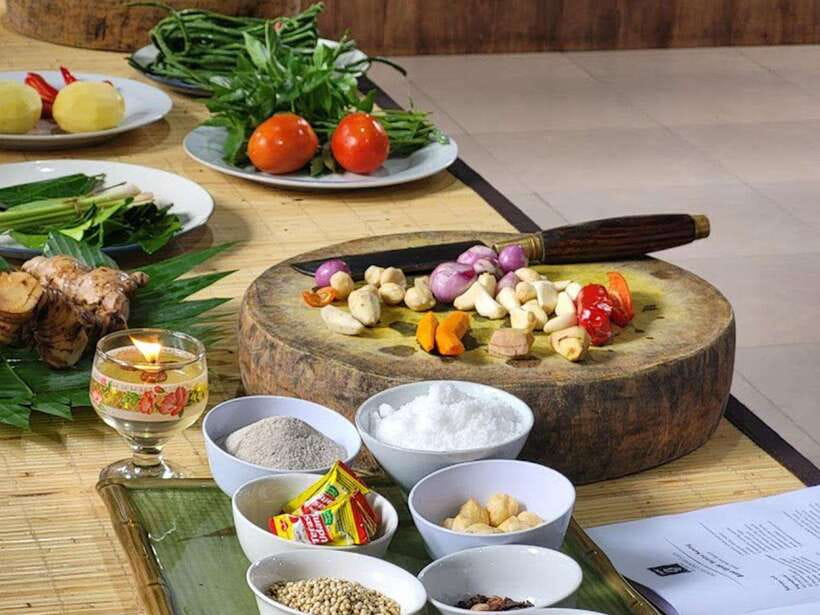
- Nine Balinese dishes in one class: Prepare a broad selection, from banana compote and mushroom soup to chicken curry, satay, and gado gado.
- Morning market stop: Select vegetables, fruit, herbs, meat, and spices before cooking begins.
- Normal or vegetarian menu: Choose the style that fits your diet when booking.
- Lunch or dinner timing: Pick a morning class with lunch or an afternoon class with dinner.
- Hotel pickup and return: Transfers cover Nusa Dua, Jimbaran, Kuta, Legian, Seminyak, Kerobokan, Canggu, Sanur, and Ubud.
- Recipes to take home: The class gives you a recipe booklet, turning a pleasant day into a practical souvenir.
Why this class is more than a meal
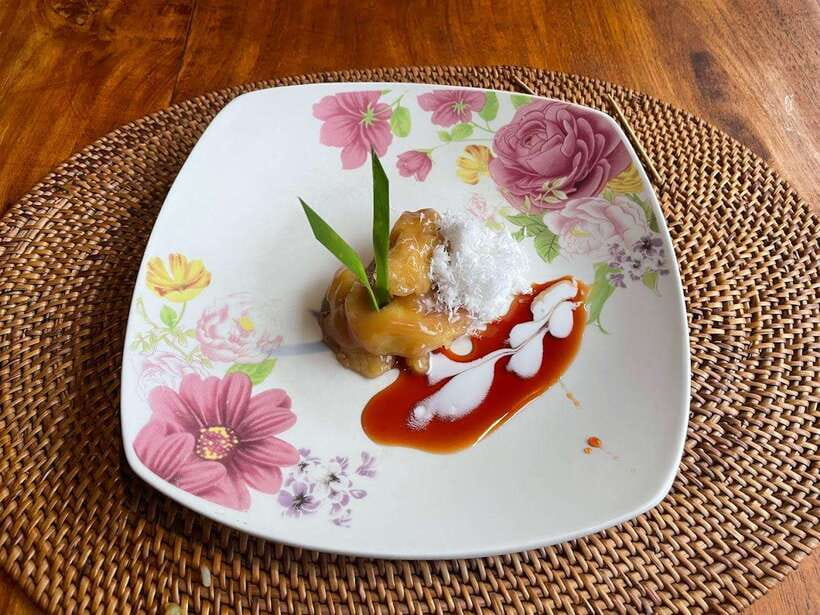
Many food activities in Bali put you in front of a finished plate. This one gives you the whole chain: market ingredients, preparation, cooking, and eating. I like that progression because it helps you understand how Balinese food comes together instead of treating each dish as a mystery.
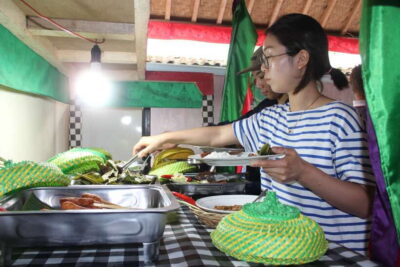
The morning market visit is especially useful. You select the vegetables, fruit, herbs, meat, and spices that will later appear in the meal. That small step adds context to the cooking and gives you a better sense of the ingredients used in ordinary Balinese kitchens.
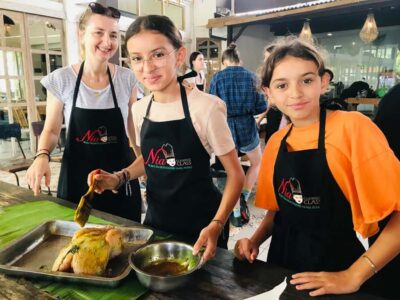
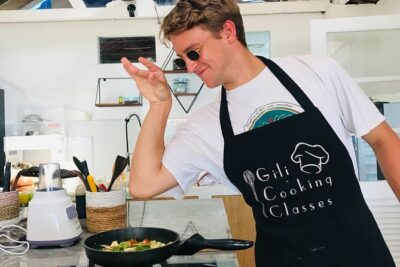
The class suits families, friends, couples, and solo visitors who enjoy doing things together. It is not presented as a formal culinary qualification. You are there to cook, ask questions, share tasks, and eat what you make. The supplied tools and ingredients mean you do not need to carry anything special.
The class has a top rating from 12 reviews, with specific praise for the food, the teaching, the market stop, transport, and the recipe booklet. One particularly useful detail is that the cooking takes place on a patio, which gives the activity a more open, relaxed setting than a tight indoor kitchen.
More Market Tour Cooking Classes in Indonesia
- Ubud: Cooking Class with Transfers and Optional Market Visit
★ 4.9 · 824 reviews - Balinese Ubud cooking school (9 Dish Cooking and Market Tour)
★ 5.0 · 540 reviews - Ubud: Balinese Cooking Class and Market Tour
★ 4.8 · 531 reviews
Choosing the morning market and lunch option
The morning schedule starts with hotel pickup between 7:00 and 8:00. The exact pickup time depends on your location and availability, so you should check the booking details rather than assume a fixed start.
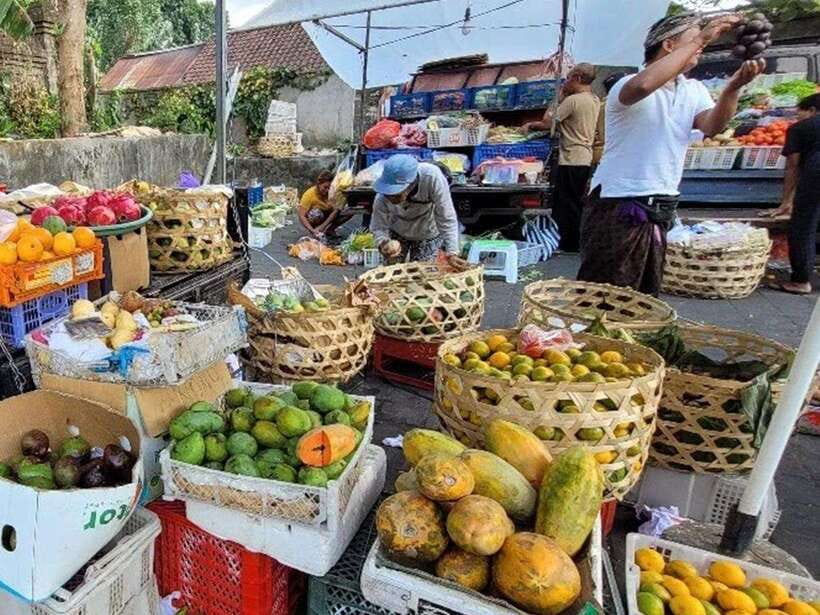
The market comes first. You walk through a local fresh food market and select ingredients for the dishes ahead. This is the most distinctive part of the morning option, since you see the raw materials before they become lunch.
Expect to encounter the basic building blocks of Balinese cooking: vegetables, fruit, herbs, meat, and spices. The supplied information does not name a particular market or promise a cooking demonstration at each stall, so I would view this as a practical ingredient-shopping stop rather than a long market tour.
After shopping, you move to the cooking session. The instructor explains how to prepare Balinese dishes, and you take part rather than simply watch. The teaching is available in English, Indonesian, or Japanese, which makes this a useful choice for groups with different language needs.
The meal includes several dishes, so the morning feels like a full half-day activity rather than a single-recipe workshop. Once the food is ready, you eat together for lunch. The return transfer then takes you back to your hotel.
I would choose this option if food is one of your main reasons for visiting Bali. You get the extra market visit, an earlier start, and lunch at the end. The tradeoff is the early pickup, especially if your hotel is in a distant part of the service area.
What happens in the afternoon session
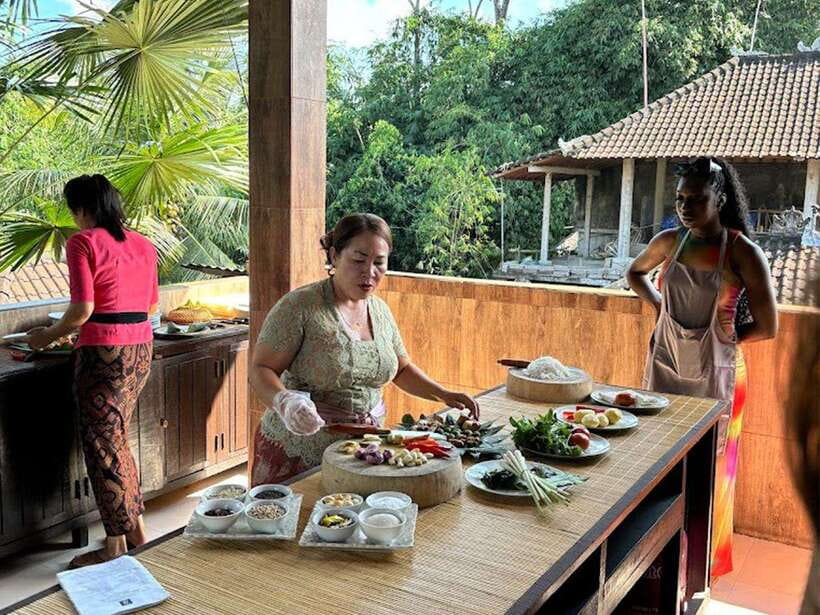
The afternoon option includes hotel pickup between 13:00 and 14:30, followed by the cooking class and dinner. The market visit is listed for the morning class only, so you should not book the later session expecting the same shopping stop.
This option works well if you prefer a slower start to the day or already have a morning plan. You still receive the cooking instruction, ingredients, tools, shared meal, and return transfer. Dinner gives the class a natural finish, particularly if you want one organized evening activity instead of another restaurant meal.
The precise cooking start time can vary, so check availability before booking. The full activity lasts about six hours, including transportation and the class program. That is a substantial block of time, but it also means you are not being rushed through nine dishes.
For me, the afternoon class is the better fit for visitors who dislike early mornings. The morning class offers more of the complete food experience, though, because the market adds a clear sense of place and purpose.
The nine-dish menu, from sweet to savory
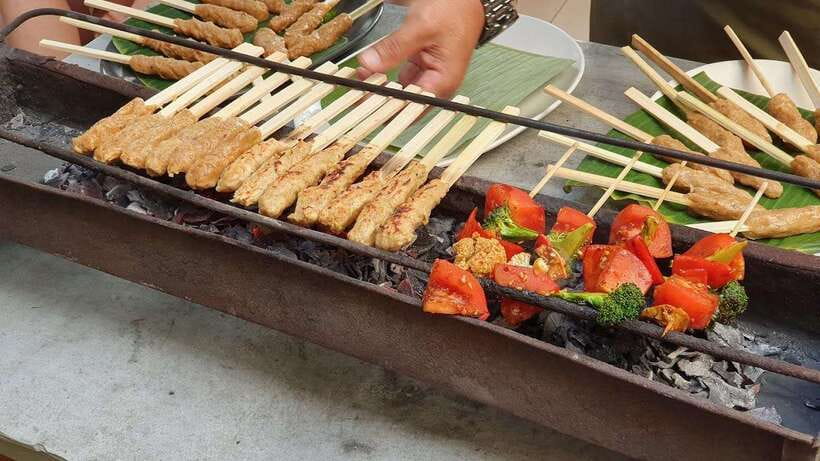
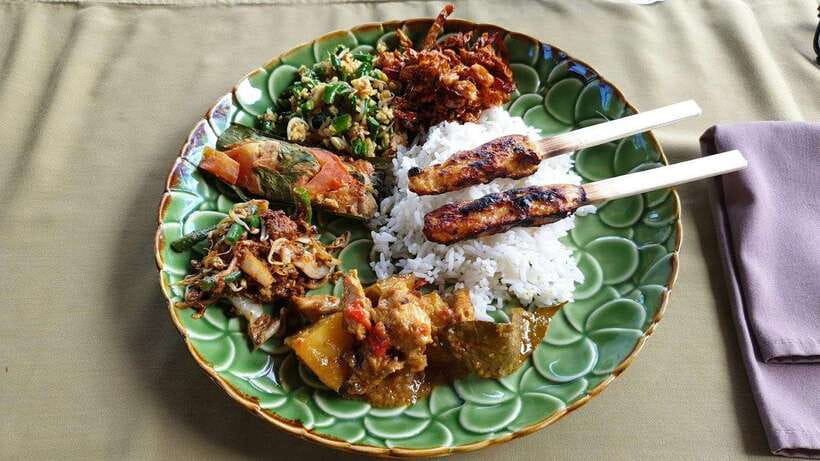
The menu gives you a broad introduction to Balinese flavors. You are not spending six hours learning one complicated dish. Instead, you prepare a spread with different textures, cooking methods, and ingredients.
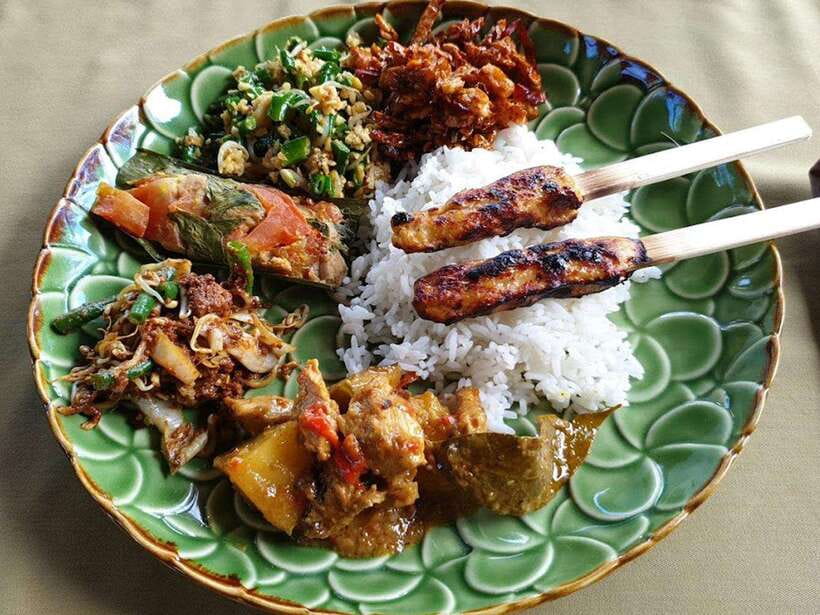
Kolak Pisang is a banana compote, giving the meal a sweet finish. It is a useful reminder that a Balinese cooking class does not stop with savory food.
Bumbu Kuning means yellow spices. This preparation introduces the spice mixture used to build flavor in other dishes. Learning the seasoning base may be one of the most useful parts of the class, since it can help you understand why several dishes taste connected.
Sup Jamur is mushroom and vegetable soup. It provides a lighter item beside the richer dishes and gives you practice with a simple soup preparation.
Kare Ayam is chicken coconut curry. Coconut and spices make this the sort of dish many people hope to learn in Bali, and preparing it yourself lets you see how the sauce develops.
Pepes Ikan is steamed fish wrapped in banana leaves. This is one of the more distinctive techniques on the menu. The banana leaf is part of the cooking method, not merely decoration, and it gives the dish a clear connection to traditional kitchen practice.
Jukut Urab combines coconut and snake beans in a salad. The dish adds a fresh vegetable element to the meal and keeps the final spread from becoming a parade of curries and grilled food.
Sate Lilit Ayam is listed as grilled fish meatball skewers in the supplied menu, despite the word Ayam, which commonly refers to chicken. Since the description uses both terms, you should confirm the exact protein and preparation with the instructor if this matters to you.
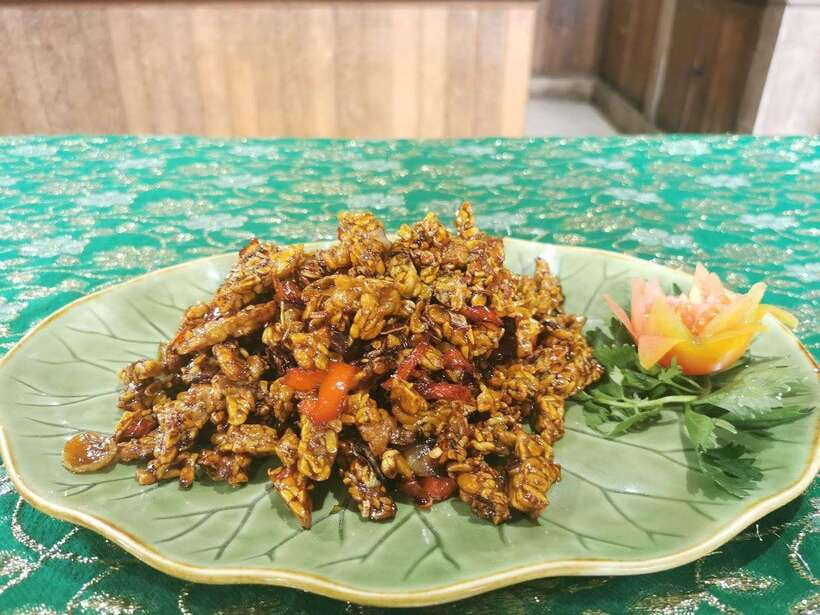
Tempe Kering is sweet and salty tempeh stir-fried with seasoning. This gives vegetarians a substantial dish and introduces a familiar Indonesian ingredient in a crisp, savory form.
Gado Gado is warm vegetables with sweet and spicy peanut sauce. It is a well-known Indonesian-style combination and adds a creamy, nutty element to the meal.
The menu is generous. You will not leave having learned only one signature recipe, but nine dishes can also feel like a lot to absorb in one day. The recipe booklet matters here. I would keep it handy during the class and mark the dishes you most want to repeat at home.
More Market Tour Cooking Classes in Ubud
- Balinese Cooking class with traditional morning market visit
★ 5.0 · 161 reviews - Jambangan bali cooking class with morning market tour
★ 5.0 · 35 reviews
Normal or vegetarian: choose before you cook
You can choose between the normal and vegetarian versions. This makes the activity easier to recommend to mixed groups, since not everyone needs to follow the same menu.
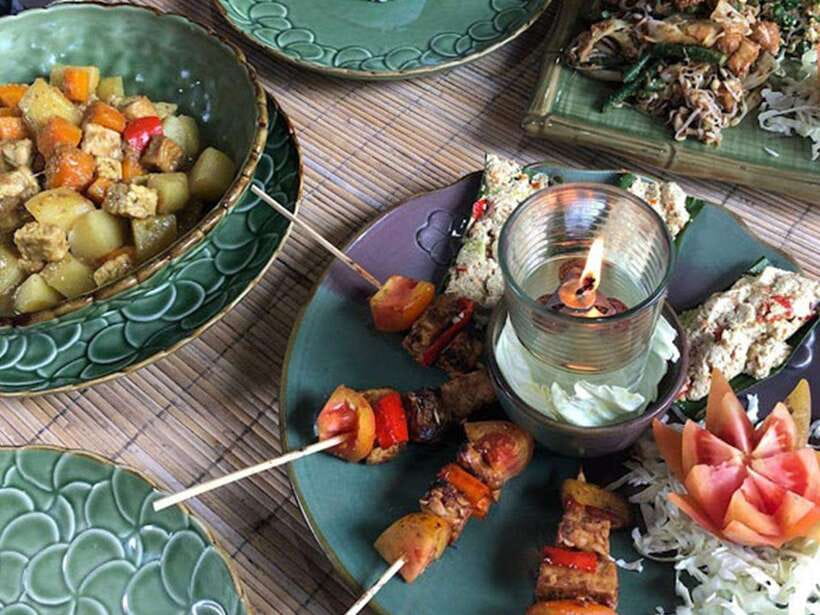
The vegetarian choice is not just a side salad added to a meat-based class. The listed menu already includes mushroom soup, tempeh, gado gado, vegetables, coconut, and banana compote. Still, some menu names and descriptions are not perfectly aligned, so you should state your preference clearly when booking and confirm the final substitutions with the instructor.
For meat eaters, the menu includes chicken, fish, and other savory ingredients. For vegetarians, the class offers enough variety to create a complete meal. The provided information does not specify vegan, allergy-safe, gluten-free, or nut-free adaptations, so you should not assume those options are available without checking first.
A relaxed cooking setup with real participation
The class provides the materials and tools, so you can arrive empty-handed. That is practical for a day of sightseeing, especially if you are moving between hotels or do not want to pack cooking equipment.
The cooking takes place on a patio, according to one detailed account of the experience. I like that setting because a shared cooking class should feel social rather than clinical. You can work alongside family or friends, then sit down and eat the result together.
The instructor is described as thorough and personable, and the teaching is offered in English, Indonesian, or Japanese. You should still check the language available for your selected date if that is important to your group.
This is a hands-on class, but the information does not specify the exact number of participants in a standard group. A private group is available, which is worth considering if you want more control over the pace or prefer not to cook with people outside your party.
Hotel transfers cover much of southern Bali and Ubud
Round-trip hotel transfer is included, with pickup and drop-off listed for Nusa Dua, Jimbaran, Kuta, Legian, Seminyak, Kerobokan, Canggu, Sanur, Ubud, and Kuta Selatan. You wait in your hotel lobby for pickup.
The transfer is a major part of the value. Bali traffic can make a cooking class difficult to reach on your own, and arranging a taxi in both directions adds cost and planning. A driver who speaks English and Indonesian is included, and the instructor language options also include Japanese.
If your accommodation is outside the listed areas, contact the provider before booking. Different-area pickup may be possible, but it is not automatically included in the stated coverage.
The long pickup window reflects the fact that hotels are spread across Bali’s main resort zones. Keep your schedule open around the stated time, and do not arrange a tightly timed flight, ferry, or separate tour immediately afterward.
Is $35 a good value?
At $35 per person, the price covers a six-hour activity, cooking school fees, ingredients and tools, the meal you prepare, a recipe booklet, an English or Indonesian-speaking driver, and round-trip hotel transfer. Japanese instruction is also listed among the available languages.
That is good value if you would otherwise pay separately for transportation and a restaurant meal. You are also getting several recipes rather than a short demonstration followed by a tasting plate.
The value is strongest for the morning class because it adds the market stop. The afternoon class can still make sense, especially if its timing fits your plans, but the market is the feature that gives the day more local texture.
The class is less attractive if you want a quick activity or dislike group cooking. Six hours is a serious commitment, and preparing nine dishes may feel long if your main goal is simply to eat Balinese food. If you enjoy practical activities and want recipes to recreate at home, the price is easier to justify.
Who should book this experience?
I would recommend it to families because cooking gives children and adults a shared task, though the supplied information does not specify a minimum age. Friends can divide the menu and compare results, while couples get a relaxed activity with a meal built into it.
It also suits food-focused visitors who want more than restaurant recommendations. The market visit, spice preparation, banana-leaf steaming, coconut dishes, and peanut sauce offer a useful window into how the food is assembled.
Vegetarians should consider it, but confirm the final menu and ingredients first. Japanese-speaking visitors may also find the language option helpful.
I would think twice if you have limited time in Bali, want a polished professional kitchen demonstration, or need strict dietary guarantees. Those details are not provided, so ask before committing.
You can cancel up to 24 hours in advance for a full refund, and the reserve-now, pay-later option keeps your plans flexible. Those terms are useful when you are still adjusting a Bali itinerary.
Should you book the Balinese cooking class?
Book it if you want a practical cultural activity, a generous meal, and recipes you can use after Bali. The morning class is my first choice because the local market gives the day a stronger sense of place.
Choose the afternoon class if you value a later start more than the market visit. At $35, both options offer solid value for a six-hour program with transport, instruction, food, and recipes.
The only real caution is the amount of cooking. Nine dishes is ambitious, and the schedule may feel full. For most people who like to work with food, though, that is also the point: you return to your hotel fed, carrying a recipe booklet, and with a better understanding of Balinese home cooking.
FAQ
How long does the Balinese cooking class last?
The activity lasts about six hours, including the scheduled program and hotel transfers.
Does the morning class include a market visit?
Yes. The morning class begins with a visit to a local fresh food market to select ingredients. The afternoon class does not list a market visit.
What meal options are available?
You can choose between a normal menu and a vegetarian menu.
Is hotel pickup and return included?
Yes. Round-trip hotel transfers are included. Pickup areas listed include Nusa Dua, Jimbaran, Kuta, Legian, Seminyak, Kerobokan, Canggu, Sanur, Ubud, and Kuta Selatan.
What languages are available?
The instructor languages are English, Indonesian, and Japanese. An English and Indonesian-speaking driver is included.
Can I cancel the booking?
You can cancel up to 24 hours in advance for a full refund. The activity also offers a reserve-now, pay-later option.
More Food Experiences in Ubud
- Small Group Cooking Class & Market Food Tour in Florence
★ 5.0 · 1,574 reviews - Athens: Food Market Visit and Cooking Class with Wine
★ 4.9 · 1,087 reviews - Undiscovered Charleston: Half Day Food, Wine & History Tour with Cooking Class
★ 5.0 · 948 reviews - Vietnamese Food Cooking Class in Hanoi with Market Experience
★ 5.0 · 778 reviews
More Balinese Cooking Classes in Ubud
- Ubud Cooking Class Bali with Balinese Chef
★ 5.0 · 1,609 reviews - PRIVATE Authentic Balinese Cooking Class in Ubud at Putu’s Home
★ 5.0 · 644 reviews - Balinese Farm Cooking Class by Pemulan Bali
★ 5.0 · 410 reviews - Balinese Authentic Cooking Class in Ubud
★ 5.0 · 239 reviews
Just added around Ubud
- The Authentic Balinese Cooking Experience★ 5.0 · 4 reviews
- Ubud: Organic Farm Harvest, Bali Cooking Class by Pemulan★ 4.8 · 12 reviews
- packages cooking class and romantic dinner in a local home★ 5.0 · 4 reviews
- Jambangan bali cooking class with morning market tour★ 5.0 · 35 reviews
- Ubud: Balinese Cooking Class with Hotel Transfers★ 4.8 · 17 reviews
- Balinese Cooking class with traditional morning market visit★ 5.0 · 161 reviews
- Balinese Cooking Class at Organic Farm★ 5.0 · 51 reviews
- Small-Group Farm Tour & Balinese Cooking Class in Ubud with Kadek★ 5.0 · 16 reviews
Balinese & Indonesian Cooking Classes, compared.
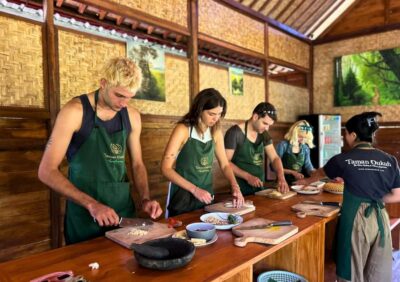
Ubud: Balinese Cooking Class at an Organic Farm
Read our review →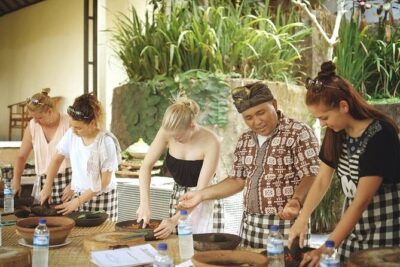
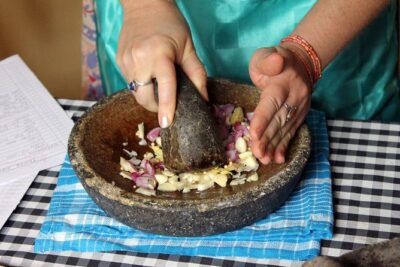
PRIVATE Authentic Balinese Cooking Class in Ubud at Putu’s Home
Read our review →
Balinese Ubud cooking school (9 Dish Cooking and Market Tour)
Read our review →