Review · UBUD
Balinese Cooking Class at Organic Farm
The best part of this class happens before you touch a cooking pot: you walk through Mai Organic Farm and pick the herbs, vegetables, and fruit that will become your lunch. That simple step turns a cooking lesson into a look at how food, farming, and village life connect in Bali. You may also taste fruit straight from the plant and smell spices you have never encountered fresh.
I like the small-group format, which keeps the work hands-on rather than turning you into an observer. I also like the traditional wood-fired stove, a practical detail that gives the meal a real sense of place. The main consideration is the weather, since much of the experience takes place outdoors and the class may be rescheduled or refunded if conditions are poor.
Key points to know
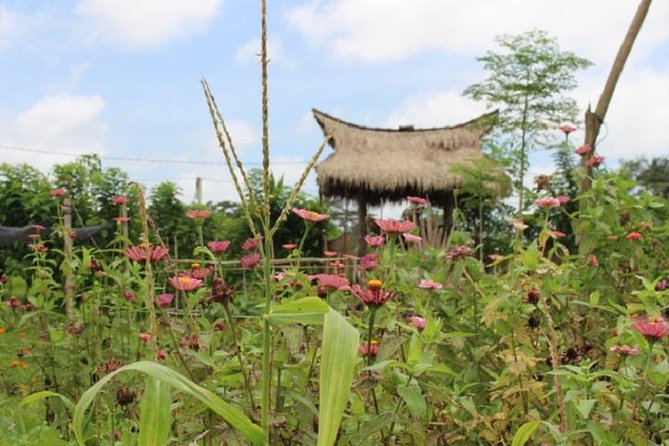
- Farm-to-table from the first hour: You collect ingredients in the fields before preparing lunch.
- Six Balinese dishes: The menu includes specialties such as tuna sate, sate lilit, and corn fritters.
- Traditional cooking setup: Food is prepared with outdoor fire cooking, including a wood-fired stove and grill.
- Drinks are part of the experience: Expect fresh juice, infused water, herbal drinks, Balinese coffee, and lemongrass tea.
- Community-focused visit: Your payment supports local farmers and villagers in Pejeng.
- Central Ubud pickup: Round-trip transfers are offered from central Ubud hotels and rentals, while the class itself takes place at the farm in Pejeng.
Why the farm visit matters more than a standard cooking class
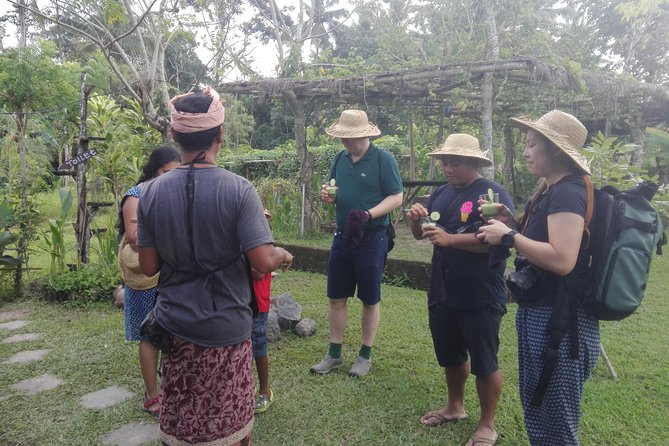
Many cooking classes begin with a chopping board and a printed recipe. This one begins in the garden. At Mai Organic Farm, you first receive a welcome drink and settle into a shaded area while the team explains its community farming work and the way organic produce is grown.
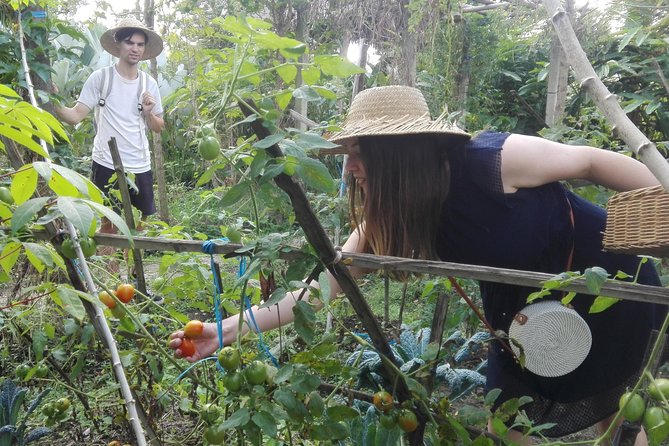
Then you walk through the farm to collect ingredients for the meal. This is not just a pleasant pause before the cooking starts. It helps you understand the ingredients as living plants rather than anonymous items from a market stall. You might taste a banana from the tree, examine herbs at their source, and smell spices while they are still growing.
The farm also gives the class a useful cultural setting. You learn about Bali’s subak irrigation system, a cooperative method of managing water for agriculture that has UNESCO World Heritage recognition. The point is not a long academic lecture. Instead, the farming explanation shows how food production depends on community cooperation, shared water, and careful use of the land.
I find this part especially valuable if you have already seen temples and rice terraces around Ubud but want a closer look at daily rural life. You are not simply looking at scenery from a roadside. You are learning how local produce reaches the cooking area and how a community tries to support its farmers.
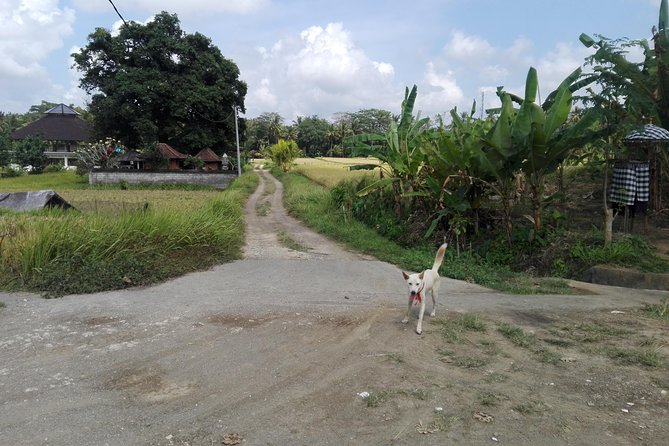
The farm is outside Ubud, in Pejeng, so you should expect a rural setting rather than a polished restaurant classroom. That is part of the appeal, but it also means you should be comfortable with walking around an outdoor farm and spending several hours in an open-air environment.
More Farm Cooking Classes in Indonesia
- Balinese Farm Cooking Class by Pemulan Bali
★ 5.0 · 410 reviews - From Ubud: Authentic Bali Farm Cooking School & Organic Farm
★ 5.0 · 122 reviews - Small-Group Farm Tour & Balinese Cooking Class in Ubud with Kadek
★ 5.0 · 16 reviews
The welcome drinks set the tone
The class starts with a welcome drink in a shaded part of the farm. Fresh coconut water is mentioned as part of the arrival experience, and the wider drink selection includes juice, infused water, herbal drinks, Balinese coffee, and lemongrass tea.
The fresh drinks are more than a free extra. They fit the farm setting and give you an early taste of the produce before you begin preparing lunch. A vegetable and fruit juice made from local farm ingredients follows the garden walk, helping refresh you before the cooking begins.
Coffee and lemongrass tea add another small cultural touch. If you are comparing this class with a shorter lesson that includes only food, the range of drinks helps explain some of the value in the five-hour schedule. You are given time to sit, talk, taste, and learn instead of being rushed from one recipe to the next.
Families should also note that children can take part in the experience. A family with children aged six and nine found the farm walk and ingredient picking accessible and enjoyable. Since the class allows you to participate as much or as little as you want, it can work for mixed-age groups, though parents should still be prepared for outdoor walking and a long morning or afternoon.
Six dishes, including sate lilit and tuna sate
After the farm visit, you head to the cooking center at Mai Organic Farm. The class prepares six Balinese dishes, with examples including tuna sate, sate lilit, and corn fritters.
Sate lilit is particularly worth watching for. Unlike the familiar skewered cubes of meat, this Balinese specialty uses a seasoned mixture shaped around a skewer. It gives you a chance to see how Balinese cooks build flavor through spice mixtures and texture, rather than relying on a single main ingredient.
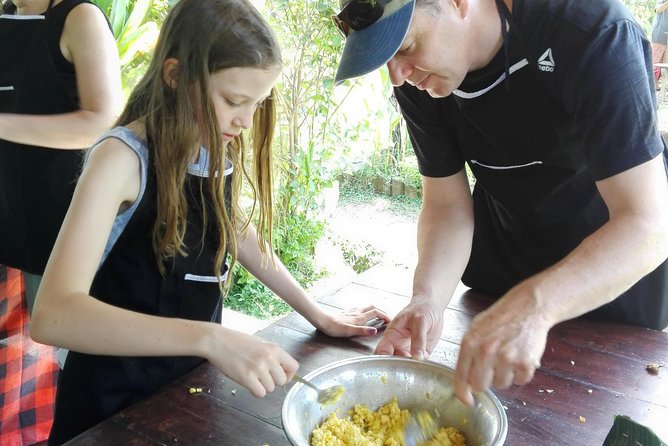
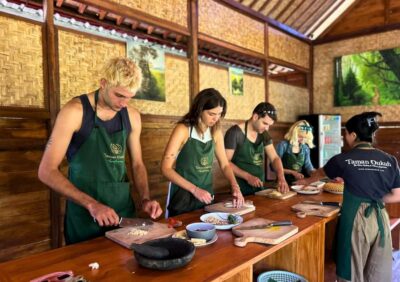
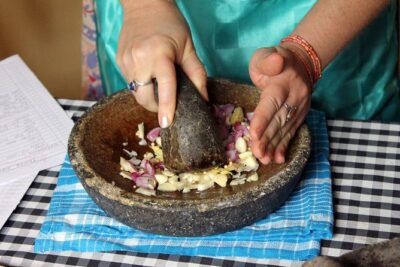
The menu also includes sauces and base components made from the herbs and vegetables collected on the farm. You should expect plenty of shared preparation, with chopping, mixing, shaping, and cooking spread among the group.
The class is designed to be participatory, but you are not forced to perform every step. If you love cooking, you can take an active role. If you would rather watch some of the more complicated work, you can still follow the process and enjoy the meal afterward. That flexibility is useful for couples or families with different levels of kitchen confidence.
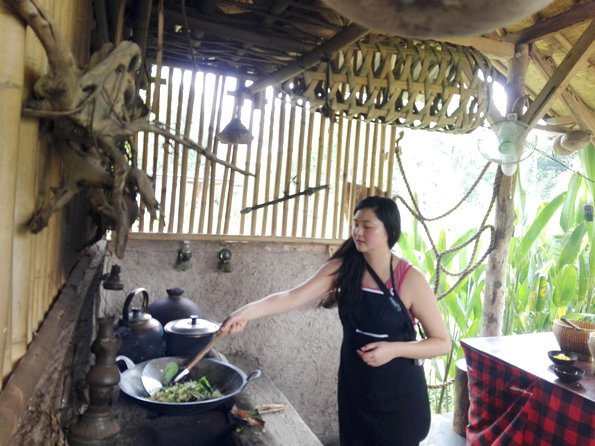
The food is cooked using an outdoor grill and traditional wood-fired stove. This is a genuine part of the class rather than a decorative prop. Fire cooking changes the pace and atmosphere. You need to pay attention to heat, timing, and the order of preparation. It also gives the meal a rustic quality that an indoor demonstration would miss.
Do not expect a professional kitchen with each person working at a separate station. This is communal cooking. You share tasks, work alongside the group, and eat what you have prepared together. If you want a private lesson focused on advanced knife skills or exact restaurant technique, this may not be the right choice. If you want food, conversation, and cultural context in the same morning, it fits well.
A communal lunch in a quiet gubuk
The final meal is served in a tranquil gubuk, a traditional-style hut. This is where the class comes together. Instead of packing up immediately after the last dish, you sit down with the people from the group and eat the meal you helped prepare.
That shared meal is one of the strongest reasons to choose this experience. Cooking is social in Bali, and the format reflects that. You learn the dishes, but you also see how food creates a reason for people to sit together and talk.
The setting helps, too. After walking through the farm and working near the fire, a meal in the hut feels connected to the place. The lunch is not simply the end of a lesson. It is the point where the farm, the ingredients, and the cooking all come together.
The class has received an exceptionally strong response, with a five-star rating from 51 published evaluations and a 100 percent recommendation figure. The most repeated strengths are clear: the friendly staff, the opportunity to harvest ingredients, the quality of the food, and the relaxed communal atmosphere.
One instructor identified in the feedback as Korong was singled out for being lively and well informed, with a teaching style that kept the group laughing. Kadek was also praised for asking how the class could improve and providing a recipe book at the end. Those details suggest a team that pays attention to the human side of the experience, not just the menu.
More Farm Cooking Classes in Ubud
- Ubud: Organic Farm Harvest, Bali Cooking Class by Pemulan
★ 4.8 · 12 reviews
Mai Organic Farm gives the class a wider purpose
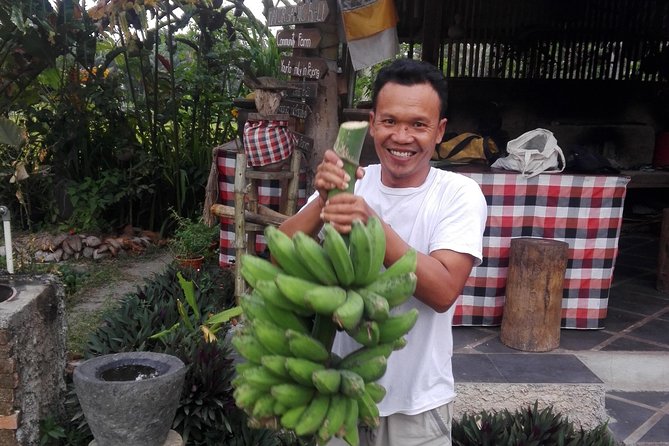
Your fee supports Mai Organic Farm and its work with local farmers and villagers in Pejeng. The stated aim is to help improve local incomes while giving farmers resources to strengthen their quality of life and encourage organic farming.
You should not confuse this with a formal farm development tour or a volunteer project. You are there to learn and cook. Still, your visit contributes to a small community-based operation rather than only paying for a standard commercial kitchen lesson.
That matters if you are trying to make your spending in Bali more direct and useful. The farm visit gives you a better understanding of where the money goes, because you meet the people, see the growing areas, and use the produce in your own meal.
The class also appears to make a real effort to reduce waste and plastic. One French-language evaluation praised the experience for using no plastic from beginning to end. The available information does not spell out every environmental practice, so I would not treat that as a formal zero-waste guarantee. Still, the farm setting and emphasis on local produce point toward a lighter approach than a class based around prepackaged ingredients.
What the five-hour schedule means for your day
Five hours is a substantial block of time. You need to allow for the farm introduction, the walk through the growing areas, ingredient collection, drinks, cooking, and the final meal.
That length is useful because the experience does not have to hurry through its cultural material. You have time to ask questions, handle ingredients, and enjoy the meal. It also makes the class feel like a half-day outing rather than a quick demonstration.
The tradeoff is that it may not fit neatly into a tightly packed Ubud schedule. If you plan temple visits, a massage, and an evening performance on the same day, leave enough room for pickup and the return journey. The class ends back at the meeting point, though pickup is offered from central Ubud hotels and rentals.
The exact group size needs a little attention. The experience is described as being capped at eight people, while the additional information gives a maximum of 10. Either way, this is intended to be a small class, but I would confirm the final group limit when booking if the size of the group matters to you.
The meeting point is Mai Organic Farm Bali in Subak Kana, Banjar Panglan, Pejeng, in the Gianyar area. Since Pejeng is outside central Ubud, pickup is useful. If you arrange your own transport, check the meeting details carefully and allow time to reach the farm.
Is $40 a fair price?
At $40 per person, the value depends on what you want from a cooking class. You are not paying only for recipes. The price covers roughly five hours, farm access, the ingredient walk, instruction, six dishes, several drinks, lunch, and the possibility of round-trip pickup from central Ubud.
That is a fair package for someone who wants food and culture together. A shorter indoor class may cost less, but it may not include the farm visit, community explanation, wood-fired cooking, or the same number of drinks and dishes.
The strongest value comes from the combination of activities. You learn about organic farming, see the subak system in context, harvest ingredients, cook with a local team, and eat the finished meal. If you value authentic contact with local food production, the price is easier to justify.
The value is weaker if you mainly want to take home advanced recipes or spend every minute cooking. A portion of the session is devoted to walking, conversation, and drinks. That is a benefit for some people and a drawback for others.
Who will enjoy this most
I would choose this class for several types of visitors:
- Food-focused visitors who want more than a restaurant meal and enjoy learning how dishes are built.
- Families looking for a hands-on activity that can include children.
- Couples and friends who prefer a social outing with a shared lunch.
- First-time visitors to Bali who want a gentle introduction to food, farming, and village life.
- Returning visitors who have already seen the main Ubud sights and want a more grounded activity.
- People who support small local businesses and want their spending to connect with a farming community.
I would think twice if you dislike outdoor settings, cannot manage a five-hour activity, or want a private, highly technical lesson. The experience is communal and relaxed rather than formal or chef-driven.
Wear clothing suitable for a farm visit and cooking near a fire. The supplied information does not give a formal clothing list, so I would keep it practical and comfortable. You should also keep the weather in mind. Poor conditions can lead to a different date or a full refund.
Booking and cancellation details to keep in mind
Confirmation is sent within 48 hours of booking, subject to availability. The experience is often reserved about 17 days ahead, so booking early makes sense if your Ubud dates are fixed.
Free cancellation is available up to 24 hours before the start time for a full refund. Cancellations or changes made less than 24 hours before the start time are not accepted for a refund. Cutoff times follow local time in Bali.
Because weather affects the farm visit and outdoor cooking, the operator may cancel in poor conditions. In that case, you are offered another date or a full refund.
Should you book the Mai Organic Farm class?
I would book it if you want a full half-day experience rather than a quick cooking demonstration. The ingredient picking, subak explanation, wood-fired stove, six-dish meal, and community setting give it more substance than a standard kitchen lesson.
The best reason to choose it is the farm-to-table connection. You can see the produce growing, collect it yourself, and then share the finished food in the hut. That sequence makes the class feel tied to Pejeng rather than interchangeable with a lesson anywhere in Bali.
Book early if you need a particular date, and confirm the group size if you are especially concerned about keeping the class intimate. For families, couples, and food-minded visitors staying in Ubud, this is a strong choice at $40. If your priority is advanced culinary training, a private chef-led lesson may suit you better.
FAQ
Where does the Balinese cooking class take place?
The class takes place at Mai Organic Farm Bali in Subak Kana, Banjar Panglan, Pejeng, in the Gianyar area of Bali.
Is pickup available from Ubud?
Yes. Round-trip transfers are offered from central Ubud hotels and rentals.
How long does the experience last?
The experience lasts approximately five hours.
How many people can join the class?
The class is described as capped at eight people, while the additional booking information lists a maximum of 10 people. Confirm the final group size when booking if this is important to you.
What food will I learn to cook?
You will prepare six Balinese dishes. Examples include tuna sate, sate lilit, and corn fritters.
Does the class include a farm tour?
Yes. You walk through the community farm, learn about organic farming and Bali’s subak irrigation system, and pick ingredients for the cooking session.
What drinks are included?
The experience includes juice, infused water, herbal drinks, Balinese coffee, and lemongrass tea. A welcome drink and fresh farm juice are also part of the activity.
Is lunch included?
Yes. After cooking, you eat the six dishes together in a gubuk, or hut, at the farm.
Can children join?
The experience can suit families, and children aged six and nine have taken part. The class allows people to participate as much or as little as they prefer.
What happens if the weather is poor?
If the experience is canceled because of poor weather, you will be offered a different date or a full refund.
More Hands-On Workshops in Ubud
- Ubud: Cooking Class with Transfers and Optional Market Visit
★ 4.9 · 824 reviews - Balinese Authentic Cooking Class in Ubud
★ 5.0 · 239 reviews - PRIVATE Balinese Cooking Class in Ubud with Dewa with Transfers
★ 5.0 · 213 reviews - Balinese Cooking class with traditional morning market visit
★ 5.0 · 161 reviews
More Balinese Cooking Classes in Ubud
- Ubud Cooking Class Bali with Balinese Chef
★ 5.0 · 1,609 reviews - PRIVATE Authentic Balinese Cooking Class in Ubud at Putu’s Home
★ 5.0 · 644 reviews - Balinese Ubud cooking school (9 Dish Cooking and Market Tour)
★ 5.0 · 540 reviews - Ubud: Balinese Cooking Class and Market Tour
★ 4.8 · 531 reviews
Just added around Ubud
- The Authentic Balinese Cooking Experience★ 5.0 · 4 reviews
- Ubud: Organic Farm Harvest, Bali Cooking Class by Pemulan★ 4.8 · 12 reviews
- packages cooking class and romantic dinner in a local home★ 5.0 · 4 reviews
- Jambangan bali cooking class with morning market tour★ 5.0 · 35 reviews
- Balinese cooking class/Go shopping at the market, cook, eat★ 5.0 · 12 reviews
- Ubud: Balinese Cooking Class with Hotel Transfers★ 4.8 · 17 reviews
- Balinese Cooking class with traditional morning market visit★ 5.0 · 161 reviews
- Small-Group Farm Tour & Balinese Cooking Class in Ubud with Kadek★ 5.0 · 16 reviews
Balinese & Indonesian Cooking Classes, compared.
Ubud: Balinese Cooking Class at an Organic Farm
Read our review →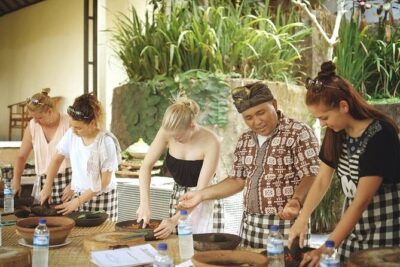
PRIVATE Authentic Balinese Cooking Class in Ubud at Putu’s Home
Read our review →
Balinese Ubud cooking school (9 Dish Cooking and Market Tour)
Read our review →