
Review · MADRID
Madrid: Half-Day Spanish Cooking Class
Madrid’s best food lesson may begin with a knife, a cutting board, and a trip to a local market. In the morning paella class, you help shop for ingredients, then return to the kitchen to make mixed chicken and seafood paella, gazpacho, and sangria. In the evening, you prepare five tapas, Catalan crème, and sangria.
I like the hands-on format because you do not simply watch a chef stir a pan. You work through each step, use the equipment, and take home the recipes. I also like the food culture woven into the class, from market shopping and Spanish ham to stories about ingredients and local habits.
The main drawback is the four-hour length. That gives you time to cook and eat without rushing, but it can feel long if you want a quick activity between sightseeing stops. The class is also done in pairs, so solo participants are assigned a cooking partner.
Key points to know before booking
- Two distinct class choices: Pick morning paella with a market visit, or evening tapas with dessert.
- A full meal is included: You eat the dishes you prepare, along with drinks and sangria.
- You cook from start to finish: This is practical kitchen work, not a chef demonstration.
- English-speaking instruction: Chefs such as Angel, Teresa, Eduardo, Elisa, and Maria lead classes in English.
- Good for families and beginners: Clear steps and patient guidance make the class approachable for children, first-time cooks, and experienced home chefs.
- Dietary needs can be discussed: Allergies, intolerances, and other food requirements can be accommodated.
Choosing between paella in the morning and tapas at night
The first decision is simple: do you want a market-based morning centered on one famous rice dish, or a relaxed evening built around several small plates?
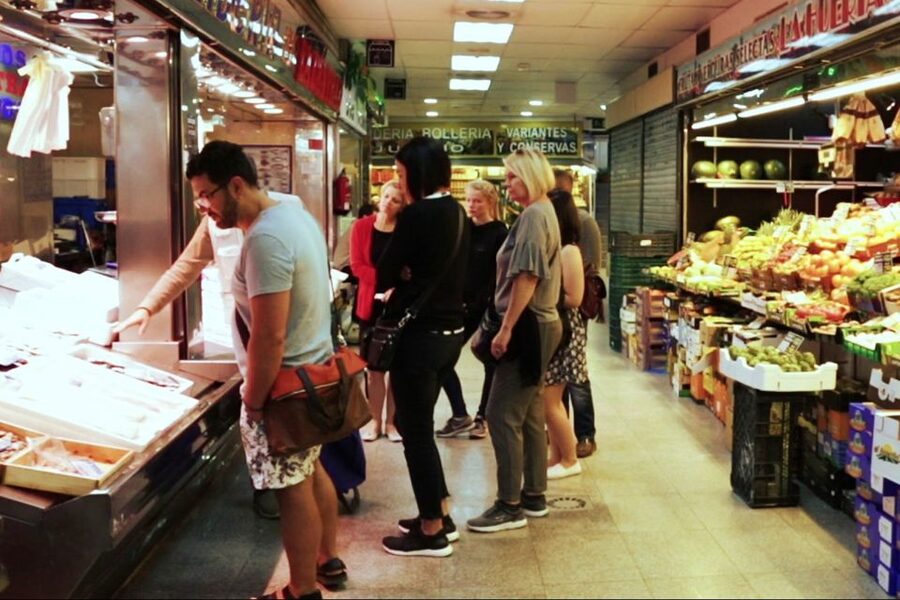
The morning paella class starts with a visit to a local market. You shop for many of the ingredients used later in the kitchen, with the chef explaining what you are buying and how people in Madrid shop for food. One particularly useful part is learning about Spanish ham and seeing how ingredients are selected before cooking begins.
Back at the cooking school, you make a mixed paella with chicken and seafood. The menu also includes gazpacho and sangria. This option gives you a fuller connection between market, ingredients, technique, and finished meal. If you enjoy food shopping, local products, and the practical side of cooking, this is the stronger choice.
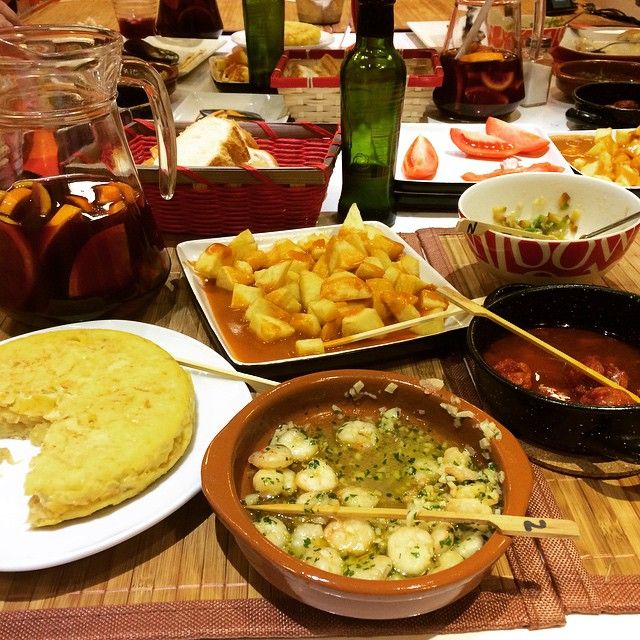
The evening tapas class is more varied. You prepare five tapas: Spanish potato omelet, garlic shrimp, chorizo in apple cider, patatas bravas, and tomato bread with ham. You also make Catalan crème for dessert and sangria to drink.
I see the tapas option as the better fit for a casual dinner activity. You learn several small recipes instead of focusing on one large dish, and the menu gives you a useful collection of Spanish favorites to recreate at home. It is also a natural choice if you have already spent the day sightseeing and want an evening activity that includes dinner.
The two classes share the same basic rhythm: cook with guidance, sit down together, and eat what you made. The market visit belongs only to the morning paella option, so check the exact choice before booking.
More Paella and Spanish Classes in Spain:
- Barcelona: Paella Cooking Experience & Boqueria Market Tour
★ 4.8 · 3,661 reviews - Barcelona Paella Cooking Class with Market Visit, Tapas & Sangria
★ 5.0 · 2,531 reviews - Barcelona Interactive Spanish Cooking Experience
★ 4.5 · 2,155 reviews
The market visit makes the paella class more useful
The market stop is not just a short walk past food stalls. It gives the morning class a sense of place before you enter the kitchen.
You shop for the ingredients needed for the meal, and the chef explains what you are seeing. Eduardo, one of the instructors, has been praised for explaining where food comes from and how it is made. Another class led by Eduardo included time with a fishmonger, while a morning with him also covered Spanish ham.
That matters because ingredients can seem generic once they are lined up on a kitchen counter. Seeing them in a market gives you a better sense of how seafood, meat, produce, and prepared foods fit into everyday Spanish cooking. You also learn what to look for when trying to repeat the recipes at home.
The market visit does add time and walking to the morning. If you want a purely kitchen-based class, choose tapas instead. If you like connecting a recipe with the place where its ingredients are bought, the market is one of the best reasons to choose paella.
Cooking with Angel, Teresa, Eduardo, and the other chefs
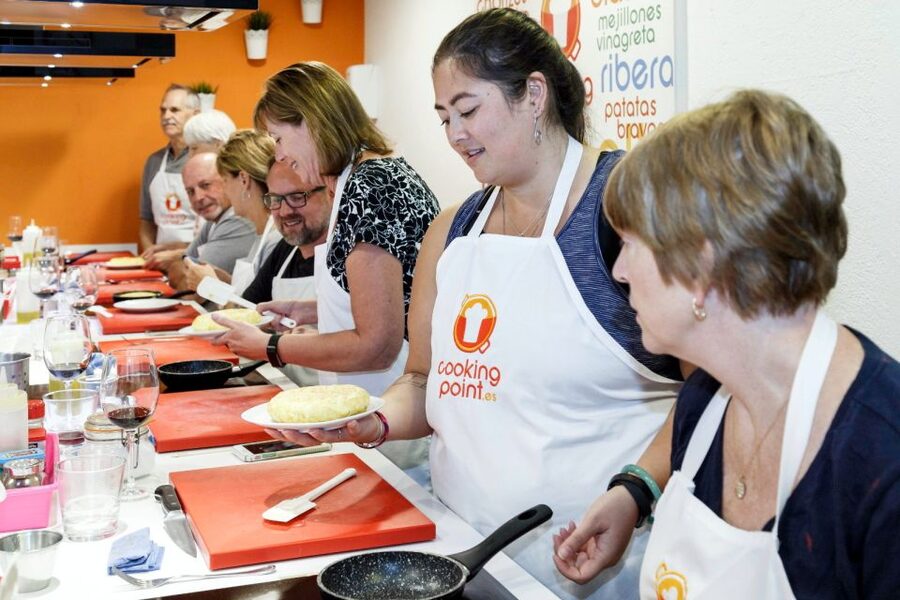
The instructors are a major part of the experience. Angel appears frequently in the class feedback and is praised for being clear, funny, patient, and good at explaining both technique and food history. Teresa is also known for an energetic teaching style and for making solo participants and families feel included.
Eduardo brings the market portion to life and explains the cultural side of the food. Elisa has led classes that combine recipes with stories about Spain, while Maria is described as patient, informative, and humorous. The exact chef depends on the session you book, but the teaching style is consistent: demonstration first, then your turn.
English is the stated teaching language. That is important for a class involving timing, heat, knives, and several dishes. You need to understand what happens next, and the available feedback repeatedly points to clear explanations and strong English.
The tone is friendly rather than formal. You will still receive direction, but the class is not presented as a strict culinary exam. The goal is to help you produce good food while enjoying the group around you.
What cooking in pairs really means
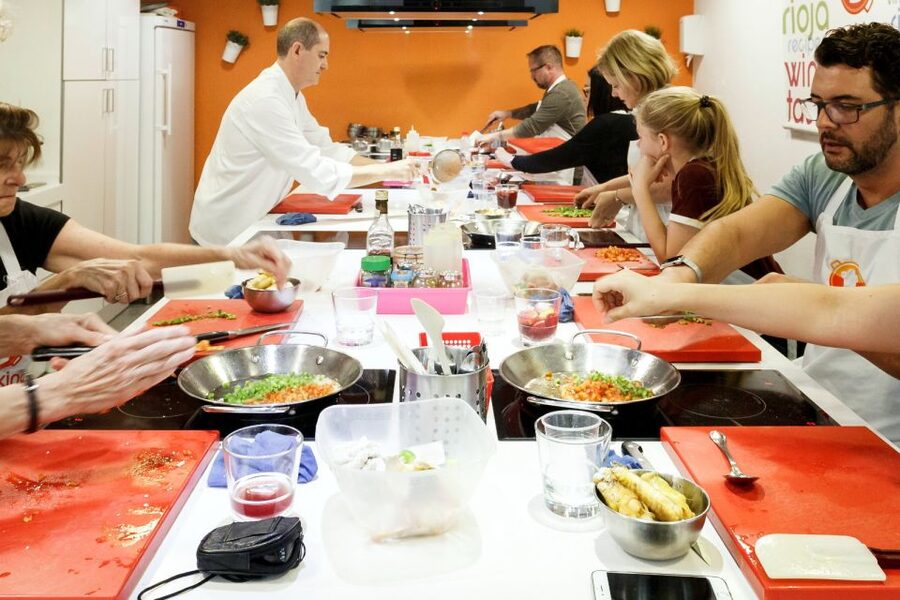
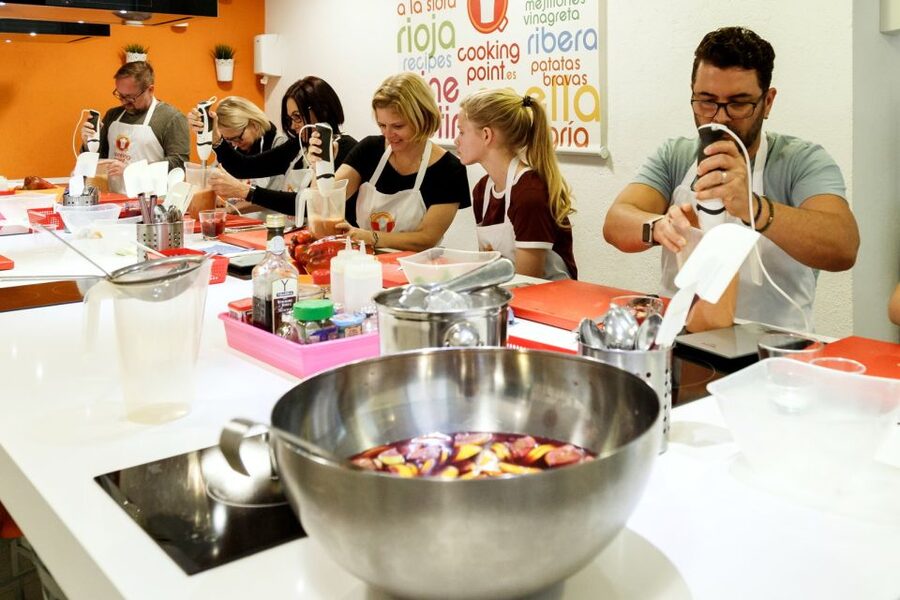
You do the kitchen work in pairs. That can be helpful because you can divide tasks, compare decisions, and keep an eye on several dishes. It also means this is not a completely individual cooking lesson.
If you book alone, the provider assigns you a partner. A solo participant specifically found the experience enjoyable and did not feel left out, but it is still worth knowing in advance that you will share the work with someone you do not know.
For couples, friends, and families, the pair system is easy. Parents can cook with a child, and two friends can split the tasks. One person might handle chopping while the other watches a pan, then you switch roles. The class is designed for participation, so you should expect to get involved rather than stand behind the chef.
This format also helps first-time cooks. The chef demonstrates a task, gives directions, and stays available as you work. At the same time, experienced cooks can pick up useful details, including seasoning methods, seafood preparation, and small techniques that make the recipes easier at home.
More Hands-On Workshops in Spain:
- Spanish Cooking Class Paella Tapas and Sangria in Madrid
★ 5.0 · 1,340 reviews - Paella Cooking Class, Wine Tasting & Central Market in Valencia
★ 5.0 · 1,150 reviews - Paella Cooking Class in Madrid with Bottomless Wine Pairing
★ 5.0 · 985 reviews - Seville: Spanish Cooking Class with Dinner
★ 4.9 · 900 reviews
The four-hour rhythm, from prep to shared meal
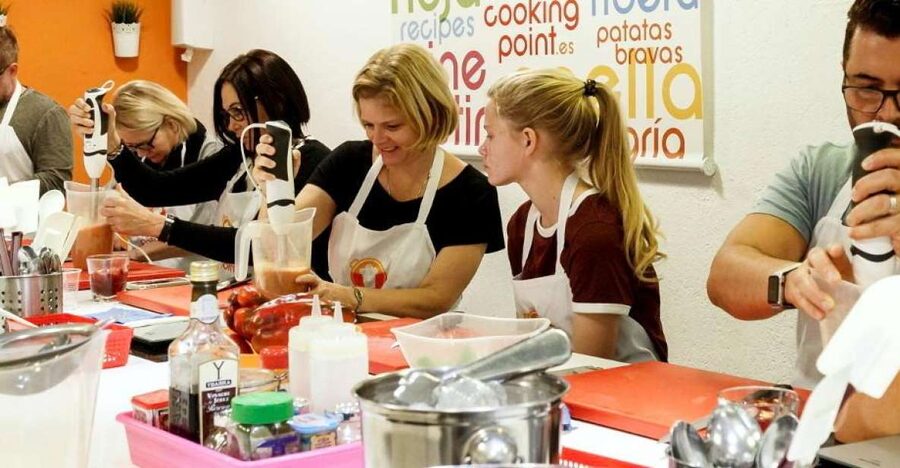
Four hours sounds substantial, but the class uses that time for several connected parts.
The paella option begins at the market, followed by kitchen preparation. You make sangria, prepare gazpacho, and work through the paella with chicken and seafood. The meal is not served to you at the start. You help create it, then eat it at the end.
The tapas option moves through five savory dishes, dessert, and sangria. The menu has enough variety to keep the class active: eggs and potatoes for the omelet, shrimp with garlic, chorizo cooked in apple cider, potatoes with bravas sauce, and tomato bread with ham. Catalan crème provides a sweet finish.
The order of work can vary, but the purpose is clear. Some dishes need preparation time, some need cooking time, and the chef organizes the steps so the meal comes together. The class is structured without feeling like a race. Several participants have found that the four hours pass quickly because there is always another task, explanation, or shared laugh.
The final meal is one of the strongest parts. You sit around the table and eat the food you prepared, with drinks included. This changes the class from a lesson into a social meal. You get to compare results, talk with the other people in the group, and enjoy a proper dinner or lunch rather than leaving with a small sample.
How much food and drink are included
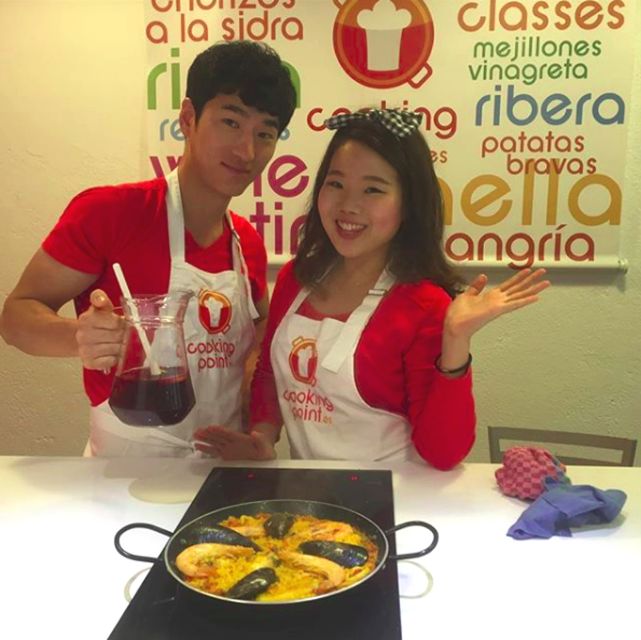
The $100 price includes ingredients, drinks, a recipe booklet, the market tour for the paella option, and the meal at the end. Sangria is part of both menus, and the class feedback often singles out the generous supply of it.
The value depends on how you use the experience. If you only want dinner, you can find cheaper meals in Madrid. But the price also covers four hours of instruction, hands-on preparation, ingredients, drinks, and a collection of recipes you can use later.
The meal is substantial. You prepare three items in the paella class and seven menu elements in the tapas class if you count the five tapas, dessert, and sangria. The cooking work and the final meal make this more than a short tasting session.
You also avoid paying for a separate lunch or dinner that day. I would schedule the morning class in place of a long lunch, or the evening class as the night’s main meal. That makes the cost easier to justify.
A class for children, beginners, and serious home cooks
This is a broad-audience activity. Families have brought young children, and the clear instructions allow them to take part. The pair format gives children a practical role, though parents should remain attentive during any task involving knives, hot pans, or the stove.
Beginners should feel comfortable here. You do not need to arrive with advanced kitchen skills. The chef shows each major step and explains the process in plain English. The recipes use ingredients and methods that can be repeated in a normal home kitchen.
Experienced cooks can enjoy the class too, especially if you focus on Spanish methods rather than basic knife work. One participant with culinary school experience still found the class engaging, while other cooks appreciated learning details such as how to devein prawns.
The atmosphere also suits solo visitors and couples. You will cook with a partner and eat with the larger group, so the experience has a built-in social side. If you prefer a private lesson or want to cook entirely alone, this is not the right format.
Food allergies and dietary needs
Allergies, intolerances, and other dietary requirements can be accommodated. You should share those needs when booking or as early as possible so the cooking team can plan the menu.
Do not assume every dish will remain unchanged. Paella includes chicken and seafood, while the tapas menu includes shrimp, chorizo, ham, eggs, and dairy-related ingredients. The provider can adjust for requirements, but you should state exactly what you cannot eat.
This is also worth considering if one person in your group has a different diet. The class is built around shared cooking, so the chef will need to know which ingredients or dishes require an alternative.
The kitchen and the practical details
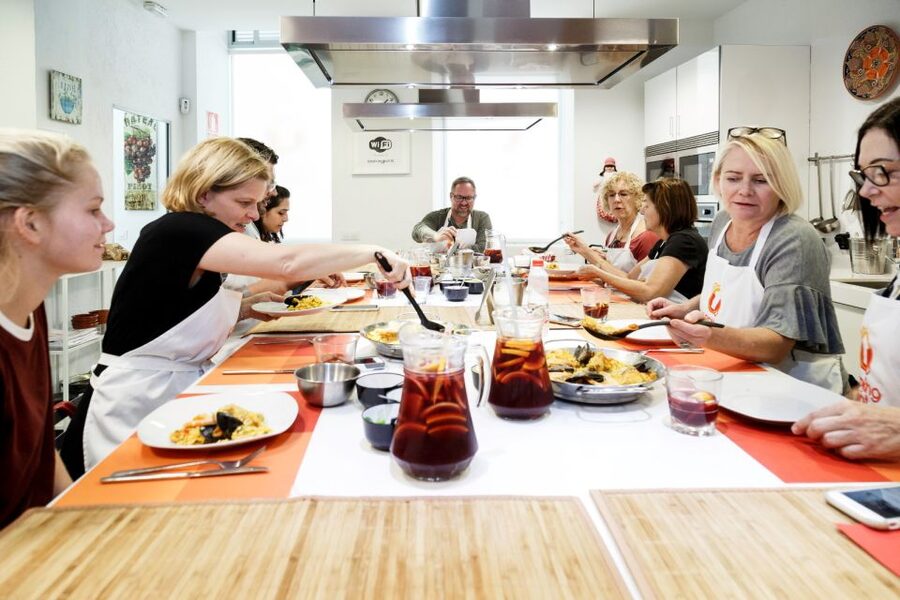
The cooking school has been described as clean, well-equipped, and organized, with enough equipment for participants to work. That matters in a group class. If tools are scarce or the kitchen is cramped, hands-on cooking quickly turns into waiting. Here, the available feedback points to a comfortable setup where you can take part.
The meeting point may differ by the option you choose. Check the booking details carefully, especially since the market-based paella class and the evening tapas class may begin in different places. Hotel pickup and drop-off are not included, so you arrange your own way to the meeting point.
The activity lasts four hours, and start times depend on availability. Build in enough time to reach the location without rushing. For the evening session, treat the class as dinner rather than trying to fit a restaurant reservation afterward.
Cancellation is free up to 24 hours before the activity for a full refund. You can also reserve now and pay later, which is useful when your Madrid schedule is still changing.
Tips for getting the most from the class
- Choose paella for the market connection. The market visit adds local food context and helps you understand the ingredients before cooking.
- Choose tapas for variety. You will make five savory dishes, dessert, and sangria rather than focusing on one main course.
- Bring questions. The chefs explain food customs, ingredients, and stories, so ask about anything you want to repeat at home.
- Tell the provider about dietary needs early. The class can accommodate allergies and intolerances, but the kitchen needs clear information.
- Plan your day around the four hours. The class is long enough to replace a meal, not just fit into a spare hour.
- Keep the recipe booklet. The food uses practical methods and ingredients, so the recipes are useful souvenirs rather than decoration.
Should you book the Madrid cooking class?
I would book this if you want more than a restaurant meal and enjoy doing something with your hands. The morning paella class is the better pick for food markets, local ingredients, and a single Spanish classic. The evening tapas class is better for variety, a casual dinner, and recipes you can serve at home.
The strongest reasons to go are the clear English instruction, the full meal, the social setting, and the chance to cook every dish yourself. Angel, Teresa, Eduardo, Elisa, and the other chefs bring different personalities, but the class consistently centers on patient guidance and practical recipes.
Skip it if you want a quick activity, a private lesson, or a polished demonstration where you simply watch. For everyone else, $100 is fair for four hours of cooking, drinks, a market visit on the paella option, and dinner made by your own hands.
FAQ
How long does the Madrid Spanish cooking class last?
The activity lasts four hours. Start times vary, so check availability for the date you want.
What are the two class options?
You can choose a morning paella class with a local market visit, or an evening tapas class. The paella option includes mixed chicken and seafood paella, gazpacho, and sangria. The tapas option includes five tapas, Catalan crème, and sangria.
Is the market visit included in both classes?
No. The market tour is included only with the morning paella class.
What food is included in the tapas class?
You prepare Spanish potato omelet, garlic shrimp, chorizo in apple cider, patatas bravas, tomato bread with ham, Catalan crème, and sangria.
Do I cook the food myself?
Yes. You prepare the menu from start to finish while following the chef’s instructions. Cooking is done in pairs.
What happens if I attend alone?
The activity provider assigns solo participants a cooking partner. You still take part in the cooking and shared meal.
Can the class accommodate food allergies or dietary requirements?
Yes. Food allergies, intolerances, and other dietary requirements can be accommodated. Provide the details when booking or before the class.
Is hotel transportation included?
No. Hotel pickup and drop-off are not included. The meeting point may vary depending on the class option you book.
More Half-Day Experiences in Spain
- Half-Day Spanish Cooking Class & Boqueria Market Tour
★ 4.9 · 383 reviews - Half-Day Thai Cooking Class at Organic Farm in Chiang Mai
★ 5.0 · 19,087 reviews - Bangkok: Tingly Thai Cooking School Half-Day Cooking Class
★ 4.9 · 1,191 reviews - Half-Day Cooking Class with Local Chef Laila in Marrakech
★ 5.0 · 952 reviews
Just added around Spain
- A Coruña: Local Market Shopping and Cooking Workshop★ 5.0 · 16 reviews
- San Sebastian: Authentic Basque Cooking Class★ 4.9 · 102 reviews
- Authentic Basque Cooking Class in San Sebastian Old Town★ 4.5 · 87 reviews
- Basque Cooking Experience: Market Tour & Hands-On Class English★ 5.0 · 144 reviews
- Local Cooking Class in San Sebastian★ 5.0 · 44 reviews
- Sevilla: Rooftop Paella Cooking Class & 30-minute expert Q&A★ 5.0 · 198 reviews
- Paella Cooking Class in Malaga★ 5.0 · 209 reviews
- La Boqueria Market and Paella Cooking Class in Barcelona★ 5.0 · 229 reviews
Spanish & Paella Cooking Classes, compared.
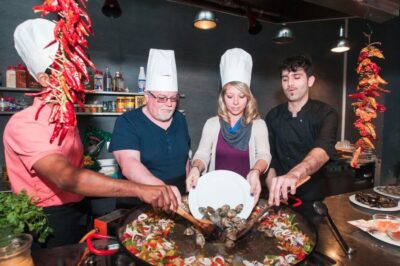
Barcelona: Paella Cooking Experience & Boqueria Market Tour
Read our review →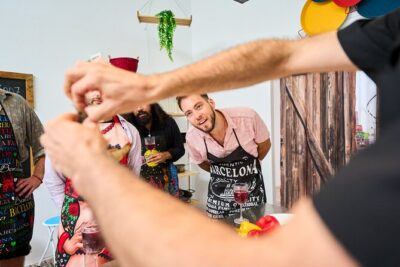
Barcelona Paella Cooking Class with Market Visit, Tapas & Sangria
Read our review →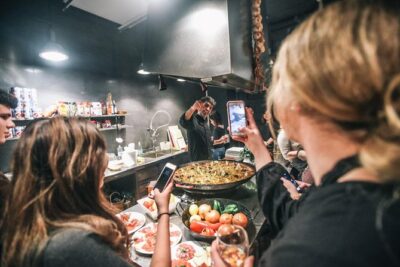
Barcelona Interactive Spanish Cooking Experience
Read our review →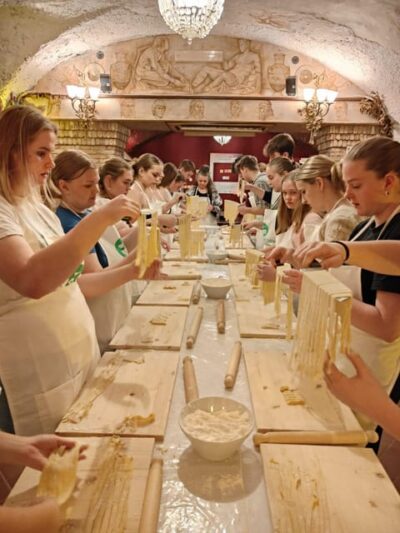
Rome: Pasta & Tiramisu Cooking Class near the Spanish Steps
Read our review →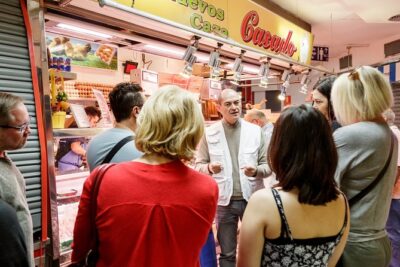
Spanish Cooking Class Paella Tapas and Sangria in Madrid
Read our review →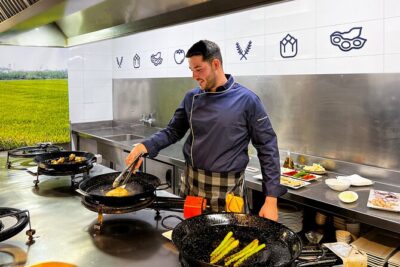
Paella Cooking Class, Wine Tasting & Central Market in Valencia
Read our review →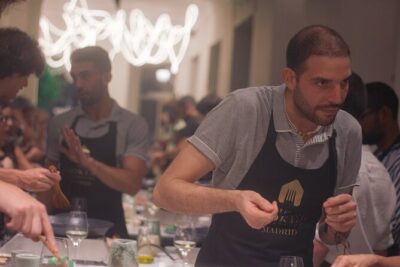
Paella Cooking Class in Madrid with Bottomless Wine Pairing
Read our review →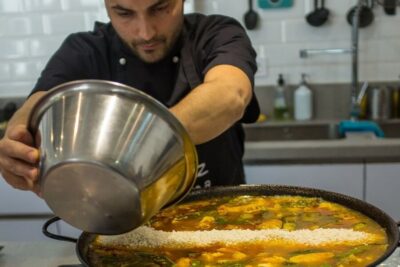
Browse the lists this tour appears in