
Review · GREECE
Melanes: Naxos Perivoli Farm & Cooking Class with Wood Fire
Naxos Perivoli Farm turns a cooking class into a proper countryside visit. You gather eggs from the chickens, pick produce, taste fruit from the trees, and then help prepare a long Greek meal over a wood fire. The farm belongs to a family that still works the land, so the food lesson comes with a look at everyday Naxian life.
I like the small group of up to 10, which gives you room to ask questions and take part without fighting for a cutting board. I also like that the class uses farm ingredients, from eggs and vegetables to olive oil and seasonal fruit. The main catch is practical: transportation is not included, and the four-hour visit involves walking outdoors, so you need your own way to the farm and sensible shoes.
Key things to know before you go
- Egg gathering is part of the tour: You collect freshly laid eggs before using them in the meal.
- The farm visit comes first: Expect animals, olive trees, potato fields, fruit trees, vineyards, and vegetable gardens before cooking begins.
- Wood-fire cooking shapes the experience: The food is prepared with traditional methods rather than a quick demonstration in a modern kitchen.
- The meal is substantial: Omelet, zucchini balls, potatoes, cheese, briam or gemista, bread, dessert, wine, and other dishes can make this your main meal of the day.
- Nikos, Konstantina, Tina, and family host the experience: The hosting team explains both farming and cooking in English.
- Plan your transport and clothing: The farm is near Melanes, but getting there is your responsibility. Bring a hat, sunscreen, sunglasses, and comfortable shoes.
Why this farm visit feels different from a standard cooking class
Many Greek cooking classes begin with ingredients already measured and waiting on a counter. Here, the ingredients have a story before they reach the table. You see the chickens, gather eggs, walk through the growing areas, and learn how the farm supplies the meal.
That difference matters. An egg is no longer just an egg after you have found it in the henhouse. A potato has more character after you have heard why Naxian soil and climate suit its cultivation. The class connects the dish on your plate with the island’s farms, weather, and family traditions.
The farm is small rather than a vast agricultural estate. That is part of its appeal. You can cover the main areas on foot in one visit, and the hosts can explain what they grow without turning the outing into a formal lecture. Expect a relaxed visit with conversation, questions, and hands-on work.
Nikos is the main host named most often in the experience details, while Konstantina and Tina also lead visits. The family approach is central to the mood. You are not simply shown around a property, then sent to a cooking station. The farm, kitchen, dining table, and family all form one connected experience.
More Farm Cooking Classes in Greece
- Naxos Perivoli Farm Experience & Wood-fire Cooking Class
★ 5.0 · 339 reviews - Santorini Family Farm Food & Wine Tour with Cooking Class
★ 5.0 · 107 reviews - Rhodes: 1952 Farmhouse Cooking & Lunch with Unlimited Wine
★ 4.9 · 99 reviews
Walking among chickens, rabbits, pigs, and peacocks
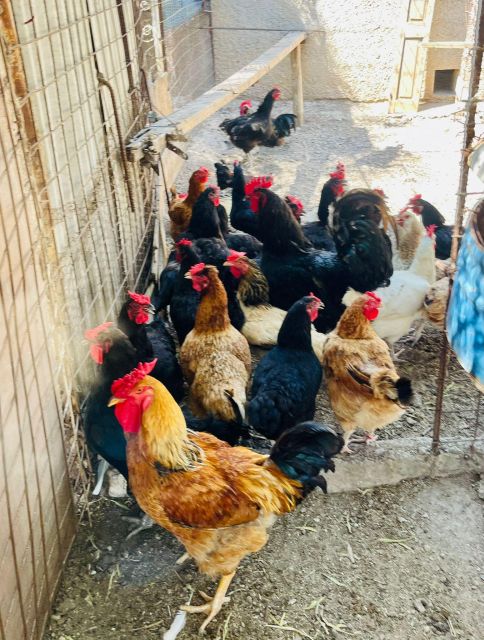
The first part takes place around the farm animals. You may see chickens, rabbits, pigs, peacocks, cats, and other animals as the guide explains how the property works.
The egg gathering is a particularly appealing touch for families and anyone who likes practical activities. You are not just looking at rural life from a path. You take part in one small task that links directly to lunch.
Children can participate, though the cooking portion also includes chopping, grating, and other preparation. Families with children from about seven to fourteen have found the activity suitable, and even a baby can simply come along and watch. Keep in mind that this is still a four-hour visit, not a short animal encounter. Younger children may enjoy the animals most, while older children can help with the food.
The animal area is not a zoo and should not be treated as one. The point is to see part of a working family farm, learn how the animals fit into life there, and then move on to the crops and kitchen.
Olive trees and the making of Naxian oil
The walk continues into the olive grove, where the guide explains how the trees are cultivated and how olives become oil. This is one of the strongest parts of the visit for anyone who wants context for Greek food beyond the dining table.
Olive oil appears in nearly every Greek meal, but its role is easy to take for granted. On this walk, you get a clearer picture of the tree, the harvest, and the care needed to produce the oil used in cooking. The property has family connections stretching back several generations, which gives the discussion a personal side rather than a generic agricultural explanation.
You may also see wild herbs such as thyme and oregano, along with almond, fig, pomegranate, lemon, and lime trees depending on the season. The exact plants and fruit available will change through the year, but the walk gives you a useful sense of how much a small Naxian farm can provide.
Bring sun protection. The outdoor portion includes time in open areas, and the recommended list is sensible: sunglasses, a sun hat, sunscreen, comfortable clothes, and shoes suited to walking.
Naxian potatoes, fruit trees, and the vegetable garden
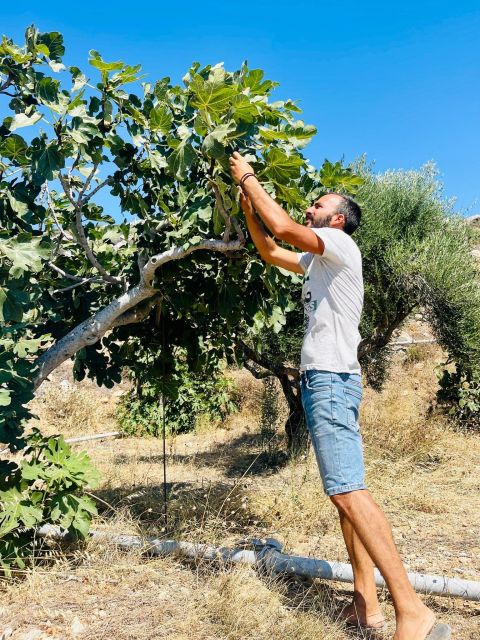
The next stop is the potato field. Naxian potatoes are a local specialty, and the guide explains why this part of the island suits them, including the climate and fertile soil.
This is a good example of the class adding value beyond a recipe. You will later eat potatoes prepared in the Naxian style, but first you see where the crop grows. That link gives a familiar side dish a stronger local identity.
The route then passes fruit trees, where seasonal fruit may be picked and sampled. Depending on the time of year, this can include fruit such as watermelon, oranges, figs, or pomegranates. The precise selection is seasonal, so do not arrive expecting one fixed fruit menu.
You also walk through the vineyard and vegetable garden. The vegetables gathered here help form the basis of the cooking session. This part of the tour is best taken slowly. Ask about the plants, farming methods, and how the family uses what it grows. The small group format helps because the guide can stop to answer individual questions.
Same place, a different menu:
- Athens: Classic Cooking Class with Market Visit and Wine
★ 5.0 · 1,101 reviews - Athens: Food Market Visit and Cooking Class with Wine
★ 4.9 · 1,087 reviews - Greek Cuisine Cooking Class in Santorini with Recipes and Wine
★ 5.0 · 969 reviews - Naxos: Half-Day Cooking Class at Basiliko Family Tavern
★ 5.0 · 887 reviews
Cooking zucchini balls and briam over a wood fire
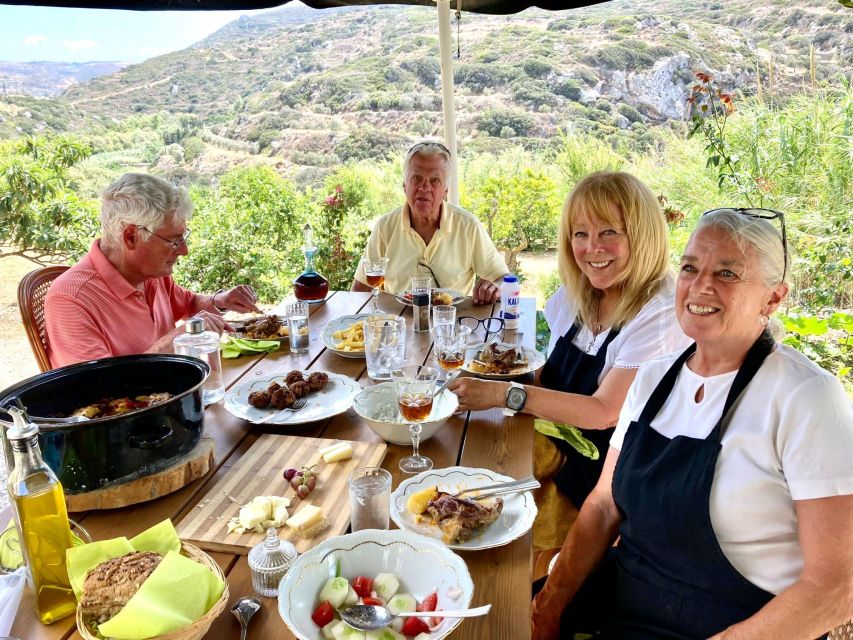
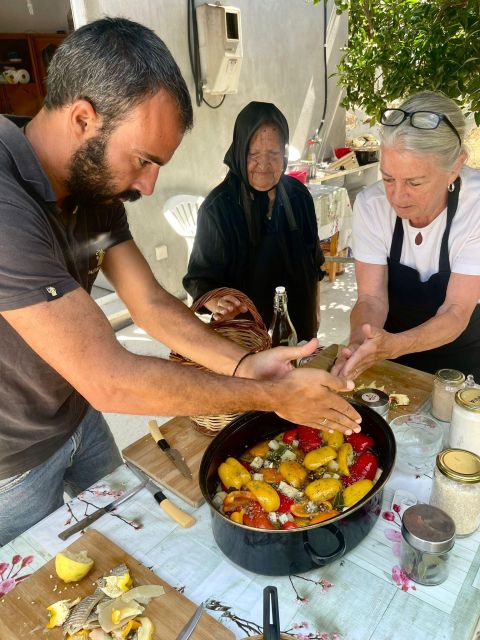
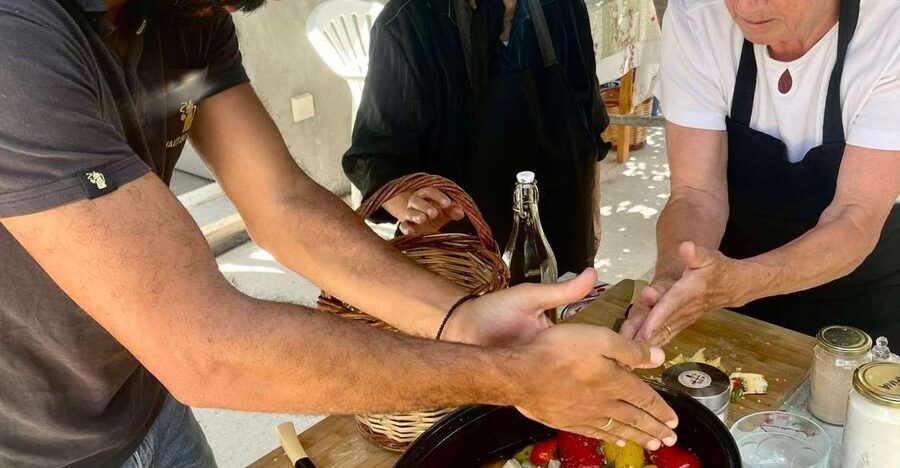
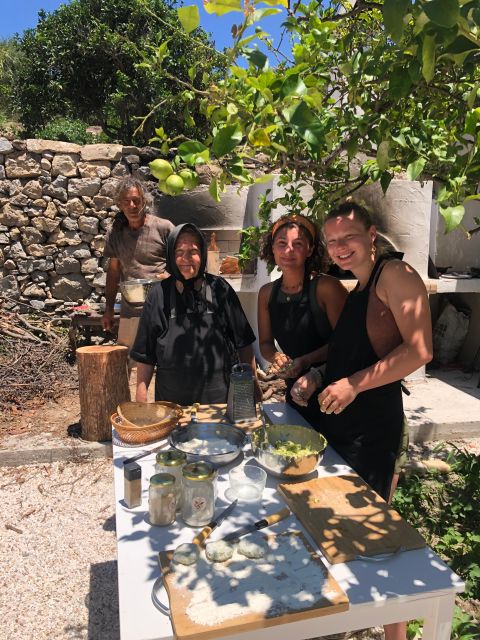
After the farm walk, you receive an apron and utensils and move to the cooking area. The work is shared, so you may grate cucumber for tzatziki, prepare zucchini for fritters, cut vegetables, crack eggs, or help with potatoes and cheese.
The menu centers on traditional Naxian and Greek home cooking. It can include:
- Omelet made with the eggs gathered earlier
- Zucchini balls
- Naxian potatoes
- Cheese served as an appetizer
- Tzatziki and bread
- Greek salad
- Briam, a baked vegetable dish
- Gemista, depending on the day
- Fried cheese with honey
- Homemade fruit preserves
- Seasonal fruit and dessert
The exact dishes may vary, but the pattern is clear: fresh vegetables, local dairy, eggs, olive oil, bread, and plenty of shared plates. Several parts of the meal are vegetarian, and the experience has been adapted for vegan participants. If you have dietary needs, raise them when booking or before the cooking begins so the hosts can plan appropriately.
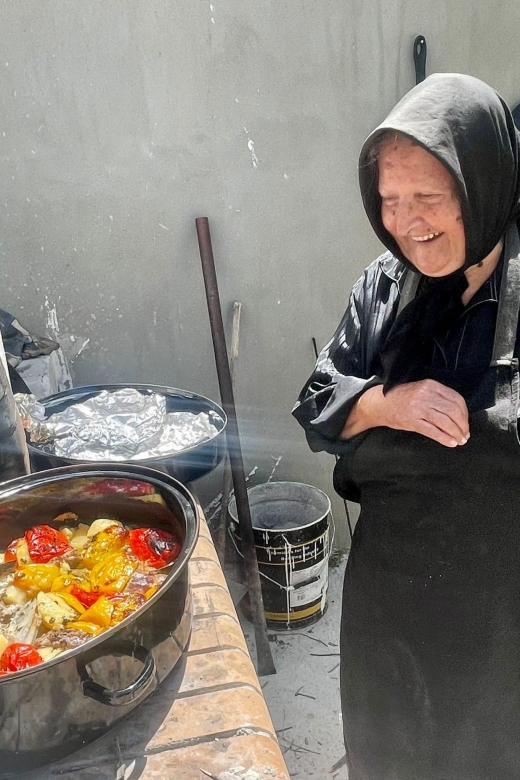
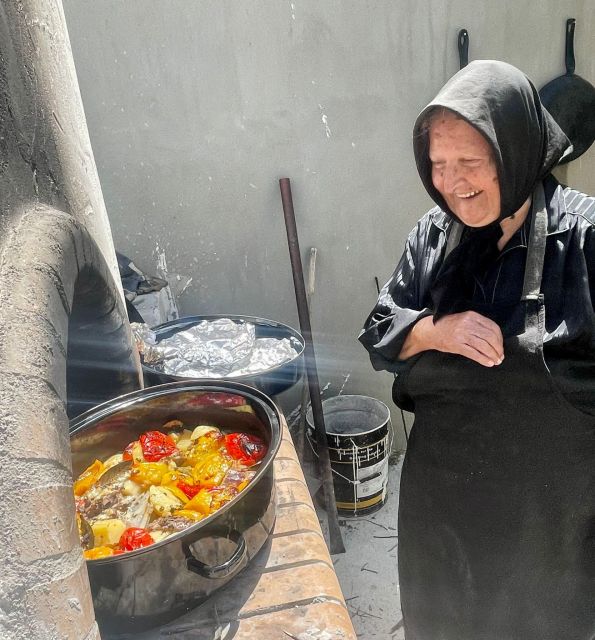
The wood fire is the heart of the class. You help prepare the ingredients while the hosts manage the actual cooking in the traditional oven and on the fire. This is not a technical chef course with precise restaurant-style instruction. It is closer to learning how a Greek family prepares a generous home meal, with several people working together and food arriving in stages.
You will get recipes to take home, which adds real value. The dishes use ingredients that are generally easy to find outside Naxos, even if the island’s potatoes, cheese, and olive oil are hard to match elsewhere.
A long lunch with wine, cheese, and family hospitality
The meal is included in the $117 price, along with bread, dessert, and local wine. That price looks fair when you count the farm tour, four hours of hosting, cooking instruction, a full lunch, drinks, and the small group size.
This is not a cheap snack stop, and it should not be compared with a basic market tasting. It is a half-day activity with a substantial meal and personal instruction. If you would otherwise book a farm visit and eat lunch separately, the combined value becomes stronger.
Come hungry. The menu can extend well beyond the dishes you help prepare, with additional food brought to the table. Expect an omelet, fritters, potatoes, roasted vegetables, salad, cheeses, bread, dessert, fruit, and wine, though the precise spread changes. You may want to schedule dinner late, especially if you dislike wasting food or plan to sample everything.
The setting is informal. You eat at a shared table, often under a pergola, and talk with the hosts and other members of the group. That shared meal is where the visit shifts from lesson to social occasion. You may arrive knowing nobody and leave with an easy sense of connection, especially because the cooking gives everyone something to do together.
Local wine is included. Homemade or farm-made fruit preserves may also appear with dessert. The emphasis is generous Greek hospitality rather than polished service, so expect warmth, conversation, and a meal that keeps coming.
Greek dancing if you still have energy
A traditional dance may follow lunch for anyone who wants to join. It is optional, so you can watch, take photographs, or simply enjoy the final part of the visit.
This is a fitting end to the day. The activity begins with farming and ends with food and culture, without forcing you into a performance. If dancing is not your thing, you will not lose the main value of the experience by sitting it out.
The mood is particularly good for couples, families, and small groups of friends. Solo visitors can also fit in well because the group is limited to 10 and the shared preparation makes conversation easy.
Practical planning for Melanes
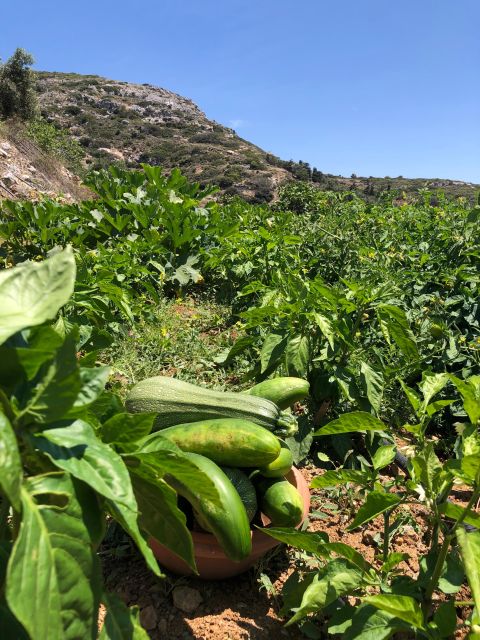
The meeting point is at the entrance to Perivoli Naxian Farm Experience, where staff wait to welcome you. Transportation is not included, so you need to arrange your own route to the farm near Melanes. Check the exact starting time when booking, since several start times may be available.
The activity lasts four hours. That timing is long enough for the farm walk, cooking, lunch, and optional dancing, but it also means you should not squeeze it between two tightly scheduled attractions.
Wear comfortable clothes and shoes. You may walk through farm areas and spend time outdoors before sitting down to cook. A hat, sunglasses, and sunscreen are especially useful in the South Aegean sun.
The live guide speaks English. The small group limit of 10 is worth noting if you prefer personal contact instead of a large demonstration. You can ask about olive oil, crops, recipes, farming methods, or village life as the day unfolds.
Cancellation is flexible up to 24 hours before the activity for a full refund, and you can reserve now and pay later. Those terms help if your Naxos plans are still moving around, but the main decision is still finding a suitable time and arranging transport.
Who should book this experience
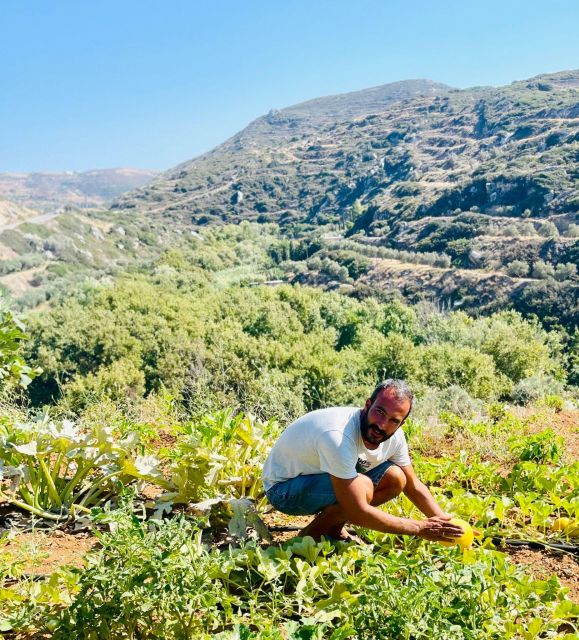
I would choose this for anyone who wants food tied to place. It suits people who prefer home-style cooking to a formal culinary school, and it gives first-time visitors a useful introduction to farming on Naxos.
It is also a strong choice for families. Children can see animals, gather eggs, taste fruit, and help with simple food preparation. Adults get the farming context and a serious lunch, while children have enough activity to keep the visit from feeling like a long lecture.
Vegetarians should find the meal especially appealing, since many of the featured dishes center on vegetables, eggs, cheese, potatoes, and olive oil. Vegan participation has also been accommodated, but you should state your needs in advance.
I would be less likely to choose it if you want a short, polished demonstration or if you do not want to walk outdoors. The farm is small, and the cooking involves shared preparation rather than a chef doing everything while you watch. That hands-on, family-run style is the point, but it will not suit someone seeking a formal restaurant class.
Should you book the Perivoli Farm cooking class?
Yes, if you want one of Naxos’s more personal food experiences and can spare four hours. The best parts are the egg gathering, the olive grove, the seasonal produce, and the generous meal cooked over wood fire. The family hosting, especially Nikos, Konstantina, and Tina, gives the day a human connection that a standard cooking demonstration cannot match.
Book it early if your Naxos schedule is tight, then arrange transport and leave room after lunch. At $117 per person, it is good value for a farm visit, small-group class, full meal, wine, dessert, and recipes to use at home. Just arrive prepared for sun, walking, shared work, and a very full stomach.
FAQ
Where does the Naxos Perivoli Farm cooking class take place?
It takes place at Perivoli Naxian Farm Experience near the village of Melanes in the South Aegean region of Greece.
How long does the experience last?
The activity lasts four hours, including the farm tour, cooking session, meal, and optional traditional dancing.
How much does the experience cost?
The listed price is $117 per person.
Is transportation to the farm included?
No. Transportation is not included, so you must arrange your own way to the meeting point.
What food do you prepare?
The class can include an omelet, zucchini balls, potatoes, cheese, briam or gemista, and other traditional Greek dishes. The exact menu may vary with the season.
Is lunch included?
Yes. Lunch, bread, dessert, and local wine are included.
What animals can you see at the farm?
You can see chickens, rabbits, pigs, peacocks, and other farm animals.
Is the tour offered in English?
Yes. The experience includes a live English-speaking guide.
What should you bring?
Bring comfortable shoes, sunglasses, a sun hat, sunscreen, and comfortable clothes.
More Hands-On Workshops in Greece
- Greek Cooking Class in Athens Including Rooftop Dinner with Acropolis View
★ 5.0 · 826 reviews - Greek Small-Group Athens Cooking Class & Dinner
★ 5.0 · 574 reviews - Chania: Authentic Cooking Class in the White Mountains
★ 4.9 · 529 reviews - Naxos:Half-day cooking class at Basiliko
★ 5.0 · 457 reviews
Just added around Greece
- 5 Hours Private Cooking Classes in Langadas Thessalonikis★ 5.0 · 14 reviews
- Cook & Dine With a Local Greek Family in Thessaloniki★ 5.0 · 26 reviews
- Thessaloniki: Greek Cooking Class, Market visit and Lunch★ 5.0 · 15 reviews
- Thessaloniki: Cooking & Dining Experience with Greek Family★ 4.9 · 85 reviews
- Rhodes: Cooking Lesson and Wine Tasting with Lunch★ 4.9 · 93 reviews
- Tasting Rhodes: Cooking Class, Wine Tasting & more in an Authentic Greek village★ 5.0 · 66 reviews
- Rhodes Wine & Food Tour: 10 Meal Course Lunch, Wine Tasting, Cooking Class★ 5.0 · 109 reviews
- Cooking Classes in Mykonos Greece★ 5.0 · 180 reviews
Farm & Countryside Cooking Classes, compared.
Half-Day Thai Cooking Class at Organic Farm in Chiang Mai
Read our review →
Cooking Class and Lunch at a Tuscan Farmhouse with Local Market Tour from Florence
Read our review →
Chiang Mai: Authentic Cooking Class with Market & Farm Visit
Read our review →
Ubud: Balinese Cooking Class at an Organic Farm
Read our review →
Ubud: Authentic Cooking Class in a Local Village
Read our review →
Chiang Mai: Cooking Class with Organic Farm at Mama Noi
Read our review →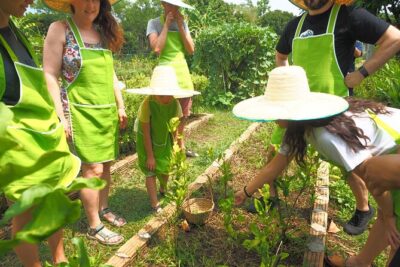

Hands-On Cooking Class & Farmhouse Tour on the Amalfi Coast
Read our review →Browse the lists this tour appears in