
Review · ROME
Rome: Traditional Pasta and Tiramisu Cooking Class
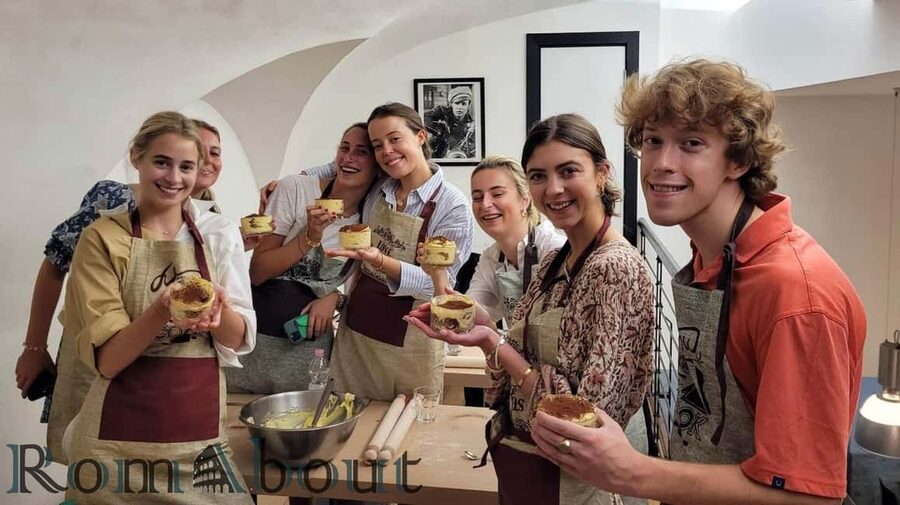
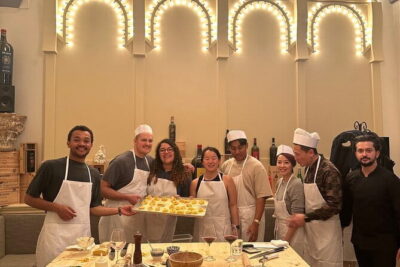
The best part of this Rome cooking class is that you do not just watch a chef work. You make fresh pasta and tiramisu yourself, from the first ingredients to the final plate, then sit down to eat the results with wine. The class begins with prosecco and a short look at how pasta and tiramisu became Italian staples.
I like the small group of no more than 10 people, which should give you room to ask questions and work at the table. I also like the clear progression: make the tiramisu first so it can set, then prepare pasta dough and sauce while you wait. The main drawback is that the class is not suitable for people with food allergies or wheelchair users, and transportation to the venue is not included.
Key points at a glance
- Make two Italian classics: Prepare fresh pasta and traditional tiramisu during one 2.5-hour class.
- Start with prosecco: Learn about the background of both dishes while enjoying a welcome glass.
- Cook with a professional chef: The lesson follows a step-by-step format in English or Spanish.
- Choose your pasta sauce: After shaping the pasta, select the homemade sauce that suits it.
- Eat what you prepare: The class includes tasting, a glass of wine, and bottled water.
- Keep the group small: No more than 10 participants attend, making hands-on help more likely.
What this Rome pasta class is really about
Rome has plenty of famous food to eat. This class gives you a chance to understand how two familiar dishes come together, rather than simply ordering them in a restaurant. You work with the ingredients, follow the method, and then taste the finished food while the steps are still fresh in your mind.
The class lasts 2.5 hours, which is long enough to cover both recipes without turning the afternoon into a full-day commitment. I see this as a good fit for a free day in Rome when you want something active but not exhausting.
The cooking takes place at GOAT Gallery on Via dei Capocci, 26. You meet your instructor there, rather than being collected from your hotel, so you need to plan your own way to the venue. That also gives you more control over your schedule and avoids spending class time in a vehicle.
More Dessert Classes in Rome
- 3 in 1 Cooking Class near Navona: Fettuccine, Ravioli & Tiramisu
★ 5.0 · 7,376 reviews - Rome: Pasta Making Class with Wine, Limoncello, and Dessert
★ 4.9 · 3,177 reviews - Rome: 3-in-1 Fettuccine, Ravioli, and Tiramisu Cooking Class
★ 4.9 · 2,704 reviews
The opening glass of prosecco and a little food history
The class begins with a glass of prosecco and an introduction to pasta and tiramisu. This opening matters because it gives the recipes some context before you start handling flour, eggs, coffee, or other ingredients.
You will hear about the background of both dishes and learn why ingredient quality affects the final result. The emphasis is practical, not just historical. You are being shown what to look for when you later try the recipes at home.
I like this gentle start. A cooking class can feel rushed when the instructor immediately pushes everyone into a recipe. Here, you have time to settle in, listen, and get ready to work. The prosecco also makes the class feel social, though additional food and drinks are not included beyond the stated beverages.
The instructors teach in English or Spanish. If you want to ask about technique, ingredient choices, or the food traditions behind the recipes, language is an important point to check when booking.
Making tiramisu before the pasta
The tiramisu comes first. You follow a step-by-step method with the chef, preparing the dessert before setting it aside. This order is sensible because tiramisu needs time to rest while you move on to the pasta.
For you, that means the dessert is not treated as a quick afterthought at the end of the class. You get to work through its preparation carefully, then return to it later when it is ready to taste. The course also shows how the timing of a meal matters. Good cooking is not only about individual ingredients. It is also about knowing what can wait and what must be served at once.
The provided details do not list every tiramisu ingredient or the exact number of layers, so I would not expect a fixed presentation to match every class. The important point is that you prepare a traditional version with the chef’s guidance rather than simply receiving a finished portion.
This is a particularly good part of the class for anyone who wants to repeat the recipe at home. You can pay attention to texture, the order of the steps, and how the dessert changes while it rests. The chef is there to explain the process instead of leaving you to guess.
Rolling out fresh pasta dough
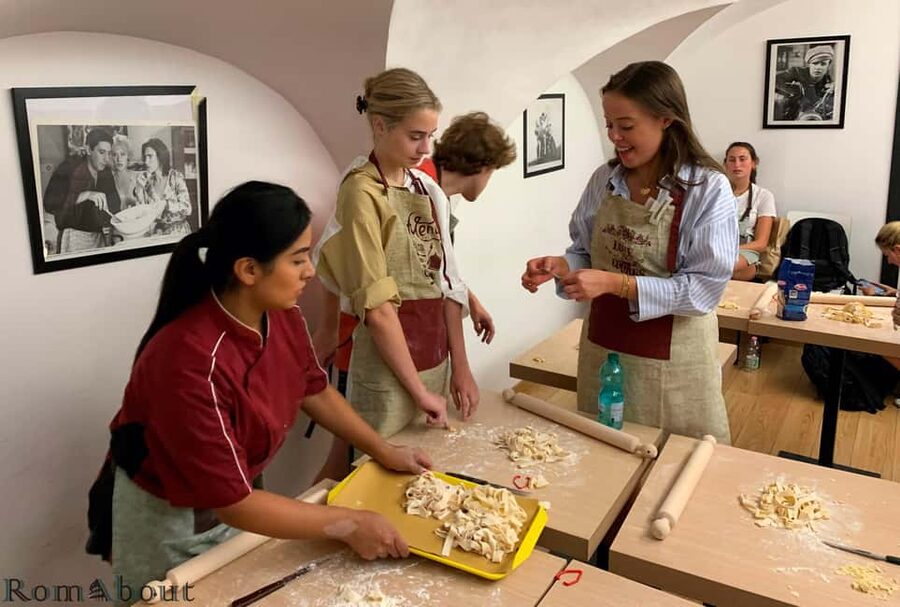
Once the tiramisu is set aside, the focus shifts to fresh pasta. You prepare the dough and work through the basic stages with the professional chef. This is the part many people picture when they think about an Italian cooking class, and it offers the most direct hands-on practice.
Fresh pasta is simple in concept, but the details matter. You learn about choosing good ingredients, bringing the dough together, and shaping it correctly. Since the class welcomes all cooking levels, you do not need to arrive with pasta-making experience.
I like that the lesson is built around a basic dough rather than an overly ambitious menu. A recipe you can remember and repeat is more useful than a complicated dish that depends on specialist tools or hard-to-find ingredients.
The class supplies all ingredients and utensils, so you do not need to pack equipment. Wear comfortable clothes and shoes, though. You will be working at a cooking station, and the class specifically asks you not to arrive barefoot.
More Pasta Making Classes in Rome
- Rome Cooking Class: Make Pasta and 3 Spritz Cocktails
★ 5.0 · 2,937 reviews - Rome: Fettuccine Pasta Cooking Class in Rome’s City Center
★ 4.8 · 2,414 reviews - Fettuccine & Tiramisù: Cooking Class with Wine & Limoncello
★ 4.9 · 2,103 reviews - Pasta Cooking Class Near the Colosseum with 3 Spritz Cocktails
★ 5.0 · 1,686 reviews
Choosing a homemade sauce for your pasta
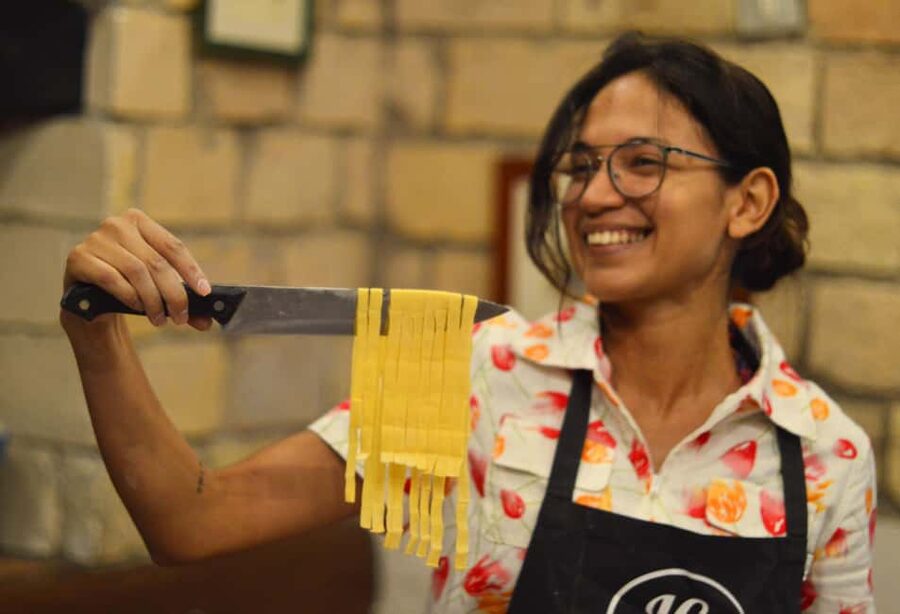
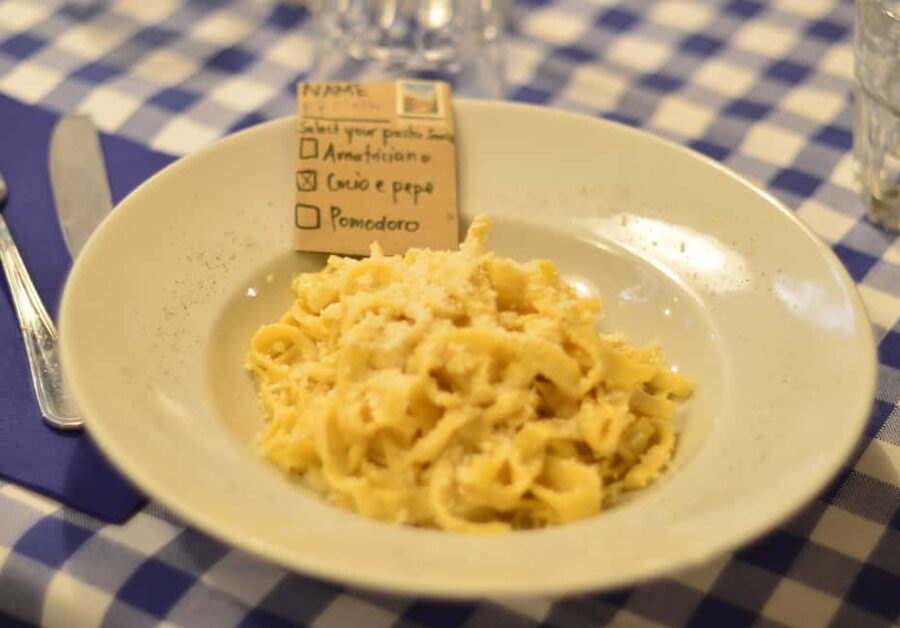
After shaping the pasta, you select the homemade sauce to serve with it. This gives you a little choice within the class instead of forcing every participant into exactly the same plate.
The sauce pairing is an important lesson. Fresh pasta has a different texture from dried pasta, so the right sauce can affect the balance of the finished dish. You get to see how a simple choice changes the result without needing a separate course on Italian menu planning.
The available information does not name the sauce options. I would treat this as a guided choice rather than a free-form cooking challenge. The chef will direct you toward a suitable homemade sauce, and the selection may depend on the class setup that day.
This part also helps the meal feel personal. Everyone follows the same broad recipe, but choosing the sauce gives you a small way to shape the final dish. If you enjoy cooking by feel, this may be the most engaging moment of the class.
Sitting down to taste your own work
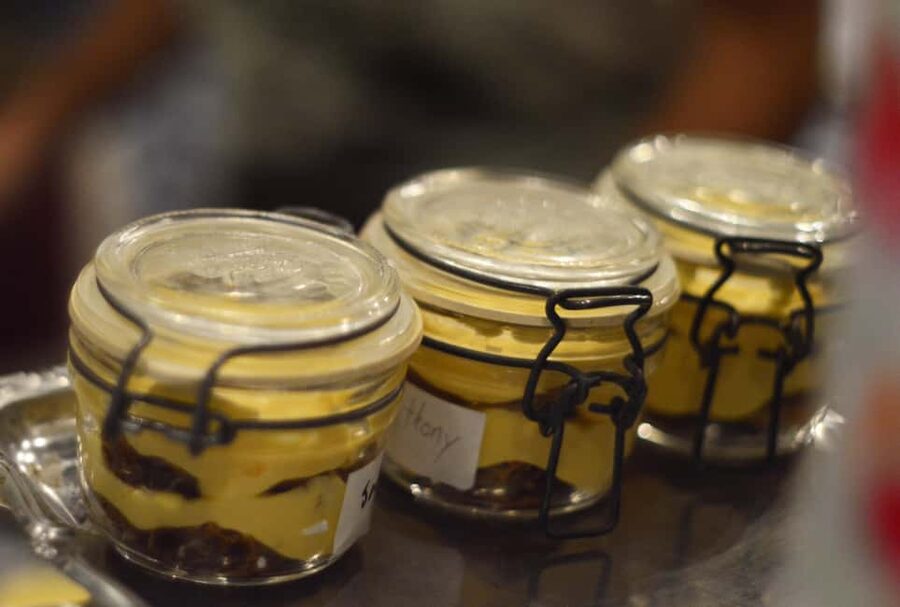
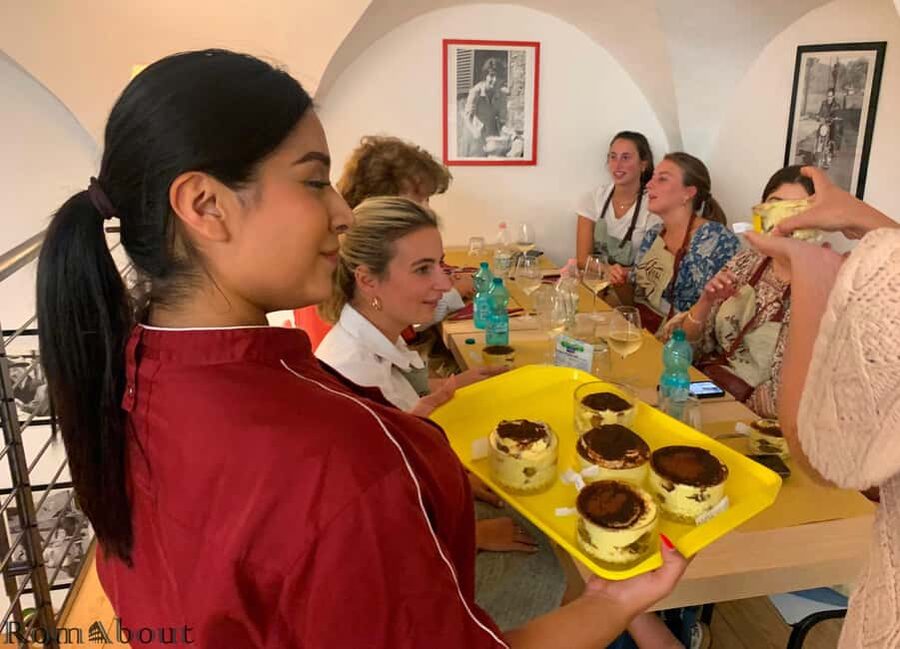
The class ends with tasting. You eat the pasta and tiramisu you prepared, along with a glass of wine and bottled water. This is more than a snack between activities. It lets you judge the texture, seasoning, and overall result while you still remember each step.
I appreciate that the food you make is part of the price. At $88 per person, you are paying for the instruction, ingredients, utensils, welcome prosecco, wine, water, and the meal itself. Compared with a standard restaurant meal, the value comes from the lesson and the social activity as much as from the food.
You should not book this expecting a large tasting menu or a long evening of drinks. Additional food and drinks are not included. Think of it as a focused cooking experience with a meal at the end.
The final tasting also makes this a good choice for couples, friends, and parent-child outings. A verified booking from Australia described a mother and son learning to make both dishes together, while another participant attended with a 7-year-old child. The activity data says children under 4 are not suitable, so older children can be considered, provided they are comfortable taking part in a cooking class.
The value of a group limited to 10
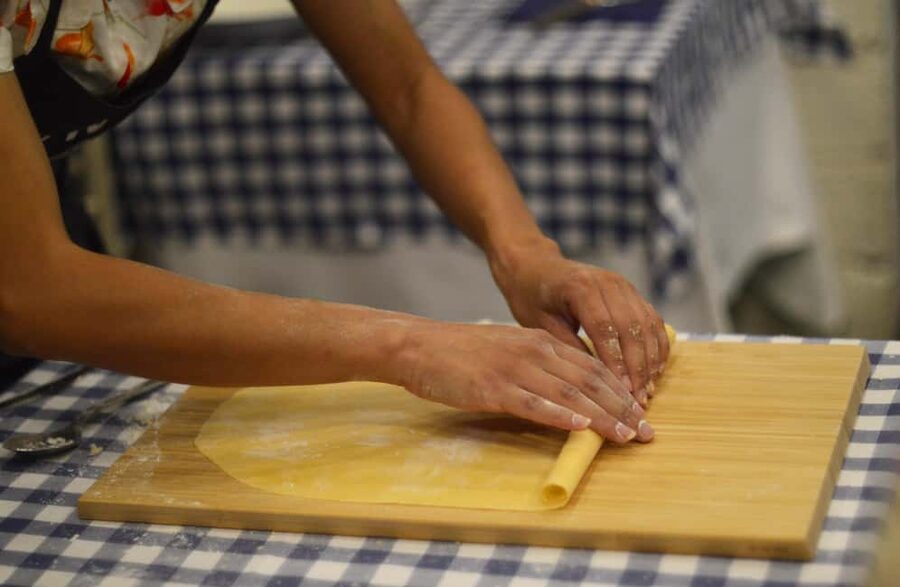
The group size is capped at 10 participants. That is small enough to keep the class more personal than a large demonstration, but it is not a private lesson unless you book the entire group.
This matters when working with dough. You may need help with texture, shaping, or the next step in the recipe. A smaller class makes it more likely that the instructor can see what you are doing and offer direct guidance.
The group size can also affect the feel of the afternoon. A table with several people gives you a social setting, while a private class would offer more individual attention. The class has also sometimes been especially small. One participant described having only two people in the session, which made the instruction feel even more personal.
The provider is Estaalia, and participant feedback names Estefanie as a friendly and attentive instructor. The supplied information does not promise that Estefanie will lead every scheduled class, so I would check the instructor details when you book. Teaching is available in English and Spanish.
Who will get the most from this experience
I would choose this class if you want to do something practical in Rome and bring home a skill, not just a photograph. It suits first-time cooks because the method is explained step by step, and it also works for experienced home cooks who want to compare techniques.
It is a strong choice for:
- Couples looking for a relaxed shared activity
- Families with children aged 4 and older
- Friends who want a meal with an activity built in
- Solo participants who enjoy small-group classes
- Home cooks interested in making pasta and tiramisu again
I would be more cautious if you have a food allergy. The activity is specifically listed as unsuitable for people with food allergies, so do not assume substitutions are available. It is also not suitable for wheelchair users, and large bags or luggage are not allowed.
Comfort matters more than dressing up. Wear clothes and shoes you can work in, and bring an appetite. The class is designed for participation, so you will get more from it if you are ready to handle the ingredients rather than sit back and watch.
Timing, meeting point, and practical planning
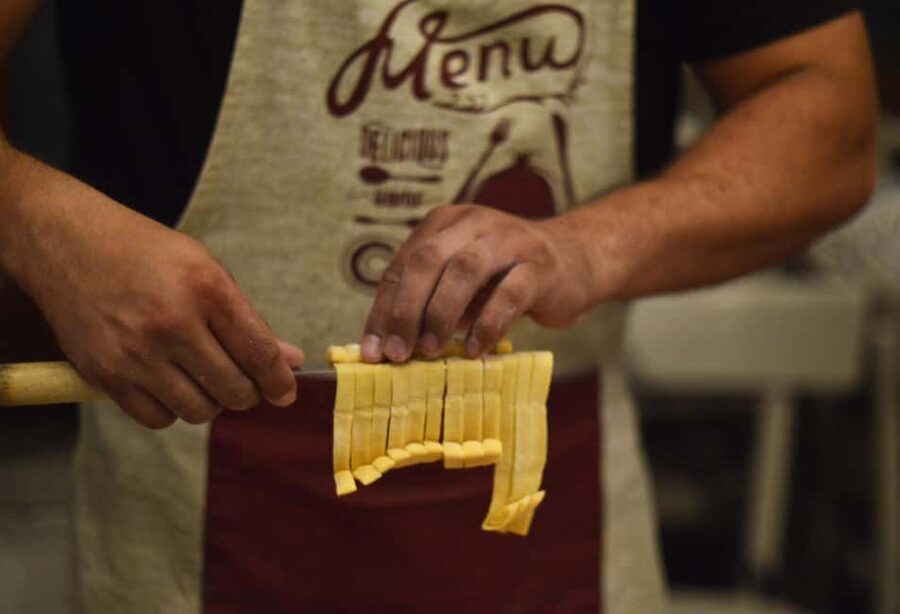
The meeting point is GOAT Gallery at Via dei Capocci, 26. Your instructor waits there, and transportation is not included. Give yourself enough time to reach the address because arriving late could cut into the hands-on portion of a short class.
Starting times vary, so you need to check availability for the date you want. The 2.5-hour duration makes it easier to fit the class into a Rome itinerary, but I would avoid booking another important activity immediately afterward. Cooking, tasting, and moving through two recipes can take the full scheduled time.
Large bags and luggage are not allowed. If you are changing hotels or carrying a suitcase, make other storage plans before arriving. Pets are also not allowed.
The booking terms are useful if your Rome plans are still shifting. You can reserve now and pay later, and cancellation is free up to 24 hours in advance for a full refund. Those terms do not remove the need to check the date carefully, but they make this easier to fit around museum visits, weather changes, or a busy sightseeing plan.
Is $88 a fair price?
At $88, this is not the cheapest way to eat pasta in Rome. You can find a plate of pasta for far less. But that is not the right comparison.
The price includes a professional chef, a 2.5-hour lesson, all ingredients, cooking utensils, prosecco, wine, water, and the dishes you prepare. You also leave with a method for making fresh pasta and tiramisu at home. If you value instruction and a social setting, the package is reasonable.
The value drops if you mainly want a large meal or a long drinks experience. The class is centered on learning, and the included food is the result of your work. Additional food and beverages cost extra, and the activity is not designed as a full evening out.
I would call it good value for someone who would otherwise pay for both a meal and a short cooking activity. It is less attractive for a visitor on a very tight budget or someone who has no interest in cooking after the trip.
My verdict on the pasta and tiramisu class
Book this experience if you want a hands-on Rome activity with a clear plan, a small group, and two recipes you can repeat at home. The strongest features are the practical format, the chance to prepare both savory and sweet dishes, and the personal scale of a group limited to 10.
I especially like the timing of the recipes. You make tiramisu first, let it set, then prepare pasta and sauce before sitting down to taste everything. That gives the class a natural rhythm instead of a series of disconnected demonstrations.
Think twice if you have food allergies, need wheelchair access, dislike active cooking, or want a big restaurant-style meal. For everyone else, $88 buys more than lunch. It buys a useful skill, a guided afternoon, and a plate of pasta you helped make from the beginning.
FAQ
Where does the Rome cooking class meet?
The meeting point is GOAT Gallery at Via dei Capocci, 26. Transportation to the venue is not included.
How long does the cooking class last?
The class lasts 2.5 hours. Starting times vary, so you need to check availability for your chosen date.
What will I prepare?
You will prepare fresh pasta, choose a homemade sauce to serve with it, and make a traditional tiramisu.
Are ingredients and cooking equipment included?
Yes. All ingredients and utensils needed for the cooking class are included.
What drinks are included?
You receive a glass of prosecco at the beginning, plus a glass of wine and a bottle of water. Additional food and drinks are not included.
Is the class suitable for children and people with food allergies?
Children under 4 are not suitable for this activity. The class is also listed as unsuitable for people with food allergies and wheelchair users.
More Hands-On Workshops in Rome
- Rome: Pasta & Tiramisu Cooking Class near the Spanish Steps
★ 4.8 · 1,395 reviews - Rome Tipsy Cooking Class: Make Pasta and Mix 3 Spritz Cocktails
★ 5.0 · 1,357 reviews - Cooking Class in the Heart of Rome: Pizza and Tiramisu Making
★ 5.0 · 1,330 reviews - Rome Cooking Class: Make Pasta, Dine & Drink Wine With Local Chef
★ 5.0 · 1,263 reviews
Just added around Rome
- ROME:Hands-On Lasagna & Marsala Tiramisu Cooking Experience”★ 5.0 · 3 reviews
- Rome: Vatican Food Tours, Cooking classes & Free Tours★ 4.9 · 11 reviews
- Rome: Small Group Pasta cooking class near Piazza Navona★ 4.9 · 8 reviews
- Rome: Trastevere Pasta Making Class★ 4.9 · 33 reviews
- Rome: Ravioli, Fettuccine and Tiramisu Cooking Class★ 4.9 · 60 reviews
- Rome: “Rooftop Pasta and Cocktails Cooking Class”★ 5.0 · 12 reviews
- Rome: Traditional Cooking Class in the Jewish Ghetto★ 4.9 · 75 reviews
- Rome: Pizza & Tiramisu Cooking Class with Meal and Drink★ 4.8 · 9 reviews
Pasta Making Classes, compared.
Florence: Pasta Cooking Class with Unlimited Wine
Read our review →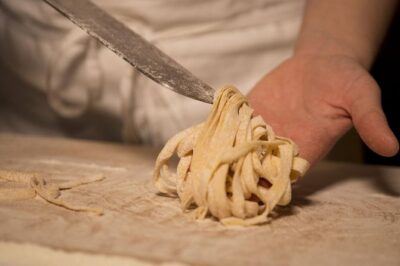
3 in 1 Cooking Class near Navona: Fettuccine, Ravioli & Tiramisu
Read our review →
Rome: Pasta Making Class with Wine, Limoncello, and Dessert
Read our review →
Rome Cooking Class: Make Pasta and 3 Spritz Cocktails
Read our review →
Rome: 3-in-1 Fettuccine, Ravioli, and Tiramisu Cooking Class
Read our review →
Rome: Fettuccine Pasta Cooking Class in Rome’s City Center
Read our review →Browse the lists this tour appears in