
Review · BOLOGNA
Bologna: Express Pasta-Making Class with Tasting
Bologna’s best food lesson is gloriously hands-on: you start with flour and eggs, then turn that dough into tortellini, tagliatelle, and farfalle before sitting down to eat it. Alessia Fiocchi teaches in a warm, home-style setting, with her kittens Pol and Ruby adding a little comic relief. I like the small group of up to 10, which gives you room to ask questions, and I like that you eat the pasta you make rather than watching a demonstration and leaving hungry.
The main catch is the clock. The advertised class lasts 90 minutes, but the meal and relaxed conversation can stretch well beyond that, sometimes past three hours. That is lovely if you have time, but you should not book a tight museum visit or train soon afterward.
Key points at a glance
- Three classic pasta dishes: Make tortellini for broth, tagliatelle for ragù, and farfalle for tomato and basil sauce.
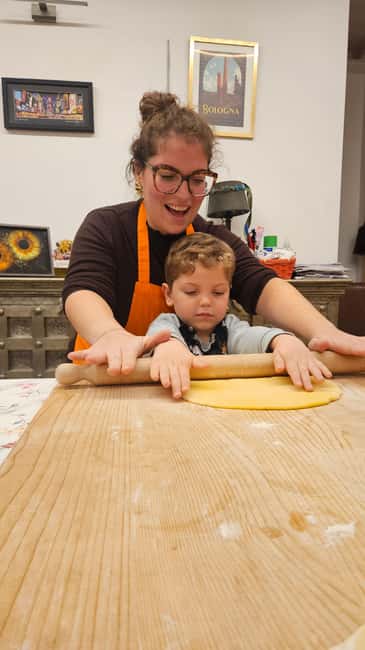
- A true rolling-pin lesson: You work the dough by hand instead of relying on a pasta machine.
- Home-style atmosphere: The class feels more like cooking with a local family than a formal school session.
- A full tasting: The experience includes an appetizer, wine, and the pasta you prepare.
- Flexible timing matters: The 90-minute class may become a much longer meal.
- Good for older children: Children under six cannot join, but children aged nine to twelve have enjoyed the class.
Why Bologna is the right place to learn pasta
Bologna is the capital of Emilia-Romagna, the part of Italy famous for filled pasta, egg pasta, ragù, mortadella, and Parmigiano Reggiano. Here, pasta is not just a restaurant order. It is part of the local household routine, shaped by hand and passed from one generation to the next.
That makes this class more useful than a generic Italian cooking lesson. You are not simply learning how to make one fashionable dish. You are working through several forms of pasta that belong to Bologna’s cooking tradition.
The lesson covers tortellini, tortelloni, tagliatelle, balanzoni, farfalle, and lasagne. You may not prepare every type as a full meal, but the range helps you see how one sheet of dough can become many different dishes. That is the real lesson: shape and thickness matter because each pasta needs the right sauce or broth.
More Pasta Making Classes in Bologna
- Bologna: Pasta Cooking Class, Ragu, Spritz, Wine & Gelato
★ 4.9 · 775 reviews - Bologna Local Pasta Cooking Class, Ragu, Spritz, Wine & Gelato
★ 5.0 · 527 reviews - Bologna: Pasta and Tiramisu Cooking Class with Wine
★ 4.7 · 507 reviews
Arriving at Via Sabotino 27
The meeting point is Via Sabotino 27. You need to go to the gray gate for cars, rather than simply waiting somewhere on the street. That detail is worth saving in your phone before you set out, especially if you are arriving after dark or using a taxi.
The class is listed as wheelchair accessible. Languages offered are English, Italian, and French, so you can choose the language that lets you follow the shaping instructions most clearly.
Wear comfortable clothes. You will be working with dough, flour, and sauces, and this is not the place for stiff sightseeing clothes. An apron is included, along with the rolling pin and the other needed materials.
The group is capped at 10 people. That is small enough for direct instruction, but it is still a shared activity. You will be cooking beside other pairs or small groups, then eating together.
Rolling pasta the Bolognese way
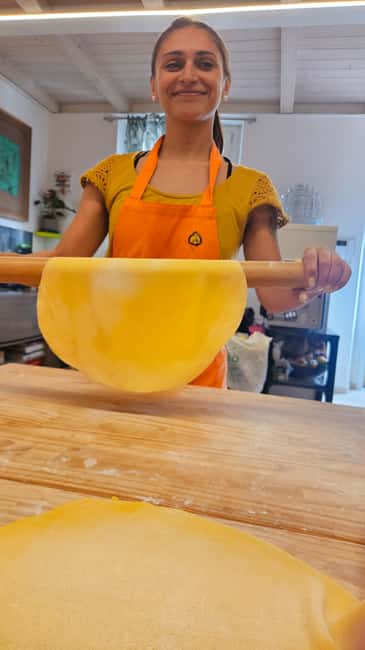
The most important practical detail is that the dough is rolled with a rolling pin. There is no shortcut through an electric machine here. You get a feel for the dough as it changes under your hands, and you learn why the sheet needs to be thin but not fragile.
This can be harder than it looks. If you have never made pasta, your first sheet may be uneven. That is fine. The point is to learn how the dough behaves, when it needs more rolling, and how to handle it without tearing.
Alessia teaches each stage step by step. The class is suitable for people who rarely cook, as well as for those who already make pasta at home. One useful part of a hands-on lesson is that mistakes become clear right away. If the dough is too thick or a shape does not hold, you can correct it before making the next piece.
You also get the chance to customize pasta color. The details of the available colors are not specified, so do not book this expecting a particular natural ingredient or design. Think of it as a playful extra rather than the main feature.
Tortellini and tortelloni: small shapes, serious patience
Tortellini are among Bologna’s signature foods. The pieces are small, filled, and folded with care, so shaping them takes more patience than making a simple ribbon pasta.
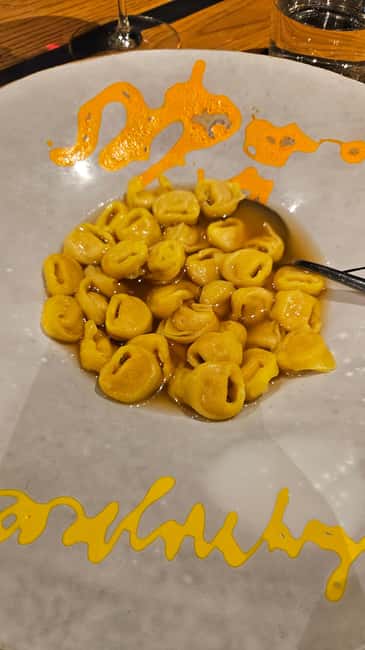
You make tortellini and eat them in broth. This pairing matters. The light broth lets the filled pasta remain the focus, while also showing why the pasta must be sealed well. A loose edge can open during cooking, which is a useful lesson you will understand better after making the pieces yourself.
Tortelloni are larger and give you more room to work. The process helps you compare the two shapes and see how size affects filling, folding, and cooking.
If you are cooking with a partner, this is a good part of the lesson to share. One person can portion the filling while the other rolls or folds, then you can switch roles. If you are alone, the small group setup gives you a chance to watch how other people approach the same task.
Do not expect factory-perfect pasta. The charm is in the small differences. A plate made by hand should look handmade.
Same place, a different menu:
- Pastamama, Home Cooking Classes at Grace’s Home
★ 5.0 · 521 reviews - Bologna: Pasta and Tiramisu Small Group Cooking Class with Wine
★ 5.0 · 409 reviews - Bologna on the plate, Cooking Class with Alessia
★ 5.0 · 260 reviews - Bologna: Pasta Tagliatelle al Ragu Cooking Class with Wine
★ 4.7 · 225 reviews
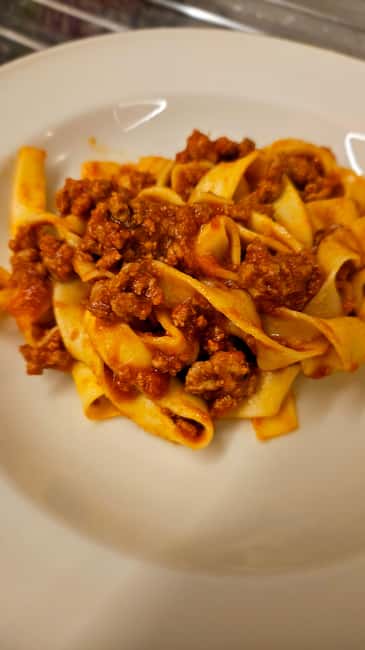
Tagliatelle with ragù
Tagliatelle is the broad, flat pasta most closely linked with Bolognese ragù. It has enough surface area and texture to hold the sauce, which is why it works better here than a very thin noodle.
You roll and cut the dough into ribbons, then eat the tagliatelle with ragù. This is a valuable pairing because it connects the shape to the sauce instead of treating pasta as a neutral base.
The class gives you a practical reference for future meals. If a menu says tagliatelle al ragù in Bologna, you will have a clearer idea of what the dish should feel like: fresh egg pasta, broad strands, and a sauce that clings rather than runs thinly across the plate.
The meal is also a chance to slow down. The kitchen work is active, but the tasting portion is social. You sit with the others, eat what you made, and enjoy wine rather than rushing off immediately.
Farfalle with tomato and basil
Farfalle adds a simpler shape to the lesson. You cut and pinch the pasta into little bow ties, then eat it with tomato and basil sauce.
This sauce is lighter and more familiar than ragù, so it gives you a useful contrast. The tagliatelle carries a hearty meat sauce, while the farfalle works with a fresh tomato and basil combination.
Farfalle can look easy, but the center pinch needs to hold. That makes it a friendly shape for beginners, while still giving you a small technical challenge.
The three finished dishes create a well-planned tasting:
- Tortellini with broth
- Tagliatelle with ragù
- Farfalle with tomato and basil sauce
You are not only sampling different pasta shapes. You are seeing how the shape, thickness, and sauce work as a set.
The aperitif, wine, and local welcome
The food begins before the pasta is ready. The experience includes an appetizer, wine, and time for coffee or tea. Salame and mortadella may be served as part of the opening aperitif, giving you a taste of Bologna’s cured-meat tradition while the dough is being prepared.
Wine is included, which helps the price feel more reasonable than a class that charges extra for every drink. You should still keep the focus on the cooking. The wine supports the meal, but it is not the reason to book.
Pol and Ruby, Alessia’s kittens, may also be around during the class. If you like animals, they add to the home setting. If you have allergies or are uncomfortable around cats, keep that in mind before booking. The supplied information does not give a separate allergy policy, so you should ask ahead if this is important to you.
The overall tone is relaxed and personal. Alessia is described as friendly, clear, and willing to take her time. That last point is part of the appeal, but it also explains why the experience may run long.
How long should you really allow?
The official duration is 1.5 hours. That is the time to use when comparing the activity with other short classes, but it may not be the total time you spend at the home.
A session that includes the full meal has lasted more than three hours. Another class ran beyond its planned finish because the group was enjoying the food and conversation. This is not necessarily a problem. In Bologna, a shared meal is part of the experience, not an obstacle to get past.
Still, plan carefully. If you have an opera performance, train, food tour, or timed museum entry two hours later, leave a generous gap. I would treat 90 minutes as the minimum advertised teaching time, not a firm door-to-door schedule.
The longer pace is best for people who want a social meal. It is less suitable if you only want to learn one quick pasta shape and leave.
Is $62 a good value?
At $62 per person, the price is strong for what is included. You get instruction, ingredients and equipment, an apron, a rolling pin, the pasta class, an appetizer, wine, and a meal made from your own work.
A restaurant meal in Bologna may cost less if you choose a simple plate, but it will not teach you how the dish is made. A formal cooking school may offer more polished facilities, but it may also cost more and feel less personal.
The value here comes from combining three things:
- A practical lesson you can repeat at home
- A tasting of several Bolognese pasta styles
- A relaxed meal with local food and wine
The price is especially fair for couples or friends who want an activity that gives you something to talk about afterward. It is also a good choice for a rainy afternoon, when a long meal and kitchen lesson can replace several hours of sightseeing.
The value is weaker if you are only interested in eating. You are expected to participate, roll, cut, fold, and pay attention. That is the point of the class.
Who will enjoy this most?
I would recommend it to first-time pasta makers, food-focused visitors, couples, and small groups of friends. You do not need advanced cooking skills. In fact, the class works well if one person in your party cooks often and the other rarely cooks, since both can take part at their own level.
Families can also enjoy it, but children must be at least six years old. Children aged nine to twelve have taken part successfully and enjoyed making the pasta. Younger children may find the rolling and folding slow, and children under six are not allowed.
The class is a particularly good fit if you want to take home a skill rather than only a photograph. You will not leave with packaged pasta, but you can try the techniques again once you have access to flour, eggs, and a rolling pin.
It is less suitable for anyone seeking a polished restaurant-style demonstration with no messy work. It is also not ideal for a strict schedule, a very quiet meal, or anyone who does not eat pasta.
What to know before you book
The class is indoors, and smoking is not allowed inside. Comfortable clothing is the only listed item to bring. The apron and rolling pin are provided, so you do not need to pack cooking tools.
You can cancel up to 24 hours in advance for a full refund, and the booking option allows you to reserve now and pay later. Those terms help if your Bologna plans are still shifting.
Wheelchair access is available, but the supplied information does not explain the exact layout or bathroom arrangements. If you need specific access details, contact the provider before booking.
The class is offered in English, Italian, and French. Ask for the language you prefer when arranging your place, especially if you want to follow detailed shaping instructions without guessing.
Should you book Alessia’s pasta class?
Book it if you want to learn classic Bolognese pasta in a warm, home-style setting and you have time to let the meal unfold. The best parts are the direct work with a rolling pin, the three different pasta-and-sauce pairings, the small group, and the chance to eat what you have made.
Do not book it as a quick 90-minute stop between major attractions. The class may turn into a three-hour food experience, and that relaxed pace is part of its character.
At $62, with materials, an aperitif, wine, instruction, and a full tasting included, I consider it a good buy for food lovers. If your trip to Bologna needs one activity that explains the city through its cooking, this is a sensible choice.
FAQ
How long does the Bologna pasta class last?
The advertised class lasts 1.5 hours. The meal and conversation may continue longer, and a session with lunch has lasted more than three hours.
Which types of pasta will I make?
You may learn to make tortellini, tortelloni, tagliatelle, balanzoni, farfalle, and lasagne. The planned tasting includes tortellini, tagliatelle, and farfalle.
What sauces are served with the pasta?
Tortellini are eaten in broth, tagliatelle are served with ragù, and farfalle are paired with tomato and basil sauce.
Is wine included?
Yes. The experience includes wine and an appetizer. Coffee and tea are also listed among the available food and drink components.
Can children join the class?
Children under six are not allowed. Children aged six and older may join, and children aged nine to twelve have taken part in the class.
Is the class wheelchair accessible?
Yes, the activity is listed as wheelchair accessible. For specific layout or facility questions, contact the provider before booking.
More Hands-On Workshops in Bologna
- Authentic Bologna Home Cooking Class: Tagliatelle & Tortellini
★ 4.5 · 136 reviews - Cesarine: Home Cooking Class & Meal with a Local in Bologna
★ 5.0 · 75 reviews - Bologna: Original Lasagna & Gelato Class at a Cooking School
★ 4.9 · 59 reviews - Bologna: Tagliatelle & Ragù Home Cooking Class with wine
★ 4.5 · 55 reviews
More Food and Drink Tours in Bologna
- Small Group Cooking Class & Market Food Tour in Florence
★ 5.0 · 1,574 reviews - Pasta Making & Wine Tasting with Dinner in Frascati from Rome
★ 5.0 · 1,326 reviews - Paella Cooking Class, Wine Tasting & Central Market in Valencia
★ 5.0 · 1,150 reviews - Athens: Food Market Visit and Cooking Class with Wine
★ 4.9 · 1,087 reviews
Just added around Bologna
- Bologna: Original Lasagna & Gelato Class at a Cooking School★ 4.9 · 59 reviews
- Bologna: Pasta-Making Class at a Local’s Home★ 5.0 · 23 reviews
- Bologna: Cooking Class at a Local’s Home★ 4.6 · 13 reviews
- Authentic Bologna Home Cooking Class: Tagliatelle & Tortellini★ 4.5 · 136 reviews
- Cesarine: Home Cooking Class & Meal with a Local in Bologna★ 5.0 · 75 reviews
- Bologna: Tagliatelle & Ragù Home Cooking Class with wine★ 4.5 · 55 reviews
- Bologna: Pasta and Tiramisu Cooking Class with Wine★ 4.7 · 507 reviews
- Bologna: Pasta Tagliatelle al Ragu Cooking Class with Wine★ 4.7 · 225 reviews
Pasta Making Classes, compared.
Florence: Pasta Cooking Class with Unlimited Wine
Read our review →
3 in 1 Cooking Class near Navona: Fettuccine, Ravioli & Tiramisu
Read our review →
Rome: Pasta Making Class with Wine, Limoncello, and Dessert
Read our review →
Rome Cooking Class: Make Pasta and 3 Spritz Cocktails
Read our review →
Rome: 3-in-1 Fettuccine, Ravioli, and Tiramisu Cooking Class
Read our review →
Rome: Fettuccine Pasta Cooking Class in Rome’s City Center
Read our review →Browse the lists this tour appears in