Review · BOLOGNA
Bologna: Pasta Cooking Class, Ragu, Spritz, Wine & Gelato
Bologna’s best souvenir may be a pasta skill you can use at home. In this three-hour class, you roll egg dough by hand, cut it into tagliatelle, and eat it with house-made ragù, Parmigiano Reggiano, and local wine. I especially like the warm social setup, with aperitivo and simple icebreaker games, and the careful use of Emilia-Romagna ingredients.
I also like that the class adds more than pasta: you make a Casoni Spritz, taste Pignoletto and Sangiovese, then finish with coffee, amaro, and gelato with balsamic vinegar. The main limitation is clear: you do not prepare the ragù, and people with vegan, vegetarian, or gluten-free diets cannot join.
Key points
- Handmade tagliatelle: Mix, roll, shape, slice, and cook fresh egg pasta with a rolling pin.
- Aperitivo before the work begins: Start with piadina, Mortadella, and Pignoletto sparkling wine.
- A local drink lesson: Prepare a Casoni Spritz made with an Emilia-Romagna spirit and local herbs.
- A full Bolognese meal: Eat your pasta with house ragù, 24-month-aged Parmigiano Reggiano, and Sangiovese.
- A memorable finish: Try Moka coffee, a bitter digestif, and gelato with balsamic vinegar.
- Good value at $79: The price covers food, drinks, instruction, leftovers, water, recipes, and a three-hour social experience.
Why Handmade Pasta Matters in Bologna
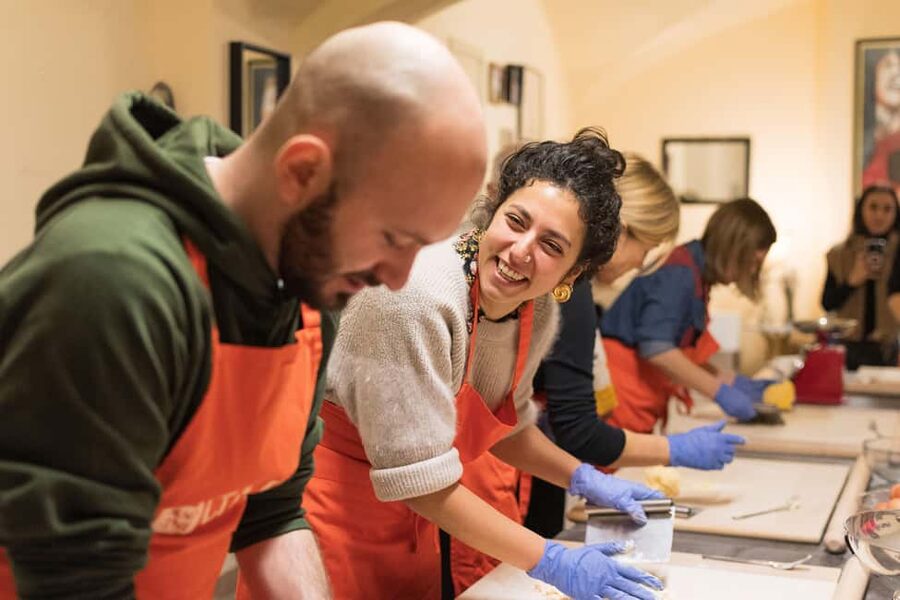
Bologna is closely tied to fresh egg pasta, and this class gives you the useful version of that story. You are not simply watching someone stretch dough across a counter. You work with flour, eggs, your hands, and a rolling pin, then shape the pasta yourself.
That old-fashioned method is part of the appeal. You learn how the dough feels, how much pressure to use, and how to cut narrow ribbons without a machine. The class is designed for first-timers, so you do not need previous cooking experience. The instructors explain each stage clearly and help when the dough needs correcting.
Your teacher is an English-speaking local sfoglina, or pasta maker. Different sessions may have different instructors, including Luca, Stella, Martina, Valentina, Roberta, Beatrice, Steffi, Claudia, Claire, and others who have led recent classes. The repeated praise for instructors such as Valentina, Stella, Steffi, and Roberta points to the same useful quality: patient teaching with plenty of encouragement.
The class also gives you time to talk with people from other countries. That is not a side issue. Pasta making involves pauses while dough rests and water heats, and the hosts use those moments for games and conversation. If you are traveling alone, this can be an easy way to meet people without having to force small talk over a formal meal.
More Cooking Classes with Wine Tasting in Bologna
- Bologna Local Pasta Cooking Class, Ragu, Spritz, Wine & Gelato
★ 5.0 · 527 reviews - Bologna: Pasta and Tiramisu Cooking Class with Wine
★ 4.7 · 507 reviews - Bologna: Pasta and Tiramisu Small Group Cooking Class with Wine
★ 5.0 · 409 reviews
Aperitivo With Mortadella, Piadina, and Pignoletto
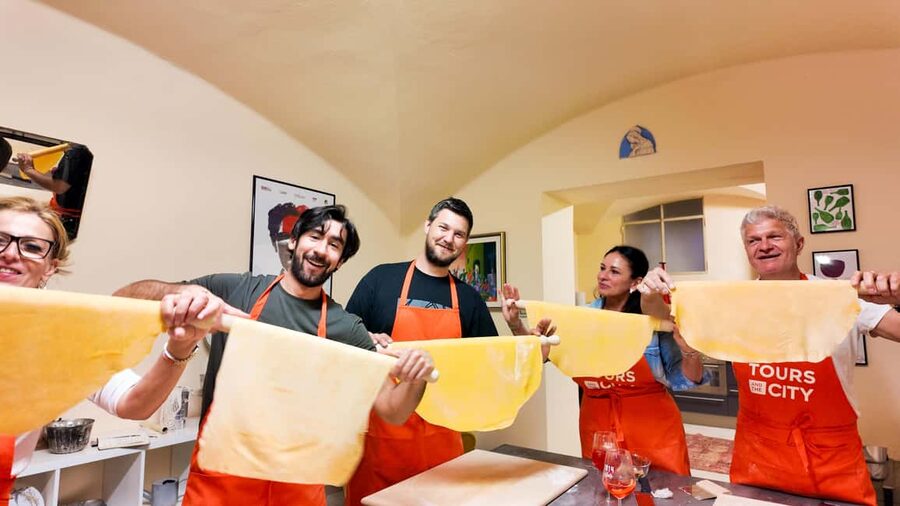
The opening aperitivo gets the room talking before anyone has flour on their hands. You begin with piadina, the soft flatbread associated with Romagna, slices of Mortadella, and glasses of Pignoletto, a local sparkling white wine.
This is a smart start for two reasons. First, it introduces familiar local flavors without requiring much explanation. Second, it gives you a chance to settle in, meet the instructors, and learn who is sharing the worktable.
Mortadella is especially fitting here. Bologna gave this sausage its name, and tasting it in the city makes the opening snack feel tied to place rather than like generic catering. Piadina adds a simple, bread-like contrast.
The wine is part of the experience, not an optional extra. If you do not drink alcohol, unlimited water and soft drinks are included, but the class is built around its food and drink pairings. People with serious allergies should contact the provider before booking, since severe allergies may prevent the class from hosting you.
Mixing Dough the Traditional Way
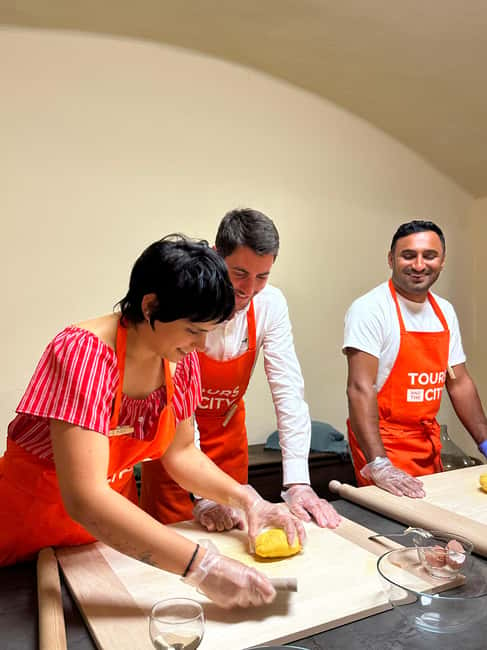
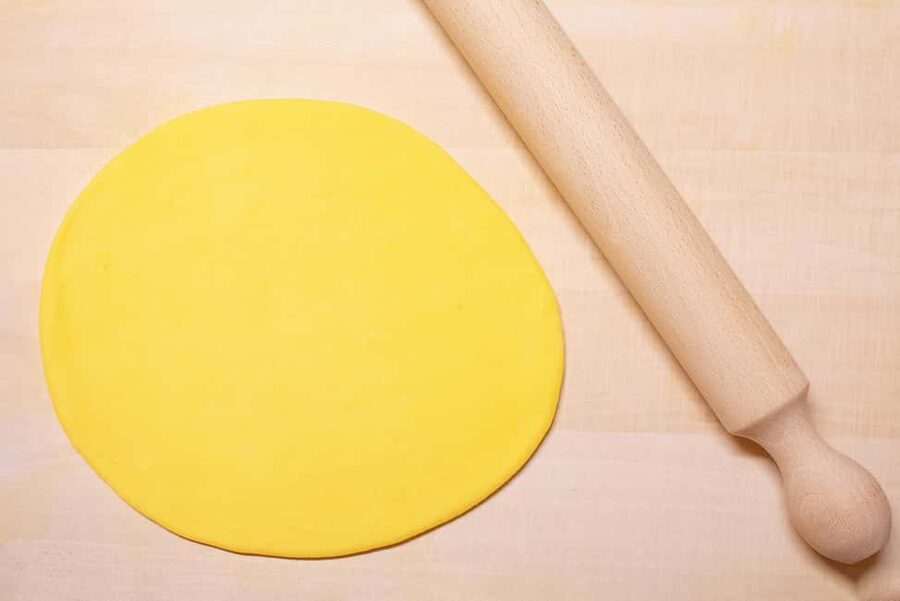
The practical centerpiece is the tagliatelle lesson. You make pasta dough from fresh eggs and flour sourced mainly from nearby producers in the Bologna province. There are no pasta machines doing the hard work for you. The rolling pin is the main tool.
You will mix the ingredients, knead the dough, and roll it thin enough to cut. The exact result may not look perfect, and that is part of the fun. Handmade pasta often varies slightly from piece to piece. Your instructor helps you troubleshoot problems, such as dough that feels too dry or ribbons that stick together.
The class keeps the process approachable. You learn by doing rather than copying a long demonstration from a distance. Recent class participants have singled out the clear instructions and patient help, which matters when a simple-looking pasta technique suddenly becomes harder at your own worktable.
Bring comfortable clothes and shoes. Flour, rolling, lifting, and moving around a kitchen are easier when you are dressed for activity rather than for a formal night out.
Making a Casoni Spritz
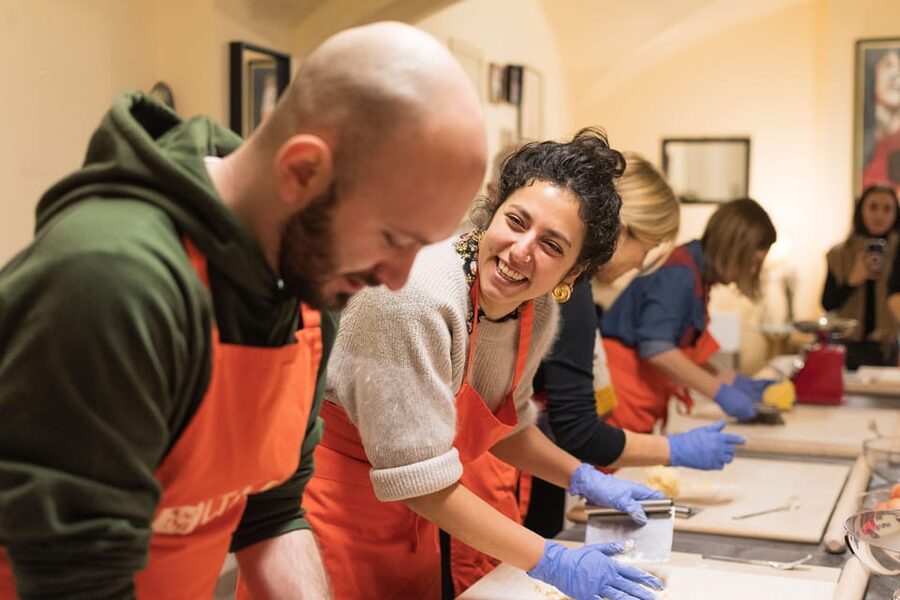
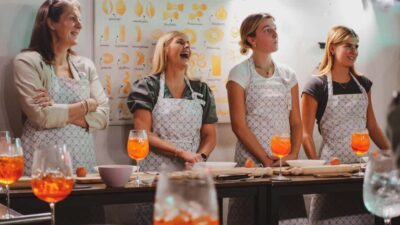
At some point during the pasta work, you prepare your own Casoni Spritz. This is not simply an Aperol Spritz with a different label. Casoni is an Emilia-Romagna spirit made with local herbs and traditional recipes, giving the drink a more regional identity.
You learn how to mix it, then sip the drink as the class continues. That timing keeps the three-hour session from feeling like a straight cooking lesson. The drink also gives you a break from rolling dough and adds a bit of ceremony to the middle of the class.
The experience includes cocktails and spritz, along with local Pignoletto and Sangiovese. Alcohol is spread through the session rather than saved for one final toast, so pace yourself. Water and soft drinks are available without limit.
More Cooking Classes with Wine Tasting in Italy
- Bologna: Pasta Tagliatelle al Ragu Cooking Class with Wine
★ 4.7 · 225 reviews - Bologna: In-Home Italian Pasta Making Workshop with Wine
★ 4.7 · 131 reviews - Bologna: Pasta Cooking Class, Ragu & Wine with Local Host
★ 4.9 · 113 reviews - Bologna: Tagliatelle & Ragù Home Cooking Class with wine
★ 4.5 · 55 reviews
Why the Ready-Made Ragù Is Both Good and Limited
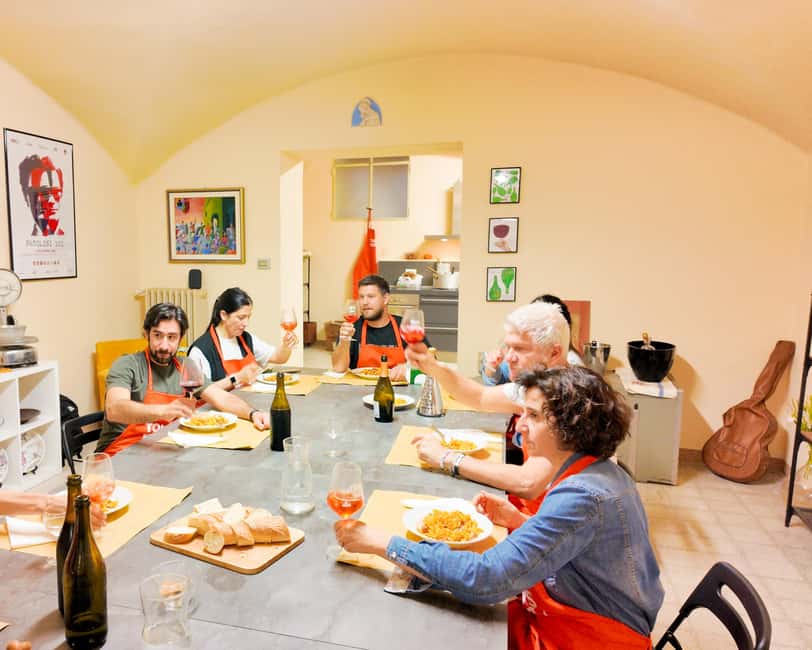
Once your tagliatelle is cut, it is cooked and served with a house ragù. The sauce is prepared in advance each week according to a family tradition. It uses the slow, careful approach expected of a serious Bolognese meat sauce, but you do not make it yourself.
That distinction is worth noting before you book. If your main goal is to learn ragù from start to finish, this is not the right class. The schedule is built around pasta, and making the sauce during the same three hours would leave little time for the hands-on work.
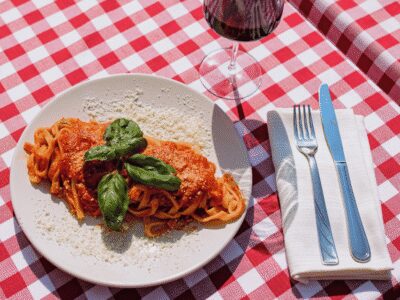
The benefit is that you get to eat the pasta at its best without rushing a sauce through an abbreviated recipe. Your finished tagliatelle is served with the prepared ragù and 24-month-aged Parmigiano Reggiano from a local dairy. The combination gives you the classic Bolognese plate the class is aiming for.
You can take your leftovers with you. That small detail adds real value, since fresh pasta made by your own hands is more useful at home than another printed souvenir.
Sangiovese, Parmigiano, and the Meal You Make
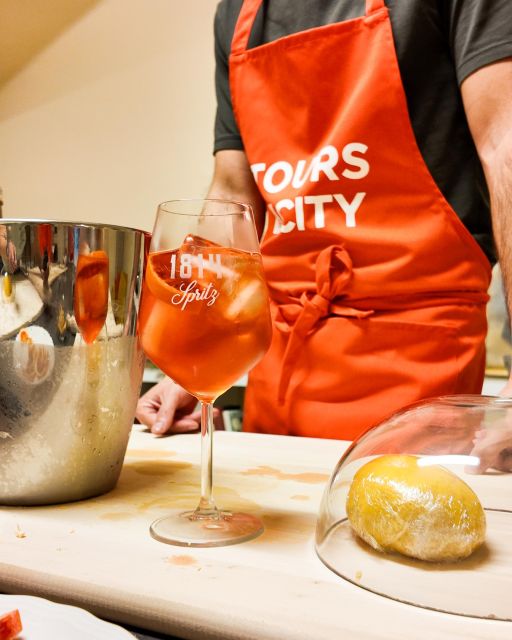
The main meal is simple and satisfying: your tagliatelle, house ragù, aged Parmigiano Reggiano, and Emilia-Romagna Sangiovese. The wine gives you a red pairing with local roots, and the cheese adds the salty, nutty finish that fresh pasta needs.
I like this part of the class because it connects the work to the reward without turning the meal into a separate restaurant stop. You made the pasta, watched it cook, and now you can judge the texture for yourself.
The meal is also where the class feels most generous. At $79 per person, you are not paying only for a short demonstration. The price includes the aperitivo, two styles of wine, the spritz workshop, the full pasta lesson, lunch or dinner, coffee, digestif, dessert, water, and leftovers.
That is strong value if you want both a cooking activity and a meal. It is less compelling if you only want a quick pasta lesson and would rather spend the rest of your budget at a restaurant. The social element is part of what you are buying, so choose this class if you enjoy eating and talking with a group.
Gelato With Balsamic Vinegar
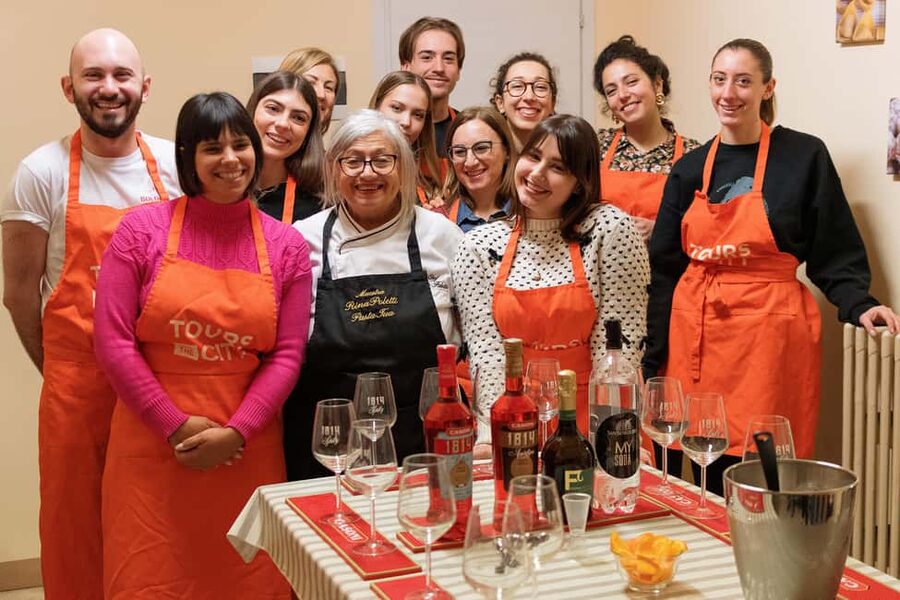
The final course is gelato with balsamic vinegar, a local-style combination that may sound unusual if you have only had balsamic on salad. The sweet gelato and sharp, concentrated vinegar create the class’s playful last bite.
The exact flavor is treated as something of a mystery dessert, so you should not expect a standard list of options. The point is to finish with a regional twist rather than an ordinary scoop of ice cream.
After the gelato, you have Moka coffee and a bitter digestif, identified as Montenegro. Coffee from a Modena roastery and spirits from Emilia-Romagna continue the focus on nearby producers.
This ending makes the class feel like a complete Italian meal. You leave with the pasta lesson behind you, a full stomach, and recipes sent by email in PDF format so you can try the process at home.
The Setting, Meeting Point, and Practical Details
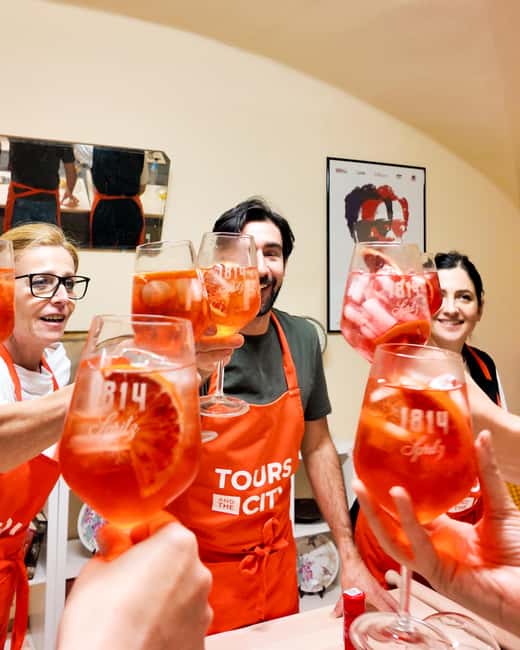
The class takes place in a traditional kitchen in central Bologna. The exact address is provided with the booking details, and the guides meet you outside the building at the scheduled time. Look for the orange apron, which makes the meeting point easier to spot.
Arrive on time. The experience is paced around food preparation, cooking, and shared eating, so arriving late could mean missing the opening aperitivo or the first dough instructions.
The class lasts three hours and is conducted in English. It works well as an afternoon or evening plan, especially if you want a break from museums and churches without giving up a strong connection to local culture.
There is a large flight of stairs at the venue. The class is not recommended if you need a wheelchair, crutches, or have significant mobility needs. That is important to check before booking, since the stair access is a fixed feature of the location.
You can cancel up to 24 hours before the start time for a full refund, and a reserve-now, pay-later option is available. Those policies are useful if your Bologna schedule is still shifting.
Who Will Enjoy This Class Most
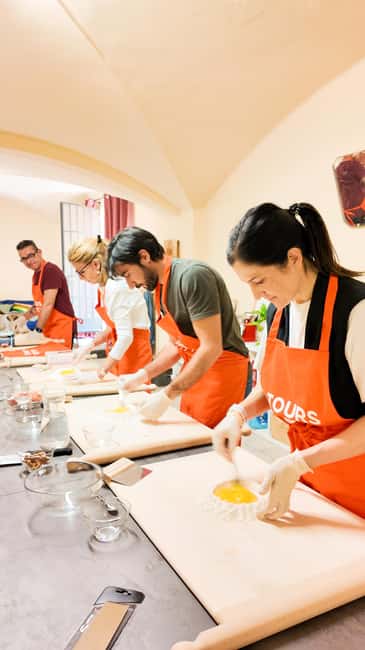
I would recommend this for couples, families with children, solo visitors, and friends who like a social activity. The class has enough structure to keep a family group focused, while the games and shared table give solo participants a natural way to connect.
It is also a good choice for a short stay. You taste several local specialties and learn a practical skill in one three-hour block. You do not need to spend a full day outside the city to get a sense of Bolognese food traditions.
You should skip it if you are vegan, vegetarian, or gluten intolerant. The menu centers on egg pasta, ragù, Mortadella, Parmigiano, and other ingredients that do not fit those diets. Serious food allergies need advance discussion, and the provider may not be able to accommodate every requirement.
This is also not the best fit if you want a quiet, private lesson. The class is designed around meeting other people, shared drinks, conversation, and a lively kitchen atmosphere. A private booking may happen if no one else has booked, but you should not count on that when making your plans.
Is the Bologna Pasta Class Worth $79?
Yes, for most visitors who want an active food experience rather than a standard restaurant meal. The class combines hands-on pasta making with a substantial spread of food and drinks, and the recipe PDF gives you something useful to take home.
The strongest parts are the patient English instruction, the old-style rolling-pin technique, the local Casoni Spritz, and the way the hosts keep strangers talking. The main compromise is the pre-made ragù. You learn how to make the pasta, not the complete sauce.
Book it if you want to spend three hours cooking, drinking, eating, and meeting people in central Bologna. Pass if you have strict dietary restrictions, mobility concerns involving stairs, or a specific goal of learning ragù from scratch.
FAQ
How long does the Bologna pasta class last?
The class lasts three hours. You learn to make tagliatelle, prepare a Casoni Spritz, eat the finished pasta, and finish with coffee, amaro, and gelato.
What food and drinks are included?
The experience includes piadina, Mortadella, Pignoletto sparkling wine, a Casoni Spritz, tagliatelle with ragù, Parmigiano Reggiano, Sangiovese, Moka coffee, a bitter digestif, and gelato with balsamic vinegar. Water and soft drinks are also included.
Do I make the ragù myself?
No. The ragù is prepared in advance each week according to a family recipe. You make the fresh tagliatelle and serve it with the prepared sauce.
Is the class suitable for vegetarians, vegans, or people with gluten intolerance?
No. The activity is listed as unsuitable for vegans, vegetarians, and people with gluten intolerance. You should also report dietary requirements in advance, especially severe allergies.
What should I bring?
Wear comfortable shoes and comfortable clothes. The guides meet you outside the building at the exact booking time and wear orange aprons.
Is the class accessible by wheelchair?
The venue has a large flight of stairs, so the experience is not recommended for people who need a wheelchair, crutches, or similar mobility support.
More Pasta Making Classes in Bologna
- Authentic Bologna Home Cooking Class: Tagliatelle & Tortellini
★ 4.5 · 136 reviews - Learn and taste the real bolognese ragù and pasta making
★ 4.8 · 32 reviews - Bologna: Pasta-Making Class at a Local’s Home
★ 5.0 · 23 reviews - Bologna: Express Pasta-Making Class with Tasting
★ 5.0 · 21 reviews
More Dessert Classes in Bologna
- Bologna: Pasta & Tiramisu Cooking Class at a Local’s Home
★ 4.9 · 67 reviews - Bologna: Original Lasagna & Gelato Class at a Cooking School
★ 4.9 · 59 reviews - Bologna: Pasta & Tiramisu Cooking Class at a Local’s Home
★ 4.9 · 54 reviews - Gelato Making Class in Bologna City center Cooking School
★ 4.7 · 43 reviews
Just added around Bologna
- Bologna Walking Tour & Traditional Cooking Class with Wine★ 5.0 · 3 reviews
- 3 hour Lasagna Bolognese cooking class★ 5.0 · 6 reviews
- Traditional Bolognese Cooking Class in Bologna with Giovanna S★ 5.0 · 6 reviews
- Lasagna Masterclass: Learn, Cook & Taste Authentic Bolognese★ 5.0 · 4 reviews
- Private Market Tour and Cooking Class in Bologna with Giovanna C★ 5.0 · 20 reviews
- Pasta Making Class: Tagliatelle & Bolognese Sauce★ 5.0 · 15 reviews
- Cesarine: Market Tour & Cooking Class at Local’s Home in Bologna★ 5.0 · 19 reviews
- Bolognese Cooking Class with Margherita in the Historic Center★ 5.0 · 26 reviews
Pasta Making Classes, compared.
Florence: Pasta Cooking Class with Unlimited Wine
Read our review →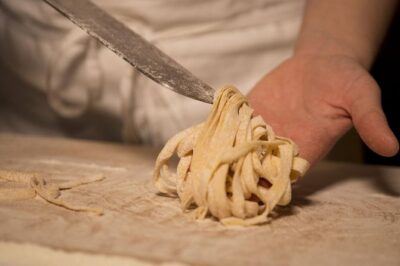
3 in 1 Cooking Class near Navona: Fettuccine, Ravioli & Tiramisu
Read our review →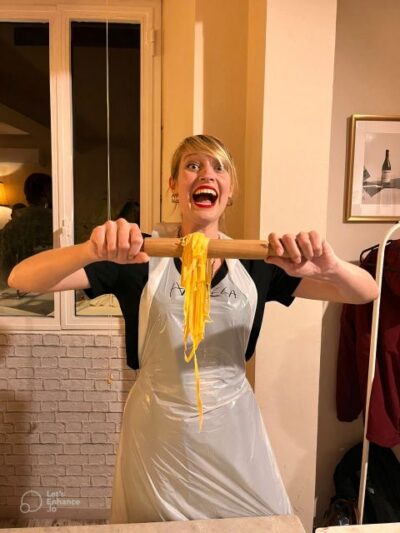
Rome: Pasta Making Class with Wine, Limoncello, and Dessert
Read our review →
Rome Cooking Class: Make Pasta and 3 Spritz Cocktails
Read our review →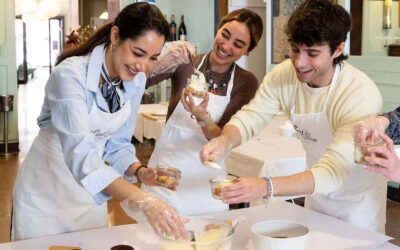
Rome: 3-in-1 Fettuccine, Ravioli, and Tiramisu Cooking Class
Read our review →