
Review · MOROCCO
Chefchaouen Cooking Class
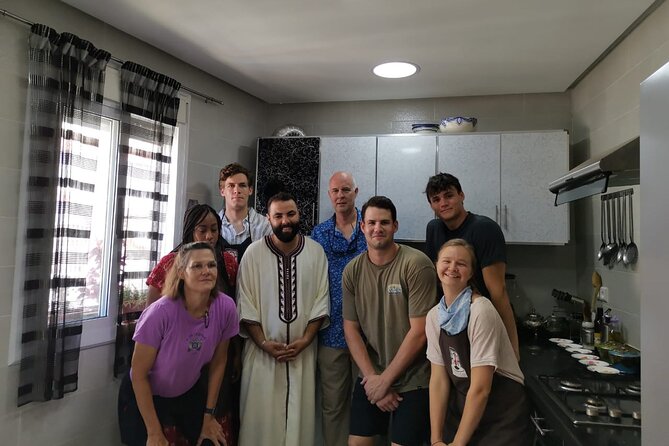
Chefchaouen’s best food lesson starts before anyone turns on the stove. You’ll walk through a local market with your chef, choose the ingredients for the meal, then prepare and eat three Moroccan courses in a home-style setting. Chef Youssef is known for his warm manner, good English, and local knowledge.
I like the market visit because it shows you how people shop for fresh food in Chefchaouen, not just how a finished tagine reaches the table. I also like the small group limit of 10, which gives you a better chance to ask questions and get close to the cooking. The main consideration is that the class may involve several dishes, so you could spend more time watching than handling the food yourself.
Key points about the Chefchaouen cooking class
- Market first: You select the fresh ingredients with the chef before cooking begins.
- Chef Youssef: He brings a local connection, speaks good English, and adds food, history, and culture to the outing.
- Three-course meal: Your lunch includes three Moroccan dishes, followed by coffee or Moroccan mint tea with cookies.
- Small-group setting: The class accepts no more than 10 people, making it more personal than a large demonstration.
- Practical format: Kitchen tools, chef assistance, and the market visit are included.
- Simple timing: Meet at Hotel Bab El Ain at 11 a.m. for an experience lasting about three hours.
Starting at Hotel Bab El Ain at 11 a.m.
The meeting point is Hotel Bab El Ain, at Rue Lala Horra, Kayssariya No. 77, in Chefchaouen’s 91000 postal area. The meeting place includes the hotel’s salon de thé, or tea salon, which gives you a clear spot to find before the group sets off.
The class begins at 11 a.m. That timing works well for a cooking experience because it leads naturally into lunch. You will not spend the morning cooking and then wait hours to eat. The activity lasts about three hours and returns to the same meeting point.
I recommend arriving with enough time to locate Hotel Bab El Ain without rushing. Chefchaouen’s old streets can be confusing, and a calm start matters when you are carrying a phone, camera, or shopping bag. The experience has a mobile ticket, so you can keep your booking confirmation on your phone.
The meeting point is near public transportation. Still, the supplied details do not specify a pickup service, so plan to reach the hotel on your own. The activity ends back at the starting point, which makes it easy to continue exploring the blue-painted streets afterward.
More Hands-On Workshops in Morocco:
- Marrakech: Moroccan Cooking Class with Pickup
★ 4.6 · 1,862 reviews - Marrakech: Traditional Moroccan Cooking Class & Market Visit
★ 4.8 · 1,861 reviews - Marrakesh: Moroccan Dishes Cooking Class with a Local Chef
★ 5.0 · 1,615 reviews
Choosing ingredients in Chefchaouen’s local market
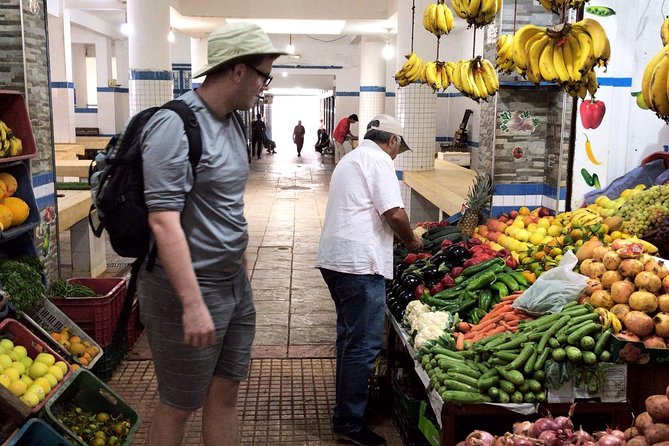
The first part of the class takes place in the local market. You walk with the chef and help select the food needed for the meal. This is more useful than simply being handed ingredients in a kitchen, since you see the shopping habits behind Moroccan home cooking.
A market visit also gives the class a local rhythm. You can look at the produce, notice how food is sold, and ask why particular ingredients are chosen. The chef can explain what to look for and how the items will be used once you return to the kitchen.
Chef Youssef’s local connection is one of the strongest reasons to book this experience. He is from Chefchaouen and can link the food to the town’s culture and past. He is also described as personable and comfortable speaking English, which matters when the class depends on clear instructions.
Do not expect a formal market lecture with a long list of facts. The focus is practical shopping for the cooking session. That is part of the appeal. You are not just passing through a market with a camera. You are choosing food that will become your lunch.
The market stop also makes the class a good choice for anyone who wants to understand Moroccan food beyond a restaurant menu. You get to see the starting point, then follow the ingredients through preparation and into the finished meal.
Moving from the market to the kitchen
After shopping, you return to the cooking location and begin the hands-on part of the experience. The class provides kitchen tools and chef assistance, so you do not need to bring equipment or know Moroccan cooking before you arrive.
The setting is described as a home-style cooking experience, though one account also refers to preparing the food in an actual restaurant. The practical point is that you should expect a working kitchen and a shared cooking session, not a private lesson with one person receiving constant one-to-one instruction.
That distinction matters. A small group of 10 or fewer is still manageable, but it is not the same as cooking alone with a chef. You may take part in some steps while watching others. The pace can also depend on how many dishes are being prepared and how many people need a turn.
One useful tip is to tell the chef at the start that you want as much hands-on work as possible. A past vegetarian class participant enjoyed the market shopping and cooking but wanted fewer dishes and more time actively preparing food. That is fair advice for anyone booking this experience. If you care more about technique than variety, say so early.
The cooking session is likely to suit you best if you enjoy a social kitchen and are happy to learn by watching, asking questions, and taking part when invited. If you want a highly structured school-style lesson in which you prepare every element yourself, this may feel less complete.
Preparing three Moroccan courses
The meal includes three courses. The supplied details do not name the dishes, so you should not book with the expectation of preparing a particular tagine, couscous, salad, or pastry. The menu is based on the ingredients selected at the market and the cooking plan for the day.
That lack of a fixed dish list has both a benefit and a drawback. You get a meal tied to local ingredients instead of a rigid demonstration repeated without change. On the other hand, you cannot compare the class against a specific recipe you hope to learn.
The chef provides guidance throughout the preparation. You can ask about methods, seasoning, and the role of each ingredient. The experience is especially worthwhile if you treat it as an introduction to Moroccan home cooking rather than a professional cooking course.
Food is also a useful way to learn about culture without sitting through a formal talk. You see how ingredients are selected, how a meal is built in several stages, and how cooking leads into sharing food. Chef Youssef can add local context as you work, which gives the class more personality than a recipe sheet alone.
The three-course format gives you a full lunch rather than a small tasting. That helps justify the price, especially if you would otherwise pay separately for lunch and a food-focused activity. It can also create the session’s main drawback: preparing three dishes may leave less time for detailed practice on each one.
A few more cooking classes around Morocco worth a look
- Moroccan Cooking Class & Marrakech Market Visit with Chef Khmisa
★ 5.0 · 1,504 reviews - Half-Day Cooking Class with Local Chef Laila in Marrakech
★ 5.0 · 952 reviews - Marrakech: Moroccan Cooking Class with a Local Family
★ 4.9 · 668 reviews - Marrakech: Moroccan Cuisine Cooking Class in Local Home
★ 4.8 · 508 reviews
Sitting down to eat what you prepared
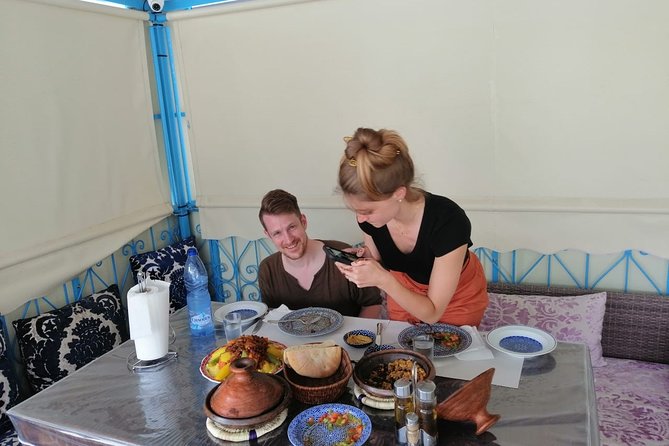
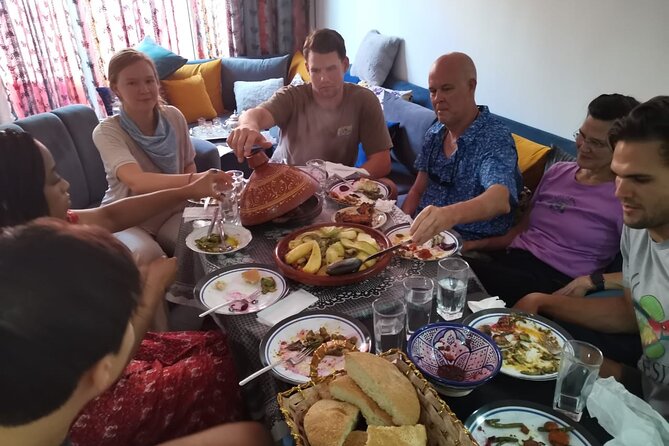
The best part comes after the cooking. You sit down and eat the food created during the class. This turns the lesson into a proper meal and gives you a chance to taste the results while the preparation is still fresh in your mind.
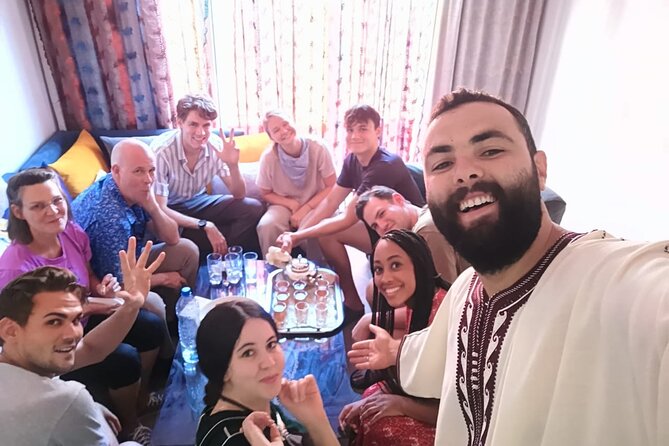
The experience includes a three-course lunch. Afterward, you choose between coffee and Moroccan mint tea, with cookies served alongside the drink. Mint tea is an important part of Moroccan hospitality, so this final pause fits the social side of the class.
The meal also gives you a natural time to ask follow-up questions. You can discuss which course you liked best, how the flavors were balanced, or what you might change when cooking at home. The activity is not only about collecting a recipe. It is about understanding how the meal comes together.
Alcoholic drinks are not included. That is easy to plan around, since the included meal already has a nonalcoholic finish with tea or coffee. If you want wine or beer, you will need to arrange that separately, and the supplied details do not promise that alcohol is available at the cooking location.
What the guides add to the experience
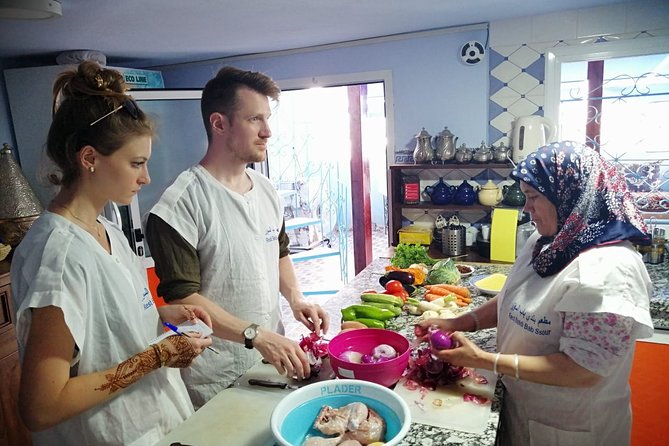
Chef Youssef receives the clearest praise for his role. He is described as personable, a native of Chefchaouen, and comfortable speaking English. He also brings food, local history, and culture into the experience, which is valuable when you want more than a sequence of cooking instructions.
A local chef can explain why a certain ingredient appears in the market, how it is used in a household, or what makes a dish familiar in the area. Those small explanations often stay with you longer than a list of recipe measurements.
The experience also includes a family-style welcome. One participant found the hosts warm and felt comfortable even when language differences made communication harder. That suggests the atmosphere can be friendly and relaxed, but you should still keep your expectations practical. Not every explanation may be perfectly detailed if the group and language mix vary.
The class is a good fit for curious eaters who enjoy conversation. It may be less suitable if you want a silent, tightly timed demonstration or advanced culinary training.
Is $68.95 a fair price?
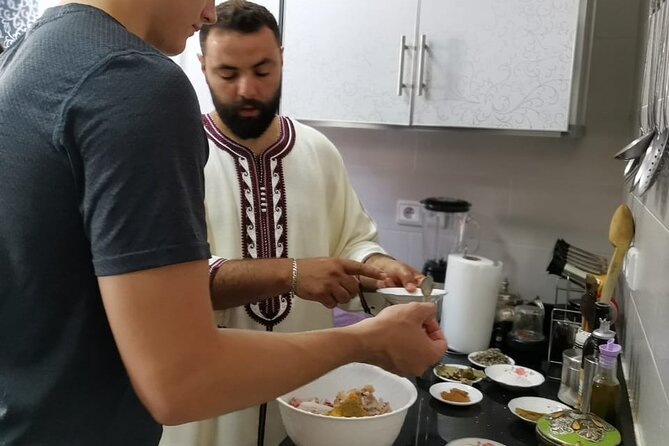
At $68.95 per person, this is not the cheapest lunch activity in Chefchaouen. The price includes the market visit, chef assistance, kitchen tools, and a three-course lunch, plus coffee or Moroccan mint tea with cookies.
The value depends on how you use the experience. If you see it as lunch alone, the cost may feel high. If you count the market walk, the cooking lesson, the meal, and the cultural exchange as one three-hour activity, the price is easier to justify.
The small group matters here. With no more than 10 people, you are less likely to disappear into a crowd than in a large cooking demonstration. You may still share tasks, but the chef has a reasonable chance to answer questions and keep an eye on the group.
The class is booked an average of 25 days in advance, so I would not leave it until the last moment during a busy visit. That booking pattern also suggests that you should choose a date carefully, especially if your time in Chefchaouen is short.
Free cancellation is available if you cancel at least 24 hours before the 11 a.m. start time. Changes or cancellations inside that window are not refunded. The activity also requires a minimum number of people, and if it is canceled for that reason, you are offered another date or a full refund.
Who should book this class?
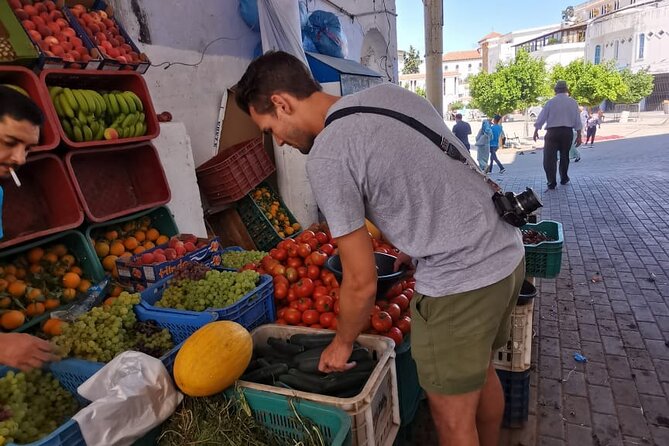
I would choose this experience if you want food to be the main way you connect with Chefchaouen. It suits solo visitors, couples, families, and small groups who enjoy eating together and do not need every cooking step to be fully individual.
It is also a strong match for first-time visitors to Morocco who want an easy introduction to local food customs. The market visit gives you a look at daily shopping, while the meal gives you a clear reason to pay attention to the preparation.
Vegetarians can book, but you should mention your dietary needs when arranging the experience. A vegetarian participant took part successfully, though the class still involved several dishes and not as much hands-on cooking as desired. The supplied information does not confirm other dietary accommodations, so ask before booking if you have allergies or strict restrictions.
I would be more cautious if your main goal is to master several recipes from start to finish. You may prepare some of the dishes, but the format can include watching as well as doing. For a relaxed cultural activity with food at the center, that balance is fine. For intensive instruction, it may not be enough.
Practical details before you book
Bring a phone with your mobile ticket available and wear comfortable clothes for walking through the market and working in a kitchen. The class begins at 11 a.m. at Hotel Bab El Ain and ends at the same place.
The activity lasts about three hours, but allow a little flexibility in your schedule. Cooking and shared meals do not always move at the exact speed of a guided sightseeing stop. Keeping your afternoon open also lets you continue exploring Chefchaouen after returning to the hotel.
Ask about the planned dishes if you have a particular interest. The available details confirm three courses but do not give the menu. Asking ahead can help you decide if the food suits your preferences and can make it easier to request more hands-on work.
The class accepts a maximum of 10 people. Since it is often booked well ahead, reserve early if you have only one free morning or want a particular date.
Should you book the Chefchaouen cooking class?
Yes, if you want a friendly, food-centered introduction to Chefchaouen that begins in the market and ends at the table. Chef Youssef’s local connection, the small group, and the included three-course meal make this more than a standard cooking demonstration.
Book with the right expectation. You may not personally prepare every part of all three dishes, and the menu is not specified in advance. If you are happy to share the kitchen, learn through a mix of practice and observation, and eat what the group creates, $68.95 is a reasonable price for a three-hour cultural outing.
FAQ
Where does the Chefchaouen cooking class begin?
The class begins at Hotel Bab El Ain, Rue Lala Horra, Kayssariya No. 77, at the hotel salon de thé in Chefchaouen.
What time does the activity start?
The cooking class starts at 11 a.m.
How long does the cooking class last?
The experience lasts approximately three hours.
How many people can join the class?
The activity has a maximum of 10 travelers.
Is a market visit included?
Yes. You visit the local market with the chef and select the ingredients needed for the cooking session.
What food and drinks are included?
The price includes a three-course lunch, followed by your choice of coffee or Moroccan mint tea with cookies. Alcoholic beverages are not included.
Can I cancel for a full refund?
Yes, if you cancel at least 24 hours before the experience start time. Cancellations made less than 24 hours before the start are not refunded.
Just added around Morocco
- Chefchaouen Private Cooking Class with Mountain View★ 5.0 · 16 reviews
- 3-Hour Cooking Class overlooking the Blue City★ 5.0 · 36 reviews
- Moroccan Cooking Class with a Local Family & Market Visit★ 5.0 · 16 reviews
- Private Tagine Cooking Class in Chefchaouen with Lunch★ 5.0 · 5 reviews
- 3 Hours Bread Making/passetrie in Chefchaouen★ 5.0 · 3 reviews
- Market Tour & Moroccan Cooking Class in Casablanca with Transfers★ 5.0 · 18 reviews
- Private Market Tour & Cooking Class in Casablanca with Transfers★ 5.0 · 20 reviews
- Private CousCous Cooking Class in a Traditional Family Home★ 5.0 · 7 reviews
Cooking Classes, compared.
Half-Day Thai Cooking Class at Organic Farm in Chiang Mai
Read our review →
Florence: Pasta Cooking Class with Unlimited Wine
Read our review →
3 in 1 Cooking Class near Navona: Fettuccine, Ravioli & Tiramisu
Read our review →
Hanoi Cooking Class: Culture, Local Market & Meaning CSR Impact
Read our review →
5 Traditional Dishes Hanoi Cooking Class with Market Trip
Read our review →
Cooking Class and Lunch at a Tuscan Farmhouse with Local Market Tour from Florence
Read our review →
Chiang Mai: Cooking Class, Market & Thai Herbs Garden Tour
Read our review →Browse the lists this tour appears in